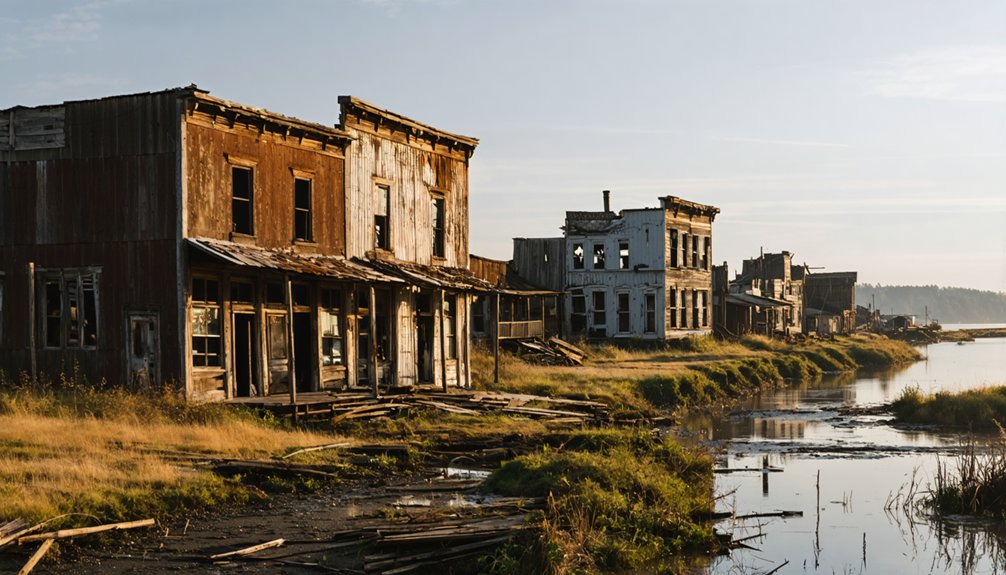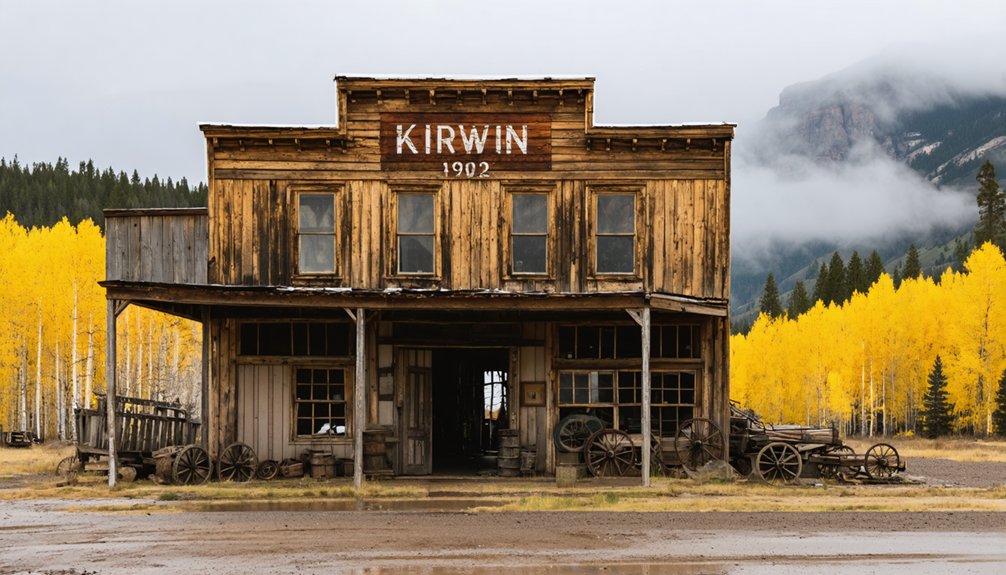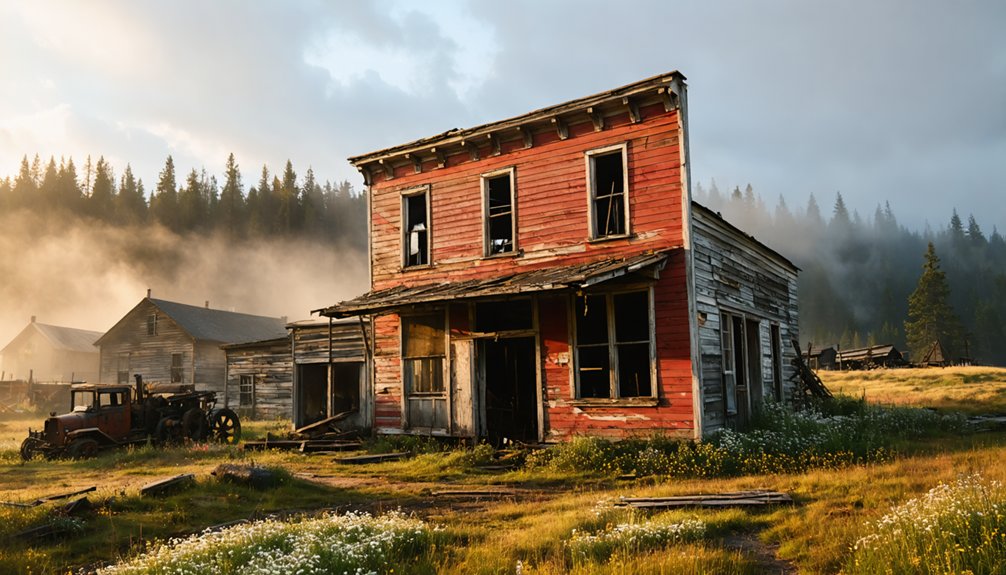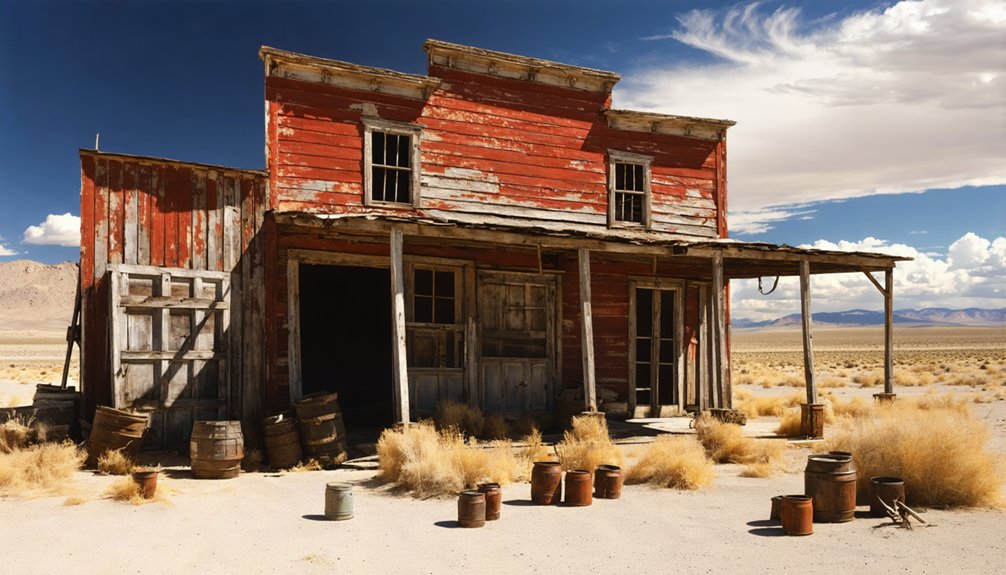
Ghost towns offer a hauntingly beautiful weekend escape from modern life. You’ll wander weathered wooden boardwalks where miners once thrived, explore crumbling facades that whisper stories of prosperity and decline, and photograph timeless scenes bathed in golden hour light. Pack sturdy hiking boots, reliable headlamps, and plenty of water for your adventure through these atmospheric time capsules. The silent streets of Bodie, Terlingua, and Colorado’s mining towns await your discovery.
Key Takeaways
- Ghost towns offer authentic experiences with abandoned architecture that reflects the boom-and-bust cycles of American history.
- Popular destinations include Bodie, California with 170 buildings in “arrested decay” and Terlingua, Texas with its unique mining heritage.
- Pack essentials like sturdy hiking boots, headlamps, and plenty of water for exploring unstable terrain.
- Practice responsible tourism by staying on designated paths and never removing artifacts from these fragile historical sites.
- Visit during golden hour for the best photography opportunities that capture both sweeping vistas and intimate architectural details.
Why Ghost Towns Make Perfect Weekend Getaways
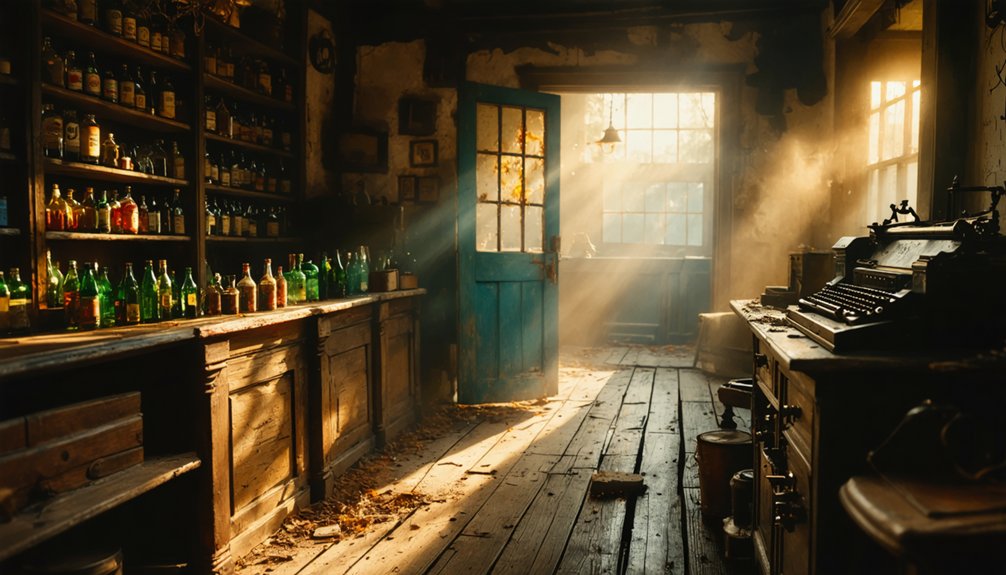
While modern travelers often seek bustling cities or pristine beaches for their weekend escapes, ghost towns offer a hauntingly beautiful alternative that’ll transport you back in time.
These forgotten frontiers deliver authentic experiences you won’t find elsewhere—abandoned architecture standing as silent testimony to boom-and-bust cycles of the American West.
In these silent towns, every crumbling facade tells a story of wild prosperity and sudden decline.
You’ll wander weathered wooden boardwalks where miners and merchants once hustled, exploring buildings frozen in time.
Listen as guides share ghostly legends that bring history to life through spine-tingling tales.
Unlike crowded tourist traps, these atmospheric settlements provide breathing room to explore at your own pace, with diverse activities from gold panning to hiking nearby wilderness areas.
From the well-preserved wooden buildings of St. Elmo to the artistic revival of Jerome, each town tells a unique story of American resilience.
Best of all, they’re accessible throughout the American West, making them perfect for spontaneous weekend adventures off the beaten path.
For the ultimate experience, navigating the narrow and winding roads to these historic sites is made effortless with the mobility and convenience of a Grech RV.
Planning Your Ghost Town Adventure: What to Pack
Your ghost town adventure demands both practical gear and season-specific essentials to navigate abandoned buildings and weather-worn trails.
You’ll need sturdy hiking boots, a reliable flashlight, and protective clothing that shields you from both the elements and potential hazards lurking in forgotten corners. A compact headlamp provides hands-free illumination while exploring dimly lit historic structures. Consider bringing a portable power bank to keep your devices charged during your expedition.
Winter explorers should pack extra layers and traction devices, while summer adventurers must prioritize sun protection and ample water supplies to combat the intense heat that radiates from sun-baked ghost town ruins.
Essential Ghost Town Gear
Exploring the haunted remnants of America’s forgotten frontier demands proper preparation, as the crumbling saloons and abandoned mine shafts hold both historical treasures and hidden dangers.
Your ghost town gear should prioritize navigation and safety first—pack maps, compass, GPS, and a reliable headlamp with extra batteries for those shadowy corners.
Don’t underestimate the importance of proper footwear; sturdy hiking boots with excellent traction will serve you well on unstable boardwalks and rubble-strewn streets. Consider the Danner Explorer 650 which offers superior ankle support for navigating unpredictable ghost town terrain. For wet conditions, waterproof options like Goretex Wildcats are essential when encountering stream crossings and muddy paths.
Layer your clothing strategically with moisture-wicking base layers and weather-appropriate protection.
Beyond the basics, your essential supplies should include more water than you think you’ll need, emergency shelter, and documentation tools.
Seasonal Packing Considerations
The spectral corridors of abandoned mining towns transform dramatically with each passing season, demanding thoughtful adaptation in your packing strategy.
In summer, breathable fabrics keep you cool while exploring sun-baked ruins, while winter adventures require thermal layers and sturdy boots to navigate snow-dusted ghost streets.
Your seasonal clothing should align with practical realities—wide-brimmed hats for desert exploration, waterproof gear for unexpected mountain storms, and layering options for temperature fluctuations at higher elevations. Just as pioneers needed wide-brim hats and sun bonnets for protection during their westward journey, you’ll appreciate similar headgear when exploring exposed ghost town sites.
Smart packing strategies like using cubes to organize warm and cool weather items guarantee you’re prepared for any weather shift.
Don’t forget year-round essentials: three days’ water supply, non-perishable food in sealed containers, navigation tools, and emergency supplies. Weather conditions can change rapidly in Nevada’s remote areas, so include specialized medical supplies for any personal health conditions you manage.
Freedom in these forgotten places requires self-sufficiency, regardless of season.
Bodie, California: A Gold Rush Frozen in Time
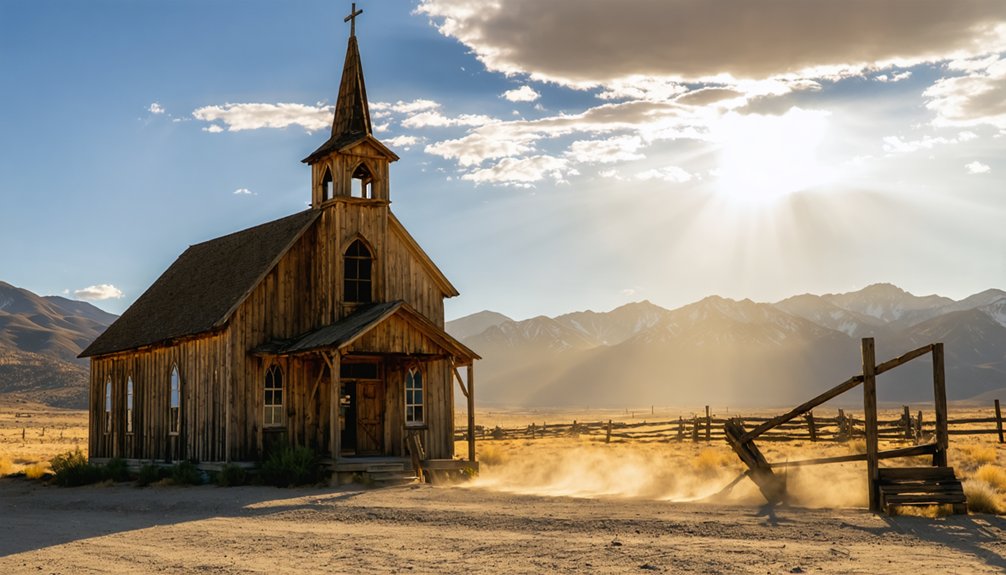
Perched high in the Sierra Nevada at over 8,300 feet, Bodie stands as a remarkably preserved monument to America’s golden era of westward expansion.
What began as William Bodey’s secret mining camp in 1859 exploded into one of the wildest boomtowns in Gold mining history after an 1876 cave-in revealed a fortune in precious ore.
At its peak, Bodie history came alive with 10,000 souls inhabiting 2,000 structures, from saloons and brothels to banks and churches. The town showcased technological advancement with its hydro-electric center constructed in 1893 by the Standard Consolidated Mining Company.
The phrase “Goodbye God, I’m going to Bodie” captures its notoriously lawless reputation. The town earned its infamy through its violent culture that rivaled Tombstone and Deadwood in the 1880s.
Today, you’ll wander among 170 buildings preserved in “arrested decay,” exactly as residents left them when the gold ran out.
It’s not just a ghost town—it’s a frozen moment of American ambition and excess.
Terlingua, Texas: Desert Ruins With Character
Unlike its northern cousin Bodie, Terlingua emerges from the Chihuahuan Desert like a mirage—part ruin, part revival.
In this liminal desert space, Terlingua exists between memory and possibility, neither fully ghost nor wholly reborn.
You’ll find a cultural landscape shaped by mercury mining that once drove this town’s boom in the early 1900s.
Wander through the historic cemetery where miners rest beneath simple stone markers, now listed on the National Register of Historic Places.
Mexican and Anglo influences blend in the architectural remnants that tell Terlingua’s history of cultural division and eventual harmony.
When the mines closed in 1945, the town nearly vanished into dust until the famous Chili Cookoff breathed new life in 1967.
Today, you can sip a cold drink at the revitalized Starlight Theatre where miners once gathered, surrounded by adobe ruins that whisper stories of boom, bust, and unexpected rebirth.
Exploring Colorado’s Mining Era Remnants
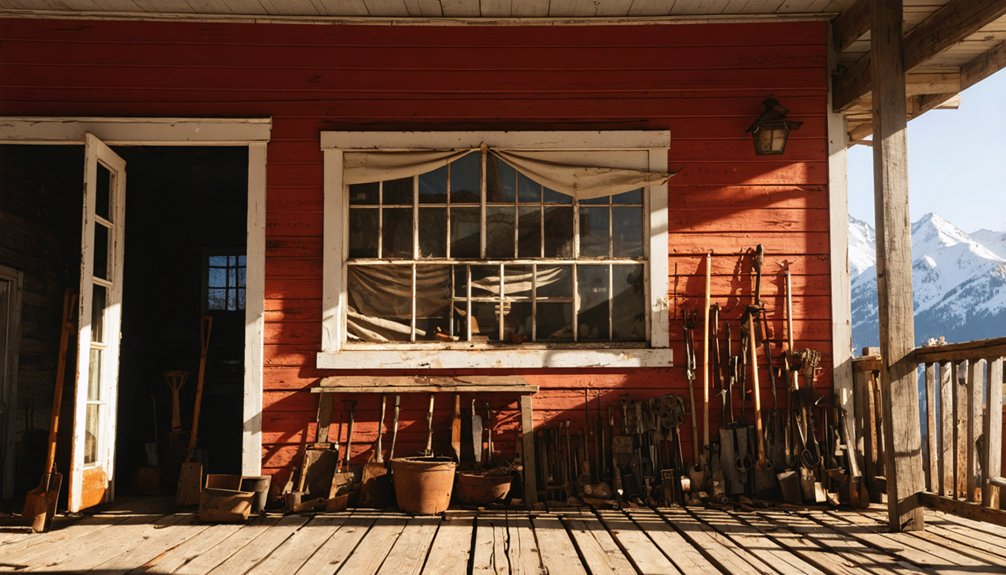
You’ll step back in time as you wander through Colorado’s preserved mining towns, where abandoned saloons and weathered mine shafts whisper stories of the 1880s gold and silver booms that once drew thousands of fortune-seekers.
Peer through the windows of St. Elmo’s untouched interiors, where dusty countertops and vintage merchandise remain exactly as they were left when the last residents departed after the railroad’s closure in 1910.
During summer months, twilight ghost tours in towns like Gilman and Creede bring the past to life, as guides recount tales of $13 million annual mineral harvests and the desperate struggles of miners who carved communities into these remote mountain slopes.
Colorado’s Best Mining Towns
As Colorado’s rugged mountains yielded their treasures in the late 1800s, a tapestry of mining communities sprang to life across the landscape, leaving behind a legacy that still captivates modern-day explorers.
You’ll find the most compelling historic mining stories in places like Leadville, which exploded into Colorado’s largest mining town after an 1879 silver discovery.
Central City, where a single gold vein discovery transformed a tiny camp into a 10,000-person boomtown in just one month, is another notable location.
For abandoned structures that truly transport you back in time, venture to the high-altitude settlements of Camp Bird and Tomboy in the San Juan Mountains.
These seemingly impossible construction feats cling to mountainsides, offering you glimpses of the remarkable determination that defined Colorado’s mining pioneers.
Undisturbed Historic Interiors
Step through the threshold of a Colorado ghost town building and you’re transported to a moment frozen in time, where peeling wallpaper, weathered counters, and forgotten personal effects tell stories that history books simply cannot.
The William Duncan House in Animas Forks and Ashcroft’s Blue Mirror Saloon offer rare glimpses into authentic mining-era interiors. You’ll find preservation challenges everywhere—weather damage, vandalism, and limited funding threaten these fragile time capsules.
Dedicated historical societies are fighting back with innovative interior restoration techniques. They’re installing shatterproof windows that maintain historic appearances while protecting furnishings, improving drainage systems, and creating digital documentation to guide authentic repairs.
When you visit St. Elmo or Independence, remember that each carefully preserved interior exists thanks to passionate volunteers and community efforts, offering you an unfiltered connection to Colorado’s rugged past.
Summer Ghost Tours
Three distinct ghost town circuits await summer explorers venturing into Colorado’s mining country, each offering glimpses into the state’s boom-and-bust past.
You’ll discover settlements where thousands once pursued fortune—like Creede, where 10,000 prospectors flooded the San Juan Mountains after an 1891 silver strike.
Hike to high-altitude remnants at Governor Basin, where miners toiled above 12,000 feet amid harsh conditions.
Explore abandoned architecture in once-thriving communities like Ironton, built with 300 structures in just three weeks. The Rothschilds’ $2 million Tomboy Mine purchase reveals the staggering wealth these mountains yielded.
Ghost town legends persist at St. Elmo, where residents abruptly departed in 1922 when railroad service ended, leaving buildings frozen in time—perfect for summer adventurers seeking connection to Colorado’s resilient mining pioneers.
Haunted History: The Eerie Tales of Cahaba, Alabama
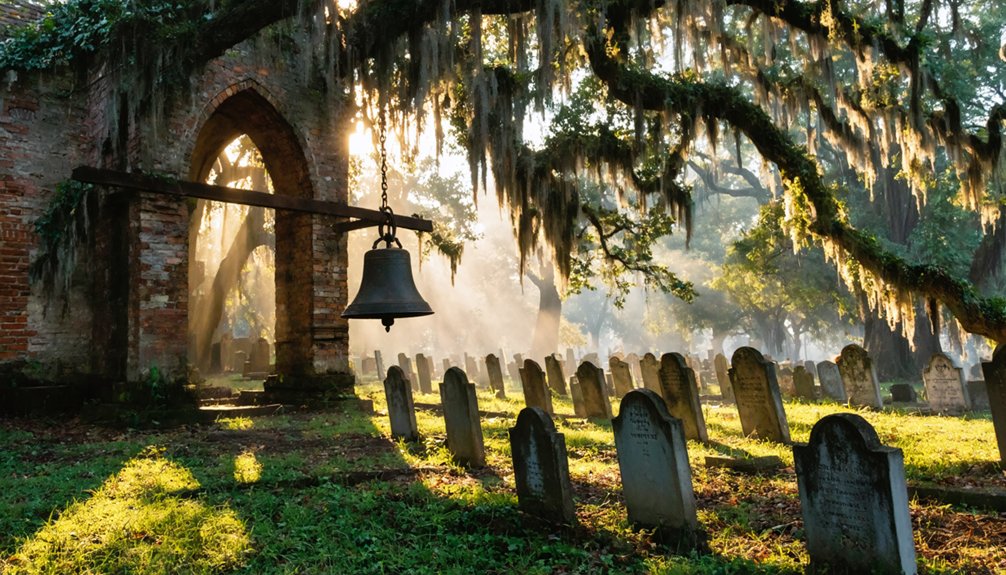
Walking through the silent streets of Cahaba today, you’ll sense the whispers of its tumultuous past lingering in the Alabama breeze.
This once-thriving capital’s dramatic rise and fall has birthed countless Cahaba legends. From Native American settlements to Alabama’s first capital, cotton prosperity to Civil War prison, the town’s layers of history create the perfect backdrop for ghostly encounters.
Stand among the Crocheron Columns at dusk, where thousands of Union soldiers once suffered at Castle Morgan.
Listen for the phantom steamboat whistles—echoes of the Sultana disaster that claimed 2,000 lives. The springs that once sustained both prisoners and townspeople now feed only the wild vegetation reclaiming this forgotten place.
Yet in the silent ruins and overgrown cemeteries, Cahaba’s spirits remain, waiting for you to discover their stories.
Photography Tips for Capturing Ghost Town Memories
While the silent ghosts of abandoned towns won’t appear on your camera’s sensor, capturing the essence of these forgotten places requires both technical skill and artistic vision.
Pack essential gear: a tripod for stability during dawn and dusk shoots, a wide-angle lens for cramped interiors, and a cleaning kit to protect your equipment during urban exploration adventures.
Timing is everything—shoot during golden hour when soft light accentuates textures and tells stories of historical preservation.
Frame your shots to include both sweeping vistas and intimate details: rusting doorknobs, abandoned personal items, and nature reclaiming human spaces. Look for unusual angles that reveal the soul of these places.
In post-processing, resist over-editing; let the authentic atmosphere speak through subtle contrast adjustments or thoughtful monochrome conversions.
Where to Stay: Accommodations Near Popular Ghost Towns
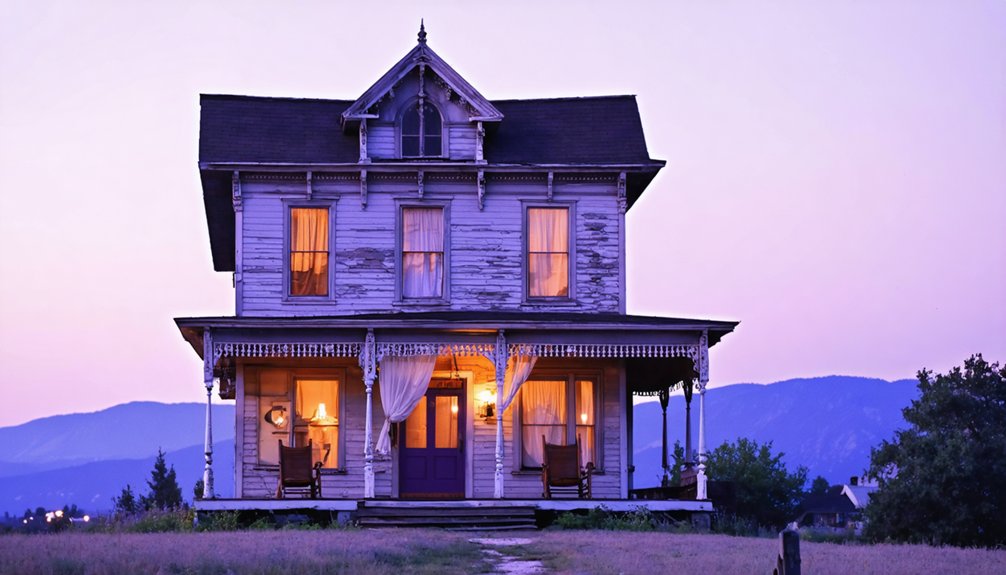
After wandering through the haunted corridors and sun-bleached facades of America’s most fascinating ghost towns, you’ll need a place to rest your weary bones when the shadows grow long.
Near Calico Ghost Town, you’ll find options ranging from the highly-rated Rodeway Inn to budget-friendly Travelodge starting at just $46 per night.
Comfortable, affordable lodging awaits after your Calico adventure, with clean rooms starting under $50.
For truly unique stays, consider bedding down at Calico’s on-site campground in a rustic cabin for $75 nightly, or venture to Terlingua’s pet-friendly Ghost Town Hotel.
The Three Valley Lake Chateau offers 200 rooms alongside BC’s premier Heritage Ghost Town, blending historical charm with modern comforts.
If you’re exploring multiple abandoned settlements, try the historic Fairweather Inn near Nevada City or Old Pioneer Garden Country Inn by Fort Churchill—authentic accommodations that extend your journey into the past.
Seasonal Considerations: Best Times to Visit
While you’ll battle scorching heat and dusty trails during summer explorations, the breathtaking golden light of fall transforms these weathered structures into a photographer’s dream canvas.
Winter’s heavy snowfall can completely block access to higher elevation ghost towns like Bodie, where drifts often reach several feet deep and temperatures plummet below zero.
You’ll find spring’s blooming wildflowers and fall’s crisp air offer the perfect balance of comfortable temperatures and dramatically beautiful backdrops for your ghost town adventures.
Summer Heat Challenges
Before you venture into the haunted stillness of desert ghost towns, consider the brutal summer conditions that transform these historic sites into sun-scorched death traps.
When temperatures soar to 120°F at places like Bombay Beach, your adventure quickly becomes life-threatening without proper heat safety measures.
- Pack triple the water you think you’ll need—hydration importance can’t be overstated when medical help is 45 minutes away
- Plan your visit during shoulder seasons when you’ll experience the authentic desolation without risking heat stroke
- Bring emergency supplies including cooling towels and electrolytes—toxic dust storms can trigger respiratory distress instantly
Remember that these ghost towns earned their abandoned status partly because humans simply couldn’t endure their extreme conditions.
As explorers venture deep into hidden towns in the rainforest, they often uncover remnants of a past where communities thrived amidst the lush greenery. These settlements tell stories of resilience, but they also reveal the heart-wrenching reality of nature’s overwhelming power. Over time, the rainforest reclaimed these spaces, leaving only whispers of the lives once lived there.
The freedom of exploration comes with responsibility to respect nature’s deadliest season.
Fall Photography Paradise
The scorching desert heat that threatens summer explorers gives way to nature’s most photogenic season at abandoned settlements across the American West. Mid-September through mid-October delivers nature’s perfect backdrop as vibrant aspens frame weathered structures in Colorado’s Ironton and Alta ghost towns.
You’ll capture magic during golden hours when early morning and late afternoon light accentuates textures of peeling paint and rusty machinery against fiery fall foliage.
Try photography techniques like reflections in Crystal Lake or light painting decaying buildings under crisp, clear night skies. For the best shots, time your visit precisely—peak colors last only 2-3 weeks.
California’s Bodie and Nevada’s Route 66 towns offer rich textures of decay amid changing vegetation, while cooler temperatures enhance contrast at higher elevations.
Winter Access Issues
Snow-locked ghost towns transform into nearly impenetrable fortresses during winter months, challenging even the most determined explorers.
Winter road conditions deteriorate rapidly as unpaved mountain routes vanish beneath snowdrifts, and maintenance becomes non-existent. Your trusty GPS won’t warn you when that last storm rendered your planned route impassable.
For the freedom-seekers determined to witness these historic sites in their snow-draped glory, heed these snow travel tips:
- Pack emergency supplies including extra food, water, and warm clothing
- Inform someone of your itinerary and expected return time
- Consider alternative transportation—some sites like Bodie are accessible only by skis or snowmobiles
The safest approach? Plan your ghost town adventures from late spring through early fall, when nature’s icy grip loosens and these forgotten places reveal their secrets more willingly.
Responsible Tourism: Preserving Our Abandoned Heritage
Wandering through the silent streets of a ghost town offers a thrilling glimpse into our past, but these fragile windows to history demand our respect and protection.
As you explore these abandoned treasures, remember you’re walking through irreplaceable heritage sites vulnerable to even well-intentioned visitors.
Practice sustainable tourism by sticking to designated paths, never removing artifacts (no matter how small), and carrying out everything you bring in. The weathered buildings around you face enough challenges from nature without adding human impact.
Your responsible choices directly support heritage preservation efforts and help guarantee these atmospheric places remain for future explorers.
Better yet, contribute to local preservation groups or spend money in nearby communities—your tourism dollars can breathe new economic life into regions that once faced their own abandonment after these towns faded into history.
Frequently Asked Questions
Are Ghost Towns Safe for Children to Visit?
Some ghost towns are safe with proper supervision, while others harbor hidden dangers. You’ll find family friendly activities in preserved sites where ghost town safety measures protect your adventurous little explorers.
What Wildlife Encounters Are Common in Abandoned Ghost Towns?
When nature reclaims human footprints, you’ll encounter urban wildlife thriving in silence. You’ll spot curious coyotes, swooping bats, slithering rattlesnakes, and scavenging ravens during your wildlife sightings adventure.
Can I Collect Artifacts or Souvenirs From Ghost Towns?
No. Collecting artifacts is illegal on public lands. Even on private property, you’ll need written permission. Embrace ethical collecting through photographs, preserving these weathered treasures for future explorers to discover.
Are There Accessible Ghost Towns for Visitors With Mobility Limitations?
Hit the dusty trails digitally! You’ll find mobility access at Bodie with special terrain wheelchairs, Calico’s visitor facilities, and Goldfield’s refurbished layout. Garnet and Ashcroft offer partial accessibility along their main thoroughfares.
How Accurate Are Ghost Hunting Tools in These Locations?
Your ghost hunting equipment measures real environmental changes, but can’t definitively prove paranormal activity. You’ll find these tools capture intriguing anomalies that’ll fuel your adventurous spirit in these hauntingly atmospheric locations.
References
- https://devblog.batchgeo.com/ghost-towns/
- https://www.mythfolks.com/haunted-us-ghost-towns
- https://www.christywanders.com/2024/08/top-ghost-towns-for-history-buffs.html
- https://www.visittheusa.com/experience/5-us-ghost-towns-you-must-see
- https://www.geotab.com/ghost-towns/
- https://www.youtube.com/watch?v=yeTVfoQxqJc
- https://www.loveproperty.com/gallerylist/83211/modern-ghost-towns-where-noone-lives
- https://en.wikipedia.org/wiki/Lists_of_ghost_towns_in_the_United_States
- https://www.tripadvisor.com/Articles-loOISRppph64-American_ghost_towns.html
- https://www.mountainluxerv.com/ghost-towns-and-gold-mines-exploring-colorados-abandoned-sites/