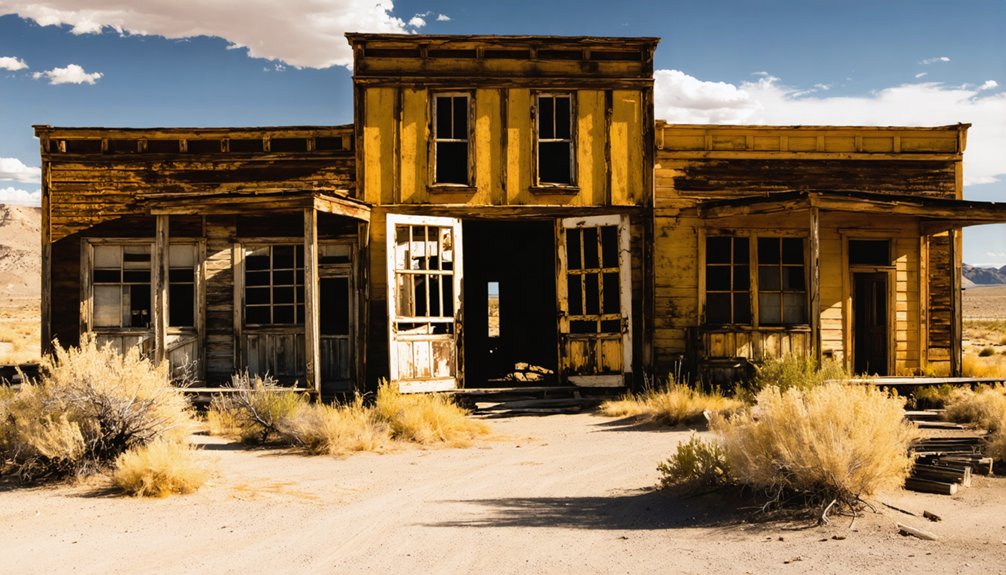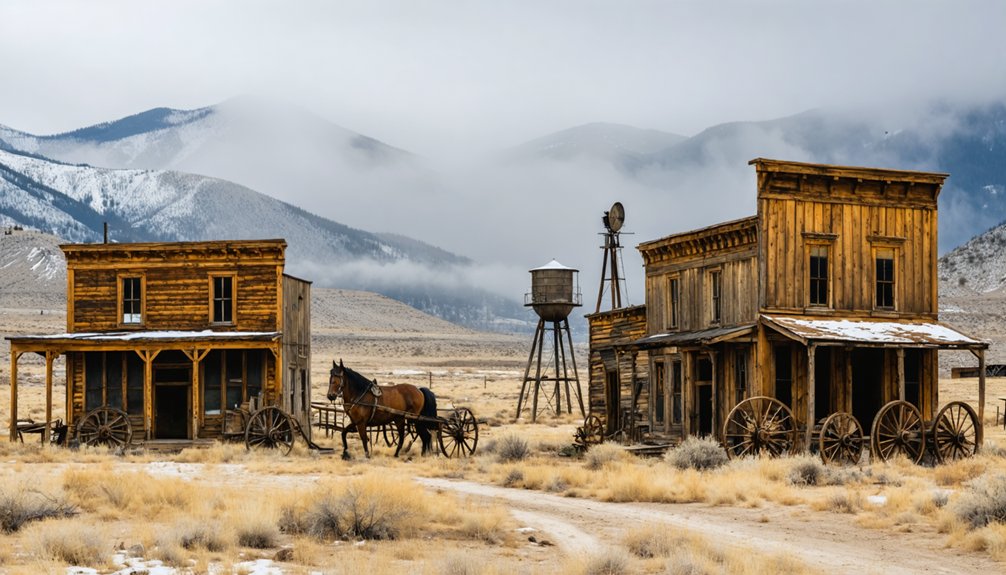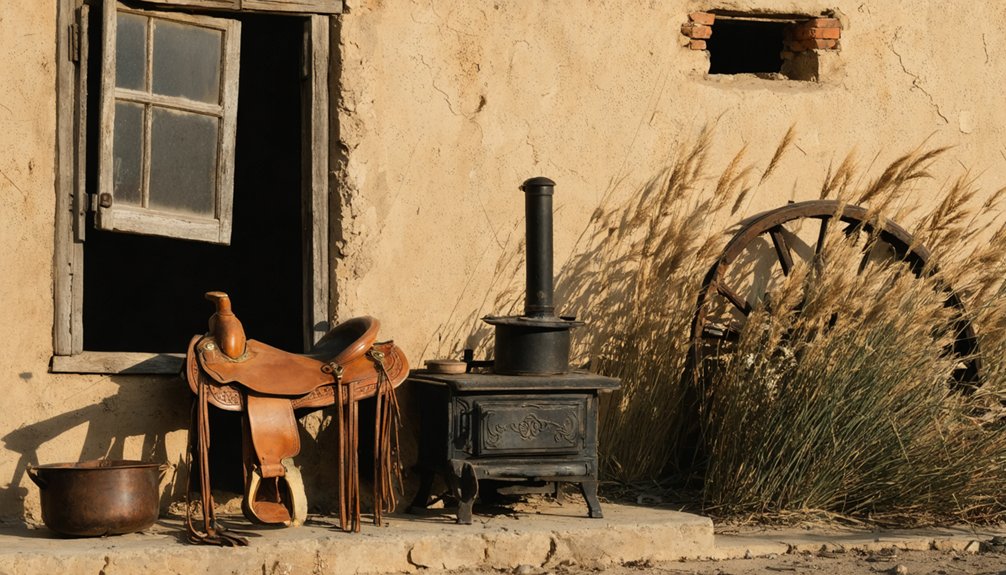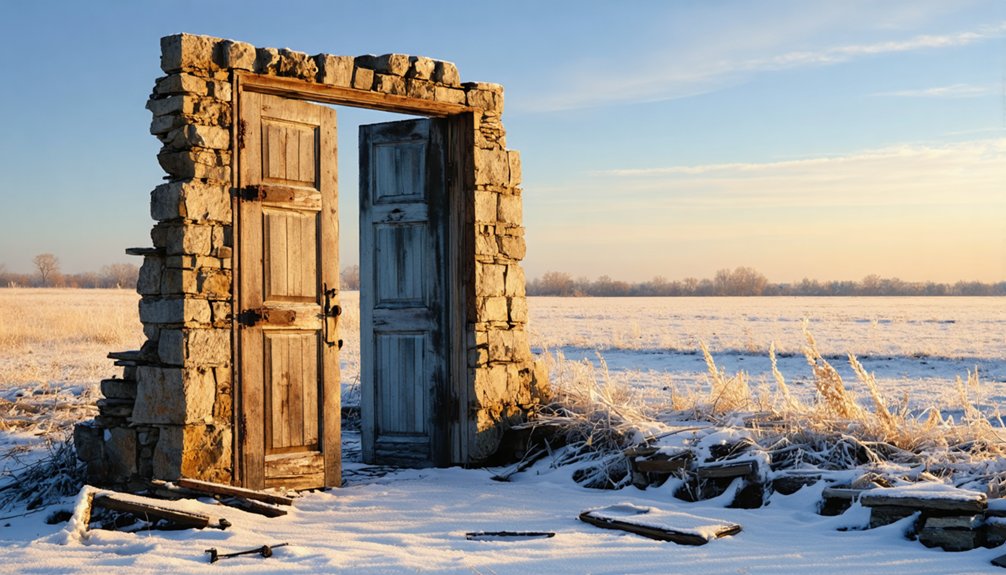
When you explore abandoned frontier sites, you’ll find eerie remnants telling silent stories. Post molds in soil reveal ghostly outlines of vanished structures. Unmarked graves encode social hierarchies through their arrangement. Personal possessions—sewing baskets with threaded needles, dog-eared Bibles—suggest lives abruptly halted. Bone-filled cellars document survival strategies while hybrid artifacts show cultural fusion at borderlands. These haunting traces offer glimpses into frontier existence for those willing to listen.
Key Takeaways
- Post molds in soil reveal ghostly outlines of vanished structures, showing where frontier buildings once stood.
- Household artifacts like half-finished needlework and abandoned cookware tell stories of lives abruptly interrupted.
- Unmarked graves and forgotten burial grounds preserve distinct cultural practices and social hierarchies.
- Military structures like fortified gatehouses and arsenals endure as remnants of frontier defense systems.
- Food remains in abandoned cellars document survival strategies and dietary adaptations of frontier settlers.
Ghostly Outlines: Post Molds and Vanished Structures
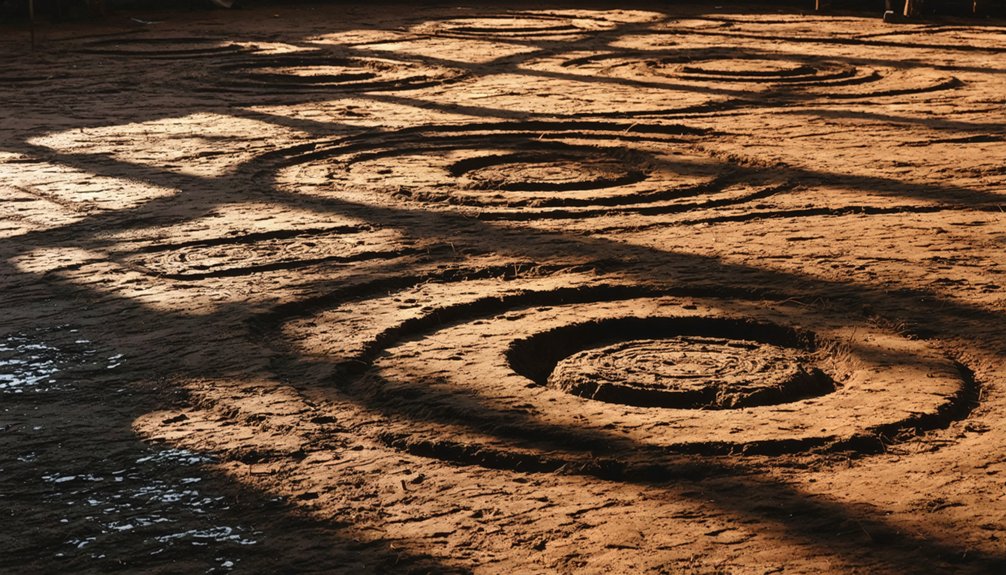
When archaeologists uncover the forgotten settlements of frontier communities, they often find nothing more substantial than subtle discolorations in the soil—post molds that mark where wooden structures once stood.
These ghostly outlines reveal the architectural skeleton of past lives, arranged in patterns that tell stories of how people organized their space.
Through post mold identification, you’ll discover circular formations indicating Native American wigwams or linear arrangements marking European-style rectangular houses. The size, spacing, and arrangement of these marks define distinct building typologies—from communal longhouses to defensive palisades. Areas near Asylum Lake property in Kalamazoo likely contained such structural evidence from indigenous peoples who settled near freshwater sources.
Some reveal slot trenches where walls once stood, while others show individual posts that supported roofs and walls. You’re literally looking at the footprints of vanished buildings, preserved only as shadows in the soil, waiting for someone to decode their forgotten patterns.
Silent Witnesses: Burial Grounds and Forgotten Graves
You’ll find unmarked graves across frontier burial grounds that whisper forgotten stories of individuals whose identities have vanished from historical records yet reveal cultural patterns through their positioning and treatment.
These silent witnesses demonstrate cross-cultural burial practices through distinct characteristics—wooden spirit houses with gable roofs indicating native traditions, while shroud pins and east-facing orientations signify Christian customs.
Cemetery landscapes encode social hierarchies through deliberate segregation, variation in shelter size, and differential treatment of remains based on status, ethnicity, and religious affiliation. Family cemeteries on plantations were typically established on high, well-drained land and enclosed to preserve the burial space from the surrounding agricultural activities.
Many historic burial grounds risk becoming forgotten and overgrown without proper maintenance, obscuring important local history and genealogical connections.
Similarly, abandoned oil cities in the USA serve as poignant reminders of a bygone era and the consequences of economic shifts. As these sites continue to deteriorate, they not only lose their historical significance but also erase the memories of those who lived and worked there. Preserving these areas can provide valuable insights into the industrial heritage of the nation.
Unmarked Stories Tell Tales
Beneath the surface of America’s frontier landscapes lie silent chronicles etched in soil and bone, where unmarked burial grounds serve as poignant testimonies to forgotten lives.
You’ll find these hidden narratives scattered throughout modern towns and rural outskirts, often discovered during construction or land development.
When you explore these sites, the physical segregation of burial areas reveals uncomfortable truths about America’s racial divides.
Barriers that separated the dead by race and status persist in cemetery layouts today.
Archaeological evidence—soil disturbances, simple wooden coffins, burial orientations—unveils the unmarked identities of those history overlooked.
These forgotten grounds connect you to the resilience of frontier communities.
Through archaeological investigation and local oral histories, you’re witnessing the reclamation of collective memory, as communities work to honor those whose stories were nearly lost to time.
Many of these burial sites exist as pioneer graveyards nestled along country roads and in farmers’ fields.
The high child mortality evident in places like Horse Prairie Cemetery provides stark reminders of the harsh realities faced by early American settlers.
Cross-Cultural Burial Practices
Throughout America’s frontier burial grounds, cross-cultural death rituals reveal complex spiritual landscapes where Native American, African American, and European practices intermingled and evolved.
When you examine Blackfoot and Cheyenne above-ground burials alongside African American grave offerings with Bakongo roots, you’ll find shared beliefs about spiritual journeys transcending physical death.
These cross-cultural connections manifested differently: Native Americans painted bodies and sang to guide souls eastward to the Sand Hills, while African American communities placed symbolic objects on graves to usher spirits across watery boundaries to the afterlife.
Both traditions emphasized community participation and protection from trapped or unhappy spirits.
As Christianity spread through frontier communities, these practices transformed rather than disappeared completely—adapting while preserving core spiritual beliefs about death as passage rather than finality.
Blackfoot tribes particularly feared encounters with spirits, leading to complete abandonment of campsites following a death in their community.
African American mourning rituals included the performance of ring shouts, circle dances conducted counterclockwise that combined music, dancing, and shouting as part of the grieving process.
Graves Reveal Social Hierarchies
Frontier burial grounds serve as silent witnesses to the social hierarchies that once structured pioneer communities, revealing distinctions that persisted even in death.
You’ll find that cemetery layouts mirror the social order, with elite graves occupying central or prominent positions while the marginalized rest in unmarked peripheries.
Examine grave goods closely—they’re direct indicators of social rank. High-status individuals were buried with ceremonial axes or exotic artifacts, while commoners received few or no offerings.
The quantity and quality of burial treatment correlate precisely with the deceased’s standing.
Even the spacing and orientation of graves reveal community structure. Clustered graves often indicate family units or clan affiliations.
The person-to-surname ratio in these silent archives tells a compelling story about kinship bonds and population mobility that frontier records rarely captured.
At sites like Fermo, funerary practices distinguished local individuals from those who migrated, with isotopic analysis confirming the presence of non-local community members.
In Roman frontier communities like the Batavians, the large communal cemeteries containing nearly 400 graves dated from AD 50-270 demonstrate how burial traditions evolved while maintaining community identity.
The Abandoned Arsenal: Defensive Remains and Military Traces
When you explore the skeletal remains of frontier arsenals, you’ll discover a network of military installations that once formed the backbone of territorial defense in America’s expanding borders.
Standing sentinel at America’s edge, frontier arsenals echo the strategic fortitude of a nation’s westward reach.
These sites were strategically positioned in dry, remote locations like Sierra Army Depot in California, yet accessible by rail for rapid deployment. The depot was established in 1942 specifically because its dry desert air created ideal preservation conditions for military equipment.
The most enduring defensive structures include fortified gatehouses and storage buildings that once sheltered massive military inventories—sometimes exceeding 10,000 firearms and hundreds of thousands of ammunition rounds.
You’ll find remnants of cannon batteries and earthworks designed to protect these valuable stockpiles.
Many arsenals evolved from earlier forts into logistical hubs, later repurposed as prisoner of war camps.
Their isolated locations on islands or inland territories offered security while allowing them to serve multiple functions throughout America’s territorial expansion.
Cultural Crossroads: Evidence of Hybrid Societies on the Edge
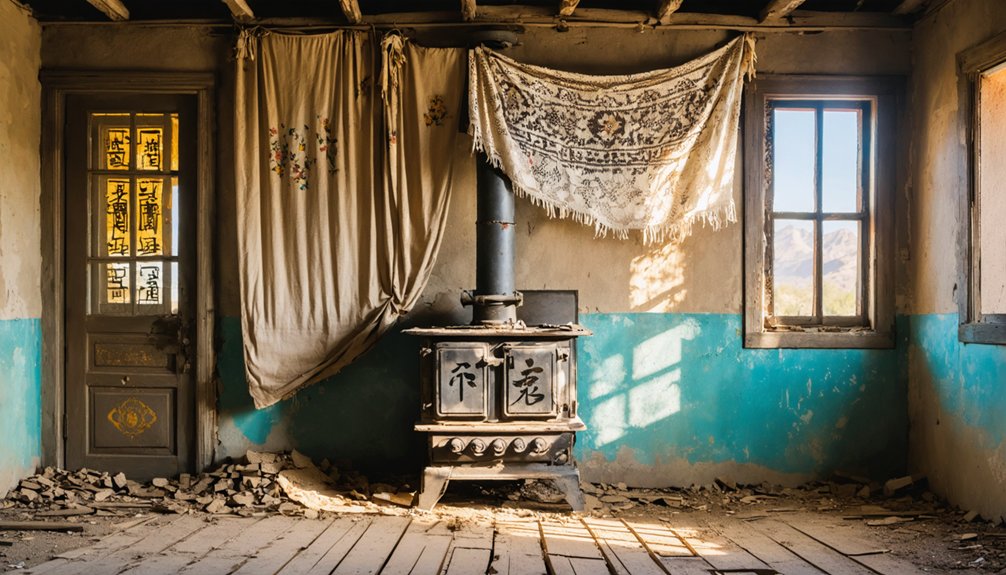
As you venture deeper into borderland ruins, you’ll encounter striking evidence of hybrid societies that once thrived at the convergence of disparate cultures.
Excavated artifacts reveal intricate cultural synthesis—tools combining European metalworking with Indigenous materials, dwellings that blend architectural traditions, and ritual objects merging Christian and native spiritual elements.
These communities forged distinct identities through identity formation processes, consciously separating themselves from both European and Indigenous populations.
The Metis in Western Canada and Orlam groups in Southern Africa exemplify this phenomenon, establishing unique social structures in marginal territories.
Their economic significance as trade intermediaries connected disparate worlds, while communal living experiments like the Harmony Society attempted to create cooperative utopias.
Through these physical remnants, you’re witnessing the material evidence of freedom-seeking peoples who defied simple categorization.
Daily Life Interrupted: Household Artifacts and Personal Possessions
The most haunting aspect of abandoned frontier settlements lies in their household artifacts—items frozen in time that reveal lives abruptly halted.
You’ll find cast iron cookware positioned as if waiting for the next meal, butter churns mid-process, and spinning wheels with unfinished thread still attached.
Personal possessions tell even more intimate stories—buckskin jackets hung by doors never to be worn again, dog-eared Bibles marked at final prayers, and hand-carved wooden keepsakes carried across continents only to be abandoned.
Possessions frozen in time—each discarded item a whispered story of frontier dreams abruptly abandoned.
Sewing baskets with needles threaded suggest mending never completed.
The artifacts create a portrait of self-sufficiency interrupted: wood-burning stoves gone cold, multifunctional furniture crafted for spaces now empty, and musical instruments silenced mid-melody.
Each object represents not just utility, but hopes and dreams suddenly suspended.
Shadows of Subsistence: Food Remains and Survival Strategies
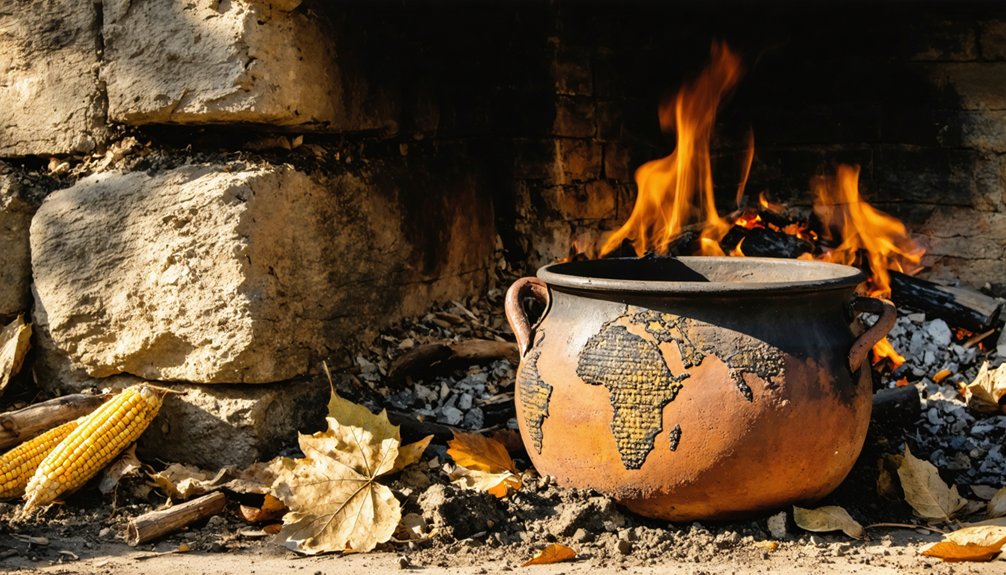
You’ll find bone-filled cellars throughout frontier settlements, where carefully excavated remains reveal distinct dietary patterns across communities.
These assemblages expose how settlers adapted their food procurement practices by combining traditional hunting methods with innovative agricultural approaches.
The hybrid crop patterns visible in charred plant remains demonstrate strategic resource management designed to guarantee survival in harsh frontier conditions.
Bone-Filled Frontier Cellars
Eerie remnants of frontier survival strategies emerge from the depths of abandoned cellars, where bone assemblages tell silent stories of subsistence and adaptation.
You’ll find these underground chambers preserving critical evidence of how settlers sustained themselves through harsh conditions.
Bone analysis reveals mixed survival tactics—animal husbandry paired with opportunistic hunting—all adapted to seasonal challenges and resource limitations.
The fragments document dietary choices that balanced necessity with cultural preferences, showing marrow extraction and strategic butchery patterns.
Some deposits transcend mere refuse, potentially representing ritual practices or community identity markers.
When excavating these spaces, you’re confronting both practical survival evidence and symbolic behaviors.
Despite preservation challenges from soil acidity and water infiltration, these bone-filled cellars continue to yield insights into frontier communities’ resourcefulness and adaptability in uncertain environments.
Hybrid Crop Patterns
While underground cellars preserve animal remains, the land above tells equally compelling stories through hybrid crop patterns that emerged as frontier settlers confronted unfamiliar environments.
You’ll notice these agricultural landscapes reveal a progression: initial settlers exploited rich prairie soils with minimal soil management, extracting more nitrogen than they returned. As frontier agriculture evolved, you’d find increasing crop rotation practices responding to declining fertility.
Land tenure arrangements shaped these patterns considerably—poor settlers pioneered cheap lands, followed by capital-rich firms that intensified production.
Agricultural policies, particularly federal land grants, accelerated settlement while influencing farming techniques. Community adaptation often followed cultural lines, with tightly-knit immigrant groups sharing approaches to crop resilience.
The ecological impact was profound: yield improvement came at sustainability’s expense, with irrigated agriculture eventually tripling in frontier zones like Chihuahua, fundamentally transforming native rangeland.
Frequently Asked Questions
Can Paranormal Investigators Detect Spiritual Activity at Frontier Archaeological Sites?
You can detect spiritual energy at frontier sites using methodical equipment monitoring that documents ghostly encounters through temperature fluctuations, unexplained audio recordings, and light anomalies during controlled investigations.
How Did Frontier Communities Dispose of Waste and Manage Sanitation?
You’d find frontier waste disposal consisted of waste pits, ravines, and middens for household refuse. Sanitation practices included basic privies, manual waste removal, and strategic placement of latrines away from water sources.
What Evidence Exists of Childhood and Play at Frontier Settlements?
You’ll find childhood artifacts like toys, scaled farming tools, and makeshift play structures in frontier settlements. Court records also reveal children’s lives through custody disputes and educational institution references.
How Did Frontier Communities Communicate With Distant Populations?
Like Paul Revere’s famous ride, you’d spread urgent news through horseback riders, signal fires, and drum systems. You’d rely on telegraph systems for immediate messages, while traders carried information between distant settlements.
Did Frontier Settlements Show Evidence of Healthcare Practices or Epidemic Management?
You’ll find healthcare artifacts like medicine bottles, surgical tools, and patent medicine tins alongside graves revealing epidemic responses through mortality patterns and mass burial sites at frontier settlements.
References
- https://egrove.olemiss.edu/cgi/viewcontent.cgi?article=2850&context=hon_thesis
- https://www.cambridge.org/core/journals/antiquity/article/life-along-the-medieval-frontier-archaeological-investigations-of-the-southeastern-long-wall-of-mongolia/B4161EE1C3CCEB528767682C11279EAD
- https://www.dhr.virginia.gov/wp-content/uploads/2020/12/The-Historical-Archaeology-of-Virginia-From-Initial-Settlement-to-the-Present.pdf
- https://sha.org/wp-content/uploads/2015/08/48-2.pdf
- https://www.annualreviews.org/doi/pdf/10.1146/annurev.an.24.100195.002351
- https://www.jstor.org/stable/2155946
- https://pmc.ncbi.nlm.nih.gov/articles/PMC4522790/
- https://wmich.edu/asylumlake/assessment
- https://historicjamestowne.org/wp-content/uploads/sandys_2000.pdf
- https://www.in.gov/history/for-educators/all-resources-for-educators/resources/george-rogers-clark/george-rogers-clark-archaeology-of-a-frontier-hero/