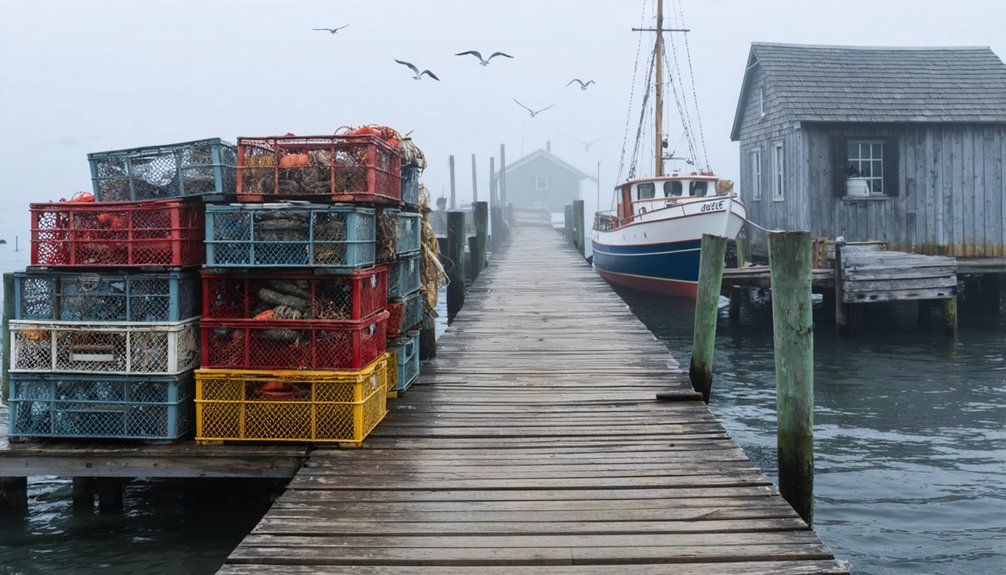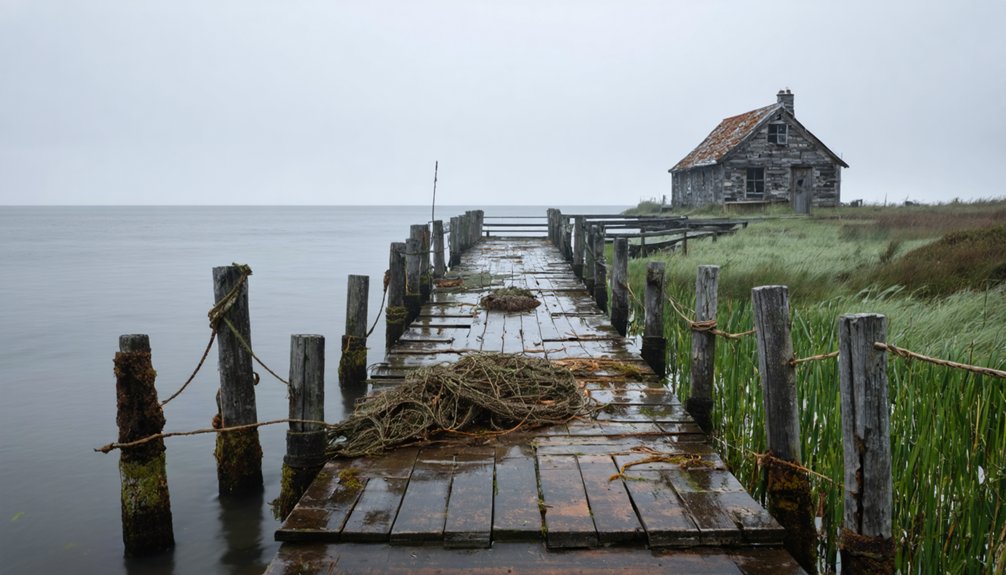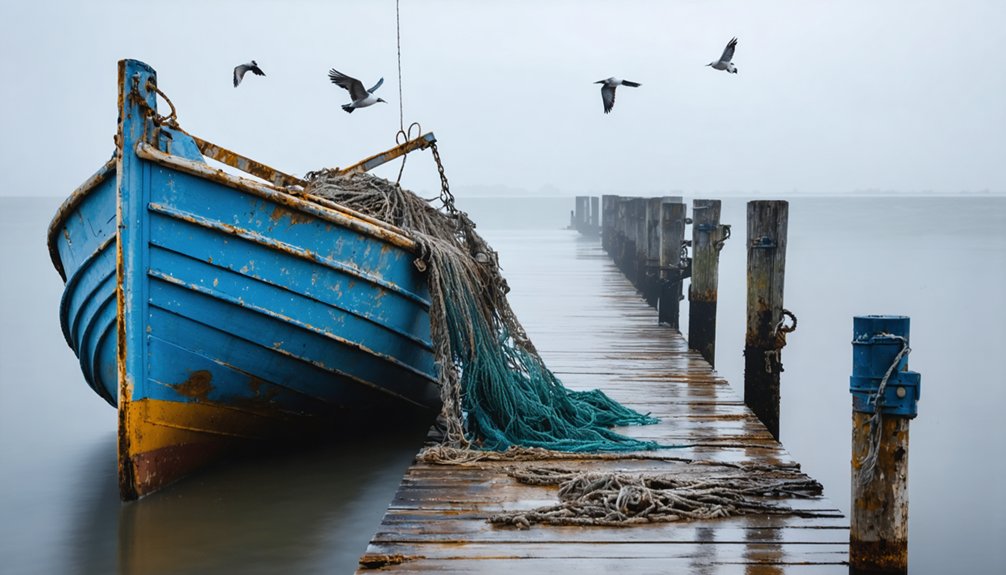
You’ll find abandoned coastal fishing towns marked by weathered processing sheds, crumbling jetties, and salt-worn houses slowly returning to nature. As economic pressures and depleted fish stocks forced communities to relocate, these maritime ruins have become living laboratories of ecological succession. Vines and mosses colonize walls, seabirds nest in empty buildings, and specialized plant communities thrive in unique microclimates. These silent witnesses to vanished ways of life hold countless stories of resilience and transformation.
Key Takeaways
- Weathered structures like processing sheds and jetties stand as silent witnesses to once-thriving maritime communities that have been abandoned.
- Nature actively reclaims these spaces through vines, mosses, and marine life, creating unique ecosystems in decaying buildings and submerged remnants.
- Crumbling infrastructure including docks, seawalls, and fishing equipment reflects the physical deterioration of these forgotten coastal settlements.
- Museums and cultural centers preserve fishing traditions and community heritage through artifacts, photographs, and documented oral histories.
- Economic remnants persist through abandoned fishing rights, vacant properties, and shuttered businesses that once supported thriving maritime economies.
The Silent Shells of Maritime Architecture
While many coastal towns emerge from careful urban planning, abandoned fishing settlements tell a different story through their skeletal remains of maritime architecture.
You’ll find weathered structures that once pulsed with life – processing sheds, jetties, and fishermen’s shacks now standing as silent witnesses to vanished communities. These abandoned architecture sites reveal how fishing towns grew organically, shaped by the practical needs of maritime life rather than formal designs.
In Dragør’s case, the historical layout evolved with yellow-washed houses arranged in distinctive double rows, showing how maritime communities naturally organized their living spaces.
Fort Ord Dunes exemplifies the fate of these communities, where coastal winds have steadily buried the remnants of a once-bustling military base and seaside town.
The maritime heritage visible in these ruins shows both resilience and vulnerability.
You can trace the original grid patterns and dense housing clusters that served tight-knit fishing communities, but you’ll also see how coastal erosion and storms have taken their toll.
What’s left are haunting reminders of how these settlements adapted to harsh marine environments before ultimately succumbing to environmental and economic pressures.
Nature’s Slow Reclamation of Coastal Settlements
Nature wages a patient but relentless campaign to reclaim abandoned coastal settlements, transforming human-built environments into wild spaces once again.
You’ll witness nature’s reclamation as vines and mosses rapidly colonize walls, while salt-laden air corrodes foundations and accelerates decay. The process of ecological succession unfolds before your eyes – seabirds nest in crumbling walls, seals claim old jetties, and marine life flourishes around submerged remnants. Off Magnetic Island’s coast, the SS City of Adelaide stands as testament to nature’s power, with mangrove trees now sprouting from its century-old wreckage.
Watch as shorelines retreat year by year, washing away human traces and reshaping the coast. Unique microclimates emerge in these ruins, where salt spray and coastal fog create perfect conditions for specialized plant communities. This transformation is evident in places like Houtouwan, where climbing vines completely engulf the village’s stepped dwellings.
As coastal erosion impacts on communities, the balance between nature and human habitation becomes increasingly fragile. The disintegration of coastal structures leads to a loss of cultural identity and displacement of residents. In areas where livelihoods depend on the sea, these changes pose significant challenges to both the environment and local economies.
What you’re seeing isn’t just abandonment – it’s the inevitable return of wilderness, as nature steadily erases our maritime footprints and crafts new habitats from our forgotten towns.
Economic Tides That Shaped Abandonment
You’ll find the economic collapse of coastal fishing towns driven by a perfect storm of industrial decline, as traditional shipbuilding and small-scale fishing operations shuttered under pressure from larger commercial fleets and declining fish stocks.
The exodus accelerated when insurers began withdrawing coverage or charging astronomical rates due to increasing coastal erosion and flood risks, making it financially impossible for many residents to maintain their homes and businesses.
These economic pressures forced younger generations to migrate toward urban areas with better job prospects, leaving behind aging communities struggling to maintain basic services and infrastructure.
The decline in ecosystem services from eroded coastlines further diminished the towns’ economic potential, destroying natural storm buffers and fisheries that once sustained these communities.
The situation mirrors other left-behind regions’ experiences, particularly in former mining areas, where local identities remain deeply tied to vanished industries.
Shifting Industry and Migration
As commercial fishing communities faced mounting pressures from the late 20th century onward, a perfect storm of economic and environmental factors triggered widespread abandonment of coastal fishing towns.
You’ll find stark migration patterns emerging as traditional fishing grounds fail to sustain livelihoods. Species like cod and lobster retreat northward with warming waters, while overfished stocks collapse across once-productive regions. The declining fisheries production since 2010 has devastated small coastal economies.
Industry adaptation proves challenging – especially for aging fleets struggling to pursue new species or adopt costly technologies. The graying of the fleet has left many coastal communities without a new generation of fishers to maintain operations. When regulations tighten and quotas shrink, many fishers can’t maintain crew sizes or keep their vessels.
They’re forced to sell off and relocate, leaving behind fragmenting communities and idle processing plants. COVID-19 accelerated this exodus, as market disruptions pushed already-strained operations past their breaking point.
Insurance Costs Drive Exodus
Rising insurance costs have become a crushing economic force driving the abandonment of coastal fishing communities, with average premiums now exceeding $3,700 annually in vulnerable areas.
You’ll find that major insurers are fleeing these high-risk regions, leaving property owners with few options for coverage. Florida’s coastal regions face particularly dire circumstances, with 10 of 15 least resilient cities nationwide. As climate change intensifies storm patterns, risk assessment models show catastrophic losses climbing 400% since 2009, pushing insurance affordability beyond reach for many residents.
Insurance companies paid a staggering $99 billion in natural disaster claims during 2022 alone.
When insurance becomes unattainable, you’re forced to make hard choices. Without coverage, you can’t protect your investments, and rebuilding after disasters becomes impossible.
This financial pressure accelerates the exodus from fishing towns, as uninsured properties deteriorate and remaining residents face mounting costs. The cycle feeds itself – as people leave, local economies shrink, making insurance even harder to maintain.
Declining Fish Stock Impact
Beyond insurance challenges, depleted fish stocks have dealt a devastating blow to coastal fishing communities.
You’ll find once-thriving ports where fishery sustainability has collapsed – as larger species vanish, fishers desperately turn to smaller fish and non-target species, accelerating the ecosystem’s decline.
When traditional fishing grounds can no longer support livelihoods, community resilience breaks down at its core.
The ripple effects touch every aspect of coastal life.
You’re witnessing the erosion of generations-old traditions as fishing families abandon their heritage.
Rising ocean temperatures force remaining fish stocks northward or deeper, beyond the reach of small-scale operations.
What’s left behind are shuttered fish houses, fractured social networks, and communities struggling to maintain their identity as the maritime economy that once sustained them slips away.
Weathering the Storm: Infrastructure Left Behind
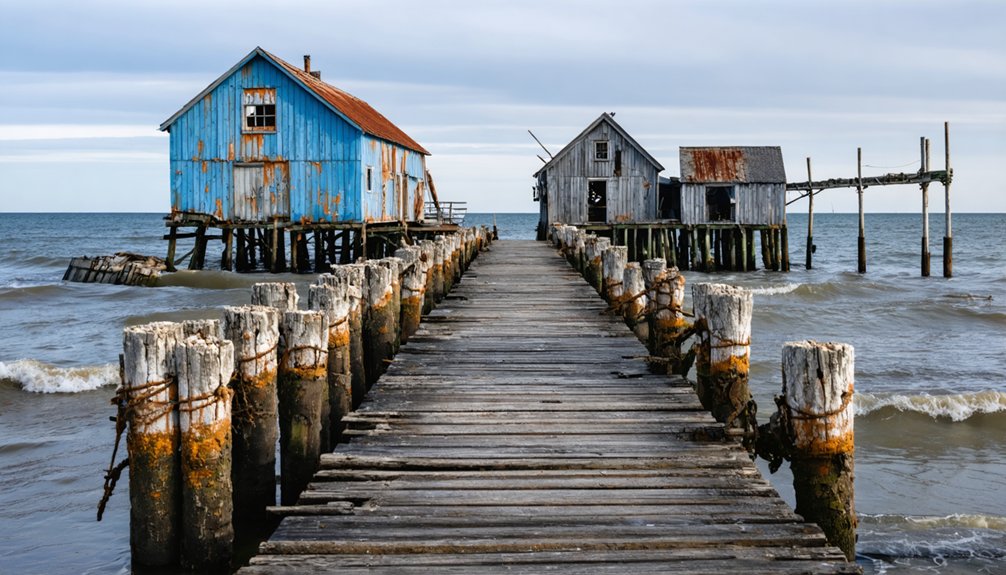
When coastal fishing villages face abandonment, their infrastructure begins a rapid and unrelenting battle against nature’s forces.
You’ll find docks and seawalls crumbling under relentless saltwater assault, while storms exceeding 160 km/h tear through weathered buildings. Without maintenance, infrastructure decay accelerates as protective barriers like beaches erode away.
What’s left behind tells a stark story of declining coastal resilience.
You can spot the skeletal remains: foundations half-buried in shifting sands, rusted boats lying forgotten on eroded shores, and fishing sheds slowly consumed by aggressive vegetation.
Rising seas and climate change further hasten this transformation, as structures succumb to flooding and erosion.
Nature reclaims these spaces with ruthless efficiency, turning once-thriving communities into weathered monuments of environmental change.
From Bustling Ports to Ghost Towns
The transformation of thriving fishing ports into ghost towns reveals a devastating pattern of socioeconomic collapse.
You’ll find rich fishing folklore fading as communities that once pulsed with maritime life now struggle to maintain their identity.
Where generations of fishermen once passed down their knowledge and permits, you’re now witnessing a mass exodus as families sell their fishing rights just to survive another season.
- Indigenous and rural fishing villages have lost up to half their populations in just 50 years
- Once-bustling harbors now house derelict boats and abandoned processing plants
- Community resilience faces unprecedented challenges as local services and schools shut down
- Traditional subsistence fishing continues but can’t sustain modern economic needs
- Historic fishing towns transform into shells of their former selves, with declining tax bases crippling public services
Cultural Heritage Through the Lens of Tourism
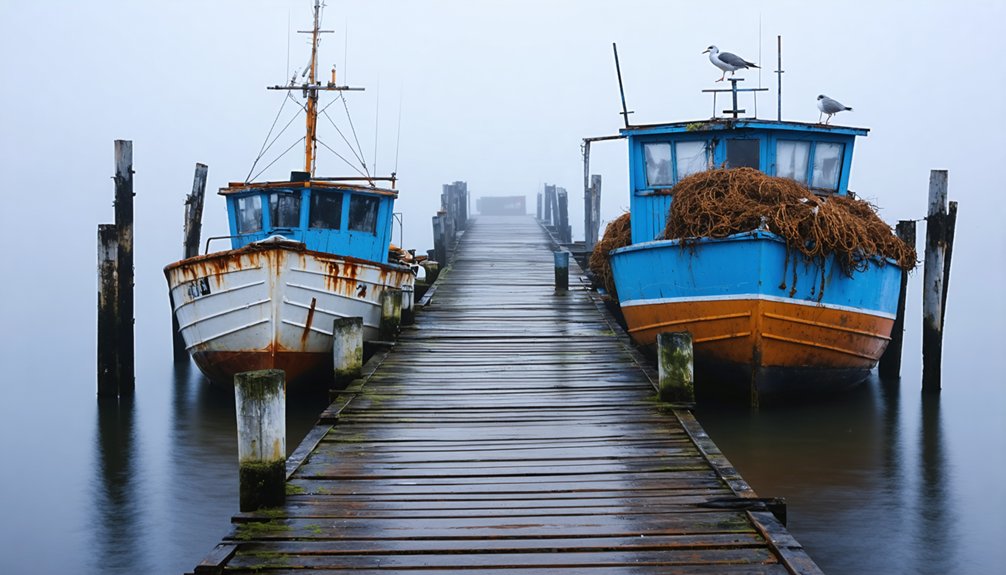
As abandoned fishing communities face economic extinction, tourism has emerged as both savior and threat to their cultural legacy.
You’ll find heritage storytelling breathes new life into these forgotten places, as visitors flock to museums and cultural centers that preserve traditional fishing practices and maritime histories.
Yet this tourism impact cuts both ways.
While tourism revenue funds the preservation of historic lighthouses and fishing cabins, it also risks turning authentic communities into sanitized attractions.
You’re witnessing a delicate balance: tourism can revitalize local economies and maintain cultural memory, but over-tourism strains infrastructure and commodifies heritage.
The transformation is especially stark in remote towns, where seasonal visitors create ghost-town effects in off-peak months, fundamentally altering the social fabric that once defined these coastal communities.
Frequently Asked Questions
Can Abandoned Coastal Fishing Towns Be Legally Purchased for Redevelopment?
You can purchase abandoned coastal towns, but you’ll face complex legal implications including permit requirements, coastal regulations, and redevelopment challenges tied to environmental protection and public access rights.
What Happens to Maritime Burial Grounds When Fishing Towns Are Abandoned?
Like ghosts of the past, you’ll find these burial grounds succumb to rising seas and coastal erosion, transforming into unique marine habitats while maritime archaeology struggles to preserve cultural remains beneath advancing waters.
Are There Any Successful Examples of Restored and Repopulated Fishing Villages?
You’ll find restoration success stories in places like Apo Island, Philippines, where community engagement revived depleted fisheries through marine sanctuaries, and Pacific Island villages that’ve restored both fish populations and traditional livelihoods.
How Do Local Governments Manage Safety Risks in Accessible Abandoned Towns?
You’ll find local governments conduct regular risk assessments, enforce safety regulations, remove hazardous vessels, and maintain emergency response systems while allowing controlled access to abandoned coastal areas that don’t pose immediate dangers.
What Traditional Fishing Techniques and Tools Remain Preserved in These Ghost Towns?
You’ll find stone weirs, cedar fish traps, and traditional reef nets left behind, though they’re deteriorating. These ancient fishing tools reflect sustainable practices that once supported thriving coastal communities.
References
- https://www.idyllicpursuit.com/10-abandoned-american-seaside-towns-that-once-overflowed-with-tourists/
- https://en.wikipedia.org/wiki/List_of_ghost_towns_by_country
- https://www.loveproperty.com/gallerylist/93458/20-towns-being-slowly-swallowed-by-the-sea
- https://www.youtube.com/watch?v=x2ql_djMzJQ
- https://www.atlasobscura.com/places/houtouwan
- https://whc.unesco.org/en/tentativelists/6375/
- https://snr.org.uk/the-mariners-mirror-podcast/the-lost-fishing-village-of-hallsands/
- https://www.opb.org/news/article/oregon-bayocean-ghost-town-resort-tillamook-bay/
- https://www.countryfile.com/go-outdoors/historic-places/britains-abandoned-coastal-villages
- https://www.fishingarchitecture.com/content/architecture-in-a-can