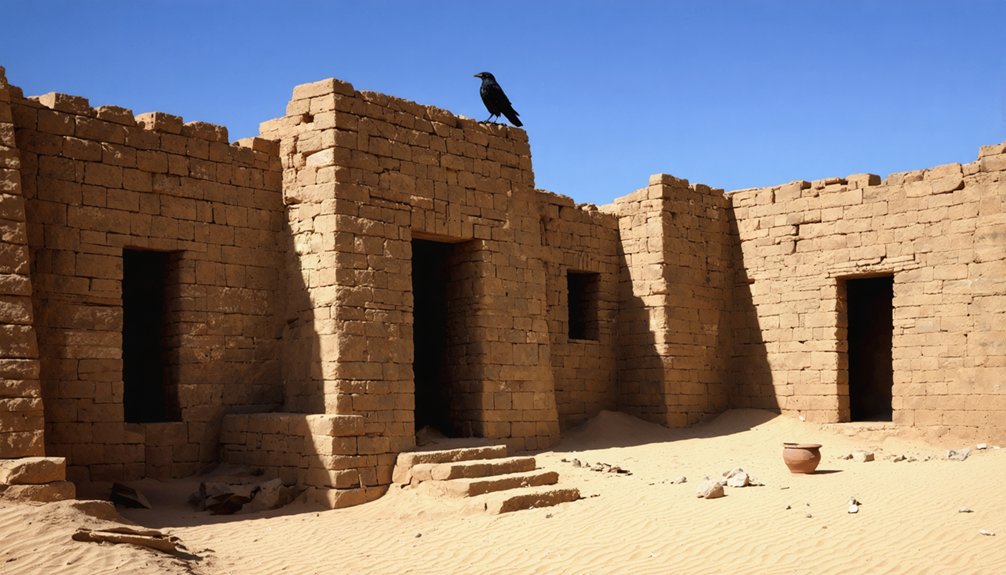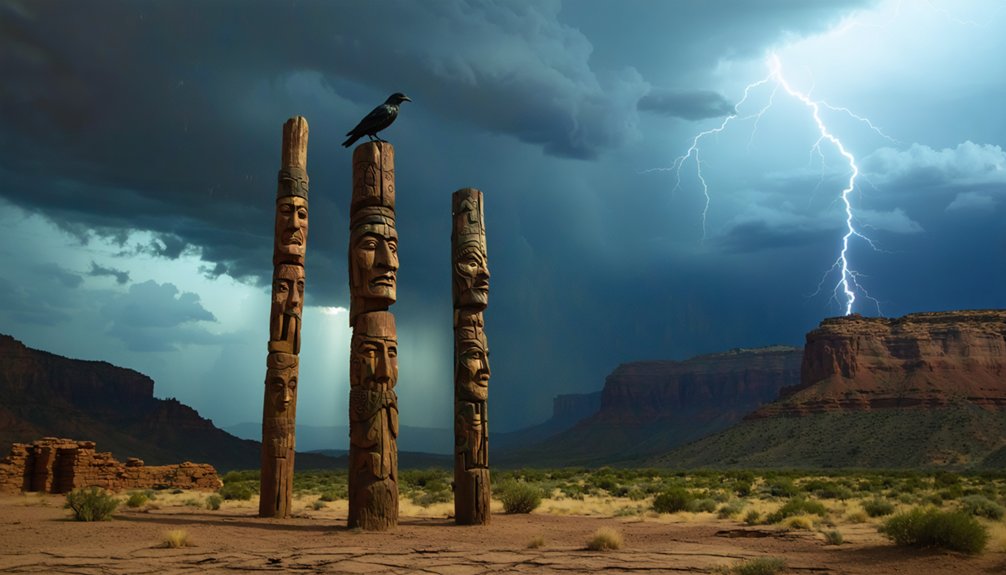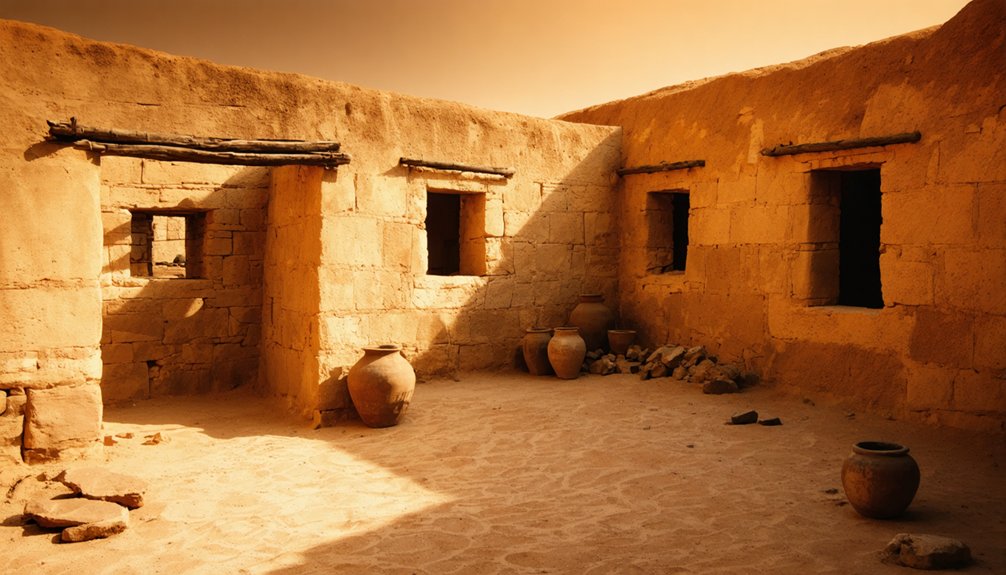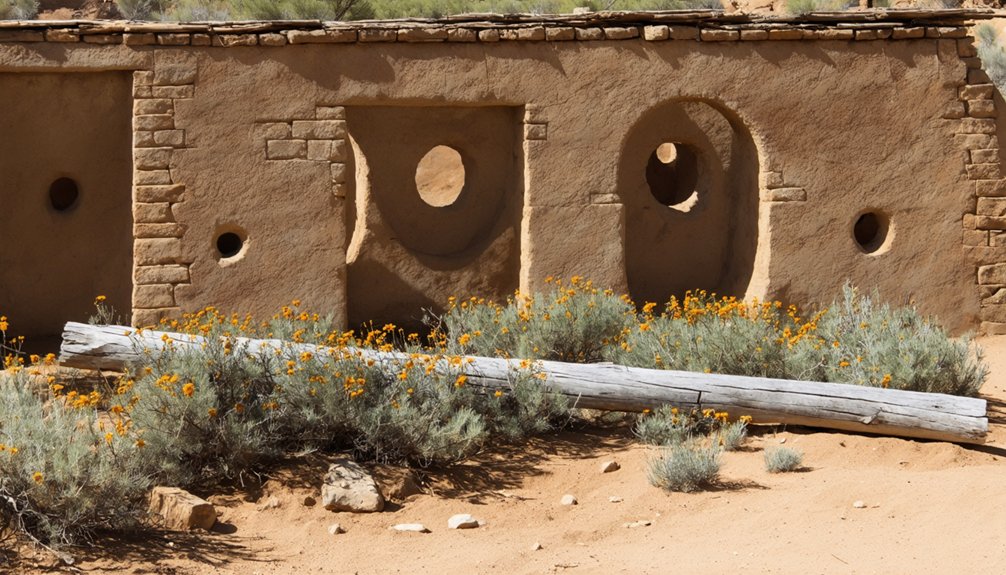
You’ll find extensive remains of Native American villages preserved beneath soil and sediment across North America. These sites have yielded over 55,000 artifacts from settlements dating back to 900 A.D., including wood carvings, bone tools, and ceremonial objects. Natural disasters like mudslides have protected many items, while archaeological excavations reveal sophisticated urban planning, agricultural practices, and sacred spaces. The physical evidence continues to uncover remarkable insights into these ancient communities.
Key Takeaways
- Archaeological sites contain well-preserved artifacts like stone tools, pottery vessels, and ceremonial objects beneath layers of soil and sediment.
- Physical evidence reveals sophisticated earthworks, including mounds, plazas, and urban planning features that supported large communities.
- Remnants of agricultural systems show irrigation networks, controlled burn areas, and farming spaces dating back to 700 CE.
- Sacred spaces remain visible through dance circles, burial mounds, and celestial observation structures aligned with astronomical events.
- Natural disasters, like mudslides, have preserved entire village sites containing up to 55,000 artifacts from daily life.
The Hidden Legacy Beneath Our Feet
While many ancient Native American villages have vanished from sight, their legacy lies preserved beneath layers of soil and sediment, offering archaeologists unprecedented windows into past cultures.
These discoveries reveal ancient settlements from as far back as 900 A.D. beneath modern infrastructure.
You’ll find these hidden histories best preserved when natural disasters struck, like the mudslide at Ozette that sealed away 55,000 artifacts around 1750.
These catastrophic events have ironically protected delicate materials – wood, bone, and other organic remnants that typically decay – capturing snapshots of daily life. The Makah Cultural Center now displays these remarkable finds. The evidence of cultural continuity emerges through carefully planned excavations, revealing everything from mussel shell knives to ceremonial objects.
Nature’s disasters serve as time capsules, preserving fragile artifacts that tell rich stories of ancient Native American life.
Through collaborative work with descendant tribes, archaeologists uncover intricate details about community life, from specialized hunting traditions to celestial knowledge embedded in carefully aligned structures.
Earth-Shaping Agricultural Practices
Although many assume early Native American agriculture was primitive, archaeological evidence reveals sophisticated earth-shaping practices that transformed North American landscapes.
You’ll find remnants of traditional practices like controlled burns that enriched soil through ash deposits and suppressed unwanted vegetation. River valley settlements utilized nutrient-rich floodplains to maximize crop yields. These agricultural innovations included extensive irrigation networks, with archaeological sites showing complex canal systems dating back to 700 CE.
The most remarkable evidence comes from the Three Sisters method, where corn stalks supported climbing beans while squash provided ground cover. The Hohokam people demonstrated remarkable engineering skills by constructing extensive canal networks throughout the Gila basin of Arizona.
You can still trace ancient terracing systems that prevented erosion and conserved water in arid regions. Discovered artifacts reveal how Native Americans integrated agroforestry techniques, combining crop cultivation with strategic forest management to create sustainable, productive environments that supported thriving communities.
Sacred Spaces and Ceremonial Grounds
Sacred burial mounds where communities interred their dead alongside ritual objects, revealing complex ceremonial practices through archaeological evidence like stratified soil layers and charcoal deposits.
Sacred dance circles, often marked by post holes or geometric earthworks, served as gathering spaces where communities would perform rituals and maintain social bonds. The flat-topped ceremonial mounds supported ritual gatherings and became residences for elite tribal members who oversaw important cultural ceremonies. These sacred spaces attracted urban populations of up to 12,000 people during major gatherings and festivals.
The alignment of observation structures with celestial events, particularly evident at sites like Cahokia and the Hopewell earthworks, demonstrates these ancient peoples’ sophisticated understanding of astronomical cycles and their integration into ceremonial life.
Burial Mounds and Rituals
Ancient burial mounds stand as remarkable symbols of Native American engineering and spiritual practices, ranging from modest conical structures to massive earthen monuments.
You’ll find these earthworks in various forms: dome-shaped mounds rising 3-10 feet, flat-topped platforms soaring 15-60 feet high, and complex arrangements like Watson Brake’s 11-mound oval configuration.
The burial practices within these mounds reveal sophisticated cultural patterns. You’ll discover multiple interments at different levels, often containing precious grave goods like copper ear-spools, greenstone pipes, and ceremonial items meant for the afterlife.
At sites like Poverty Point and Crystal River, these mounds served as ceremonial centers where communities gathered for rituals, while platform mounds supported temples and elite residences, demonstrating the complex social organization of these ancient societies. The incredible Grave Creek Mound required moving 57,000 tons of earth to complete its construction between 250-150 B.C. One notable example in Cartersville features a 63-foot earthen platform that once housed the residence of an important priest-chief.
Sacred Dance Circles
Sacred dance circles represent essential ceremonial spaces where Indigenous communities performed spiritual rituals and communal gatherings, often marked by cleared circular or oval areas surrounded by logs, stones, or earthen berms.
You’ll find these cultural spaces near traditional village centers, ceremonial plazas, and water sources, typically featuring central fire pits and arranged seating. These sacred grounds held special significance as sacred fire was revered as a manifestation of supreme deities.
Archaeological evidence reveals their dance traditions through compacted soil, postholes, and fire-cracked rock patterns. The Southeastern tribes, including Cherokee, Creek, and Seminole, maintained these sacred grounds for stomp dances and Green Corn ceremonies.
While many historic sites have been abandoned, their cultural significance endures through active use by modern Native communities, preserving pre-Removal traditions particularly in Oklahoma and throughout the Southeast. These spaces continue to foster deep spiritual connections between Native peoples and their ancestral lands through traditional dance ceremonies.
Celestial Observation Structures
Beyond ritual dance spaces, Native American communities created sophisticated celestial observation structures that merged architectural precision with astronomical knowledge.
You’ll find remarkable examples in the Hopewell Ceremonial Earthworks of Ohio, where geometrically precise squares, circles, and octagons align perfectly with solar and lunar cycles. These celestial alignments weren’t random – they served as sophisticated astronomical tools.
At sites like Cahokia and Winterville, you’ll discover mounds and plazas carefully positioned to track celestial events.
The architectural significance extends beyond mere construction – these spaces integrated cosmic worship with communal gatherings.
From the conical burial mounds of the Adena culture to the expansive ceremonial complexes of the Hopewell, these structures demonstrate how Native Americans masterfully connected earthly architecture to celestial movements for both spiritual and practical purposes.
Daily Life Through Discovered Artifacts

Physical remnants unearthed from abandoned Native American villages provide a detailed window into the intricacies of daily life. Through artifact analysis, you’ll find stone tools like flint arrowheads, scrapers, and axes that reveal hunting and woodworking activities.
In modern contexts, similar efforts can be observed in the redevelopment projects at army bases, where the past meets present initiatives. These projects often involve archaeological surveys that uncover historical artifacts, shedding light on the military’s impact on local communities. As such, they not only serve a functional purpose but also aim to preserve and honor the heritage of the areas they inhabit.
Pottery vessels, created using coil methods, show sophisticated food storage and cooking practices, while grinding stones and mortars indicate food preparation routines.
You’ll discover evidence of textile work in recovered sewing kits and fragments of clothing made from animal skins. Baskets woven from bark fibers and grass mats demonstrate resourceful domestic solutions.
The villages’ daily routines become clear through fishing hooks crafted from bird bones, parfleche containers, and remnants of farming tools. These artifacts paint a picture of communities that masterfully balanced hunting, gathering, farming, and crafting activities.
Ancient Urban Planning and Architecture
You’ll find impressive earthen monuments rising from ancient village sites, where Native Americans engineered complex ceremonial mounds and plazas aligned with astronomical events and cardinal directions.
These architectural features served multiple functions, from hosting large public gatherings to facilitating trade and religious ceremonies that could accommodate thousands of participants.
Archaeological evidence reveals sophisticated urban planning principles in these settlements, with specialized zones for different activities and careful integration of living spaces with agricultural fields and natural resources.
Earthen Monuments Stand Tall
Native American earthen monuments represent some of the most impressive examples of pre-Columbian engineering and architectural achievement in North America.
These monumental engineering feats incorporated sophisticated layering techniques, using different colored clays and soils to create stunning visual effects. You’ll find earthen structures ranging from towering platform mounds to intricate geometric enclosures, with some walls reaching heights of 23 feet.
The scale is remarkable – Monks Mound at Cahokia rises over 100 feet, while Poverty Point spans more than a square mile with its concentric ridges.
These monuments weren’t built haphazardly; they required precise planning and massive labor coordination. Their builders strategically integrated natural landscapes and water features, demonstrating advanced knowledge of geology and hydrology while embedding deep cosmological significance into their designs.
Ceremonial Urban Design Features
While excavating ancient Native American settlements, archaeologists have uncovered sophisticated urban planning principles that reveal deep connections between ceremonial architecture and astronomical knowledge.
You’ll find ceremonial layouts that perfectly align with cardinal directions and celestial events, demonstrating their advanced understanding of sacred geometry. Central plazas served as dynamic spaces for community gatherings, surrounded by multi-story dwellings and ritual structures.
Examining these sites, you’ll discover flat-topped earthen mounds arranged in specific patterns, often forming “U” or “R” shapes around plazas.
These elevated platforms supported temples and council houses, while circular structures like kivas and sweat lodges reflected spiritual beliefs about cycles and emergence. The interconnected network of plazas, mounds, and ceremonial buildings reveals sophisticated planning that balanced practical needs with cosmic alignments.
Protecting Our Native Heritage Sites
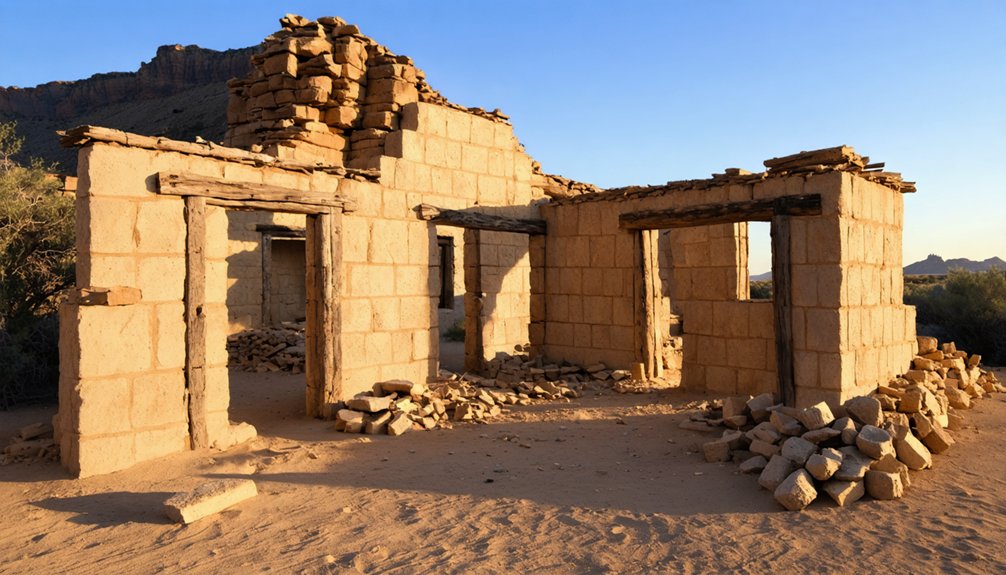
Since the passage of landmark legislation in 1966, the United States has established extensive frameworks to protect Native American heritage sites through federal laws, tribal partnerships, and dedicated funding programs.
You’ll find that tribal co-stewardship agreements now cover 109 National Park Service units, with tribes actively managing cultural landscapes and sharing Indigenous stories. The National Historic Preservation Act and NAGPRA provide legal foundations for cultural preservation, while dedicated funding streams support these efforts.
At sites like Grand Canyon National Park and Craters of the Moon, you can experience firsthand how tribal partnerships have transformed interpretation and site management.
Since 2021, $77 million in federal grants has strengthened tribal preservation programs, enabling documentation of traditional properties and cultural revitalization efforts nationwide.
Frequently Asked Questions
How Did Weather Patterns Influence the Locations of Native American Villages?
You’ll find Native Americans chose village locations based on climate adaptability, positioning settlements near water sources, on protected terrain, and along seasonal migration routes that offered reliable food and shelter.
What Methods Did Native Americans Use to Defend Their Village Settlements?
You’ll find Native Americans employed multi-layered palisades, defensive towers, and strategic village placement on high ground. They enhanced these village fortifications with clay-plastered walls, defensive ditches, and narrow, guardable entrances.
Powerful partnerships promoted peaceful trade, as you’ll find tribes formed strategic alliances along established trade routes. They’d share resources, exchange ceremonial gifts, and maintain diplomatic relations through structured gatherings and calumet ceremonies.
What Role Did Women Play in Village Leadership and Decision-Making?
You’ll find women held substantial female leadership positions, controlling clan decisions, nominating chiefs, managing resources, and maintaining cultural traditions. Their decision-making roles extended across political, economic, and spiritual domains.
How Did Native Americans Handle Waste Management in Large Village Settlements?
You’ll find they managed waste disposal through individual backyard pits and communal dumps, with organic materials recycled into agriculture. Sanitation practices evolved from household-level management to larger shared disposal sites.
References
- https://www.thearchcons.org/tac-tcha-indiana-preserve-native-american-villages-outside-fort-ouiatenon-historic-site/
- https://archaeology.org/issues/january-february-2026/off-the-grid/prophetstown-indiana/
- https://home.dartmouth.edu/news/2025/06/archaeologists-find-intensive-indigenous-farming-michigan
- https://www.historyextra.com/period/medieval/native-american-city-cahokia-rivalled-london/
- https://www.wilderness.org/articles/article/10-extraordinary-native-american-cultural-sites-protected-public-lands
- https://www.garviespointmuseum.com/indian-archaeology-long-island.php
- https://www.nps.gov/meve/learn/historyculture/cliff_dwellings_home.htm
- https://www.youtube.com/watch?v=uy65g6CcKl8
- https://www.cliffdwellingsmuseum.com/history/
- https://en.wikipedia.org/wiki/Ozette_Indian_Village_Archeological_Site