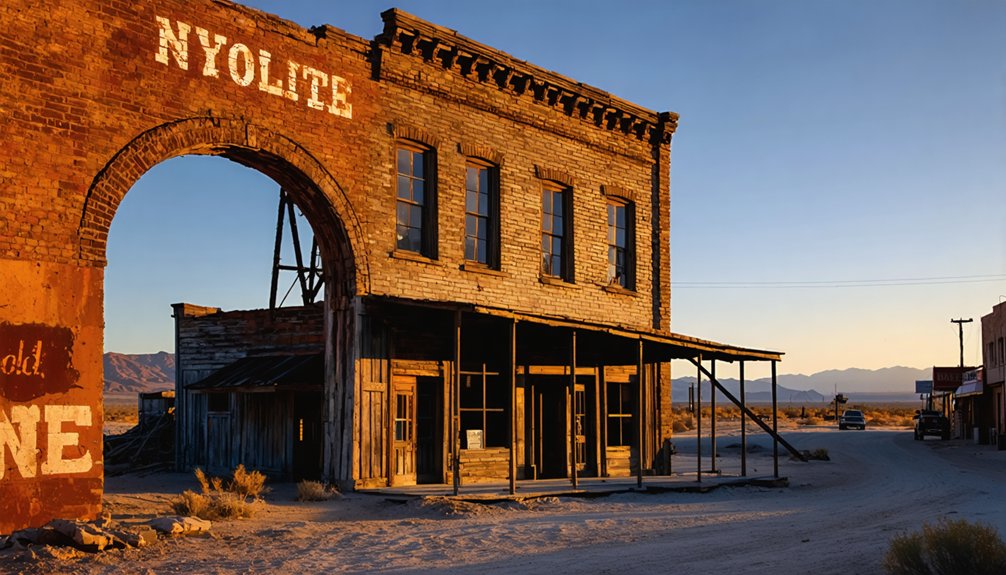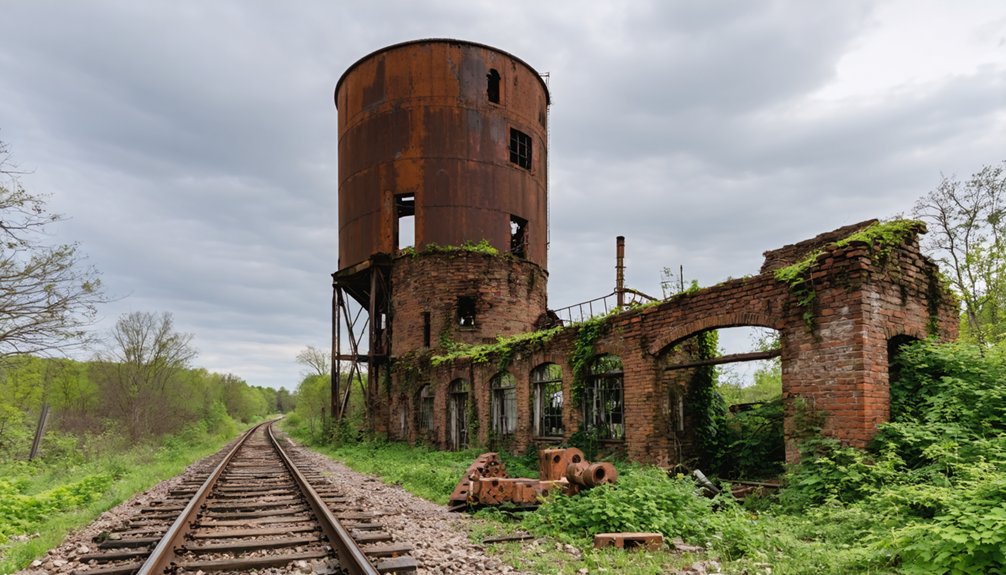
You’ll find deteriorating furnace buildings, rusted rail lines, and toxic landscapes in abandoned smelting towns across America. These sites contain weathered brick warehouses, machine shops, and worker housing that tell stories of industrial prosperity. While nature gradually reclaims these spaces, dangerous environmental legacies persist through contaminated soil, poisoned groundwater, and compromised ecosystems. The complex intersection of cultural heritage and environmental devastation reveals deeper truths about America’s industrial past.
Key Takeaways
- Deteriorated furnace buildings, rusted rail lines, and industrial brick structures remain as physical evidence of former smelting operations.
- Toxic contamination persists in soil and water systems, with heavy metals affecting groundwater and creating long-term environmental hazards.
- Worker housing communities and residential structures stand abandoned, reflecting the former connection between industry and local populations.
- Historical artifacts like blue hematite rocks and slag heaps scatter the landscape, while nature gradually reclaims industrial spaces.
- Cultural heritage sites transformed into tourist attractions preserve industrial history through educational programs and guided tours.
The Ghost Towns Left Behind: A Historical Perspective
While the American West’s mining legacy often takes center stage, the smelting towns that processed its mineral wealth tell an equally compelling story of boom-and-bust industrialization.
You’ll find these ghost town dynamics particularly evident in places like Vulture City, Arizona, where a population of 5,000 once thrived around massive ore processing operations.
The historical narratives of these towns reveal a pattern: rapid growth fueled by mineral wealth, followed by eventual abandonment.
You can trace their rise through the establishment of crucial infrastructure – towering smelter stacks, worker housing, and commercial districts.
Some of these sites became Superfund locations due to decades of environmental contamination from unregulated smelting operations.
When ore quality declined or government policies shifted, these communities faced swift decline.
The Vulture Mine produced an estimated 340,000 ounces of gold before its operations ceased.
World War II’s resource redirections dealt the final blow to many operations, leaving behind only skeletal reminders of their industrial past.
Environmental Scars and Toxic Legacies
The devastating environmental legacy of abandoned smelting operations extends far beyond their crumbling infrastructure, leaving behind a complex web of ecological destruction.
You’ll find toxic legacies in every natural system – from sinkholes that’ve swallowed the landscape to soils laced with lethal heavy metals. These environmental scars run deep, as acid mine drainage poisons watersheds up to 90 miles downstream, while toxic slag heaps render surrounding land barren and lifeless. Records show that abandoned mine sites number in the millions worldwide, with many still undocumented.
The impact isn’t static – it’s actively spreading. Contaminated groundwater continues to seep outward, while airborne pollutants drift for miles. The Northport region saw 13 million tons of slag dumped into the Columbia River over a century of smelting operations.
Toxic remnants refuse to stay buried, as poison plumes steadily expand their reach through water and air.
Wildlife populations face devastating biomagnification effects, with some aquatic species suffering 80% mortality rates near contamination zones. Without proper containment, these abandoned sites keep leaching poisons decades after their closure, creating an ever-expanding zone of environmental devastation.
Cultural Heritage and Community Memory
Despite their toxic environmental legacy, abandoned smelting towns harbor rich cultural heritage that transcends physical decay. You’ll find preserved smelter stacks, historic structures, and industrial remnants serving as physical evidence to America’s industrial past.
These sites strengthen community identity through shared memories and cultural narratives that connect generations. Similar to the success of Beckley Exhibition Mine, these industrial sites often become vital historical attractions. Local historians play a crucial role in documenting and preserving these industrial landscapes.
Walking through these preserved landscapes, you’ll discover museums and historic parks where guided tours reveal stories of labor, technology, and daily life. The close-knit communities that remain often transform these spaces into vibrant cultural hubs or artist colonies, demonstrating remarkable resilience.
Through oral histories and community-driven preservation efforts, you’re witnessing how these towns maintain their authentic character while resisting erasure. Their cultural landscapes offer invaluable educational opportunities, helping you understand the complex interplay between industry, society, and human adaptation.
The ghost towns of textile mills serve as poignant reminders of a bygone era, where innovation and labor once thrived. As you explore these remnants, you can appreciate the stories embedded in the crumbling facades and rusting machinery, each telling a tale of resilience and transformation. Mindfully engaging with these sites encourages a deeper reflection on the intersection of progress and preservation.
Physical Remnants of the Industrial Age
Physical evidence of America’s industrial might stands frozen in time across abandoned smelting landscapes.
You’ll find deteriorated furnace buildings reduced to their foundations, alongside rusted rail lines that once transported essential materials. The industrial architecture reveals itself through surviving brick warehouses and machine shops, distinguished by their high ceilings and arched windows.
As you explore these sites, you’ll encounter historical artifacts scattered throughout: blue hematite rocks from iron processing, abandoned slag heaps, and remnants of smelting equipment. During the Victorian era, these facilities were filled with coal smoke and steam, much like Philadelphia’s industrial waterfront.
Nature’s slow reclamation of these spaces is evident in forest growth overtaking old infrastructure, while shallow ponds and limestone cliffs mark former extraction sites. Visitors can still explore two iron furnaces that remain visible today in the region.
Worker housing still stands nearby, some renovated but many succumbing to decay, evidence of the intimate connection between industry and community.
Economic Impact on Local Communities
Once thriving mining operations cease, smelting towns experience devastating economic impacts that ripple through their communities.
You’ll witness the rapid collapse of local businesses, from general stores to service providers, as miners and their families leave in search of new opportunities. Without economic diversification, these towns often spiral into decline, with unemployment rates soaring and property values plummeting.
The loss of tax revenue cripples local governments’ ability to maintain infrastructure and provide essential services.
While some communities attempt to build community resilience through alternative industries like renewable energy or tourism, many struggle due to their remote locations and damaged economic foundations.
The workforce skills gap and exodus of younger residents further complicate efforts to attract new businesses, leaving these once-prosperous towns fighting for survival.
Health Consequences and Public Safety
If you’re living near an abandoned smelting town, you’ll face serious health risks from long-term lead exposure, with blood lead levels in children reaching up to three times the national average.
You’ll find that contaminated water sources compound these risks, as toxic metals from old smelting operations leach into groundwater and surface water systems.
Your risk increases further through multiple exposure pathways, including contaminated soil dust, compromised drinking water, and affected local food sources. Exposure can cause devastating neurological damage and anemia, particularly affecting children’s development and cognitive function. Studies reveal that weathered lead particles in urban areas pose an even greater danger due to their higher bioavailability compared to unaltered lead compounds.
Long-Term Lead Exposure
Long-term lead exposure poses severe neurotoxic threats to human health, with blood lead levels (BLLs) as low as 10 µg/dL causing significant cognitive impairment in adults.
You’ll face devastating neurotoxic effects that can permanently damage your brain’s prefrontal cortex, leading to cognitive decline and irreversible neurological impairment. The public health implications are staggering, as lead poisoning affects multiple body systems simultaneously.
- Your brain tissue suffers permanent volume reduction, particularly in areas controlling executive functions.
- Lead crosses your blood-brain barrier, causing cerebral edema and encephalopathy.
- Your cardiovascular system deteriorates, increasing risks of high blood pressure and stroke.
- Your kidneys develop interstitial fibrosis, progressively losing function over decades.
Even low-level exposure can reduce your IQ, impair attention span, and trigger behavioral problems that persist throughout life.
Contaminated Water Sources
Three major contaminants – cadmium, zinc, and lead – routinely poison groundwater and surface waters surrounding abandoned smelting towns.
These heavy metals infiltrate aquifers and reservoirs, threatening drinking water for millions. You’ll find these toxins bioaccumulating in fish, livestock, and local food chains, creating a deadly cycle of exposure.
The water quality impacts are severe and long-lasting. If you’re living near these sites, you’re facing potential kidney damage, developmental delays in children, and increased cancer risks from chronic exposure.
Natural cleanup isn’t enough – contaminated aquifers require decades of treatment. Many residents must rely on bottled water or municipal supplies as their groundwater remains toxic.
Even after 60 years, some communities can’t safely use their local water sources due to persistent heavy metal contamination.
Preservation Efforts and Tourism Potential

While many abandoned smelting towns faced severe environmental degradation, preservation efforts have transformed these sites into valuable cultural and ecological assets.
Through heritage preservation initiatives and community engagement, you’ll find these historic locations now serve as compelling destinations that generate economic revitalization through tourism development.
Heritage sites transform into vibrant tourist destinations, reviving local economies through thoughtful preservation and strong community support.
- Multi-agency collaborations have secured over $20 million for restoring natural resources and converting degraded lands into public spaces.
- Heritage tourism programs preserve cultural identity while attracting visitors through educational tours and interpretive experiences.
- Local stakeholders, historians, and architects drive preservation planning through dedicated funding mechanisms and volunteer networks.
- Adaptive reuse strategies transform former industrial sites into renewable energy facilities, recreational areas, and mixed-use developments that benefit surrounding communities.
Social Transformation and Population Shifts
As smelting operations ceased across mining regions, communities experienced profound demographic and socioeconomic upheaval that reshaped their fundamental character.
You’ll find that working-age adults typically left first, seeking employment elsewhere, while elderly residents often remained behind. This created a significant demographic shift that weakened community resilience and social structures.
The impact extends beyond mere population numbers. When mining jobs disappeared, you’d see local businesses and essential services follow suit, triggering a domino effect of economic decline.
Social networks unraveled as families dispersed, and community organizations struggled to maintain their presence. Without proper change planning, these towns faced increasing inequality and social strain, particularly affecting vulnerable groups who couldn’t easily relocate.
The resulting isolation and population loss have permanently altered these once-vibrant communities.
Environmental Justice and Remediation Progress
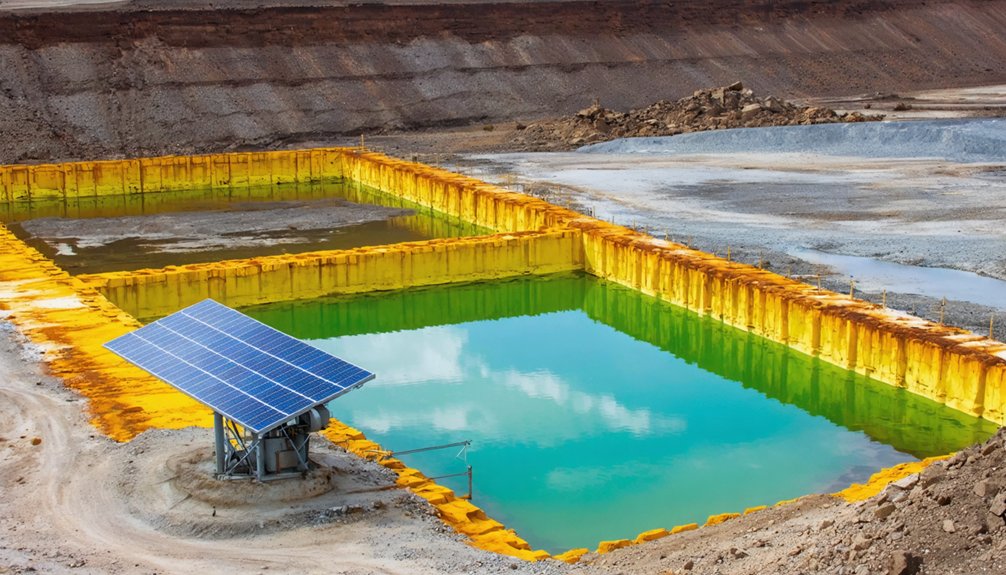
You’ll find persistent health impact zones in abandoned smelting communities where soil and groundwater contamination continue to affect residents living near former industrial sites.
Community-led cleanup initiatives have emerged as essential forces in pushing for thorough remediation, with local advocacy groups partnering alongside environmental agencies to monitor progress and guarantee accountability.
Federal enforcement patterns reveal uneven attention to these sites across regions, though recent environmental justice policies have begun addressing historical inequities in cleanup prioritization and resource allocation.
Ongoing Health Impact Zones
Despite decades of smelter closures, former smelting towns continue to grapple with severe environmental health challenges that disproportionately affect vulnerable populations.
You’ll find persistent health risks across these communities, where soil lead levels exceed 200 mg/kg and blood lead levels in children remain alarmingly high. Community resilience is tested as residents face ongoing exposure through contaminated soil, air, and dust.
- Children near abandoned sites show blood lead levels twice the national average
- Cancer mortality and autoimmune disease clusters correlate with smelter proximity
- Thyroid disorders affect 36% of surveyed residents versus 6% in general population
- Low-income and minority neighborhoods bear heaviest contamination burden
The evidence is clear: these towns aren’t just historical artifacts – they’re active zones of environmental health concern requiring immediate intervention and sustained monitoring.
Community-Led Cleanup Efforts
Through coordinated federal, state, and community partnerships, abandoned smelting towns are witnessing unprecedented cleanup initiatives backed by $11.3 billion in infrastructure funding.
You’ll find strategic cleanup strategies prioritizing watersheds and addressing toxic sites that have plagued communities for generations.
Multi-agency collaborations, including the Animas River Stakeholders Group, have demonstrated remarkable success, completing 50 mining remediation projects and restoring native trout populations.
These community partnerships extend beyond government agencies, incorporating mining companies and volunteer groups to tackle contaminated waste rock and acid drainage containing hazardous metals.
You’re seeing tangible results: improved water quality, revived ecosystems, and new recreational opportunities.
The combination of federal investment, industry expertise, and local commitment is transforming these legacy sites, particularly benefiting rural and tribal regions most impacted by industrial contamination.
Government Enforcement Patterns
While federal and state agencies have historically struggled with coordinated enforcement of environmental regulations, recent patterns show increasingly effective oversight of abandoned smelting sites through multi-agency collaboration.
You’ll find today’s enforcement mechanisms include robust regulatory frameworks that protect both environmental and public health interests.
- EPA initiates early regulatory decisions, establishing clear cleanup guidelines through consent decrees and legally binding plans
- Multi-agency partnerships between federal, state, and local authorities guarantee thorough site remediation
- Superfund settlements from responsible parties provide dedicated funding streams for long-term cleanup efforts
- Community engagement through public meetings and workshops helps balance redevelopment goals with contamination management
These enforcement patterns demonstrate a shift toward more accountable, transparent, and effective remediation processes that protect your community’s future while addressing historical environmental damage.
Frequently Asked Questions
How Long Does It Typically Take for Nature to Reclaim Abandoned Smelting Sites?
You’ll see nature’s reclamation take 50-100+ years for basic ecosystem recovery, though environmental impact from heavy metals can extend this process to several centuries in severely contaminated sites.
What Role Did Women Play in the Operation of Smelting Towns?
You’d be foolish to underestimate women workers – they ran households, organized strikes, managed social welfare, and maintained community roles while taking industrial jobs during WWII and entrepreneurial positions thereafter.
Were There Successful Attempts to Rebuild Smelting Towns Into Modern Communities?
You’ll find numerous successful revitalization efforts, where former smelting towns transformed through heritage tourism, outdoor recreation, and community engagement, as seen in Durango, Leadville, and Butte’s thriving modern economies.
How Did Indigenous Communities Interact With Newly Established Smelting Operations?
You’ll find Indigenous communities engaged in complex cultural exchanges with smelting operations, leveraging traditional resource management expertise while maneuvering colonial power dynamics that often led to exploitation of their lands.
What Happened to the Machinery and Equipment After Smelting Towns Closed?
With over 80% of heavy machinery recycled, you’ll find most equipment was dismantled and sold. When removal costs exceeded value, the remaining machinery deteriorated on-site, leaving rusted remnants of industrial preservation.
References
- https://vulturecityghosttown.com/blog/abandoned-america/
- https://www.tshaonline.org/handbook/entries/smeltertown-tx
- https://response.restoration.noaa.gov/about/media/pennsylvania-mining-town-moves-beyond-toxic-history-denuded-mountains-and-contaminated-c
- https://jasontdunn.com/files/ghost_towns_big_cities.pdf
- https://apps.ecology.wa.gov/cleanupsearch/document/67060
- https://coloradogeologicalsurvey.org/minerals/historic-mining-districts/
- https://www.epa.gov/superfund/abandoned-mine-lands-revitalization-and-reuse
- https://www.conservation.ca.gov/dmr/abandoned_mine_lands/AML_Report/Documents/volume1textonly.pdf
- https://panethos.wordpress.com/2024/06/06/rediscovering-historic-smelter-towns-across-america-and-canada/
- https://en.wikipedia.org/wiki/Ghost_town