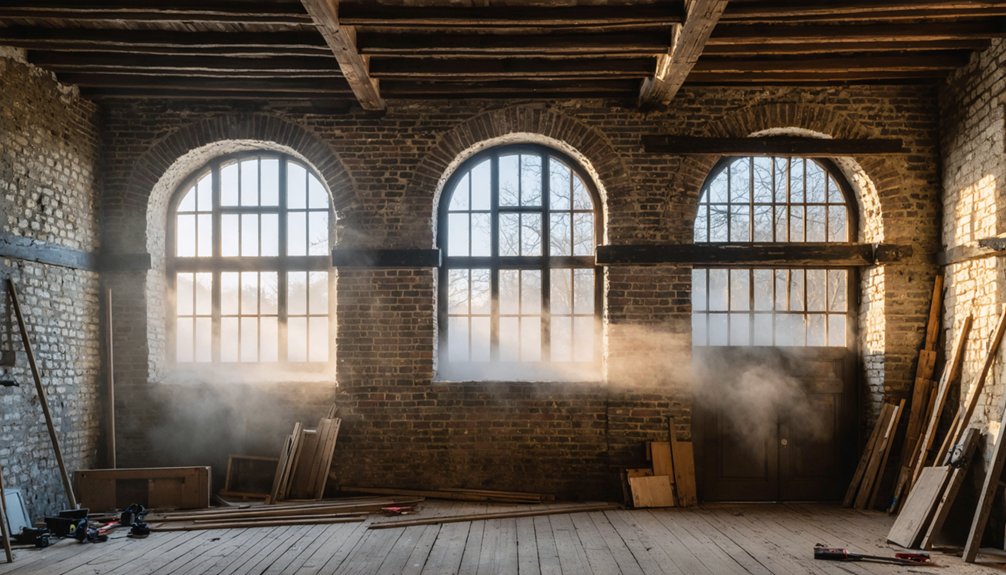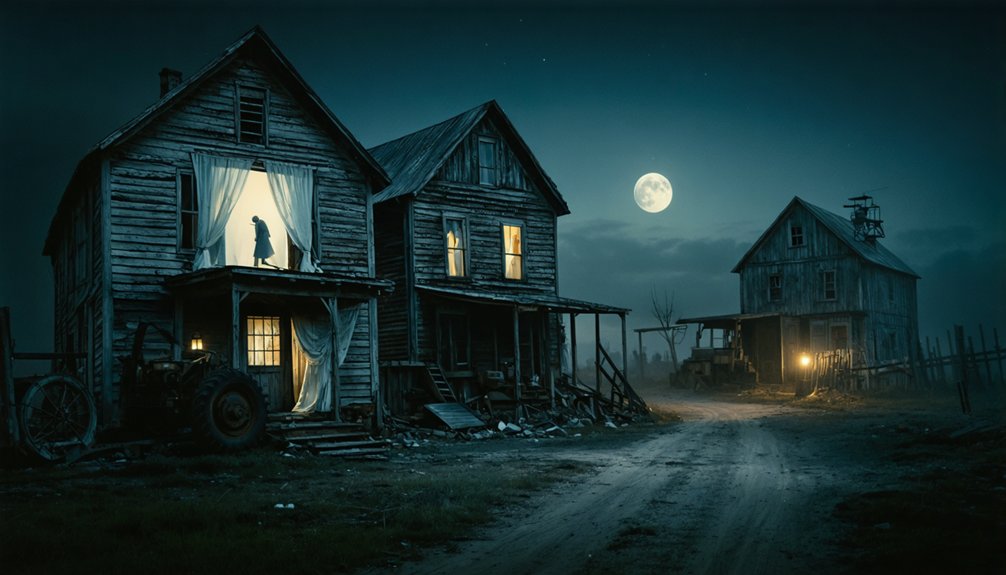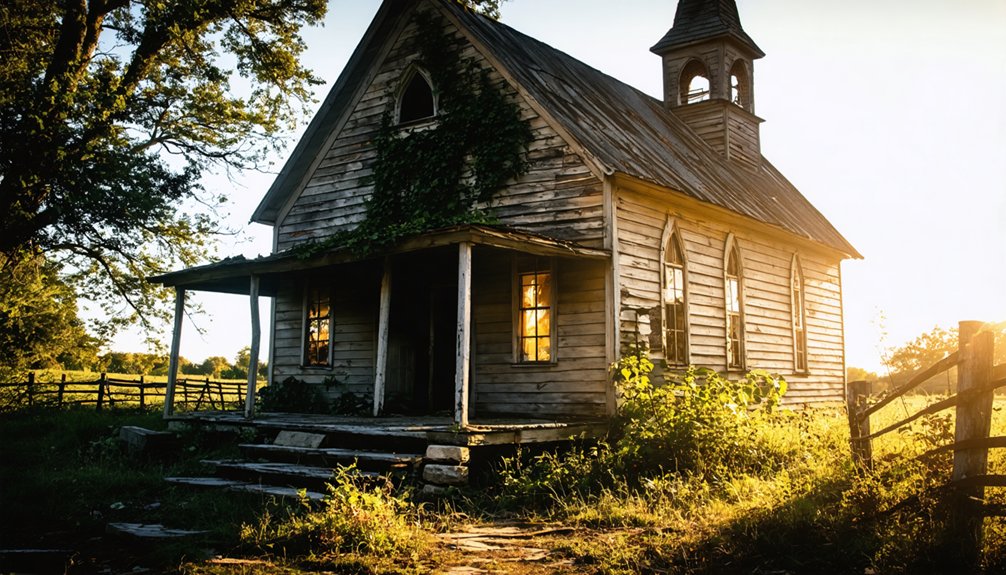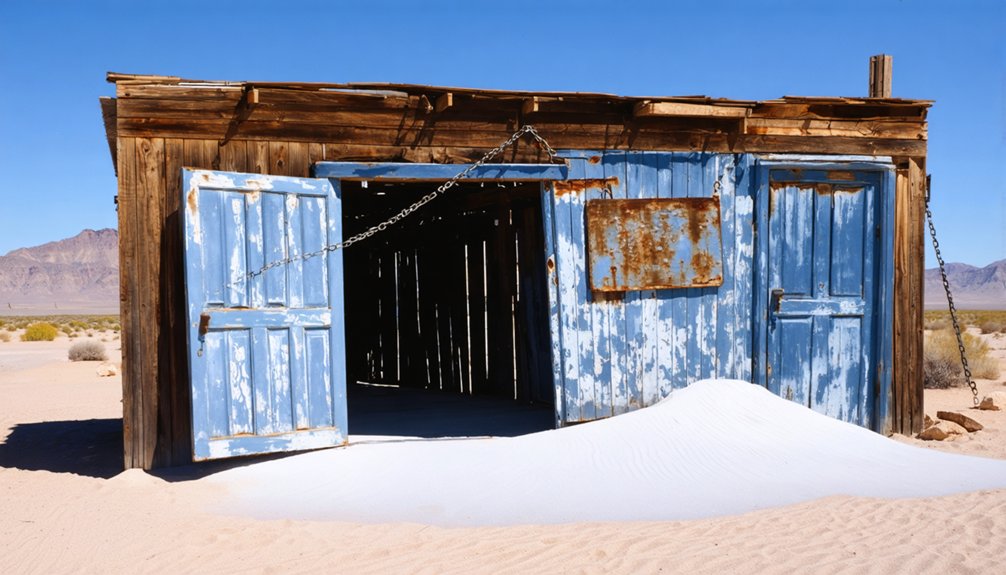
You’ll find substantial physical remnants of America’s colonial ghost towns, including stone churches, wooden structures, and scattered artifacts dating from the 16th to 18th centuries. These abandoned settlements, established by English, Spanish, and French colonists, often feature preserved religious buildings, cemeteries, and architectural elements that have withstood time. While some sites face threats from environmental factors and vandalism, preservation efforts through state programs and historical societies help protect these tangible links to early American settlement.
Key Takeaways
- Religious buildings, particularly Gothic Revival churches built from stone and timber, remain among the most well-preserved colonial structures.
- Over 110 original buildings persist in ghost towns like Bodie, California, including hotels, saloons, and other frontier-era structures.
- Mining equipment, ore carts, and processing facilities show industrial heritage through rusting remnants and preserved foundations.
- Cemeteries adjacent to colonial churches preserve townspeople’s legacies and serve as historical documentation of early settlements.
- Archaeological remains and building foundations provide evidence of intended permanent settlement from the 16th to 18th centuries.
Defining America’s Lost Colonial Settlements
While modern ghost towns often evoke images of abandoned mining camps and railroad stops from the Old West, America’s colonial ghost towns represent a distinct and earlier chapter in the nation’s settlement history.
These lost settlements date from the 16th to 18th centuries, established primarily by English, Spanish, and French colonists attempting to gain footholds in North America.
European powers planted tenuous colonial roots across North America from the 1500s through the 1700s, seeking to expand their empires.
You’ll find that colonial abandonment occurred for different reasons than later ghost towns – conflict with Indigenous peoples, disease outbreaks, and failed supply lines from Europe often spelled doom for these early ventures. Poor relations between colonists and native tribes, plus severe food shortages, led to many settlements failing.
The famous Roanoke Colony disappearance in 1587 became America’s first colonial ghost town when 116 settlers vanished without a trace, leaving only the mysterious word “CROATOAN” carved into a tree.
To qualify as a lost colonial settlement, sites must show evidence of intended permanence through physical remains or historical documentation, with their population having vanished or relocated during the colonial period.
Unlike their 19th-century counterparts, these sites typically preserve only archaeological traces rather than standing structures.
Common Structures That Still Stand Today
Around 110 buildings from the old West can still be spotted in Bodie, California, an abandoned mining settlement established in 1859. These structures were preserved in their original state as State Historic Park for future generations to explore.
Preserved Hotels and Saloons
Among the most enduring relics of America’s colonial ghost towns, hotels and saloons stand as evidence to the bustling communities that once thrived during the nation’s westward expansion.
You’ll find these structures were often built with superior materials and craftsmanship, as they served as essential social and economic hubs along major mining and transportation routes. Many historic hotels, like The Menger Hotel in San Antonio, feature ghostly encounters reported by guests and staff since their founding days.
Ghost town tourism today benefits from the preservation of iconic saloon architecture, with sites like Bodie, California, and Virginia City, Nevada, showcasing remarkably intact interiors complete with original fixtures and artifacts. Visitors can explore Bodie’s 110 remaining buildings, which include historic schools, churches, and well-preserved saloons.
Many of these buildings have been carefully maintained by state agencies and historical societies, allowing you to step back in time.
In places like Garnet, Montana, you can still explore multiple preserved saloons and hotels, offering glimpses into the vibrant frontier life of the 1800s.
Original Mining Equipment Remains
Remnants of original mining equipment stand as silent sentinels across America’s colonial ghost towns, offering tangible connections to the nation’s industrial heritage.
You’ll find rusting ore carts, rail cars, and stamp mill equipment scattered throughout these historical sites, each piece telling its own story of industrial innovation. Mining artifacts like air compressors, boilers, and drilling equipment remain frozen in time, while massive conveyor systems and loading trestles tower above the landscape.
The industrial remnants extend beyond the mines themselves. You can explore the foundations of stamp mills, witness preserved crushing machinery, and examine the remnants of cyanide processing tanks. The historic adobe walls of processing facilities still stand at sites like the Amargosa Borax Works, preserving the architectural heritage of these industrial operations. The Sturd event blower from Boston remains one of the largest ventilation systems ever discovered in these abandoned mines.
Wooden headframes still pierce the sky at well-preserved locations, while hoist houses and ventilation systems remind you of the complex underground networks that once buzzed with activity.
Religious Buildings Stand Strong
Standing as enduring monuments to colonial America’s spiritual life, religious buildings represent the most prevalent surviving structures in ghost towns across the United States. You’ll find these architectural marvels constructed from durable materials like stone, brick, and heavy timber, often perched on elevated terrain that’s protected them from centuries of water damage. Like the iconic Powelton Methodist Church, these buildings stand as silent witnesses to once-thriving communities. The old buildings near Monticello, Utah include several wooden structures standing that reflect the area’s religious heritage.
Their spiritual significance extends beyond religious services, as they’ve become focal points for historical preservation and community memory.
- Gothic Revival churches with steep-pitched roofs and raised foundations demonstrate remarkable architectural resilience
- Adjacent cemeteries preserve the legacy of original townspeople even after other structures have vanished
- Local historical societies prioritize church preservation as tangible links to colonial heritage
- Many buildings now serve as interpretive centers, housing exhibits that tell their town’s story
Preservation Efforts and Historical Protection
You’ll find that most colonial ghost towns receive protection through state-level historical programs, which provide essential funding and oversight for structural preservation and site management.
These programs typically work in conjunction with local historical societies to maintain authentic period features while allowing controlled public access for educational purposes.
Community restoration projects further supplement state efforts through volunteer labor, fundraising initiatives, and partnerships with preservation organizations to guarantee these invaluable historical sites endure for future generations.
State Protection Programs
State and federal programs play essential roles in protecting America’s colonial ghost towns through three main channels: preservation funding, site recognition initiatives, and digital documentation efforts.
You’ll find state grants and preservation funds managed by organizations like the Ghost Town Club of Colorado, which directs 100% of donations to qualified nonprofit projects. The Save America’s Treasures program and National Endowment for the Humanities provide vital federal support for stabilization and interpretation of significant historical sites.
- State Historic Preservation Offices administer targeted grants for restoration and documentation
- Preserve America Communities program recognizes over 900 locations protecting historic assets
- Digital preservation technologies create detailed 3D records of vulnerable structures
- Local historical societies collaborate with state programs for critical repairs and maintenance
Community Restoration Projects
Across America’s colonial ghost towns, community-driven restoration projects have emerged as essential forces in preserving historical structures and cultural heritage.
You’ll find organizations like the Ghost Town Club of Colorado leading vital preservation efforts through local collaboration, utilizing advanced technologies like drone mapping to create 3D digital twins of endangered structures. These digital models guide precise restoration work and architectural documentation.
Community engagement manifests through diverse initiatives, from the East Hampton Town’s cemetery revival projects to nonprofit partnerships funding structural stabilization.
You’ll see this grassroots approach in action at sites like Cerro Gordo, where private owners work alongside volunteers to rehabilitate historic buildings.
Through coordinated efforts between historical societies, preservation groups, and dedicated community members, these forgotten places are finding new life while maintaining their authentic colonial character.
Cultural Impact on Modern American Identity
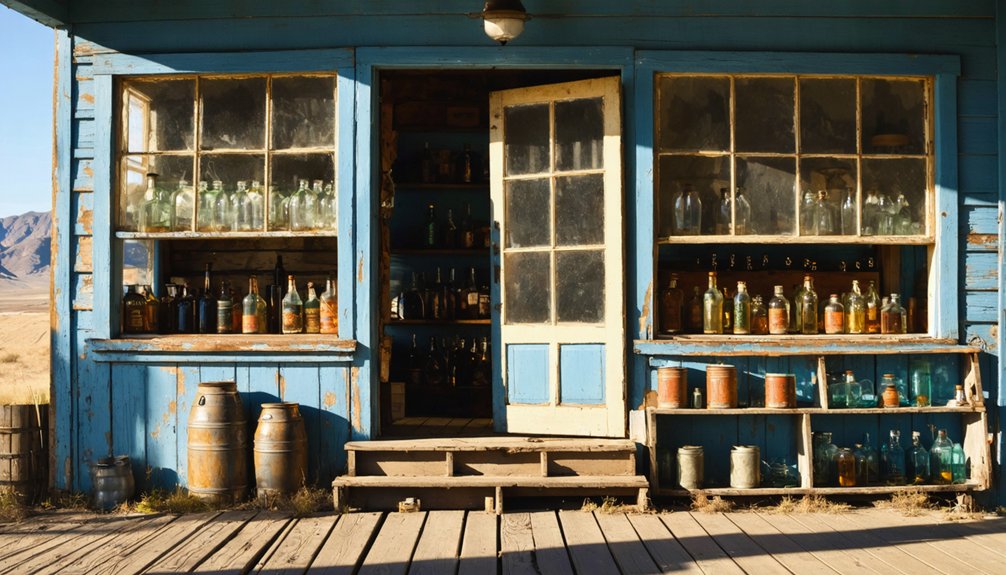
While colonial ghost towns may appear as mere relics of America’s past, their profound influence on modern American identity extends far beyond their crumbling structures.
These sites shape cultural memory through complex narratives that challenge and reinforce your understanding of national heritage. Ghost narratives from these abandoned settlements reveal deep-seated tensions around race, colonization, and the myth of American progress.
Colonial ghost towns serve as mirrors reflecting our complex national identity, exposing unresolved tensions between progress and oppression.
- They serve as physical reminders of colonial displacement and indigenous land seizure.
- Their stories expose racial hierarchies and cultural resilience among marginalized communities.
- They contribute to American frontier mythology and ideals of conquest.
- They challenge sanitized versions of history by presenting evidence of imperial failure.
Through these abandoned towns, you’ll find yourself confronting both triumphant and troubling aspects of American identity, forcing a deeper examination of how colonial legacies continue to shape modern society.
Notable Ghost Towns From the Colonial Era
The American landscape is dotted with remarkable colonial-era ghost towns that stand as evidence to the complex patterns of settlement, abandonment, and preservation in our nation’s history.
You’ll find compelling examples in Utah’s Grafton history, where Mormon pioneers established a settlement that lasted less than a decade before Native American conflicts forced abandonment.
The Iosepa significance lies in its unique status as a Hawaiian Mormon colony and rare mainland leper community, surviving nearly 50 years in Skull Valley’s harsh desert conditions.
These sites, along with mining towns like Bodie and St. Elmo, reveal how environmental challenges, economic shifts, and cultural conflicts shaped America’s westward expansion.
Today, preserved structures and maintained cemeteries serve as tangible connections to these pioneering communities.
Tourism and Heritage Site Management
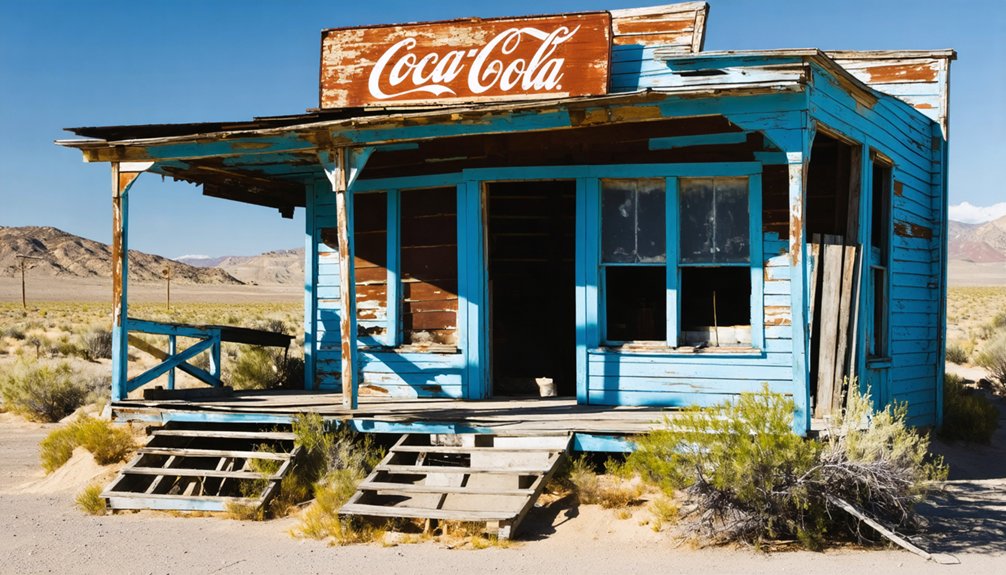
Modern heritage tourism has transformed colonial ghost towns from forgotten relics into vibrant cultural destinations that generate substantial economic value for surrounding communities.
Through carefully managed visitor education programs and preservation efforts, you’ll find these historic sites striking a delicate balance between accessibility and conservation.
State parks and national monuments now protect many ghost towns, implementing “arrested decay” practices to maintain authenticity while ensuring public safety.
- Interactive exhibits and living history demonstrations bring colonial life vividly to your experience
- Digital tools like augmented reality apps enhance your immersion in historical narratives
- Guided tours and educational programs provide deep insights into colonial-era culture
- Revenue from tourism supports ongoing preservation and local economic development
The successful management of these heritage tourism sites relies on collaboration between historians, archaeologists, and tourism professionals to deliver authentic, engaging experiences while protecting these irreplaceable historical treasures.
Archaeological Findings and Historical Records
Archaeological investigations and historical documentation reveal fascinating evidence of colonial life through tangible artifacts and written records from America’s abandoned settlements.
Through advanced archaeological methods like ground-penetrating radar and systematic excavations, you’ll find compelling evidence of cultural mixing between European settlers and Native Americans. The discoveries include 16th-century weapons, Border Ware ceramics, and European metals alongside indigenous pottery and artifacts.
Historical interpretation of these findings suggests complex relationships rather than simple trade interactions. You can trace evidence of colonial persistence through artifacts like the carved “CROATOAN” message and English pottery dated post-1655.
Sites like “Site X” and Bertie County demonstrate how settlers may have relocated and integrated with indigenous communities, challenging traditional narratives of the colonies’ mysterious disappearances.
Threats to Remaining Colonial Ghost Towns
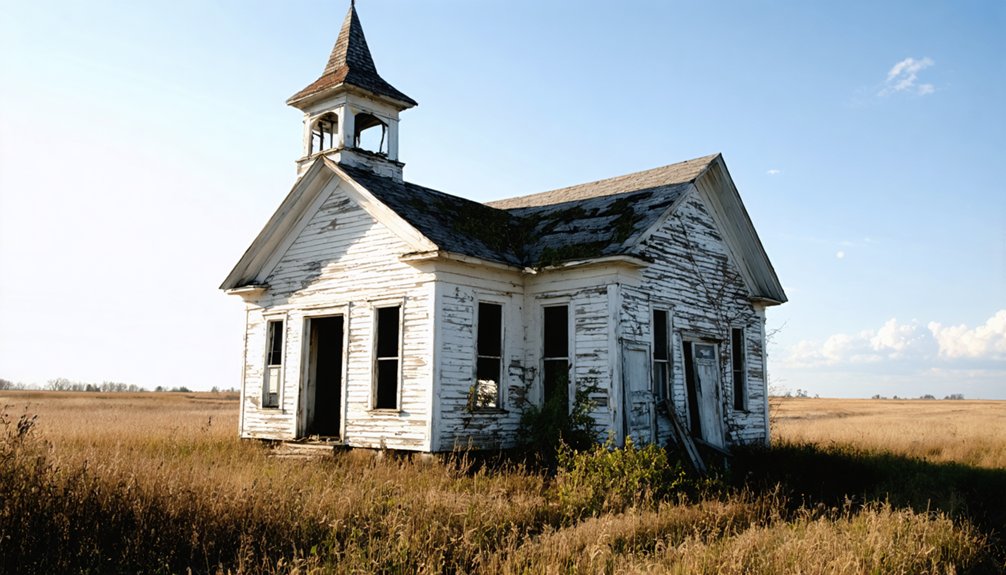
Deteriorating rapidly under multiple threats, America’s remaining colonial ghost towns face unprecedented challenges from environmental contamination, natural disasters, economic decline, and human negligence.
You’ll find these historic sites battling against toxic contamination from past industrial activities, while natural forces steadily erode what’s left of their structural integrity.
Economic decline has stripped away resources needed for preservation, leaving these irreplaceable landmarks vulnerable to both environmental hazards and human vandalism.
- Groundwater contamination and toxic substances make many sites unsafe for preservation efforts
- Flooding, erosion, and severe weather continuously damage remaining structures
- Limited funding due to economic decline prevents proper maintenance and security
- Vandalism and artifact theft accelerate the loss of historical evidence
Frequently Asked Questions
How Did Indigenous Populations Interact With Abandoned Colonial Settlements?
You’ll find Indigenous populations adapted abandoned colonial settlements for shelter, ceremonies, and resource gathering, while fostering cultural exchanges through trade and meetings between tribes and remaining settlers.
As you explore these interactions, the beauty of coastal village charm in America becomes evident, showcasing colorful homes and vibrant community life. Each corner tells a story, blending the past with the present and highlighting the resilience of the people who call these villages home. This unique atmosphere invites visitors to immerse themselves in the rich history and cultural heritage that define the coastal landscape.
What Personal Artifacts Are Most Commonly Found in Colonial Ghost Towns?
While some personal relics have deteriorated, you’ll commonly find metal items like buckles, buttons, coins, and pocket watches, plus clay pipes and jewelry – all bearing profound historical significance for colonial life.
Can Visitors Take Home Small Artifacts Found at Colonial Ghost Towns?
You can’t legally remove artifacts from colonial ghost towns – it violates preservation laws and site regulations. Instead, document your finds through photos while helping protect these irreplaceable historical treasures for future generations.
Were Any Colonial Ghost Towns Later Reoccupied by Different Settler Groups?
You’ll find numerous cases of settler resettlement where ghost towns gained new life, as different groups reoccupied sites of historical significance based on strategic locations, economic opportunities, or changing social conditions.
How Accurate Are Colonial Ghost Town Locations on Modern Maps?
You’ll find ghost town accuracy varies considerably on modern maps, with well-documented sites precisely located through mapping technology, while lesser-known colonial settlements often have approximate coordinates requiring verification.
References
- https://albiongould.com/ghost-towns-to-visit-in-the-states/
- https://www.christywanders.com/2024/08/top-ghost-towns-for-history-buffs.html
- https://devblog.batchgeo.com/ghost-towns/
- https://nightofthejack.com/2025/01/23/top-creepy-ghost-towns-in-america/
- https://www.geotab.com/ghost-towns/
- https://whakestudios.com/us-ghost-towns/
- https://en.wikipedia.org/wiki/Lists_of_ghost_towns_in_the_United_States
- https://freepages.history.rootsweb.com/~gtusa/usa.htm
- https://www.youtube.com/watch?v=F6-_DPPPjt4
- https://kenyonreview.org/kr-online-issue/2018-julyaug/selections/nell-boeschenstein-656342/