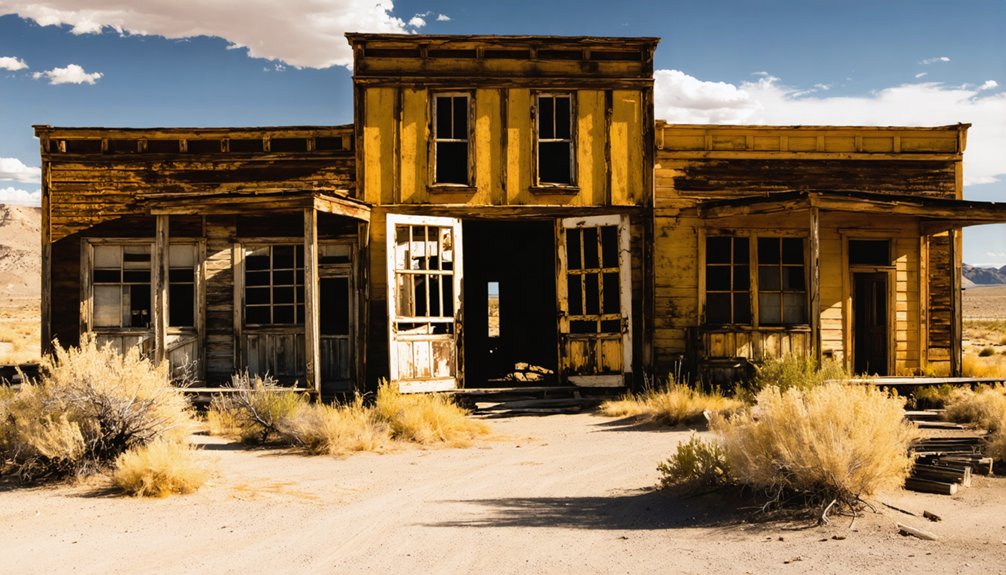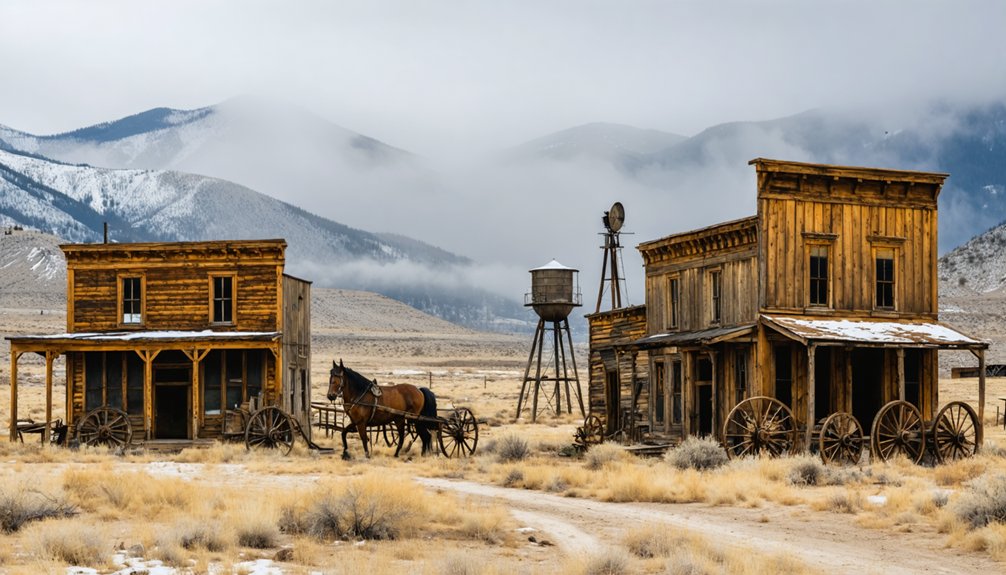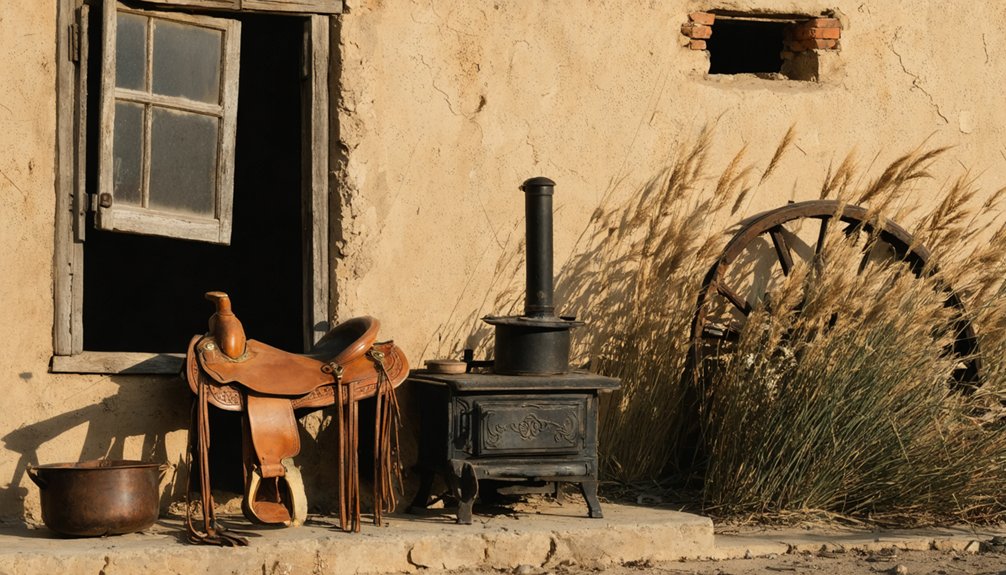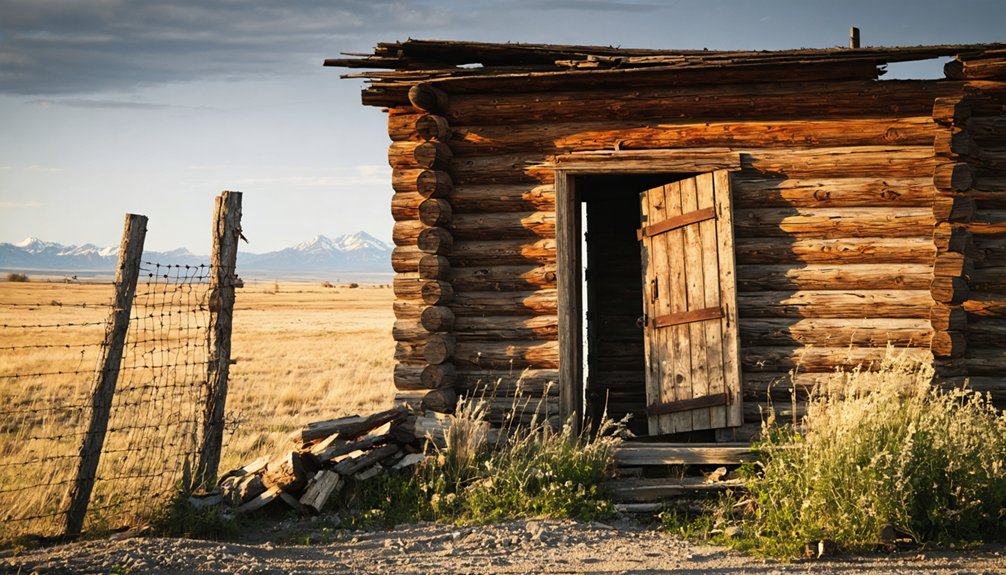
You’ll find roughly 3,500 surviving Old West homesteads and commercial buildings across America’s frontier regions today, representing just 7% of the original structures from the 1800s settlement period. These remnants include iconic false-front architecture, working corrals, and log cabins built with sophisticated construction techniques. While urban expansion threatens many sites, dedicated preservation efforts protect these physical connections to frontier life. The stories these structures tell about America’s past are waiting to be discovered.
Key Takeaways
- Approximately 3,500 false-front buildings survive today, featuring ornate facades that created an illusion of grandeur in frontier towns.
- Original barns and working corrals from the 1800s remain functional, built with durable materials like river cobble and native stone.
- Log cabin structures persist with their stone foundations, skilled construction techniques, and effective chinking methods for insulation.
- Archaeological sites reveal domestic items, tools, and structural remains that provide detailed insights into 19th-century frontier life.
- Many homestead structures are now protected as historical landmarks, though urban expansion and agricultural mechanization threaten their preservation.
Iconic False Front Architecture of the Frontier
While many architectural styles defined America’s western expansion, false front architecture emerged as one of the most distinctive features of frontier commercial buildings between 1880 and 1910.
You’ll recognize these structures by their imposing facades that rise above the actual roofline, creating an illusion of grandeur that masked simpler structures behind them. This frontier aesthetic wasn’t just about appearances – it represented the ambitious spirit of western merchants who wanted their establishments to rival those in established eastern cities.
The false fronts typically featured ornate details like cornices, medallions, and Greek columns, often crafted from cast iron or stamped metal. Vernacular Architecture Forum scholars have extensively documented these architectural elements as vital components of frontier commercial design. Of the estimated 50,000 facades constructed during this period, only about 3,500 survive today.
You’ll find these architectural symbols of frontier optimism scattered across towns west of the Mississippi, where they served as powerful statements of permanence and prosperity in rapidly growing communities.
Surviving Buildings and Their Common Features
If you’re exploring surviving Old West buildings today, you’ll notice that log cabin construction remains one of the most prevalent architectural forms, with carefully milled wood joints and durable stone foundations still intact after more than a century.
The iconic false front design, while less commonly preserved, features tall facade extensions that made modest frontier buildings appear larger and more established from the street view. Early settlers often used crude huts as temporary shelters before constructing more permanent structures. Drawing inspiration from early American construction techniques, some homesteads incorporated stone masonry similar to the Henry Whitfield House built in 1639.
These architectural elements reflect both the practical needs of frontier construction and the ambitious spirit of early Western settlements, with many surviving examples now protected as historical landmarks.
False Front Design Features
False front architecture stands as one of the most recognizable features of surviving Old West commercial buildings, characterized by façades that extend vertically above the actual roofline.
These false front aesthetics served a practical purpose: you’ll find that merchants used them to create an illusion of size and prosperity, masking simple gable roofs behind elaborate facades that mimicked eastern city architecture.
Even when buildings transitioned to more permanent materials, boomtown facades remained a popular design choice.
The architectural symbolism went beyond mere appearances. Between 1900 and 1910, many false fronts appeared in Bend, Oregon, reflecting the town’s rapid commercial growth.
You’ll notice that builders used higher-quality materials and ornate decorations on the street-facing walls, including brackets, cornices, and stylized trim work.
While the underlying structures were often modest and quickly built, these false fronts created a unified, sophisticated look that helped transform rough frontier towns into respectable-looking commercial centers, projecting success and permanence to potential customers.
Log Cabin Construction Elements
The fundamental elements of surviving Old West log cabins reveal sophisticated construction methods that guaranteed longevity.
You’ll find elevated stone or brick piers supporting sill logs, an essential design that prevented ground moisture from rotting the foundation. Builders carefully selected log species like white oak, chestnut, and cedar for their natural rot resistance and durability.
In examining these structures, you’ll notice skilled construction techniques, particularly in the walls where hewn logs with half-dovetail notching created tight, stable corners. Most surviving cabins were intentionally positioned to face toward the south for maximum sunlight exposure throughout the day. The rustic architecture draws from Scandinavian origins, with construction methods dating back thousands of years.
The chinking techniques employed multiple layers – soft materials like moss or straw packed between logs, sealed with durable daubing mixtures of clay, lime, or mud.
These time-tested methods have allowed many cabins to withstand decades of harsh weather, demonstrating the builders’ practical understanding of material properties and environmental challenges.
Historic Ranch Structures Still Standing
When you explore historic ranch sites across the American West, you’ll notice that barns are among the most resilient structures, with many original timber-frame and stone examples still serving their intended purposes after more than a century.
You’ll find working corrals built from native stone and timber that continue to handle livestock, particularly in places like the Questad Farm in Texas and McGraw Ranch in Wyoming where multiple original outbuildings survive. The Questad Farm showcases remarkable dry-stack stone walls that represent some of the longest intact examples in Texas.
The durability of these essential ranch structures stems from their robust construction using local materials like river cobble, basalt, and native logs, combined with practical designs that have proven their worth through generations of use. One remarkable example is the river cobble cookhouse at the former Bruggemann ranch, which stands as the last remaining structure of its kind in Washington’s Hanford area.
Original Barns Endure Time
Historic barns stand out as remarkable survivors among Old West homestead structures, with many original timber-framed buildings from the late 1800s and early 1900s still dotting rural landscapes across America.
While houses and outbuildings have vanished, these enduring symbols of agricultural heritage remain the most visible reminders of frontier settlement.
The challenges facing rural oil towns often stem from economic fluctuations and dwindling resources, making it difficult for residents to maintain their livelihoods. As the oil industry evolves, these communities must adapt to new realities while preserving their unique histories and identities. Sustainable development initiatives could offer pathways to rejuvenate these towns, ensuring their stories are not forgotten.
You’ll find these surviving barns primarily on properties that have stayed in continuous agricultural use or family ownership.
However, their roles have shifted dramatically. Only 39% of Washington’s Heritage Barns maintain their original purpose, while 44% serve new functions like storage or event spaces.
Modern farming methods and equipment have made traditional barn designs obsolete, leading to widespread deterioration.
Without proper barn restoration efforts, these iconic structures face an uncertain future, though preservation programs in states like New York now offer tax incentives to save them.
Working Corrals Stand Strong
Beyond traditional barns, working corrals emerge as some of the most resilient remnants of Old West ranching operations, with many original structures still standing after more than a century of continuous use.
You’ll find these enduring landmarks built from railroad ties, barbed wire, and natural wooden posts, often supplemented with salvaged materials like guard rails and utility poles.
These corrals represent more than just fencing – they’re masterworks of practical design that facilitate efficient cattle movement through specialized pens for sorting, treatment, and shipping.
You can still see this ranching heritage preserved across the American West, from Texas to Wyoming, where working ranches maintain these historic structures.
Their durability stems from resourceful construction methods and ongoing maintenance, proving that necessity-driven engineering can withstand the test of time.
Archaeological Evidence of Settlement Life
Archaeological investigations of Old West homesteads have revealed remarkably detailed insights into 19th-century frontier life through structural remains and artifact assemblages.
Through careful artifact analysis and study of settlement patterns, you’ll find evidence of both daily routines and dramatic events that shaped frontier existence.
- You can trace the evolution of homestead structures through dry-set boulder foundations and rock cobble clusters that once supported both log cabins and pole barns.
- Everyday life emerges through scattered domestic items – from playing cards to brass curtain tie-backs – preserved beneath floors and within refuse pits.
- Evidence of self-sufficiency appears in blacksmith areas filled with tools, hardware, and repair items.
- Stories of survival and adaptation reveal themselves through butchered animal bones, harness parts, and household items brought from eastern homes during western migration.
Preservation Efforts and Modern Challenges
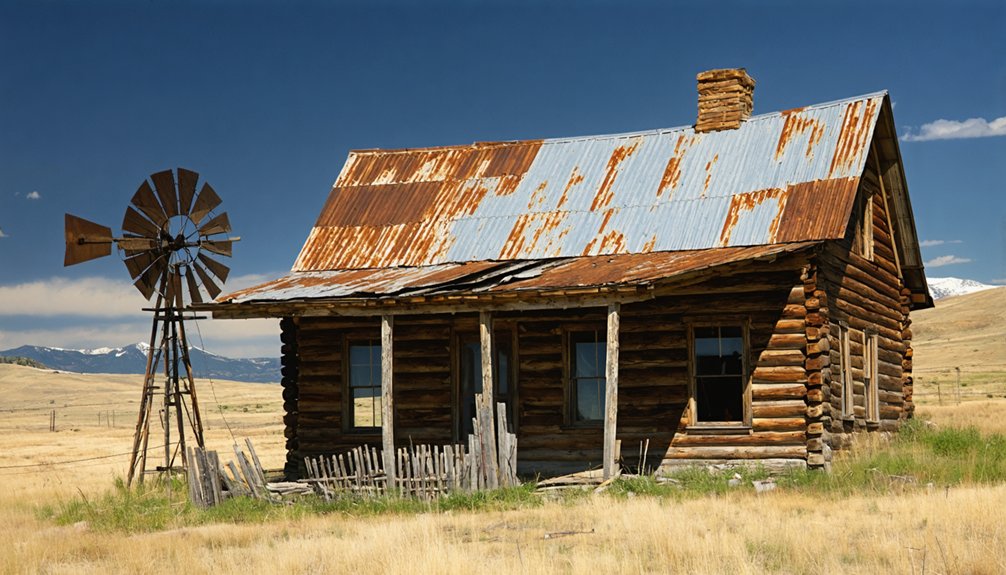
While countless original homestead structures have succumbed to time and neglect, dedicated preservation efforts now protect the remaining physical legacy of America’s frontier settlement era.
You’ll find preservation strategies ranging from the National Park Service‘s Homestead National Historical Park to extensive digitization projects that make millions of land claim files accessible online.
Modern obstacles, however, present significant challenges to these conservation efforts.
You’re seeing urban expansion increasingly threaten archaeological sites, while ambiguous land titles and private ownership complicate preservation rights.
Agricultural mechanization continues to reshape the landscape, often erasing original homestead features.
Despite these hurdles, collaboration between historical societies, academic institutions, and government organizations has expanded access to homesteading records and enhanced preservation initiatives through GIS mapping, digital archives, and targeted restoration grants.
Cultural Impact on Western Heritage
The Homestead Act of 1862 profoundly shaped America’s cultural identity, creating enduring narratives that still influence modern interpretations of Western heritage.
You’ll find these stories woven into the fabric of American mythology, from Laura Ingalls Wilder’s Little House series to countless Western films celebrating rugged individualism.
Yet, these cultural narratives often overshadow Native perspectives that view homesteading as a tool of displacement and loss of sovereignty.
Beneath the pioneer success stories lies a darker legacy of indigenous displacement and cultural erasure through systematic land redistribution.
- Family ranching traditions preserve homesteading heritage through folk stories and place-based knowledge
- Basque dendroglyphs in areas like Owens Valley chronicle generations of land relationships
- Native-led exhibits now reframe the homesteading story to include indigenous experiences
- Modern homesteading movements reinterpret these narratives, emphasizing environmental partnership over conquest
Living History: Active Homesteads Today
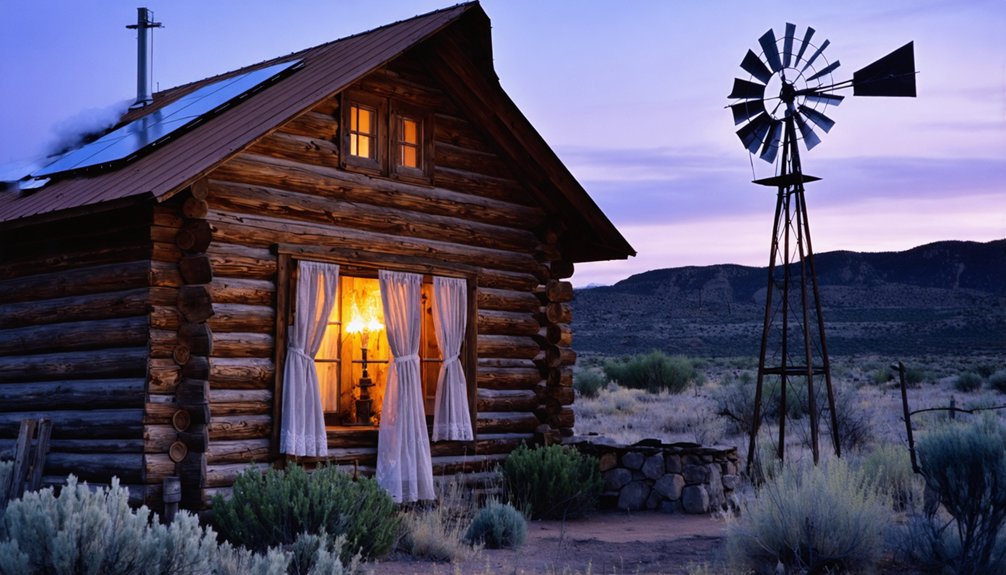
Modern homesteading practices extend far beyond nostalgic reenactments, as thousands of Americans actively embrace this lifestyle across remote regions of Montana, Wyoming, Idaho, and Alaska.
Today’s modern communities blend traditional self-sufficiency with cutting-edge technology, operating solar arrays and satellite internet while tending to livestock and gardens.
You’ll find these homesteads organized through innovative structures like cooperative land trusts, where residents share resources and equipment.
Many sustainable practices include permaculture design, off-grid power systems, and food preservation methods.
While some homesteaders focus purely on self-sufficiency, others have developed thriving businesses through CSAs, agritourism, and online sales of homestead products.
The demographic makeup has diversified greatly, with young families, retirees, and digital nomads choosing this path to greater autonomy and a deeper connection to the land.
Frequently Asked Questions
How Much Does It Typically Cost to Restore an Original Old West Building?
Like uncovering buried treasure, your restoration costs for an authentic Old West building will typically range from $100,000 to $250,000, depending on the historical value and building condition.
What Construction Techniques Were Used to Prevent Fire Damage in Wooden Structures?
You’ll find historical techniques employed tight mortise-and-tenon joints, hand-rived shingles, and fire resistant materials like chinking mixtures. Post-and-beam construction with hewn timbers reduced gaps where flames could spread.
Did Native American Building Practices Influence Old West Homestead Architecture?
You’ll find over 40% of Plains homesteads used sod construction, showing direct cultural exchange with Native Americans. Their architectural adaptations included earth lodges, adobe techniques, and east-facing entrances for environmental harmony.
How Did Homesteaders Handle Water Storage and Irrigation Systems?
You’ll find homesteaders mastered water conservation through multiple systems: wells, rainwater catchment tanks, gravity-fed irrigation methods, and stock ponds, ensuring reliable water access for both household and agricultural needs.
What Tools and Equipment From Old West Homesteads Are Valuable to Collectors?
1800s cast-iron plows can fetch up to $2,000+. You’ll find value in antique farm tools like Disston saws ($40-$300), Stanley planes ($75-$500), and vintage homestead equipment including seed drills ($150-$800).
References
- https://petticoatsandpistols.com/2023/02/28/old-west-architecture-and-a-giveaway/
- https://www.loveproperty.com/gallerylist/445765/archive-photos-reveal-what-home-life-really-looked-like-in-americas-wild-west
- https://abc57.com/news/south-bend-historic-preservation-commission-lists-top-10-most-endangered-sites-of-2025
- https://www.truewestmagazine.com/article/top-10-true-western-towns-of-2025/
- https://www.youtube.com/watch?v=-1uSjJtORcc
- https://en.wikipedia.org/wiki/American_frontier
- https://www.jstor.org/stable/3514305
- https://www.historynet.com/mesker-brothers-found-good-business-putting-false-fronts-frontier/
- https://en.wikipedia.org/wiki/Western_false_front_architecture
- https://dahp.wa.gov/historic-preservation/historic-buildings/architectural-style-guide/western-falsefront