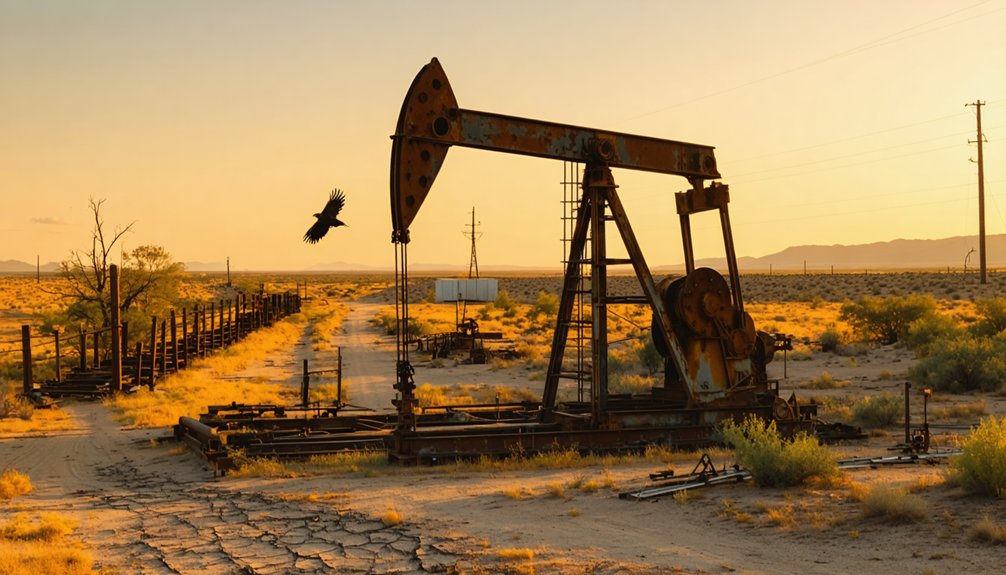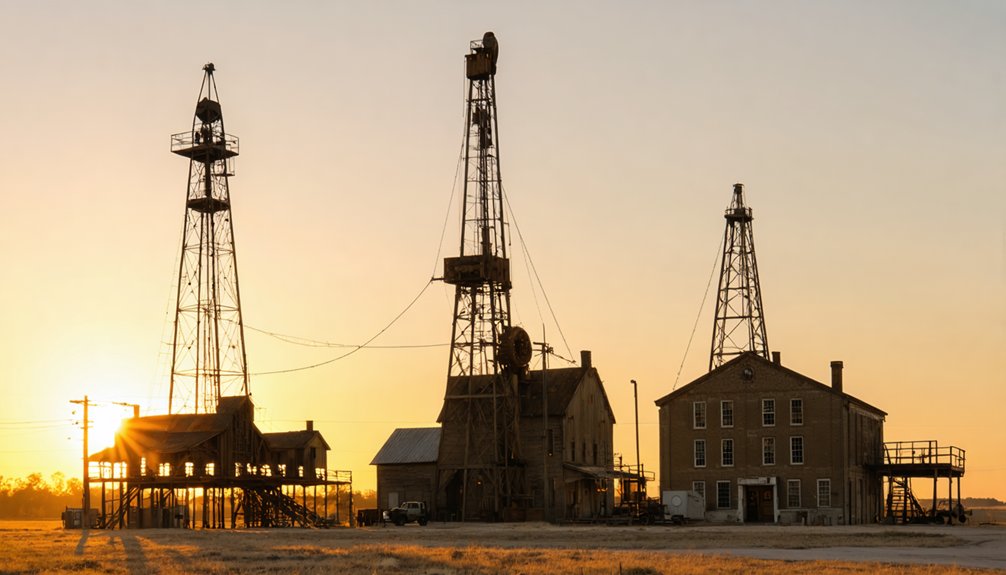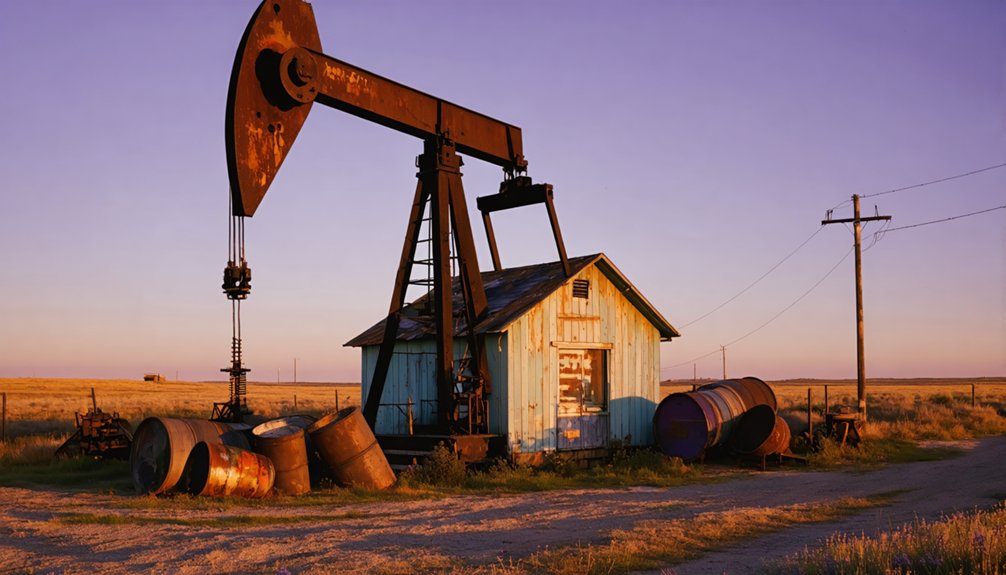
You’ll find rural oil town remnants scattered across America’s landscape, from Pennsylvania to California, where abandoned derricks and weathered buildings tell complex stories of boom-and-bust cycles. These sites harbor both historical treasures and environmental hazards: preserved workers’ homes and company offices stand alongside contaminated wells and toxic soil. While some towns have transformed into heritage tourism destinations, others remain as cautionary tales of resource extraction’s lasting impact on communities and ecosystems.
Key Takeaways
- Architectural remnants include preserved workers’ homes, company offices, and specialized oil infrastructure that tell America’s petroleum history.
- Over 10,000 orphaned wells in Texas alone pose environmental threats to water supplies and continue leaking greenhouse gases.
- Historic industrial structures remain as potential cultural spaces for heritage tourism and community engagement opportunities.
- Toxic soil contamination and groundwater pollution persist in many abandoned oil towns, creating ongoing environmental and health hazards.
- Grassy streets and quiet remnants of once-bustling towns, like Pithole City and Slick, showcase the physical decline of former boomtowns.
The Rise and Fall of Oil Boomtowns
While the discovery of oil in late 19th century America promised unprecedented wealth and opportunity, it sparked a transformative period that would permanently alter rural landscapes across Pennsylvania, Texas, and Oklahoma.
You’ll find that boomtown culture emerged almost overnight, as places like Beaumont exploded from 10,000 to 50,000 residents following the Spindletop discovery in 1901. By 1940, the Texas Railroad Commission had stepped in to regulate and stabilize oil production. The arrival of the Kansas, Oklahoma Railway in 1899 enabled crude transport to markets, sparking rapid development of oil boomtowns like Bartlesville. These towns demonstrated remarkable economic resilience during World War I, with sites like Ranger directly supporting Allied efforts through massive production.
Yet the prosperity wasn’t sustainable. Over-drilling depleted reservoir pressure, while rapid industrialization permanently changed traditional agricultural communities.
When the oil ran dry or prices dropped, populations fled, leaving behind ghost towns and altered ecosystems. Only those communities that managed to diversify their economies survived the inevitable bust phase.
Ghost Towns and Their Physical Legacy
When oil boomtowns faded into ghost towns, they left behind a complex tapestry of architectural and industrial remnants that tell America’s petroleum story.
You’ll find preserved structures like workers’ homes, company offices, and specialized infrastructure that showcase the once-thriving communities. California’s first successful oil well, Pico Canyon, demonstrated this pioneering spirit through its innovative steam-powered operations. In places like Mentryville, California, architectural preservation efforts have saved historic buildings from demolition, allowing you to explore these time capsules of industrial heritage. Heritage tourism has breathed new life into many abandoned sites, drawing visitors from around the globe.
- Original buildings and reconstructed structures stand as evidence to the workers who shaped these communities.
- Industrial artifacts, from oil derricks to machinery parts, reveal the technological evolution of petroleum extraction.
- Environmental markers in the landscape, including old well sites and modified terrain, remind you of humanity’s lasting impact on the natural world.
Environmental Scars and Health Hazards
Beyond the visible architectural remnants, America’s rural oil towns harbor dangerous environmental legacies that continue to threaten public health and ecological systems today.
You’ll find toxic emissions seeping from abandoned wells and refineries, while groundwater contamination spreads beneath your feet from decades of wastewater injection and spills. The evidence is stark – volatile organic compounds and methane pour into the air, while petroleum residues poison soil and water tables. Recent data shows the area ranks in the top 14% for toxic air pollution.
If you live within half a mile of these industrial ghosts, you’re facing increased risks of cancer, respiratory illness, and neurological effects. Kay County, including Ponca City, has one of the highest cancer rates in Oklahoma.
The most vulnerable communities, often low-income and minority populations, bear the heaviest burden of this toxic inheritance. These environmental scars run deep, demanding urgent attention to protect both human health and nature’s resilience.
Economic Ripple Effects on Local Communities
Although rural oil towns have historically provided economic prosperity through direct industry employment and multiplier effects, these communities now face complex challenges from their dependency on fossil fuel extraction.
You’ll find that without economic diversification, these towns remain vulnerable to the boom-and-bust cycles that define fossil fuel markets.
- When oil prices drop, you experience cascading effects: job losses ripple through local businesses, housing markets collapse, and tax revenues plummet – threatening essential public services like schools and infrastructure.
- Community resilience suffers as population decline follows economic downturns, with skilled workers often leaving permanently.
- While fossil fuel jobs offer high wages ($107,198 median in North Dakota), this prosperity is temporary – leaving towns struggling to maintain economic stability when the industry contracts.
The rapid 354% employment increase in North Dakota’s oil sector between 2007-2012 demonstrates how quickly these economies can expand, making the subsequent contractions even more devastating.
However, emerging clean fuel industries like biodiesel are creating 107,400 jobs nationwide, offering new opportunities for economic stability in rural areas.
These patterns reveal the urgent need for sustainable economic alternatives in rural communities.
Notable Cases of Abandoned Oil Towns
The stark reality of oil town abandonment becomes clear through several compelling historical examples across America.
Abandoned oil towns stand as haunting monuments to America’s boom-and-bust cycles, scattered across the landscape like cautionary tales.
Pithole City, Pennsylvania’s dramatic 500-day rise and fall, where a once-bustling petroleum center now exists only as preserved grassy streets. The city’s rapid decline was hastened when devastating oil tank fires destroyed much of the town in 1866.
In Slick, Oklahoma, you can trace the decade-long descent from a 5,000-person boomtown to today’s quiet remnant. Like the nearby town of Picher, which became a toxic ghost town after extensive mining operations forced all residents to evacuate by 2009.
As you explore the region, it becomes evident that the story of abandoned villages in the US reflects broader themes of economic decline and environmental change. Many of these places hold remnants of their vibrant past, serving as haunting reminders of what once was. A visit to these locations often evokes a sense of nostalgia and curiosity about the lives once lived there.
Texas’s ghost towns tell an environmental cautionary tale, with over 10,000 orphaned wells threatening water supplies.
The devastating legacy extends beyond oil – just look at Picher and Treece, where lead mining created uninhabitable toxic zones.
Yet there’s hope in preservation, as demonstrated by Bodie, California’s carefully maintained structures, showing how we can honor our resource-extraction history while learning from its harsh lessons.
The Future of These Forgotten Places
You’ll find these forgotten oil towns at a vital crossroads, where their futures hinge on successfully balancing economic revival through heritage tourism with the pressing need for environmental restoration.
While many sites require extensive remediation of contaminated soil and proper capping of abandoned wells, these challenges also present opportunities to showcase the historical significance of America’s oil boom era through preserved infrastructure and educational initiatives.
The path forward for these communities must prioritize both ecological recovery and cultural preservation, potentially transforming industrial remnants into heritage parks that could attract visitors while healing the environmental scars of the past.
Potential for Economic Revival
Rural oil towns facing economic stagnation still hold potential for revival through strategic diversification and smart development approaches.
You’ll find that community resilience emerges when towns evolve beyond sole reliance on extraction industries. Through workforce adaptation and innovative planning, these communities can build sustainable futures while preserving their cultural heritage.
- Natural amenities and quality of life improvements attract young professionals and entrepreneurs, bringing fresh energy and economic diversity.
- Place-based development strategies leverage existing infrastructure while cultivating new industries compatible with local resources.
- Higher-than-average industry wages can fund infrastructure and community development, creating foundations for long-term growth.
Environmental Recovery Challenges
Despite decades of extractive industry operations, these forgotten oil towns now face formidable environmental recovery challenges that’ll shape their futures for generations.
You’ll find soil so saturated with toxic wastewater that it can’t sustain crops, while abandoned wells continue leaking greenhouse gases into the atmosphere. The scale of contamination has grown exponentially, from 168 million gallons of toxic waste annually to 3.3 billion gallons in 2023.
Environmental restoration efforts must tackle persistent groundwater pollution, radioactive waste, and damaged ecosystems.
Yet fragmented land rights and limited regulatory resources complicate the path forward. True recovery demands community engagement to drive coordinated action between federal, state, and corporate entities.
Without standardized change strategies, these towns struggle to overcome their toxic legacies while seeking sustainable futures.
Heritage Tourism Opportunities
While environmental challenges persist, these forgotten oil towns hold untapped potential in heritage tourism – a promising path toward economic renewal that honors their industrial legacy.
You’ll find opportunities to transform historic industrial structures into vibrant cultural spaces while preserving authentic stories of America’s oil boom era.
- Convert historic derricks and company buildings into museums, lodging, or event venues that celebrate cultural heritage.
- Develop walking tours and heritage trails connecting multiple sites, creating immersive tourism experiences.
- Launch community-driven festivals and reenactments that bring local history to life while supporting year-round visitation.
Through strategic tourism development, you can protect these irreplaceable landmarks while creating sustainable economic opportunities.
Frequently Asked Questions
How Do Abandoned Oil Towns Affect Nearby Property Values in Surrounding Communities?
You’ll see significant property depreciation within a mile radius of abandoned oil towns, as negative market perception, environmental hazards, and reduced services create rippling devaluation effects on surrounding communities.
What Happens to the Mineral Rights After an Oil Town’s Abandonment?
You’ll find mineral ownership remains with original deed holders or heirs unless properly transferred, even if the town’s abandoned. Rights transfer requires legal action through dormant mineral acts or quiet title proceedings.
Are There Successful Examples of Oil Towns Transitioning to Renewable Energy?
You’ll find inspiring examples like Burlington and Canberra, which achieved 100% sustainable energy through economic diversification, proving oil towns can successfully transform while preserving local jobs and environmental resources.
How Do Insurance Companies Handle Claims in Partially Abandoned Oil Towns?
You’ll face serious delays and claim disputes in these towns, as insurers limit coverage and often deny claims. Insurance adjustments become complicated when companies withdraw, leaving state guaranty funds to handle settlements.
What Role Do Local Indigenous Communities Play in Reclaiming Abandoned Sites?
Like modern-day land guardians, you’ll find Indigenous communities leading crucial land reclamation efforts, combining traditional knowledge with modern techniques while preserving cultural sites and restoring ancestral territories to their natural state.
References
- https://www.youtube.com/watch?v=eyOASXxAmMI
- https://www.atlasobscura.com/places/yumen-ghost-town
- https://www.cityandstateny.com/politics/2022/05/new-yorks-once-booming-oil-industry-and-risky-wells-it-left-behind/366655/
- https://en.wikipedia.org/wiki/Ghost_town
- https://www.epa.gov/mo/town-flood-and-superfund-looking-back-times-beach-disaster-nearly-40-years-later
- https://mix931fm.com/texas-ghost-towns-history/
- https://www.okhistory.org/publications/enc/entry?entry=PE023
- https://en.wikipedia.org/wiki/Texas_oil_boom
- https://www.texasalmanac.com/articles/oil-and-texas-a-cultural-history
- https://www.thestoryoftexas.com/discover/campfire-stories/oil-worker