You’ll find remarkable remnants of colonial ghost towns through their classical architectural features, including symmetrical designs with large columns and decorative moldings. These settlements utilized local materials like brick and stone, with resilient elements such as red-tiled roofs and thick walls still standing today. While natural forces and human activity threaten these structures, preserved sites across regions like Texas’s 550 documented locations offer glimpses into our colonial past through careful conservation efforts.
Key Takeaways
- Classical buildings with symmetrical designs featuring large columns, decorative moldings, and grand entryways remain standing in colonial settlements.
- Thick stone walls, red-tiled roofs, and fortified structures demonstrate remarkable durability and preservation of colonial construction methods.
- Dutch colonial architecture survives through distinctive gambrel roofs and brick buildings adapted to local materials and conditions.
- Historic churches, government buildings, and residential structures showcase Greek Revival elements similar to antebellum Southern architecture.
- Foundation stones, building footprints, and infrastructure remnants outline the original layout of colonial settlements and communities.
The Enduring Architecture of Abandoned Colonial Settlements
While many colonial settlements have long since been abandoned, their architectural legacy endures through remarkably preserved structures that showcase the distinct building styles of European powers.
You’ll find classical symmetry in facades adorned with large columns and decorative moldings, reflecting the grandeur of colonial architecture. Local materials like brick and stone were commonly used based on regional availability. The most resilient features include red-tiled roofs from Spanish settlements, thick stone walls, and fortified structures that have withstood centuries of exposure. Many structures incorporate Greek Revival elements similar to those found in antebellum government buildings of the American South.
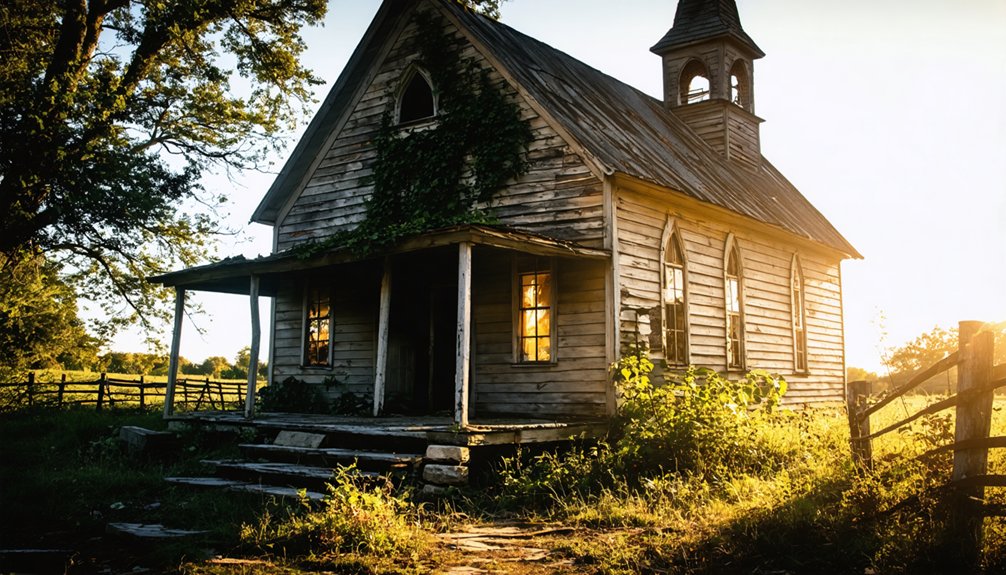
Dutch colonial influences remain visible in surviving gambrel roofs and distinctive brick construction, while religious buildings display Greek Revival and Georgian elements of historical significance.
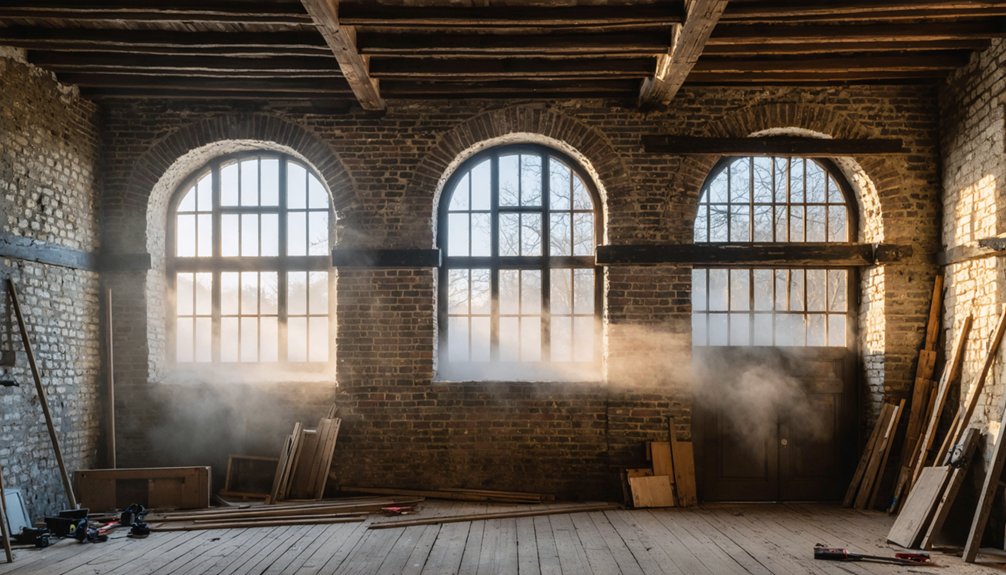
Inside these ghost towns, you can still observe high ceilings, intricate woodwork, and decorative paneling that speak to the craftsmanship of colonial builders.
Mining and Industrial Infrastructure Left Behind
Throughout colonial ghost towns, the remains of extensive mining and industrial operations provide stark testimony to their resource-driven past.
You’ll find deteriorating mine shafts and hoist foundations dominating these landscapes, alongside rusted ore processing machinery that once crushed and refined precious metals. The sites reveal a complex network of infrastructure, from abandoned rail lines and loading docks to the remnants of power stations and water management systems.
Decaying machinery and industrial remnants tell silent stories of colonial mining empires, their rusted bones scattered across forgotten landscapes.
What’s particularly striking is how these industrial scars have transformed the environment. Notable examples include number two shafts measuring 106 by 188 feet, which demonstrate the massive scale of these historical mining operations. Today, popular destinations like Bodie State Park preserve these industrial remnants for educational purposes.
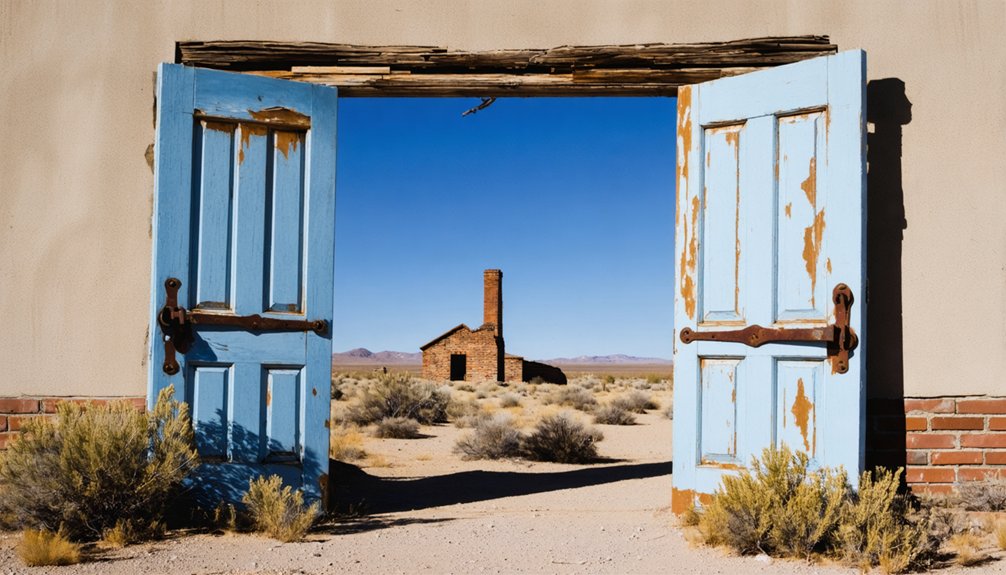
You’ll encounter massive tailings piles, open pits, and hazardous sinkholes that continue to shape the terrain. In arid regions, desert sands gradually consume the mining machinery, while in other areas, nature slowly reclaims these sites through forest overgrowth, creating a haunting reminder of colonial resource extraction.
Geographic Distribution of Notable Ghost Town Sites
Despite their widespread presence across multiple continents, ghost towns exhibit distinct geographic clustering patterns that reflect historical resource exploitation and settlement trends.
You’ll find colonial legacies most prominently in the American West, where Texas leads with 550 documented sites, followed by California’s concentrated ruins in the Sierra Nevada and Mojave Desert.
Settlement patterns reveal dense clusters in specific counties – Wilson and Guadalupe in Texas, Inyo and Mono in California, and Nye in Nevada. Economic decline caused mass departures from these once-thriving communities, leading to their eventual abandonment.
The distribution extends internationally, with notable sites like Kolmanskop in Namibia’s Namib Desert showcasing diamond mining‘s impact.
While Western states dominate with remote, arid locations, Eastern regions display different patterns, with Pennsylvania, Wisconsin, and Michigan’s ghost towns tied to coal, timber, and iron industries. A significant number of these submerged ghost towns can be found in Pennsylvania’s landscape.
Natural Forces and Human Impact on Preserved Structures
The preservation of colonial ghost towns faces a complex interplay of destructive natural forces and human activities that shape their fate.
As similar challenges arise in the remnants of ghost towns in Nevada, the struggle for preservation becomes even more pronounced. These sites, once vibrant hubs of activity, now serve as haunting reminders of a bygone era, fading under the relentless sun and harsh winds. Yet, the historical value they hold continues to attract both researchers and tourists eager to uncover the stories hidden within their dilapidated structures.
Time and human hands wage a constant battle over these silent witnesses to colonial history, gradually erasing their presence from the landscape.
You’ll find natural erosion gradually wearing away at wood, brick, and stone structures through relentless wind, rain, and temperature fluctuations. The textile mill remains in North Carolina’s Deep River region illustrate how industrial structures slowly succumb to the elements. The freeze-thaw cycles create structural instability by widening existing cracks, while aggressive vegetation penetrates foundations and walls.
In your exploration of these sites, you’ll encounter the lasting impact of both intentional and unintentional human interference. Vandalism and uncontrolled tourism accelerate deterioration, though some conservation efforts help counter these effects. Major destructive events like the devastating fires in Bodie, California during 1892 and 1932 demonstrate how quickly historic structures can be lost.
The structures’ survival largely depends on their building materials and environmental context – wooden buildings in humid regions deteriorate faster than stone structures in arid climates, while coastal locations face unique challenges from saltwater exposure and flooding.
Heritage Tourism and Conservation Efforts Today
Modern heritage tourism has transformed colonial ghost towns into vibrant centers of historical education and cultural preservation, where you’ll discover meticulously maintained structures operating under diverse conservation models.
You’ll encounter sites like Bodie State Historic Park, where heritage preservation efforts maintain 200 original buildings in “arrested decay,” allowing you to experience authentic gold rush-era environments. The Bodie Foundation actively supports preservation initiatives to protect this historically significant site.
Throughout these historic sites, you’ll find carefully balanced approaches to cultural significance and tourism development. You can explore interiors frozen in time, participate in guided tours, and witness reenactments that bring history to life. Popular destinations like Jerome, Arizona have evolved into historic districts with art galleries while maintaining their ghostly charm.
State parks and volunteer organizations work diligently to protect these treasures while making them accessible, implementing strategic infrastructure improvements that preserve historical authenticity while ensuring your safety and enjoyment.
Frequently Asked Questions
What Tools and Methods Were Used to Construct Colonial Ghost Town Buildings?
You’ll find colonists used axes, adzes, and saws for traditional construction, while employing mortise-and-tenon joints, locally sourced building materials, and specialized tools like augers and trowels for precise assembly.
How Did Indigenous Populations Interact With These Settlements After Abandonment?
You’ll find that Indigenous peoples reclaimed these sites for cultural practices and ceremonies, asserting sovereignty through land reclamation while maintaining spiritual connections to ancestral territories despite colonial displacement.
What Personal Belongings Are Commonly Discovered in Colonial Ghost Towns?
You’ll find personal artifacts like combs, razors, tobacco pipes, coins, and clothing fasteners that hold immense historical significance, revealing intimate details about colonial settlers’ daily lives and social status.
How Did Colonial Ghost Towns Influence Modern Urban Planning and Architecture?
You’ll find colonial ghost towns inspired modern urban revival through preserved architectural elements, grid layouts, and mixed-use planning principles that developers now use to create historically authentic neighborhoods and commercial districts.
Which Ghost Town Remnants Have Paranormal or Supernatural Activity Reports?
You’ll find paranormal sightings at Cornwallis’ Cave, Crawford Road, and Nelson House in Yorktown, while ghostly encounters persist at Bannack’s mines, Bodie’s structures, and Williamsburg’s colonial buildings.
References
- https://en.wikipedia.org/wiki/Ghost_town
- https://www.californist.com/articles/interesting-california-ghost-towns
- https://www.britannica.com/topic/ghost-town
- https://history.howstuffworks.com/history-vs-myth/ghost-towns.htm
- https://westernmininghistory.com/664/what-is-a-ghost-town-wmh-town-classifications-explained/
- https://www.geotab.com/ghost-towns/
- https://www.legendsofamerica.com/gt-hiddentales/
- https://www.youtube.com/watch?v=ZiJctD8Cs70
- https://freepages.history.rootsweb.com/~gtusa/definitions.pdf
- https://grokipedia.com/page/Ghost_Town