You’ll discover America’s ghost towns hold layered histories of boom-and-bust cycles, from $200 million mining empires to submerged settlements beneath modern reservoirs. These abandoned places reveal tales of supernatural hauntings, cursed artifacts, and phantom gunshots echoing through time. While nature steadily reclaims these forgotten spaces with diverse ecosystems, preservation efforts like Bodie’s “arrested decay” protect their historical legacy. Beyond the weathered walls lie countless untold stories waiting to be unearthed.
Key Takeaways
- Underground fires, haunted legends, and supernatural activities persist in towns like Centralia and Bodie, where visitors report mysterious encounters.
- Submerged communities beneath lakes and reservoirs preserve untold stories of displaced residents and forgotten settlements.
- Abandoned structures have become thriving ecosystems, hosting diverse wildlife populations and creating unique microclimates for plant species.
- Historic artifacts worth millions, like Kennecott’s $200 million legacy, remain scattered throughout these forgotten towns.
- Former industrial powerhouses contain remnants of America’s manufacturing decline, with over 1.5 million abandoned properties nationwide.
The Rise and Fall: Mining Towns That Time Forgot
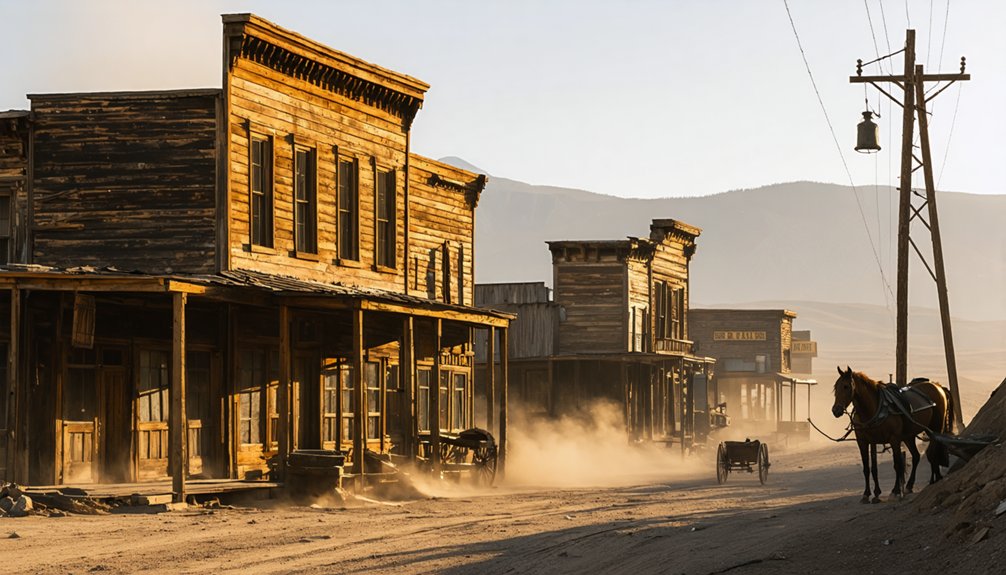
While the American West conjures images of cowboys and frontier settlements, it was the discovery of precious metals that truly shaped many of the nation’s most fascinating ghost towns. You’ll find their economic impact etched into the landscape, from Kennecott’s $200 million copper legacy to Bodie’s gold-fueled explosion of 1,000 residents.
These weren’t just mining camps – they were vibrant communities where railroads carried dreams and fortunes. The eerie Annabelle Stark legend adds supernatural mystique to St. Elmo’s abandoned streets.
Today, heritage tourism sites draw visitors from around the world to explore these preserved remnants of America’s past.
Yet their cultural legacy tells a bittersweet tale. When ore deposits ran dry or market forces shifted, these towns faced swift decline.
World War II’s resource demands shuttered Bodie’s last mine in 1942, while the 1907 financial panic devastated places like Rhyolite. Railroad closures, like Steins’ 1944 shutdown, often delivered the final blow, transforming boom towns into silent monuments of America’s mineral rush.
Hidden Stories Beneath the Surface: Submerged Ghost Towns
Beneath America’s lakes and reservoirs lie the remnants of once-thriving communities, submerged during the nation’s ambitious 20th-century dam projects.
You’ll find these underwater ghost towns scattered across the country, from Appalachia’s Proctor beneath Fontana Lake to Nevada’s St. Thomas under Lake Mead. The construction of Fontana Dam in 1944 forced residents to abandon their homes and communities.
Through underwater archaeology, researchers have uncovered remarkable submerged histories. Entire settlements like Bull Shoals Lake in Arkansas swallowed both Dubuque and Kingdon Springs.
During droughts, you can glimpse Old Bluffton’s ruins in Texas’ Lake Buchanan, where a cotton gin and hotel foundations tell tales of frontier life.
In Tennessee, Loyston’s streets rest silently under Norris Lake, while Pennsylvania’s Tohickon sleeps beneath Lake Nockamixon.
These communities weren’t just flooded – they were sacrificed for hydroelectric power and flood control, often with residents receiving minimal compensation.
Their preserved structures serve as time capsules, evidence of America’s rapid industrialization and its human cost.
Haunted Histories: Tales of the Supernatural
Spectral echoes of America’s past linger in its most notorious ghost towns, where paranormal activity seems as deeply rooted as the settlements’ turbulent histories.
You’ll discover supernatural encounters in places like Bodie, California, where a curse allegedly strikes those who dare remove artifacts, and Centralia, Pennsylvania, where an eternal underground fire creates an otherworldly backdrop for shadowy apparitions.
In Bannack, Montana, you might hear phantom gunshots echo through preserved structures, remnants of its violent frontier days. Former miners in Ruby’s dark tunnels still haunt visitors with unexplained noises and chilling presences.
Each location harbors its own ghostly legends: the restless spirits of gold miners, the vengeful specters of outlaws, and the mysterious figures that drift through abandoned buildings.
From dusty saloons to decrepit mines, each ghost town’s spirits tell tales of fortunes lost and justice denied.
Visitors exploring the exposed metal shells of Blue Heron, Kentucky report eerie voices that seem to whisper the recorded stories of former coal mining residents.
These paranormal tales offer glimpses into the raw, unfiltered stories of America’s forgotten communities.
Industrial Ghosts: When Cities Fade Away
As America’s industrial heartland crumbled in the late 20th century, you’ll find the haunting remnants of once-thriving manufacturing cities scattered across the nation’s landscape.
The industrial decline struck with devastating precision: 5.7 million manufacturing jobs vanished between 1998 and 2013, leaving communities like Youngstown, Muncie, and Dayton shadows of their former selves. Many of these cities now face poverty rates double the national average.
The economic consequences rippled through 232 legacy communities, where you’ll witness the stark reality of urban abandonment. Cities that once hosted Fortune 500 headquarters now stand nearly empty – Detroit’s 19.9% rental vacancy rate tells only part of the story. Since the late 1990s, over 650 textile plants closed their doors forever.
From Flint’s 72% manufacturing job loss to the 80,000 shuttered facilities nationwide, these industrial ghosts remind you of a transformed America, where global trade and outsourcing hollowed out once-proud manufacturing centers, leaving behind more than 1.5 million abandoned properties.
Preservation vs. Decay: The Battle for Historical Heritage
As historic ghost towns across America fade into obscurity, dedicated preservation efforts have become crucial for protecting these remnants of the past. The state of “arrested decay” implemented at Bodie, California exemplifies how careful conservation can maintain authentic historic character while preventing complete deterioration. While many abandoned towns lie in ruins, places like Virginia City serve as living museums where visitors can experience well-preserved pieces of Western heritage.
Tourism and Adventure: Exploring America’s Lost Places
While you’ll find ghost towns scattered across America’s landscape offering tangible connections to the frontier past, exploring these haunting ruins requires careful preparation and awareness of potential hazards.
Among the most haunting places to visit are the abandoned buildings in Chernobyl, where nature has slowly reclaimed the man-made structures. These sites tell a story of sudden abandonment and lost lives, drawing adventurers and history enthusiasts alike. Venturing into these desolate areas can be both fascinating and unsettling, as the echoes of the past linger in the decaying walls and overgrown pathways.
Among the many intriguing destinations are the abandoned places in the western United States, where remnants of history stand as silent witnesses to a bygone era. Every crumbling facade and rusting relic invites exploration, revealing tales of the lives once lived within their walls. These locations, often steeped in legend, provide a glimpse into the unique stories of the American frontier and the dreams that faded along with them.
You’ll need to research access requirements, bring essential supplies like water and emergency gear, and strictly follow posted safety guidelines, as many structures are unstable and remote locations often lack cell service.
Beyond the practical considerations, each abandoned street and weathered building holds documented histories of boom-and-bust cycles, mining disasters, and the compelling stories of those who once called these places home.
Ghost Tourism Safety Tips
When exploring the haunting remnants of America’s ghost towns, proper safety protocols can mean the difference between an enriching adventure and a dangerous mishap.
You’ll need to prioritize emergency preparedness and adhere to strict guidelines to protect both yourself and these historic sites.
- Always secure proper permissions, as most ghost towns are privately owned or protected by law
- Pack essential recovery gear and share your detailed itinerary with trusted contacts
- Visit only during daylight hours and never explore alone
- Bring protective clothing and first aid supplies for potential hazards
Remember that these sites often harbor hidden dangers, from unstable structures to toxic materials.
You’re responsible for treading lightly and preserving these cultural treasures while ensuring your own safety through careful planning and responsible behavior.
History Behind Empty Streets
Throughout America’s landscape, abandoned towns tell compelling stories of boom-and-bust cycles that shaped the nation’s development.
You’ll discover how 19th-century mining rushes created instant cities like Bodie, California, where gold fever drew thousands before its inevitable decline. The historical significance of these sites reveals deeper economic patterns, from railroad expansion to agricultural collapse in the Great Plains.
During urban exploration, you’ll encounter remnants of various abandonment triggers: depleted natural resources, rerouted transportation routes, and devastating natural disasters.
Post-WWII shifts dramatically altered America’s settlement patterns, while industrial decline transformed once-prosperous factory towns into modern ghost towns. In places like Centralia, Pennsylvania, environmental hazards forced entire communities to relocate, leaving behind haunting reminders of humanity’s temporary nature on the landscape.
Nature’s Takeover: When Wilderness Reclaims Towns

As you explore America’s ghost towns, you’ll witness nature’s methodical reconquest, where persistent desert flora and determined vines transform abandoned structures into living ecosystems.
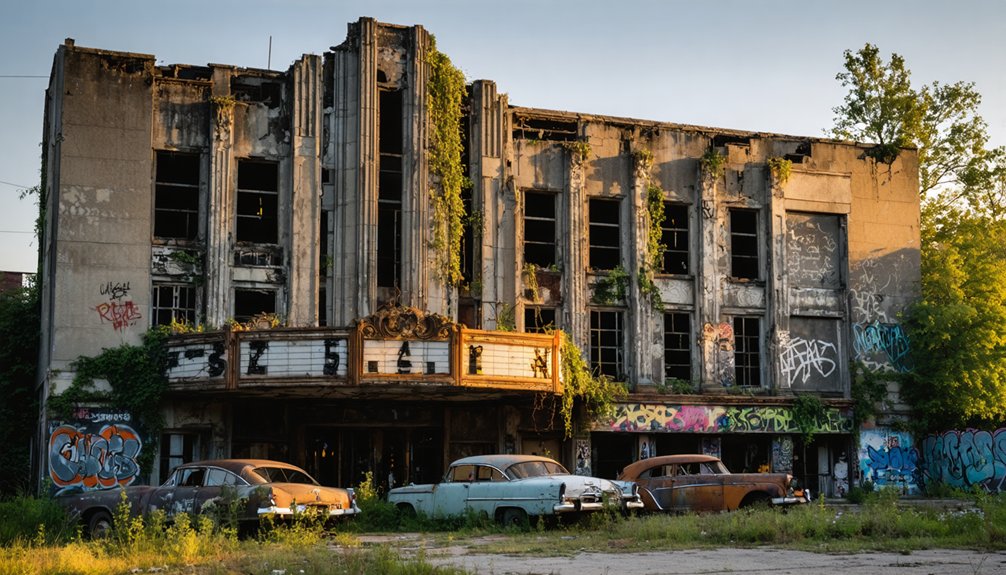
You’ll observe how structural decay creates an eerily beautiful tableau, with tree roots penetrating foundations and moss softening harsh architectural lines into organic forms.
The absence of human activity has allowed diverse wildlife populations to flourish, turning these forgotten urban spaces into sanctuaries where coyotes den in old cellars and raptors nest in deteriorating rooftops.
Plant Species Take Control
The fertile soils and moderate climate of abandoned Midwest towns create perfect conditions for nature’s dramatic reclamation through plant colonization.
You’ll witness remarkable urban ecology in action as plant succession transforms these forgotten spaces into thriving ecosystems.
Nature’s strategic invasion follows a precise order:
- Pioneer species like crabgrass and dandelions first emerge through sidewalk cracks and disturbed soil
- Hardy shrubs such as sumac and wild rose establish themselves in protected corners
- Fast-growing trees, including aspen and birch, exploit structural weaknesses
- Shade-tolerant species gradually replace pioneers, forming mature forest communities
In abandoned buildings, you’ll discover specialized microclimates where ferns thrive in humid corners and sun-loving plants colonize south-facing walls, while old cisterns transform into miniature wetland habitats.
Structural Decay’s Natural Beauty
Time’s unstoppable march transforms abandoned ghost towns into haunting displays of structural decay, where nature’s destructive forces create an paradoxically beautiful aesthetic.
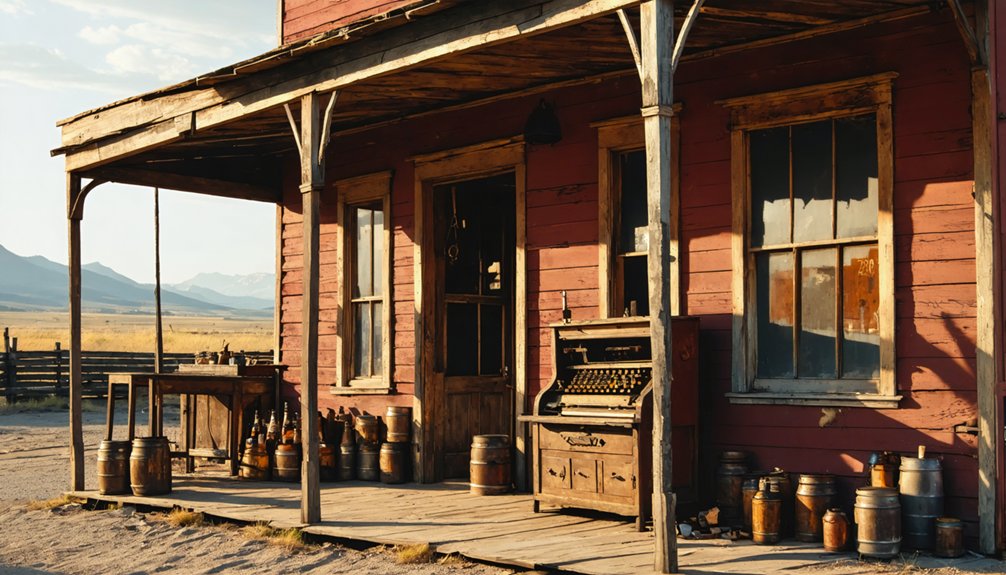
You’ll witness how oxidation turns metal surfaces into stunning canvases of orange and crimson patinas, while weathered wood develops silvery textures that tell stories of decades past.
As you explore these forgotten places, you’ll discover how natural decay aesthetics emerge through peeling paint and faded signage, creating ghostly reminders of human absence.
Broken windows and partially collapsed roofs allow sunlight to dance through empty rooms, casting dramatic shadows that highlight nature’s artistic touch.
The interplay between crumbling structures and encroaching vegetation produces a mesmerizing visual narrative, where rust, weathered materials, and natural patina blend to create a raw, untamed beauty that photographers and adventurers seek.
Wildlife Claims Urban Spaces
While human footprints fade from these forsaken settlements, nature orchestrates a remarkable transformation, turning abandoned structures into thriving wildlife sanctuaries.
You’ll discover how urban wildlife has reclaimed these spaces, creating complex ecological niches that support remarkable biodiversity.
Within these forgotten towns, you’ll witness nature’s resilience through:
- Migratory birds like egrets and herons establishing colonies in overgrown military forts
- Bats colonizing abandoned mine shafts and tunnels, thriving in the dark, humid conditions
- Eagles and ospreys utilizing weathered structures as hunting perches above newly formed waterways
- Small mammals and insects finding shelter among vine-covered walls and moss-laden foundations
These ghost towns have evolved into biodiversity hotspots, surpassing the ecological value of surrounding developed areas.
You’re witnessing firsthand how wilderness reclaims its territory, creating intricate ecosystems where human artifacts once dominated.
Frequently Asked Questions
How Can I Legally Explore Ghost Towns Without Trespassing?
You’ll need to research ghost town regulations, obtain exploration permits, and secure permissions from property owners. Check BLM lands, state parks, and public heritage sites for legal access opportunities.
What Survival Gear Should I Pack When Visiting Remote Ghost Towns?
Pack your essential survival gear: water purification tools, first-aid kit, navigation equipment, layered clothing, fire starters, emergency shelter, sturdy boots, and communication devices for remote area safety.
Are There Any Ghost Towns Still Accepting New Residents Today?
While 70% of Western ghost towns are tourist-only sites, you’ll find places like Frontier Town, Montana and Swett, South Dakota actively welcoming new residents who appreciate historical significance and want to build unique community dynamics.
Which Ghost Towns Are Most Accessible During Winter Months?
You’ll find the best winter accessibility in Leadville, Idaho Springs, and Breckenridge, Colorado. Check ghost town maps before visiting, as most remote locations require snowmobiles or specialized winter transport.
Do Any Ghost Towns Still Maintain Functioning Post Offices?
You’ll discover active postal services in several unconventional locales, including Calico, California and Kennecott, Alaska, where these rare ghost town services preserve post office history through continued operation.
References
- https://247wallst.com/special-report/2018/11/02/30-american-ghost-towns-3/
- https://devblog.batchgeo.com/ghost-towns/
- https://infrastructureusa.org/spooky-infrastructure-ghost-towns-across-the-united-states/
- https://nightofthejack.com/2025/01/23/top-creepy-ghost-towns-in-america/
- https://www.geotab.com/ghost-towns/
- https://www.loveexploring.com/gallerylist/188219/the-us-state-with-the-most-ghost-towns-revealed
- https://en.wikipedia.org/wiki/Lists_of_ghost_towns_in_the_United_States
- https://worldpopulationreview.com/world-city-rankings/abandoned-cities
- https://joybird.com/blog/top-ghost-towns-in-america/
- https://www.britannica.com/topic/ghost-town