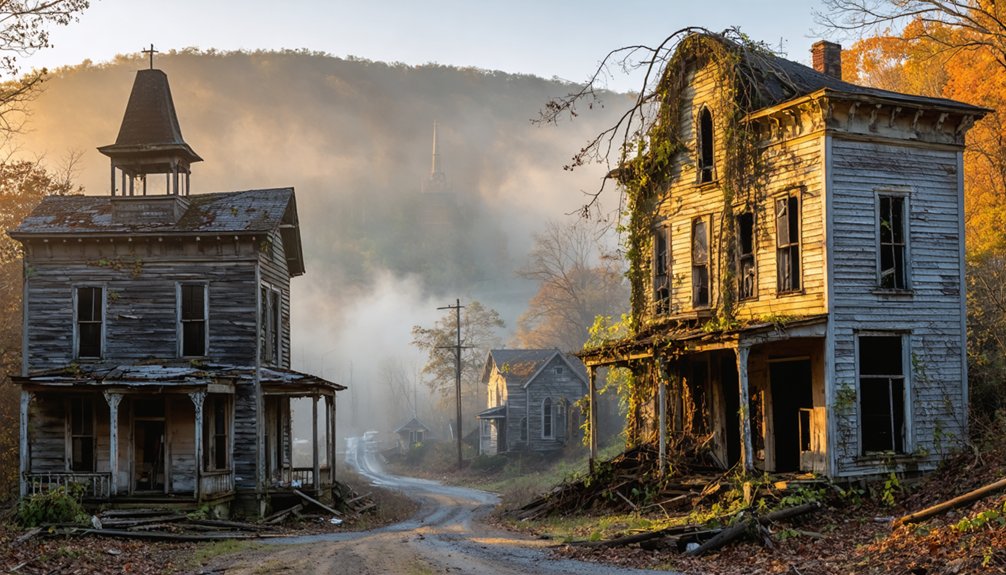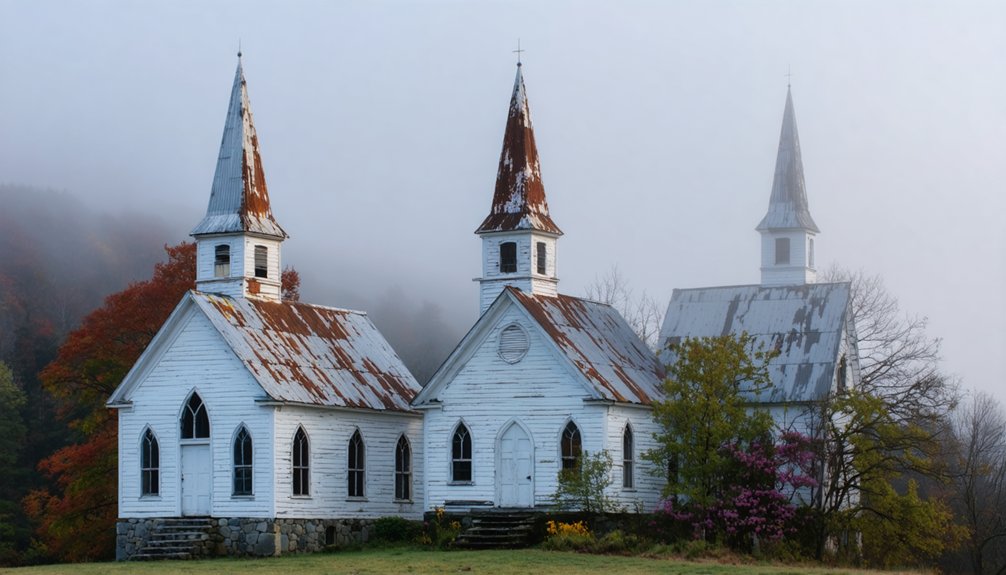
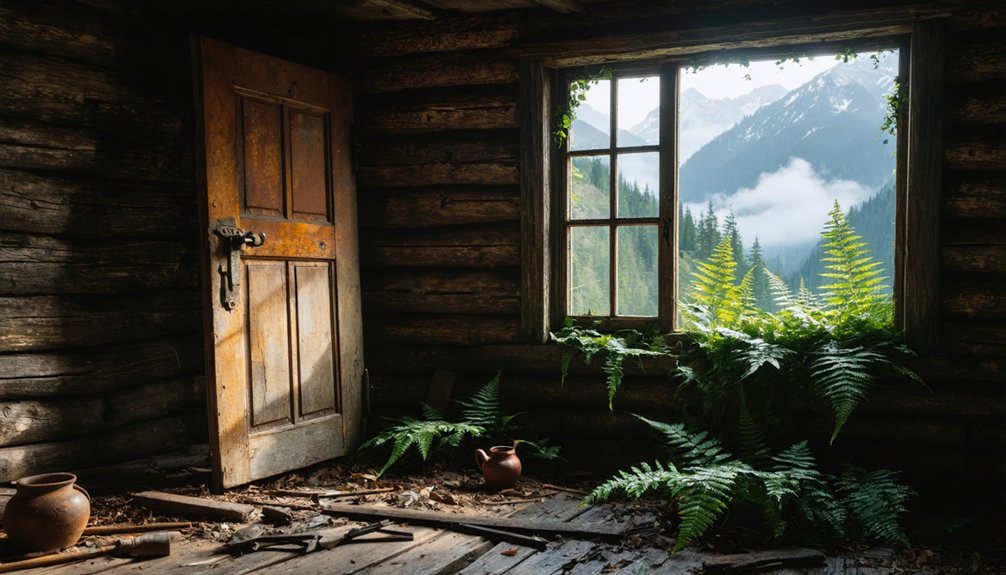
You’ll find over 2,500 abandoned company towns scattered throughout Appalachia’s misty valleys, each telling a complex story of America’s industrial past. These ghost towns preserve the physical remnants of corporate-built communities, where workers once lived under the strict economic control of mining and railroad companies. Nature has steadily reclaimed these sites, with rusted equipment and mining tunnels now hidden beneath aggressive vegetation. Yet beneath the decay, these forgotten places hold deeper secrets about power, resilience, and cultural heritage waiting to be uncovered.
Key Takeaways
- Abandoned company towns reveal extensive corporate control through infrastructure, including housing, stores, and churches built to maintain worker dependency.
- Hidden mining tunnels contain archaeological artifacts and stories of immigrant laborers, while some report paranormal activity during modern explorations.
- Indigenous burial mounds with distinct soil layers and white quartz tops indicate 2,700 years of Native American presence.
- Former mining sites conceal environmental damage, with over 700 miles of buried streams and widespread acid drainage affecting water systems.
- Local oral histories preserve stories of resilient communities, trust-based commerce, and social bonds that sustained mountain towns through hardships.
The Rise and Fall of Company-Built Mountain Communities
While the rugged Appalachian Mountains had long deterred large-scale development, the late 19th century’s surging demand for coal and timber transformed these remote regions into bustling industrial hubs.
Coal and timber corporations carved out entire communities from scratch, constructing everything from worker housing to stores, schools, and churches in isolated valleys accessible only by company-built rail lines. The Little River Railroad revolutionized logging operations by efficiently transporting timber from remote mountain areas.
You’ll find these weren’t just towns – they were sophisticated systems of community control. Companies owned every building and piece of infrastructure, paying workers in scrip that could only be spent at inflated-price company stores.
This created cycles of economic dependence that trapped generations of workers. When resources depleted or became unprofitable by mid-20th century, companies simply shut down operations, leaving behind ghost towns of empty buildings and broken dreams.
Hidden Stories Behind Abandoned Rail Towns
Throughout the early 20th century, abandoned rail towns scattered across Appalachia tell a deeper story than mere industrial decay. During this era, approximately 2,500 company towns operated across the United States, each shaped by industrial ambitions.
You’ll find hidden narratives in their company-built schools, churches, and general stores – evidence of deliberate community planning aimed at workforce stability. These forgotten legacies reveal how railroad companies shaped entire societies through welfare capitalism, providing not just jobs but complete social structures. Old Clinchfield Railroad routes through Johnson City demonstrate how these vital transportation arteries connected and sustained these mountain communities.
Railroad towns weren’t just workplaces – they were engineered societies where companies controlled every aspect of community life.
The physical remnants – deteriorating rail beds, bridges, and depots – mark the paths of once-thriving communities like Blue Heron, Kentucky, where coal and lumber operations sustained generations.
Today, these ghost towns serve as time capsules, preserved in national recreation areas and local museums. Their stories illuminate the complex relationship between corporate power, worker autonomy, and the rise of labor movements that sought to balance this dynamic.
Nature’s Reclamation of Historic Mining Sites
You’ll find nature steadily reclaiming Appalachia’s historic mining sites, where rusted equipment lies partially buried beneath thick vegetation and weathered mine portals reveal long-forgotten underground networks.
Once-barren valleys now feature streams carving new paths through mining debris, though the water quality remains impacted by decades of acid mine drainage and heavy metal contamination. With 73% of lands still awaiting remediation, these abandoned mines continue to shape the region’s environmental recovery.
The transformation reflects both nature’s resilience and its limitations, as many sites remain visibly scarred despite decades of natural regeneration processes. The estimated cost to fully reclaim these abandoned pre-1977 mining sites stands at 11.5 billion dollars.
Vegetation Overtakes Mining Equipment
Deep within abandoned Appalachian ghost towns, nature steadily reclaims historic mining equipment through an intricate process of vegetative encroachment.
You’ll find once-mighty machines now immobilized by aggressive vines like poison ivy and honeysuckle, which climb and envelop every surface. Moss and lichen formations accelerate the decay, forming dense mats that speed up corrosion of metal structures.
As leaves and organic matter accumulate around these industrial relics, they create fertile ground for native plants to take root. The restoration teams have discovered that deep ripping technique helps break up the compacted soil around old equipment, allowing native saplings to grow more successfully. The transformation of these sites follows similar patterns seen in the Mower Tract restoration, where native vegetation has successfully reclaimed former mining areas.
Over decades, you’ll witness how the forest gradually consumes these remnants of human industry. The dense undergrowth becomes so thick that you can barely distinguish the equipment from the surrounding vegetation, as nature transforms these mechanical giants into living monuments of the region’s mining heritage.
Underground Tunnels Reveal Secrets
Winding beneath the surface of Appalachian ghost towns, extensive networks of abandoned mining tunnels chronicle both human ambition and nature’s persistence. Your tunnel exploration through these subterranean passages reveals a complex tapestry of 19th-century industrial innovation and immigrant labor stories.
- Water seepage creates treacherous conditions while reclaiming these historic engineering feats.
- EMF detectors and spirit boxes document reported ghostly encounters tied to unmarked worker graves.
- Archaeological artifacts provide glimpses into the lives of Irish laborers who built these passages.
You’ll find these tunnels, dating back to the post-Civil War era, aren’t just deteriorating infrastructure – they’re time capsules of Appalachian heritage.
While structural degradation and mountain geology pose challenges, these passages continue revealing secrets about economic boom-and-bust cycles, worker conditions, and the untold stories of those who shaped America’s industrial age.
Silver Run Tunnel No. 19 remains one of ten preserved tunnels along the historic 72-mile Northbend Trail from Parkersburg to Clarksburg.
The haunting legacy of Censipal Tunnel endures through numerous paranormal investigations and unexplained phenomena reported by visitors who dare to venture inside.
Streams Reshape Mining Valleys
While nature gradually reclaims abandoned mining sites across Appalachia, the process has left lasting scars on the region’s watersheds.
You’ll find that over 1,200 miles of headwater streams vanished under valley fills between 1992-2002, fundamentally altering the mountain’s natural hydrology.
The ecological impact extends far beyond visible changes.
Where steady mountain streams once flowed, you’ll now encounter unstable water systems prone to flash floods.
Stream restoration efforts face significant challenges – reconstructed channels function more like drainage ditches than natural waterways.
Even decades after mining ceased, these altered valleys continue releasing harmful substances downstream, with high conductivity and sulfate levels threatening aquatic life.
Despite reclamation attempts, scientific evidence shows that once-buried streams may never regain their original biodiversity and ecosystem functions.
Underwater Ghost Towns: Submerged Mountain Heritage
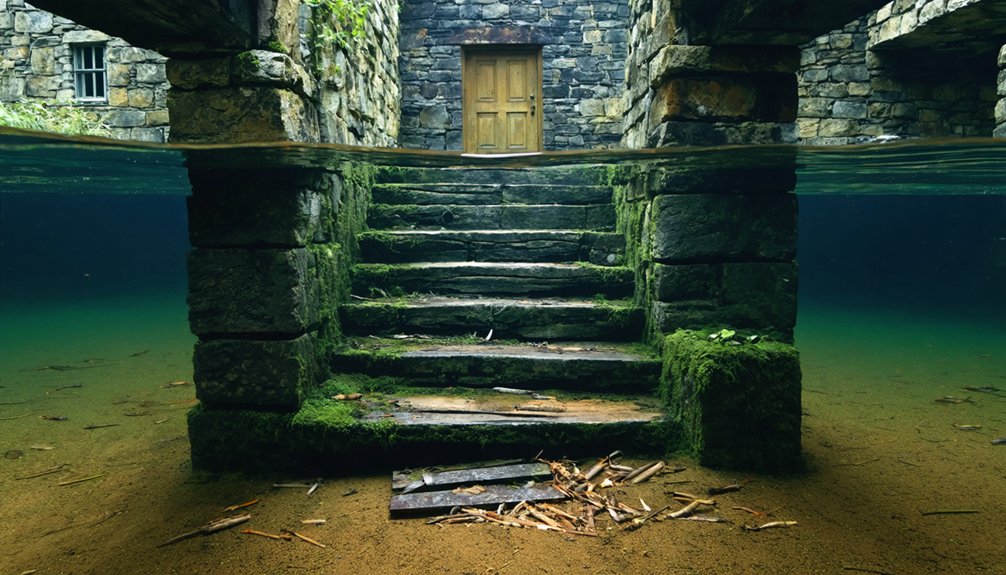
Beneath the tranquil waters of Appalachia’s lakes lies a haunting memorial to the region’s sacrificed communities.
Hidden beneath Appalachia’s placid lake waters rest the echoes of lost towns and displaced mountain folk.
Through underwater exploration and submerged archaeology, you’ll discover entire towns surrendered to hydroelectric progress – from Judson’s 600 displaced residents to Cherokee settlements erased by Tellico Lake.
These submerged landscapes offer rare glimpses into mountain heritage:
- Fontana Lake reveals building foundations and the Mount Carmel Cemetery during extreme low water
- Summersville Lake’s crystal-clear depths showcase Gad’s remnants with 327-foot visibility
- Tellico and Calderwood Lakes conceal ancient Cherokee towns like Chota and Tanasi
You can witness this hidden history through diving expeditions or during periodic lake drainages, though most artifacts remain perpetually submerged – silent testimonies to communities that once thrived in these mountain valleys.
From Boom to Bust: The Legacy of Resource Extraction
Deep within Appalachia’s rugged terrain, a complex legacy of resource extraction has shaped both the landscape and its communities since 1768.
You’ll find the remains of once-thriving settlements that boomed during coal’s century-long dominance, then withered as Western competition emerged in the 1970s. Poor resource management by absentee corporations prioritized quick profits over economic resilience, leaving communities vulnerable when resources depleted.
The transformation was stark: over 700 miles of streams buried under mining waste, mountaintops removed, and forests cleared.
You can trace this story through abandoned company towns, where miners once depended entirely on their employers. What began with simple quarrying evolved into massive industrial operations, ultimately leaving behind ghost towns that stand as evidence to the true cost of unchecked extraction.
Preserved Architecture and Cultural Remnants
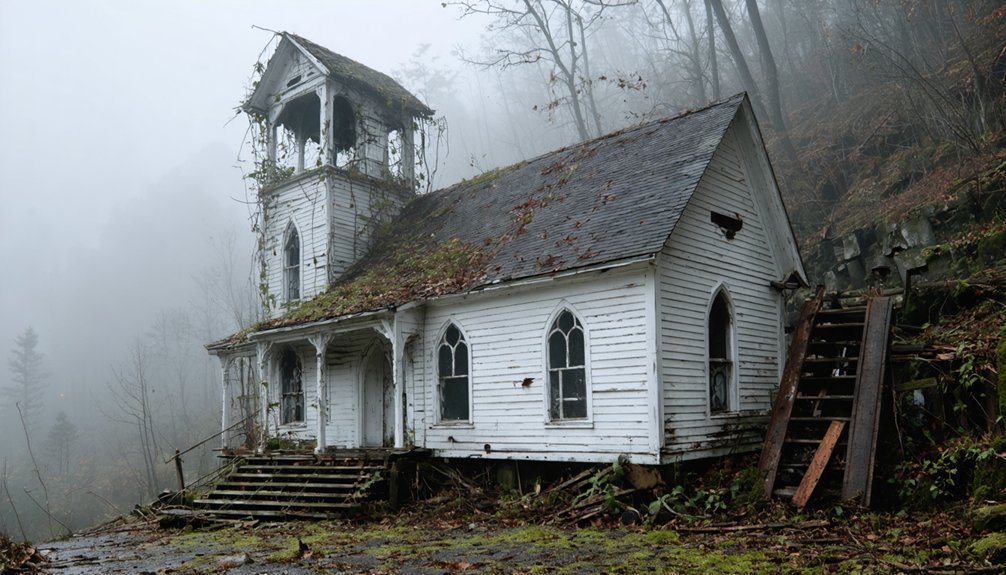
As you explore Appalachian ghost towns, you’ll notice architectural shifts from simple log cabins to more sophisticated Craftsman-style structures, particularly evident in places like Elkmont’s Daisy Town section.
The preserved buildings tell stories through their construction materials – from rough-hewn logs and board-and-batten siding to the integration of larger porches that reflected changing lifestyles and social patterns.
These structural remains, along with their artifacts and interpretive displays, provide tangible evidence of how mountain communities evolved from basic settlements into sophisticated seasonal retreats for wealthy urbanites in the early 20th century.
Building Styles Through Time
While exploring Appalachian ghost towns today, you’ll find that their architectural heritage reveals distinct patterns of early mountain life through evolving building materials and techniques.
As you delve deeper into the stories of ghost towns in the Appalachian Mountains, you’ll encounter remnants of vibrant communities that once thrived in the rugged landscape. Each structure tells a tale of resilience, echoing the challenges faced by its inhabitants. The unique combinations of cultural influences present in these towns add to their mystique, drawing adventurers and historians alike to uncover their hidden histories.
The abandoned structures tell a story of architectural evolution, from simple timber dwellings to more complex community designs.
You’ll discover these distinct building phases throughout the region:
- Early settlements relied on locally-sourced timber and stone foundations, adapting to rugged mountain terrain.
- Railroad expansion brought standardized materials, enabling rapid construction of uniform worker housing and commercial buildings.
- Wealthy retreat areas introduced more elaborate designs with decorative elements and larger footprints.
This progression reflects the transformation from isolated mountain communities to industrialized towns, with each era leaving its mark through distinct construction methods and architectural choices.
Stories Behind Remaining Structures
Today’s preserved ghost town structures across Appalachia serve as physical time capsules that tell complex stories of boom-and-bust cycles, cultural resilience, and architectural innovation.
You’ll find these stories etched in Elkmont’s restored cabins, where 19 preserved buildings showcase early 20th-century resort life, and in Lost Cove’s scattered stone chimneys that whisper ghost stories of moonshine runners and frontier independence.
Blue Heron’s innovative metal frameworks outline where buildings once stood, while audio recordings bring the mining community’s cultural significance to life.
At Thurmond, the original depot stands as a testament to the railroad era.
Each site offers unique preservation approaches – from Elkmont’s full restoration to Blue Heron’s architectural outlines – but they all serve one purpose: keeping Appalachia’s rich cultural heritage alive through their remaining structures.
Lost Resort Communities of the Smokies
Deep in the Smoky Mountains of Tennessee, the abandoned resort community of Elkmont stands as a tribute to America’s early tourism industry.
What began as a logging camp in the 1900s evolved into an exclusive retreat when the Appalachian Club established Daisy Town, building elegant vacation cabins along Jakes Creek.
You’ll discover three distinct phases that shaped this lost paradise:
- The shift from logging operations to a prestigious resort destination between 1910-1926
- A golden age of summer retreats where wealthy families brought trunks and servants to their Elkmont cabins
- The eventual decline after the National Park Service acquired the land, offering owners lifetime leases that expired in 1992
Today, these abandoned structures tell a story of leisure, privilege, and the inevitable march of time in the Smokies.
Archaeological Treasures in Forgotten Villages
Beneath the rugged Appalachian soil lies a complex archaeological record of indigenous civilization, centered around the Nacoochee Valley‘s remarkable mound complexes. You’ll find at least 38 identified mounds, where archaeological discoveries reveal centuries of continuous occupation spanning 2,700 years.
Hidden beneath Appalachia’s soil, ancient mounds reveal 2,700 years of indigenous life, with 38 earthen monuments marking their enduring presence.
These aren’t just simple earthen hills – they’re sophisticated engineering feats. You can trace their evolution from burial sites to ceremonial platforms through distinct layers of colored soils and indigenous artifacts.
The Eastwood Village Site showcases this transformation, where two burial mounds merged into a massive 250-foot platform. A thick layer of alluvial sand marks the dramatic end of this civilization around 1700 AD, before Anglo-American settlement.
Within these forgotten villages, stone-lined burial mounds topped with ritual white quartz tell a story of complex societies that flourished in these valleys for generations.
Living Memories: Oral Histories of Mountain Life
You’ll find that behind every abandoned storefront in Appalachian ghost towns lies a tapestry of personal stories waiting to be heard from the families who once called these places home.
Through carefully documented oral histories, you can trace the daily rhythms of mountain life – from the bustle of general stores to the echoes of children playing in now-empty streets.
These firsthand accounts reveal not just the physical structures of lost communities, but the intricate social bonds and cultural traditions that gave these mountain towns their spirit.
Personal Tales Behind Storefronts
What brings abandoned Appalachian storefronts back to life most vividly? It’s the rich storefront stories preserved through oral histories, where former residents paint detailed pictures of once-bustling main streets that served as the heartbeat of mountain communities.
Through these community memories, you’ll discover how local businesses functioned as more than just shops:
- General stores operated on trust-based credit systems during hard times, with owners keeping detailed ledger books.
- Post offices and barber shops doubled as social hubs where essential town decisions were made.
- Family-run establishments adapted through generations, weathering economic shifts from mining booms to railroad changes.
These firsthand accounts reveal how storefronts anchored mountain life, fostering resilience through barter systems and social bonds that sustained communities even during their most challenging periods.
Mountain Families Remember Home
Through carefully preserved oral histories, Appalachian ghost towns spring back to life in the memories of those who once called these mountains home.
You’ll discover how family traditions endure through recorded interviews of elders sharing stories about pre-industrial life, from subsistence farming to seasonal rhythms that governed daily routines.
These ancestral connections remain strong, as descendants return yearly to former town sites for family reunions and cemetery visits. They speak their ancestors’ names aloud, maintaining deep ties to these forgotten places.
Churches served as the backbone of mountain communities, where generations gathered for worship, celebrations, and mutual support.
Today, organized oral history projects guarantee these voices aren’t lost, capturing diverse perspectives from African American residents to multi-generational households that once populated company towns and hollows.
Modern Exploration and Heritage Tourism
As abandoned settlements across the Appalachian region capture increasing attention, modern exploration and heritage tourism have emerged as significant economic drivers for rural communities.
Ghost town exploration has transformed from casual hiking adventures into organized experiences that connect you with tangible pieces of history, from forgotten mining equipment to hidden cemeteries reclaimed by nature.
The heritage tourism impact is substantial, with sites like the Ghost Town Trail generating $1.7 million in economic benefits.
You’ll find:
- Well-preserved towns like Thurmond, WV, offering glimpses into past industrial life
- Digital archives and guided walking tours led by local historians
- Small businesses offering authentic experiences rooted in Appalachian culture
Through these preserved spaces, you’re not just visiting historical sites – you’re supporting communities as they transform their industrial past into sustainable economic opportunities.
Frequently Asked Questions
Are There Any Documented Paranormal Activities in Appalachian Ghost Towns?
In Tennessee’s Pressmen’s Home, where 3,000+ workers once lived, you’ll find documented ghost sightings at Berry’s crypt and haunted locations like Bell Witch Cave, with state-verified supernatural activity causing death.
How Safe Is It to Explore Abandoned Mining Tunnels Independently?
You’re risking your life by independently exploring abandoned mines. Deadly hazards include sudden collapses, toxic gases, drowning, and hidden shafts. Mining experts strongly advise against any unsanctioned exploration attempts.
Can People Legally Purchase Property Within These Ghost Towns Today?
You can’t legally purchase property in most Appalachian ghost towns since they’re under federal or state ownership. Private purchases are only possible in rare cases where land has no legal restrictions.
What Happened to the Furniture and Belongings Left Behind?
You’ll find most furniture fell to decay through exposure, while personal belongings deteriorated from weather and wildlife. Some items survived in sealed spaces, preserving fragments of history despite decades of abandonment.
Are There Any Completely Undiscovered Ghost Towns Still Hidden in Appalachia?
You’ll find dozens of undiscovered settlements – with LiDAR mapping revealing over 150 hidden foundations in 2021 alone. These forgotten legends and hidden treasures remain cloaked by dense forests and rugged terrain.
References
- https://www.youtube.com/watch?v=4oHlJFXbrCk
- https://www.geotab.com/ghost-towns/
- https://smokymountainnationalpark.com/blog/fun-facts-about-elkmont-ghost-town/
- https://appalachianmemories.org/2025/10/16/the-lost-towns-of-appalachia-the-forgotten-mountain-communities/
- https://www.blueridgeoutdoors.com/go-outside/southern-ghost-towns/
- https://www.thewanderingappalachian.com/post/the-underwater-towns-of-appalachia
- https://www.visitmysmokies.com/blog/smoky-mountains/things-didnt-know-history-elkmont-ghost-town/
- https://www.youtube.com/watch?v=RRS9TL_PLsA
- https://www.appalachianplaces.org/post/appalachia-s-other-company-towns
- https://www.appalachianhistory.net/2014/07/ghost-towns-cumberland-plateau.html