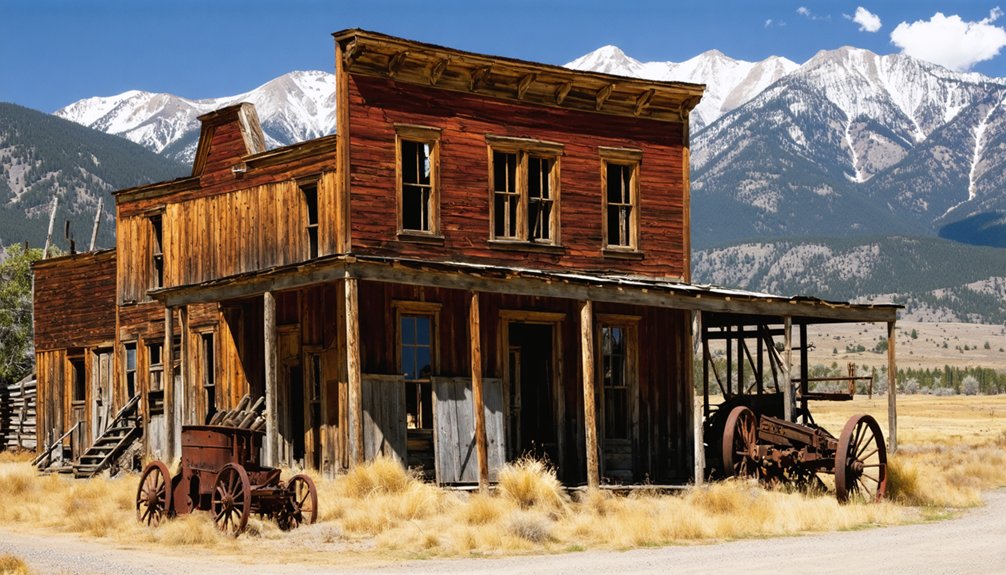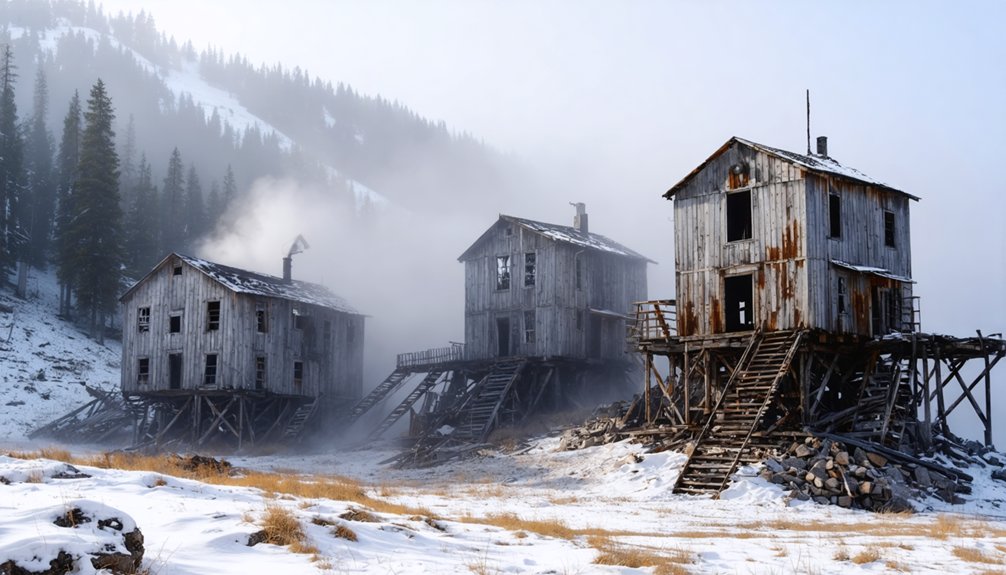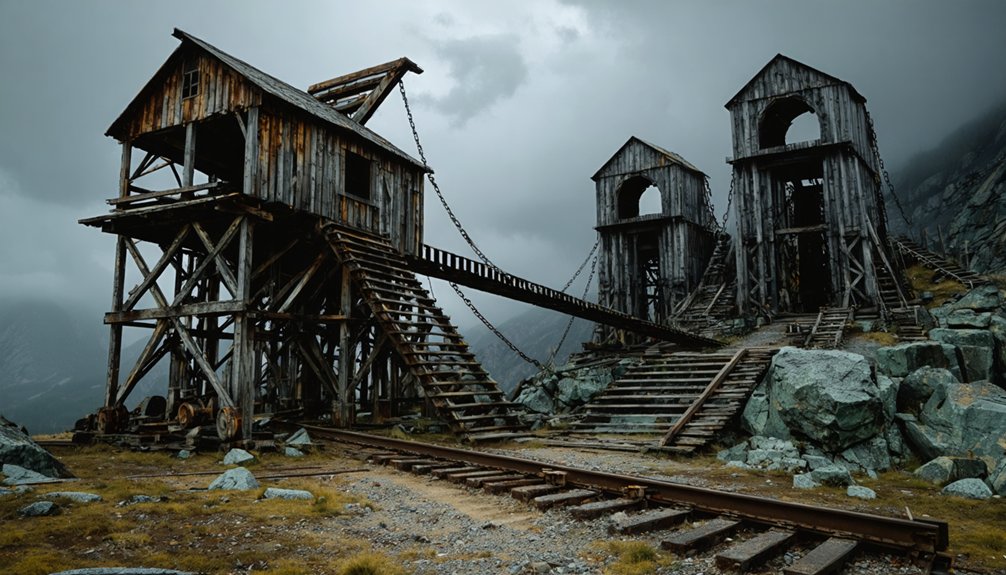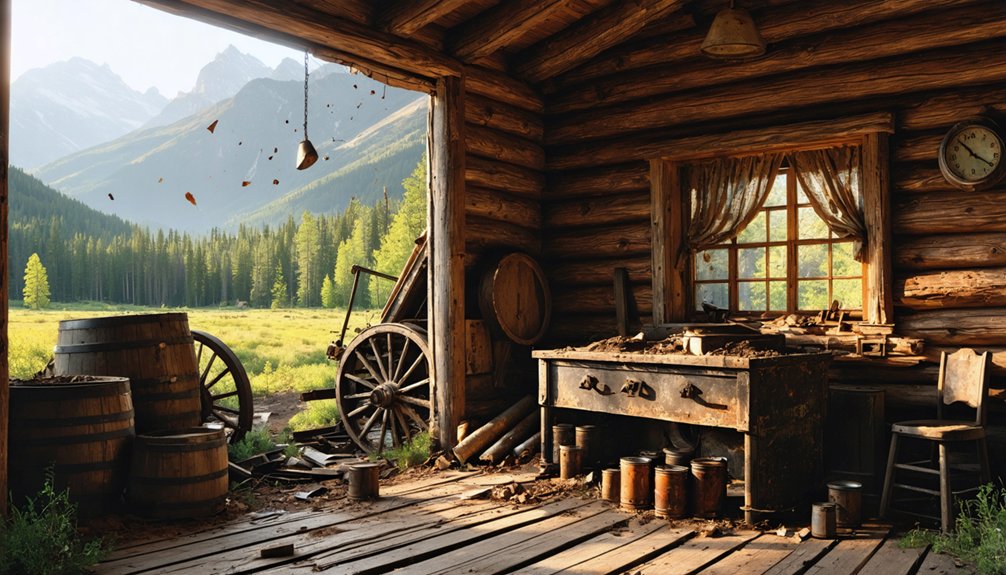
You’ll discover fascinating remnants of Colorado’s mining heyday within its abandoned camps, where weathered structures tell tales of fortune-seekers who transformed tent settlements into bustling communities. From the $82 million silver boom in Leadville to the preserved architecture of St. Elmo’s 43 original buildings, these ghost towns reveal the true nature of frontier life through their mills, boarding houses, and tunnels. The mysteries of Colorado’s mining heritage await your exploration.
Key Takeaways
- Abandoned mining camps contain preserved architectural marvels like the Mountain Top Mine boarding house, showcasing century-old construction techniques.
- Hidden artifacts and original structures, including square-headed nails and log buildings, reveal daily life in boom-era mining communities.
- Ghost towns like St. Elmo maintain 43 original buildings at high elevation, offering glimpses into the rapid development of mining settlements.
- The remains of early mining operations, including shallow placer mines and over 18,000 abandoned mine sites, dot Colorado’s landscape.
- Weathered foundations and mills, such as Crystal Mill, stand as silent witnesses to the dramatic boom-and-bust cycles of mining communities.
The Rush for Rocky Mountain Riches
While numerous factors contributed to Colorado’s mining rush, the General Mining Act of 1872 served as a significant catalyst that transformed the Rocky Mountain region into a hotbed of mineral exploitation.
You’ll find that this essential mining legislation opened federal lands to widespread prospecting, attracting waves of settlers seeking their fortune. After being signed into law, the act initiated dramatic changes in how mining operations could be established and managed across the American West.
The economic impact was immediate and far-reaching. When you look at the 1858-59 Pikes Peak Gold Rush, you’ll see how it triggered massive migration, establishing Denver and numerous mountain camps. In 1863, the industry diversified when commercial coal mining began near Boulder under Joseph W. Marshall’s operation.
The Pikes Peak Gold Rush ignited a human tidal wave, carving Denver from wilderness and birthing countless mountain settlements across Colorado.
The subsequent silver discoveries in Leadville in 1879 further diversified the region’s mineral wealth. With each new find – from molybdenum to coal, aluminum to uranium – you’d witness the evolution of mining techniques and the birth of boomtowns, all supported by expanding railway networks and military protection.
Life in a Boom Town’s Golden Days
You’d have witnessed a bustling commercial scene in Colorado’s boom towns, where banks, general stores, and supply shops served thousands of miners and their families during the height of mining operations.
The rhythms of daily life revolved around the mines’ schedules, with workers streaming to and from the shafts while merchants, saloonkeepers, and service providers catered to their needs in the town centers. Situated at almost 10,000 feet, mining camps like Caribou challenged residents with harsh mountain conditions. The discovery of Tom’s Baby nugget in 1887 sparked renewed excitement and drew even more fortune seekers to these mountain settlements.
Social life thrived in these communities, where saloons, gambling halls, and entertainment venues offered escape from the harsh realities of mining life, creating distinct social hierarchies between mine owners, skilled workers, and laborers.
Daily Routines and Commerce
Life in Colorado’s mining camps followed strict daily rhythms shaped by the demands of mineral extraction and basic survival. You’d start your day before dawn, donning woolen undergarments and chemically-hardened hats for protection underground. Hispanic miners often worked seasonal jobs in agriculture to supplement their income.
The mining companies controlled nearly every aspect of daily life, from clothing storage to ore shipping security. Marriages often happened young as families arranged unions to ensure financial stability.
- Your shift began at 7 AM, descending through treacherous manways while carrying hand tools and tallow candles.
- Your family managed the economic impacts through diverse roles – wives preparing meals, women operating boarding houses.
- You’d store provisions carefully, stacking canned goods and planning meals around long underground shifts.
- Your living quarters, whether tent or cabin, served as both shelter and social hub, though they were often cramped and dust-filled.
Entertainment and Social Life
Despite the harsh realities of frontier mining life, Colorado’s boomtowns pulsed with vibrant entertainment and social gatherings that defined their golden era.
You’d find dance halls and saloons buzzing day and night, where fiddlers, guitarists, and piano players kept spirits high. On the Fourth of July, you’d witness grand parades with brass bands marching down main street, while communal gatherings in repurposed halls brought neighbors together for social dances and performances. The towns were filled with merchants and gamblers who arrived seeking opportunity in these bustling mountain communities.
The entertainment venues weren’t without their risks – you’d need to watch your back in the nightlife’s dangerous mix of gamblers and con men. When the silver crash of 1893 hit, many of these once-lively establishments shuttered their doors forever.
Yet these cultural expressions, from the sacred Sunday orchestras to the raucous celebrations at places like Fat Jack’s, created bonds that transcended the harsh mining life, offering you moments of joy and freedom in the wild frontier.
From Tents to Towns: Building Mountain Communities
While Colorado’s mining camps began as hastily erected tent settlements during the 1858-1859 Pikes Peak Gold Rush, successful locations quickly evolved into permanent communities when rich mineral deposits were discovered.
You’ll find evidence of this community evolution in places like Gregory Diggings, which transformed from a 15-person camp into a bustling town of 10,000 within just one month. As discoveries continued through the mid-1870s prospectors ventured into every corner of the territory to establish new districts and settlements. The expansion of mining operations across Colorado generated over $1.1 billion in revenue during the boom years.
Consider these key developments that turned temporary camps into thriving towns:
- Stores, saloons, and permanent housing replaced canvas shelters
- Towns adopted formal names and structured layouts
- Essential services emerged, including post offices and schools
- Infrastructure adapted to challenging mountain terrain and harsh winters
The shift wasn’t always smooth – you’ll notice how geography shaped these communities, with steep slopes forcing dense building patterns and narrow streets in places like Leadville and Telluride.
Tales From the Mines Below
Beneath Colorado’s rugged mountain peaks, a complex network of tunnels and shafts tells the story of ambitious prospectors who risked their lives in search of mineral riches.
Deep beneath Colorado’s peaks lies a labyrinth of tunnels where brave souls once chased dreams of striking it rich.
You’ll find mining legends of the Virginius and Mountain Top mines, which yielded millions in precious metals from elevations above 12,000 feet, while ghostly whispers echo through the famous Tomboy Mine’s abandoned corridors.
These weren’t just holes in the ground – they were the foundation of bustling communities.
The mines’ prosperity shaped entire towns, attracting everyone from hardworking miners to crafty con men.
When mine whistles weren’t calling workers to their shifts, they’d summon folks to church services, as in Guston’s unique tradition.
Yet success proved fleeting – once rich veins played out or mineral prices dropped, these thriving operations often shuttered, leaving only memories behind.
When Fortune Favored the Bold
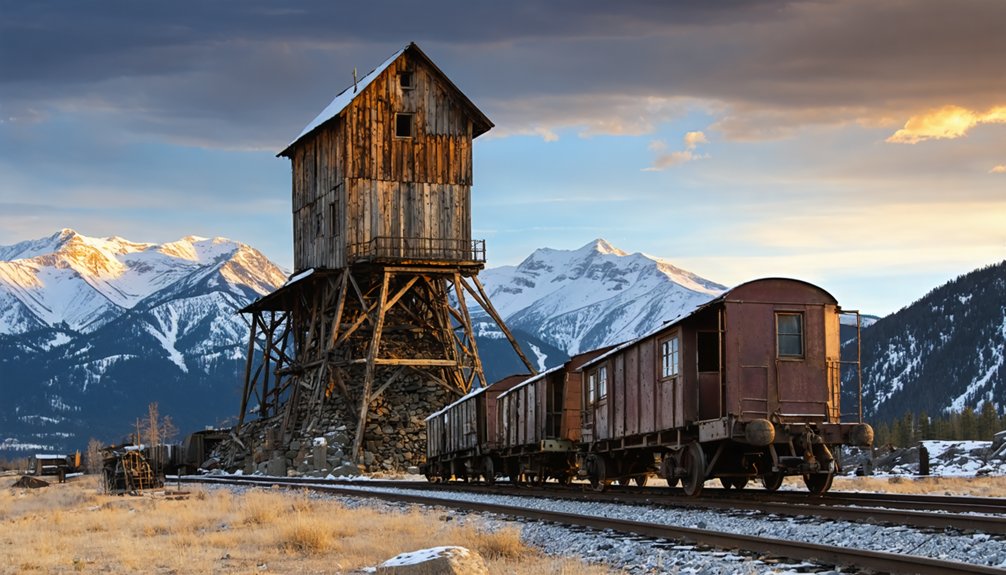
As Colorado’s mineral wealth beckoned in 1858, the Pikes Peak Gold Rush launched an era of unprecedented prosperity that would transform the territory into America’s premier mining frontier.
You’ll find that fortune seekers didn’t just strike it rich through luck – they revolutionized the industry through determination and ingenuity.
- Mining innovations flourished as operations evolved from simple placer mining to sophisticated deep shaft excavations.
- Labor movements gained momentum through strikes like the 1894 Cripple Creek action, which secured better working conditions.
- Towns like Leadville generated over $82 million in silver, proving that calculated risks could yield astronomical returns.
- The discovery of diverse minerals, from gold to molybdenum, created multiple pathways to wealth for those willing to brave the harsh mountain conditions.
Abandoned Dreams in the High Country
The promise of boundless riches couldn’t shield Colorado’s mining camps from their inevitable fate.
You’ll find their abandoned aspirations scattered across the state’s high country, where towns that once buzzed with saloons and commerce now stand silent above 11,000 feet. The devaluation of silver in 1893 delivered the fatal blow to many settlements, forcing residents to desert their mountain dreams practically overnight.
Today, you can trace forgotten legacies through weathered foundations and deteriorating mills like the Crystal Mill, where water once powered the machinery of progress.
These remote outposts tell a stark tale of boom and bust – from bustling communities with post offices and hotels to ghost towns reclaimed by alpine forests.
Even attempts at reinvention, like Dearfield’s resort aspirations, ultimately surrendered to time and isolation.
Preserved in Time: Structures That Still Stand
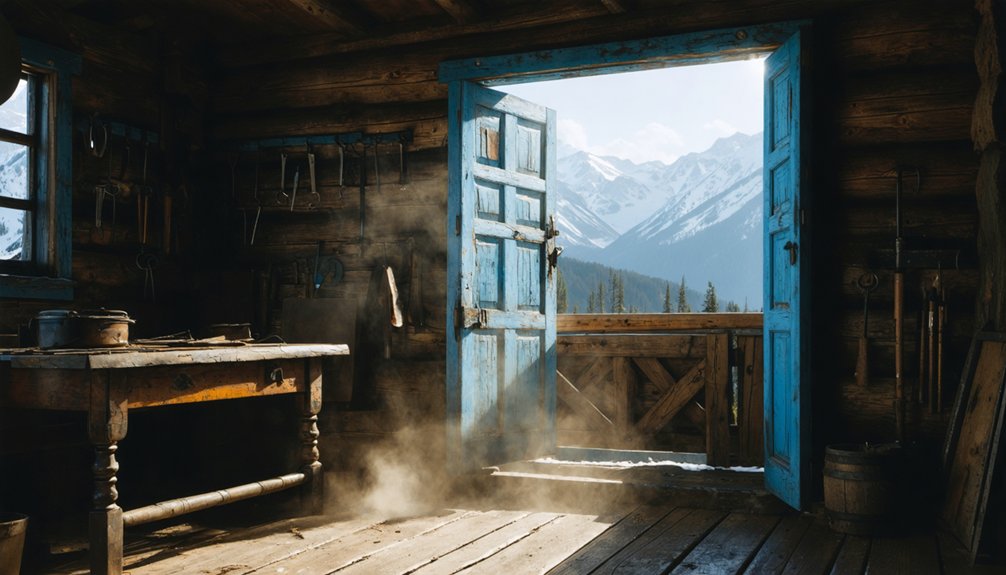
When you venture into Colorado’s historic mining camps today, you’ll discover remarkable architectural survivors that have endured more than a century of harsh alpine conditions.
Buildings like the Mountain Top Mine boarding house standing above 12,000 feet and St. Elmo’s intact commercial district provide tangible connections to the state’s mining heritage.
These preserved structures, from false-front stores to weathered cabins, reveal the innovative construction methods and daily lives of the mining communities that once thrived in these remote mountain settings.
Time-Weathered Architecture Remains
Standing defiantly against time and elements, Colorado’s historic mining structures offer fascinating glimpses into frontier life through their weathered frames and log construction.
These remote outposts, built above 12,000 feet, face constant battles against nature’s forces, yet many still endure after more than a century.
- You’ll find original square-headed nails holding together the wooden frames at sites like Animas Forks, where preservation efforts battle freeze-thaw cycles.
- The Tobasco Cabin stands as the last sentinel of early 1900s mining life near Cinnamon Pass.
- At Mountain Top Mine’s boarding house, you can witness how miners engineered structures to withstand extreme alpine conditions.
- St. Elmo’s dozen surviving buildings showcase the durability of 19th-century construction techniques, despite facing harsh mountain weather and limited maintenance opportunities.
Historic Buildings Tell Tales
Five remarkably preserved mining towns across Colorado offer detailed windows into frontier life through their surviving structures.
You’ll find St. Elmo’s 43 original buildings, including an operational general store, showcasing the architectural significance of this 9,600-foot elevation settlement.
At Ashcroft, restored log cabins and interpretive displays reveal the cultural legacy of an 1880s silver boomtown.
Red Mountain Town’s remaining structures, including the historic Tobasco Cabin, stand as monuments to Colorado’s mining prosperity.
Alta and Nevadaville maintain authentic period buildings, with Nevada Lodge No. 4 still hosting Freemason meetings.
In Vicksburg and Winfield, you can walk streets lined with century-old poplars, past preserved storefronts and cabins that housed thousands during the region’s mining heyday.
The Last Echo of Pick and Shovel
Though the Colorado mining era began with simple tools, the demanding work of pick and shovel mining shaped both the landscape and the lives of countless miners from 1858 onwards.
Armed with just picks and shovels, Colorado miners transformed the rugged terrain and forged new destinies starting in 1858.
As you explore these ghostly remains, you’ll discover how basic pick techniques evolved into more sophisticated operations when surface gold became scarce. Labor struggles emerged as miners faced grueling conditions in hazardous underground spaces.
- You can still find evidence of early manual mining methods in shallow placer operations and surface workings.
- The shift to deep mining required extensive tunnel networks and complex ore processing.
- Chlorination plants and stamping mills revolutionized metal recovery by 1893.
- Worker strikes, like the 1896 Leadville uprising, led to improved conditions and shorter hours, though progress came at a heavy price.
Hidden Treasures Among Ghost Town Ruins
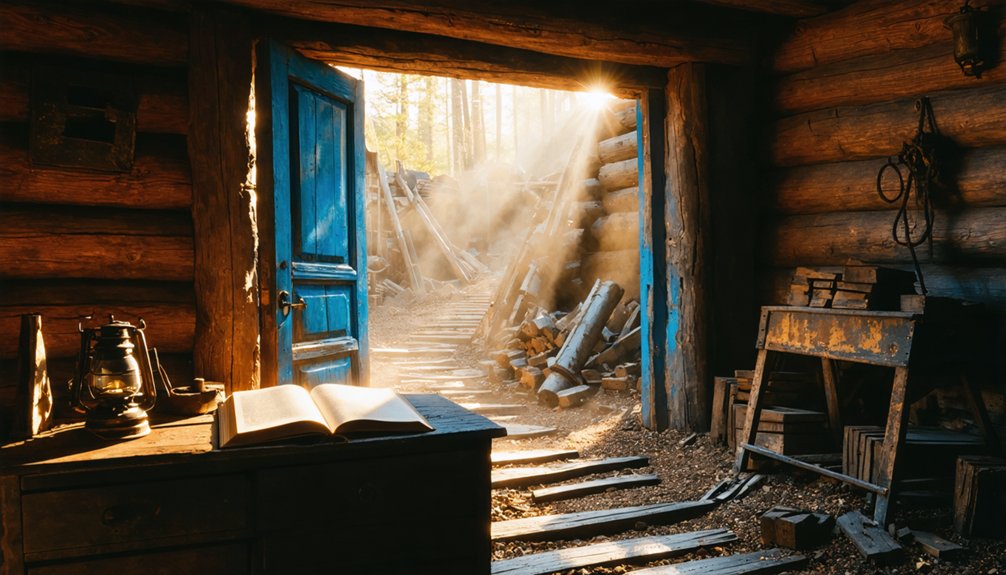
While most of Colorado’s mining wealth has long since been extracted, tantalizing stories of undiscovered riches continue to draw modern-day explorers to the state’s ghost camps.
You’ll find these hidden treasures hinted at in places like Treasure Mountain in Gunnison County, where legends of French expeditioners’ buried gold from the 1700s persist.
The ghostly riches aren’t just folklore – physical evidence of vast wealth exists in abandoned mines near Nevadaville and throughout the San Juan Mountains, where original mining equipment and structures remain frozen in time.
Your best chances for discovering historical artifacts lie in preserved sites like Animas Forks and the Red Mountain District, where remnants of Colorado’s mining heyday, from ore carts to historic coins, still surface among alpine ruins.
Exploring Colorado’s Mining Heritage Today
Today, Colorado’s rich mining heritage stands as a tribute to the industry that shaped the state, with over 18,000 abandoned mines scattered across its dramatic landscape.
You’ll find this legacy preserved through museums, historic sites, and carefully maintained ghost towns, though environmental challenges persist from centuries of extraction.
Some of these haunted locations in the Midwest offer guided tours that delve into their eerie pasts, allowing visitors to connect with the history that lingers in the air. Others have become popular for their paranormal investigations, attracting enthusiasts eager to capture evidence of the supernatural. As interest in ghost stories and haunted sites grows, these locations are transforming into vibrant attractions that celebrate both their heritage and the mysteries they hold.
- Visit the Western Museum of Mining & Industry to explore the evolution of mining technology, from early hand tools to industrial-era machinery.
- Venture into the Creede Underground Mining Museum for an authentic subterranean experience.
- Discover historic mining towns like Lulu City, protected by the National Park Service.
- Research detailed mine reports at the Colorado State Archives, documenting operations from 1900-1980.
While exploring these sites, you’ll notice ongoing reclamation efforts addressing the $2 million annual challenge of securing hazardous features and protecting local watersheds.
Frequently Asked Questions
Are There Any Dangerous Environmental Hazards in Abandoned Mining Camps Today?
You’ll encounter serious hazards from toxic waste and heavy metals at abandoned mines, where acid drainage and contaminated water threaten your safety and pollute over 1,800 miles of Colorado’s streams.
What Happened to Unclaimed Gold After Mines Were Suddenly Abandoned?
You can’t legally claim abandoned gold without proper mining regulations today. While valuable deposits remain, federal law dictates that unclaimed minerals revert to public domain, requiring permits for any gold recovery attempts.
Did Native American Tribes Interact With These Mining Communities?
You’d think it was all peace and harmony, but Native Americans had complex, often tense interactions with mining camps, experiencing both cultural exchange and devastating economic impact as their lands were seized for mining operations.
Were There Doctors or Medical Facilities in These Remote Camps?
You’d rarely find doctors in remote mining camps. Most relied on traveling physicians, midwives, and home care. Mining health suffered from limited medical supplies and long distances to proper facilities.
How Did Mail and Communication Services Operate in Isolated Mining Towns?
Pioneering postal paths connected your isolated camps through rugged mail routes, where carriers braved deadly terrain. You’d rely on post offices, telephone lines, and telegraph services for essential communication methods.
References
- https://www.uchealth.org/today/ghost-towns-abound-in-colorado/
- https://gunnisoncrestedbutte.com/blog/hike-to-colorados-abandoned-mining-camps/
- https://www.coloradolifemagazine.com/printpage/post/index/id/172
- https://www.legendsofamerica.com/co-ghosttowns/
- https://www.sandradallas.com/colorado-ghost-towns-and-mining
- https://www.colorado.com/articles/colorado-ghost-towns
- https://www.durango.com/colorado-ghost-towns/
- https://redthunderoralhistoryproject.org/timeline
- https://en.wikipedia.org/wiki/Timeline_of_mining_in_Colorado
- https://www.nps.gov/romo/learn/historyculture/time_line_of_historic_events.htm