You’ll find that Ghost Whisperer wasn’t filmed in a real town at all – it primarily used Universal Studios’ Back Lot in Los Angeles to create the fictional Grandview. The show’s creators transformed the iconic Courthouse Square set (famous from Back to the Future) and Colonial Street into their supernatural small town. While some scenes incorporated real California locations like Orange’s Plaza Square and Pasadena’s streets, the heart of Grandview’s ghostly tales unfolded right on Universal’s historic grounds.
Key Takeaways
- Ghost Whisperer was primarily filmed at Universal Studios Back Lot, which created the fictional town of Grandview.
- The show’s main filming location centered around Courthouse Square, famous for its appearance in Back to the Future.
- Additional scenes were filmed in Plaza Square, Orange, California, utilizing its early 1900s architecture and vintage storefronts.
- Parts of Pasadena, California served as filming locations, providing tree-lined streets that resembled a New England setting.
- Various locations throughout Los Angeles were used for exterior shots to enhance the authenticity of Grandview’s small-town setting.
The Universal Studios Back Lot: Heart of Grandview
The heart of Ghost Whisperer’s fictional town of Grandview came to life on Universal Studios’ historic back lot in Universal City, California.
You’ll find that the production team cleverly utilized existing streets and facades rather than building a completely new set, making the most of Universal’s versatile filming locations.
The back lot’s modular design allowed for seamless filming techniques, combining different street sections to create a cohesive small-town atmosphere.
Key areas like Courthouse Square served as Grandview’s town center, while Colonial Street provided the perfect backdrop for residential scenes.
The Back to the Future plaza became an iconic filming spot for many of the show’s memorable scenes.
The production team used the classic architecture of Stage 28 for several indoor sequences before moving to other locations.
The production team enhanced Universal’s existing structures with strategic lighting, custom signage, and careful set dressing to transform the studio space into a believable New York town, maintaining visual consistency until the 2008 fire prompted a move to Warner Bros. Studios.
Inside the Famous Courthouse Square Set
You’ll recognize Courthouse Square at Universal Studios as the iconic Hill Valley from Back to the Future, though for Ghost Whisperer, it underwent significant modifications.
The historic set, first built in 1948 for An Act of Murder, features a prominent courthouse building that has survived multiple fires and reconstructions over the decades. A devastating three-alarm fire in 2008 damaged parts of the location, though the main courthouse facade remained intact. After extensive repairs, the location celebrated its grand reopening in June 2009.
When transformed for Ghost Whisperer, the production team removed the famous clock, added a façade to the courthouse pillars, and installed a central gazebo to create the distinctive look of Grandview.
Historic Set Details
Located within Universal Studios’ sprawling backlot, Courthouse Square served as the beating heart of Ghost Whisperer’s fictional town of Grandview.
You’ll find this iconic set design has been a Hollywood mainstay since the late 1940s, featuring a striking two-story courthouse building that anchors the town center layout.
The architectural features reflect quintessential small-town America, with period-style storefronts, classic lamp posts, and a charming town green area.
While the courthouse building itself is purely a facade, it’s become one of the most recognizable sets in television and film history.
The versatile space has been continuously updated and redressed for countless productions, though it maintains its timeless appeal.
For Ghost Whisperer, the set designers enhanced the square’s nostalgic atmosphere to create the perfect supernatural backdrop. Many fans recognize this location as the same town square used in the Back to the Future trilogy. The show’s production also utilized Colonial Street backlot for additional filming locations.
Back to Future Connection
Perhaps most fascinating about Courthouse Square’s role in Ghost Whisperer is its iconic status as Hill Valley’s town center in the Back to the Future trilogy.
You’ll instantly recognize the same layout, buildings, and famous clock tower that served as the backdrop for Marty McFly’s adventures now repurposed as Grandview’s charming downtown.
The connection between these productions runs deeper than just shared architecture. The show was filmed at Universal Studios backlot in Los Angeles, maintaining the authentic small-town feel throughout its run.
For optimal viewing experience, viewers should ensure JavaScript is enabled in their browsers to fully appreciate the detailed set designs and visual elements.
Tom Wilson, who played Biff Tannen in Back to the Future, made several appearances on Ghost Whisperer – a deliberate nod to the set’s legacy.
As you watch both shows, you’ll notice they utilize identical camera angles and street configurations, allowing you to spot familiar storefronts and architectural details that link these two beloved properties through their shared iconic locations.
Real California Towns Behind the Scenes
Ghost Whisperer utilized several filming locations in Universal Studios, California and its surrounding areas. The show made use of Plaza Square in Orange, California as one of its key filming spots.
Orange’s Plaza Square Setting
The historic Plaza Square in downtown Orange, California, served as the real-world backdrop for Ghost Whisperer’s fictional Grandview, New York.
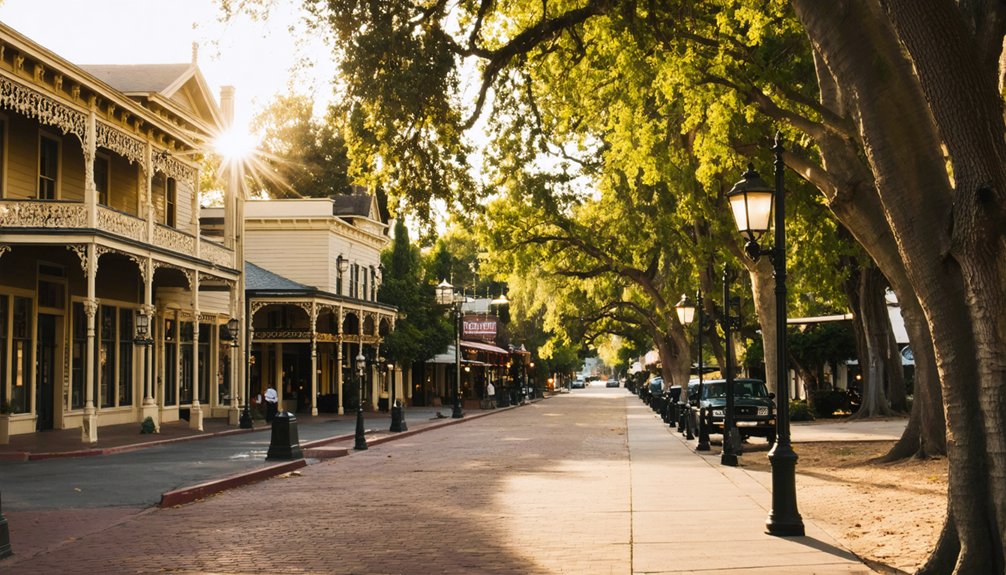
You’ll find Plaza Square’s charm in its early 1900s architecture, featuring classic brick buildings, vintage storefronts, and a central park with a fountain that perfectly captured small-town America.
The filming logistics were straightforward: production crews would transform the walkable downtown area into Grandview’s main street, where you’d spot Melinda Gordon strolling past shops or interacting with townspeople.
The location’s versatility allowed crews to shoot both day and night scenes, while its proximity to Los Angeles made it an ideal choice.
The preserved architecture and minimal modern elements helped create the authentic New York small-town atmosphere viewers came to love.
Pasadena Location Highlights
The city’s tree-lined streets and mix of Craftsman, Spanish Revival, and Beaux-Arts buildings created the perfect New England atmosphere with minimal set dressing.
Key Pasadena filming spots included 141 N Grand Avenue and the iconic City Hall.
If you’re exploring Ghost Whisperer’s real-world locations, don’t miss the Colorado Street Bridge, Gamble House, and Fenyes Mansion – all part of Pasadena’s rich television history.
Southern California Film Spots
While Ghost Whisperer’s fictional town of Grandview was set in New York, most of the show’s filming took place across several Southern California locations.
You’ll find the heart of Grandview at Universal Studios’ Courthouse Square backlot, famous for its iconic clock tower and town square layout from Back to the Future.
The historic Plaza Square in Orange served as a key filming spot, with its Craftsman architecture and tree-lined streets creating the perfect small-town atmosphere.
The Cravens Estate in the San Gabriel Valley area provided gothic backdrops for supernatural storylines, while Altadena’s residential neighborhoods doubled as Grandview’s suburban streets.
These Southern California filming locations offered versatile settings that could be transformed into convincing East Coast scenes through creative set dressing and camera angles.
Creating Melinda’s Antique Shop and Home
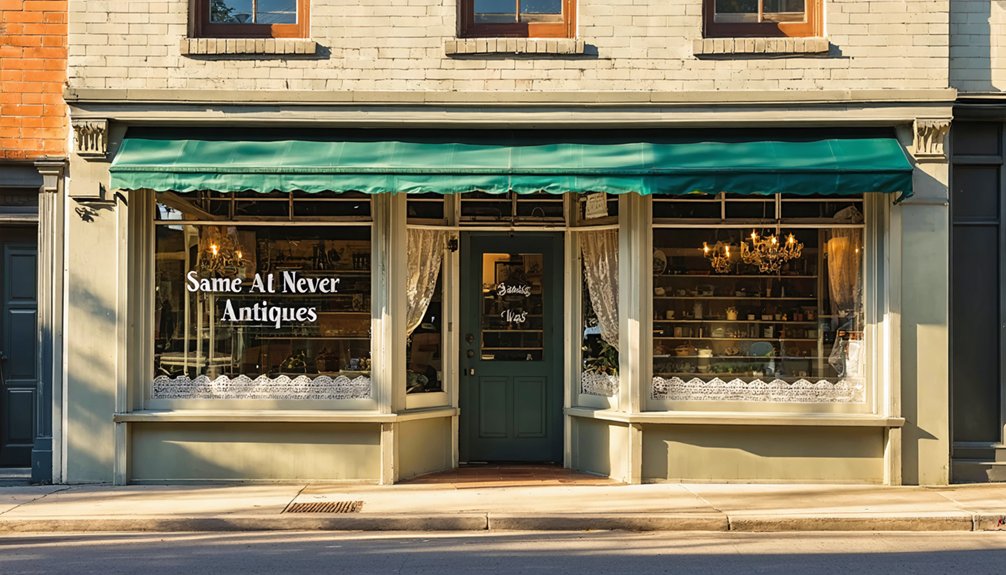
Inside Melinda Gordon’s supernatural world, two key locations brought Ghost Whisperer’s eerie charm to life: her antique shop and Victorian home.
You’ll find both sets on Universal Studios’ back lot, where set designers crafted these iconic spaces on Courthouse Square and sound stages. The antique shop’s carefully curated prop selection blends authentic period pieces with mystical elements, creating the perfect backdrop for spirit encounters.
World-renowned psychic James Van Praagh consulted on the shop’s layout to guarantee supernatural authenticity.
In Melinda’s home, you’ll notice warm, inviting spaces that contrast with the show’s spooky elements. The set decorators filled both locations with meaningful objects that often played essential roles in ghost-related storylines, while hidden technical equipment helped create the supernatural atmosphere.
Behind the Magic: Production Locations
Nestled within Hollywood’s bustling film industry, Universal Studios’ back lot served as the primary filming location for Ghost Whisperer’s fictional town of Grandview.
You’ll find the iconic Courthouse Square, which you might recognize from Back to the Future, transformed through set design into the show’s charming town center.
While most scenes utilized Universal’s versatile street sets, including Colonial Street and Elm Street, the production team also ventured into real locations around Los Angeles.
You can spot authentic exterior shots from Orange’s Plaza Square and various Pasadena locations.
The filming techniques seamlessly blended these locations with the controlled studio environment, where special effects teams at Smart Post Sound and Eden FX worked their magic to create the show’s supernatural atmosphere.
The Legacy of Ghost Whisperer’s Filming Sets
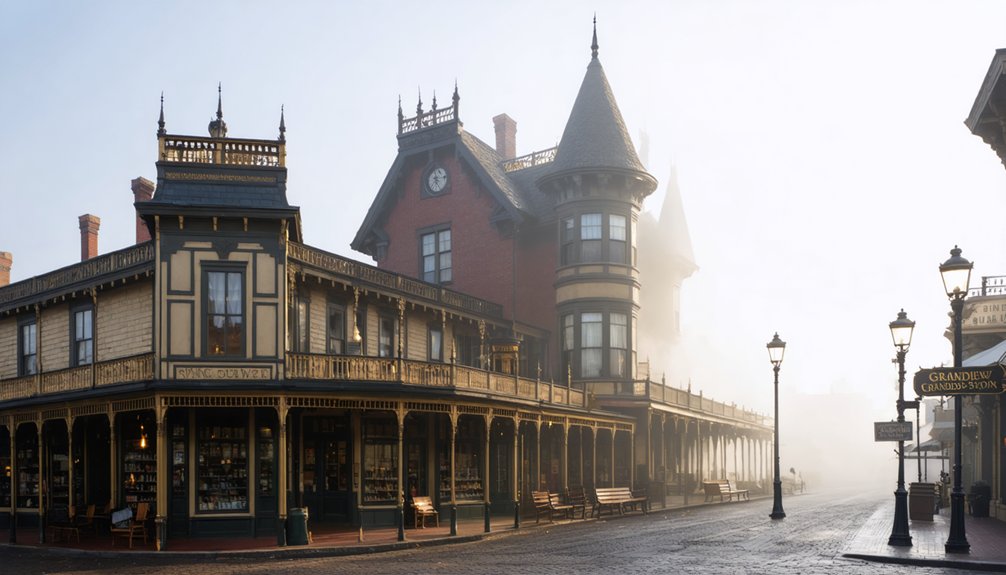
The Universal Studios backlot left an indelible mark on television history through Ghost Whisperer‘s iconic sets.
You’ll find a rich heritage woven into every corner, from the instantly recognizable Courthouse Square, famous from Back to the Future, to the meticulously crafted antique shop that became central to the show’s mythology.
The set evolution perfectly matched the series’ narrative continuity, creating an authentic small-town atmosphere that drew viewers into Melinda’s supernatural world.
The seamless evolution of Ghost Whisperer’s sets crafted a believable small town where supernatural tales felt hauntingly real.
- Courthouse Square served as the heart of storytelling, hosting key paranormal encounters
- Colonial Street and Elm Street provided versatile backdrops for diverse storylines
- The Plaza Square in Orange, California added genuine urban texture
- Eden FX and Flash Film Works seamlessly integrated visual effects with physical sets
Frequently Asked Questions
Did Any Cast Members Live Near the Filming Locations?
A million stars lived right around Universal Studios! You’ll find cast residences scattered throughout Los Angeles near the filming location, with local attractions like the Hollywood Hills and Valley neighborhoods within easy reach.
Were Fans Allowed to Visit the Filming Sets During Production?
You couldn’t freely access filming sets during production, though Universal Studios occasionally offered guided tours. Direct fan experiences were limited to scheduled events or viewing from designated public areas during studio tours.
How Long Did It Take to Transform Locations for Filming?
Quick as a flash, you’d see location transformations take 1-3 days for basic changes, while major filming preparations needed 3-5 days. Complex rebuilds of key spots could stretch up to a week.
Which Original Buildings From Filming Still Exist Today?
You won’t find original Ghost Whisperer buildings today, though Courthouse Square’s historical preservation continues at Universal Studios. The original architecture was dismantled, with only modified elements appearing in newer productions.
Did Weather Conditions Ever Affect Filming on the Universal Back Lot?
You’ll find that while SoCal’s coastal fog and summer heat presented some filming challenges, weather impact on Ghost Whisperer’s backlot production was minimal, with crews easily adapting schedules around any conditions.
References
- https://www.imdb.com/title/tt0460644/locations/
- https://www.imdb.com/title/tt0460644/
- https://en.wikipedia.org/wiki/Ghost_Whisperer
- https://www.filmaps.com/series/ghost-whisperer-filming-locations
- https://ultimateghostwhisperer.fandom.com/wiki/Ghost_Whisperer
- https://giggster.com/guide/movie-location/where-was-ghost-whisperer-filmed
- https://www.thestudiotour.com/productions.php?id=1
- https://en.wikipedia.org/wiki/Courthouse_Square
- https://www.iamnotastalker.com/2008/09/18/stalking-the-wb/
- https://en.wikipedia.org/wiki/Colonial_Street