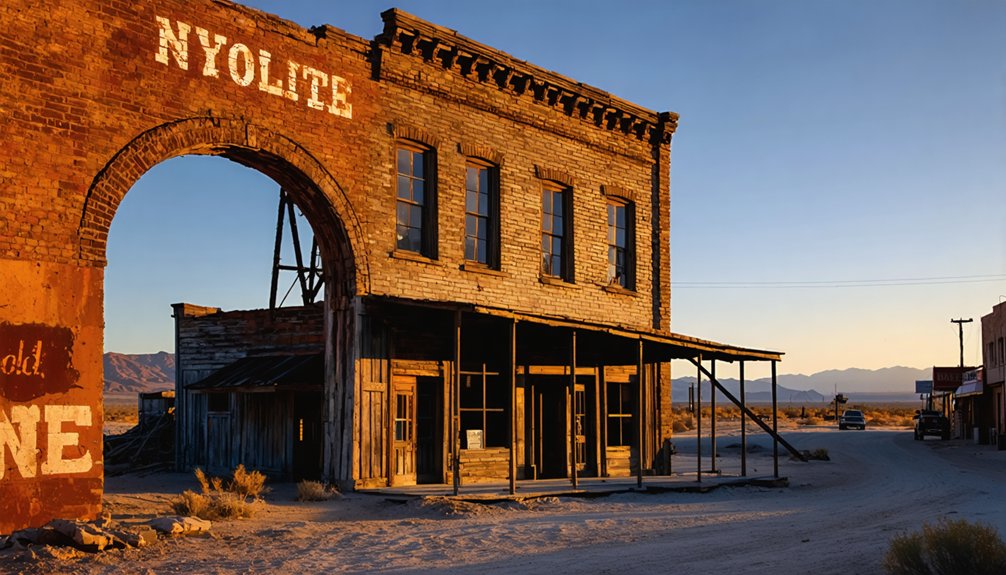
American industrial ruins offer you invaluable insights into the nation’s manufacturing heritage and working-class history. You’ll discover unexpected beauty in their decaying architecture, where nature slowly reclaims abandoned spaces through ecological succession. These sites document essential narratives of immigrant labor, technological innovation, and economic transformation that shaped modern America. Beyond their historical significance, these ruins serve as powerful artistic inspiration and living laboratories for understanding industrial legacy’s lasting impact on communities.
Key Takeaways
- Industrial ruins preserve crucial stories of America’s manufacturing heritage, immigrant experiences, and labor movements that shaped the nation’s economic development.
- These sites showcase remarkable architectural innovation through exposed materials and construction methods that defined America’s industrial golden age.
- Abandoned industrial spaces demonstrate nature’s resilience as plants and wildlife transform deteriorating structures into thriving urban ecosystems.
- Ruins document important community histories and social changes, serving as powerful reminders of economic transformation’s impact on local populations.
- The visual drama of decaying industrial structures provides unique artistic opportunities for photographers and creators to capture American history.
Time Capsules of American Manufacturing
While America’s industrial ruins now stand as silent sentinels of decay, they serve as invaluable repositories of the nation’s manufacturing heritage from the late 19th to mid-20th centuries.
These architectural remnants capture the industrial nostalgia of specialized production hubs like Pittsburgh’s Steel City and Detroit’s Motor City, where concentrated expertise shaped America’s economic destiny.
You’ll find these sites rich with labor legacy stories, from immigrant workers to African American families who joined the Great Migration seeking industrial employment.
The ruins document the rise of company towns, union movements, and the complex social dynamics that defined America’s manufacturing golden age.
Within their weathered walls, you’ll discover the physical evidence of industrial design, production methods, and working conditions that built the nation’s economic backbone until the 1950s decline began.
Many sites like the Bethlehem Steel Plant have been transformed into cultural spaces where visitors can experience both art and history.
The economic vitality of these industrial sites peaked when manufacturing reached its height as 32.9% of GDP in 1953, before automation and globalization triggered their downfall.
The Hidden Beauty of Decaying Architecture
Ruins provide unique opportunities to blend historic architecture with modern design. Physical reminders of decay and weathering create compelling storytelling elements in contemporary spaces. Historic locations like the Michigan Central Station reflect our nation’s evolving transportation history.
Raw Industrial Design Elements
Despite their deteriorating state, American industrial ruins reveal an unexpected beauty through their raw architectural elements, where exposed materials and decaying structures create a compelling visual narrative.
Through raw materiality exploration, you’ll discover honest expressions of brick, concrete, and steel that tell stories of America’s manufacturing heritage. These unrefined surfaces, marked by time’s passage, showcase authentic construction methods rarely visible in modern buildings.
The architectural authenticity appreciation deepens as you examine the exposed rivets, beams, and structural frameworks that demonstrate the era’s innovative building techniques. Cultural heritage preservation becomes increasingly vital as these structures stand as irreplaceable testaments to our industrial past.
Natural aging processes have created complex textures where human-made materials merge with organic elements, while the interplay of light through skeletal remains adds dramatic dimension.
These industrial spaces offer a unique documentary of architectural evolution, celebrating both imperfection and engineering ingenuity. Many cities now recognize these spaces as opportunities for urban regeneration, transforming them into vibrant cultural hubs.
Nature Reclaiming Steel Structures
As abandoned steel structures surrender to time’s passage, they transform into living canvases where nature stages a remarkable reclamation. Through ecological succession, these industrial relics become thriving habitats where organic matter accumulates, and pioneering species take hold.
These enduring structures maintain their core stability thanks to steel’s durability properties, as the material never warps, cracks, rots, or splits even as nature takes over. You’ll witness rust-streaked beams draped in vibrant vines, creating stunning visual contrasts between decay and renewal. These evolving landscapes contribute greatly to urban biodiversity, offering refuge for birds, insects, and small mammals.
You’ll find diverse microclimates within the steel frameworks, where moisture-loving mosses thrive alongside sun-seeking flowering plants. The ruins serve as crucial corridors connecting fragmented urban ecosystems, while their aesthetic transformation tells a powerful story of nature’s resilience. The SteelStacks Campus in Bethlehem demonstrates how blast furnaces can be preserved as iconic architectural elements.
These living laboratories demonstrate how industrial decline can birth new forms of ecological richness.
Voices From the Industrial Working Class
While historical accounts often focus on industrialists and business titans, the true story of American industrialization emerges through the diverse voices of its working class – the immigrants, natives, and rural migrants who powered the nation’s factories.
You’ll find their worker narratives embedded in the fabric of America’s industrial ruins, where diverse ethnic groups toiled 50-60 hour weeks under hazardous conditions. Their cultural identity shaped the nation’s industrial backbone, as first- and second-generation immigrants comprised a significant portion of the 10 million manufacturing workers by 1920. This marked a significant change from the seventy-hour workweeks common in the previous century.
The rise of wage labor systems fundamentally transformed American society as workers outnumbered the self-employed for the first time after the Civil War. In these abandoned spaces, you can still sense the echoes of labor strikes, ethnic tensions, and the relentless pursuit of better wages and working conditions. These voices reflect a transformative period when America shifted from an agrarian to an industrial powerhouse.
Nature’s Reclamation of Forgotten Spaces
You’ll find a compelling transformation in America’s abandoned industrial sites, where nature steadily reclaims concrete expanses and rusted structures through ecological succession.
As native plants colonize these forgotten spaces, they create new habitats for wildlife, turning former symbols of environmental degradation into unexpected sanctuaries of biodiversity.
What you’re witnessing is nature’s remarkable capacity for healing, as these industrial ruins evolve into complex ecosystems that bridge urban landscapes with wild spaces, offering essential ecological corridors for species adaptation and survival.
Urban Wilderness Emerges
Beneath the skeletal remains of America’s industrial past, nature orchestrates a remarkable transformation of abandoned factories, mills, and warehouses into vibrant ecosystems.
As communities embrace these changes, preservation efforts in Massachusetts towns have played a crucial role in allowing nature to reclaim these spaces. Local initiatives are focused on restoring green areas and enhancing biodiversity, creating a habitat that supports both wildlife and residents. This revitalization not only celebrates the history of these sites but also fosters a sense of community and environmental stewardship.
You’ll witness vegetation bursting through concrete floors, scaling rusty walls, and colonizing forgotten corners, creating stunning ecological contrasts between human-made structures and wild growth. These spaces aren’t merely decaying relics; they’re evolving into essential sanctuaries of urban biodiversity.
As you explore these industrial ruins, you’ll discover how nature reclaims its territory, establishing complex habitats that support diverse wildlife communities.
Birds nest in old girders, insects thrive in emerging meadows, and small mammals find shelter among crumbling foundations. This spontaneous wilderness emergence represents nature’s resilience, forming what ecologists now recognize as distinctive “third landscapes” within our urban fabric.
Nature Heals Industrial Scars
Through complex biological processes, nature systematically heals and transforms abandoned industrial sites into thriving ecological habitats. You’ll witness ecological succession as hardy pioneers like mosses and fungi break down concrete and steel, while creating soil for larger plants.
Through bioremediation practices, natural microbial communities detoxify polluted soils, while wetlands filter contaminants and restore water cycles.
- These industrial ruins become essential wildlife refuges, offering shelter and resources for diverse species in urban landscapes.
- Nature’s reclamation creates striking aesthetic contrasts, where rust meets verdant growth, inspiring artistic expression.
- The transformation demonstrates nature’s resilience, turning toxic wastelands into living laboratories of regeneration.
You’re observing a powerful indication of environmental recovery, where nature’s persistent forces convert industrial scars into biodiverse sanctuaries, enriching both ecosystem health and cultural heritage.
Preserving Our Industrial Heritage

As industrial structures across America face decay and demolition, systematic preservation efforts have emerged to protect these essential monuments of our technological heritage.
When you explore these sites today, you’ll find sophisticated artifact preservation techniques, including supercritical fluid treatments and polymer sealants, that protect iron artifacts while adhering to ethical conservation principles of reversibility and non-alteration.
You’re witnessing a coordinated effort to document and save America’s industrial legacy through initiatives like the Historic American Engineering Record.
These preservation strategies prioritize minimal intervention while maintaining authenticity – you’ll notice how adaptive reuse projects carefully balance modern functionality with historical integrity.
This institutional framework, supported by preservation standards and technical guidelines, guarantees that you can continue to experience these powerful reminders of America’s industrial might for generations to come.
Economic Impact on Local Communities
When major industrial facilities shut down, they trigger devastating economic chain reactions throughout local communities.
You’ll witness how these closures create rippling effects that extend far beyond lost jobs, undermining the entire economic foundation of affected areas. The impact becomes evident through:
- Plummeting property values and tax revenues that cripple essential public services
- Mass exodus of working-age residents, leading to further business closures and reduced economic activity
- Deterioration of social cohesion and community identity, hampering economic revitalization strategies
Despite these challenges, you’ll find that community resilience initiatives can help reverse this decline.
Success requires addressing both immediate economic needs and long-term structural issues through targeted investment, workforce development, and preservation of valuable industrial infrastructure that could support future growth opportunities.
From Dangerous Work to Historic Landmarks

Once bustling with dangerous industrial activity, America’s former manufacturing sites now stand as powerful historic landmarks that chronicle the nation’s industrial evolution.
You’ll find stark reminders of the dangerous conditions workers faced daily in places like Sloss Furnaces, where hazardous environments and minimal worker safety protocols were commonplace. These preserved ruins, with their original equipment and structures intact, offer you authentic glimpses into the physically demanding world of early industrial labor.
Today, these transformed spaces serve a crucial educational purpose. As you explore these National Historic Landmarks, you’ll encounter the machinery, factory layouts, and worn materials that tell stories of technological progress and worker sacrifice.
The preservation of these sites guarantees that future generations understand both the innovative spirit and human cost of America’s industrial rise to power.
Photography and Artistic Inspiration
Photographers have discovered a compelling artistic canvas within America’s industrial ruins, where specialized techniques like infrared photography reveal ethereal dimensions beyond conventional sight.
Through visual storytelling, you’ll witness how these forgotten spaces transform into profound artistic interpretations of our industrial heritage, capturing both decay and resilience in equal measure.
- Your exploration reveals stories of economic transformation and community displacement through the stark contrast of abandoned machinery against nature’s reclamation.
- You’ll find that each composition challenges conventional perspectives, as photographers experiment with light, shadow, and texture to convey deeper meanings.
- You’re witnessing history preserved through an artistic lens, as these ephemeral structures may soon vanish, leaving only photographic evidence of their existence.
These haunting images serve as powerful reminders of impermanence while inspiring innovative approaches to documenting America’s industrial legacy.
Frequently Asked Questions
What Safety Precautions Should Explorers Take When Visiting Industrial Ruins?
Like Detroit’s Packard Plant explorers learned, you’ll need proper safety gear including helmets and respirators, a partner, first aid supplies, and emergency contacts before entering abandoned industrial structures.
Are Industrial Ruins Legally Accessible to the Public?
You’ll face significant legal restrictions when accessing industrial ruins – most require permits or landowner permission. Public access is often prohibited, with federal laws enforcing criminal penalties for unauthorized exploration.
How Can Communities Fund the Preservation of Local Industrial Ruins?
With $1,000-$3,000 DeLony Grants available, you’ll find success through community grants, crowdfunding initiatives, federal preservation tax credits, and local business partnerships. Collaborate with historical societies for matching funds and resources.
What Photography Equipment Works Best for Capturing Industrial Ruins?
You’ll need wide angle lenses for capturing vast interior spaces, a weather-sealed camera body for protection, drone photography equipment for aerial perspectives, and a sturdy tripod for low-light conditions.
Do Industrial Ruins Contain Valuable Salvageable Materials or Artifacts?
You’ll find significant salvage potential in industrial ruins, from recyclable metals and machinery to historically significant artifacts, though you’ll need to navigate hazardous conditions and legal restrictions carefully.
References
- https://www.smithsonianmag.com/travel/abandoned-industrial-ruin-garden-wilmington-dupont-crowninshield-180981544/
- https://www.abbeyslinker.com/blog/2020/12/13/the-contemporary-role-of-post-industrial-ruins-in-the-midwest-chapter-5
- https://hiddencityphila.org/2015/03/surveying-the-damage-with-abandoned-america-the-age-of-consequences/
- http://www.printmag.com/daily-heller/the-daily-heller-lost-in-america/
- https://plantandmachinery.caboodleai.net/article/166865/20-forgotten-industrial-sites-in-the-u.s.-that-are-eerily-beautiful
- https://www.mensjournal.com/travel/america-ruins-a-look-back-at-americas-industrial-heyday
- https://www.nps.gov/subjects/industry/industrial-revolution.htm
- https://en.wikipedia.org/wiki/Rust_Belt
- https://www.richmondfed.org/publications/research/econ_focus/2023/q3_economic_history
- https://www.brookings.edu/wp-content/uploads/2018/04/2018-04_brookings-metro_older-industrial-cities_full-report-berube_murray_-final-version_af4-18.pdf