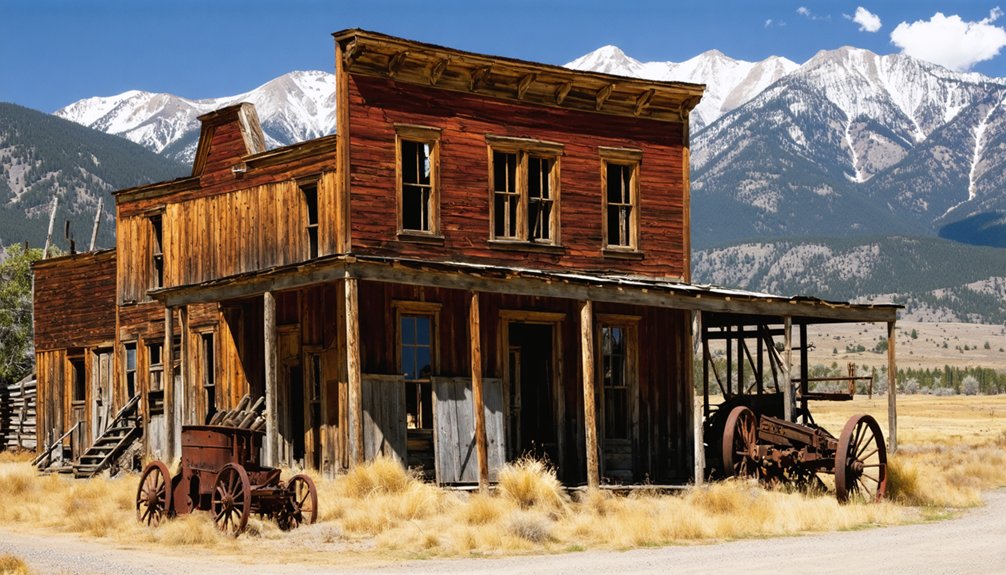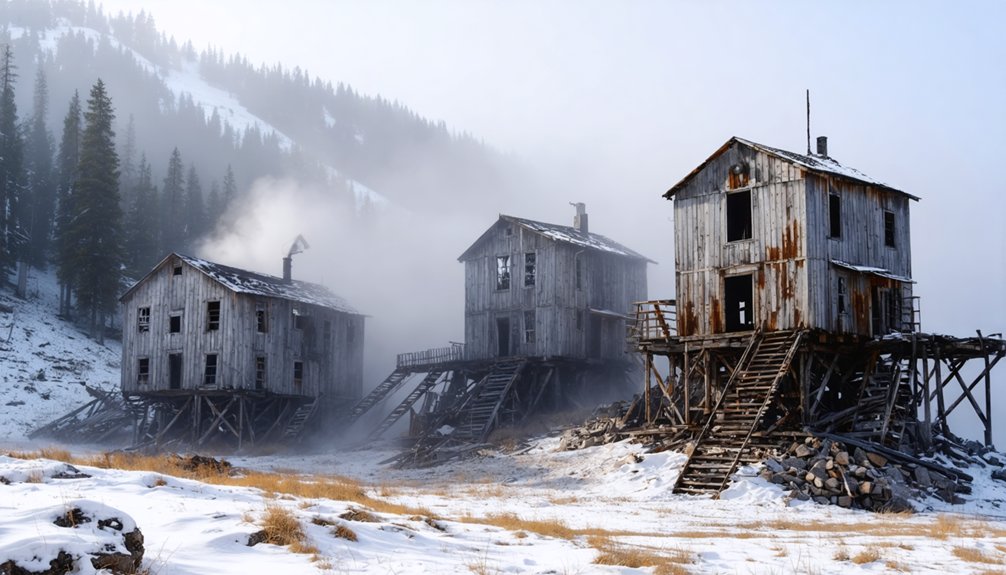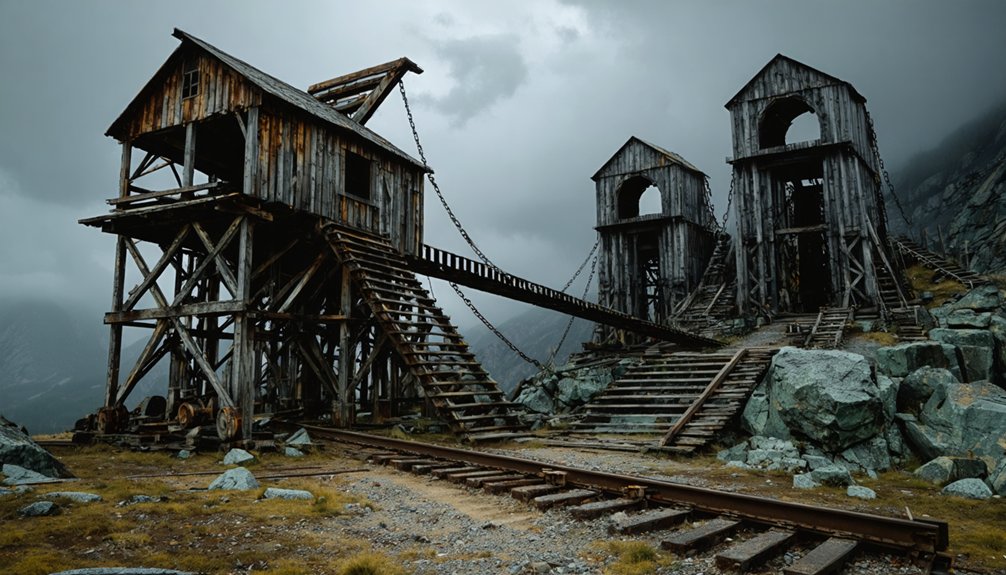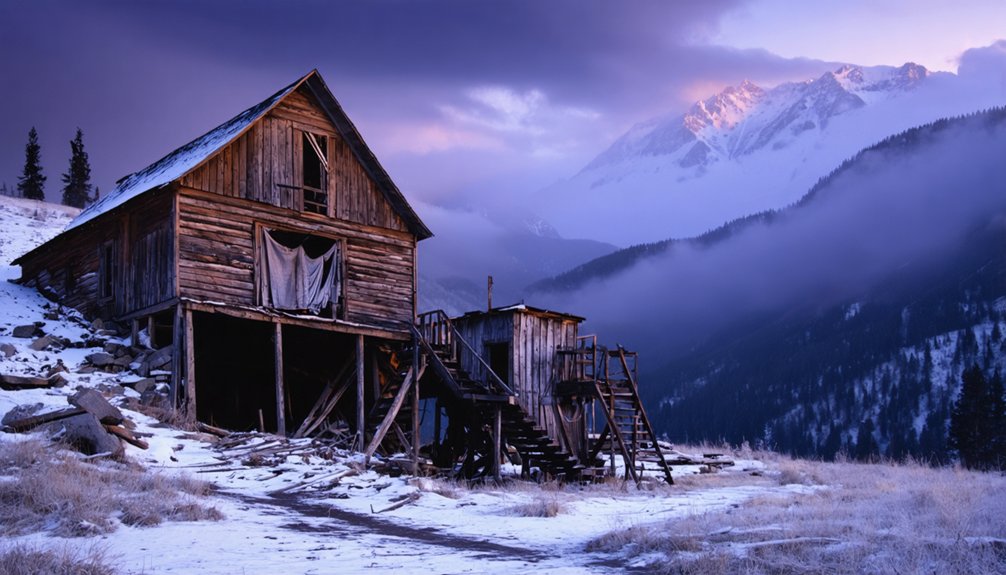
Colorado’s mining camps gained their haunted reputation through a deadly mix of extreme conditions and human tragedy. You’ll find these camps were built on sacred Native American lands amid harsh 8,000-11,000 foot elevations, where altitude sickness and brutal weather claimed countless lives. The sudden wealth attracted desperate fortune-seekers, leading to murders, claim disputes, and supernatural beliefs about mine spirits. These dark elements merged to create enduring legends that still echo through hundreds of ghost towns today.
Key Takeaways
- Tommyknocker spirits from Cornish-Welsh folklore became deeply embedded in mining culture, with miners leaving offerings for supernatural protection.
- Violent deaths, shootings, and murders in lawless mining camps created a foundation for dark legends and haunting stories.
- Hidden fortunes and mysterious markings, like those at Treasure Mountain, sparked deadly conflicts and tales of cursed wealth.
- The rapid transformation from bustling towns to abandoned ghost towns fueled beliefs about supernatural forces and cursed settlements.
- Native American displacement from sacred lands added spiritual elements to mining camp legends through violated cultural connections.
The Perfect Storm: High Altitudes and Harsh Realities
While mining in Colorado promised riches during the 19th century, the extreme altitudes of mining camps created a perfect storm of physiological and environmental challenges.
You’d find yourself battling altitude sickness at elevations between 8,000-11,000 feet, where oxygen levels drop considerably. Your body would struggle with headaches, dizziness, and potential life-threatening conditions like pulmonary edema. Taking Diamox before ascent could help prevent these severe symptoms.
Environmental stress intensified these difficulties. The thin atmosphere exposed you to harsh UV radiation, while unpredictable weather patterns brought sudden storms and dangerous temperature swings. Gradual acclimatization would have been crucial for survival at these heights.
You’d face constant dehydration risks from low humidity and cold nights. Without proper medical knowledge or resources, your ability to adapt became essential for survival.
The combination of reduced oxygen, physical demands, and extreme weather conditions made these mining camps especially challenging environments to endure.
When Gold Fever Meets Native American Heritage
As gold fever swept through Colorado in the late 19th century, you’d witness a dramatic collision between miners’ ambitions and Native American heritage.
The rush for riches drove settlers onto lands sacred to the Ute, Arapaho, and Cheyenne peoples, who’d inhabited the region for thousands of years.
As prospectors poured into Colorado’s gold-rich mountains, they trampled the ancestral territories of Native tribes who called these lands home.
You’ll find that this cultural displacement went beyond physical removal. The tribes’ spiritual connection to mountains, rivers, and hunting grounds was severed as mining camps sprouted across their ancestral territories.
The Brunot Treaty of 1873 opened four million acres of San Juan land to settlers, dealing a devastating blow to Native American sovereignty.
Sacred sites were transformed into boom towns, while traditional winter gatherings and buffalo hunts became impossible. Treaties meant to protect Native lands crumbled when gold was discovered, forcing tribes onto reservations. Over 600 ghost towns now stand as silent witnesses to this tumultuous era.
The legacy lives on in legends of curses and hauntings, born from the clash between Native American spirituality and miners’ relentless pursuit of wealth.
Tales From the Underground: Tommyknockers and Mining Spirits
Deep beneath Colorado’s mountains, a peculiar group of supernatural beings captured miners’ imaginations – the Tommyknockers.
These two-foot-tall spirits, brought over from Cornish and Welsh mining folklore, became deeply woven into mining superstitions throughout the state’s camps. The mining communities shared tales of Cousin Jacks, who first introduced these spirit stories to American mines in Pennsylvania.
You’d find ceramic Tommyknocker figurines guarding mine entrances, while miners left food and coins as offerings to earn their protection.
The spirits could be both helpful and dangerous – knocking on walls to warn of cave-ins or lead workers to rich ore, but also causing mischief if disrespected. Many miners reported seeing mysterious fiery blue orbs floating through tunnels, believed to be Tommyknockers guiding them to valuable deposits.
Tommyknocker folklore lives on today in places like Idaho Springs, where you’ll find businesses named after these underground guardians.
Their legacy reminds us of the unique blend of immigrant traditions and mining culture that shaped Colorado’s mountain communities.
Blood, Greed, and Lawlessness in Boom Towns
You’ll find that Colorado’s mining camps were ruled by an explosive mix of greed and violence, where sudden mineral wealth attracted thousands of desperate fortune-seekers ready to kill for claims.
The chaos bred widespread lawlessness, with frequent shootings, barroom murders, and corrupt law enforcement that often sided with wealthy mine owners against workers. Mining tycoon Sam Strong was among many who met violent deaths when he was shot in 1901 during a heated barroom dispute.
Living conditions proved brutal and dangerous, as miners faced deadly accidents underground while above ground, fires, diseases, and economic crashes devastated entire communities built on unstable boom-and-bust cycles. The devastating Silver Crash of 1893 triggered widespread bankruptcies and abandoned towns across Colorado’s mining regions.
Violence Ruled Mining Camps
When Colorado’s mining camps erupted with wealth in the late 1800s, they also birthed an era of unprecedented violence and lawlessness.
You’d find mining conflicts everywhere – from brutal crackdowns on striking workers to vigilante mobs targeting ethnic minorities. Violence escalation became commonplace as company-backed guards wielded machine guns against miners and their families. Studies show that in areas with heavy mining activity and worker camps, there were dramatic crime spikes against local populations.
The chaos hit vulnerable groups hardest. Chinese miners faced racist attacks and arson, while Indigenous women suffered horrific rates of sexual violence near male-dominated camps. The Baldwin-Felts Detective Agency brought Death Special vehicles to terrorize striking workers and their families.
Law enforcement, when present, often served mining companies rather than justice. In many camps, martial law suspended basic rights, leading to torture and summary imprisonment.
Armed clashes between workers, private detectives, and militia forces turned mining towns into battlegrounds where might made right.
Money Drove Fatal Feuds
Inside Colorado’s mining camps, the intoxicating lure of instant riches sparked deadly feuds that turned neighbors into mortal enemies.
You’d witness money-driven rivalries erupt as miners staked hasty claims, leading to violent disputes over ownership rights. When formal courts didn’t exist, miners took justice into their own hands through brutal vigilante actions.
Greed-fueled violence intensified during the inevitable bust cycles, as desperate miners fought over dwindling resources. The stakes were life-and-death – a profitable claim meant survival, while failure often led to ruin.
Racial tensions and cultural prejudices only amplified these deadly conflicts, particularly targeting Chinese, Mexican, and Mormon miners. Without legal protections or official oversight, mining camps became powder kegs where wealth disparities ignited lethal confrontations, and armed standoffs over claims became commonplace.
Hidden Fortunes and Their Deadly Price
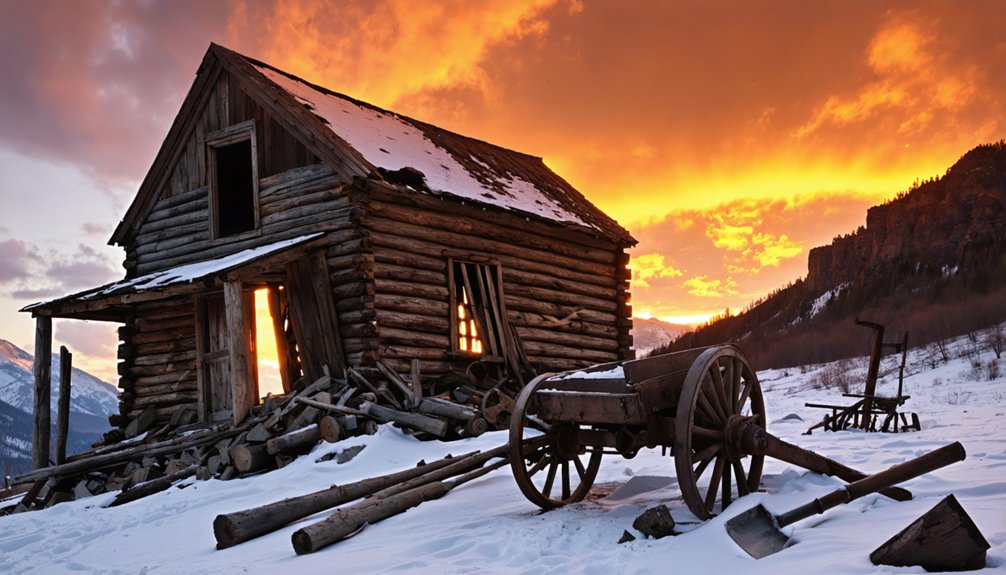
Throughout Colorado’s mining camps, tales of hidden fortunes have captivated prospectors and treasure hunters since the 1700s. The most famous mining myths surround Treasure Mountain, where French explorers allegedly buried vast quantities of gold.
You’ll find stories of secret caches marked by mysterious carvings, like those from the Tomboy Mine, which sold for $2 million in 1897.
But these hidden treasures came at a devastating cost. The pursuit of wealth led to violent claim disputes, executions, and countless deaths in dangerous mine shafts.
Working in harsh conditions at high altitudes, miners faced treacherous terrain and unstable tunnels. When economic collapses forced mine closures, entire communities crumbled.
The cycle of boom and bust left behind ghost towns, where legends of concealed riches still persist today.
Ghost Towns: When Dreams Turn to Dust
The rapid rise and fall of Colorado’s mining camps created a landscape dotted with over 1,500 ghost towns, though only 640 remain visible today.
These once-bustling mining communities drew thousands of fortune seekers, with some towns reaching populations near 10,000 during the boom years.
When you explore these abandoned settlements today, you’ll find:
- Well-preserved wooden structures in places like St. Elmo, where original sidewalks and buildings still stand
- Remote mountain locations that challenged both survival and infrastructure development
- Railroad remnants that once served as lifelines before their removal sealed many towns’ fates
- Environmental scars from mine waste, shafts, and adits that transformed the landscape
These ghost towns now serve as tourist destinations, where historical societies work to preserve Colorado’s mining legacy through heritage tourism and building stabilization efforts.
Visitors are drawn to the stories behind abandoned places in Michigan, each location steeped in its own unique history. Exploring these sites offers a glimpse into the past, showcasing the architectural remnants of a bygone era. As more people seek out these hidden gems, communities are starting to capitalize on their cultural significance and potential for revitalization.
The Legacy of Lost Mining Communities
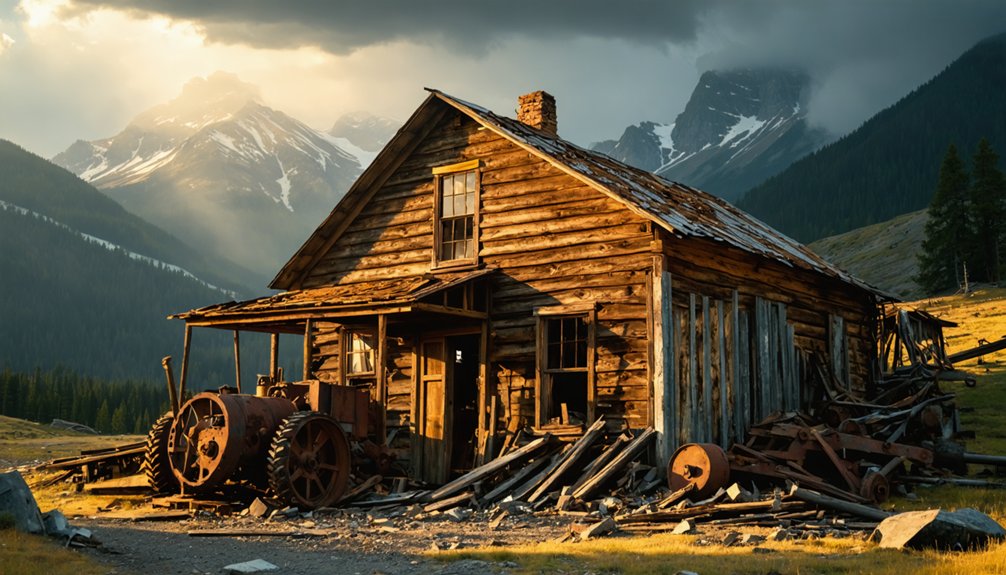
Mining communities that once thrived across Colorado’s rugged landscape left an indelible mark on American history, transforming from bustling towns of 40,000 residents into haunting reminders of the boom-and-bust cycle.
These lost legacies tell stories through their remnants – abandoned mills, weathered cabins, and silent cemeteries. You’ll find traces of diverse communities where miners, merchants, and fortune seekers once crossed paths in countless saloons and general stores.
The cultural impact of these settlements extends beyond their brief existence, as many sites now serve as protected historical landmarks and tourist destinations.
Today, places like Cripple Creek and Tincup preserve this mining heritage, while interpretive trails near Vicksburg and Goldfield let you explore the authentic remains of America’s mining era, offering glimpses into the dramatic rise and fall of Western frontier life.
Frequently Asked Questions
How Did Miners Identify Safe Locations to Establish New Mining Camps?
You’ll want to conduct topographical surveys for flat, defensible ground near water sources, while checking for mineral indications like ore outcrops and ensuring you’ve got legal claims to establish camp.
What Role Did Women Play in Shaping Mining Camp Culture?
Through pioneers like Harriet Fish Bacus, who ran bustling boarding houses, women’s contributions transformed rough camps into communities. They’ll inspire you by establishing social order and bringing stability through camp socialization efforts.
Did Any Mining Camps Successfully Transition to Modern Sustainable Communities?
You’ll find successful changes in places like Golden’s Mines Park, where sustainable development transformed old mining housing, and towns like Camp V, where community resilience emerged through adaptive reuse and tourism-based economies.
How Did Transportation Networks Influence the Survival of Mining Settlements?
You’ll find that transportation routes determined which camps thrived or died – as mining settlements with diverse survival strategies leveraged pack trails, toll roads, and eventually railroads to maintain crucial supply chains.
What Methods Did Miners Use to Communicate Between Isolated Camps?
You’d communicate through signal fires and bells early on, then upgrade to landline telephones, party-line circuits, and two-way radios, finally adopting satellite and internet systems in modern times.
References
- https://eaglecountyhistoricalsociety.com/holy-cross-city/
- https://www.legendsofamerica.com/co-ghosttowns/
- https://www.altaonline.com/dispatches/a6466/ghost-town-wild-west-laura-fraser/
- https://www.uchealth.org/today/ghost-towns-abound-in-colorado/
- https://www.youtube.com/watch?v=NdbTaaRW6OM
- https://www.aspire-tours.com/blogs/hidden-mines-of-colorado-forgotten-history-beneath-the-rockies
- https://thegrouprealestatess.com/mountain-living/local-legends-ghost-stories-lore-folklore-of-routt-county/
- https://www.yocolorado.com/blogs/news/colorado-legends-and-ghost-stories-to-tell-your-kids
- https://runwayhealth.com/denver-altitude-sickness/
- https://zacalife.com/blogs/blog/colorado-altitude-sickness