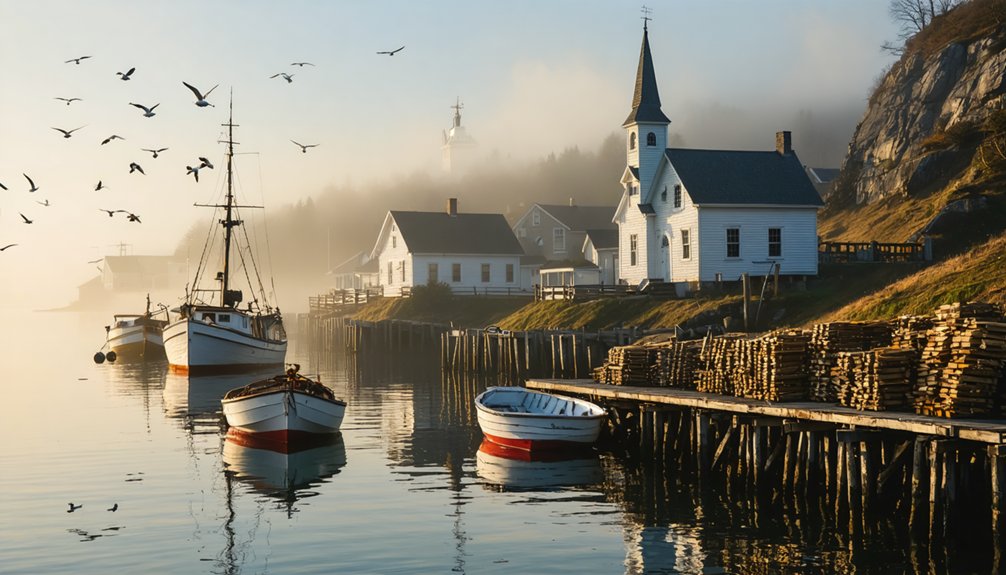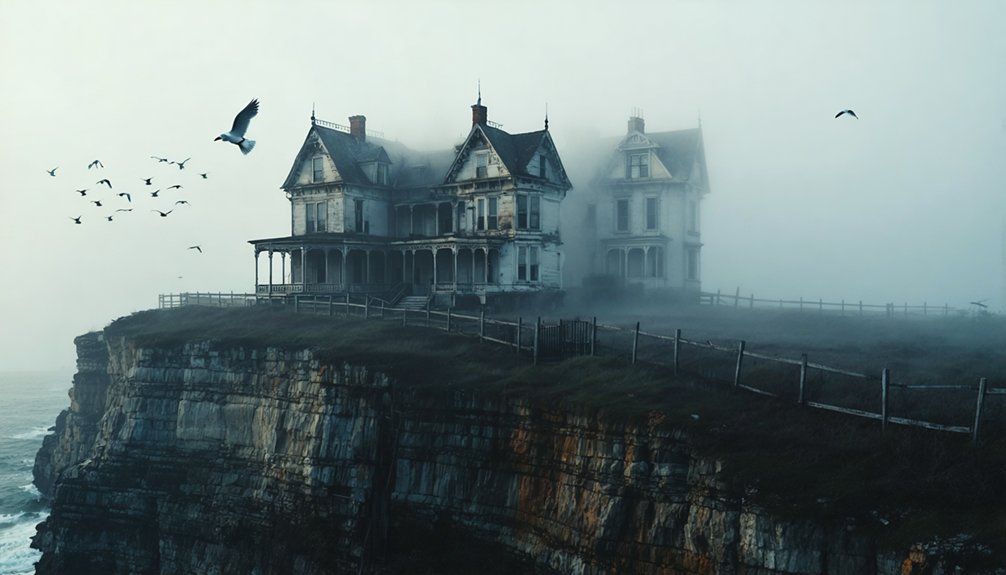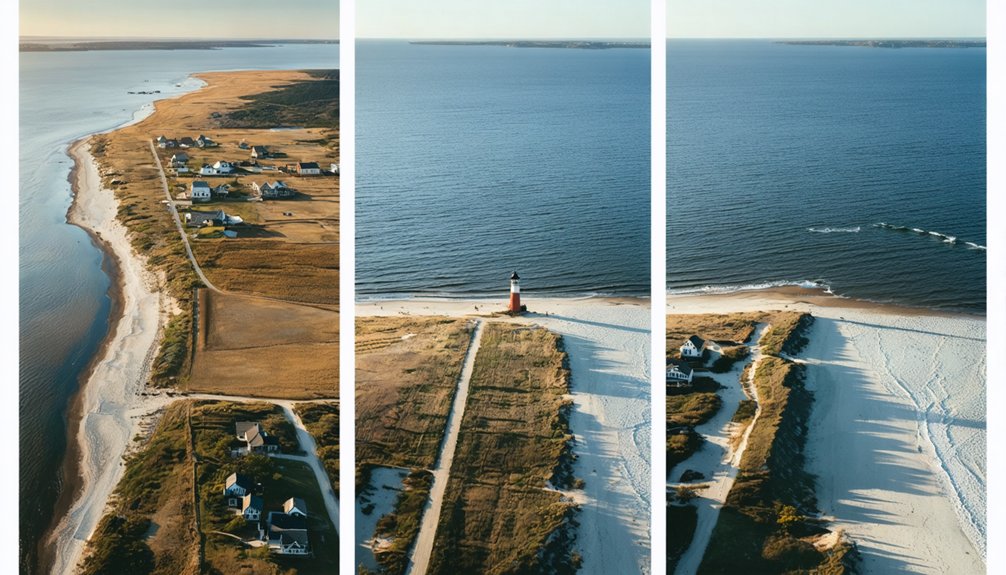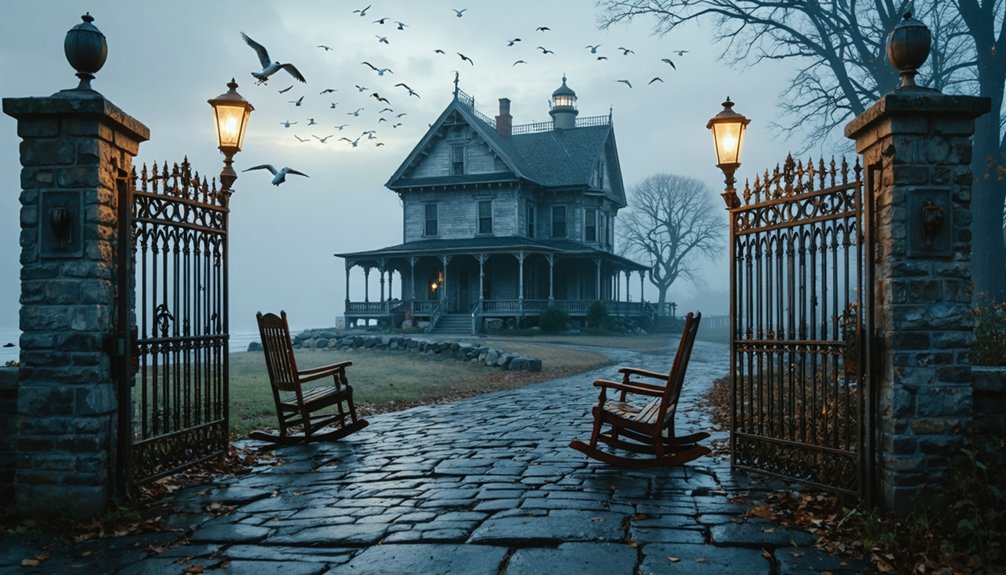
You’ll find East Coast coastal towns eerily transformed by nature’s relentless assault and human retreat. Rising seas claim up to 15 feet of shoreline annually, while historic buildings sink into unstable ground at rates of 2-4mm per year. Ghost towns emerge as infrastructure crumbles, populations flee, and abandoned properties stand as haunting reminders of vibrant maritime communities. From Maine’s eroding beaches to Virginia’s emptying shores, these coastal settlements harbor darker stories beneath their weathered facades.
Key Takeaways
- Abandoned buildings and historic remnants like half-submerged dome houses and empty lightkeeper homes create haunting coastal landscapes.
- Mass population exodus leaves behind ghost towns, with places like Virginia Beach losing over 12,000 residents.
- Deteriorating infrastructure, including failing seawalls and crumbling bridges, gives coastal towns an unsettling, decaying appearance.
- Empty beach houses and shuttered businesses create desolate streetscapes as communities surrender to rising waters and erosion.
- Recurring floods isolate remaining residents from essential services, creating an atmosphere of neglect and abandonment.
Ghost Towns in the Making: Population Shifts Along the Coast
While the East Coast has historically been a magnet for growth and prosperity, recent years have witnessed an unprecedented exodus from its coastal communities.
You’ll find stark evidence in Virginia Beach’s -1.4% population decline, where out-migration has surpassed 12,000 residents despite natural population growth. This population migration extends beyond single cities – from Buchanan to Sussex Counties, coastal towns are hemorrhaging residents at alarming rates of 6-8%. Northern Virginia’s decline has been particularly notable, with Fairfax County alone losing nearly 30,000 residents to out-migration since 2020.
You’re witnessing a transformation driven by compelling economic factors: soaring living costs, housing unaffordability, and mounting climate concerns. Many residents are relocating to Florida’s Gulf Coast for its appealing combination of lower taxes and better weather.
The perfect storm of economic pressures and climate anxieties is fundamentally altering where Americans choose to call home.
Even mighty New York City lost over 100,000 residents in 2023, as people sought refuge in more affordable regions. This shift isn’t merely demographic – it’s reshaping the cultural and economic fabric of these once-vibrant coastal communities.
The Sinking Ground Beneath Our Feet: Physical Changes
When you stand on the East Coast’s shifting sands today, you’re witnessing land disappear at unprecedented rates, with places like North Carolina’s Outer Banks losing up to 15 feet of shoreline annually and Maine’s Popham Beach eroding by more than 91 feet per year.
At Popham Beach State Park, frequent changes in the Morse River’s course have intensified the erosion problem significantly.
The devastation has resulted in annual property losses of $500 million across affected coastal regions.
You’ll notice the physical evidence of this retreat in the form of condemned buildings, relocated infrastructure, and vanishing dunes that once protected coastal communities.
As you walk these beaches, you’re observing a transformation that’s forcing towns to abandon or relocate critical facilities, from restrooms to entire roads, while natural habitats essential to marine life steadily vanish beneath the rising tides.
Accelerating Land Loss
Along the East Coast’s vulnerable shoreline, a relentless battle against land loss intensifies as coastal erosion devours up to 15 feet of beach annually in critical areas like North Carolina’s Outer Banks.
You’ll witness this accelerating land erosion firsthand, as waves claim seven houses in 2024 alone, while shoreline retreat advances at triple the typical rate.
You’re watching history dissolve beneath your feet as rising seas transform once-stable ground into wetlands and open water.
The stark reality: you’ll lose over 80,000 acres of coastal wetlands yearly – equivalent to seven football fields every hour.
Despite $150 million in annual federal spending on beach nourishment, these temporary fixes can’t outpace nature’s determination.
The narrow barrier islands of the Outer Banks are especially vulnerable to erosion due to their sandy composition.
Scientists warn that rising global temperatures are dramatically accelerating the erosion of these coastlines.
Infrastructure Slowly Disappears
Through sinking ground and coastal erosion, infrastructure along the East Coast faces an unprecedented crisis of disappearance, with over 70% of essential systems succumbing to land subsidence rates of 2 mm annually.
You’ll witness the gradual vanishing of crucial systems that once defined these coastal communities, creating an unsettling atmosphere of decline.
Infrastructure vulnerability manifests in three stark ways:
- Major airports like JFK and LaGuardia are sinking over 2 mm yearly
- Railway networks strain under differential subsidence, creating dangerous structural stresses
- Seawalls fail as erosion claims up to 25 feet of shoreline annually
The subsidence effects you’re seeing aren’t just changing the landscape – they’re erasing decades of engineering achievement.
Critical foundations weaken beneath your feet while coastal defense structures crumble, leaving these once-thriving communities increasingly exposed to nature’s relentless advance.
According to studies by Virginia Tech and USGS, these changes affect more than 2 million people living in coastal regions.
Traditional responses like concrete seawalls have proven both expensive and ineffective at protecting coastal infrastructure against intensifying storms and rising seas.
Decay and Disrepair: Infrastructure’s Silent Story
As the land beneath East Coast coastal towns silently sinks, a troubling narrative of infrastructure decay unfolds at an alarming rate.
You’ll find up to 70% of critical structures built on slowly descending terrain, with cities like Charleston sinking nearly 4mm yearly. This uneven settlement wreaks havoc on infrastructure resilience, creating a web of cracking highways and compromised foundations.
What you’re witnessing isn’t just age-related deterioration. The combination of subsidence and rising seas accelerates the decay, particularly in structures below 10-foot elevations. Groundwater extraction and dams are major contributors to the land’s descent. Research by Virginia Tech and USGS reveals unprecedented detail about this widespread sinking.
Maintenance challenges mount as saltwater corrodes metals and concrete, while deferred upkeep due to budget constraints hastens the decline.
The story of these coastal towns is written in their failing seawalls, deteriorating bridges, and the haunting sight of abandoned facilities succumbing to the elements.
Haunting Remnants of Historical Coastal Life
While the waves endlessly lap at America’s eastern shores, they reveal haunting remnants of coastal life that tell stories of abandonment and loss.
You’ll find haunting architecture in places like Gilchrist, Texas, where Hurricane Ike left only concrete foundations, and Cape Romano’s half-submerged dome houses stand as silent sentinels of coastal vulnerability.
These ghost towns evoke powerful coastal nostalgia through their:
- Weathered fishing shacks and empty boatyards that once supported thriving maritime economies
- Abandoned lightkeeper homes at Cape Lookout Village, where isolation forced residents to retreat inland
- Vacant tourist destinations like Salvo, where erosion transformed bustling beaches into desolate stretches
Each site represents a community’s surrender to nature’s power, preserving moments frozen in time as the sea reclaims its territory.
The Human Toll: Social and Health Impacts
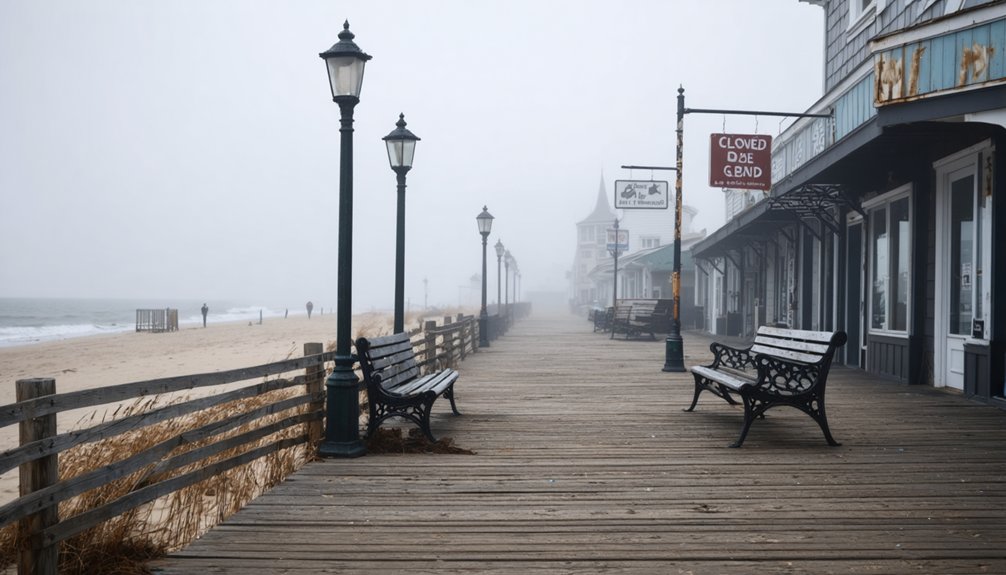
Behind the haunting facades of abandoned coastal structures lies an even more profound story of human suffering and resilience.
You’ll find stark health disparities among those who remain, as one-third of post-hurricane deaths stem from disrupted medical care. When you explore these towns, you’ll witness how flooding isolates residents from essential services, with 14.4% lacking access to medications and 9.5% losing power for crucial medical equipment.
Community resilience faces unprecedented challenges as rising seas force populations to retreat.
As ocean waters advance, tight-knit coastal neighborhoods unravel, testing the limits of human adaptability and collective strength.
You’re seeing a dramatic transformation: mental health deteriorates under the weight of property loss, while social bonds fray as neighbors relocate. The psychological toll manifests in increasing rates of depression and PTSD, particularly affecting low-income residents who can’t afford to rebuild or relocate.
These once-vibrant communities now stand as testimonies to climate vulnerability’s human cost.
Uncertain Horizons: Future Risks and Abandonment
You’ll find a growing number of coastal towns along America’s eastern seaboard transforming into modern ghost towns, where rising waters meet crumbling infrastructure and abandoned properties tell tales of retreat.
As you explore the forgotten ghost towns of the east, you’ll encounter remnants of vibrant communities that once thrived on tourism and fishing. These eerie landscapes serve as a poignant reminder of the climate crisis, with empty streets and dilapidated buildings echoing stories of the past. Local history enthusiasts often wander through these sites, hoping to uncover the secrets of their dwindling populations and lost livelihoods.
From Salvo’s vanishing shoreline to Charleston’s sinking streets, these communities face an existential crisis as repeated storms, accelerating erosion, and land subsidence force residents to make difficult choices about staying or leaving.
The combination of astronomical repair costs, persistent flooding, and declining property values creates a self-reinforcing cycle of abandonment that leaves behind eerie landscapes of empty beach houses and shuttered businesses.
Rising Waters, Vanishing Towns
As rising seas continue to reshape America’s East Coast, coastal communities face an unprecedented existential threat that extends far beyond occasional storm damage.
You’re witnessing the early stages of coastal migration as rising tides transform once-thriving towns into vulnerable outposts.
Consider these sobering realities:
- Your coastal neighbors face flooding 25-125 days annually, with water lingering longer than traditional measurements suggest.
- By 2050, you’ll see 2.5 million Americans in 1.4 million homes facing severe flood risks.
- Your East Coast communities will experience sea-level rise at triple the global average.
The transformation is already underway.
Infrastructure fails more frequently, storm drains back up during high tides, and roadways flood regularly.
You’re watching history unfold as centuries-old towns grapple with the prospect of becoming modern-day Atlantises.
Decay Without Recovery
When coastal communities begin their descent into abandonment, they follow a haunting pattern of decay that’s virtually impossible to reverse.
You’ll witness economic despair cascade through these towns as businesses shutter and tax bases crumble, leaving public services to deteriorate. Insurance losses exceeding $200 million from major storms force mass departures, while repair costs of $80,000-$150,000 per home drive further abandonment.
Community fragmentation accelerates as infrastructure fails – roads wash away, utilities falter, and sea walls breach under intensifying storms.
What remains are concrete foundations, scattered ruins, and empty streets where lower-income residents, unable to relocate, endure mounting risks.
Despite government buyout programs, most communities face their fate without adequate support, transforming vibrant seaside towns into ghostly reminders of nature’s relentless advance.
Frequently Asked Questions
Are There Any Supernatural Legends Associated With Abandoned East Coast Towns?
You’ll find rich coastal folklore throughout abandoned East Coast towns, from Dudleytown’s haunted ruins to Bara-Hack’s mysterious voices, while supernatural sightings persist in New Jersey’s Sea Breeze and Pine Barrens.
Which Coastal Towns Have the Most Photographed Abandoned Buildings and Structures?
Like ghosts frozen in time, Sea Breeze NJ, Cape Charles VA, and Portsmouth Village NC offer you the most compelling abandoned architecture and photographic opportunities, with their haunting seaside ruins beckoning your lens.
How Do Property Values Compare Between Eerily Declining Versus Thriving Coastal Communities?
You’ll find thriving coastal towns showing 5-8% annual property market growth, while eerily declining areas face stagnant or falling values, with economic impact reflected in median prices often $100,000+ lower.
What Wildlife Species Have Reclaimed Abandoned Coastal Areas and Buildings?
You’ll find wild boars sheltering in empty buildings, raccoons and civets denning in houses, while serows and monkeys thrive in coastal forests – showing remarkable urban wildlife adaptation to abandoned human spaces.
Do Coastal Ghost Towns Attract More Paranormal Investigators Than Inland Ghost Towns?
With paranormal tourism up 256%, you’ll find coastal ghost towns attract more investigators due to their rich maritime histories, wartime events, and preserved “frozen-in-time” atmosphere that ghost hunting enthusiasts find particularly compelling.
References
- https://economics.td.com/us-east-coast-population-trends
- https://www.nature.com/articles/s41586-024-07038-3
- https://www.census.gov/topics/preparedness/about/coastal-areas.html
- http://toolkit.climate.gov/coastal-impacts
- https://news.vt.edu/articles/2024/01/COS-PNAS-subsidence.html
- https://coast.noaa.gov/states/fast-facts/economics-and-demographics.html
- https://www.aamc.org/news/coastal-communities-health-risks-climate-change-accelerate
- https://www.epa.gov/climateimpacts/climate-change-impacts-coasts
- https://www.coastalwiki.org/wiki/Coastal_cities_and_sea_level_rise
- https://cardinalnews.org/2025/01/28/fairfax-county-and-virginia-beach-lose-population-but-danville-gains-for-first-time-in-decades/