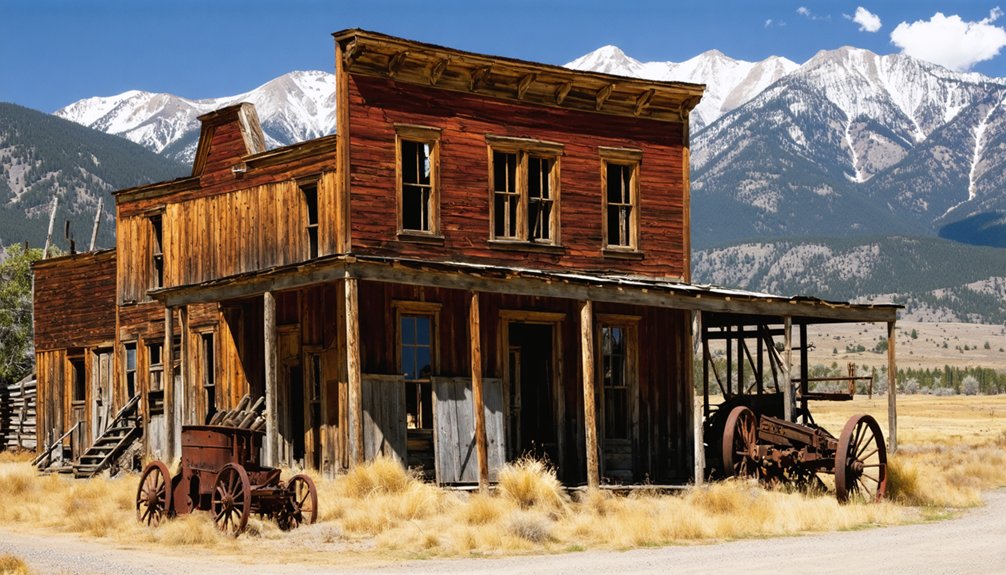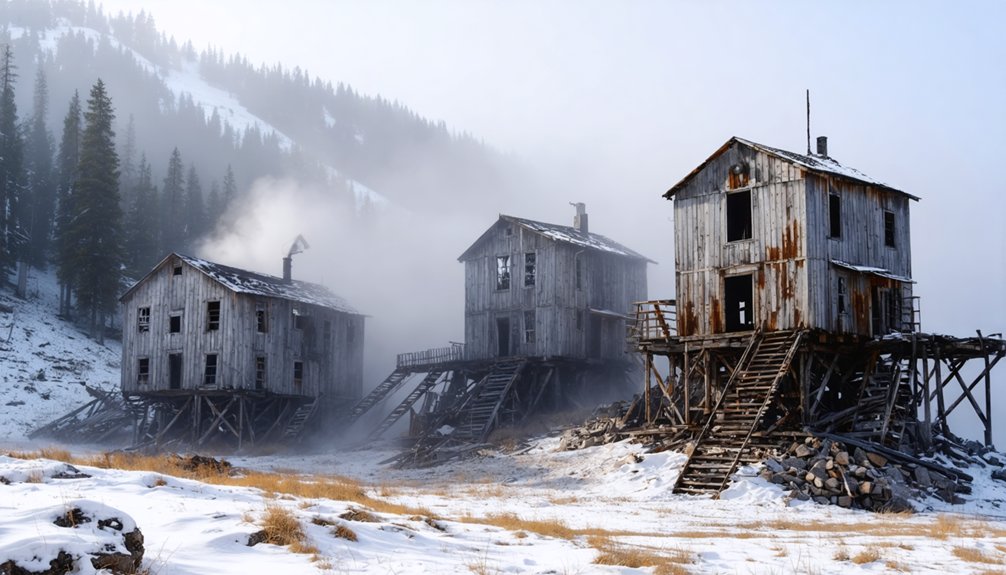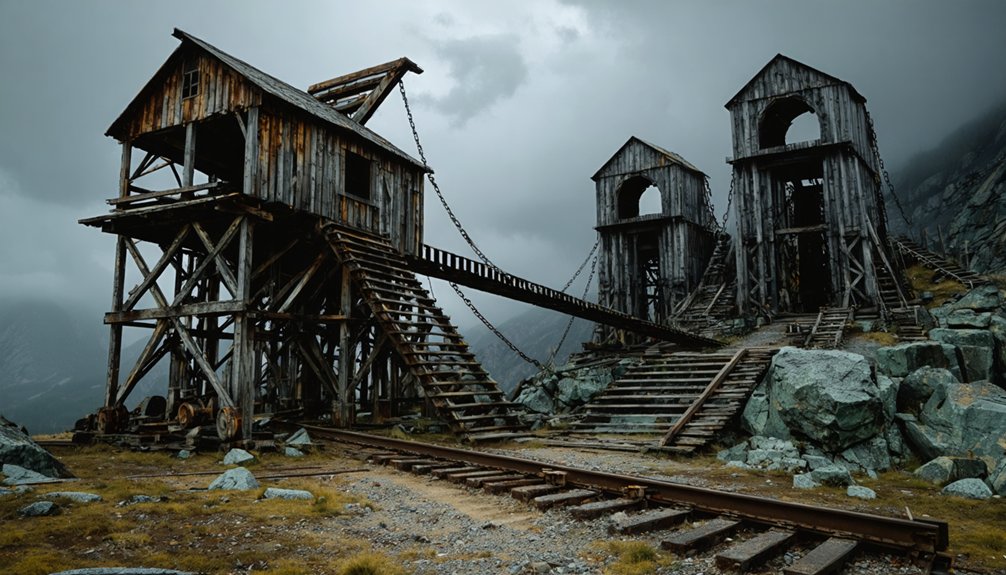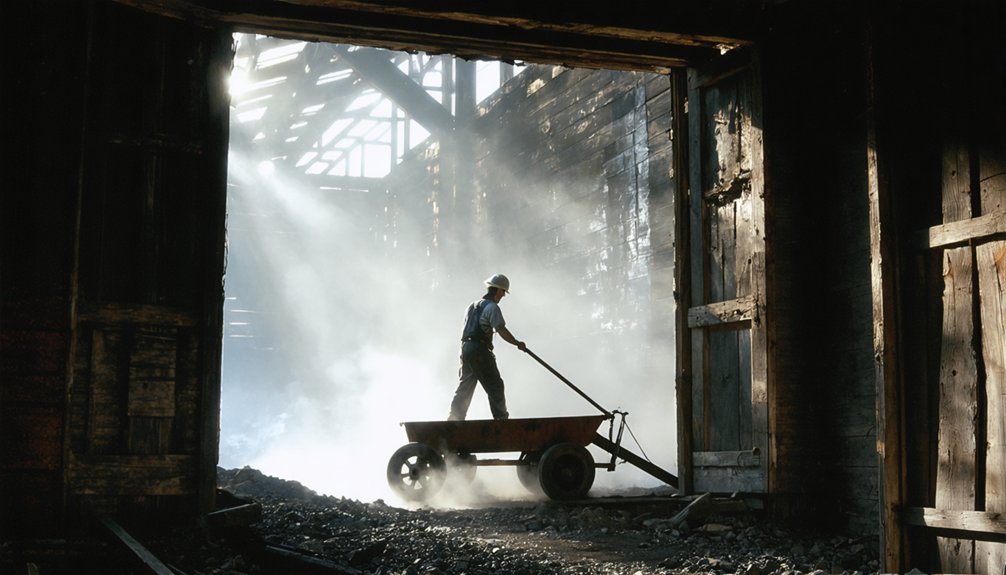
When you explore Colorado’s ghost towns, you’ll find tragic stories of miners who met their fate in dangerous underground accidents during the 1800s gold and silver rush. These sites witnessed countless deaths from gas explosions, cave-ins, and toxic fumes, with pre-1963 records showing only 10% of mining fatalities were documented. The 23,000 abandoned mines, many on federal land, continue drawing visitors who seek connections to these restless spirits and their unfinished stories.
Key Takeaways
- Mining accidents and disasters claimed numerous lives, with many miners dying tragically in gas explosions, cave-ins, and equipment accidents.
- Poor documentation of mining fatalities before 1963 suggests many miners’ deaths went unrecorded, potentially leaving unresolved spirits.
- Sudden abandonment of mining towns after the 1893 Silver Crisis left communities frozen in time, creating ideal settings for ghost stories.
- Local folklore connects paranormal activities to the dangerous working conditions and sudden deaths that occurred during Colorado’s mining era.
- Mining towns’ preserved structures and artifacts maintain strong emotional connections to the past, encouraging ghostly tales and paranormal reports.
The Rise and Fall of Colorado’s Mining Boomtowns
When prospectors discovered gold along the South Platte River in 1858, they ignited a transformative era in Colorado’s history that would reshape the territory’s landscape and economy.
The discovery of gold in Colorado’s waters sparked a seismic shift that forever altered the fate of this untamed territory.
You’ll find the remnants of this era in places like Central City, once dubbed “the richest square mile on Earth,” where advanced mining techniques transformed mountainsides into industrial powerhouses. In 1862, the establishment of Gregory Gulch settlement marked the beginning of Central City’s meteoric rise to prominence.
The discovery marked history as Antoine-Simon Le Page du Pratz had first reported gold sightings nearly a century earlier in 1758.
From the San Juan Mountains to Leadville, boomtowns exploded with activity as silver joined gold in driving Colorado’s mineral rush.
By 1879, these towns were bustling with schools, smelters, and social institutions.
Yet when the Sherman Silver Purchase Act was repealed in 1893, many thriving communities became the ghost towns you can explore today – places where ghost stories now echo through abandoned mine shafts and empty streets, telling tales of fortunes made and lost.
Tragic Tales From the Underground
Deep beneath Colorado’s rocky terrain, miners faced lethal hazards that claimed countless lives during the state’s mining boom.
You’ll find their legacy in the ghost stories that emerged from these fatal accidents, preserving the memory of those who perished in the darkness.
- Gas explosions and dust ignitions created catastrophic events, like the 1910 Victor-American disaster that killed 79 miners in a single blast.
- Hidden vertical shafts claimed victims through sudden falls, while toxic gases silently suffocated others trapped in poorly ventilated tunnels.
- Equipment accidents, cave-ins, and explosives mishandling added to the death toll, with pre-1963 records showing only 10% of actual fatalities.
These tragic underground tales now fuel the haunting legends of spectral miners, their restless spirits serving as stark reminders of mining’s deadly past.
With over 23,000 inactive mines scattered across Colorado, these dangerous sites continue to claim victims, as evidenced by recent hiking fatalities.
Today, Colorado continues to experience mining tragedies with two fatalities recorded in 2024, showing that the dangers of mining persist in modern times.
Environmental Hazards and Abandoned Mine Mysteries
Beyond the ghostly legends and supernatural tales, Colorado’s abandoned mines harbor very real and deadly environmental hazards that continue to plague the state.
You’ll find over 23,000 abandoned mines scattered across Colorado’s landscape, leaving a toxic legacy that contaminates roughly 1,800 miles of streams.
When you explore these sites, you’re facing invisible dangers – acid mine drainage releases dangerous metals like cadmium, zinc, and arsenic into waterways, while toxic dust from mine tailings pollutes the air.
The environmental impact is staggering: depleted fish populations, contaminated drinking water, and degraded ecosystems. Experts warn visitors to Stay Out and Stay Alive when encountering these hazardous sites.
Each year, the state treats nearly 98 million gallons of polluted water, yet the poisonous discharge persists as these abandoned mines continue their centuries-long assault on Colorado’s natural resources. Most of these hazardous sites are located on federally managed land, with approximately 19,000 abandoned mines on National Forest Service property alone.
Preserving the Spirits of the Past
As Colorado’s historic ghost towns fade under nature’s relentless assault, dedicated preservation groups have mounted an impressive response to save these precious remnants of the mining era.
Through extensive community involvement, organizations like the San Juan County Historical Society have secured over $12 million in grants, proving the historical significance of these sites resonates deeply with modern audiences.
The rapid development of Ashcroft during the silver boom saw its streets and courthouse built overnight, demonstrating the incredible speed at which these mining towns could materialize.
You’ll find these preservation efforts operating on multiple fronts:
- Local citizen groups partner with government agencies to maintain structures using innovative methods, including helicopter-delivered supplies.
- National Register Historic Site designations release vital funding while formalizing each town’s cultural importance.
- Specialized stewards like the Santiago Mill Stewards work year-round to protect historic buildings against environmental damage.
These combined efforts guarantee that Colorado’s mining heritage remains accessible for future generations to explore and experience.
With 250,000 annual visitors exploring these historic sites, the need for preservation has become increasingly urgent.
From Prosperity to Paranormal: The Legacy Lives On
The haunting legacy of Colorado’s mining towns stretches far beyond their economic rise and fall, weaving together tales of prosperity, tragedy, and the supernatural.
You’ll find these abandoned settlements serve as powerful reminders of boom-era prosperity memories, where once-thriving communities of miners and their families created rich social tapestries through their shared experiences and hardships.
Today, the echoes of mining folklore resonate through deteriorating structures and empty streets.
Stories of spectral miners still working their claims, ghostly sounds of pickaxes, and mysterious lights in abandoned mine shafts connect you to the raw determination of those who sought their fortunes here.
These paranormal tales, born from actual mining tragedies and accidents, have become inseparable from the towns’ historical narratives, drawing countless visitors seeking connections to Colorado’s gritty pioneering spirit.
In addition to Colorado, adventurous souls are eager to explore abandoned sites in the Midwest, where remnants of past industries tell their own haunting stories. These forgotten locations often hold echoes of history, inviting explorers to uncover their secrets. Each site serves as a reminder of the resilience and struggles of those who once called these places home.
Like many mining boom sites of the 1880s, these towns declined rapidly once their precious resources were depleted.
Near Aspen, the once-bustling settlement of Toklat Lodge became a beacon of preservation when Stuart Mace dedicated himself to protecting its historical legacy in 1948.
Frequently Asked Questions
What Equipment Do Ghost Miners Reportedly Carry in Their Spectral Appearances?
You’ll spot mining apparitions carrying weathered pickaxes, glowing lanterns, ore carts, and rusted spectral tools like shovels and pans from the 19th and early 20th centuries.
Do Ghost Miners Communicate With Each Other or Only Interact With Visitors?
Like ships passing in the night, ghost miners don’t show clear evidence of communicating with each other. You’ll find their spectral interactions are mainly focused on living visitors through isolated manifestations and phenomena.
Are There Specific Times of Year When Mining Ghost Sightings Increase?
You’ll notice seasonal spikes in mining ghost sightings during autumn and winter, especially around Halloween. Haunting patterns intensify when temperatures drop, nights lengthen, and tourist crowds thin out in Colorado’s ghost towns.
Which Mining Ghost Town Has Reported the Most Paranormal Activity?
You’ll find Cripple Creek stands out with thousands of famous hauntings and ghost town legends, from Buffalo Billy’s mysterious girl to Maggie at Colorado Grande Casino – it’s Colorado’s most active paranormal hotspot.
How Do Native American Beliefs Intersect With Mining Ghost Town Hauntings?
You’ll find Native American beliefs deeply woven into mining hauntings through spiritual significance of sacred lands and cultural connections to ancestral territories where mining operations disrupted traditional ceremonial grounds.
References
- https://www.uchealth.org/today/ghost-towns-abound-in-colorado/
- https://en.wikipedia.org/wiki/List_of_ghost_towns_in_Colorado
- https://www.visitouray.com/ghost-towns
- https://gunnisoncrestedbutte.com/blog/haunted-places-in-crested-butte-and-gunnison/
- https://www.durango.com/colorado-ghost-towns/
- https://www.coloradolifemagazine.com/blog/post/11-colorado-ghost-towns
- https://leadville.com/the-ghost-towns-of-leadville-and-beyond/
- https://www.colorado.com/articles/colorado-ghost-towns
- https://www.youtube.com/watch?v=e07GnE8W9nQ
- https://www.uncovercolorado.com/ghost-towns/