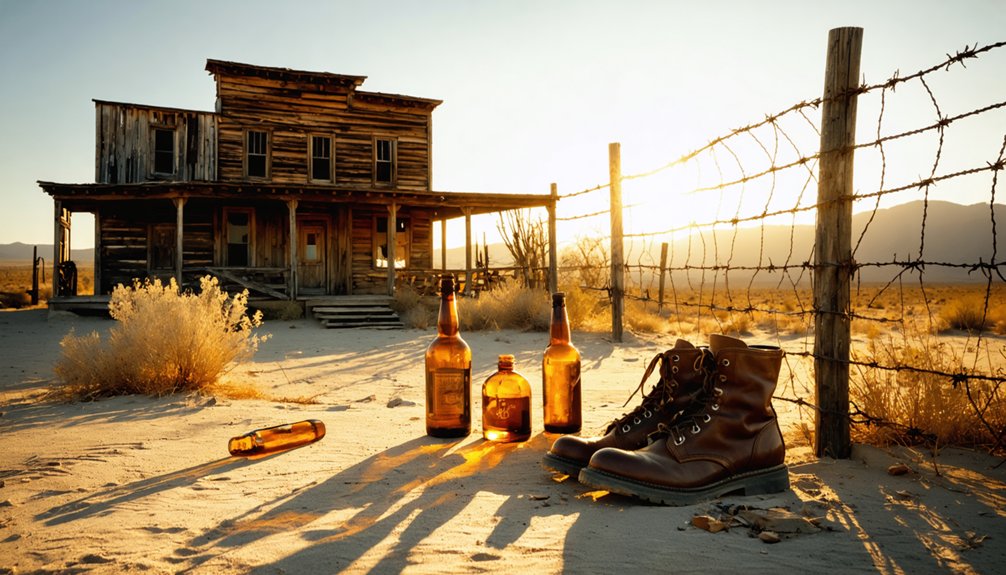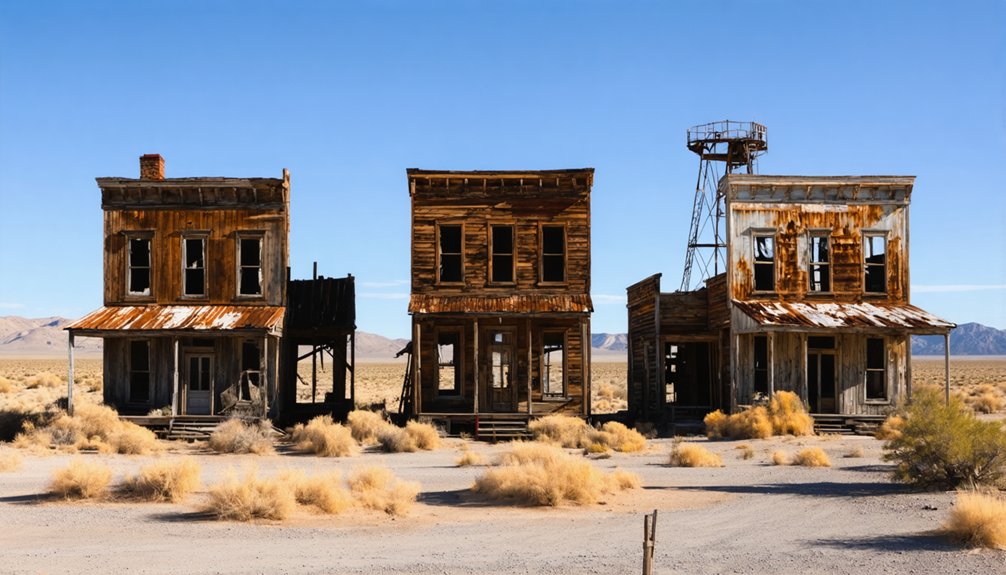
Nevada’s ghost towns survive through a perfect combination of natural desert conditions and human dedication. You’ll find these rare time capsules protected by the arid climate, where low humidity and scarce rainfall naturally preserve historic structures and artifacts. Community volunteers contribute thousands of hours annually while heritage tourism generates essential revenue for rural areas. From Tom Kelly’s Bottle House to the Goldwell Open Air Museum, these sites hold countless stories waiting to be discovered.
Key Takeaways
- Nevada’s ghost towns preserve vital mining heritage and historical structures, generating billions in tourism revenue for rural communities.
- Natural desert conditions, including low humidity and scarce rainfall, help preserve buildings and artifacts better than wetter climates.
- Volunteer groups contribute thousands of hours annually to protect and restore these sites, fostering community engagement and heritage awareness.
- Federal and state laws provide legal protection for ghost towns, requiring permits for excavation and implementing strict preservation measures.
- Ghost towns diversify Nevada’s tourism beyond casinos, creating sustainable economic opportunities through heritage tourism and outdoor recreation.
Time Capsules in the Desert: The Cultural Legacy
While many abandoned settlements fade into obscurity, Nevada’s ghost towns stand as remarkable cultural landmarks that preserve the state’s rich mining heritage.
You’ll find these time capsules meticulously maintained through restoration projects that protect original structures, from Tom Kelly’s Bottle House to historic courthouses and saloons. Their cultural significance extends beyond mere preservation, as these sites now host contemporary art installations like the Goldwell Open Air Museum’s sculptures alongside mining-era ruins. Economic fluctuations ultimately shaped these towns’ destinies. Goldfield’s transformation from a tent city to metropolis in 1904 exemplifies the rapid development these towns experienced.
These towns weave compelling historical narratives through guided tours, walking maps, and public exhibits. Local historical societies, state agencies, and BLM archaeologists work tirelessly to document and share these stories during events like Nevada Day Weekend, ensuring that the boom-and-bust tales of the American West continue to educate and inspire visitors.
Nature’s Perfect Preservation Chamber
You’ll find Nevada’s ghost towns remarkably well-preserved thanks to the desert’s natural preservation qualities, where low humidity and scarce rainfall averaging 9 inches annually dramatically slow the deterioration of wood, metal, and other building materials.
The arid climate creates ideal conditions for preserving mining-era structures by inhibiting destructive forces like mold, mildew, and vegetation growth that typically accelerate decay in more humid regions.
These remote desert locations, combined with stable geological foundations of limestone and volcanic rock, have effectively transformed Nevada’s abandoned mining towns into time capsules that continue to withstand the test of time.
The remnants of old mining technology serve as tangible reminders of the state’s innovative mining heritage.
With over 600 ghost towns scattered across Nevada’s vast landscape, this natural preservation has helped maintain one of the largest collections of abandoned settlements in America.
Desert Slows Natural Decay
Despite the harsh conditions that drive people away from Nevada’s ghost towns, the desert environment acts as a remarkable preservation chamber, dramatically slowing the natural decay of abandoned structures and artifacts.
You’ll find that arid preservation in these regions stems from extremely low moisture levels, which prevent rot, rust, and mold growth. The desert climate’s dramatic temperature swings, while harsh, actually work in favor of preservation by inhibiting sustained biological decay.
What’s more, the desert’s minimal vegetation means you won’t see the typical root damage to foundations or organic debris accumulation that plagues abandoned structures elsewhere. With up to 600 ghost towns scattered across Nevada, this natural preservation process has helped maintain countless historical sites.
Wind-blown sand creates protective layers over time, while the clean, dry air contains fewer corrosive pollutants that would typically accelerate deterioration in more humid environments. This natural preservation is evident in Searchlight’s old mining relics that survived even the widespread World War II scrap metal collection drives.
Low Humidity Extends Life
The remarkably low humidity levels in Nevada’s desert act as nature’s most effective preservation system. You’ll find humidity effects are dramatic – with evaporation rates exceeding 100 inches annually, surfaces dry rapidly and stay that way. This natural preservation technique keeps wooden structures, mining equipment, and historical artifacts from succumbing to decay.
The clean, crisp desert air works alongside low humidity to create ideal preservation conditions. You won’t see the typical mold, mildew, or rot that plagues sites in wetter regions. Towns like McGill showcase this preservation with its brick homes and museum remaining remarkably intact decades later. With over 600 ghost towns scattered across Nevada’s public lands, these preservation conditions help maintain a vast collection of historical sites.
In addition to the unique preservation seen in Nevada, the same can be said about military housing complexes in California, where the climate aids in maintaining structural integrity. These complexes often feature mid-century architectural styles that reflect the history of military families stationed in the region. As a result, many of these housing units have become important landmarks, telling the story of service and community throughout the years.
Instead, these ghost towns benefit from a perfect combination of daily temperature cycles and minimal moisture. The extreme dryness inhibits microbial growth and slows deterioration, while clear skies limit corrosive pollutants, helping maintain these historic treasures in their authentic state.
Climate Protects Mining History
Stepping into Nevada’s ghost towns feels like entering nature’s own time capsule, where an extraordinary combination of geological and climatic conditions creates the perfect preservation chamber for mining history.
The desert’s crisp, dry air slows decay, while sparse rainfall protects wooden structures and metal artifacts from deterioration. Nevada’s climate has helped preserve over 600 ghost towns throughout the state. You’ll find mining heritage remarkably intact, from wooden shaft supports to machinery layouts, all preserved by the arid environment. These abandoned sites are now ideal for photographers seeking unique shots of the Old West.
The surrounding landscape acts as a natural shield – remote locations and rugged terrain limit human interference, while silica-rich volcanic soils provide stable foundations. Even the mineral content in the soil helps inhibit microbial decay.
This climate preservation extends beyond human artifacts. At sites like Berlin-Ichthyosaur State Park, you’ll discover how these same conditions protect both mining relics and ancient fossils, creating a unique window into Nevada’s past.
Economic Benefits Through Heritage Tourism
Heritage tourism in Nevada’s ghost towns serves as an essential economic engine, generating billions in revenue while providing critical employment opportunities for rural communities.
You’ll find the heritage impact particularly evident in places like Virginia City, where historical architecture and cultural experiences drive visitor spending across hotels, restaurants, and retail shops.
The tourism sustainability of these ghost towns depends on their ability to diversify beyond traditional casino offerings.
By exploring sites along routes like the “Loneliest Road in America” and participating in outdoor recreation activities, you’re supporting a resilient economic model that protects these communities from market volatility.
This integrated approach to heritage tourism creates year-round employment, generates tax revenue for public services, and helps preserve Nevada’s unique mining history for future generations.
Community Guardians and Volunteer Efforts
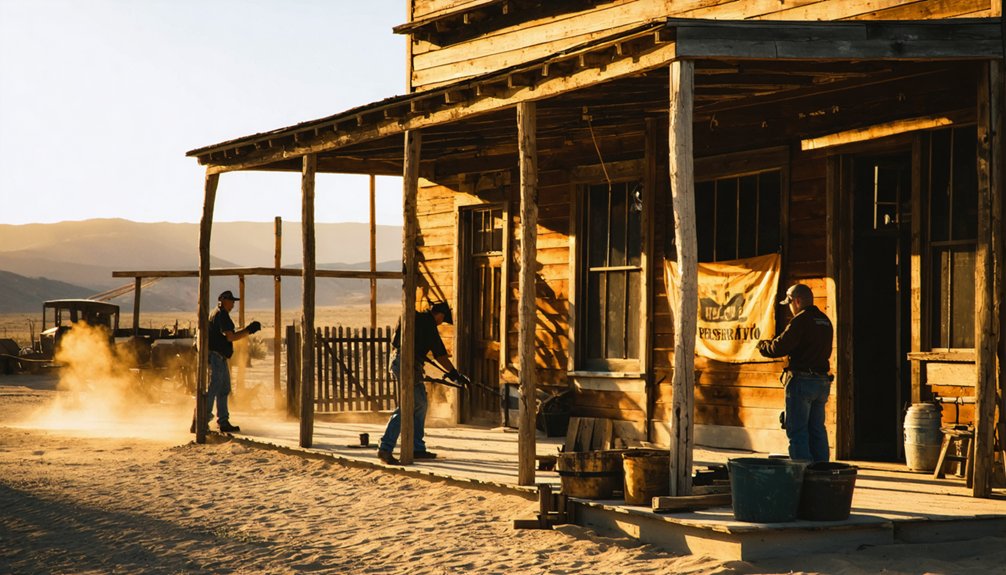
You’ll find dedicated volunteer teams across Nevada working tirelessly to protect ghost towns through organized preservation projects and educational initiatives that contribute over 20,000 hours annually.
Through hands-on restoration work and site maintenance, local heritage groups collaborate with organizations like Americorps and Montana Youth Challenge to safeguard these historic treasures for future generations.
These community guardians don’t just maintain physical structures—they’re building stronger community bonds while developing valuable skills in historic preservation and conservation techniques.
Local Heritage Protection Teams
Throughout Nevada’s ghost towns, dedicated volunteer groups and community guardians form the backbone of local heritage protection, working tirelessly to preserve these historical treasures for future generations.
You’ll find local engagement in action as volunteers restore deteriorating buildings, maintain trails, and stabilize mining artifacts at sites like the Sutro Tunnel. Through heritage stewardship, these teams collaborate with state agencies and the Bureau of Land Management to maximize resources and guarantee preservation compliance.
These protection teams don’t just maintain physical structures – they’re creating thorough educational programs, conducting guided tours, and developing interpretive materials.
They monitor sites for vandalism, clean up debris, and install safety features while maintaining historical authenticity. By partnering with archaeological experts, they’re preserving both tangible history and cultural stories for posterity.
Building Community Through History
Community spirit thrives in Nevada’s ghost towns through dedicated volunteer networks that transform historical preservation into a shared mission.
You’ll find Community Guardians leading educational tours and organizing heritage festivals that strengthen community identity through historical storytelling. These passionate volunteers coordinate regular site monitoring, cleanups, and maintenance while receiving specialized training in handling fragile artifacts and structures.
Local youth and elders work side-by-side during preservation activities, creating meaningful cross-generational connections.
Through collaborative partnerships with schools, students participate in field trips that integrate local history into their education. You can join virtual tours and social media campaigns that extend community engagement beyond physical boundaries.
This collective stewardship not only protects invaluable heritage sites but builds lasting bonds between residents who share a commitment to preserving their region’s unique past.
Hands-On Preservation Projects
While ghost towns face constant threats of deterioration, dedicated volunteer groups across Nevada lead essential preservation initiatives through hands-on building restoration projects.
You’ll find these passionate preservationists purchasing and restoring cabins, outhouses, and other original structures using hands-on techniques that extend building lifespans by decades. They’re achieving remarkable results through DIY preservation work, relying on community engagement and donated materials rather than external funding.
These restoration efforts create opportunities for you to participate directly in saving history. You can join organized work parties, contribute to fundraising efforts, or even stay in restored cabins that help finance future projects.
Through partnerships with museums and arts organizations, you’ll discover innovative ways to combine historical preservation with modern cultural experiences, ensuring these authentic mining-era sites survive for future generations.
Legal Safeguards for Historic Treasures
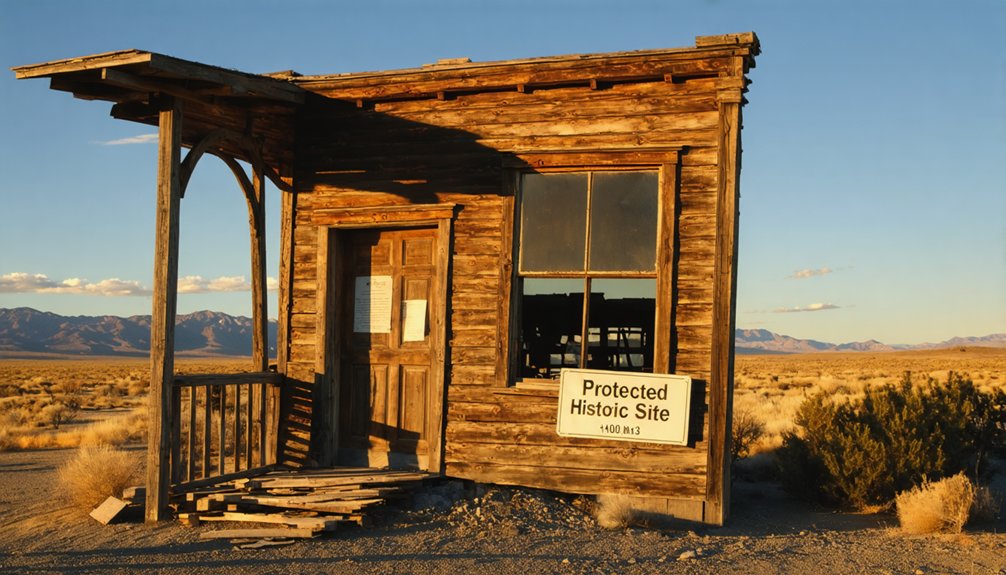
Nevada’s ghost towns benefit from robust legal protections at both federal and state levels, safeguarding their historical artifacts and cultural significance.
You’ll find extensive laws like the Antiquities Act protecting these sites from unauthorized disturbance, while state regulations make it illegal to remove even small items like nails or tools.
Your exploration of these historic sites is guided by strict artifact preservation measures, including surveillance systems and active monitoring by volunteers.
If you’re interested in research, you’ll need official permits for any excavation work.
The laws also guarantee respectful collaboration with Native American tribes, particularly regarding burial sites and cultural resources.
These legal safeguards aren’t meant to restrict your access but rather to preserve these irreplaceable treasures for future generations to discover and appreciate.
The Marriage of Art and Antiquity
Beyond the legal protections that shield these historic sites, you’ll discover a remarkable fusion of contemporary art and antiquity throughout Nevada’s ghost towns.
At Goldwell Open Air Museum near Rhyolite, you can explore artistic installations like Szukalski’s ghostly “The Last Supper” and a towering pink nude sculpture, which transform the desert landscape into an immersive cultural experience. These creative additions breathe new life into abandoned mining structures while preserving their historical significance.
The marriage of art and ruins has sparked a surge in cultural tourism, attracting photographers, filmmakers, and art enthusiasts.
You’ll find that these artistic elements not only enhance the storytelling of boom-and-bust mining communities but also generate essential economic opportunities through events, guided tours, and increased visitation, ensuring these historic treasures remain protected and relevant.
Ghost Towns as Living Classrooms

Through their remarkably preserved structures and artifacts, ghost towns serve as dynamic outdoor classrooms where you’ll experience firsthand the rich tapestry of Nevada’s mining heritage.
Nevada’s ghost towns stand as open-air museums, where weathered buildings tell vivid stories of the state’s pioneering mining past.
These immersive learning environments let you explore original schools, jails, and saloons while discovering how mining communities thrived and ultimately faded.
You’re free to investigate historical sites that combine geology, archaeology, and environmental science in one compelling location.
- Study preserved ore mills to understand mining technology evolution
- Participate in interactive programs like pottery schools and historical reenactments
- Examine geological formations to grasp mineral deposit patterns
- Connect with local guides who share authentic oral histories
Through historical exploration of these sites, you’ll uncover the relationship between resource availability and community development, while gaining insights into the environmental impact of Nevada’s mining era.
Frequently Asked Questions
How Safe Are Ghost Town Buildings for Visitors to Enter?
You’ll need to follow strict safety standards when entering ghost town buildings, as they’re often unstable and hazardous. Take visitor precautions seriously—many structures aren’t safe for interior exploration.
What Happens to Artifacts Discovered by Visitors in Ghost Towns?
With 100% of artifacts on public lands legally protected, you’re required to report any discoveries to authorities. You can’t remove items – visitor regulations guarantee artifact preservation through proper documentation and study.
Can Private Individuals Purchase and Restore Buildings in Ghost Towns?
You can acquire private ownership of ghost town buildings, but you’ll face restoration challenges including unclear titles, BLM regulations, historic preservation requirements, and the need for proper permits.
Do Any Ghost Towns Still Have Active Mining Claims?
You’ll find quite a few treasure-rich ghost towns with active claims today, especially in Nevada’s mining districts like Goldfield and Tonopah, where fortune seekers continue their quest for mineral wealth.
How Do Authorities Determine Which Structures to Preserve Versus Demolish?
You’ll find authorities use strict preservation criteria to evaluate historic significance and conduct structural assessments to determine whether buildings are safe enough to restore or too hazardous to maintain.
References
- https://www.smithsonianmag.com/sponsored/nevadas-living-and-abandoned-ghost-towns-180983342/
- https://www.carsonnow.org/10/16/2022/nevada-offroad-community-helps-preserve-ghost-town
- https://travelnevada.com/ghost-town/
- https://savingplaces.org/stories/explore-wild-west-mining-history-in-nevada-ghost-towns
- https://nvtami.com/2024/10/06/ghost-towns-are-not-theme-parks-how-to-visit-them-safely/
- https://www.pbslearningmedia.org/resource/nevada-ghost-towns-video-gallery/outdoor-nevada/
- https://www.rgj.com/story/life/2025/10/17/nevada-town-spookiest-place/86729038007/
- https://www.blm.gov/blog/2024-11-01/blm-archaeologists-tell-ghost-town-story-nevada-day-weekend
- https://findingnevadawild.com/goldfield-the-old-west-lives-in-nevadas-best-ghost-town/
- https://travelthruhistory.com/reviving-the-past-exploring-the-ghost-towns-of-nevada/