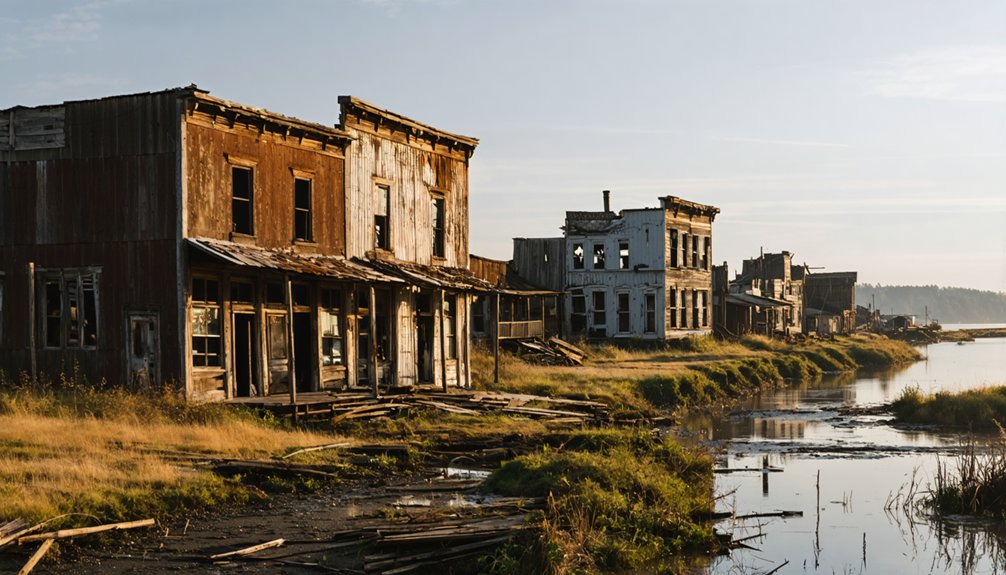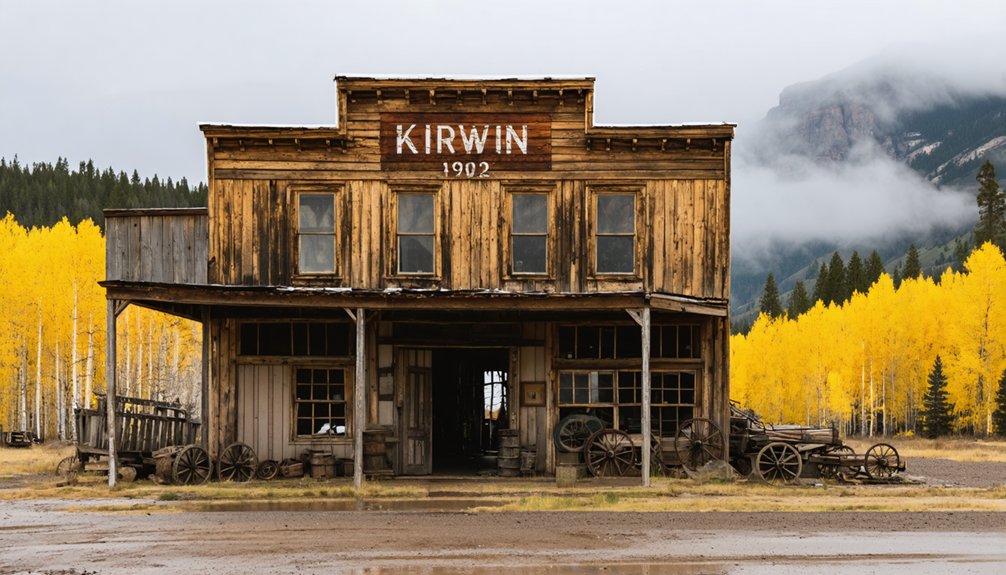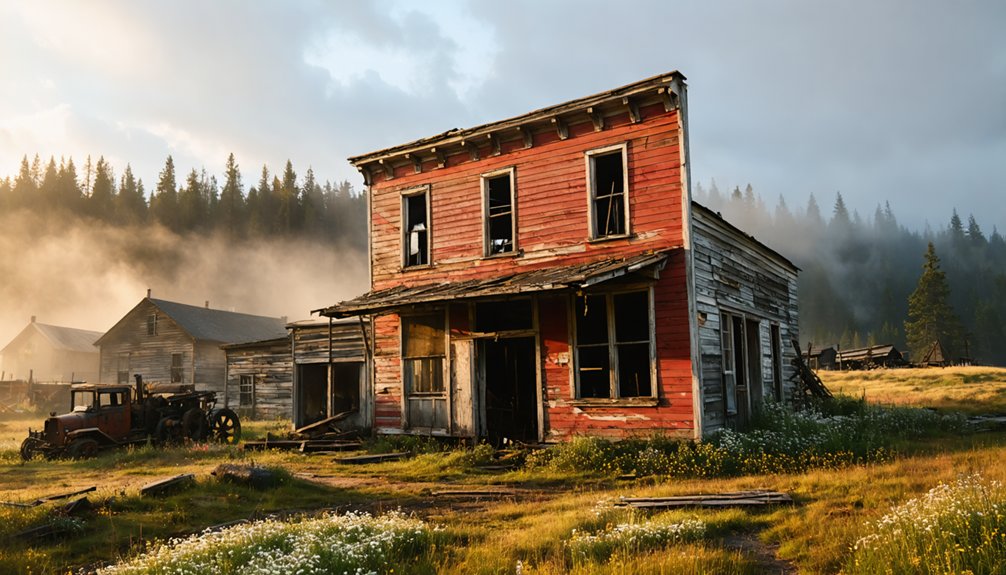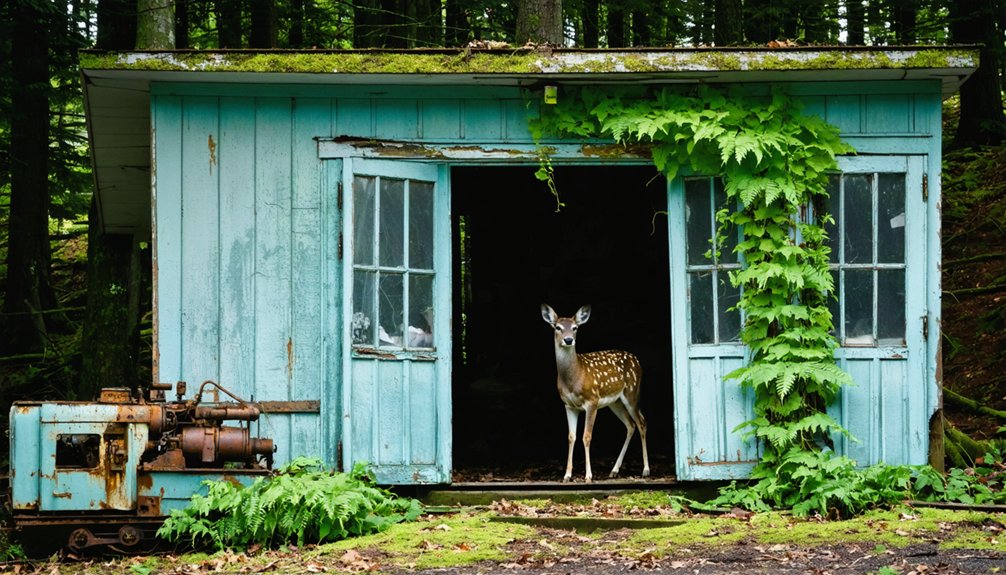
Pacific Northwest ghost towns captivate you with their rich pioneer heritage, supernatural mysteries, and dramatic natural forces. You’ll discover abandoned settlements from the 1800s that once thrived during resource booms before falling victim to economic busts and geological events. These towns feature preserved structures, from historic schoolhouses to mining remnants, while local storytellers share haunting legends of phantom residents and Native American spirits. The deeper you explore these forgotten places, the more secrets they reveal.
Key Takeaways
- Pacific Northwest ghost towns offer tangible connections to 19th-century pioneer life through preserved buildings, artifacts, and frontier architecture.
- Rich supernatural folklore blends Native American traditions with settler experiences, creating captivating stories of haunted locations and historical tragedies.
- Natural disasters like volcanic eruptions and tsunamis dramatically shaped these towns, leaving behind haunting remnants and geological evidence.
- These abandoned settlements reveal boom-and-bust cycles of resource-based economies, from gold rushes to logging operations.
- Ghost towns generate significant tourism revenue through guided tours, paranormal investigations, and historical reenactments that bring history alive.
The Rich Pioneer Legacy Behind Abandoned Towns
While many abandoned towns dot the Pacific Northwest landscape today, their pioneer origins reveal rich historical foundations dating back to 19th-century westward expansion.
You’ll find these settlements strategically established near gold, silver, timber, and fertile lands, becoming essential hubs for early frontier development.
Take Claquato, Washington – founded in 1853 as an important Oregon Trail stop, it showcased remarkable pioneer craftsmanship through structures like its 1858 church.
Claquato’s 1858 church stands as a testament to pioneer ingenuity along this vital Oregon Trail settlement point.
These towns weren’t just resource outposts; they were thriving communities with schools, trading posts, and diverse economies.
Like the town of Goodsprings, which grew from silver ore discoveries in the 1860s, these settlements attracted thousands seeking mineral wealth.
Oregon’s extensive collection of over 250 ghost towns stands as testament to this era of rapid development and decline.
Through community organization, settlers created vibrant social centers that supported both families and workers.
Whether built on mining, logging, or agriculture, each town’s economic identity shaped its unique cultural character and settlement patterns before eventual abandonment.
Economic Rise and Fall: A Pattern of Boom and Bust
Behind the pioneer spirit of Pacific Northwest settlements lay a predictable economic pattern that would ultimately determine their fate.
You’ll find these towns rode dramatic economic cycles, rising rapidly during resource booms and collapsing when their singular economic foundations crumbled. When mining or logging operations flourished, populations swelled as workers poured in, bringing investment, infrastructure, and prosperity.
Yet poor resource management and over-dependence on single industries sealed their doom. Once mines emptied, timber depleted, or market prices crashed, these towns couldn’t sustain themselves. Many settlements became shadowy semblances of their former bustling selves. Towns like Bordeaux, Washington saw their populations vanish when the local sawmill closed in 1941.
The 1907 financial panic and Great Depression dealt additional blows, while technological changes like the shift from steam to diesel engines bypassed once-thriving communities.
What began as bustling hubs of industry transformed into silent testimonies to the volatile nature of resource-based economies.
Haunting Tales and Local Legends
Throughout the Pacific Northwest’s abandoned settlements, rich tapestries of supernatural tales interweave historical events with local folklore.
You’ll discover haunting figures like Emma Merlotin at Lone Fir Cemetery and the phantom schoolteacher of Govan, their stories rooted in genuine historical tragedies. Oregon City’s ghostly history began when Dr. John McLoughlin founded the settlement.
These spectral encounters often blend Native American spiritual traditions with settler experiences. At Spirit Lake, you’ll find Kootenai legends of ghostly lovers in phantom canoes, while the Owyhee Mountains hold darker tales of mysterious disappearances.
Ancient spirits traverse borders between worlds, as indigenous wisdom and settler lore paint haunting tales across Northwest landscapes.
Natural disasters, like the 1812 Mission San Juan Capistrano earthquake, have left their paranormal imprint through stories of lingering spirits. The 1964 tsunami at Battery Point claimed eleven lives, leading to decades of supernatural occurrences.
You’ll notice how these haunted locations share common elements: unexplained footsteps, flickering lights, and an overwhelming silence that’s only broken by inexplicable sounds.
Natural Forces That Shaped Ghost Town Fates
When examining the Pacific Northwest’s ghost towns, you’ll discover that powerful geological forces played decisive roles in their abandonment.
Volcanic eruptions from giants like Mount St. Helens and Mount Mazama released devastating lahars – mudflows racing at up to 40 mph – that obliterated downstream settlements and created haunting “ghost forests” of dead trees. The massive eruption of Mount St. Helens in 1980 caused $1 billion in damage to surrounding communities and infrastructure.
Earthquake impacts proved equally destructive, as the massive 1700 Cascadia quake caused coastal land to sink, drowning entire forests and forcing communities to relocate. Native American oral traditions describe how the great shaking devastated coastal villages and transformed the landscape.
You’ll find evidence of these natural disasters in tsunami deposits that buried organic soils and in the layered remnants of volcanic ash.
These geological forces continue to shape the region, reminding you that many ghost towns stand as silent witnesses to nature’s raw power.
Preserving History Through Ruins and Remnants
The preservation of Pacific Northwest ghost towns represents a multifaceted effort to safeguard both physical remnants and cultural memory.
You’ll find original structures like hotels, schools, and mining offices providing archaeological insights into frontier life, while interpretive signs and preserved equipment tell the story of boom-and-bust economies.
The architectural significance of these sites becomes clear as you explore restored buildings in places like Molson and Liberty, where mining facilities and community halls reflect each town’s original purpose. At Molson, the town’s brick schoolhouse museum offers summer tours that bring the past to life.
Through photographs, newspaper articles, and personal letters, you can piece together the daily lives of early settlers. Author Philip Varney’s detailed explorations of Oregon, Washington, and British Columbia ghost towns have documented these historical treasures.
Local historical societies and volunteers actively maintain these open-air museums, ensuring that both physical artifacts and cultural heritage survive for future generations to study and experience.
Tourism and Cultural Impact in Modern Times
Modern tourism in Pacific Northwest ghost towns reflects complex economic patterns shaped by both regional and global factors. You’ll find dark tourism thriving here, especially during October when haunted tours draw visitors seeking paranormal experiences.
These abandoned settlements serve as powerful venues for cultural storytelling, connecting you with boom-and-bust narratives while generating significant revenue for local communities.
Ghost towns breathe life into forgotten stories, transforming abandoned ruins into economic engines for modern communities through cultural tourism.
- Candlelit ghost tours winding through decaying wooden structures
- Paranormal investigators setting up equipment in dusty saloons
- Local storytellers sharing tales beside crumbling mine entrances
- Historical reenactors bringing past residents to life in preserved buildings
While international tourism fluctuates with geopolitical tensions, ghost towns maintain their allure through unique cultural experiences.
The surreal beauty of Bodie ghost town draws visitors into a time capsule of the Wild West, where crumbling structures and dusty streets tell stories of the past. Each visit offers a glimpse into the lives of its former residents, enriching the travel experience with history and a sense of adventure. As daylight wanes, the ethereal atmosphere transforms, creating an unforgettable backdrop for photography and reflection.
The region’s identity benefits from these preserved sites, offering you authentic glimpses into the past while supporting modern economic growth through specialized tourism initiatives.
Frequently Asked Questions
How Do You Safely Explore Ghost Towns During Extreme Weather Conditions?
You’ll need extreme weather preparedness with proper gear, emergency supplies, and detailed route planning. Monitor conditions, travel with others, notify contacts, and follow ghost town safety protocols during exploration.
What Special Permits Are Needed to Metal Detect in Ghost Towns?
You’ll need special research permits under federal antiquities laws for ghost town metal detecting, plus state-specific authorizations. On federal lands, you must obtain a Notice of Intent and archaeological resource permits.
Are There Guided Night Tours Available at Any Pacific Northwest Ghost Towns?
You’ll find guided tours in Oregon City that blend ghost town history with paranormal tales, while Portland and Seattle offer haunted night tours focusing on their historic districts and abandoned sites.
Which Ghost Towns Allow Camping or Overnight Stays on Their Grounds?
You’ll find most Pacific Northwest ghost towns strictly regulate camping within their boundaries. However, Calico Ghost Town’s amenities include an adjacent campground, while other locations offer designated camping areas nearby.
How Can Photographers Capture Ghost Towns Without Disturbing Protected Historical Structures?
You’ll protect historical preservation by using tripods, shooting from safe distances, avoiding flash photography, and practicing ethical photography techniques. Never touch structures or remove artifacts while documenting these fascinating places.
References
- https://en.wikipedia.org/wiki/List_of_ghost_towns_in_Oregon
- https://www.pdxmonthly.com/travel-and-outdoors/2025/10/oregon-ghost-towns-history
- https://www.britannica.com/topic/ghost-town
- https://www.loveexploring.com/gallerylist/188219/the-us-state-with-the-most-ghost-towns-revealed
- https://www.thegoldminehotel.com/ghost-towns-and-haunted-places-in-idaho
- https://www.dnr.wa.gov/Publications/ger_misc_ghost_town_references.pdf
- https://www.si.edu/object/siris_sil_1011478
- https://savingplaces.org/stories/explore-wild-west-mining-history-in-nevada-ghost-towns
- https://www.youtube.com/watch?v=nEnuMUhhwFA
- https://stateofwatourism.com/ghost-towns-of-washington-state/