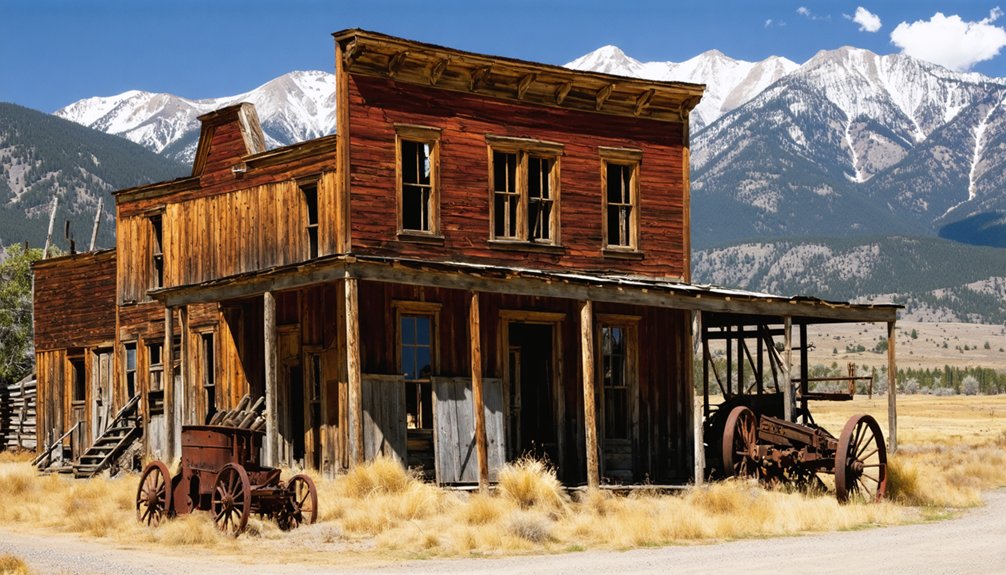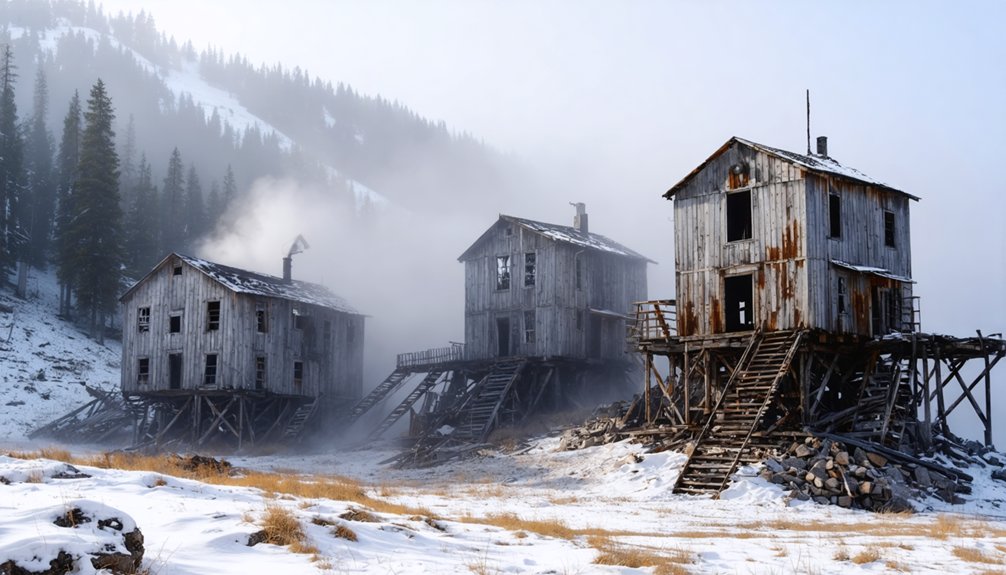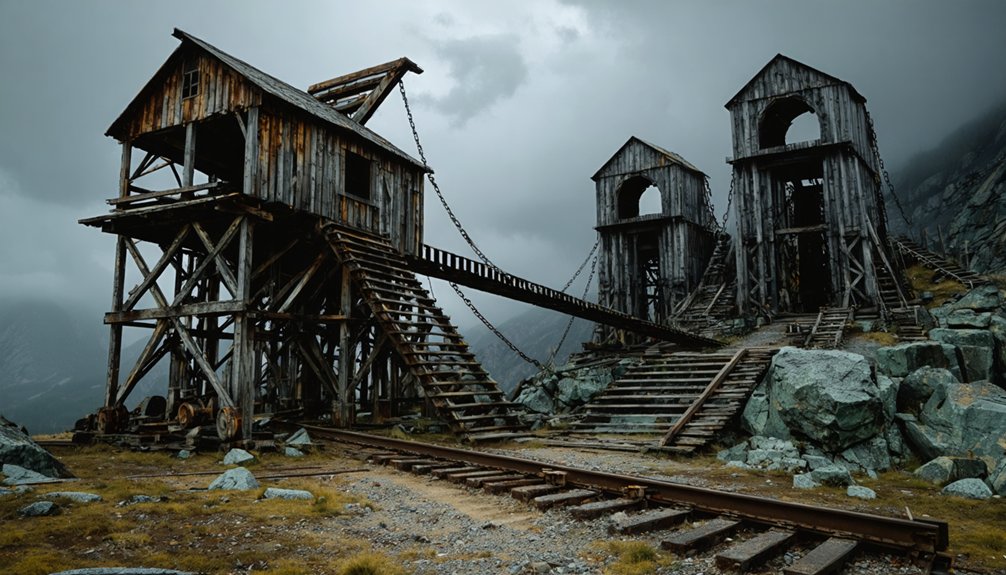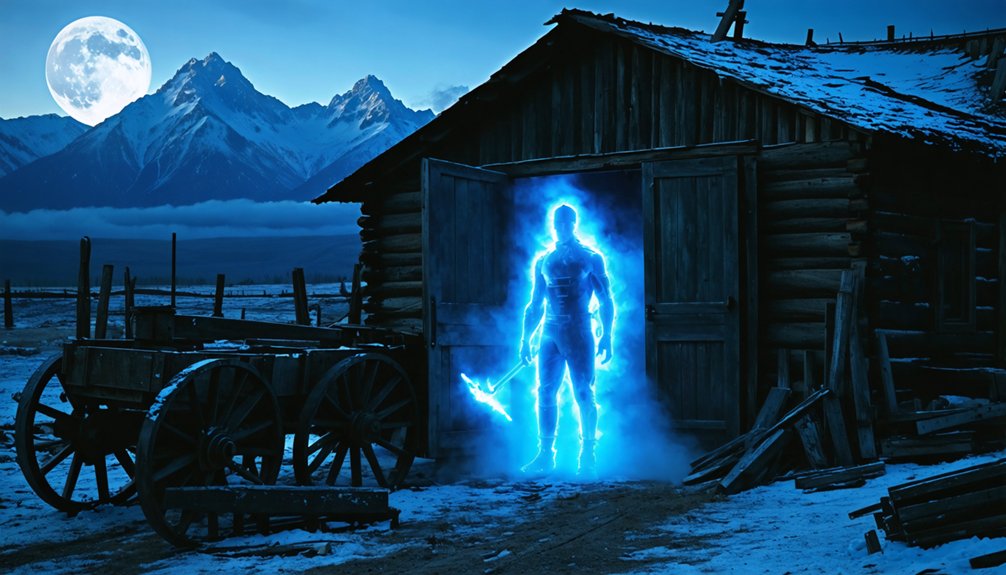
Phantom miners haunt Colorado’s ghost towns due to the tragic circumstances of their deaths and unfinished business in the mines. You’ll find these supernatural phenomena stem from devastating mining accidents, violent labor conflicts, and the sudden economic collapse after the 1893 silver crash. The harsh conditions and dangerous work led to numerous fatalities, with spectral encounters including mysterious lantern lights, unexplained footsteps, and ghostly figures in abandoned tunnels. The deeper you explore these historic mining sites, the more their dark secrets emerge.
Key Takeaways
- Tragic mining accidents, including cave-ins and explosions, led to sudden deaths of miners who may remain spiritually attached to work sites.
- The 1893 silver market crash caused economic devastation and abandoned towns, creating emotionally charged environments conducive to haunting activity.
- Violent conflicts between union workers and mine owners resulted in numerous deaths, leaving unresolved trauma in mining communities.
- Harsh living conditions and dangerous work environments led to high mortality rates, with many miners dying before fulfilling their dreams.
- The abrupt abandonment of mining towns after disasters preserved emotional energy and memories, creating ideal conditions for paranormal activity.
The Rise and Fall of Colorado’s Mining Empire
When prospectors discovered gold near Pikes Peak in 1858, they triggered one of Colorado’s most transformative periods in history.
You can trace the evolution of mining technology through the early gold rushes, as miners shifted from simple placer mining to complex shaft operations when surface deposits ran dry in the early 1860s. The Ancestral Puebloans first established mining practices in the region over a thousand years ago.
Colorado’s mineral wealth expanded beyond gold when massive silver deposits emerged in Leadville by 1879, generating over $82 million during the boom years.
The infrastructure you see today – from railroads to mining towns – emerged during this period. This development accelerated when the Denver Pacific Railroad arrived in 1870.
But the industry’s volatility became clear when the 1893 repeal of the Sherman Silver Purchase Act devastated mining communities.
While some areas like Cripple Creek found renewed prosperity through gold in the 1890s, many once-thriving mining towns transformed into the ghost towns you’ll find scattered across Colorado today.
Tales From the Underground: Famous Mining Hauntings
As you explore Colorado’s abandoned mines today, you’ll encounter more than just crumbling infrastructure and rusted equipment – these dark tunnels harbor countless tales of supernatural encounters.
Phantom miners, often victims of tragic accidents, are said to wander these subterranean passages, carrying spectral lanterns and producing inexplicable sounds like footsteps and knocking. These ghostly apparitions echo the dangerous conditions that claimed countless lives through explosions, cave-ins, and fires. The 1894 disaster at Franklin claimed thirty-seven miner lives, adding to the tales of restless spirits in abandoned mines.
Drawing from traditions like the Cornish knockers, these hauntings frequently manifest as mysterious voices, shadowy figures, and unexplained disturbances near mine shafts, abandoned homes, and mining cemeteries. Similar to the Sterling Hill Mine in New Jersey, visitors frequently report hearing unexplained footsteps and disembodied voices echoing through the tunnels.
The phenomena reflect deeper cultural anxieties about mortality, industrial dangers, and the toll of underground work, preserving the memories of those who perished pursuing mineral wealth.
Life and Death in 19th Century Mining Towns
The harsh realities of 19th century mining life in Boulder County left an indelible mark, with towns like Cardinal attracting a rowdy mix of people to its saloons and brothels, providing entertainment that was strictly forbidden in neighboring settlements. In Leadville, the discovery of silver in the late 1870s triggered a rapid population boom as prospectors and miners flooded the area seeking their fortunes.
What Makes These Towns Ghost Magnets?
You’ll find that Colorado’s ghost towns became spiritual hotspots due to the staggering number of miners who perished in dangerous working conditions, accidents, and diseases that plagued 19th-century mining communities.
Mysterious underground activities, from unexplained equipment movements to phantom drilling sounds, have been reported in abandoned mine shafts where workers once toiled endless hours.
The unfinished business of those who died suddenly in mining disasters or failed to strike it rich seems to linger in these remote mountain settlements, where original structures and mining equipment stand as silent witnesses to their stories.
Many of these towns were abandoned when the silver market crashed in 1893, leaving behind empty buildings and unfulfilled dreams.
Along the historic Florence & Cripple Creek Railroad route, visitors frequently report encounters with spectral figures of former railway workers still performing their duties.
Harsh Mining Life Deaths
evangalmartinsentlyename here landed with a unwpasswords on harsh realities that defined Colorado’s mining era, where death lurked in every shaft and tunnel.
You’ll find mining safety was often sacrificed for profit, with workers paid by tonnage rather than hourly wages, forcing desperate choices between survival and sustenance. In just 28 years, from 1884 to 1912, over 1,700 miners lost their lives. Today, over 23,000 inactive mines remain as dangerous reminders of this deadly past.
Labor conflicts intensified these dangers, culminating in violent clashes like the Ludlow Massacre. Miners faced daily threats from collapsing walls, poisonous gases, and flooded shafts, while unpaid “dead work” meant many skipped essential safety measures. The company towns controlled every aspect of miners’ lives, from housing to medical care.
The fatality rate soared to 7.06 per 1,000 workers in 1912, more than double the national average. Massive explosions, like the 1910 disaster that killed 75 miners, became grim evidences to the industry’s deadly nature.
Unexplained Underground Activity
Deep beneath Colorado’s ghost towns, a complex interplay of geological and environmental factors creates the perfect conditions for unexplained phenomena.
You’ll find vast networks of abandoned mining tunnels where underground acoustics play tricks on your senses – dripping water mimics footsteps, and shifting ground creates inexplicable sounds that echo through the darkness.
When you explore these subterranean passages, you’ll encounter natural phenomena that fuel local legends.
Methane pockets trapped in old shafts occasionally ignite, producing mysterious lights. Tunnel collapses and mineral deposits under pressure generate low-frequency vibrations that feel supernatural in origin.
High-altitude weather patterns create sudden temperature drops and unexpected drafts in the tunnels.
These scientific factors combine with the dark, enclosed spaces to heighten your sensitivity to seemingly paranormal activity.
Unfinished Business Lingers
While many factors contribute to a ghost town’s haunting reputation, the complex interplay of environmental hazards, economic collapse, and cultural memory creates an atmosphere of unfinished business in Colorado’s abandoned mining settlements.
You’ll find these unfinished legacies scattered throughout towns like Gilman, where toxic contamination forced sudden evacuations, leaving homes and businesses frozen in time.
The lingering spirits often reflect real historical trauma – from devastating market crashes that wiped out fortunes to deadly mine accidents that claimed lives.
In places like St. Elmo, where Annabelle’s ghost allegedly roams, you’re witnessing the intersection of abrupt departures and unfulfilled dreams.
These sites aren’t just physically dangerous due to unstable mines and contaminated soil; they’re emotional time capsules of prosperity cut short by forces beyond anyone’s control.
Historical Tragedies Behind the Hauntings
If you’re exploring Colorado’s ghost towns, you’ll encounter the dark history of mining disasters that claimed countless lives through cave-ins, elevator accidents, and explosive sabotage.
You’ll find evidence of violent conflicts between union and non-union workers that led to tragic deaths, including a train depot bombing that killed 13 people.
The harsh conditions and extreme altitudes of these mining camps, some reaching over 12,000 feet, created additional hazards that contributed to the towns’ grim legacy of lost lives.
Mine Disasters and Deaths
Throughout Colorado’s mining history, devastating underground disasters claimed the lives of hundreds of workers, with the deadliest occurring between 1896 and 1917.
You’ll find the most catastrophic event at the Hastings Mine, where 121 miners perished when an open safety lamp triggered a gas and dust explosion. The Vulcan Mine and Victor-American disasters each killed dozens more, their stories now woven into local ghost stories.
While explosions and fires created the most dramatic incidents, you’ll discover that falling rock, cave-ins, and suffocation claimed even more lives.
Poor mine safety standards of the era contributed to over 41,000 deaths nationally between 1870 and 1912.
Today, these tragic events explain why so many abandoned mining towns report phantom miners still walking their empty streets.
Violence in Mining Camps
Mining accidents weren’t the only source of death and tragedy in Colorado’s camps – violence between miners, company forces, and state militia created an equally dark legacy.
You’ll find stories of guard brutality where private security used armored vehicles like the “Death Special” to terrorize striker camps at night with machine gun fire. The companies’ oppressive tactics drove miners to desperate measures, leading to striker retaliation across the southern coalfields.
Armed miners launched coordinated attacks on mines and company property, using dynamite and firearms in their guerrilla campaign. The National Guard, often aligned with mine owners, participated in burning camps and attacking miners rather than keeping peace.
Women and children suffocated in underground pits while trying to escape the violence.
Lost Lives Underground
Deep beneath Colorado’s rugged terrain, a dark history of mining tragedies claimed hundreds of lives and left an indelible mark on the state’s ghost towns.
You’ll find lost souls from disasters like the Vulcan Mine explosions, where 86 miners perished despite warnings about dangerous methane levels.
Mining memories echo through abandoned tunnels, telling stories of workers who faced deadly hazards daily – from sudden structural collapses to toxic gas buildups and underground fires.
The most chilling reminders come from preventable tragedies, where miners continued working in known dangerous conditions out of economic necessity.
At mines like Hastings, catastrophic accidents claimed dozens of lives at once, while countless others succumbed slowly to respiratory diseases from poor ventilation and toxic dust exposure.
Paranormal Hotspots in Abandoned Mine Shafts
While Colorado’s abandoned mines stand as evidence to the state’s rich mineral heritage, they’ve gained notoriety as paranormal hotspots where witnesses report encounters with phantom miners and unexplained phenomena.
You’ll find these haunting locations concentrated in remote areas like the Red Mountain District and San Juan Mountains, where harsh conditions and isolation intensify their mysterious atmosphere.
At sites like the Victorine and Horton mines, phantom sightings include ghostly figures, unexplained footprints, and mysterious sounds echoing through the shafts.
Deep within mines like Cerro Gordo, visitors report eerie sensations of being watched or followed, particularly in areas where tragic accidents claimed miners’ lives.
The China Stope cave-in, where dozens of miners perished, remains one of the most actively reported paranormal locations among these abandoned tunnels.
The Cultural Impact of Mining Town Legends

Throughout Colorado’s frontier history, the dramatic rise and fall of mining towns has woven a rich tapestry of cultural legends that continue to shape regional identity.
You’ll find these cultural narratives deeply embedded in local festivals, guided tours, and storytelling events, where tales of phantom miners and haunted shafts connect generations of residents. The stories reflect remarkable community resilience, as descendants of miners preserve oral histories that blend fact with folklore to honor their ancestors’ struggles.
When mines closed and fortunes vanished, especially after the 1893 silver crash, these communities adapted by transforming their heritage into cultural capital.
Today, you’ll see how these ghost town legends fuel both local pride and tourism, while reinforcing Colorado’s self-image as a land shaped by endurance and pioneer spirit.
Modern Ghost Hunters in Historic Mining Sites
These enduring cultural legends have sparked a modern phenomenon, as ghost hunters equipped with sophisticated technology now explore Colorado’s abandoned mining sites.
You’ll find them conducting investigations at well-preserved locations like Animas Forks and Cripple Creek, where mining relics provide an authentic backdrop for paranormal research. They’re armed with EVP recorders, infrared cameras, and EMF meters to document unexplained phenomena, from shadowy figures to mysterious sounds.
At sites like the Colorado Grande Casino, investigators report encounters with phantom scents and ghostly apparitions.
While some locations, such as the contaminated Gilman site, remain off-limits, ghost hunting teams continue to explore accessible towns like St. Elmo and Alta, where they combine historical research with modern detection methods to reveal the mysteries of these abandoned settlements.
Frequently Asked Questions
How Do Phantom Miners Interact With Modern Mining Equipment and Technology?
You’ll find phantom miners manipulating spectral machinery in abandoned mines, with ghostly interactions including unexplained equipment activation, mysterious mechanical sounds, and disruption of modern sensors and detection devices.
Can Phantom Miners Cross Between Different Ghost Towns and Mining Sites?
You’ll find ghost town legends generally don’t support spectral travel between sites, as phantom miners remain bound to their specific locations where significant events or deaths occurred in their mining lives.
Do Phantom Miners Appear More Frequently During Specific Mining Anniversaries?
You’ll encounter increased spectral sightings during mining anniversaries, especially when commemorating major disasters or town foundings. Misty weather and heritage festivals during these times create ideal conditions for phantom appearances.
What Happens to Phantom Miners When Ghost Towns Are Restored or Rebuilt?
Like disturbed bees from their hive, you’ll find ghost town restoration often disrupts spectral miner activity. When you rebuild structures and modernize spaces, you’ll notice phantom encounters decrease as their familiar environment changes.
The haunted history of Massachusetts mill towns serves as a reminder of the past, where echoes of industry and labor linger in the shadows. As the stories of those who toiled in these mills surface, they connect us to a time when the line between the living and the spectral was often blurred. Understanding this history enriches our appreciation for the cultural landscape and the resilience of communities that once thrived.
Why Do Some Phantom Miners Appear in Groups While Others Haunt Alone?
You’ll find group dynamics reflect collective mining tragedies and shared workplace bonds, while solitary hauntings often stem from isolated deaths, lone prospectors, or specific individuals remembered for unique circumstances.
References
- https://www.legendsofamerica.com/co-ghosttowns/
- https://en.wikipedia.org/wiki/List_of_ghost_towns_in_Colorado
- https://www.colorado.com/articles/colorado-ghost-towns
- https://grechrv.com/ghost-towns-and-haunted-highways-to-explore-this-fall/
- https://www.youtube.com/watch?v=VSDDe1CN038
- https://history.howstuffworks.com/history-vs-myth/ghost-towns.htm
- https://www.rabbitholedistillery.com/blogs/lifestyle/ghost-towns-of-colorado
- https://www.denvergazette.com/2022/06/19/starting-in-1858-heres-a-look-at-the-timeline-of-colorados-mining-past-20bc26e4-e4d3-5eae-8520-8fa197554111/
- https://visitfourcorners.com/colorado-mining-history-made-the-state/
- https://www.uncovercolorado.com/colorado-mining-history-timeline/