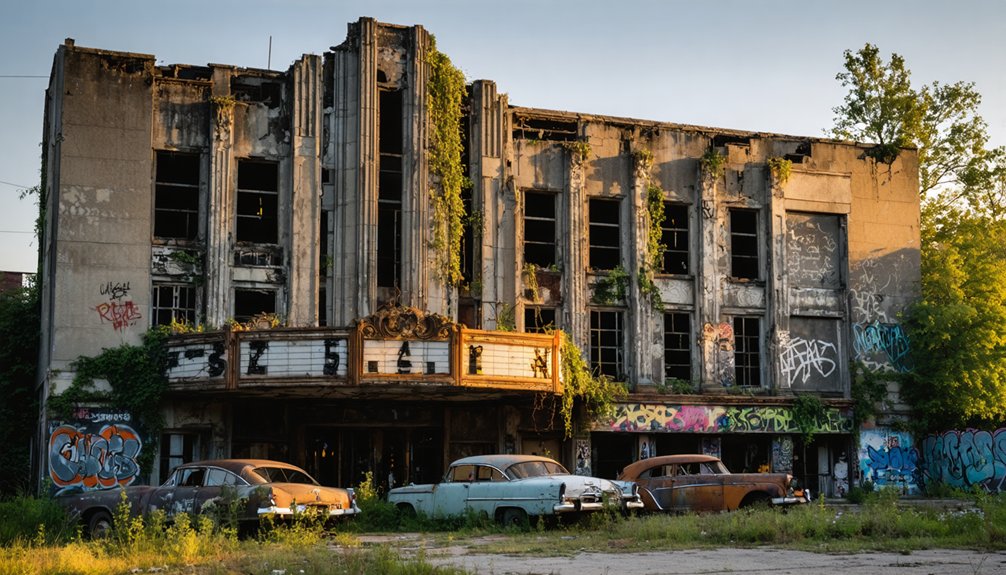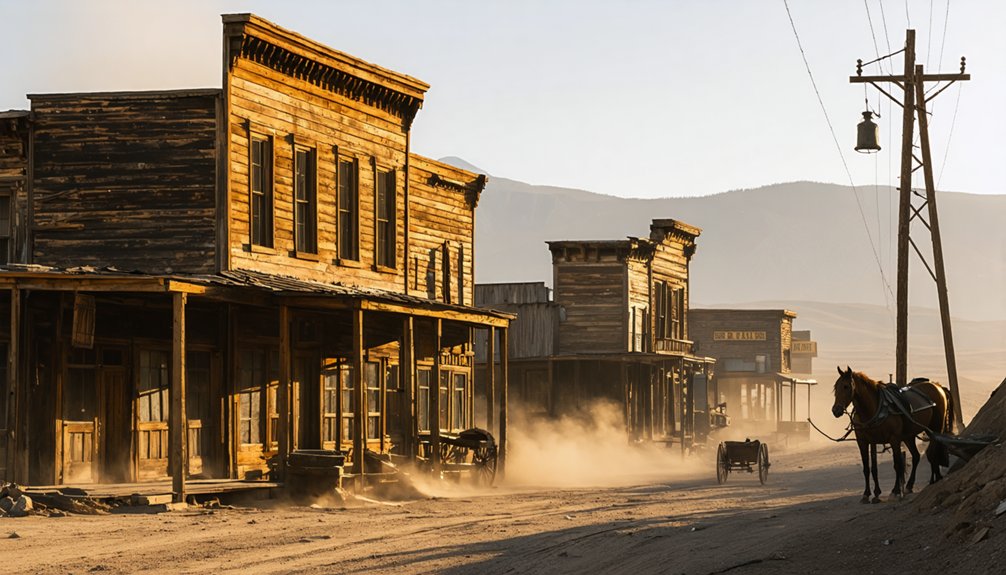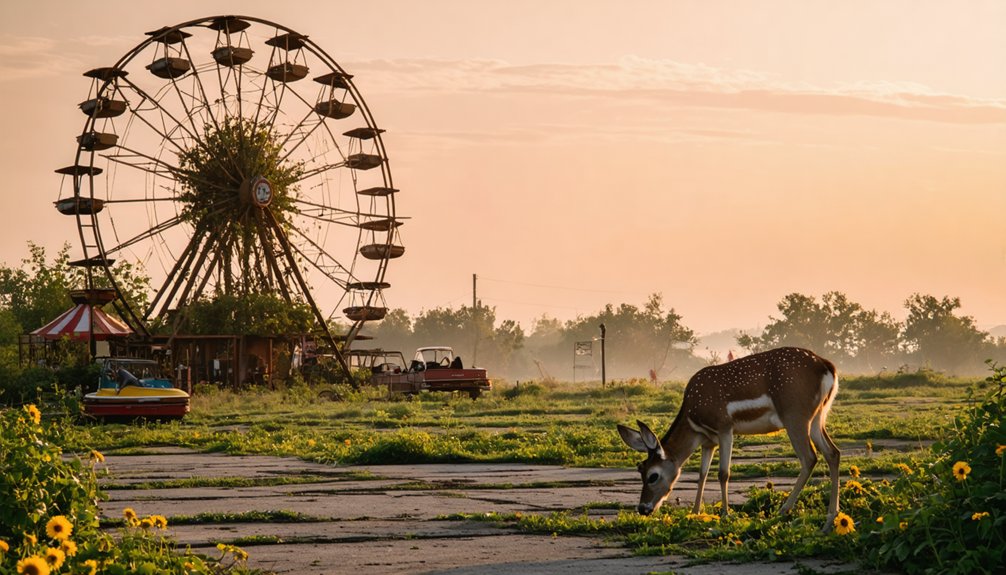
You’ll find yourself mesmerized by post-apocalyptic ghost towns because they perfectly capture nature’s triumph over human ambition. These haunting spaces blend decaying architecture with vibrant new life as ivy embraces crumbling walls and wildlife claims forgotten streets. Each abandoned room tells intimate stories through scattered belongings and interrupted lives, while the eerie silence invites your imagination to wander. The deeper you explore these frozen-in-time spaces, the more secrets they’ll reveal about our collective past.
Key Takeaways
- Post-apocalyptic ghost towns blend haunting beauty with nature’s reclamation, creating visually striking scenes of ivy-wrapped buildings and shattered windows.
- These abandoned spaces freeze moments in time, preserving untouched personal belongings that tell intimate stories of interrupted lives.
- The stark contrast between human structures and nature’s takeover creates a compelling artistic narrative that photographers and visitors find captivating.
- Ghost towns satisfy our psychological desire to explore the unknown while connecting with history’s darker moments and mortality.
- These spaces become sanctuaries for wildlife and rare species, showcasing nature’s resilience and ability to transform urban decay.
The Haunting Beauty of Urban Decay
In a world reclaimed by nature’s unstoppable force, post-apocalyptic cities tell haunting stories through their decaying bones.
Abandoned metropolises whisper their secrets as nature slowly devours concrete and steel, leaving only ghosts of human civilization behind.
You’ll discover ivy-wrapped skyscrapers leaning precariously against the sky, their shattered windows reflecting the wild beauty that’s consumed them. Every urban exploration reveals nature’s artistic triumph – grass breaking through cracked pavement, while feral dogs prowl past graffiti-covered walls that whisper messages from the past. Thick fog rolls through empty corridors, creating an ethereal atmosphere that masks lurking dangers. Photographers capture these haunting scenes through long exposures that transform the darkness into surreal dreamscapes.
As you wander these forgotten streets, you’re struck by an aesthetic nostalgia that’s both beautiful and melancholic.
Collapsed bridges span emptiness like broken dreams, while hollow buildings stand as monuments to human ambition. At night, without artificial light to mask the stars, you’ll witness the raw magnificence of darkness pierced only by moonlight filtering through skeletal structures.
Nature’s Reclamation: A Green Revolution
While mankind’s grip on civilization has loosened, nature wages a silent revolution across abandoned cityscapes.
You’ll witness mosses creeping through cracked pavement, vines scaling weathered walls, and native shrubs bursting through forgotten foundations. This green rebellion transforms ghost towns into thriving ecosystems, where wildlife returns to reclaim their ancestral territories. Based on research data, this transformation can result in net forest gains of tens of thousands of square kilometers over time. Local residents often discover that these transformed spaces create vibrant green spaces from decaying properties that once threatened community well-being.
As you explore these evolving landscapes, you’ll discover how nature crafts green corridors through the urban ruins, connecting once-fragmented habitats.
The process builds ecological resilience, as native plants stabilize soil and purify water. What were once symbols of decay now showcase nature’s remarkable ability to heal itself.
In these spaces where civilization retreated, you’ll find a wild and untamed beauty that speaks to your adventurous spirit.
Frozen Moments in Time
Time stands eerily still within these deserted settlements, creating a haunting tableau of interrupted lives.
You’ll discover untouched dinner plates, open books frozen mid-page, and toys scattered as if their owners just stepped away. These temporal snapshots capture specific moments – whether triggered by natural disasters, economic collapse, or political upheaval.
In these silent streets, you’re walking through frozen narratives of human experience.
Bodie, California remains in a unique state of arrested decay, preserving authentic glimpses of 19th-century life.
Soviet-era Pyramiden’s Arctic chill preserves its past perfectly, while Pripyat’s abandoned classrooms tell stories of sudden evacuation. The ongoing underground coal fire in Centralia continues to emit smoke through cracked streets, preserving the moment of its tragic transformation.
Every personal belonging, every architectural detail offers intimate glimpses into lives abruptly halted.
The absence of modernization or redevelopment keeps these places suspended between yesterday and today, allowing you to step directly into history’s powerful pause button.
The Psychology of Abandoned Spaces
Beneath the crumbling facades and weathered walls of abandoned spaces lies a complex psychological landscape that draws explorers into its depths.
You’re pulled in by an innate drive to discover the unknown, where every darkened corridor and empty room triggers a unique blend of fear and fascination. The remnants of decay ignite an irresistible curiosity about what lies behind each closed door. These forgotten places become a canvas for psychological exploration, offering both the thrill of adventure and the calm of solitude. As you wander through these spaces, affective atmospheres shape your emotional responses and invite deeper contemplation.
You’ll find yourself wrestling with cognitive dissonance as familiar structures take on unfamiliar forms, while emotional nostalgia washes over you among the decay.
In these decaying spaces, the familiar becomes foreign yet intimate, stirring deep memories within our psychological landscape.
These spaces serve as powerful catalysts for self-reflection and identity formation, creating a therapeutic refuge from modern life’s chaos. In the silence of abandonment, you’re free to contemplate time’s passage and reconnect with your own narrative through the stories these ruins tell.
Silent Stories of Past Lives
Among the weathered timbers and rusted machinery, you’ll discover stories etched into every surface of these abandoned towns. Each crumbling storefront and empty home whispers tales of forgotten residents who once thrived here, chasing dreams of silver, gold, or new frontiers along bustling railroad routes.
You’re walking through more than just decay – these ghost towns are living museums where untold narratives linger in discarded artifacts and faded signs. They reveal the harsh realities of boom-and-bust cycles, industrial disasters, and environmental challenges that forced entire communities to vanish. In Calico, over 500 silver mines operated, leaving behind a testament to California’s largest silver rush. Economic decline often followed when natural resources depleted, leaving these once-vibrant communities frozen in time.
Nature now weaves its own story through broken windows and collapsing roofs, while wild vegetation reclaims streets where children once played. Here, you’ll find yourself face-to-face with raw evidence of human ambition, resilience, and ultimately, impermanence.
Architectural Remnants and Lost Dreams
As you wander through these abandoned halls, you’ll discover frozen snapshots of unfulfilled dreams – from ornate mansions with custom fireplaces to industrial ruins that once promised endless prosperity.
Each weathered wall and crumbling facade tells a story of ambition, from the German architecture of Kolmanskop to the medieval stonework of Craco, where time stands still in their decay.
The grand structures, now haunted by emptiness, reveal layers of human aspiration through their architectural details: entertainment centers gather dust, church spires reach toward silent skies, and mining equipment rusts as evidence to boom-and-bust cycles that shaped these forgotten places.
Frozen Moments in Time
Walking through a post-apocalyptic ghost town feels like stepping into a three-dimensional photograph where time stands eerily still.
You’ll discover frozen moments that tell stories of unfulfilled futures: a half-packed suitcase gathering dust, dishes left unwashed on kitchen counters, and classrooms with lessons still scrawled on chalkboards.
- Empty town squares whisper tales of bustling markets and community gatherings that vanished in an instant.
- Sand-filled living rooms in Kolmanskop reveal how nature reclaims what humans leave behind.
- Personal belongings in Pyramiden’s homes suggest residents expected to return.
- Craco’s medieval castle stands as a silent witness to generations of abandoned dreams.
These snapshots of interrupted lives create an eerily beautiful reflection of humanity’s resilience and vulnerability, forever suspended between what was and what could have been.
Silent Halls Speak History
Deep within post-apocalyptic ghost towns, architectural remnants stand like silent storytellers, each brick and beam whispering tales of bygone dreams.
The landscape is dotted with ghost towns along the Mississippi River, each one a testament to the lives once lived there. Nature begins to reclaim these spaces, intertwining its roots with the remnants of civilization as the river flows silently by. Visitors may find themselves pondering the stories of the past while surrounded by the beauty and decay that define these forgotten places.
You’ll discover distinctive styles, from International to Spanish Colonial Revival, frozen in time like crystallized memories. The whispering walls of abandoned theaters, hotels, and churches reveal the pulse of vanished communities, while forgotten echoes linger in empty courtyards where children once played tennis and baseball.
Trace the outlines of ambitious plans in crumbling street grids and faded signage, where nature now reclaims grand visions.
You’re walking through more than just empty buildings – you’re exploring physical testimonies of boom-and-bust cycles, preserved in mining complexes and vacation resorts. These architectural ghosts tell stories of resource exploitation, corporate dreams, and the delicate dance between human ambition and environmental forces.
Decaying Grandeur Lives On
Through shattered windows and crumbling thresholds, you’ll discover haunting masterpieces of architectural decay where opulent mansions, grand churches, and ornate public buildings now stand frozen in their final moments.
These monuments of ruined elegance tell stories of ambitious dreams colliding with harsh realities, where nature now weaves its way through stonework and forgotten halls echo with nostalgic whispers of past lives.
- Explore sand-filled ballrooms where elegant dances once swirled beneath crystal chandeliers
- Witness mighty castles surrendering to vegetation’s slow but relentless embrace
- Step through time-worn churches where stained glass casts rainbow shadows on empty pews
- Discover personal artifacts left behind in luxury homes, each telling tales of sudden departure
These architectural remnants aren’t just ruins – they’re portals to lost worlds waiting for your discovery.
The Allure of Dark Tourism
As shadows lengthen across abandoned streets and crumbling buildings, humanity’s fascination with dark tourism continues to surge, drawing millions to sites of tragedy, disaster, and paranormal activity each year.
You’re part of a growing movement – particularly if you’re among the 91% of Gen Z adventurers seeking authentic connections with history’s darkest moments.
Your visitor motivations might run deeper than mere curiosity. When you stand amid these silent witnesses to time, you’re engaging in a profound psychological journey.
You’ll find yourself confronting mortality, processing complex emotions, and perhaps even experiencing that paradoxical sense of wellbeing that comes from facing the shadows of the past.
It’s no wonder the dark tourism industry is projected to reach $38.64 billion by 2030, as more explorers like you seek meaning in these haunting destinations.
Environmental Forces and Natural Takeover
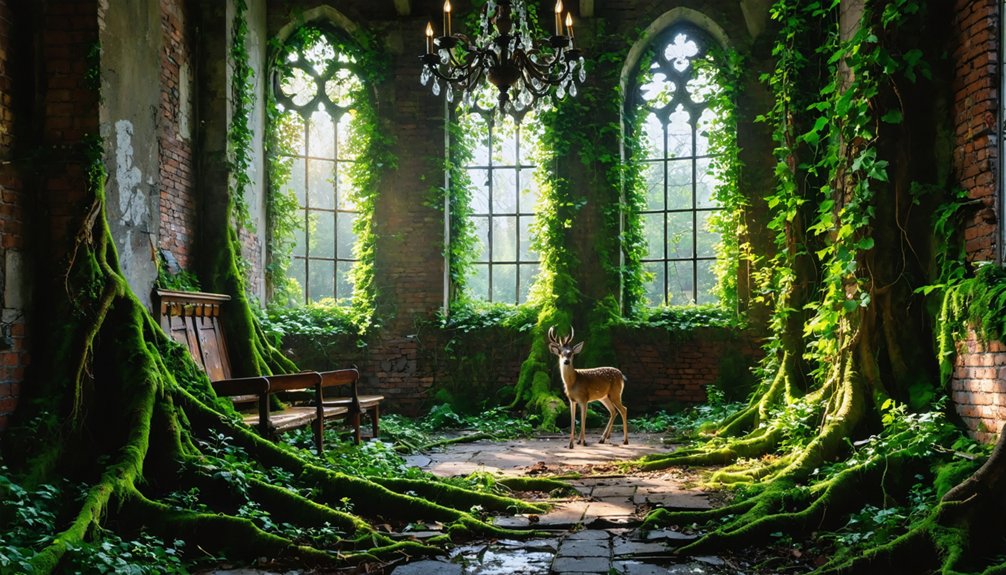
When nature reclaims its territory from abandoned human settlements, you’ll witness an extraordinary transformation unfold before your eyes. The process of natural reclamation begins as pioneer plants pierce through concrete, while wildlife emerges from the shadows to establish new domains.
Nature’s reclamation of abandoned places reveals a wild beauty, as pioneers pierce through concrete and wildlife emerges to forge new realms.
You’re watching nature’s masterpiece in motion, as ecological resurgence breathes life into these forgotten spaces.
- Witness invasive grasses and climbing vines wrap themselves around crumbling structures, creating living tapestries.
- Marvel at deer and bears roaming freely through former streets, transforming urban corridors into wild passages.
- Discover rare species finding sanctuary in these untamed havens, away from human interference.
- Watch as trees burst through forgotten foundations, their roots becoming nature’s archaeological record of human absence.
Cultural Legacy and Historical Preservation
These haunting ruins aren’t just crumbling structures – they’re guardians of memory where you can trace the footsteps of displaced communities and witness the aftermath of industrial disasters.
Whether you’re exploring Pripyat’s frozen-in-time apartments or wandering through Kayaköy’s protected streets, you’re experiencing living museums that challenge our understanding of progress and remind us of civilization’s fragile nature.
The Art of Decay Photography
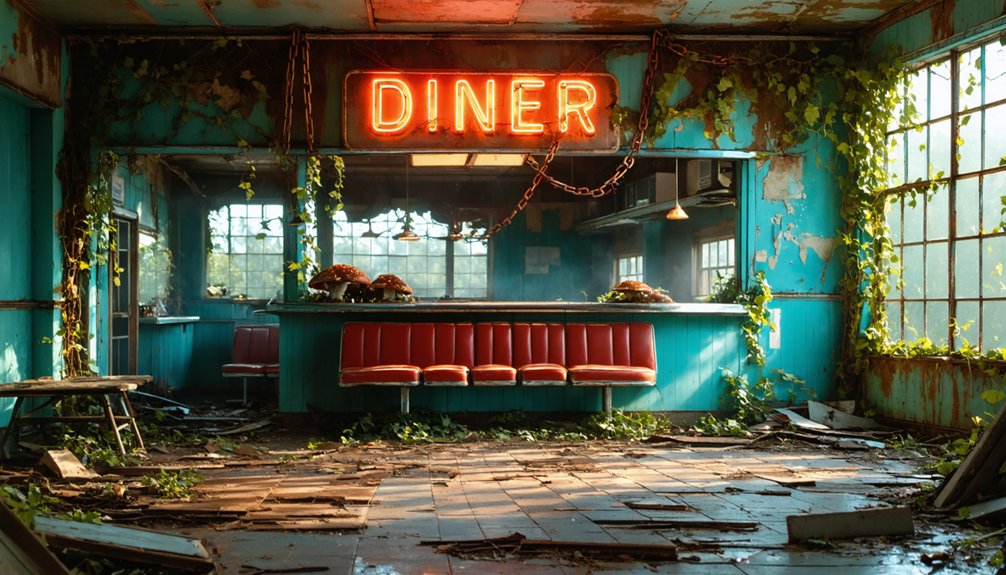
Through the lens of decay photography, abandoned places transform into compelling works of art where nature’s reclamation meets human history.
You’ll discover that mastering decay aesthetics requires both technical skill and artistic vision, as you capture the haunting beauty of forgotten spaces. Light manipulation becomes your paintbrush, whether you’re working with natural sunlight streaming through broken windows or creating dramatic effects with strategic flash lighting.
- Pack essential gear including a sturdy tripod and wide-angle lens to stabilize shots and capture the full grandeur.
- Experiment with long exposures during golden hour to reveal ethereal qualities and rich textures.
- Frame both vast architectural spaces and intimate details to tell layered stories.
- Use post-processing techniques like HDR merging and selective contrast to enhance the raw, weathered character of your subjects.
Frequently Asked Questions
How Safe Is It to Explore Abandoned Buildings in Post-Apocalyptic Ghost Towns?
You’ll face serious risks exploring these sites. Take essential safety precautions: check building integrity, wear protective gear, and never venture alone. Even then, unstable structures could collapse without warning.
What Legal Permits Are Required to Visit Restricted Ghost Town Areas?
Like a key unfastening forgotten doors, you’ll need Special Area Permits and written property owner consent. Check local ghost town regulations, as visitor permits vary between government, private, and protected locations.
Can You Remove Artifacts or Take Souvenirs From Ghost Towns?
You shouldn’t take artifacts from ghost towns – it’s illegal and violates souvenir ethics. Instead, preserve these precious time capsules through photos while respecting artifact preservation laws that protect our shared heritage.
How Do Local Communities Feel About Tourists Visiting Nearby Ghost Towns?
You’ll find local communities often embrace tourists when tourism impact benefits their economy directly. They’ll welcome you warmly if you respect their heritage and support community-driven initiatives through responsible exploration.
What Survival Gear Should Urban Explorers Bring to Ghost Town Expeditions?
Like a prepared wilderness scout, you’ll need survival essentials: sturdy boots, headlamps, first aid kit, GPS, maps, gloves, water, food, backup lights, and communication tools for safe urban exploration.
References
- https://pg.world/articles/abandoned_places_part_1
- https://postapocalypticcities.wordpress.com/2013/10/05/real-life-ghost-towns/
- https://en.wikipedia.org/wiki/Ghost_town
- https://www.youtube.com/watch?v=JU9Ery0UlAc
- https://www.youtube.com/watch?v=d0Fba_lQqYI
- https://www.britannica.com/topic/ghost-town
- https://en.wikivoyage.org/wiki/Ghost_towns
- http://arcana.wikidot.com/post-apocalyptic-decay
- https://imagiquill.com/60-ways-to-describe-a-post-apocalyptic-city-illustrating-the-decay-and-struggle/
- https://fiveable.me/cities-and-the-arts/unit-10/urban-decay-ruin-photography/study-guide/FoevvwYpeeCCc771