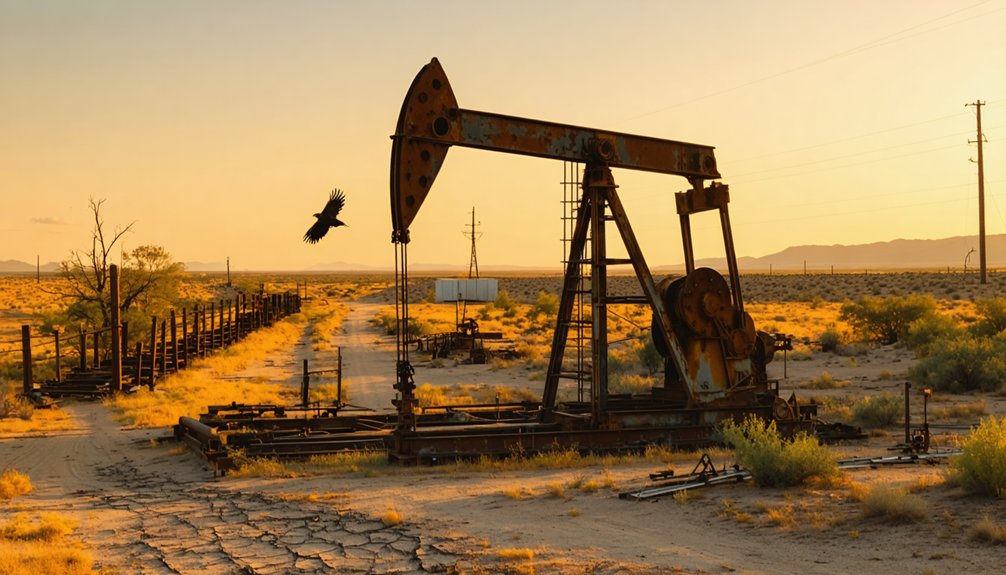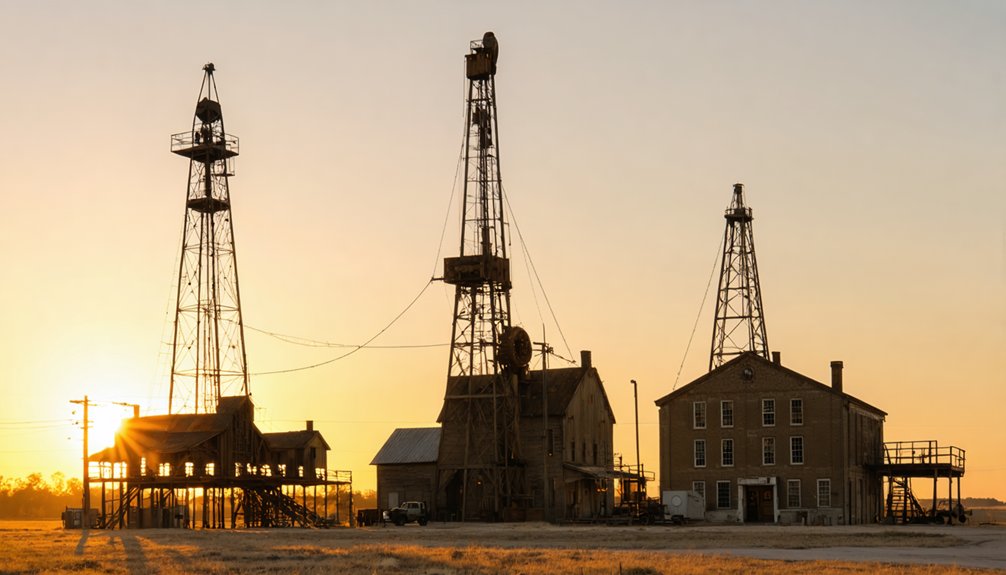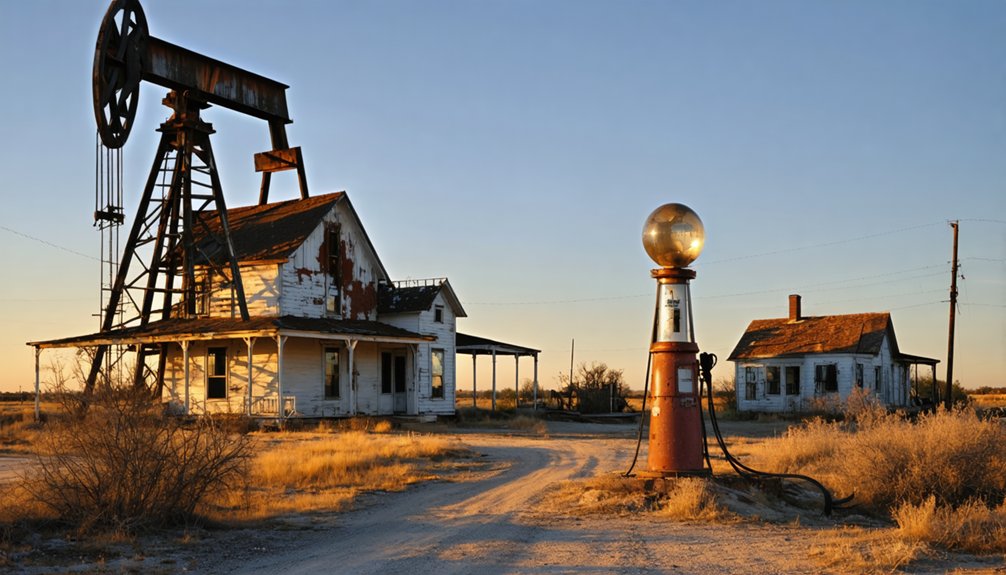
America’s oil towns are preserved because they’re living monuments to a pivotal era that transformed the nation. You’ll find distinctive Italianate mansions and Gothic Revival churches that showcase the wealth generated from the 1859 Drake strike onwards. These sites serve as outdoor learning centers, offering hands-on experiences while generating tourism revenue for local economies. The preserved infrastructure and architecture tell compelling stories of technological innovation, environmental lessons, and cultural heritage that continue to shape America’s future.
Key Takeaways
- Historic oil towns serve as outdoor educational centers, providing hands-on learning experiences about America’s petroleum industry through preserved infrastructure.
- These sites protect significant architectural heritage, including Italianate mansions and Gothic Revival churches that showcase the oil boom’s prosperity.
- Heritage tourism generates substantial revenue for local economies through visitor spending on museums, accommodations, dining, and cultural attractions.
- Oil town remnants document technological innovations and regulatory reforms that shaped modern drilling practices and environmental protection measures.
- These preserved sites maintain cultural narratives and historical records of the transition from agrarian to industrial society in America.
The Birth of America’s Oil Industry Heritage
When Edwin Drake successfully drilled the first commercial oil well near Titusville, Pennsylvania in 1859, he couldn’t have known he was launching America’s petroleum revolution.
Drake’s pioneering oil well in Titusville marked the beginning of America’s energy revolution, forever changing the nation’s industrial landscape.
You’ll find the roots of this transformative oil discovery in western Pennsylvania, where early pioneers like Samuel Kier and George Bissell recognized petroleum’s potential for kerosene production.
The region’s success triggered rapid drilling evolution, as technology advanced from basic hand-dug wells to sophisticated mechanical rigs. By 1865, Pennsylvania’s output reached half a million barrels annually, establishing the foundation of America’s oil heritage.
This breakthrough didn’t happen in isolation – it built upon earlier developments, including Abraham Gesner’s coal oil refinement and Benjamin Silliman’s scientific validation of petroleum as a viable fuel source.
By the end of 1859, several thousand barrels were being produced from numerous wells across the region.
These innovations laid the groundwork for America’s industrial transformation. Indigenous peoples had long known about and utilized natural oil seeps for their daily needs before the modern petroleum industry emerged.
Preserving the Architecture of Boom and Bust
As the wealth from America’s oil boom flowed through nascent petroleum towns, it left an indelible mark in the form of distinctive architecture that you’ll still find preserved today.
From Italianate mansions to Gothic Revival churches, these structures showcase the optimism and prosperity of the era through their ornate designs and grand proportions.
You’ll discover how these communities have fought to protect their architectural significance through historic district designations and preservation laws.
Local commissions now carefully evaluate changes to maintain authenticity while allowing practical adaptations.
Through tax incentives and grants, historical preservation efforts have transformed many former oil town buildings into museums, community centers, and thriving businesses.
This adaptive reuse not only preserves the physical remnants of America’s petroleum heritage but also strengthens community identity and promotes cultural tourism.
The 1859 Drake strike in Titusville marked the beginning of modern petroleum development, launching an architectural renaissance that would define these industrial towns.
In Connecticut, the Standard Oil barn represented one of the last remaining horse-drawn oil delivery facilities, highlighting the transition from early distribution methods to modern gas stations.
Educational Value for Future Generations
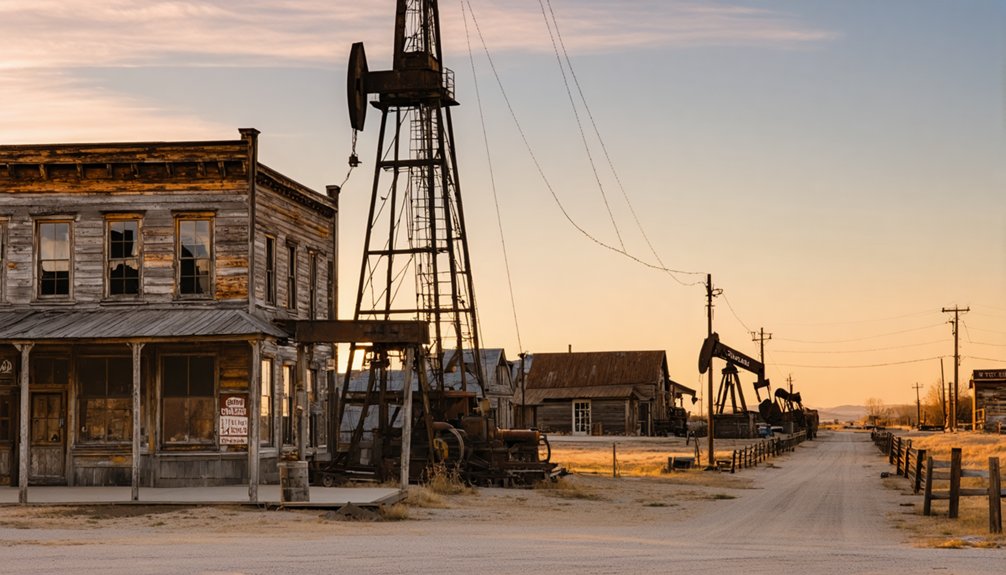
You’ll discover that historic oil towns serve as crucial outdoor learning centers, where preserved infrastructure and authentic artifacts provide tangible connections to America’s petroleum heritage.
Through interactive youth discovery programs at sites like the Drake Well Museum, students can examine original drilling equipment, participate in hands-on demonstrations, and understand the technological evolution of oil extraction. Today’s STEM initiatives supported by oil and gas companies enhance these educational experiences through specialized camps and teacher development programs.
These educational experiences help you grasp the profound impact of oil development on American industry, culture, and society while fostering appreciation for the preservation of these historic resources. The legendary Spindletop gusher in Beaumont sparked a new era of petroleum education, with its dramatic 1901 discovery now immortalized through preserved historical sites.
Historical Industry Learning Centers
Throughout America’s oil-producing regions, historical industry learning centers serve as essential educational repositories that preserve and interpret the nation’s petroleum heritage.
You’ll find places like the Drake Well Museum offering extensive exhibits that trace the evolution of oil production from local discoveries to global industry. These centers actively promote community engagement through walking tours, workshops, and interactive displays that bring industrial heritage to life.
When you visit these learning facilities, you’ll discover carefully curated collections of machinery, documents, and oral histories that tell the story of America’s energy pioneers. Organizations like AOGHS work to connect oil and gas museums nationwide to better preserve these important historical assets.
The Oil Region National Heritage Area in Pennsylvania showcases the birthplace of commercial oil production, while preserved company towns like Thurber, Texas, provide authentic glimpses into the daily lives of early oil workers and their families. Visitors can explore the museum grounds from dawn to dusk throughout the year to experience the historic landscape firsthand.
Interactive Youth Discovery Programs
When exploring America’s oil towns today, interactive youth discovery programs stand at the forefront of preserving petroleum heritage for future generations.
You’ll find hands-on learning experiences like Project E3 and the Knowledge Box exhibits bringing energy education to life for K-12 students. These initiatives combine traditional oil industry knowledge with modern technological innovations.
Mobile units like MOLU travel directly to schools, offering six interactive learning stations where you can discover oil and gas technologies firsthand.
Youth engagement extends beyond the classroom through virtual tours of offshore rigs and digital content that breaks geographic barriers.
The Petroleum Academy and similar programs connect you with real-world industry experiences through internships and workplace training, while STEM labs and trade centers equip you with practical skills for tomorrow’s energy sector.
Near Taft, California, students can explore science rooms for children that were once vibrant community spaces funded by the oil industry.
ExxonMobil’s commitment to education has resulted in over $1.25 billion in contributions to global educational initiatives since 2000.
Economic Impact on Modern Tourism
As former oil towns faced economic decline following the industry’s downturn, many communities discovered a promising new revenue source in heritage tourism.
Heritage tourism breathed new life into struggling oil towns, transforming industrial decline into economic opportunity through historical preservation.
You’ll find that these preserved industrial sites now generate millions in annual revenue through visitor spending on accommodations, dining, and local attractions. The shift toward tourism sustainability has created a robust economic diversification strategy, reducing dependence on volatile oil markets.
When you visit these transformed communities, you’ll notice how the preservation of oil infrastructure creates unique cultural attractions that drive tourism.
Local businesses flourish as visitors explore museums, stay in hotels, and shop at local establishments. The economic ripple effect extends beyond direct tourism spending, fostering growth in transportation, retail, and hospitality sectors while strengthening community resilience through increased tax revenues and employment opportunities.
Environmental Lessons From the Past
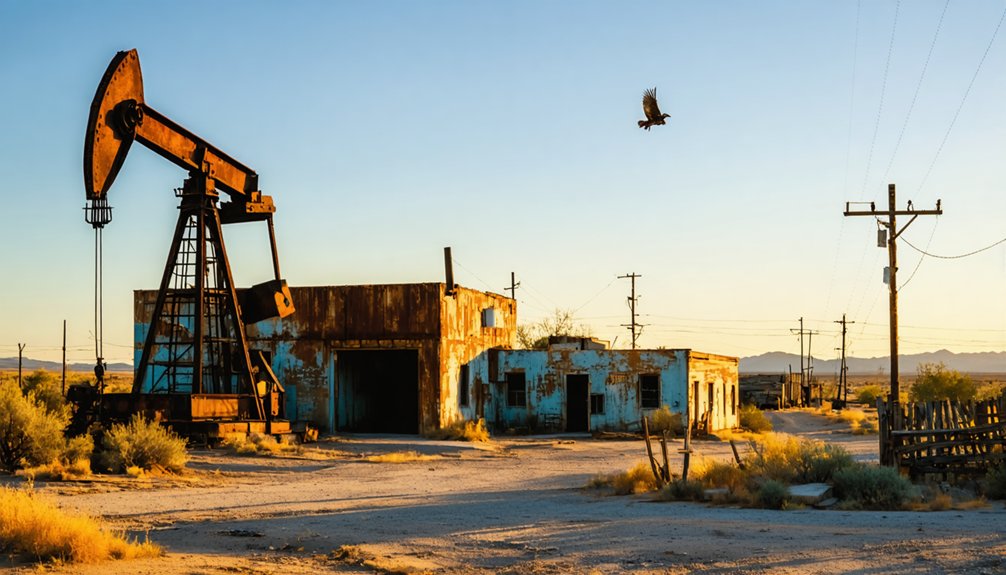
You’ll find that early oil towns provided stark warnings about environmental contamination through their legacy of improperly sealed wells and toxic wastewater seepage into groundwater systems.
Today’s mounting costs of over $250 billion for cleaning up millions of abandoned wells demonstrate how critical it’s to implement proper environmental safeguards from the start of drilling operations.
Early Contamination Warning Signs
Throughout America’s oil boom era, early warning signs of environmental contamination emerged through distinct scientific markers and ecological changes that would later prove prophetic.
You’ll find this contamination history recorded in sediment cores, which show PAH levels increasing up to 23-fold between 1967-2010, marking the industry’s growing footprint. These chemical signatures stretched 50-85 km downstream from extraction sites, revealing the true reach of industrial pollution.
The ecological impact became starkly visible through incidents like the 1969 Santa Barbara spill, where oil coated 50 km of coastline.
Even more telling were the subtle shifts – microbial communities transformed, coral reefs struggled to regenerate, and toxic compounds seeped into porous materials, creating long-term damage that wouldn’t be fully understood for decades.
Preventing Past Drilling Mistakes
The catastrophic environmental impacts of early oil drilling sparked a wave of legislative and regulatory reforms that reshaped America’s approach to resource extraction.
You’ll find that major disasters like the 1969 Santa Barbara spill and 1990 Exxon Valdez accident directly led to stricter drilling regulations and thorough spill prevention measures. The National Environmental Policy Act and Oil Pollution Act established vital frameworks for environmental protection and polluter accountability.
Today’s drilling operations must comply with extensive safety protocols, including double-hulled tanker requirements and detailed contingency plans.
Modern technology helps you track potential hazards through satellite monitoring and advanced mapping systems. While complete remediation remains challenging, these preservation efforts serve as powerful reminders of past industrial mistakes, ensuring you won’t repeat the environmental devastation that once plagued America’s oil towns.
Cultural Stories Worth Remembering
When oil boomtowns vanished from America’s landscape, they left behind a rich tapestry of cultural narratives worth preserving.
Many of these stories are now tied to haunted destinations in Virginia, where the echoes of the past can still be felt. From eerie mansions to abandoned battlefields, each site offers a glimpse into the lives that once were. Exploring these haunted locations not only reveals the history but also sparks curiosity about the myths and legends that surround them.
You’ll find these stories deeply woven into our nation’s cultural identity, from Indigenous sacred lands to the memories of working-class communities that once thrived on black gold.
Here’s what makes these remnants culturally significant:
- Ancient Indigenous sites like Greater Chaco contain over 10,000 years of spiritual heritage.
- Ghost towns serve as living museums that chronicle the boom-and-bust cycle of American enterprise.
- Texas boomtown narratives capture the transformation from agrarian to industrial society.
- Oral histories of roughnecks and wildcatters preserve working-class memory.
Through memory preservation efforts, you’re connecting with both the triumphs and struggles of those who shaped America’s oil legacy, ensuring their stories aren’t lost to time.
Technological Innovation Landmarks
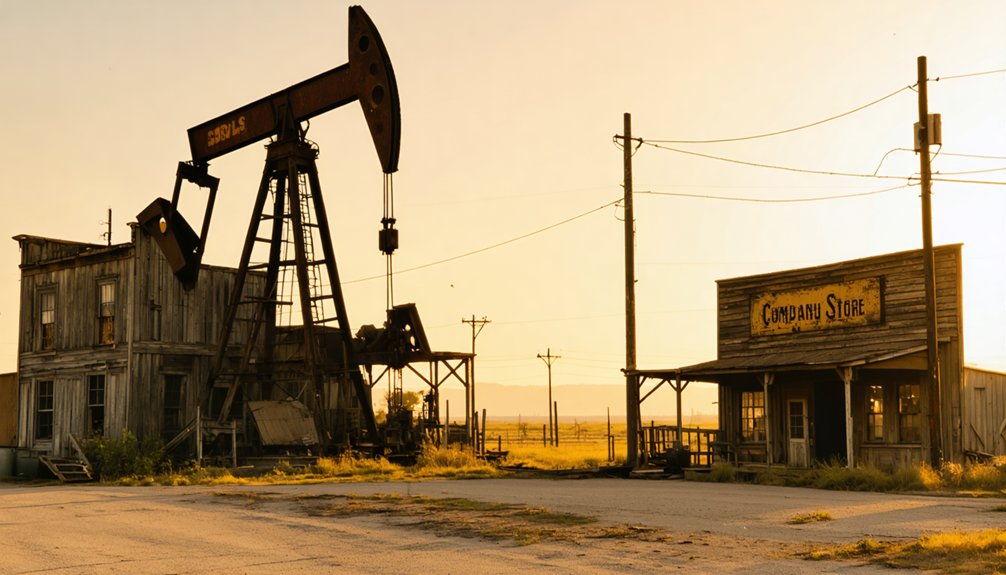
By examining America’s abandoned oil towns, you’ll discover pioneering technological landmarks that revolutionized the petroleum industry.
You can trace technological milestones from the 1865 Roberts Torpedo, which increased oil production by 1,200%, to the first modern refineries of 1850 that replaced whale oil with kerosene. These innovation influences transformed America’s energy landscape, as evidenced by the remains of early thermal cracking facilities from 1910 and catalytic refineries of the 1920s.
The rusted remnants of the first over-water platform from 1910 at Caddo-Pine Island Field mark the birth of offshore drilling, while abandoned digital monitoring stations showcase the industry’s evolution toward automation.
From rusty oil rigs to sleek digital sensors, these abandoned sites chronicle America’s technological journey toward energy self-reliance.
Each artifact tells the story of America’s relentless drive for energy independence through technological advancement.
Living Museums of Industrial Progress
Throughout America’s forgotten oil towns, living museums stand as powerful reminders to the nation’s industrial heritage, inviting you to step back in time and experience firsthand the technological marvels that shaped petroleum history.
These sites offer authentic living history experiences through four essential elements:
- Interactive exhibits featuring operational machinery at locations like the Drake Well Museum
- Guided demonstrations that showcase historical industrial processes and worker life
- Community engagement programs that connect past achievements to present regional identity
- Educational tours that bring industrial innovation to life
You’ll witness the preserved cultural legacy of America’s oil boom era while exploring these industrial landmarks.
Through hands-on experiences and immersive presentations, these living museums guarantee that future generations understand the remarkable story of American industrial ingenuity and determination.
Frequently Asked Questions
How Much Does It Cost Annually to Maintain Historic Oil Town Sites?
You’ll find annual funding varies considerably, with maintenance expenses ranging from $173 per resident in typical cities to $143.8 million for larger historic oil regions like California’s preservation efforts.
What Role Do Native American Tribes Play in Oil Town Preservation?
In 1924, Osage Nation earned $24.6M from oil rights. You’ll find tribes lead preservation through cultural significance initiatives, tribal collaboration with federal agencies, and sovereign control over historic oil development sites.
Are There International Partnerships Involved in Preserving American Oil Towns?
You’ll find international collaborations actively support American oil town preservation through UNESCO partnerships, energy company agreements, and cross-border cultural heritage initiatives that protect these historically significant industrial landscapes.
How Do Modern Oil Companies Contribute to Historic Oil Town Preservation?
You’ll find modern oil companies support preservation through corporate responsibility initiatives, providing matching funds, technical expertise, and community engagement programs while maintaining historic sites and sharing industry knowledge.
What Security Measures Protect Preserved Oil Town Artifacts From Theft?
You’ll find extensive security technology protecting oil town artifacts, including surveillance cameras, motion detectors, metal screening checkpoints, electronic tracking systems, and trained staff implementing rigorous theft prevention protocols.
References
- https://aoghs.org/petroleum-pioneers/pithole-creek/
- https://badassworkgear.com/top-us-oil-towns/
- https://www.talonlpe.com/blog/historic-texas-oil-boomtowns
- https://yesterdaysamerica.com/texas-oil-history/
- https://en.wikipedia.org/wiki/History_of_the_petroleum_industry_in_the_United_States
- https://www.acs.org/education/whatischemistry/landmarks/pennsylvaniaoilindustry.html
- https://oilregion.org/heritage/history-of-oil/
- https://www.youtube.com/watch?v=CF1ROmY_vyg
- https://guides.loc.gov/oil-and-gas-industry/history
- https://www.ebsco.com/research-starters/history/commercial-oil-drilling-begins