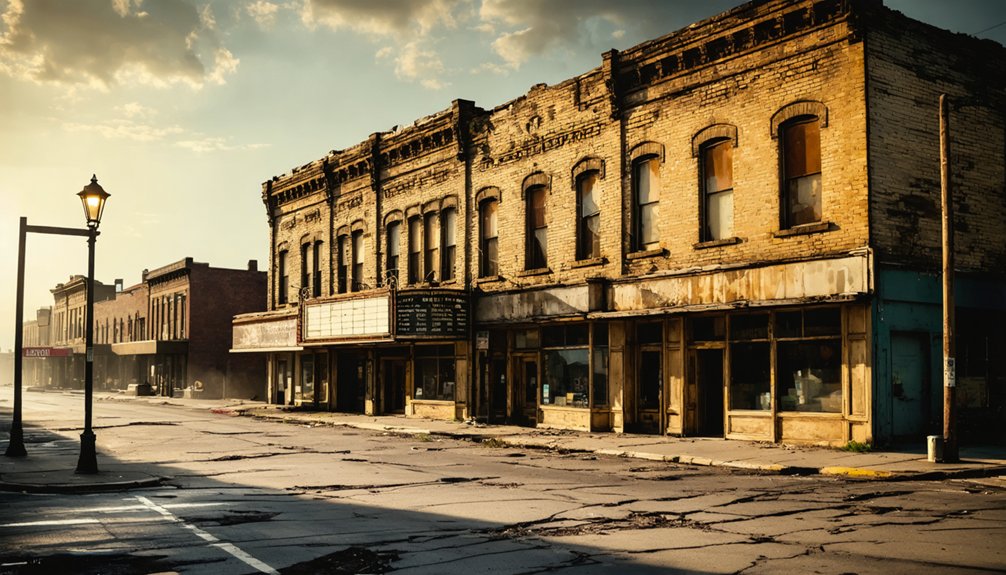
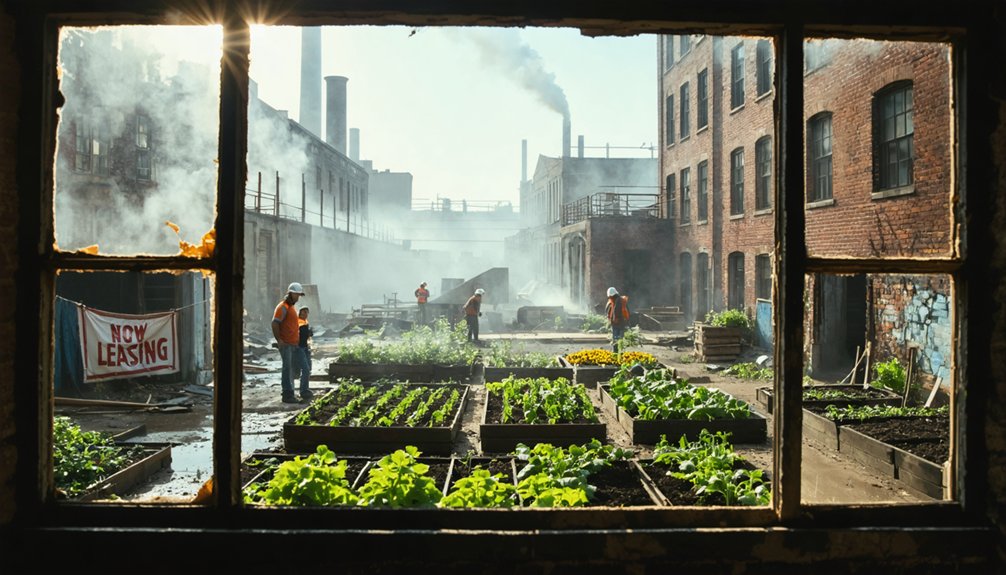
You’ll find over 5 million lost manufacturing jobs across America’s Rust Belt cities since 2001, triggering mass population exodus and urban decay. Cities like Detroit lost 45% of their residents between 1970-2006, while property values plummeted and tax bases crumbled. With 15-20% of housing sitting vacant and unemployment reaching 18% in some areas, these former industrial powerhouses face a devastating cycle of decline. Understanding the complex factors behind this transformation reveals potential paths forward.
Key Takeaways
- Loss of manufacturing jobs due to foreign competition and automation led to severe unemployment, causing workers to migrate elsewhere.
- Over-reliance on single industries left towns vulnerable when those industries collapsed, particularly in steel-dependent communities.
- Population exodus resulted in declining tax revenues, causing deterioration of public services and infrastructure.
- Young workers moved to southern and western states seeking better opportunities, leaving aging populations behind.
- Abandoned properties and declining property values created cycles of urban decay that discouraged new investment.
The Perfect Storm: Industrial Collapse and Job Loss
While the Rust Belt once dominated America’s manufacturing landscape, accounting for over half of U.S. manufacturing jobs in 1950, its dramatic decline reshaped the nation’s economic geography.
You’re looking at a region that lost 28% of its total jobs and 34% of manufacturing positions between 1950 and 1980.
Prior to this decline, high price markups and oligopolistic practices dominated major industries like auto, steel, and rubber.
The industrial decline accelerated as foreign competitors, especially from Asia, gained ground with lower labor costs.
Cities with college-educated workers showed stronger resilience and recovery during this manufacturing decline.
When China entered the WTO in 2001, U.S. manufacturing employment plummeted by over 5 million jobs in just a decade.
You’ll find the job migration wasn’t just overseas – manufacturers fled to the American South seeking lower wages and fewer union restrictions.
Cities like Detroit, Cleveland, and Toledo bore the brunt of these losses, creating a uniquely devastating regional downturn that went far beyond national manufacturing trends.
A Domino Effect: Population Exodus and Empty Streets
If you’d visited Detroit in 1970, you’d have found a bustling metropolis of 1.5 million people, but by 2006 you’d have encountered a city that had lost 45% of its residents, leaving behind countless abandoned homes and hollowed-out neighborhoods.
You’d notice this exodus hit hardest in areas with the lowest-priced housing, where the loss of manufacturing jobs triggered a chain reaction of departing workers, declining tax revenues, and deteriorating public services.
The migration patterns show younger workers, especially those without college degrees, heading to southern and western states for better opportunities, leaving aging populations and empty streets behind in these once-vibrant industrial centers.
Census data reveals that those who left the Rust Belt achieved the highest gains in personal income compared to those who stayed.
The dramatic shift began in the 1950s when these industrial hubs faced mounting pressure from global competition, leading to widespread factory closures and economic instability.
Lost Jobs, Lost Homes
As manufacturing jobs vanished from Rust Belt cities after World War II, a devastating domino effect took hold that transformed bustling industrial centers into increasingly empty streets.
You’re seeing the brutal math of job displacement: cities with higher manufacturing dependence faced 2.7% employment decline per decade, triggering household income drops up to 30% in places like Detroit and Cleveland.
This economic free fall sparked a vicious cycle of housing instability. When you can’t find work, you can’t keep your home. Neighborhoods emptied out as residents fled, leaving behind vacant properties that drove down values for everyone else.
The evidence is stark – more than 40% population losses hit cities like Buffalo and Pittsburgh, while abandoned homes created a “reverse gentrification” effect that’s still visible today. The drastic decline was accelerated as transportation costs fell by two-thirds between 1950 and 1970. Today, 72 out of 96 studied Rust Belt cities have populations lower than their historical peak, underscoring the ongoing exodus.
Migration Patterns Ripple Outward
Since manufacturing jobs disappeared, the Rust Belt’s demographic decline has created rippling migration patterns that extend far beyond city limits.
These demographic shifts have triggered a domino effect, where population losses spread outward from urban cores into surrounding communities.
You’ll find these key migration trends shaping the region’s transformation:
- Metro Columbus gained 67,000 residents from within Ohio but lost 28,000 to other states
- Population exodus pushes residents into smaller towns, spreading economic decline
- Those who leave achieve higher income growth than those who stay behind
- Tax revenue losses lead to reduced services and infrastructure maintenance
This outward ripple of departures weakens entire metropolitan regions, as both urban centers and nearby communities experience sustained population drain and economic contraction.
The shift to service sector jobs starting in the 1970s accelerated this regional transformation, forcing residents to seek opportunities elsewhere.
Cities like Des Moines and Columbus have bucked this trend, showing impressive population growth rates exceeding the national average.
Communities Without Young People
While manufacturing cities once buzzed with youthful energy, today’s Rust Belt communities face unprecedented demographic collapse as young residents flee in search of better opportunities.
You’ll find college-educated 25-34 year olds leaving at a rate of 2.9% annually, creating a vacuum in neighborhoods that desperately need youth engagement for community revitalization.
The impact is devastating – as young people depart, local tax bases shrink, leading to deteriorating schools, infrastructure, and public services.
Without reinvestment, the cycle accelerates. Cities like Cleveland and Detroit have watched their household incomes plummet 30%, while abandoned buildings multiply.
The exodus hits hardest in low-price neighborhoods, where population losses reach 40-45%. Those with higher education levels stand the best chance of attracting and retaining young residents, but most Rust Belt areas struggle to compete.
The decline has been particularly severe since the Volcker shock of 1979-1982, which made American products more expensive globally and opened the door to cheaper imports.
The Housing Crisis: Abandoned Homes and Declining Values
Despite decades of economic decline, the housing crisis gripping Rust Belt cities has reached unprecedented levels, with over 269 census tracts across 49 cities losing more than half their housing units between 1970 and 2010.
You’ll find these abandoned properties concentrated in historically Black neighborhoods, where housing policies and equitable development have fallen short.
Here’s what you’re seeing in these communities:
- Zombie foreclosures reaching alarming rates (12.7% in Wichita, 12.3% in Peoria)
- Over 882,300 vacant homes held by investors, stalling urban renewal efforts
- Property values continuously declining, especially in low-income areas
- Tax foreclosure processes taking years, leading to vandalism and deterioration
The annual property tax burden of 3,000 to 5,000 dollars often exceeds the actual value of homes worth as little as $10,000, forcing many owners to abandon their properties.
Without effective revitalization strategies and tenant protections, these communities face an uphill battle for historical preservation and community engagement.
Economic Wounds: Poverty, Crime, and Social Challenges
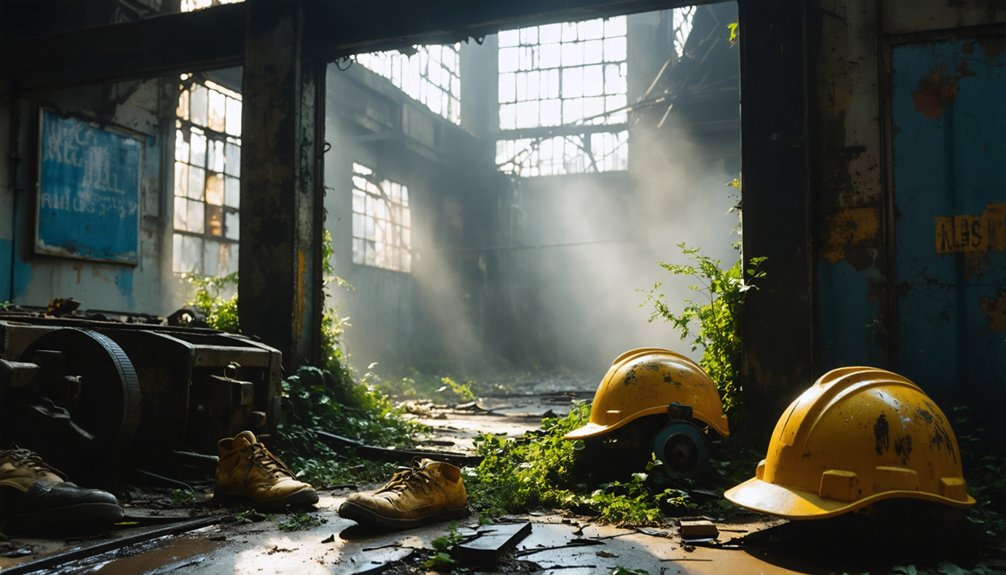
As manufacturing jobs vanished from America’s heartland, Rust Belt cities have plunged into a devastating cycle of poverty, crime, and social dysfunction.
You’ll find poverty rates soaring above state averages, with Detroit hitting 36.1%, leading to economic isolation that’s difficult to escape.
The ripple effects are stark. High crime rates deter new investment and drive out skilled workers, while educational attainment remains stubbornly low.
You’re seeing a workforce that can’t adapt to new economic sectors, young people fleeing for better opportunities, and city budgets crushed under legacy pension debts.
This social disintegration creates a toxic cycle: limited tax revenue means fewer services, which leads to more poverty and crime.
It’s a self-reinforcing spiral that’s turning once-proud industrial centers into shells of their former selves.
Beyond City Limits: The Spread of Urban Decay
You’ll find urban decay isn’t just confined to city centers anymore, as the epidemic of abandonment spreads into once-stable suburban communities throughout the Rust Belt.
Your formerly middle-class suburban neighborhoods now face plummeting property values, crumbling infrastructure, and declining public services as municipal tax bases shrink beyond sustainable levels.
The ripple effects have reached rural towns too, where you’re seeing unprecedented population loss, shuttered businesses, and deteriorating housing stock that mirror the same patterns of decline once limited to inner cities.
Suburban Decay Takes Hold
While urban centers struggle with population loss, suburban areas now face their own mounting challenges despite experiencing faster growth than cities since 2010.
Suburban sprawl has created a perfect storm of infrastructure neglect and economic disparities that’s transforming once-thriving communities into areas of concern.
You’ll find these critical issues affecting suburban stability:
- Infrastructure costs have skyrocketed to $1.12 trillion, stretching municipal budgets beyond their limits.
- Tax base shifts are leaving both cities and older suburbs without adequate funding for basic services.
- Lower population density has made public services increasingly expensive to maintain.
- Demographic shifts show younger residents moving to newer suburbs, leaving older areas with aging populations.
This pattern of decline isn’t inevitable, but it requires immediate attention to strengthen community resilience and prevent further deterioration.
Rural Communities Face Crisis
Beyond the challenges facing suburban areas, rural communities across America are experiencing unprecedented demographic and economic upheaval.
You’re seeing a stark divide: while some rural areas attract new residents seeking space and affordability, others face extinction. Between 2023-2024, natural population decline hit 104,600, though net migration provided a slim cushion of growth.
What’s really troubling is that 77% of rural counties have fewer working-age residents than 20 years ago.
Rural revitalization strategies often fall short because specialized industries like agriculture and resource extraction aren’t generating enough jobs. Community engagement initiatives struggle as dwindling tax bases can’t support basic services.
You’ll find the harshest reality in isolated areas, where loss of businesses, young talent, and accurate economic data creates a perfect storm of decline.
Hidden Costs: Public Services and Infrastructure Strain
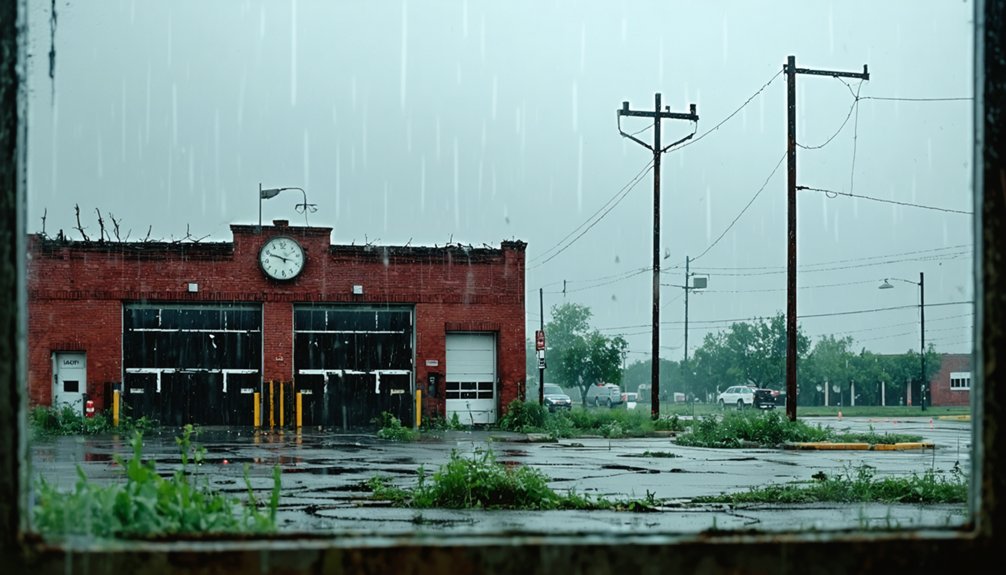
Although Rust Belt towns face numerous challenges, the strain on public services and infrastructure stands out as particularly devastating.
You’re witnessing a destructive cycle where declining populations slash the tax base, yet fixed costs for maintaining essential services remain stubbornly high. Public funding shortfalls force tough choices in service allocation, creating ripple effects throughout communities.
Key impacts you’ll notice:
- 15-20% of housing stock sits vacant, eroding property tax revenues
- Emergency services face higher per-capita costs with fewer taxpayers
- Infrastructure deterioration accelerates as maintenance gets deferred
- Social services strain under increased poverty while funding drops
These hidden costs create a downward spiral – as services decline, more residents leave, further reducing resources for those who remain.
Historical Roots of Decline: Single-Industry Dependencies
You’re looking at the foundational cracks that doomed many Rust Belt communities – their deep-rooted single industry vulnerabilities.
When towns hitched their entire economies to manufacturing giants, particularly in steel and automotive sectors, they created a dangerous economic dependency. This became devastatingly clear from the 1980s onward.
Take Youngstown and Bethlehem – cities built around steel production. When global competition intensified through trade agreements like NAFTA and China’s WTO entry, these towns had no economic cushion.
Steel cities like Youngstown and Bethlehem crumbled when global trade agreements exposed their economic vulnerability to international competition.
With 650 textile plants shuttering between 1997-2009, unemployment skyrocketed above 18% in some areas. The lack of economic diversification left these communities exposed, and their over-reliance on dominant firms stifled innovation and entrepreneurship.
This single-industry focus created a perfect storm when globalization hit.
The Human Toll: Health and Well-being in Declining Cities
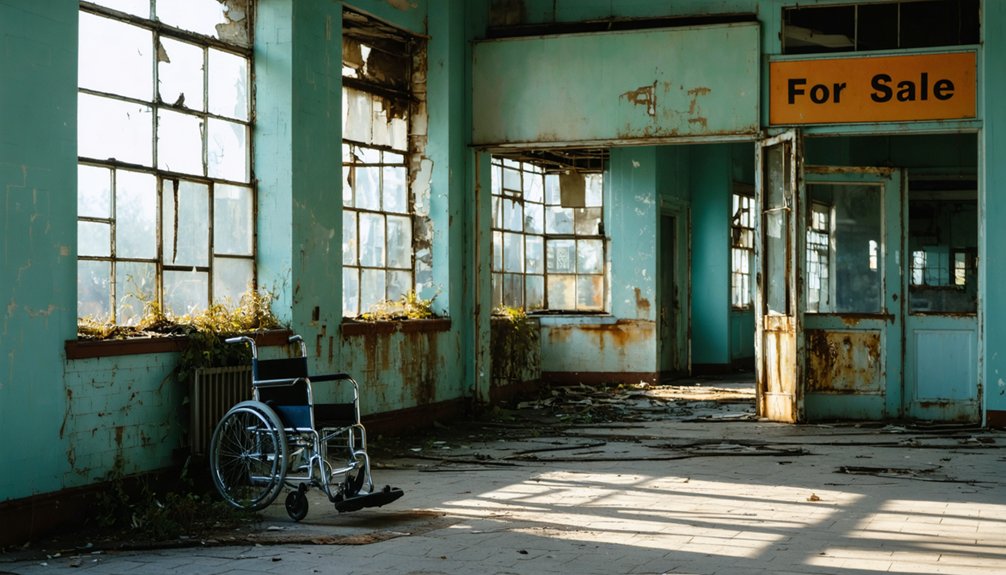
- Mental health issues are surging alongside poverty rates – with increased isolation, substance abuse, and psychological strain hitting residents who’ve watched their communities crumble.
- Your exposure to decades of industrial pollution has left a toxic legacy, driving up rates of respiratory illness and cancer.
- You’re facing severely limited healthcare access as tax bases shrink and medical facilities close their doors.
- If you lack a college degree, you’re more likely to experience worse health outcomes and fewer opportunities for economic recovery.
The data shows a clear correlation: as these cities lose population and industry, the human toll escalates through deteriorating physical and mental health conditions.
Urban Planning Dilemmas: Managing Shrinking Cities
While many urban planners focus on managing growth, Rust Belt cities face the opposite challenge: strategically downsizing infrastructure and services for dramatically smaller populations.
You’ll find cities like Detroit and Cleveland struggling with a complex urban planning puzzle – maintaining services across vast areas while their tax bases have shrunk by over 40% since the 1970s.
Population management becomes critical as you witness the mismatch between city size and resident numbers. These cities must make tough choices about which neighborhoods to maintain and which to repurpose.
Declining cities face stark realities: maintain services everywhere or strategically concentrate resources where people still live.
The infrastructure that once served bustling industrial communities now drains municipal budgets, forcing difficult decisions about service reduction. With high municipal debt and retirement obligations weighing heavily, you’re seeing cities experiment with controversial solutions like decommissioning utilities in abandoned areas or consolidating public services into denser zones.
Revival Efforts and Current Realities
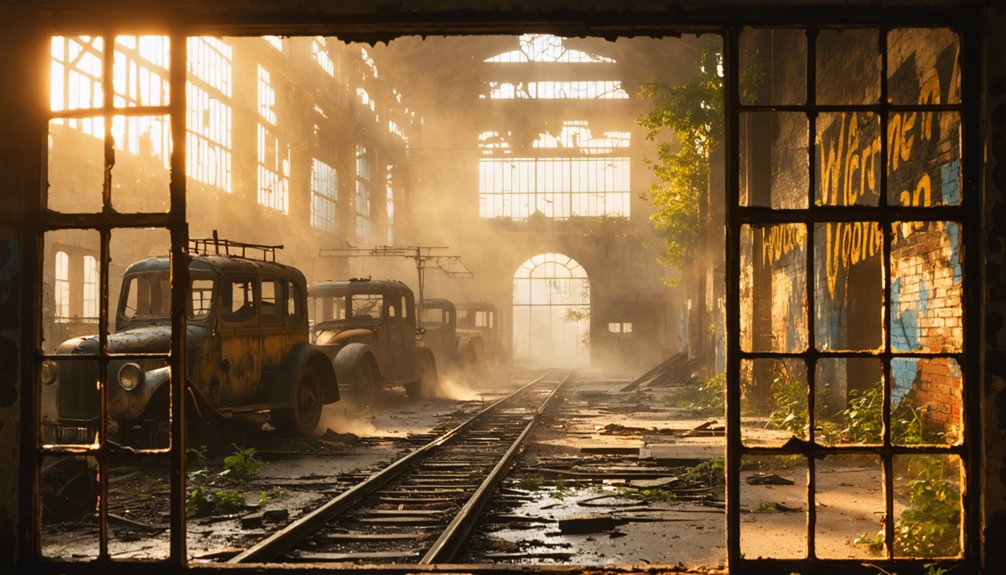
You’ll find that despite significant investment and community-driven initiatives across the Rust Belt, only a small percentage of former industrial towns have achieved meaningful economic turnaround.
While cities like Pittsburgh showcase successful shifts to tech and healthcare economies, most smaller municipalities continue struggling with population decline, aging infrastructure, and limited tax bases.
Your analysis of current demographic data reveals that for every success story, dozens of Rust Belt communities face persistent challenges in attracting new businesses, maintaining basic services, and reversing decades of economic deterioration.
Limited Success Stories
Pockets of resilience have emerged across the Rust Belt, with several cities demonstrating targeted revival strategies that buck the broader trend of decline.
Some of these forgotten towns of the rust belt are uncovering unique industries that capitalize on their historical strengths. As local entrepreneurs launch innovative businesses, a sense of pride and community begins to blossom, drawing in new residents and visitors alike. This revival is not just about economic growth; it represents a reclaiming of identity and spirit that had long been overshadowed by decline.
You’ll find economic diversification efforts paying off in places like Akron, where a polymer research hub now employs 10,000 people across 200+ companies.
While these successes remain limited in scope, they’re worth examining:
- Cincinnati’s waterfront revival and adaptive reuse projects are creating vibrant mixed-use communities.
- Fort Wayne’s 92% population increase since 1950 shows steady, sustainable growth.
- Columbus’s designation as an I-Corridor Tech Hub has spurred housing and workforce expansion.
- St. Louis’s T-REX incubator supports a growing startup ecosystem.
These bright spots demonstrate that with targeted investment and strategic planning, Rust Belt cities can chart a path toward renewal.
Barriers To Recovery
Despite targeted revival efforts in select cities, massive barriers impede broader Rust Belt recovery, with environmental contamination and crumbling infrastructure presenting immediate challenges.
You’ll find costly brownfield remediation requirements, like the $43 million Carrie Furnace site cleanup, deterring private investment and prolonging economic stagnation.
Your local governments face a devastating cycle: population losses exceeding 65% in cities like Detroit have decimated tax bases, crippling their ability to fund essential infrastructure investment and workforce development programs.
Multi-jurisdictional complexities and governance fragmentation further complicate revival strategies. The mismatch between available skills and emerging industry needs creates additional hurdles, while the continued exodus of educated workers limits economic diversification potential.
Without addressing these fundamental barriers, many Rust Belt communities can’t break free from their downward spiral.
Frequently Asked Questions
Which Rust Belt Cities Have Successfully Transformed Their Economies Since Deindustrialization?
You’ll find Pittsburgh’s transformation remarkable – from steel to tech. Cities like Cleveland and Cincinnati have achieved economic diversification through urban revitalization, focusing on healthcare, technology, and innovative startup ecosystems.
How Do Seasonal Weather Patterns Affect Abandonment Rates in Rust Belt Towns?
You’ll see higher abandonment rates during harsh winters and flooding seasons, with seasonal migration patterns showing residents seeking climate adaptation elsewhere, especially when maintenance costs exceed their financial capacity.
What Role Do Local Universities Play in Retaining Younger Populations?
Like lifeboats in a declining sea, local universities anchor youth through student engagement and community partnerships, though they’re fighting against a 23% enrollment decline across many Rust Belt institutions.
How Do Ghost Towns Impact Surrounding Rural Farming Communities?
You’ll see economic decline ripple through your farming community as ghost towns drain local markets, disrupt supply chains, and weaken community resilience through reduced services, infrastructure deterioration, and population loss.
Which Industries Are Most Likely to Revive Abandoned Rust Belt Areas?
You’ll find the biggest revival potential in renewable energy facilities, advanced manufacturing plants, technology startups, logistics hubs, and healthcare complexes – all capitalizing on existing infrastructure and skilled workforce availability.
References
- https://247wallst.com/special-report/2023/07/11/americas-modern-ghost-towns/
- https://www.lincolninst.edu/publications/articles/new-american-ghost-towns/
- https://schoolofcities.utoronto.ca/neighbourhood-abandonment-in-the-american-rust-belt/
- https://www.geotab.com/ghost-towns/
- https://www.industryweek.com/talent/article/22028380/the-abandonment-of-small-cities-in-the-rust-belt
- https://www.cato.org/blog/economic-mobility-not-manufacturing-decline-real-rust-belt-story
- https://en.wikipedia.org/wiki/Rust_Belt
- https://www.loveexploring.com/gallerylist/127789/then-and-now-us-rust-belt-cities-that-bounced-back
- https://www.minneapolisfed.org/article/2014/competition-and-the-decline-of-the-rust-belt
- https://www.nber.org/digest/202404/global-evidence-decline-and-recovery-rust-belt-cities