When you explore the rustic relics of America’s Old West, you’ll discover tangible connections to a pivotal era that shaped the nation’s identity from 1865 to 1895. These artifacts tell rich stories of cultural exchange between Native Americans and settlers, while preserving the spirit of frontier adaptation through tools, artwork, and household items. From the National Cowboy Museum to local heritage sites, these treasures drive tourism, enhance education, and offer authentic glimpses into the complex narratives that transformed the American frontier.
Key Takeaways
- Rustic relics provide tangible connections to America’s frontier heritage and help preserve stories of Western settlement and cultural exchange.
- Western artifacts drive significant economic growth through heritage tourism, generating millions in revenue for local communities.
- These objects serve as educational tools that foster historical empathy and deeper understanding beyond traditional textbook learning.
- Artifacts represent diverse cultural narratives and preserve important perspectives from Native Americans, settlers, and other frontier groups.
- Historical relics document the evolution of Western society through preserved tools, household items, and artistic works.
The Living Legacy of Western Artifacts
While countless Old West artifacts lie dormant in museums and private collections, their living legacy continues to shape America’s cultural identity and historical understanding.
You’ll find these tangible connections to the past telling stories of cultural exchange between Native Americans and settlers, revealing how both groups adapted to the harsh realities of frontier life.
Through preserved tools, household items, and artistic works, you can trace the evolution of Western society from the late 1700s through the early 1900s.
Historical artifacts serve as time capsules, revealing how Western society transformed through generations of tools, art, and daily life.
Like John James Audubon who traversed the untamed frontier documenting America’s birds, these artifacts embody the spirit of frontier adaptation, showcasing how diverse groups – from Indigenous peoples to immigrants – contributed to the American West.
Whether examining a Navajo rug or a settler’s plow, you’re witnessing the physical proof to the resilience and ingenuity that forged the Western frontier.
The museum’s detailed miniature figures bring to life a century of Western settlement, from early Native American communities to the dramatic events at Little Bighorn.
From Gold Rush to Gallery: Economic Value
Beyond their historical and cultural significance, Western artifacts have transformed into powerful economic drivers across the American West. You’ll find compelling evidence in places like Oklahoma’s National Cowboy & Western Heritage Museum, projected to generate $313 million in economic impact through 2028.
This shift represents successful economic diversification as communities evolve from traditional extractive industries to heritage tourism. With 59% of visitors traveling from outside Oklahoma City, these attractions draw substantial out-of-area spending to local communities. Research shows that service industries like hotels, lodging, health, and real estate experience the most significant growth near these heritage sites.
When you explore national monuments and cultural sites across the region, you’re participating in tourism growth that’s creating tangible benefits – boosting local business numbers by 10% and increasing jobs by 8.5%.
What’s particularly striking is that these economic gains don’t come at the expense of existing industries. Instead, they’re opening new opportunities while preserving the authentic character of the American West through sustainable, culture-based development.
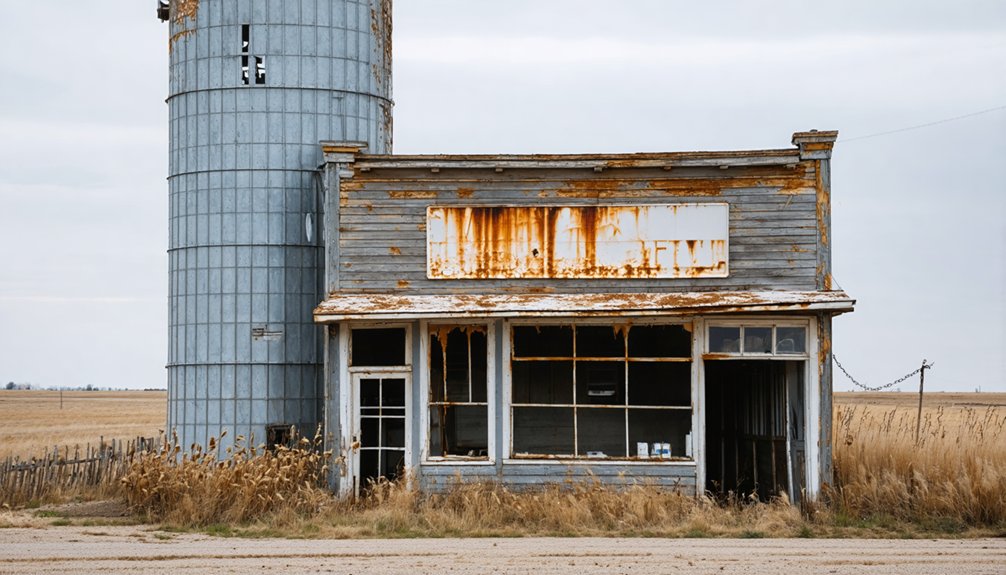
the remnants of the oil boom era are evident in the landscape, serving as a reminder of a past that shaped the region’s economy. Communities are embracing this legacy by transforming abandoned sites into cultural hubs and eco-tourism attractions. This revitalization not only honors history but also paves the way for a more sustainable and diversified future.
Preserving Cultural Heritage Through Objects
As tangible links to the American West’s storied past, preserved cultural objects tell a complex story of survival, adaptation, and resilience.
You’ll find these treasures carefully maintained in museums and historical societies across the region, where professional conservators work tirelessly to protect them from environmental damage and decay.
The cultural significance of these artifacts extends beyond their physical form – they’re essential connections to both everyday life and pivotal historical moments.
When you examine Native American ceremonial items or pioneer tools, you’re witnessing the material preservation of diverse cultural narratives.
Through partnerships with tribal communities and local institutions, these objects receive proper care while respecting their spiritual and historical context.
Traditional skills passed down through generations are represented in these preserved objects, offering insights into resourcefulness and cultural identity.
Modern technological tools help document and protect these artifacts for future study and preservation.
They serve as powerful reminders of the American West’s rich heritage, ensuring future generations can connect with their roots.
Artistic Reflections of Frontier Life
Through their masterful brushstrokes and chisels, artists like Frederic Remington and Charles M. Russell captured the untamed spirit of the American West, creating powerful frontier symbolism that still resonates today.
Their artistic interpretation of cowboys, Native Americans, and vast landscapes helped shape your understanding of this pivotal era in American history.
You’ll find their works depicting the Code of the West’s core values – courage, independence, and respect for nature – in pieces like Remington’s “The Broncho Buster.”
Modern galleries serve as time portals that transport visitors through the rich tapestry of Western heritage.
These artists didn’t just document; they preserved a vanishing way of life through dramatic scenes of cattle drives, Indian ceremonies, and encounters between settlers and natives.
The Whitney Gallery of Western Art opened in 1959 to showcase masterworks that defined the American frontier experience.
Their legacy extends beyond art, influencing conservation efforts through Thomas Moran’s Yellowstone paintings and George Catlin’s majestic vistas, which helped establish America’s first National Parks.
Teaching History Through Tangible Treasures
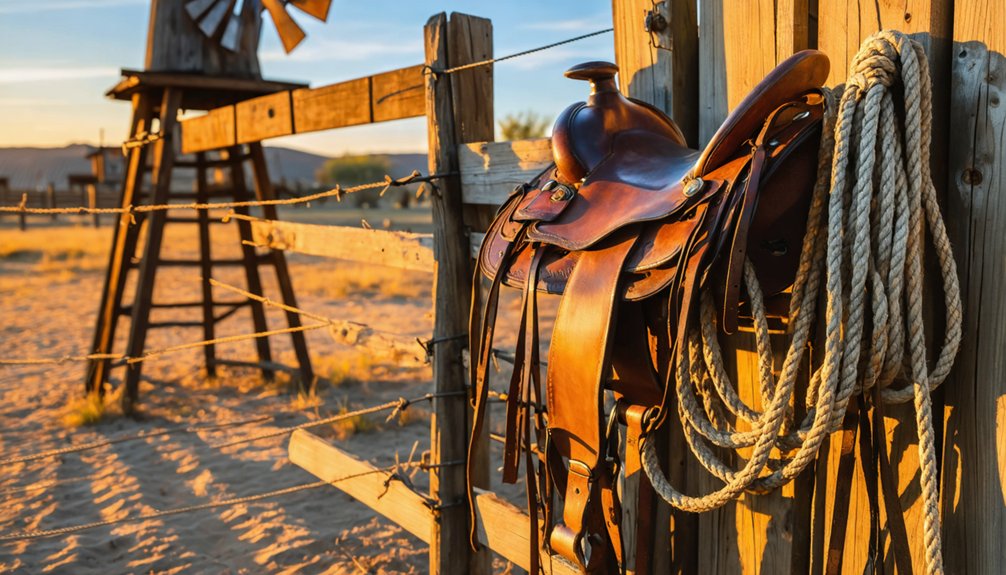
When you hold a rustic relic from the American West in your hands, you’re not just touching an object – you’re bridging time itself. Through hands-on learning with artifacts like Native American tools, settler household items, and immigrant belongings, you’ll develop historical empathy that textbooks alone can’t provide.
Physical artifacts connect us to frontier stories in ways words cannot, transforming abstract history into tangible human experiences.
These tangible treasures serve as your gateway to understanding complex frontier narratives, from the struggles of Chinese railroad workers to the environmental impact on buffalo populations. Just as genre paintings depicted daily life before photography existed, these artifacts offer authentic glimpses into historical times. The Bill Lane Center has been studying these diverse dimensions of the American West for two decades.
You’ll sharpen your critical thinking as you examine these authentic pieces in museums or historic sites, making connections between abstract concepts and concrete evidence. By analyzing these objects, you’ll uncover diverse perspectives and challenge simplified interpretations of Western expansion.
Frequently Asked Questions
How Do You Authenticate Rustic Relics From the American West?
You’ll need to examine maker’s marks, verify period-correct materials, check historical context through documented provenance, and use authentication methods like non-destructive testing to confirm your Western relic’s authenticity.
What Are the Legal Regulations for Collecting Native American Artifacts?
You’ll need permits to collect artifacts on federal/tribal lands under ARPA and NAGPRA. Cultural sensitivity and artifact preservation are vital, while private land collection requires landowner permission and state-specific compliance.
Can Damaged Western Relics Be Restored Without Losing Historical Value?
You can restore Western relics using conservation-based restoration techniques while preserving historical integrity, but you’ll need to limit treatments to reversible methods that maintain original materials and authentic aging patterns.
How Should Rustic Relics Be Properly Stored and Maintained?
Like precious gems in a vault, you’ll need proper storage techniques: maintain below 40% humidity, use acid-free materials, and follow regular maintenance practices including gloved handling and protective coatings.
Which Western Artifacts Are Most Commonly Forged or Reproduced?
You’ll find that vintage saddles, cowboy gear, and firearms are most heavily forged, especially Colt revolvers, Winchester rifles, and ornate leather pieces from the American frontier period.
References
- https://www.smithsonianmag.com/history/101-objects-that-made-america-2254692/
- https://blackhawkmuseum.org/the-spirit-of-the-old-west/
- https://journalofantiques.com/digital-publications/joac-magazine/features/collecting-the-american-west-a-vast-frontier/
- https://rockwellmuseum.org/200-2/
- https://collectinsure.com/2025/01/21/a-beginners-guide-to-collecting-western-americana-exploring-the-wild-west-through-artifacts/
- https://myauctionfinds.com/2013/07/24/wild-west-artifacts-the-stories-they-hold/
- https://mcmullenmuseum.bc.edu/cowboys/
- https://thecodeofthewest.us/blogs/news/the-enduring-significance-of-western-artistry-and-the-code-of-the-west
- https://www.businesswire.com/news/home/20241014950298/en/New-Economic-Impact-Study-Highlights-National-Cowboy-Western-Heritage-Museums-Significant-Role-as-an-Economic-Engine-in-State-of-Oklahoma
- https://www.resources.org/archives/national-monuments-can-boost-economy-american-west/