You’ll discover fascinating layers of history in Southern ghost towns, where abandoned buildings showcase frontier craftsmanship and tell stories of economic booms and busts. Nature’s dramatic reclamation adds mystique as kudzu vines embrace weathered structures, while preserved artifacts and oral histories reveal tales of daily life in these lost communities. These forgotten places serve as living museums of American perseverance, holding countless mysteries waiting to be uncovered.
Key Takeaways
- Southern ghost towns reveal dramatic stories of boom-and-bust cycles, showing how communities rose and fell with single-resource economies.
- Historic structures showcase unique architectural features and craftsmanship, from frontier-style wooden buildings to local material construction.
- Nature’s dramatic reclamation creates haunting beauty as vines, trees, and local flora transform abandoned buildings into living galleries.
- Personal narratives and oral histories preserved through artifacts and descendants’ stories provide intimate glimpses into past lives.
- These sites serve as outdoor museums, displaying the intersection of human ambition, industrial innovation, and environmental adaptation.
Uncovering Living History Through Abandoned Places
While many travelers pass by abandoned structures without a second glance, Southern ghost towns serve as powerful windows into America’s past, preserving stories of boom-and-bust cycles, industrial innovation, and human perseverance.
You’ll discover cultural reflections in every weathered building, from old schoolhouses and churches to the remnants of saloons and mining operations. These sites reveal how communities transformed from agricultural roots to bustling centers of timber, railroad, and mining activity. Lost Cove exemplifies this pattern, starting as a Civil War era settlement before evolving into a thriving self-sustaining community. The National Park Service has taken steps to protect numerous ghost towns, with Elkmont’s nineteen historic buildings now safeguarded for future generations.
Through carefully preserved historical narratives, you’re free to explore the authentic experiences of immigrant laborers, moonshiners, and frontier families.
Step into the footsteps of early settlers, immigrant workers and bootleggers who carved out lives in America’s frontier South.
National Register designations and conservation efforts guarantee these treasures remain accessible, while guided tours and interpretive displays bring the past to life through oral histories, archival photos, and the enduring stories of those who once called these places home.
The Architecture That Time Forgot
The architectural remnants of Southern ghost towns tell stories as compelling as the people who once inhabited them.
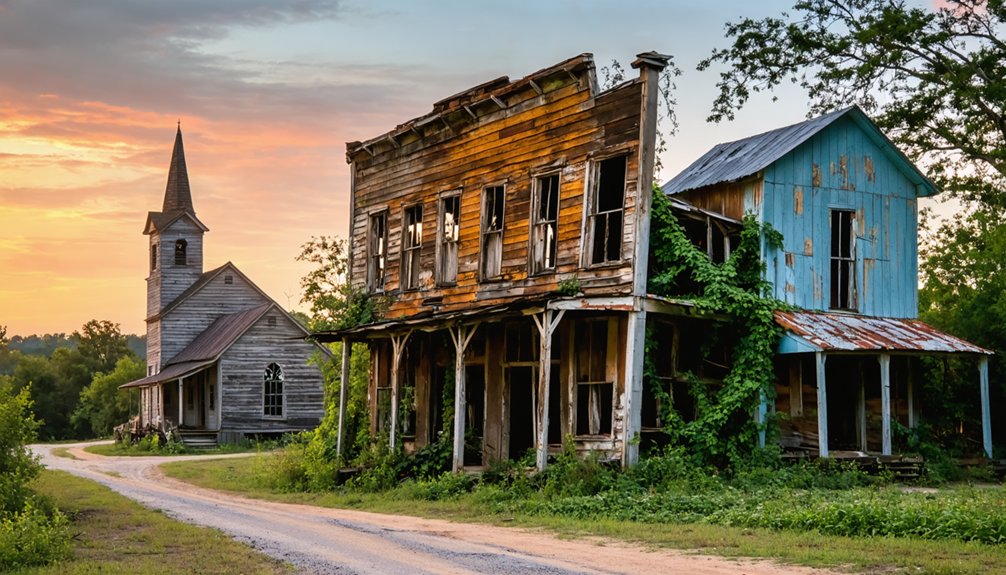
You’ll find yourself surrounded by forgotten craftsmanship in frontier-style wooden buildings, where false-front facades and wide porches speak of Old West ambitions. These structures, built with local materials like adobe and limestone, showcase an architectural nostalgia that’s uniquely Southern. Similar to Kolmanskop’s German architecture, these buildings reflect the cultural influences of their founders and the era in which they were built.
Time and nature now wage war on these historic treasures. Sand drifts through broken windows, while humidity warps weathered boards and crumbles masonry. Grafton’s schoolhouse remains one of the best-preserved examples of pioneer architecture in Utah.
Yet the towns’ original layouts remain, revealing how life once flowed around central hubs of commerce and community. From old saloon halls to mining company offices, each building stands as a tribute to the practical needs and determined spirit of frontier life.
Economic Tales of Boom and Bust
Southern ghost towns owe their existence to dramatic cycles of resource-driven prosperity and decline, where fortunes rose and fell with dizzying speed.
You’ll find these stark reminders of boom-and-bust economics scattered across the region, where gold, silver, and other precious resources once promised unlimited wealth.
The lack of economic resilience in these single-resource communities meant that when mines ran dry or commodity prices crashed, entire towns faced swift abandonment.
Railway bypasses often sealed the fate of these vulnerable communities, cutting off vital transportation links.
What you’re witnessing in these silent streets are the remnants of instant cities, built overnight on waves of speculative investment.
Poor resource management and overreliance on single industries meant that when the boom ended, these towns couldn’t adapt.
Workers fled, businesses closed, and once-thriving communities transformed into the haunting ruins you can explore today.
The town of Calico exemplifies this pattern, where falling silver prices in 1929 turned a bustling mining settlement into a near-empty ghost town.
Nature’s Dramatic Reclamation
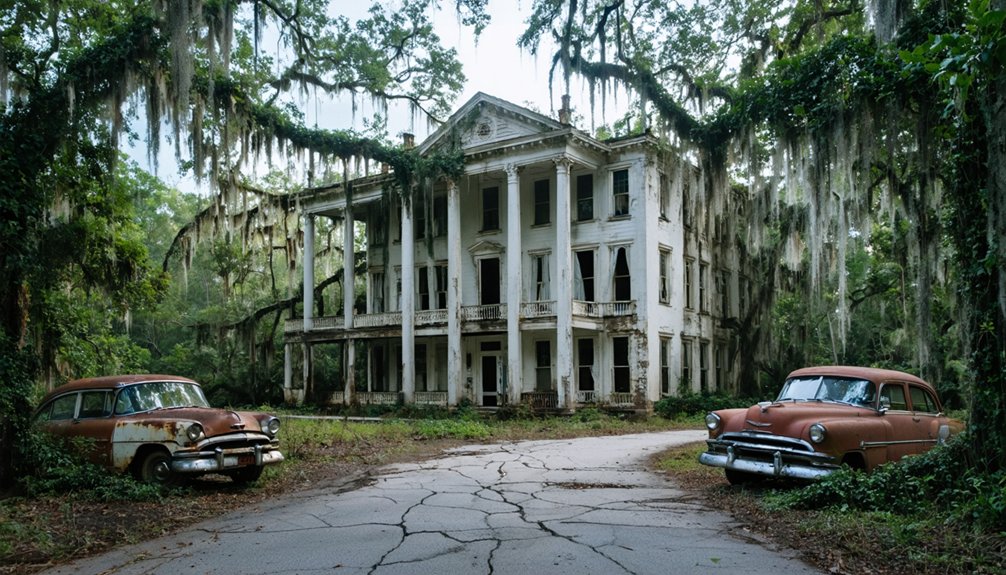
When you visit Southern ghost towns today, you’ll witness nature’s patient but relentless reclamation as thick kudzu vines and wild muscadine grapes engulf century-old brick walls and wooden structures.
Where merchants once conducted business and families strolled down neat streets, you’ll now find volunteer saplings pushing through cracked sidewalks and wild gardens sprouting from long-forgotten flowerbeds. Much like Centralia’s coal fire transformed its landscape, these Southern ruins tell powerful stories of abandonment and natural forces. Similar to how SS Ayrfield demonstrates, even human-made metal structures eventually surrender to vegetation’s unstoppable growth.
The region’s humid climate accelerates this transformation, as native plants rapidly colonize these abandoned spaces, turning once-bustling town centers into galleries of living Southern history where architecture and wilderness merge.
Vines Consume Historic Walls
Many historic walls throughout southern ghost towns now stand draped in nature’s green embrace, as persistent vines transform these abandoned structures into living monuments of time’s passage.
You’ll notice how these climbing plants weave through every crack and crevice, their tendrils gradually weakening mortar joints and displacing century-old bricks. The heat and humidity makes southern ghost towns particularly vulnerable to rapid deterioration compared to their western counterparts. The region’s warm, humid climate accelerates this vine growth, creating a dramatic display of architectural decay that tells a compelling story of nature’s resilience.
Just as the API provides seamless integration with existing systems, these vines seamlessly blend the manmade and natural worlds into one unified landscape.
As you explore these sites, you’ll discover how the thick vegetation provides sanctuary for birds and insects, though it also masks potential structural hazards.
The vines’ mysterious allure draws you in, yet their presence poses a complex challenge: they’re simultaneously destroying and preserving these haunting remnants of the past.
Wild Gardens Replace Streets
Through decades of abandonment, former streets and pathways in these ghost towns have transformed into vibrant wild gardens, where nature stages a dramatic reclamation of human-built spaces.
You’ll witness ecological succession in action as mosses and lichens first colonize cracked pavement, followed by grasses and wildflowers that create stunning displays of color and life.
In the South’s humid climate, you’ll find extraordinary wildflower diversity thriving in these forgotten thoroughfares.
Native species pierce through asphalt, while vines and shrubs weave through old fence posts and remnants of the past.
What once served as rigid urban grids now flows with natural rhythms, as seasonal rains nurture dense thickets and flowering meadows.
These wild gardens tell a compelling story of nature’s resilience and its power to transform even the most manufactured environments.
Preserving Stories for Future Generations

You’ll discover rich family stories through recorded interviews with descendants of ghost town residents, who share memories passed down through generations about daily life, traditions, and local customs.
Your exploration of vanishing cultural practices can reveal fascinating details about everything from traditional cooking methods to folk remedies that were once common knowledge in these abandoned communities.
Capturing Oral Family Histories
Family stories serve as precious threads that weave together our heritage, connecting past generations to present and future ones.
When capturing oral histories about Southern ghost towns, you’ll want to create an environment where storytellers feel comfortable sharing their memories. Use open-ended questions that encourage detailed narratives about life in these abandoned places, and don’t rush the process – allow for thoughtful pauses that often yield the richest memories.
For effective family storytelling and memory preservation, record both audio and video to capture not just words, but expressions and gestures that bring stories to life.
Store these precious records in multiple formats, including cloud storage and external drives, and don’t forget to document proper permissions and rights.
Consider partnering with local historical societies to guarantee these valuable narratives endure for generations.
Documenting Vanishing Cultural Traditions
As the physical remnants of Southern ghost towns slowly fade, preserving their cultural traditions becomes increasingly essential for future generations. Through cultural documentation efforts, you’ll discover how preservation organizations work to capture the rich tapestry of community life that once thrived in these locations.
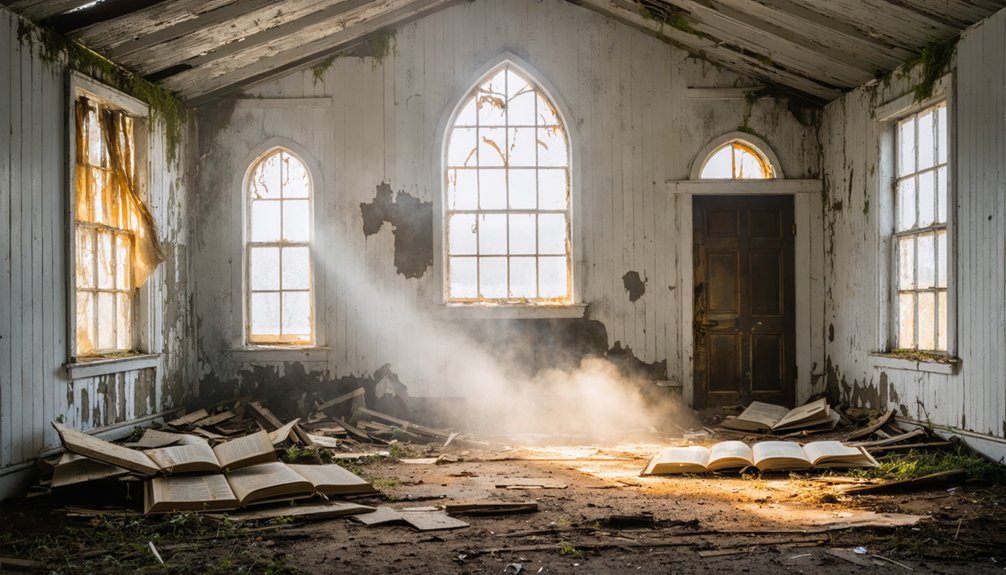
Historical buildings, from Greek Gothic revival churches to local meetinghouses, serve as anchors for narrative preservation. You can experience these traditions through thoughtfully designed exhibits, informational displays, and guided tours that bring the past to life.
Sustainable tourism initiatives help protect these cultural treasures while creating meaningful connections between visitors and historical sites. By exploring restored landmarks and participating in preservation-led events, you’ll gain deeper insights into the social fabric and daily rhythms that defined these fascinating communities.
The Human Connection to Lost Communities
While modern life rushes forward at breakneck speed, Southern ghost towns stand as poignant reminders of our shared human experience, connecting visitors to the lives, struggles, and triumphs of those who came before.
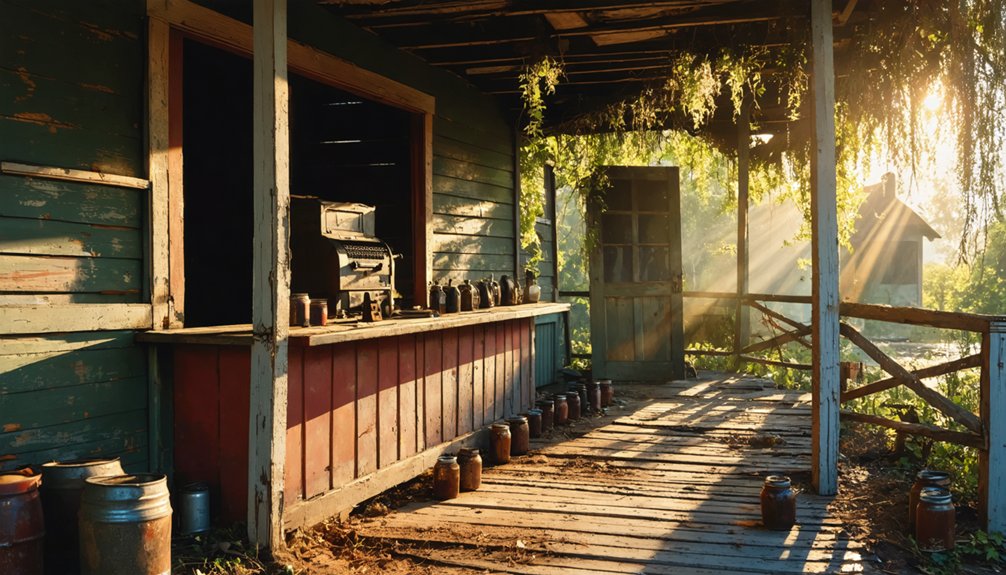
When you walk through these abandoned streets, you’ll discover personal narratives etched in every weathered storefront and crumbling homestead. These sites forge powerful ancestral connections, especially for descendants who trace their roots to these lost communities.
The echoes of laughter and life resonate through abandoned communities in the South, inviting reflection on what once was. Each building tells a story of resilience and struggle, a testament to the spirit of those who called these places home. As you stand amidst the ruins, it’s impossible not to feel a deep sense of connection to their heritage and the histories that shaped them.
You can touch the same walls your great-grandparents might’ve known, stand in the shadows of the same church steeples, and read names carved in century-old headstones. Through haunting legends, preserved artifacts, and stories of boom-and-bust cycles, you’ll feel the raw emotional impact of communities that once pulsed with life, dreams, and ambitions.
Frequently Asked Questions
Are There Legal Restrictions for Visiting and Photographing Ghost Towns?
Yes, you’ll need legal permits to visit many ghost towns. Respect property rights and get photography rights clearance, as most sites are privately owned or protected by state preservation laws.
What Safety Precautions Should Explorers Take When Visiting Abandoned Structures?
You’ll need proper safety gear including sturdy boots, gloves, and respirators. Always bring a first aid kit, establish an emergency plan, and explore with others to guarantee backup if needed.
Which Ghost Towns Allow Overnight Camping or Paranormal Investigations?
Of 6 major southern ghost towns allowing camping, Kentucky Camp’s restored cabins offer the most amenities. You’ll need camping regulations permits for Jackson Lake Island and investigation permits for Goldfield’s paranormal explorations.
How Can Visitors Distinguish Between Private Property and Publicly Accessible Ghost Towns?
You’ll need to check property signs and local regulations, contact historical societies, and look for maintained visitor facilities to determine if a ghost town’s accessible or privately restricted.
What Specialized Equipment Do Ghost Town Explorers Need for Documentation?
You’ll need high-quality camera gear with backup batteries, GPS devices, detailed mapping tools, measuring equipment, notebooks, and protective cases to properly document historical structures and artifacts in ghost towns.
References
- https://www.geotab.com/press-release/american-ghost-towns/
- https://openprairie.sdstate.edu/etd/4061/
- https://www.geotab.com/ghost-towns/
- https://www.blueridgeoutdoors.com/go-outside/southern-ghost-towns/
- https://devblog.batchgeo.com/ghost-towns/
- https://infrastructureusa.org/spooky-infrastructure-ghost-towns-across-the-united-states/
- https://esirc.emporia.edu/bitstream/handle/123456789/1577/McQuin Vol 8 Num 3.pdf?sequence=1
- https://247wallst.com/special-report/2018/11/02/30-american-ghost-towns-3/
- https://en.wikipedia.org/wiki/Lists_of_ghost_towns_in_the_United_States
- https://www.loveexploring.com/gallerylist/188219/the-us-state-with-the-most-ghost-towns-revealed