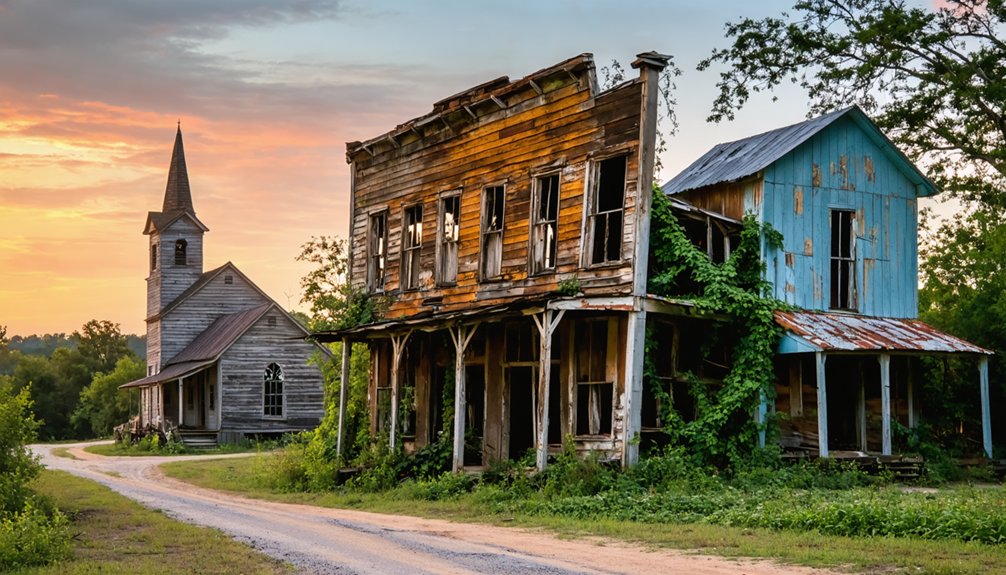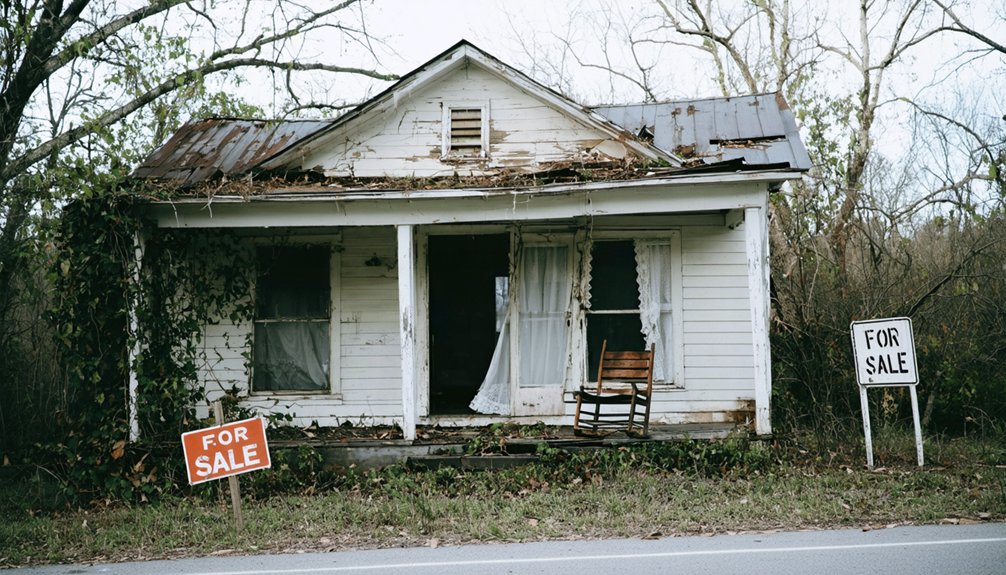
You’ll find southern rural neighborhoods becoming abandoned due to several interconnected factors. Population decline from aging Baby Boomers has reduced working-age residents by 77% over two decades, triggering economic downturns. Limited banking access, soaring mortgage rates, and severe weather damages have destabilized housing markets. Meanwhile, high poverty rates and racial disparities compound these challenges. Understanding these complex dynamics reveals how systemic issues continue reshaping rural communities.
Key Takeaways
- Population decline due to aging Baby Boomers and natural decrease has left 77% of rural counties with fewer working-age residents.
- High mortgage rates and limited banking access make homeownership increasingly unaffordable for middle-income rural residents.
- Poverty rates are 6% higher than metro areas, with racial disparities creating cycles of intergenerational poverty.
- Vacant properties attract crime and strain local resources, while municipalities lack funding for basic services and infrastructure.
- Rising maintenance costs, averaging $8,808 annually, force homeowners to abandon properties they can no longer afford to maintain.
The Mass Exodus: Population Decline’s Impact on Rural Communities
While rural communities across the South have long faced demographic pressures, today’s population decline represents an unprecedented challenge marked by both natural decrease and shifting migration patterns.
You’ll find that population aging, particularly among Baby Boomers, has created a severe imbalance where deaths consistently outnumber births in over three-quarters of rural counties. This natural decrease has accelerated the emptying of once-vibrant neighborhoods.
Though recent migration trends show some promise with new residents moving in, it’s not enough to offset the broader exodus. In fact, the South experienced a loss of 41,800 rural residents to natural decrease in 2024.
The alarming trend shows that 77 percent of rural counties now have fewer working-age residents than they did two decades ago.
You’re witnessing a dramatic reshaping of rural communities as working-age populations continue to shrink, triggering a cycle of reduced economic activity and diminished services. The result is a transformation that’s leaving many southern rural neighborhoods increasingly vacant and struggling to maintain their liveliness.
Economic Downturn and Housing Market Collapse
As mortgage rates have doubled since the pandemic lows, southern rural communities face an unprecedented housing market crisis that extends beyond typical economic cycles.
You’re witnessing economic instability that’s eroding the foundation of rural housing markets, with interest rates soaring to 6.8% and severely suppressing demand. The scarcity of bank branches in rural areas further limits access to financial guidance and mortgage options for potential homebuyers. Severe weather disasters causing $180 billion in damages last year have further destabilized these markets.
- Your local housing markets are experiencing severe disinvestment, with limited new construction and declining maintenance leading to accelerated property deterioration.
- You’ll find fewer affordable rental options, as the market has lost 2.5 million lower-rent units over the past decade.
- Your community’s tax base is shrinking due to population decline, reducing resources for essential infrastructure maintenance.
The combination of rising costs, stagnant incomes, and housing disinvestment has created a perfect storm, leaving many rural properties abandoned and communities struggling to maintain their liveliness.
The Legacy of Poverty and Racial Division
The deep-rooted legacy of poverty and racial division stands at the heart of Southern rural neighborhood abandonment.
As society evolved, many once-thriving communities fell into disrepair, becoming forgotten ghost towns in Texas. These deserted landscapes serve as haunting reminders of historical struggles, while also attracting curious adventurers seeking to uncover their stories. Exploring these locations offers a glimpse into the past, highlighting the resilience and challenges faced by those who called them home.
You’ll find poverty rates nearly 6% higher in rural areas compared to metro regions, with people of color bearing the heaviest burden. African Americans and Native Americans face poverty rates above 30%, while white residents experience rates around 13.3%. Southern states have seen food insecurity rates reach 14.7%, the highest in the nation.
This disparity isn’t accidental. Structural disinvestment in these communities has created a cycle of intergenerational poverty that’s difficult to break.
You’re seeing the impact of decades of limited investment in education, infrastructure, and economic diversification. The historical effects of segregation and discrimination continue to shape these communities, driving younger residents to seek opportunities elsewhere. The deaths of despair from suicide, drug abuse, and alcohol-related diseases plague these struggling rural areas at disproportionate rates.
As working-age populations decline, you’re left with aging communities that struggle to maintain essential services and economic stability.
Housing Affordability Crisis in Southern States
Despite record-breaking new construction in southern states, a severe housing affordability crisis grips rural communities across the region.
You’ll find that middle-income families earning around $50,000 can afford less than 9% of available homes, while extremely low-income renters face dire rental shortages with as few as 17 affordable units per 100 households. Areas categorized as stuck in the middle continue to struggle with meeting housing demand, leaving many families without viable options.
- Rising mortgage rates, jumping from 2.99% to 6.82%, have pushed homeownership out of reach for many rural residents.
- The South’s affordable housing deficit exceeds 8 million units, hitting rural communities hardest.
- Southern states lead new construction permits, yet can’t keep pace with mounting demand.
The crisis hits hardest in Louisiana and Florida, where high foreclosure rates and underwater mortgages plague rural areas. Research shows one in 372 homes faces foreclosure in Charlotte County, Florida, highlighting the severity of the situation.
Even with more permissive zoning policies, the region struggles to bridge the widening gap between housing costs and local incomes.
Safety Concerns and Rising Crime in Vacant Areas
While southern states grapple with housing affordability issues, a more pressing crisis emerges in their rural communities where vacant properties fuel rising crime rates.
You’ll find alarming statistics in towns like Dyersburg, Tennessee, where violent crime rates soar above 1,200 per 100,000 residents. These abandoned properties become magnets for criminal activity, straining local law enforcement resources.
Without effective crime prevention measures, the cycle intensifies: rising violence drives residents away, creating more vacant properties that attract further criminal behavior. Property crime rates remain significantly higher in these regions compared to coastal areas.
You’re seeing this pattern across rural southern states, where community engagement falters as safety concerns mount. The impact hits hardest in areas already struggling with poverty and limited social services, creating a perfect storm that accelerates neighborhood abandonment and deterioration of once-vibrant communities. Experts point to widespread drug addiction issues as a significant factor contributing to the decline of these rural areas.
Local Government Struggles and Policy Gaps
You’ll find that rural southern municipalities often lack the basic financial resources and staffing capacity to effectively combat neighborhood abandonment.
These local governments struggle with limited tax revenues from declining populations, making it nearly impossible to maintain infrastructure or implement extensive vacancy reduction programs.
The absence of coordinated regional strategies and insufficient policy frameworks, particularly in affordable housing and rental assistance, further compounds their inability to address the systemic causes of abandonment in their communities.
Limited Municipal Resources
Throughout the American South, rural municipalities grapple with severe resource limitations that directly fuel neighborhood abandonment. You’ll find local governments struggling with funding shortages that prevent them from maintaining basic infrastructure and enforcing property codes.
These budget constraints create a devastating cycle where reduced tax bases lead to fewer services, driving more residents away.
- Small towns can’t afford enough qualified staff to manage housing programs or enforce ordinances.
- Limited administrative capacity prevents effective processing of permits and implementation of revival plans.
- Restricted access to capital and financial incentives makes it nearly impossible to attract new investment.
The impact of these resource limitations extends beyond immediate service cuts. You’re seeing communities trapped in a downward spiral where each departure further erodes the tax base, making it harder to maintain the services that might keep remaining residents in place.
Policy Implementation Barriers
Despite significant legal frameworks and policy tools available to address neighborhood abandonment, rural Southern communities face substantial barriers in implementing effective solutions.
You’ll find that local governments struggle with outdated building codes, weak enforcement mechanisms, and difficulty holding absentee property owners accountable. Policy implementation often falters due to inadequate training, limited resources, and political inertia.
The challenges extend beyond mere enforcement issues. You’re seeing communities grapple with fragmented legal strategies, insufficient support from higher government levels, and gaps in addressing modern abandonment triggers.
Many localities lack formal programs for property registries and land banks, while existing laws don’t adequately address reactive measures in areas already experiencing abandonment. These shortcomings particularly impact rural areas, where limited expertise and funding compound policy enforcement challenges.
The Hidden Cost of Rural Property Abandonment
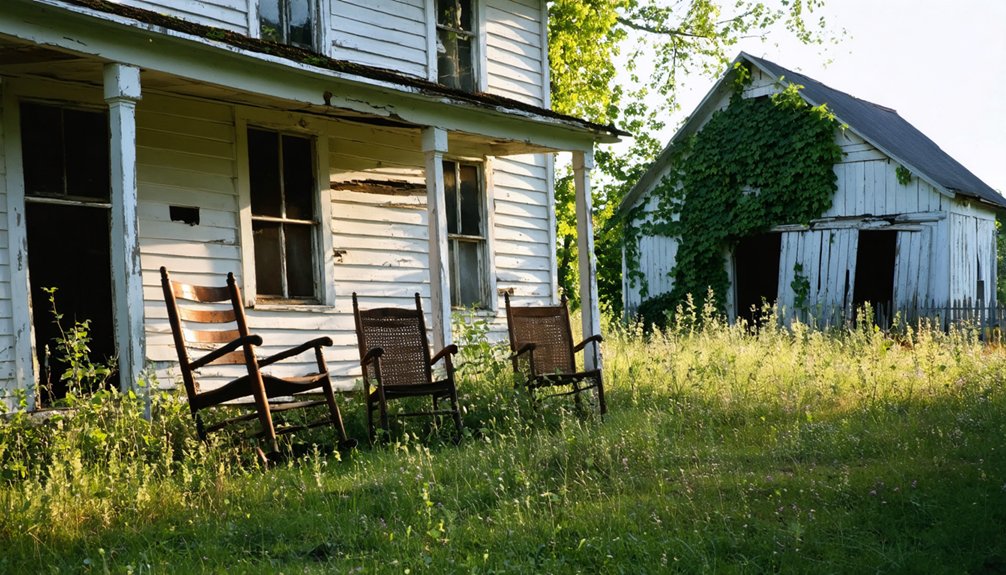
You’ll find that abandoned rural properties trigger a destructive financial chain reaction, where declining property values lead to reduced tax revenues and diminished public services.
The maintenance costs for these vacant properties spiral upward as local governments must address security, code violations, and increased crime rates, often without compensation from absent property owners.
These compounding financial burdens create a negative feedback loop in rural communities, where reduced municipal resources limit the ability to implement effective solutions, further accelerating neighborhood decline.
Financial Impact on Communities
When rural properties fall into abandonment, their financial impact ripples through entire communities, creating a cascade of economic challenges that affect both local governments and residents.
You’ll see economic disparities emerge as property values plummet, with neighboring homeowners losing significant wealth and facing increased insurance costs.
Community resilience weakens when local governments lose vital tax revenue while simultaneously bearing higher maintenance and public safety expenses.
- Property tax losses can reach millions annually, with neighboring properties losing up to 30% of their value.
- Municipal costs skyrocket for police, fire, and maintenance services, often exceeding $1,500 per abandoned property.
- Local economies suffer from reduced consumer bases, business disinvestment, and diminished labor markets, creating a cycle of decline.
Property Value Chain Reaction
The devastating chain reaction of rural property abandonment begins with a single vacant home, setting off a domino effect that transforms entire neighborhoods.
When you’re witnessing property devaluation in your community, you’ll notice how quickly it spreads – each abandoned house reduces nearby property values by up to 30%, creating a ripple effect throughout the area.
As your neighbors become hesitant to invest in home improvements, neighborhood deterioration accelerates.
You’ll see fewer buyers interested in the area, leading to longer vacancy periods and reduced market liquidity.
This creates a self-reinforcing cycle: lower property values mean decreased tax revenue, resulting in reduced public services and infrastructure maintenance.
The spiral continues as more homeowners feel pressure to leave, further destabilizing the community’s economic foundation.
Maintenance Costs Spiral Upward
As maintenance costs continue their relentless climb in rural southern neighborhoods, homeowners face an increasingly unsustainable financial burden.
You’re witnessing rising expenses across every aspect of home upkeep, from basic repairs to essential updates. The combination of material cost spikes, labor shortages, and aging infrastructure creates a perfect storm that’s forcing many to choose between financial stability and property maintenance.
- Material costs have surged 17% since 2022, while skilled labor commands premium rates due to widespread shortages.
- Aging homes, typically over 40 years old, require increasingly frequent repairs, with maintenance spending up 76%.
- Annual costs now average $8,808 for maintenance alone, not including the $4,494 for utilities, leading to maintenance neglect.
This upward spiral of expenses pushes more homeowners toward difficult choices, often resulting in property abandonment when costs become overwhelming.
Frequently Asked Questions
How Long Does It Typically Take for an Abandoned Property to Deteriorate Beyond Repair?
You’ll typically see property deterioration progress beyond repair within 8-15 years, as structural damage, urban decay, and severe maintenance issues make restoration costs exceed the building’s market value.
What Role Do Natural Disasters Play in Accelerating Rural Neighborhood Abandonment?
While you might think communities bounce back easily, disasters severely strain disaster recovery efforts and erode community resilience, especially in low-income rural areas where repeated floods trigger mass exodus and infrastructure collapse.
Are There Successful International Models for Revitalizing Abandoned Rural Communities?
You’ll find success stories in South Korea’s Saemaul Undong movement, where community reinvestment transformed villages through urban agriculture, infrastructure development, and local empowerment—proving rural revival is achievable with collective action.
How Do Seasonal Migration Patterns Affect Southern Rural Property Abandonment Rates?
Like autumn leaves drifting away, seasonal migration drains your community’s essential energy. When workers leave for months at a time, you’ll see more vacant homes, declining property values, and eventually permanent abandonment.
What Impact Do Nearby Military Base Closures Have on Rural Abandonment?
You’ll see severe military impact when bases close, triggering mass economic decline as jobs vanish, families relocate, and housing markets crash – leaving your rural community struggling to survive without its economic engine.
References
- https://www.richmondfed.org/region_communities/regional_data_analysis/regional_matters/2023/rm_08_17_23_baltimore_abandoned_housing
- https://www.realtor.com/news/trends/zombie-foreclosures-are-up-see-which-states-are-hardest-hit/
- https://nlihc.org/sites/default/files/gap/2025/gap-report_2025_english.pdf
- https://www.fingerlakes1.com/2025/04/28/zombie-foreclosures-rise-2025-states-hit-hardest/
- https://themortgagepoint.com/2025/05/30/vacant-property-rate-holds-steady-in-q2/
- https://safeguardproperties.com/zombie-foreclosures-remain-a-small-fraction-of-u-s-housing-inventory-in-first-quarter-of-2025/
- https://communityprogress.org/wp-content/uploads/2025/03/2025-community-progress-impact-report.pdf
- https://www.brookings.edu/articles/vacant-land-in-cities-an-urban-resource/
- https://www.governing.com/urban/rural-counties-grow-for-fourth-straight-year
- https://www.fwd.us/news/rural-decline/