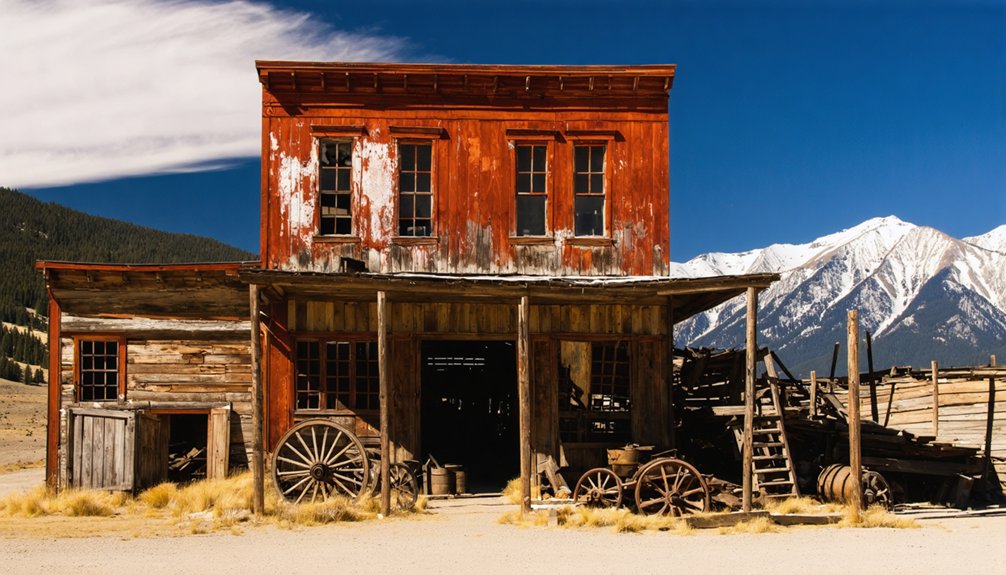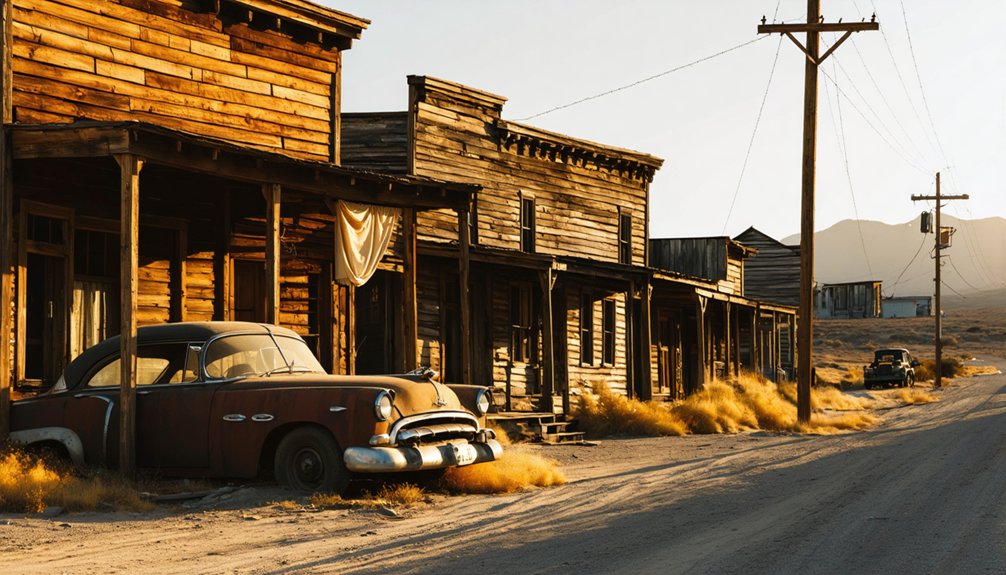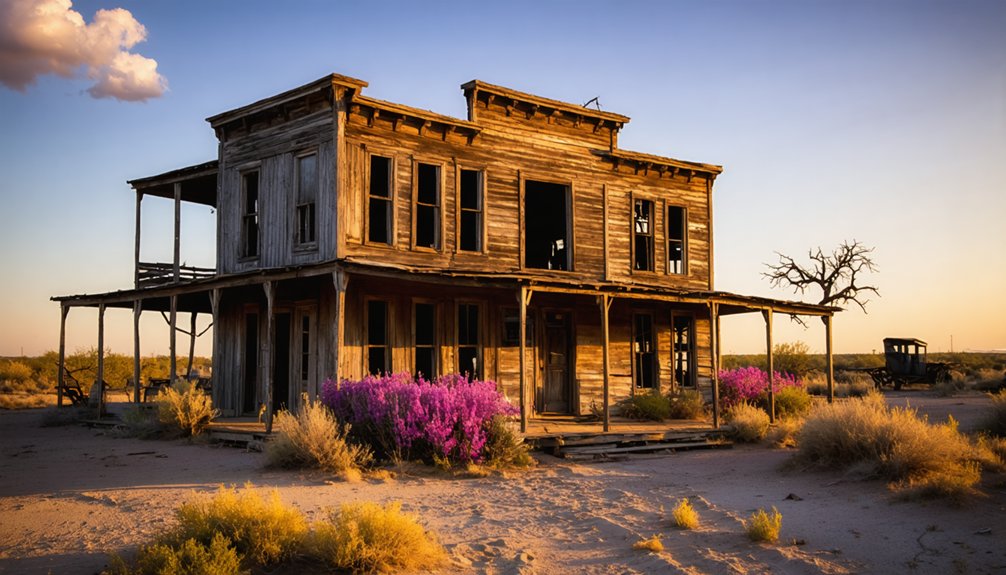
You’ll find Texas ghost towns haunting for several key reasons. Their crumbling 19th-century buildings stand frozen in time, with broken windows and collapsed porches telling tales of sudden abandonment. Nature’s reclamation adds to the eerie atmosphere as vines strangle old structures and wildlife makes homes in empty rooms. The 511 ghost towns across Texas harbor countless stories in their cemeteries and mining ruins, where legends of boom-and-bust cycles still echo through the silent streets.
Key Takeaways
- Decaying architecture with crumbling walls and broken windows creates an unsettling atmosphere of abandonment and deterioration.
- Nature’s aggressive reclamation, with vines and trees engulfing historic buildings, produces an eerie contrast between life and decay.
- Haunting cemeteries with weather-worn grave markers tell tragic stories of mining accidents and lost communities.
- Empty buildings retain traces of 19th and early 20th-century life, serving as frozen-in-time remnants of abandoned dreams.
- Extreme Texas weather accelerates structural decay, creating unstable and dangerous conditions that heighten the spooky atmosphere.
The Haunting Legacy of Abandoned Buildings
When you explore Texas ghost towns today, you’ll encounter a haunting array of deteriorating structures that tell silent stories of bygone eras.
These abandoned architecture sites feature crumbling walls, collapsed porches, and broken windows that create an undeniably eerie atmosphere. Texas leads the nation with 511 ghost towns, each offering a unique glimpse into the state’s rich history. Many sites like Terlingua showcase the remnants of once-thriving communities where mercury mining booms drove rapid development. You’ll witness nature’s slow reclamation as vines crawl up walls and trees burst through wooden floors, while harsh desert elements accelerate the decay of historic buildings.
Inside these ghostly remains, you’ll find spectral stories written in the dust and debris.
Empty rooms still hold traces of 19th and early 20th-century life – old churches, schools, and saloons standing as silent witnesses to vanished communities.
The stark contrast between aging industrial remnants and encroaching vegetation creates an otherworldly scene that’ll make you feel like you’re stepping through time.
Silent Streets and Forgotten Communities
Throughout Texas’s vast landscape, you’ll discover an astonishing 511 ghost towns that stand as silent monuments to forgotten communities. As you wander these deserted streets, you’ll encounter the silent echoes of once-thriving towns like Bankersmith and Gruene, where the Great Depression dealt fatal blows to local economies.
The story of Gomez serves as a particularly stark example, where only a cemetery and marker remain from what was once Terry County’s first bustling settlement. In Wilson County alone, you can explore 31 abandoned settlements, each telling its own tale of decline. Many of these settlements were originally established during the westward expansion era between the 1880s and 1940s.
The forgotten legacies of these communities live on through deteriorating structures and empty buildings reclaimed by nature. While some towns like Helena maintain minimal preservation efforts through museums and historical sites, most stand as stark reminders of Texas’s dynamic past, where economic shifts, diseases, and natural disasters forced entire populations to seek opportunities elsewhere.
Eerie Tales From Texas’s Mining Boom
Among Texas’s most haunting ghost towns, the abandoned mining settlements tell particularly chilling stories of boom-and-bust cycles that shaped the state’s industrial past.
You’ll find the remnants of once-thriving communities like Terlingua and Thurber, where spectral stories echo through crumbling stone walls and forgotten mineshafts.
The Chisos Mining Company transformed Terlingua into a bustling desert settlement in the early 1900s, showcasing the rapid growth that defined the era.
Today, visitors flock to the town’s famous chili cook-off, bringing brief moments of life back to the ghostly landscape.
- Terlingua’s quicksilver mines drew 2,000 souls before falling silent, leaving behind ghostly encounters near Perry’s mansion.
- Thurber’s population of 10,000 vanished when coal gave way to oil, abandoning their opera house and electric lights.
- Dangerous mining conditions and frequent accidents filled local cemeteries with tragic tales.
- Company-owned towns controlled every aspect of miners’ lives, from housing to entertainment.
- The harsh desert environment and isolation amplified the suffering, creating lasting legends of restless spirits.
Whispers of the Railroad Era
Deep in the heart of Texas, a web of iron rails once determined the fate of countless frontier communities.
You’ll find their ghosts scattered across the landscape – towns like Helena and Belle Plain, where residents watched helplessly as railroad routes bypassed their homes, taking prosperity with them.
When the Texas and Pacific Railway chose Baird over Belle Plain, locals didn’t just leave – they dismantled entire buildings, carrying their lives six miles north to the new boom town.
The fate of Independence serves as a stark example, where their refusal of a Santa Fe Railroad line led to their downfall.
In Toyah, you can still sense the echoes of bustling saloons and hotels that thrived during its heyday as a railway division point.
But when water dried up and trains changed course, these towns withered.
Their empty streets and crumbling structures stand as silent witnesses to the power of the iron horse.
Today, these abandoned sites draw paranormal investigators seeking evidence of restless spirits.
Nature Reclaiming Ghost Town Ruins
As you walk through Texas’s abandoned ghost towns today, you’ll witness nature’s determined reclamation as creeping vines and thick vegetation engulf crumbling walls, while native wildlife like javelinas and birds make homes in the empty structures.
Weather elements continually batter these deserted places, where rain seeps into adobe bricks, sun bleaches wood frames, and wind strips away loose materials year after year.
The transformation from human settlement to wilderness creates an eerie tableau where bullet-riddled walls peek through moss-covered foundations, and animal trails weave between collapsing buildings that once bustled with frontier life. Even the once-bustling Chisos Mining Company buildings in Terlingua now stand as silent reminders of the area’s quicksilver mining heyday.
Creeping Vines Take Over
The relentless march of creeping vines transforms Texas ghost towns into living monuments of nature’s reclamation. You’ll witness how trumpet vines and invasive kudzu accelerate architectural decay, growing up to a foot daily as they consume abandoned buildings. Identifying vines through local garden centers helps residents in neighboring towns protect their properties from similar invasive threats. These aggressive climbers create an eerie atmosphere that speaks to nature’s triumph over human structures.
- Dense vine growth traps moisture against walls, speeding up wood rot and rust
- Roots penetrate foundation cracks, destabilizing entire structures
- Thick foliage masks human traces, amplifying feelings of isolation
- Intertwined vines form natural webs across windows and doorways
- Vibrant green growth contrasts sharply with decay, creating unsettling visuals
In these forgotten places, you’re watching a dynamic ecosystem emerge as vines weave through every crack and crevice, turning ruins into mysterious forest-like sanctuaries.
Wild Animals Move In
While vines weave their web across deteriorating structures, wildlife steadily reclaims these forgotten spaces as their own.
You’ll find endangered ocelots and black bears prowling through the remnants, using abandoned buildings as makeshift dens. These ghost towns serve as crucial wildlife corridors, connecting larger natural habitats that have been fragmented by modern development.
The quiet ruins create perfect shelters for diverse species – from bobcats hunting in overgrown yards to migratory birds nesting in crumbling walls.
Water sources like old wells become essential drinking spots for creatures large and small. Nature’s ecological balance reasserts itself as predators regulate small mammal populations, while insects and native plants flourish in the untamed environment.
These forgotten towns have transformed into unofficial wildlife sanctuaries, preserving biodiversity in an increasingly developed Texas landscape.
Weather Erodes Empty Buildings
Through relentless forces of nature, Texas ghost towns face accelerated structural decay from extreme weather patterns.
You’ll witness how intense storms, scorching heat, and persistent winds steadily erode these abandoned settlements into haunting ruins. Weather damage intensifies as hurricanes batter coastal ghost towns, while inland structures crumble under brutal temperature swings and wind-driven sand.
- Building decay accelerates when rainwater penetrates failing roofs, feeding destructive mold and rot.
- Metal rusts faster in the rising Texas heat, while UV rays weaken exposed wood and fade paint.
- Storm surges and flooding undermine foundations, causing structures to sink or collapse.
- Wind-blown debris and sand accumulate, forcing apart windows and door frames.
- Nature reclaims these spaces as weather-induced erosion creates perfect conditions for invasive plants to tear through walls.
Cemetery Stories and Local Legends
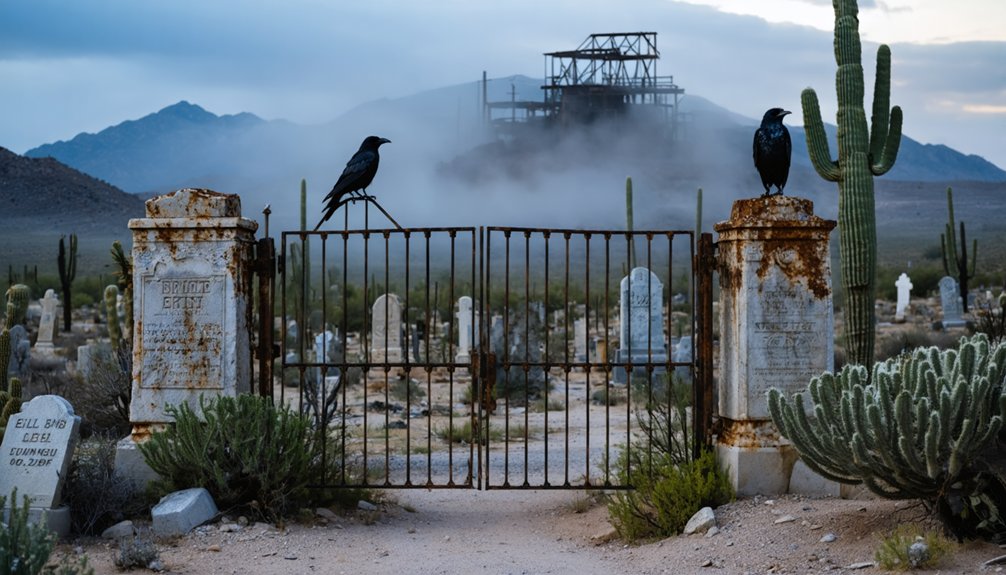
You’ll find Texas ghost town cemeteries filled with eerie burial grounds where centuries-old tombstones reveal stories of mining accidents, epidemics, and forgotten communities.
Local legends persist through personal epitaphs and folk art memorials, including Terlingua Cemetery’s metal T-Rex and “Hobbit hole” markers that reflect the diverse cultural heritage of its 400 inhabitants.
These sacred spaces serve as the last remaining evidence of displaced populations, where weather-worn grave markers and oral histories keep alive the memory of lost mining towns and their tragic pasts.
Haunted Burial Grounds Persist
As abandoned settlements fade into history, their cemeteries remain as haunting memorials to Texas’s ghostly past, with over 13,700 burial grounds scattered across the state.
These neglected graveyards fuel haunted narratives and spectral sightings that continue to captivate visitors and locals alike.
You’ll discover why these burial grounds persist as focal points of supernatural folklore:
- Historic battles and mass graves from epidemics create powerful connections to tragic events
- Isolated locations and minimal maintenance amplify their eerie atmosphere
- Local oral histories preserve tales of restless spirits and unexplained phenomena
- Former residents and notable figures reportedly roam their final resting places
- Economic decline leaves cemeteries as the last preserved landmarks of ghost towns
The desolation and decay of these sites guarantee their haunting reputations endure, drawing both history buffs and paranormal enthusiasts.
Mysterious Tombstone Tales Endure
Among Texas’s haunted burial grounds, specific tombstones tell compelling tales that blend historical tragedy with local folklore.
You’ll find Terlingua Cemetery‘s mysterious markers chronicle the harsh realities of mercury mining, where roughly 400 souls, including miners and their families, rest beneath weather-worn stones.
Some graves feature unique graveyard art, from whimsical Hobbit holes to metal dinosaurs, revealing the creative spirit of this mining community.
While relic hunters and harsh weather have claimed many markers, the remaining headstones speak of industrial accidents, mercury poisoning, and devastating epidemics that swept through the town.
These enduring monuments serve as stark reminders of the perils early miners faced, preserving their stories in a landscape where personal expression meets industrial tragedy.
The significance of rustic relics is profound, as they connect us to a bygone era of human struggle and resilience. Each weathered tool and abandoned homestead tells a tale of hope amidst hardship, reflecting the spirit of those who toiled in often unforgiving conditions. By preserving these artifacts, we not only honor their legacy but also gain insight into the evolution of industry and community.
Graveyard Legends Shape History
Scattered across Texas’s forgotten landscapes, ghost town cemeteries serve as both historical archives and wellsprings of local folklore.
As you explore these haunting grounds, you’ll discover how graveyard folklore shapes the historical narrative through tales of duels, buried treasures, and restless spirits.
- Ancient Native American burial grounds add layers of spiritual significance
- The infamous Helena duel, where fighters were bound together with knives, echoes through time
- Mysterious lights and unexplained sounds fuel stories of haunted gravesites
- Tales of cursed treasures, like the San Saba legend, persist despite futile searches
- Tombstone symbolism reflects diverse cultural influences from miners to settlers
These enduring legends don’t just make the cemeteries spooky – they preserve the authentic human experiences that brought these ghost towns to life and ultimately led to their abandonment.
The Psychology Behind Ghost Town Atmospheres
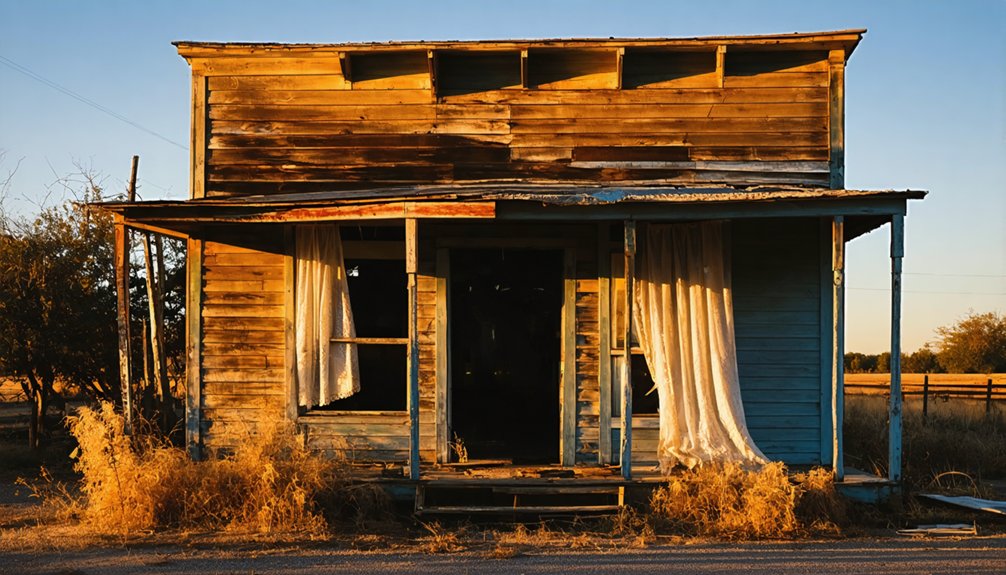
While ghost towns may appear as mere abandoned settlements, their psychological impact runs far deeper than empty buildings and dusty streets. When you explore these places, you’re experiencing powerful emotional atmospheres that trigger place attachment and cognitive dissonance. Your brain struggles to process the eerie emptiness of spaces that should be bustling with life.
You’ll find yourself drawn by sensation seeking instincts as you venture through these time-frozen towns. The neglected buildings and broken windows challenge your perceived safety, keeping you alert and engaged.
Yet paradoxically, ghost towns offer therapeutic solitude – a rare chance to step outside modern life’s chaos. The unsettling atmosphere stems from this unique blend of historical loss, violated expectations, and the profound silence that speaks of lives long past.
Paranormal Reports and Unexplained Phenomena
Texas ghost towns harbor more than just empty buildings and forgotten streets – they’re epicenters of paranormal activity that continue to intrigue investigators and visitors alike.
From Helena’s compelling EVP sessions revealing an entity named “Hal” to Barstow’s floating robed specters, these abandoned settlements offer a window into unexplained phenomena that defy conventional explanation.
- Helena’s documented cases include a young boy’s encounters with spirits, complete with physical evidence of mysterious scratches.
- Spectral sightings in Barstow feature ethereal figures that hover silently above fields.
- Independence’s electromagnetic anomalies trigger intense physical and psychological effects.
- The Marfa lights remain one of Texas’s most enduring mysteries.
- Commerce’s cemeteries and abandoned structures draw paranormal enthusiasts, especially during Friday the 13th gatherings.
Preserving the Ghostly Past
Beyond the supernatural tales and mysterious encounters, these historic settlements require dedicated preservation efforts to endure for future generations.
You’ll find over 200 county historical commissions across Texas working to protect these remnants of the past, with local groups organizing festivals and events to fund essential restoration work.
When you explore these abandoned towns, you’ll discover how historical preservation faces unique challenges – from untangling complex property rights to upgrading ancient infrastructure.
Yet communities continue finding creative solutions. Artists have transformed places like Lobo into cultural hubs, while historic designations help secure funding and protection.
Creative vision breathes new life into forgotten towns, as artists and preservationists collaborate to reinvent these historic spaces.
You can experience this preservation firsthand through ghost town museums, cemetery conservation programs, and educational tours that keep Texas’s frontier heritage alive through community engagement and adaptive reuse.
Frequently Asked Questions
How Many Texas Ghost Towns Are Still Accessible by Public Roads?
Along dusty public roadways, you’ll find roughly 250-300 of Texas’s ghost towns still accessible by car, though road conditions vary from maintained highways to weathered backroads requiring adventurous spirit.
What’s the Best Season to Photograph Texas Ghost Towns?
You’ll find autumn’s your best bet for photographing Texas ghost towns, with crisp lighting conditions, fewer crowds, and vibrant autumn colors enhancing weathered structures against clear skies and golden sunlight.
Are Permits Required to Visit and Explore Texas Ghost Towns?
You’ll need exploration permits since most Texas ghost towns sit on private property. Check ghost town regulations and obtain written permission from landowners to avoid trespassing issues and legal problems.
Which Texas Ghost Towns Have Active Preservation or Restoration Projects?
You’ll find major preservation efforts in Shafter, where billionaire Poindexter leads restoration initiatives, while Terlingua thrives as a tourist destination and Lobo transforms through artist-driven rehabilitation projects.
Do Any Texas Ghost Towns Still Maintain Functioning Post Offices?
You’ll find functioning post offices in ghost towns like Hunt and The Grove, where they serve mail needs and preserve historical significance despite dwindling populations. Hunt’s facility is temporarily relocated after flooding.
References
- https://www.caller.com/story/news/local/2018/10/25/texas-state-most-historic-ghost-towns-america/1755702002/
- https://www.texastribune.org/2024/11/14/texas-population-changes-rural-urban/
- https://www.geotab.com/ghost-towns/
- https://www.county.org/county-magazine-articles/summer-2025/ghost-towns
- https://en.wikipedia.org/wiki/List_of_ghost_towns_in_Texas
- https://www.youtube.com/watch?v=phjUE19A8HM
- https://mix931fm.com/texas-ghost-towns-history/
- https://www.texasstandard.org/stories/today-on-texas-standard-december-4-2024/
- https://texashistory.unt.edu/explore/collections/TGTN/
- https://texashighways.com/travel-news/four-texas-ghost-towns/