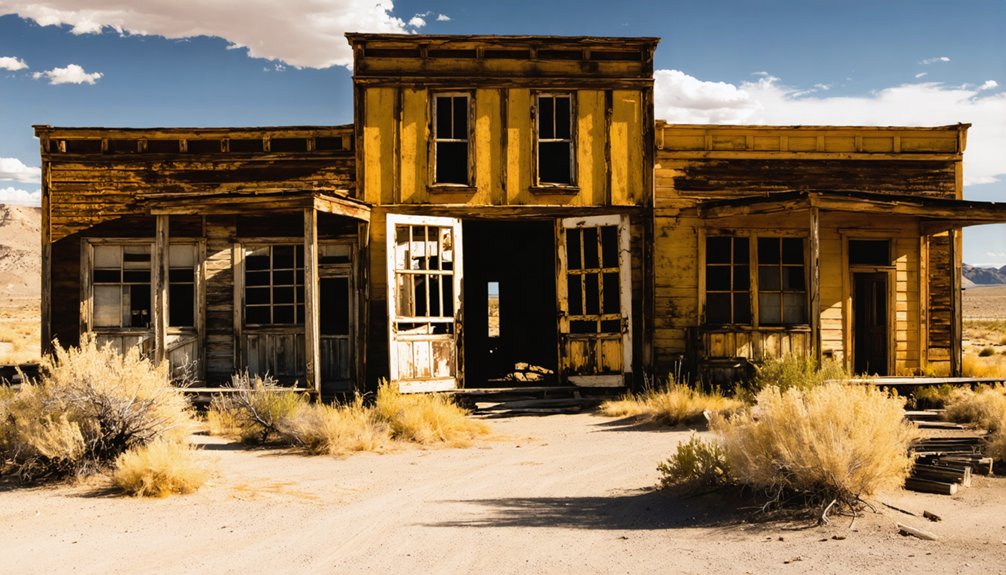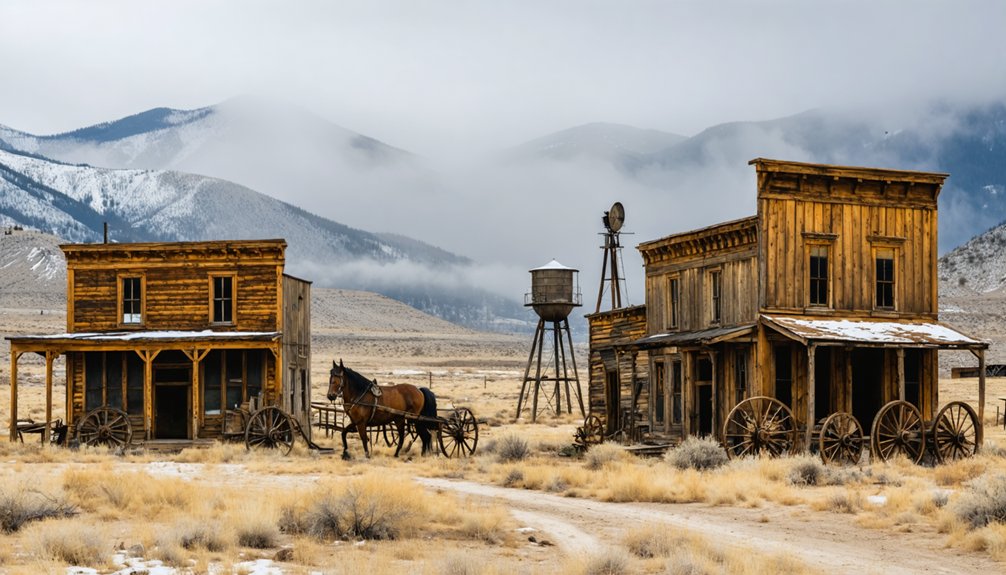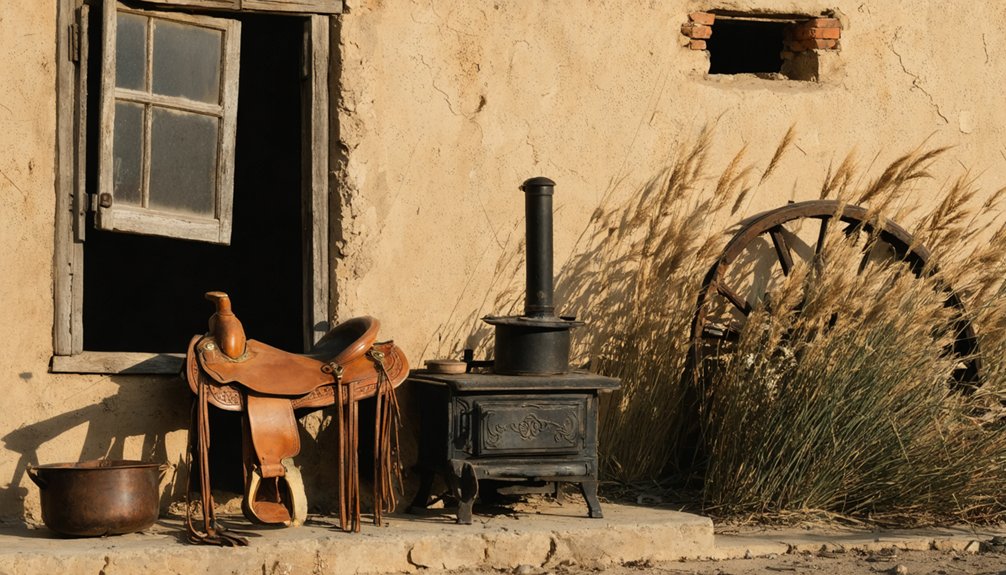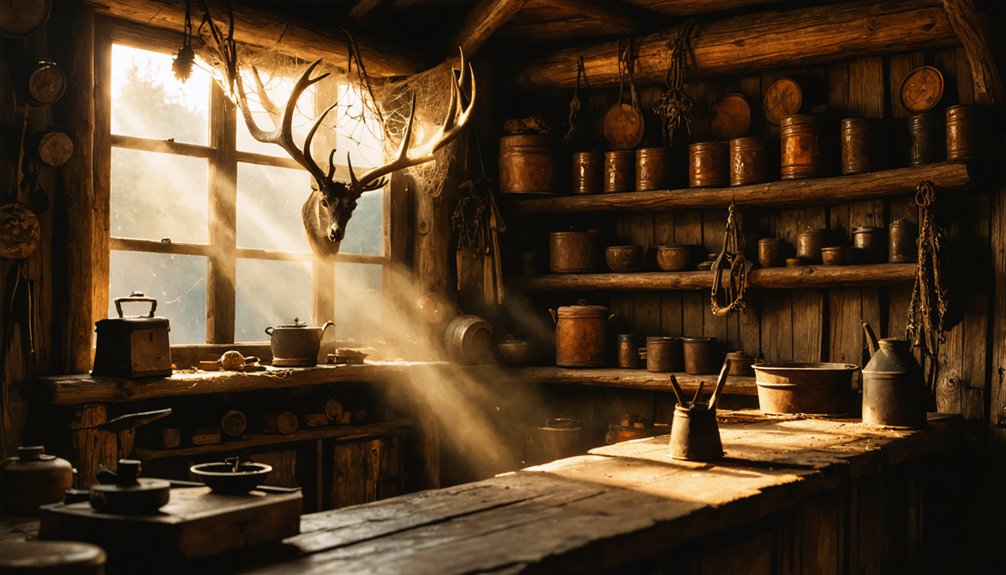
Frontier trading posts hold mysteries because they were complex hubs where multiple cultures intersected through commerce, conflict, and cooperation. You’ll find unexplained architectural features, concealed trade routes, and missing Indigenous perspectives that challenge traditional historical narratives. These abandoned sites contain buried artifacts, lost records, and untold stories of women and marginalized voices. Even their strategic military significance remains clouded by government secrecy. The deeper you explore these weathered structures, the more enigmas emerge.
Key Takeaways
- Hidden trade networks and secret waterways used by traders remain largely unmapped, leaving questions about historical commerce routes.
- Missing Indigenous records and destroyed colonial documents create significant gaps in understanding cultural exchanges and trading practices.
- Archaeological discoveries reveal sophisticated underground chambers and architectural features whose exact purposes remain unclear.
- Artifacts found at trading posts suggest complex cultural interactions and women’s roles that aren’t fully documented in historical records.
- Legends and supernatural stories associated with trading posts blend historical facts with folklore, creating enduring mysteries.
Unwritten Stories of Cultural Exchange
While frontier trading posts are often remembered primarily as commercial centers, they served as vibrant hubs of cultural exchange where diverse groups forged complex social networks and shared traditions.
As you explore these sites today, you’ll find evidence of rich cultural narratives in discarded artifacts like pipes, stoneware, and beads – each telling stories of daily life and interactions between Indigenous peoples and European traders.
Discarded artifacts at frontier trading posts speak volumes, revealing centuries-old stories of cultural exchange between Indigenous peoples and European settlers.
These trade relationships went far beyond simple commerce, as marriages between traders and Indigenous women created lasting kinship networks that shaped frontier communities.
Trading posts became multilingual gathering spaces where news traveled, stories were shared, and diverse customs merged.
Through objects left behind and oral traditions passed down, you can glimpse how these sites preserved Indigenous perspectives often missing from official colonial records.
Native Americans frequently exchanged valuable furs and pelts at trading posts for manufactured European goods that transformed their traditional way of life.
The Hudson’s Bay Company dominated trade across North America for nearly a century after receiving its charter in 1670.
Lost Trading Networks and Secret Routes
You’ll find that many frontier trading posts were strategically positioned along hidden waterways, forming intricate networks that remained off official maps and records.
These concealed water routes allowed traders to move goods covertly between posts while avoiding hostile territories, taxation points, and competing merchants.
The absence of documented indigenous trade maps, combined with oral traditions lost to time, leaves modern historians struggling to piece together these complex aquatic pathways that once connected remote outposts.
Ella Blackwell’s piano added an unusual artistic element to her trading post, breaking from the traditional frontier merchant atmosphere.
The trading posts’ role as essential community centers has diminished as big-box stores and modern financial services reshape traditional commerce patterns.
Hidden Waterway Trade Paths
Beneath the well-documented major waterways of North America lies an intricate network of hidden trade routes that once served as essential commercial arteries for Indigenous peoples and early European settlers.
You’ll find these forgotten routes running parallel to major rivers, connecting diverse ecosystems from prairies to woodlands through secondary waterways that time has obscured.
Natural forces have masked many of these paths – silting has filled channels, while vegetation has overtaken ancient portage trails.
Archaeological discoveries of sunken dugout canoes and artifacts reveal these hidden trade networks’ true extent, while abandoned frontier posts mark key junctions where commerce once flourished.
These elusive water highways formed complex systems that integrated with overland paths, though many left minimal physical traces, making their rediscovery an ongoing challenge for researchers mapping North America’s lost commercial corridors.
The Anishinaabe encampments discovered along shorelines by Michigan State University archaeologists offer compelling evidence of these ancient trade networks, with some artifacts dating back 3,000 years.
Similar to the Gulf Intracoastal Waterway, these historic trade routes were developed to provide safer passage for vessels navigating treacherous coastal waters.
Missing Indigenous Exchange Maps
The true extent of Indigenous trade networks across North America remains largely hidden due to the widespread absence of surviving exchange maps.
You’ll find this gap in Indigenous cartography stems from colonial destruction of records, forced relocations, and the deliberate obscuring of traditional knowledge. The historical injustice of confiscated or destroyed maps continues to impact our understanding of complex trade dynamics that once connected diverse communities.
What’s particularly challenging is tracking the secret routes that Indigenous peoples used for economic resilience and cultural preservation. The tribal GIS systems have become vital tools for preserving and documenting these historical trading paths. Today, organizations like Native Land Digital are helping reconstruct these historical pathways through detailed territory mapping.
These hidden pathways, protected through oral traditions and community narratives, enabled crucial exchanges while safeguarding resources from outsiders.
Today, Indigenous-led mapping initiatives are working to reconstruct these lost networks, integrating traditional knowledge with modern technology to reclaim their cartographic heritage.
Archaeological Puzzles in Post Ruins
When you explore abandoned trading post ruins, you’ll find that hidden artifacts like clay pipe fragments and religious medallions reveal complex stories of cultural exchange between European traders and Native Americans.
The discovery of underground storage chambers, often marked by distinctive architectural features like poteaux-en-terre posts, provides essential evidence of how frontier inhabitants adapted to harsh conditions.
Perhaps most intriguing is the ongoing mystery of trading windows, where archaeological evidence shows varied designs across different posts but leaves questions about their exact operational methods unanswered. River travel routes played a crucial role in connecting these frontier trading posts, as waterways served as the primary transportation network for fur traders and merchants. Excavations at Fort St. Joseph have uncovered six stone fireplaces that offer insights into daily life and architectural practices of the settlement.
Hidden Artifacts Reveal Secrets
Archaeological discoveries within abandoned frontier trading posts reveal intricate puzzles of early American commerce and cultural exchange.
You’ll find evidence of hidden economies in the thousands of fur pelts – from beaver to opossum – that paint a picture of bustling frontier trade. British muskets and firearms expose forgotten trades with European powers, while imported wines and English teawares show sophisticated consumer demands.
The middens tell an even deeper story through their mix of artifacts. Charred corn cobs, animal bones, and military buttons help date specific periods of occupation.
Trade goods from distant regions – Gulf Coast shells and Texas flint – prove these posts weren’t isolated outposts but critical nodes in vast commercial networks that shaped America’s economic frontier.
Underground Chambers Tell Tales
Deep beneath frontier trading posts, intricate networks of underground chambers reveal sophisticated architectural achievements and puzzling cultural mysteries.
As visitors explore these hidden depths, they are often captivated by the enigmatic charm of New England towns, where history weaves itself into the fabric of everyday life. Each cobblestone street and weathered façade tells a story, inviting both locals and travelers to delve into the rich tapestry of traditions and legends. It is in these quaint settings that the past and present converge, creating a sense of wonder that lingers long after leaving.
You’ll find carefully engineered spaces with vaulted stone roofs, brick floors, and advanced drainage systems that protected against flooding and contamination. These chambers’ subterranean significance extends beyond mere functionality – they’re often aligned with cardinal directions and seasonal markers, suggesting deep cosmological meaning.
The architectural symbolism becomes apparent in T-shaped doorways, raised hearths, and ceremonial spaces that hosted elite burials.
Yet questions persist about these chambers’ exact purposes. While some clearly served as storage or defensive shelters, others show evidence of ritual use or trade activities.
Multiple construction phases and varied artifact assemblages hint at complex cultural interactions and evolving roles within frontier communities.
Trading Windows Mystery Persists
Through centuries of weathering and neglect, trading windows in abandoned frontier posts remain one of archaeology’s most intriguing puzzles.
You’ll find these small, fortified openings served as critical exchange points between traders inside and Indigenous peoples outside, yet their exact trading protocols often elude modern researchers.
While artifacts like trade beads and coins cluster near these windows, erosion and site disturbances have obscured much of their physical evidence.
You can see how these openings reflected complex security measures – small enough to prevent unauthorized entry while allowing goods to pass through.
What’s particularly fascinating is how these windows symbolized the delicate balance of cooperation and caution in frontier commerce.
Their placement, size variations, and later modifications suggest evolving relationships between cultures that we’re still working to understand.
Hidden Power Dynamics Between Traders and Tribes
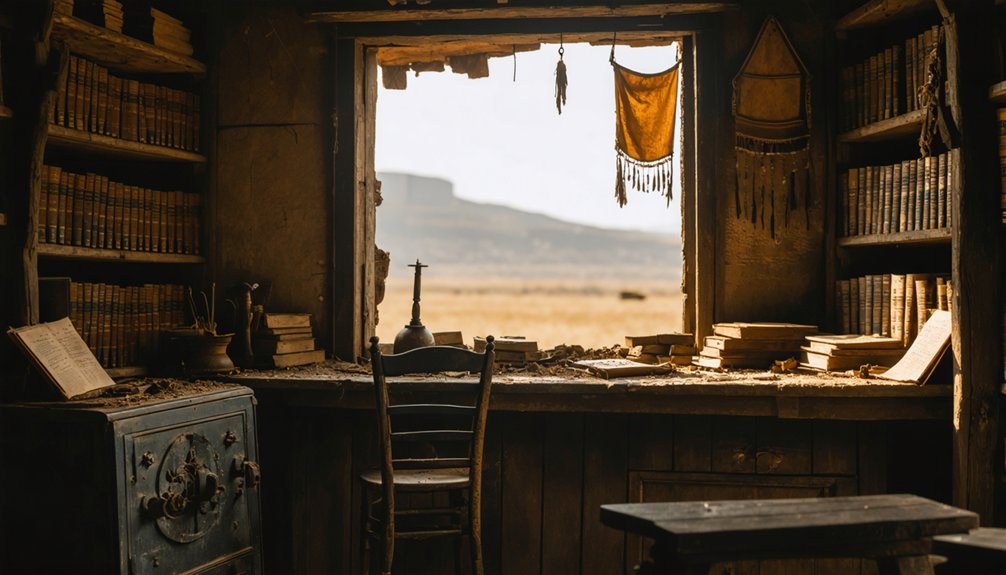
While frontier trading posts appeared to be simple commercial centers, they were actually intricate hubs of power where traders wielded significant economic and social control over Indigenous tribes. Through their monopoly on essential goods like firearms and metal tools, traders established powerful economic leverage over tribal communities.
You’ll find that these isolated outposts became sites of complex cultural negotiations, where traders functioned as de facto authorities with near-absolute power.
Yet this relationship wasn’t entirely one-sided. Indigenous peoples strategically engaged with trading posts, leveraging their knowledge of local resources and survival skills.
The frontier trading system created a web of mutual dependencies, even as it tilted power dramatically in favor of traders who could dictate terms through their control of crucial European goods and trade routes.
Vanished Artifacts and Missing Records
You’ll find that many frontier trading posts‘ essential records have vanished over time, leaving significant gaps in our understanding of daily commerce and interactions.
Trade ledgers were often lost when posts were abandoned or destroyed, while buried trading goods have deteriorated or been scattered by natural forces and development.
The limited surviving documentation, combined with fragmentary archaeological evidence, creates substantial challenges in reconstructing the full scope of frontier trading activities.
Lost Trade Ledgers
From the early frontier days to modern times, the loss of trading post ledgers has created significant gaps in our historical understanding of frontier commerce and culture.
You’ll find that natural disasters, wars, and neglect have destroyed countless lost economic records, leaving mysteries about trading post operations across the frontier. The 1906 San Francisco earthquake alone wiped out essential Alaska Commercial Company documents.
When you examine these gaps in record-keeping, you’ll discover they’ve obscured important insights into frontier life – from business transactions and Indigenous demographics to intercultural relationships and trade networks.
While some ledgers occasionally resurface in basements or private collections, most remain lost to time. The destruction of these records hasn’t just erased business data; it’s diminished our ability to fully grasp the complex social fabric of frontier communities.
Buried Trading Goods
As frontier trading posts vanished into history, they left behind a treasure trove of buried artifacts that tell complex stories about commerce and cultural exchange.
You’ll find evidence of extensive trade networks through thousands of buried treasures – from animal pelts and ceramic fragments to musket parts and gaming pieces.
Yet the artifact significance remains partially hidden. Many sites stay unexplored due to funding limits or land restrictions, while amateur excavations and poor documentation have obscured vital findings.
Natural forces and human activities have scattered evidence, while perishable goods have decayed beyond recognition. The written records that could illuminate these discoveries are often missing, destroyed, or incomplete.
Trading posts’ high turnover rates and frequent abandonment mean countless artifacts remain buried, their stories waiting to be uncovered.
Undocumented Daily Operations
While meticulous record-keeping defines modern business practices, frontier trading posts operated with minimal documentation of their daily activities.
You’ll find that undocumented transactions were commonplace, as remote locations and informal operations meant traders rarely maintained detailed ledgers or manifests.
These trading posts existed in a world where informal agreements between traders and indigenous peoples relied heavily on oral traditions rather than written contracts.
- Trading posts varied dramatically in their administrative sophistication, with many run by independent traders who lacked formal bookkeeping systems.
- Environmental factors, wartime disruptions, and sudden post closures often led to the loss or destruction of what few records existed.
- Competing territorial jurisdictions and frequent ownership changes contributed to scattered or incomplete documentation of commercial activities.
Environmental Changes That Erased History
Throughout America’s frontier history, environmental changes systematically erased physical evidence of trading posts, making their locations increasingly difficult to discover and study today.
You’ll find that both natural forces and human activities
Untold Tales of Women and Marginalized Voices

Behind the traditional narratives of frontier trading posts lies a rich but often overlooked history of women who shaped commerce, diplomacy, and survival on America’s expanding borders.
These untold histories reveal how Indigenous and settler women served as crucial bridges between cultures while building lasting enterprises in harsh conditions.
Indigenous and settler women forged vital cultural connections at frontier trading posts, building enduring businesses despite extreme challenges.
You’ll discover marginalized contributions that were essential to trading post survival:
- Indigenous women facilitated trade through their expertise in traditional crafts, language interpretation, and diplomatic marriages.
- Independent businesswomen like Ann LeTort managed posts and negotiated with multiple cultures despite gender barriers.
- Women’s labor in food preparation, clothing production, and shelter maintenance proved fundamental to post sustainability.
Their resilience transformed frontier commerce despite facing disease, exploitation, and constant danger, proving instrumental in America’s westward expansion.
Military Secrets and Strategic Significance
Far beyond their commercial role, frontier trading posts concealed extensive military operations that shaped America’s defensive capabilities during conflicts like the Cold War.
You’ll find these strategic outposts housed complex underground networks designed for covert operations, from nuclear readiness to surveillance missions against Soviet forces.
The military strategies behind these installations were masterfully crafted. By placing bases at critical frontier points, commanders could control vast territories while maintaining the appearance of simple trading posts.
You’re looking at sites that served as crucial nodes for troop movements, intelligence gathering, and rapid response capabilities.
Today’s archaeological mysteries stem from intentional government efforts to obscure these posts’ true purposes through destruction of evidence and classified documents, leaving only fragments of their secret military past.
Mythical Figures and Legendary Events
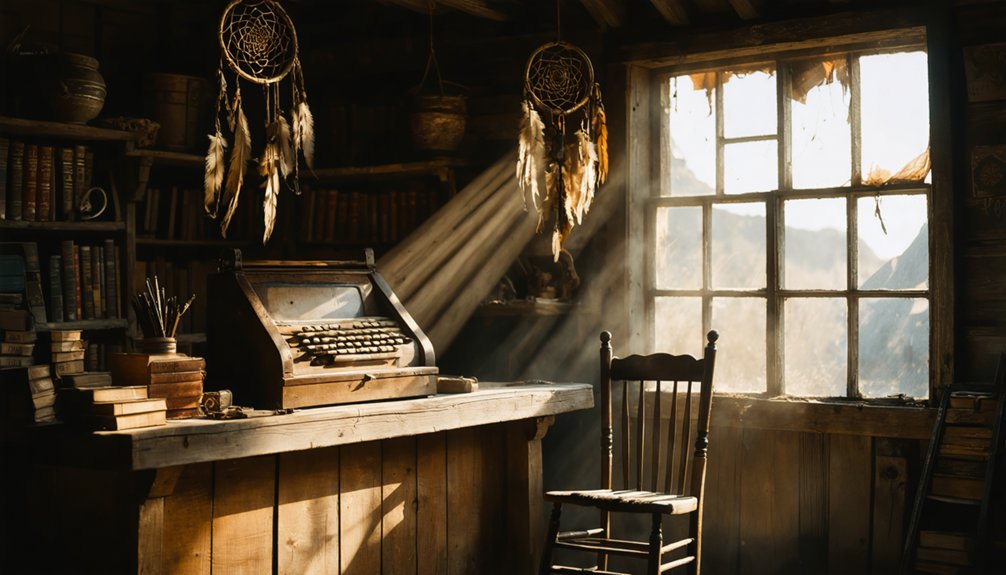
When you explore abandoned frontier trading posts, you’ll discover a rich tapestry of legendary figures and mythical events that shaped American frontier folklore.
Frontiersmen like Kit Carson and Jim Bridger transformed these outposts into epicenters of larger-than-life tales, while mysterious figures like the Lady in Green of Fort Laramie added supernatural intrigue to these historic sites.
From grizzled mountain men to spectral figures, frontier outposts became gathering places for both legends and spirits alike.
- Annual fur trading gatherings sparked dramatic tales of survival and rivalry among trappers.
- Ghost stories and hauntings, particularly at Fort Laramie, emerged from tragic frontier romances and unexplained disappearances.
- Violent clashes between traders and indigenous tribes created legendary encounters that still echo through these abandoned posts.
These mythical figures and legendary events weren’t just stories – they represented the raw freedom, danger, and untamed spirit of frontier life that defined these trading posts.
Architectural Clues and Design Mysteries
The architectural remains of frontier trading posts reveal fascinating design elements that merged practicality with cultural symbolism. You’ll find false front façades that created imposing street presences, masking simpler structures behind them while conveying permanence and civilization.
These buildings showcased remarkable architectural adaptation through their use of local materials, like repurposed telephone poles, and their incorporation of both Native American and European design traditions.
Look closely at the construction methods, and you’ll discover walls framed 16 inches on center, metal roofs built to withstand harsh conditions, and sturdy tongue-and-groove floors rated for heavy loads.
The trading posts’ multifunctional spaces, including lean-to porches and separate zones for storage and trade, reflect their role as community hubs where different cultures intersected and commerce flourished.
Frequently Asked Questions
How Did Traders Communicate Across Language Barriers Without Modern Translation Tools?
You’ll find that 80% of frontier traders relied on gestural communication, pidgin languages, and cultural exchange through trusted intermediaries, using pointing, miming, and symbolic gifts to bridge language barriers.
What Happened to the Personal Fortunes Amassed by Successful Frontier Traders?
You’ll find trader legacies followed diverse paths – some fortunes dissipated through market risks and poor planning, while others transformed into industrial empires through strategic wealth distribution across land holdings, railroads, and banking ventures.
Did Trading Posts Maintain Secret Underground Storage Systems for Valuable Goods?
You’ll find trading posts did maintain hidden compartments and underground chambers for valuable artifacts, protecting them from theft, weather damage, and raids while maintaining steady temperatures for sensitive goods.
How Did Traders Determine Fair Prices Without Standardized Currency Systems?
You’d determine fair prices through barter systems based on local commodity values, price negotiations, and established trust relationships. Trade ratios evolved from repeated exchanges and community-accepted standards.
Were There Unofficial Alliances Between Competing Trading Posts During Times of Crisis?
You’ll find that competing posts frequently formed unofficial alliances during crises, sharing resources and information while coordinating defense strategies. They’d set aside rivalries when survival and trade stability demanded crisis cooperation.
References
- https://www.crazycrow.com/site/resources/historic-sites/
- https://en.wikipedia.org/wiki/Hubbell_Trading_Post_National_Historic_Site
- https://www.encyclopedia.com/history/dictionaries-thesauruses-pictures-and-press-releases/trading-posts-frontier
- https://www.legendsofamerica.com/we-tradingposts/
- https://npshistory.com/publications/fous/index.htm
- https://www.historians.org/resource/the-significance-of-the-frontier-in-american-history/
- https://history.sd.gov/preservation/docs/19thCenturyTradingPosts.pdf
- https://www.journee-mondiale.com/en/i-traced-220-years-of-forgotten-frontier-life-in-south-dakotas-hidden-trading-posts/
- https://www.chieftain.com/story/news/state/2019/10/13/where-roots-run-deep/2538343007/
- https://ehillerman.unm.edu/2377