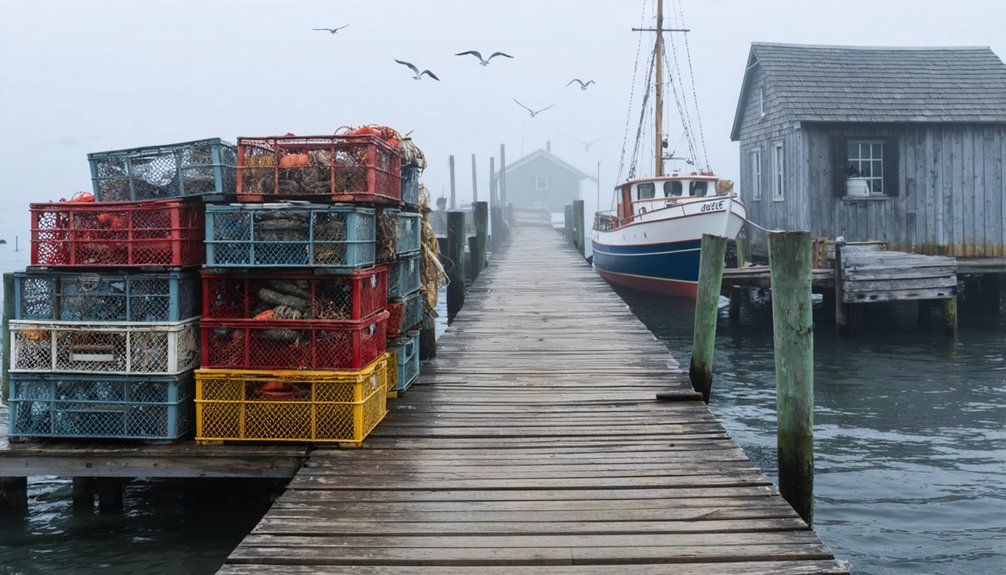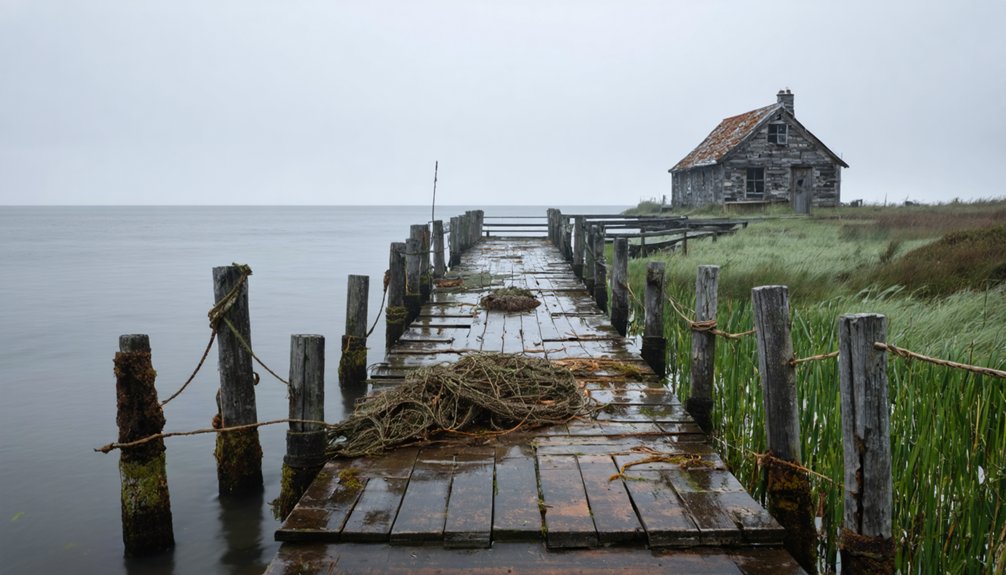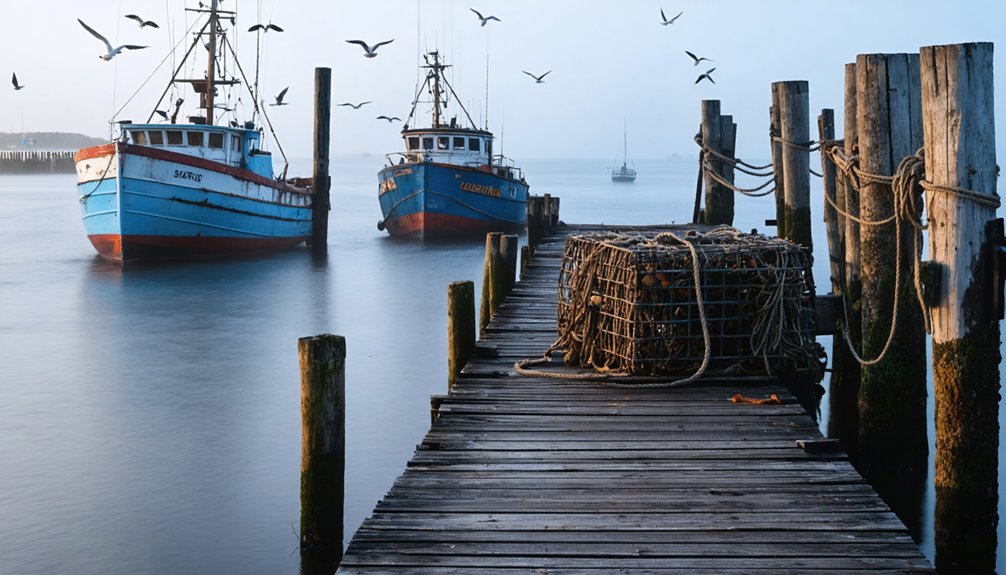
You’re drawn to coastal fishing village remains because they reveal humanity’s timeless connection to the sea through tangible evidence of maritime ingenuity. These sites showcase architectural adaptations, traditional fishing techniques, and sustainable resource management systems that sustained communities for generations. From preserved boats to ancient smokehouses, each artifact tells a story of survival and innovation. The layers of maritime heritage await your discovery in these salt-worn settlements.
Key Takeaways
- Coastal fishing village remains reveal ingenious architectural adaptations and traditional skills that demonstrate human resilience against maritime challenges.
- Archaeological sites preserve tangible evidence of sustainable resource management systems that balanced ecological needs with economic survival.
- Physical remnants showcase how communities synchronized their lives with natural rhythms through specialized structures and cultural artifacts.
- Village remains illustrate complex social structures and cultural traditions that united communities through shared maritime heritage.
- Artifacts and structures tell stories of diverse economic practices and gender-specific roles that sustained coastal communities for generations.
The Timeless Appeal of Maritime Heritage
While many cultural traditions fade with time, maritime heritage continues to serve as a powerful anchor of identity for coastal communities worldwide.
You’ll find this heritage woven into the fabric of daily life through maritime folklore, traditional boat-building techniques, and distinctive fishing practices that have endured for generations.
When you explore these villages, you’ll discover how coastal rituals and sea ceremonies strengthen community bonds, passing down essential values and collective memories.
Traditional navigation knowledge and spiritual customs create a shared sense of belonging that’s particularly crucial in today’s digital age.
In an era of digital disconnection, age-old maritime wisdom and rituals anchor communities to their shared cultural roots.
The preservation of these maritime traditions isn’t just about maintaining the past – it’s about sustaining living cultures that adapt and thrive.
You’re witnessing resilient communities that balance heritage preservation with modern challenges, as traditional trades diminish and tourism reshapes coastal economies.
In contrast, ghost towns in the western United States serve as poignant reminders of the boom-and-bust cycles that once defined these regions. Amidst the ruins, stories of ambition and hardship linger, inviting exploration and reflection on the past. Preserving these sites becomes essential not only for historical education but also for grounding present-day communities in their rich legacies.
The Sea Guardian Program exemplifies how traditional fishing knowledge and modern marine science can work together to protect ocean resources.
Living History Through Architecture and Artifacts
A rich tapestry of architectural features and material artifacts reveals the deep maritime heritage of coastal fishing villages.
You’ll find ingenious architectural adaptations in their narrow alleyways and clustered whitewashed houses, designed to protect against seafaring threats while maximizing limited space. These settlements showcase vernacular building techniques, from wooden structures coated in weather-resistant paints to rainwater collection systems that solved freshwater scarcity. The traditional wooden llaguts of Cadaqués exemplify the vital role of specialized fishing vessels in sustaining these communities.
The cultural artifacts you’ll discover tell equally compelling stories – from traditional boats crafted by generations of local shipwrights to specialized smokehouses that powered the fishing economy. The Pillsbury Boat Shop represents early maritime industry with its boat-building legacy dating back to 1907.
Museums now preserve these tangible links to maritime life, while sculptural works and everyday objects like nets and navigation tools embody the technical knowledge and shared labor that defined these resilient communities.
Sustainable Practices That Shaped Communities
Through generations of trial and error, coastal fishing communities developed sophisticated resource management systems that balance ecological preservation with economic survival.
You’ll find these communities implementing traditional practices like sasi alongside modern scientific approaches, creating effective community management frameworks that protect marine resources while sustaining livelihoods.
Their success stems from integrating diverse income sources with ecological balance initiatives. Community members have reported significant increases in both fish stock health and income levels since 2018.
Women play essential roles in these systems, contributing to both conservation and economic resilience through activities like eco-tourism and handicraft production.
The global fishing industry supports 58.5 million workers who depend on these sustainable practices for their livelihood.
Local enforcement of fishing regulations, combined with seasonal closures and no-take zones, helps maintain healthy fish populations.
These communities have proven that sustainable practices aren’t just about environmental protection – they’re about creating robust, adaptable systems that guarantee both ecological and economic survival for future generations.
Traditional Skills Passed Through Generations
In coastal fishing villages around the world, traditional skills serve as living repositories of generational wisdom, transmitted through carefully orchestrated systems of oral instruction, hands-on apprenticeship, and ritualized learning. In Fiji, turaga ni qoliqoli lead these knowledge-sharing practices as hereditary fishing chiefs.
You’ll find these oral traditions woven into the fabric of daily life, where skill transmission occurs through structured, gender-specific roles that maintain community resilience. These time-honored methods echo practices dating back to early civilizations, when fishing first shaped human settlements.
Consider these core elements of traditional knowledge transfer:
- Elders act as custodians, teaching not just techniques but environmental stewardship.
- Gender-specific expertise guarantees thorough skill preservation, from net-making to market trading.
- Hands-on apprenticeship enables direct learning of seasonal patterns and tool crafting.
This adaptive system lets you preserve ancestral wisdom while integrating new methods, creating a dynamic balance between heritage and innovation in fishing communities.
The Social Fabric of Fishing Life
Life within coastal fishing villages revolves around intricate social networks that define community identity and structure daily interactions. You’ll find strong community bonds shaped by maritime traditions, kinship ties, and collective labor practices that unite fishermen, their families, and neighbors across generations. Research shows active engagement participation through various social and religious groups, professional associations, and political parties.
The social fabric interweaves through distinct class layers – from boat-owning skippers to laborers – while various associations and cooperatives strengthen social cohesion through shared resource management and welfare services.
Despite urbanization pressures, these communities maintain resilience through their social capital and cultural continuity. You’ll observe how traditional festivals, rituals, and fishing practices reinforce relationships while preserving indigenous knowledge.
This complex web of interdependence and mutual support enables fishing villages to adapt to changes while maintaining their unique cultural identity.
Economic Evolution Along the Coastline
When you examine traditional fishing villages today, you’ll find they’ve evolved from purely subsistence-based economies into complex market systems that integrate tourism, aquaculture, and specialized maritime services.
You can observe how these coastal communities have adapted by developing diverse revenue streams, often combining traditional fishing activities with modern tourism experiences and value-added processing operations.
This transformation reflects both the economic pressures on traditional fishing and the opportunities that arise from modernizing coastal infrastructure and meeting contemporary market demands.
Traditional to Modern Markets
Coastal fishing villages worldwide have undergone a dramatic economic transformation, shifting from traditional fishing-based economies to diversified markets driven by tourism and cultural industries.
You’ll witness remarkable market adaptation as communities embrace new revenue streams while preserving their maritime heritage. This economic diversification has created resilient income sources beyond traditional fishing.
Key transformations you’ll observe include:
- Conversion of fishing ports into tourism hubs offering recreational activities and cultural experiences
- Development of heritage-based commerce through Zanhuawei shops and seafood markets
- Integration of traditional fishing knowledge into modern aquaculture and eco-tourism ventures
You’re seeing a dynamic shift where coastal communities leverage their maritime heritage to create sustainable economic opportunities, blending traditional practices with contemporary market demands. In Japan, the development of umigyo maritime business has become essential for revitalizing fishing communities facing economic challenges.
Diverse Maritime Income Sources
Modern maritime economies in fishing villages demonstrate remarkable adaptability through multiple revenue streams that extend well beyond traditional catch-based income.
You’ll find households diversifying their economic portfolios through fish processing, vessel construction, and small-scale commerce, with women playing essential roles in invertebrate harvesting and market sales.
The economic landscape now encompasses both subsistence fishing for local food security and recreational angling that generates substantial tourism revenue.
You’re witnessing a sophisticated integration where traditional practices merge with modern opportunities – from $21 million fishing economies in coastal bays to tourism-related wages reaching $700 million.
This adaptation strategy helps communities weather economic disruptions while maintaining their maritime heritage, proving that coastal villages aren’t just surviving – they’re evolving into dynamic economic hubs.
Natural Rhythms and Human Connection
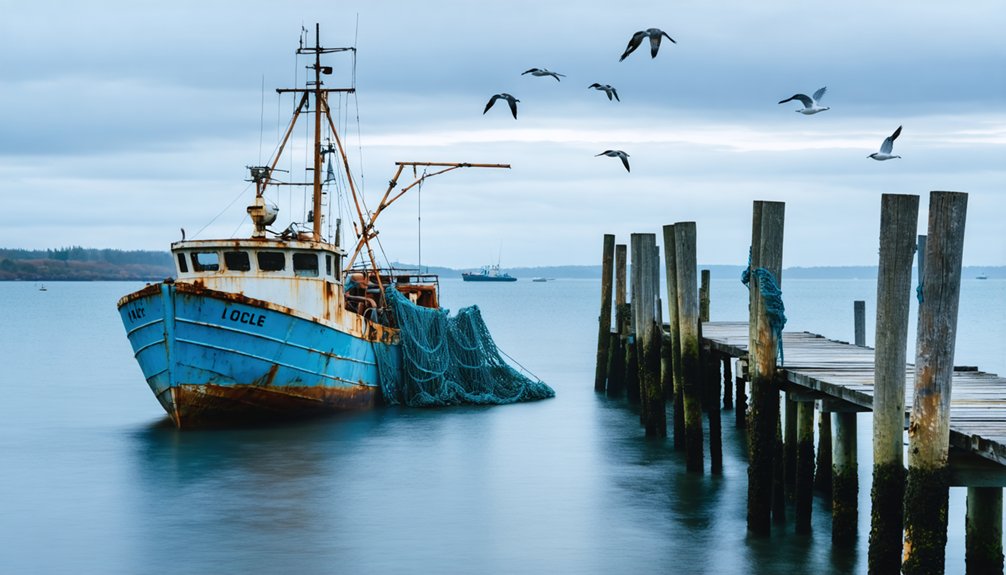
Through intricate synchronization with oceanic rhythms, fishing villages exemplify humanity’s deep connection to natural cycles.
You’ll find these communities operating in perfect harmony with tides, lunar phases, and seasonal patterns that govern marine life. Their daily routines and community rhythms mirror nature’s own tempo, creating sustainable practices that have endured for generations.
These villages demonstrate remarkable adaptation through:
- Dawn fishing expeditions timed to ideal tidal conditions
- Collective knowledge-sharing systems that track fish movements and spawning cycles
- Social structures that distribute roles based on natural resource availability
You’re witnessing a sophisticated interplay between human activity and environmental forces, where fishing practices adapt to sediment dynamics and coastal morphology.
This deep understanding of natural cycles guarantees both community survival and ecosystem preservation.
Cultural Preservation in Modern Times
In an era of rapid globalization, fishing villages are deploying innovative strategies to preserve their rich maritime heritage while adapting to contemporary challenges.
You’ll find heritage cooperatives actively documenting centuries-old fishing techniques and cultural narratives through digital archives and community-led programs. These initiatives protect traditional knowledge while creating sustainable economic opportunities through managed cultural tourism.
Women strengthen heritage identity by maintaining rituals and social bonds, while local guides share authentic stories rather than staged performances.
You’re witnessing a delicate balance as communities integrate conservation policies with traditional ecological knowledge. Through seasonal festivals, craft workshops, and oral histories, fishing villages aren’t just preserving their past – they’re evolving their cultural legacy to thrive in modern times while retaining their distinctive maritime character.
Stories Written in Sand and Salt
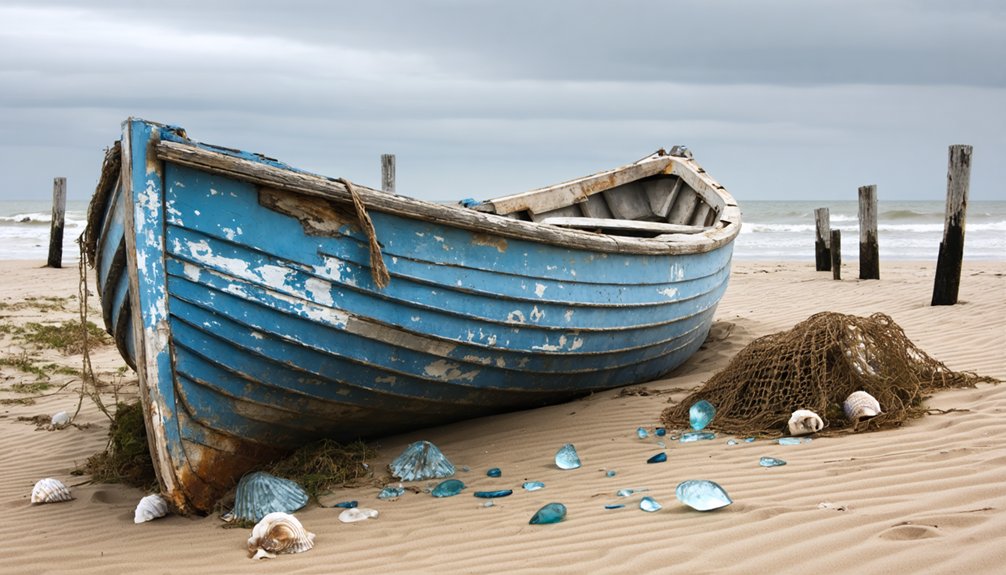
The rich narratives of coastal fishing communities emerge from their deep connection to salt-influenced environments and centuries of maritime adaptation.
Maritime cultures are born where land meets sea, shaped by salt-laden winds and generations of seafaring wisdom.
You’ll discover their saltwater storytelling etched in archaeological remains and living traditions, revealing ecological legacies that span generations of coastal dwellers.
These maritime settlements have left behind three distinct markers of their relationship with salt-influenced landscapes:
- Traditional trotline fishing spots and muskrat trapping territories marked by distinct grass knots
- Salt-preserved artifacts and brick structures that survived environmental challenges
- Intertidal shellfish farming zones that demonstrate deep understanding of marine ecosystems
You’re witnessing the culmination of human ingenuity adapting to coastal forces, where every preserved site tells a story of communities that learned to thrive in dynamic salt-marsh environments.
Frequently Asked Questions
How Do Coastal Fishing Villages Protect Their Waters From Illegal Fishing Activities?
You’ll protect your waters through organized community patrols, collaborating with local authorities, implementing sustainable practices, and using real-time monitoring systems to detect and report illegal fishing vessels effectively.
What Role Do Women Traditionally Play in Coastal Fishing Communities?
You’ll find women’s leadership in processing, marketing, and conservation, while their economic contributions span harvesting shellfish, managing local sales, and providing essential labor that sustains coastal fishing communities’ livelihoods.
How Do Fishing Villages Maintain Their Population Despite Urban Migration Trends?
You’ll find fishing villages keep their population through Snapchat-worthy cultural heritage, sustainable practices, diversified income sources, strong community bonds, targeted government support, and strategic locations near valuable marine resources.
What Impact Do Seasonal Weather Patterns Have on Fishing Village Economies?
You’ll find seasonal fluctuations directly affect fishing villages’ economic sustainability through reduced fishing days, shifting species availability, and income instability, forcing communities to adapt their harvesting strategies or face financial hardship.
How Do Fishing Villages Resolve Conflicts Between Commercial and Recreational Fishers?
Like waves meeting the shore, you’ll find fishing villages achieve conflict resolution through stakeholder meetings, zone allocation, gear restrictions, and fisher cooperation between commercial and recreational groups.
References
- https://www.islands.com/1850117/oregon-authentic-fishing-village-garibaldi-stunningly-picturesque-coastal-city-brimming-delicious-seafood/
- https://vanlifebydesign.com/2025/08/19/charming-fishing-villages-on-the-coast-of-maine/
- https://www.scseagrant.org/sc-working-waterfronts-fishing-villages-evolve/
- https://worthydetours.com/carrabelle-the-sleepy-fishing-village-on-floridas-forgotten-coast/
- https://www.destinfwb.com/blog/why-is-destin-the-worlds-luckiest-fishing-village/
- http://toolkit.climate.gov/fisheries-and-coastal-communities
- https://thebamabuzz.com/small-town-in-alabama-named-one-of-the-top-fishing-destinations-in-the-united-states/
- https://www.fisheries.noaa.gov/topic/socioeconomics/human-dimensions-of-fishing
- https://www.marinebiodiversity.ca/how-coastal-tourism-is-reshaping-ancient-maritime-traditions/
- https://cbss.org/baltic-heritage/working-groups/costal-heritage/