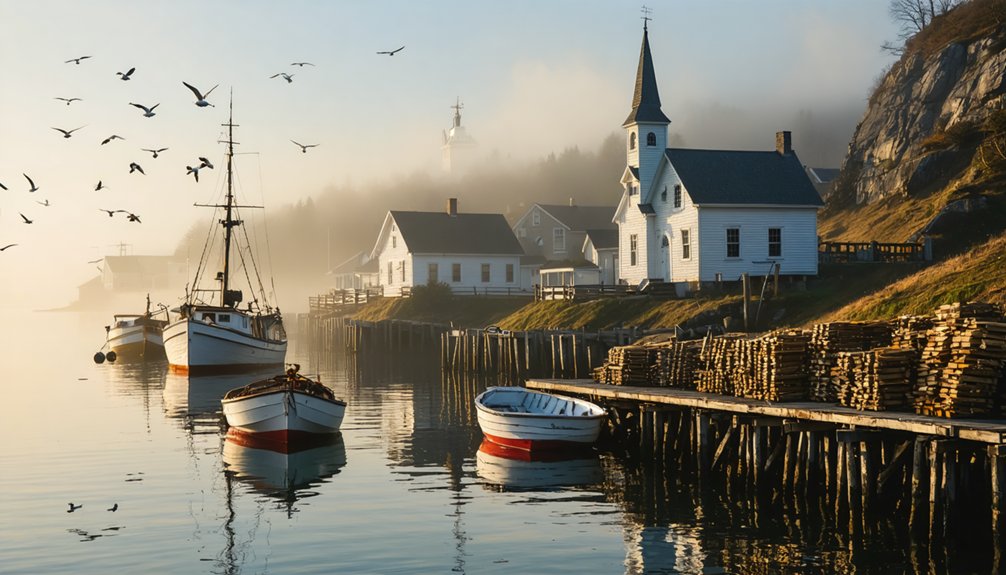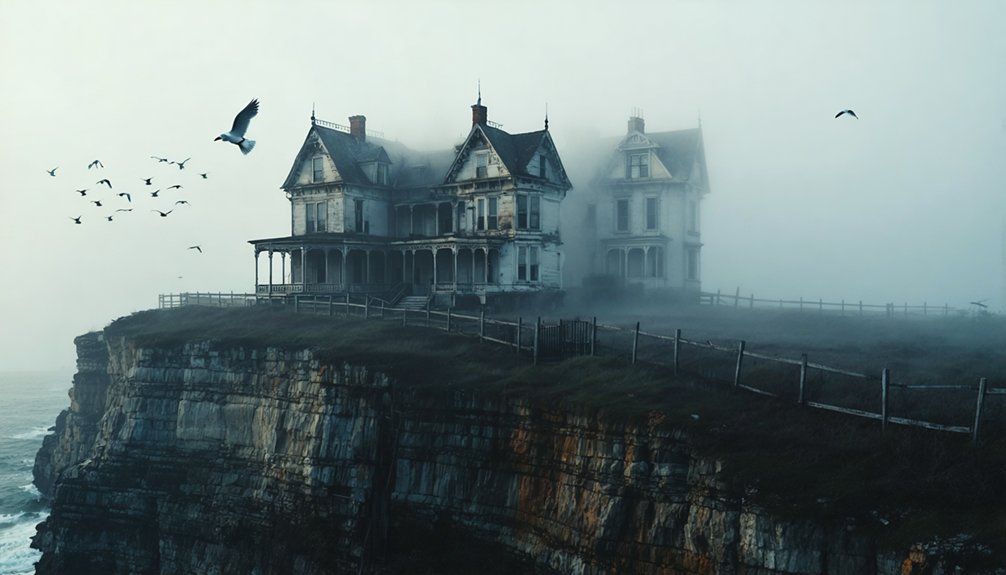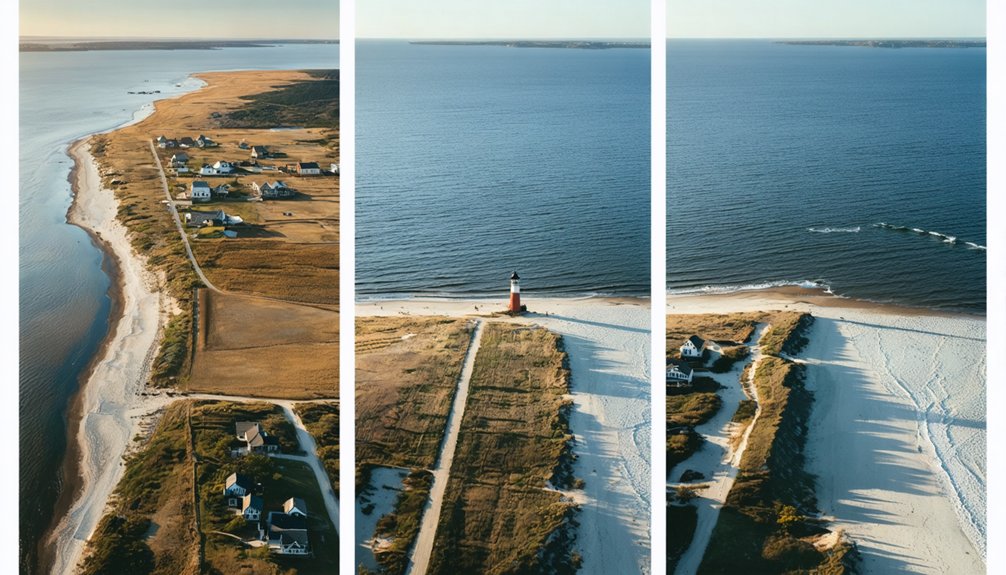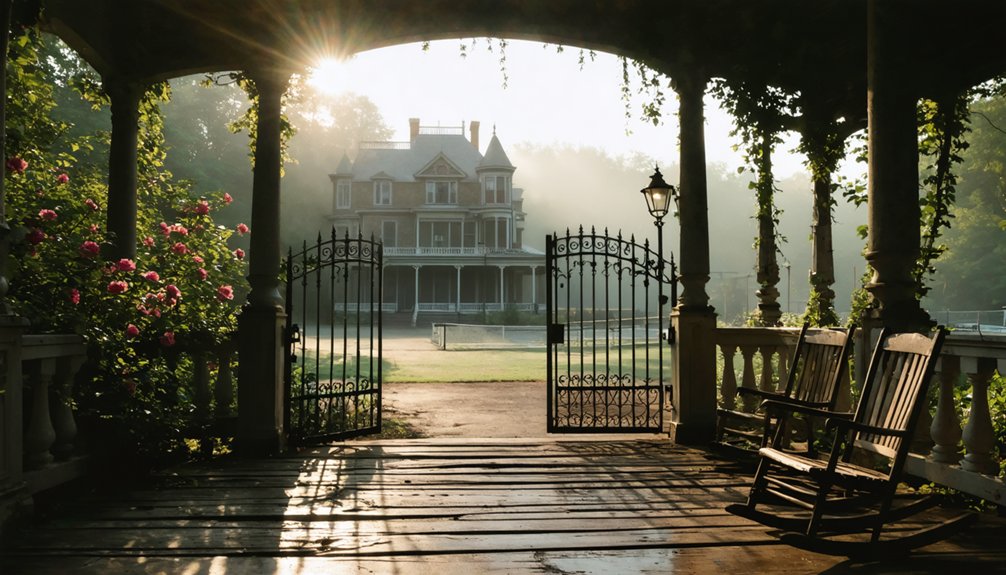
You’ll discover that Eastern USA’s resort towns haunt visitors through their unique blend of preserved Victorian grandeur and maritime mystique. These coastal havens feature the nation’s richest collection of 19th-century architecture, ghost ships emerging from fog-laden harbors, and seasonal transformations that turn vibrant summer destinations into winter ghost towns. Their isolation by ferry, combined with centuries of folklore and documented paranormal encounters, creates an atmospheric experience that beckons you deeper into their enigmatic past.
Key Takeaways
- Preserved Victorian architecture and National Historic Landmark status create an otherworldly atmosphere that transports visitors to the 19th century.
- Rich maritime folklore, ghost ships, and documented paranormal encounters contribute to the mysterious allure of coastal towns.
- Seasonal population swings transform vibrant summer destinations into eerily quiet ghost towns during winter months.
- Ferry-only access and physical isolation from mainland development maintain an enchanting, timeless quality to island resorts.
- Historic shipwrecks and maritime monuments along the coast serve as haunting reminders of human endeavors and natural forces.
Victorian Architecture and Time-Frozen Facades
While many coastal resort towns along America’s Eastern seaboard boast historic architecture, the Victorian-era buildings in these communities stand as particularly remarkable symbols to America’s Gilded Age.
You’ll find the nation’s second-largest collection of preserved Victorian homes in Cape May, NJ, where architectural preservation efforts have maintained the town’s 19th-century charm. These time-frozen facades showcase distinctive Victorian aesthetics: steeply pitched roofs, wraparound porches, and ornate woodwork that transport you to a bygone era. The entire borough’s designation as a National Historic Landmark ensures its unique architectural heritage endures.
In towns like Newport, RI, and Beaufort, SC, you’ll discover how devastating fires paradoxically led to architectural renaissance, as communities rebuilt in the Victorian style. Like these communities, Lewes, Delaware embraces its role as the First Town in the First State through carefully preserved homes and buildings.
Today, these preserved streetscapes serve as living museums, protected by historic district designations that guarantee their authenticity remains intact for future generations.
Legends and Lore of Coastal Communities
You’ll discover that eastern coastal towns hold a treasure trove of maritime myths, from the blue-glowing phantom ships of Salem to the haunting tales of pirate gold near Saugus River.
These enduring legends continue to shape local identity, with ghost ships like the Palatine making their scheduled spectral appearances and historic hotels like Congress Hall harboring centuries of paranormal encounters.
Whether you’re exploring Native American sacred sites or tracing the paths of star-crossed lovers lost at sea, these coastal communities preserve their mysterious heritage through carefully maintained oral traditions and documented supernatural encounters. The enchanting Cliff Walk in Newport provides visitors with both stunning oceanfront views and whispered tales of paranormal activity. The notorious Captain Lightfoot targeted wealthy travelers along these very shores before his eventual capture and execution in East Cambridge.
Maritime Myths Endure Today
As coastal communities along the Eastern seaboard preserve their maritime heritage, a rich tapestry of myths and legends continues to shape their cultural identity.
You’ll find maritime folklore deeply woven into the fabric of these enigmatic towns, from Tangier Island’s mysterious colonial dialect to the ghostly legends of shipwrecks that haunt local consciousness.
Native tales of sea creatures merge with accounts of lost crews, while historic events like Chincoteague’s Pony Swim transform into mythologized narratives that draw tourists year after year.
These stories aren’t mere entertainment – they’re essential threads connecting you to centuries of seafaring tradition.
In places like Mystic Seaport, where 19th-century maritime life still breathes through preserved structures, you’ll discover how these enduring myths reinforce the unique cultural identity that sets these coastal communities apart. The town of Weeki Wachee adds to this mystique with its famous underwater mermaid shows, captivating visitors with living folklore. The imposing presence of Cape Hatteras with its 198-foot lighthouse stands as a testament to the enduring maritime legends that illuminate the Outer Banks.
Ghost Ships Still Sail
From the haunting remains of Mallows Bay to the enigmatic Carroll A. Deering, you’ll discover that ghost ships aren’t just maritime legends – they’re tangible pieces of history dotting the Eastern seaboard.
The Mallows Bay Ghost Fleet stands as America’s largest collection of historic shipwrecks, where 169 WWI-era vessels rest in their watery grave. These vessels now form unique natural habitats for countless species of local wildlife. You’ll find Kiptopeke’s concrete sentinels still guarding Virginia’s shore, while the unsolved mystery of the Carroll A. Deering continues to intrigue maritime enthusiasts near Cape Hatteras. Built during WWII when steel was scarce, these concrete ships proved that necessity truly is the mother of invention.
Even modern ghostly sightings persist, as fierce Atlantic storms occasionally send abandoned vessels to shore, like the Lady Catherine III and Cuki during recent hurricanes.
These maritime monuments serve as silent witnesses to both human endeavor and nature’s power, preserving stories that refuse to sink into obscurity.
Folklore Shapes Local Identity
The rich tapestry of Eastern coastal folklore weaves together maritime legends, supernatural beliefs, and indigenous wisdom into a distinct cultural identity that defines these seaside communities.
Ancient mariners spoke of encountering giant sea creatures that could destroy entire ships. You’ll find the cultural significance of these stories deeply embedded in local traditions, where folklore preservation remains essential to maintaining authentic connections with the past. The infamous Salem Witch Trials transformed Massachusetts into a haunting reminder of mass hysteria and injustice.
These mystical narratives manifest in four distinct ways:
- Maritime legends of shipwrecks and spectral figures like the Headless Pirate create a shared heritage
- Witch tales from Salem to Block Island serve as powerful reminders of historical struggles
- Regional cryptids like Champ and the Lusca symbolize untamed wilderness
- Indigenous influences blend seamlessly with settler stories, creating unique syncretic traditions
This living folklore continues to shape tourism, community bonds, and local pride across Eastern resort towns.
The Mystique of Island Isolation
You’ll discover that many of America’s most intriguing coastal resorts remain accessible only by ferry, creating an air of exclusivity that dates back to their Victorian-era founding.
The untamed shorelines you encounter on these islands have stayed remarkably pristine due to their physical separation from mainland development pressures.
When storms roll in and ferries stop running, you’re reminded of how the changing weather patterns have historically deepened these islands’ sense of mystery and isolation.
Ferry-Only Access Mystique
Hidden along America’s eastern seaboard, ferry-only resort towns preserve an enchanting sense of isolation that modern bridges and highways have stripped from most coastal destinations.
You’ll discover a world where limited mobility shapes daily rhythms, and ferry schedules dictate the pulse of island life.
These water-bound sanctuaries maintain their mystique through:
- Natural crowd control, as ferry capacity restricts visitor numbers
- Car-free environments that foster quiet, walkable communities
- Protected landscapes untouched by bridge infrastructure
- Cultural authenticity preserved by physical separation
You’re not just crossing water – you’re stepping into communities where time moves differently.
The very act of boarding a ferry signals your departure from mainstream tourist paths into a domain where isolation isn’t just geographic; it’s a defining feature of the resort town’s character.
Remote Shorelines Stay Wild
While modern coastal development continues to reshape America’s eastern shoreline, remote island sanctuaries stand as pristine wilderness outposts where nature’s rhythms remain undisturbed.
You’ll discover ecological preservation at its finest on places like Cumberland Island, where 17 miles of untouched coastline harbor diverse wildlife, from loggerhead turtles to roseate spoonbills.
These secluded havens maintain their wild character through limited infrastructure and sparse human presence.
On Sapelo Island, where only 70 residents dwell, you’ll find community resilience intertwined with environmental stewardship.
The absence of extensive development – no traffic lights, minimal commercial activity, and ferry-only access – guarantees these maritime forests, ancient dunes, and tidal creeks continue their timeless dance with nature, offering you a glimpse of the Atlantic coast as it once was.
Weather Deepens Island Secrets
Beneath the tranquil facade of eastern resort islands lies a complex interplay between weather patterns and isolation that shapes their distinctive character.
You’ll discover how weather extremes amplify these islands’ mystique, creating an environment where nature’s forces meet human resilience in remarkable ways.
- Weather patterns intensify the psychological effects of isolation, as storms and rising seas gradually reshape coastal landscapes.
- Traditional island communities develop unique social bonds that help them weather environmental challenges.
- Geographic barriers create distinct cultural microcosms, where isolation breeds both strength and vulnerability.
- Each extreme weather event adds another layer to the island’s collective memory, deepening its enigmatic character.
This dynamic has historically transformed simple coastal settlements into places of intrigue, where island resilience manifests through closely guarded traditions and adaptation strategies passed through generations.
Seasonal Transformations and Ghost Town Vibes
Throughout the eastern seaboard of the United States, resort towns undergo dramatic seasonal metamorphoses that transform vibrant summer destinations into near-ghost towns during winter months.
Among these towns is Cape May, known for its haunted history of Cape May, where tales of ghostly apparitions and eerie encounters add an intriguing layer to its charming Victorian architecture. Visitors often stroll through the historic district, eager to learn about the spooky legends that have lingered through generations. This unique combination of history and mystery draws curious tourists all year round, ensuring that Cape May’s allure is far from seasonal.
You’ll witness population swings of 200-500% between peak and off-seasons, with places like Cape May seeing their 3,000 year-round residents multiply tenfold during summer’s height.
These seasonal shifts leave ghostly remnants in their wake. You’ll find 40-70% of businesses shuttered, their windows boarded up from late fall through early spring.
Once-bustling boardwalks in places like Rehoboth Beach stand silent, while public services dwindle to bare minimums. The skeleton crews of emergency services and reduced municipal operations echo through empty streets, where summer’s vibrancy has retreated like the tide, leaving behind a hauntingly beautiful solitude.
Historic Preservation Vs Modern Development
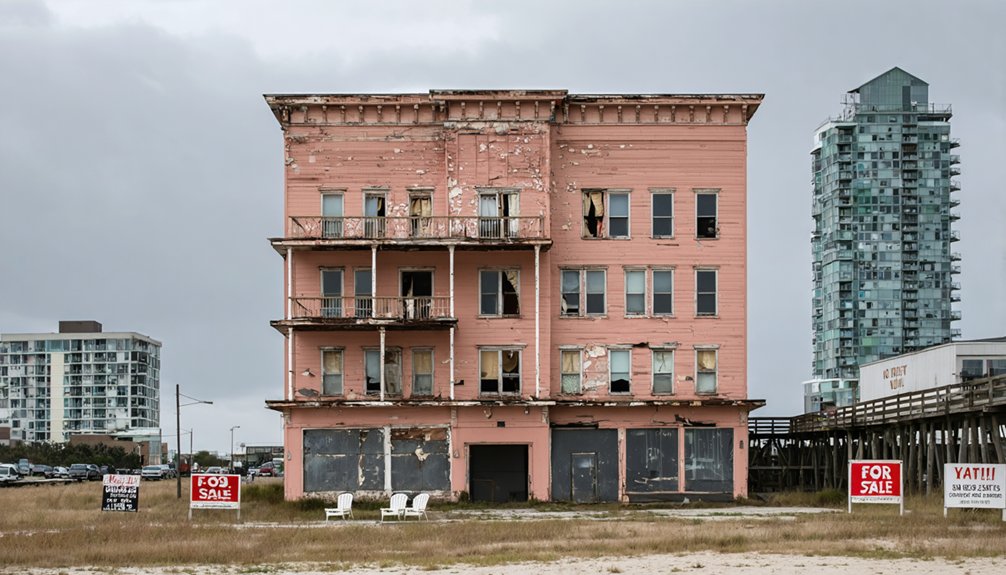
These seasonal ghost towns face an even deeper existential challenge: the tension between preserving their historic character and embracing modern development.
You’ll find preservation challenges manifest in complex ways as these communities struggle to maintain their authentic charm while adapting to contemporary needs.
Consider these critical development conflicts affecting Eastern resort towns:
- Strict preservation ordinances clash with developers’ desires to modernize properties for profit
- High restoration costs and technical hurdles strain limited local resources
- Tourism expansion demands infrastructure upgrades that threaten historic integrity
- Community divisions emerge between preservation advocates and development supporters
The outcome of these battles shapes not just individual buildings, but the very soul of these communities.
While preservation reinforces cultural identity and can boost heritage tourism, the financial realities of modern development often prove difficult to resist.
Natural Wilderness and Atmospheric Elements
A natural mystique envelops the Eastern resort towns, where vast wilderness and atmospheric elements create an enigmatic backdrop that defines their character.
You’ll find yourself immersed in diverse ecosystems, from Everglades’ subtropical marshes to White Mountain’s alpine peaks, each offering distinct natural encounters that heighten the area’s allure.
The atmospheric sounds of these landscapes – harbor seals calling, wind whispering through ancient forests, and waves breaking against pristine shores – compose a haunting symphony.
Dense morning mists shroud Appalachian peaks, while seasonal transformations paint dramatic scenes, from autumn’s fiery display to spring’s delicate awakening.
Wildlife movements add another layer of mystery, with black bears roaming the Smokies and wild ponies galloping across Assateague’s windswept beaches, reinforcing these towns’ reputation as gateways to untamed wilderness.
Cultural Heritage and Storytelling Traditions
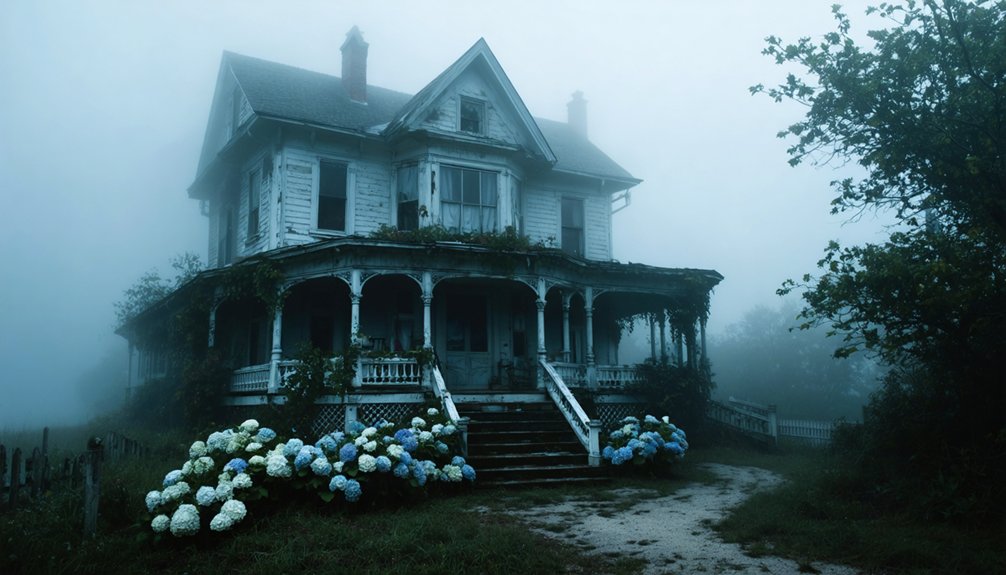
While generations of inhabitants have shaped these resort towns’ identities, their rich cultural tapestry emerges most vividly through carefully preserved storytelling traditions.
These coastal communities maintain their mystique through oral storytelling that weaves together colonial history, Native American heritage, and Gilded Age narratives into a compelling cultural identity.
You’ll discover these enduring legacies through:
- Ghost tours that bring historic shipwrecks and witch trials to life
- Native American spiritual perspectives that explain haunted locations
- Gilded Age mansion tours revealing tales of wealth and tragedy
- Community gatherings where local storytellers share centuries-old legends
These intertwined narratives create a powerful sense of place, where every corner whispers of past events and unexplained phenomena, drawing you deeper into the towns’ enigmatic nature.
Economic Evolution and Haunting Remnants
Once prosperous Eastern resort towns now face unprecedented economic challenges as shifting travel patterns and global disruptions reshape their tourism-dependent foundations.
You’ll find iconic destinations like Mackinac Island and Bar Harbor struggling with dramatic tourism shifts, as their once-bustling streets grow quieter.
The economic decline is stark: historic fudge shops face mounting inventory, grand hotels report booking drops of 18%, and traditional seafood experiences give way to cheaper alternatives.
You’re witnessing a profound transformation where each percentage drop in visitors threatens roughly 1,500 jobs.
Local economies that once thrived on seasonal tourism now grapple with billions in lost revenue, while empty storefronts and quiet boardwalks stand as haunting reminders of their former vibrancy.
These changes ripple through communities, affecting everyone from street vendors to hotel staff.
Frequently Asked Questions
Which Eastern Resort Towns Have Recorded the Most Unexplained Paranormal Activity?
While Gettysburg’s battlefields host ghostly encounters daily, you’ll find the most documented supernatural legends in Stowe, Vermont, and St. Augustine, Florida, where historic resorts merge tragedy with tourism.
How Do Property Values Compare Between Haunted and Non-Haunted Historic Buildings?
You’ll find haunted properties typically sell for 16-17% less, though historic preservation status can offset this stigma, potentially commanding up to 26% higher prices when original architectural features remain intact.
What Percentage of Local Businesses Capitalize on Their Town’s Mysterious Reputation?
You’ll find 60% of tourism businesses in enigmatic towns employ mystery-focused business strategies, while overall 20-40% of local establishments leverage these themes for tourism impact and revenue growth.
Do Crime Rates Differ Significantly Between Peak Season and Off-Season Periods?
You’ll notice crime trends spike mysteriously during peak tourist seasons, with theft and vandalism doubling compared to off-season. Seasonal variations show tourists bring both revenue and heightened criminal activity.
Which Resort Towns Have Successfully Integrated Modern Amenities Without Losing Mysterious Charm?
You’ll find Cape May and Asbury Park excel at preserving charming architecture while seamlessly weaving in modern amenities, creating an authentic atmosphere where historic mystique meets contemporary comfort.
References
- https://leisuregrouptravel.com/best-7-classic-resort-towns-eastern-us/
- https://samantha-brown.com/destinations/9-beautiful-east-coast-beach-towns/
- https://www.youtube.com/watch?v=hz5KAC0FUNY
- https://www.homeofmalones.com/my-travel-bucket-list-10-east-coast-resorts-to-visit/
- https://www.businessinsider.com/best-alternatives-popular-travel-spots-east-coast-hidden-gems
- https://wanderyourway.com/14-amazing-places-in-the-usa-east-edition/
- https://www.nantucketresortcollection.com/press-releases/7-coolest-towns-on-the-atlantic-coast-for-a-summer-vacation-in-2024/
- https://recollections.biz/blog/cape-may-nj-victorian-seaside-homes/
- https://www.homestratosphere.com/most-charming-small-towns-with-victorian-era-architecture/
- https://fifiandhop.com/2017/07/11/cape-may-victorian-charm/