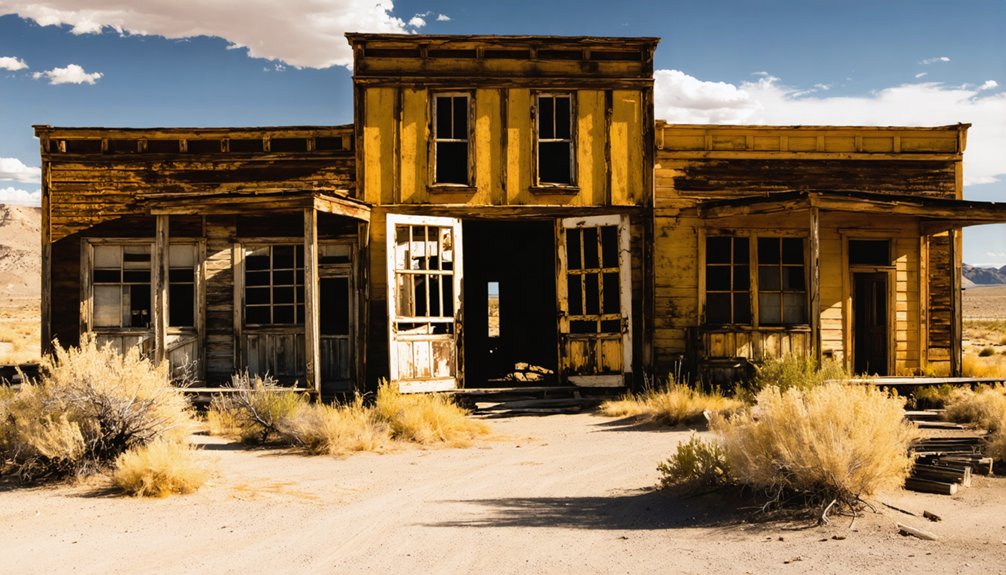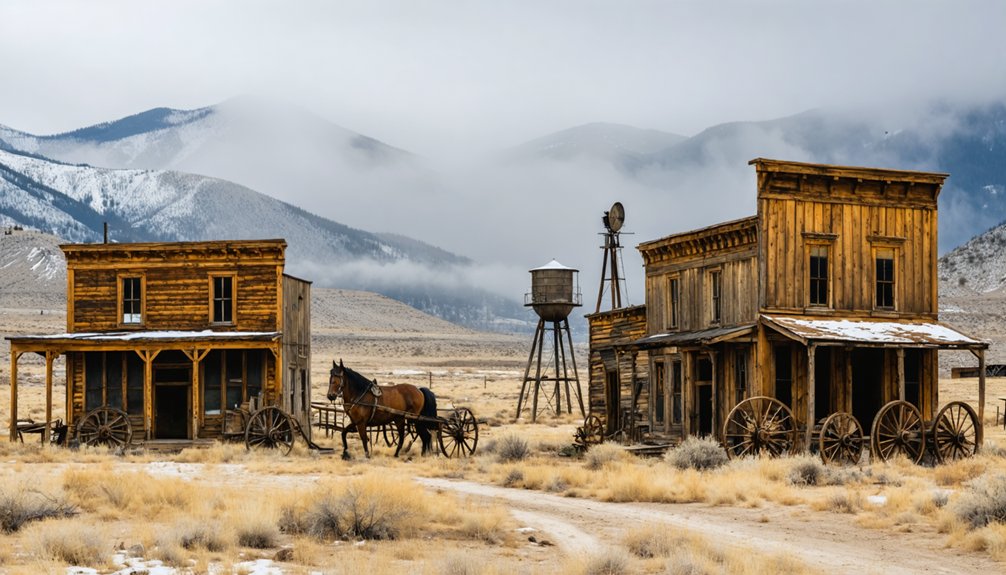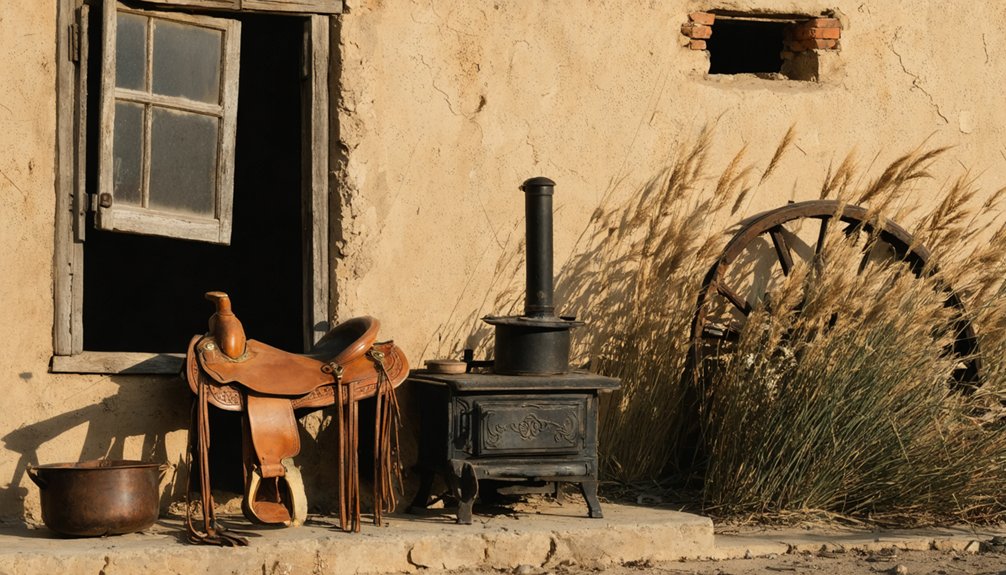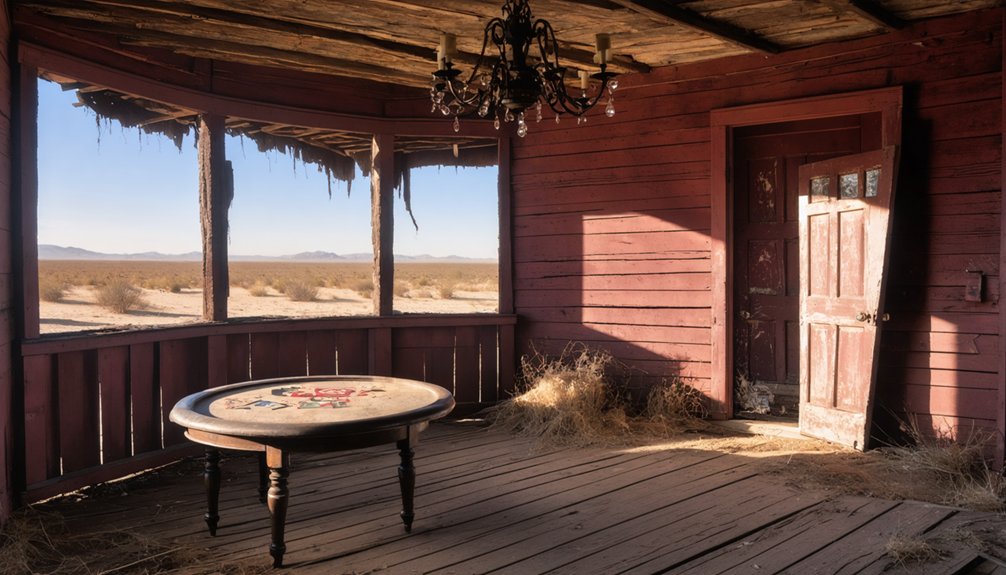
Ghost towns echo frontier life because you’ll find preserved remnants of America’s westward expansion, from mining camps to railroad outposts. These abandoned settlements showcase the rapid boom-and-bust cycles driven by resource extraction, where diverse immigrant communities once sought wealth and opportunity. You can spot weathered buildings, empty saloons, and merchant shops that reveal how economic forces, natural disasters, and resource depletion shaped the American frontier experience. The stories of these empty streets hold deeper insights into our pioneering past.
Key Takeaways
- Ghost towns preserve authentic frontier architecture and infrastructure, providing tangible evidence of 19th-century American settlement patterns.
- Abandoned buildings and artifacts showcase daily life, economic activities, and social structures of pioneer communities.
- These sites reflect the boom-and-bust cycles of resource-based economies that characterized frontier development and westward expansion.
- Ghost towns demonstrate the multicultural fabric of frontier life through remaining structures used by diverse immigrant populations.
- Physical remnants tell stories of resilience, ambition, and adaptation as settlers faced harsh conditions and economic challenges.
The Rise and Fall of Frontier Boomtowns
When prospectors struck gold in California in 1849, they sparked a transformative period in American frontier history that would give rise to countless boomtowns across the West.
The ideology of manifest destiny drove waves of settlers westward to seek their fortunes in these emerging territories. You’ll find that boomtown origins weren’t limited to mining impacts alone – these settlements also flourished at strategic railroad junctions, cattle drive stops, and military outposts. Towns like Dodge City, Kansas became vital stops along cattle drive routes, offering essential services to weary drovers. As news of economic opportunities spread, diverse waves of immigrants, from Chinese laborers to European settlers, rushed to these frontier outposts.
What began as makeshift camps quickly evolved into bustling communities, complete with saloons, hotels, and merchant shops. You’d see mining operations driving the local economy while ranching and agriculture developed to support growing populations.
However, when resources depleted or transportation routes changed, these once-vibrant communities often faced swift decline, leaving behind the silent remnants that are recognized as ghost towns.
Among these are forgotten oil towns in Texas, where families once thrived on the prosperity of the boom. Now, crumbling structures stand as a testament to a bygone era, with memories etched into the walls. Exploring these desolate landscapes reveals stories of resilience and change, echoing the transformative impact of the oil industry on the region.
Economic Forces Behind Ghost Town Formation
The economic engines that powered frontier boomtowns often contained the seeds of their own destruction.
You’ll find that resource depletion and economic volatility played decisive roles in transforming thriving communities into abandoned settlements. When the mines ran dry or timber stocks disappeared, these single-industry towns couldn’t sustain themselves. Heritage tourism sites now preserve many of these historical locations for future generations. The dramatic story of Bodie, California shows how gold rush prosperity could vanish almost overnight when resources were depleted.
Here’s what made these towns particularly vulnerable:
- Heavy dependence on extractive industries like mining or logging, with little economic diversification
- Rapid investment in temporary infrastructure that couldn’t support long-term growth
- Transient workforce populations that created unstable housing markets
You’re witnessing the aftermath of speculation-driven development, where quick profits took precedence over sustainable growth.
These towns’ fates were sealed by their inability to adapt when the resource-based economy collapsed, leaving behind empty streets and abandoned dreams.
Natural Elements That Shaped Town Abandonment
Throughout history, natural forces have systematically transformed thriving communities into abandoned shells, often acting more decisively than economic factors in ghost town formation.
You’ll find that natural disasters like floods, tornadoes, and earthquakes have forced entire populations to flee, as seen in Burke City, Oklahoma, where the North Canadian River’s fury left no choice but evacuation. The creation of man-made lakes has submerged numerous communities, including the original sites of Hochatown and old Kaw City.
Environmental changes have proven equally devastating. Villages like Vunidogoloa have undergone complete coastal relocation as rising waters threaten their existence.
You’re witnessing this impact through rising sea levels consuming coastal towns like Burrwood, Louisiana, while underground coal fires in Centralia, Pennsylvania, make the ground unstable beneath residents’ feet.
Climate shifts bring more frequent extreme weather, melting glaciers threaten mountain communities, and geological hazards like sinkholes and landslides transform once-safe havens into danger zones, leaving behind empty streets and crumbling structures.
Preserving America’s Deserted Heritage
While natural forces may destroy ghost towns, dedicated preservation efforts work to protect these remaining fragments of American history. Weather damage threatens these old structures daily, requiring constant monitoring and maintenance.
You’ll find complex networks of organizations, from federal agencies to local historical societies, wrestling with preservation challenges while securing essential funding sources. These groups navigate legal frameworks and ownership disputes to safeguard these cultural treasures. The Ghost Town Club of Colorado demonstrates this commitment through their Preservation Fund which directs all donations to qualified restoration projects.
- Federal laws like the National Historic Preservation Act establish protection guidelines, with the National Park Service coordinating preservation across multiple government levels.
- Non-profit organizations and historical societies secure funding through donations, grants, and volunteer labor to maintain endangered structures.
- Local community groups tackle urgent repairs and documentation while promoting ethical visitation practices, despite limited utilities and unclear property rights.
The collaborative efforts between these organizations guarantee America’s ghost towns remain accessible windows into frontier life.
The Cultural Legacy of Empty Streets and Buildings
Standing as silent witnesses to America’s frontier era, ghost towns provide invaluable cultural repositories through their empty streets and weathered buildings. Within these abandoned settlements, you’ll discover architectural remnants that tell stories of boom-and-bust cycles, from wooden sidewalks to weathered saloons. The physical decay sparks cultural nostalgia, connecting you to the resilient pioneers who once called these places home. Many of these settlements became deserted when natural resources depleted, forcing residents to seek opportunities elsewhere. In Virginia City, visitors can explore the legacy of the Comstock Lode that triggered one of America’s greatest silver rushes.
You can trace the evolution of frontier life through preserved infrastructures like rail depots and town squares, while ruined cemeteries reveal intimate details about the demographics and challenges of early settlers.
These sites serve as open-air classrooms where you’ll find evidence of multicultural interactions and economic transformations. Through archaeological parks and heritage tourism, you’re able to experience firsthand the dramatic narratives of survival and abandonment that shaped America’s western expansion.
Frequently Asked Questions
What Paranormal Activity Is Commonly Reported in American Ghost Towns?
You’ll experience ghost sightings like apparitions, hear unexplained footsteps and voices, feel sudden cold spots, and witness objects moving on their own—all tied to the hauntings history of these places.
How Do Archaeologists Determine the Exact Dates When Towns Were Abandoned?
You’ll find archaeologists use multiple dating techniques including radiocarbon, dendrochronology, and stratigraphy to pinpoint when towns were abandoned, cross-referencing these archaeological methods with historical records for precise dates.
Were There Any Successful Attempts to Repopulate Abandoned Ghost Towns?
You’ll find several successful ghost town revivals through urban renewal and historical preservation, like Walhalla in Victoria and Riace in Italy, where tourism and government initiatives restored vibrant communities.
What Happened to the Personal Belongings Left Behind by Former Residents?
You’ll find abandoned artifacts scattered among weathered walls and dusty floors – personal memories frozen in time, either deteriorating naturally, preserved by historical societies, or lost to scavenging over decades.
Did Native American Tribes Ever Resettle in Abandoned Ghost Town Locations?
You’ll find that tribal resettlement in abandoned ghost towns was rare, as U.S. government policies typically forced Native Americans onto reservations rather than allowing them to reclaim these historical interaction sites.
References
- https://www.geotab.com/ghost-towns/
- https://explorethearchive.com/western-ghost-towns
- https://www.notesfromthefrontier.com/post/untitled
- https://ridewayoutwest.com/2024/09/09/rise-and-fall-of-americas-frontier-towns-from-boom-to-bust/
- https://www.visittheusa.com/experience/5-us-ghost-towns-you-must-see
- https://www.legendsofamerica.com/gt-hiddentales/
- https://www.atlasobscura.com/lists/americas-best-preserved-ghost-towns
- https://en.wikipedia.org/wiki/Lists_of_ghost_towns_in_the_United_States
- https://www.ghosttowns.com
- https://www.youtube.com/watch?v=V-tz9LF8T-c