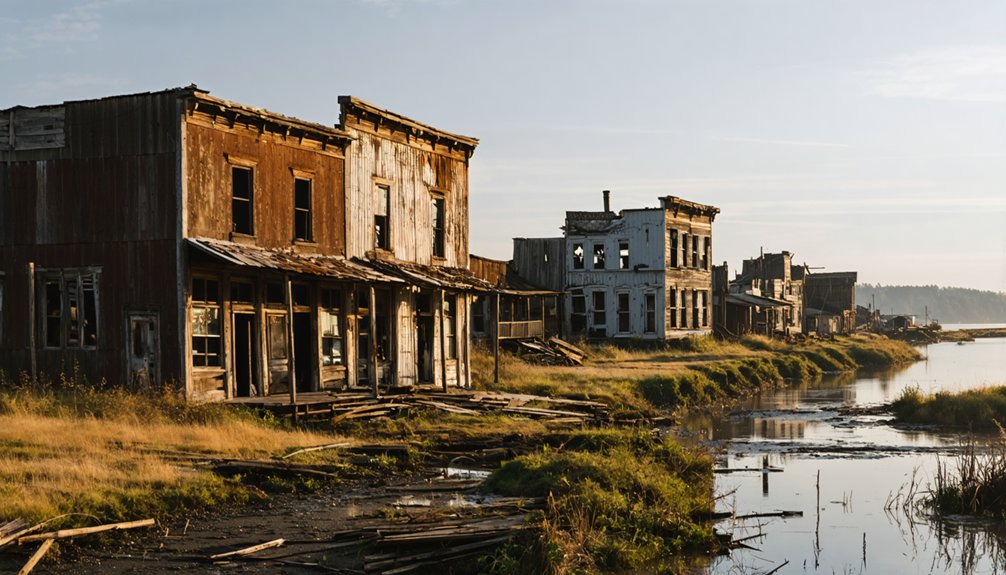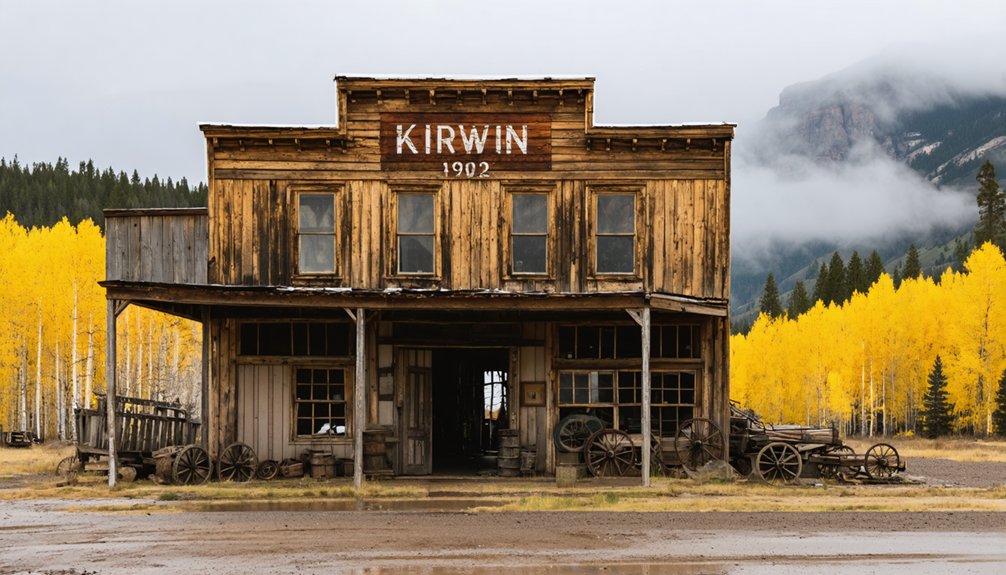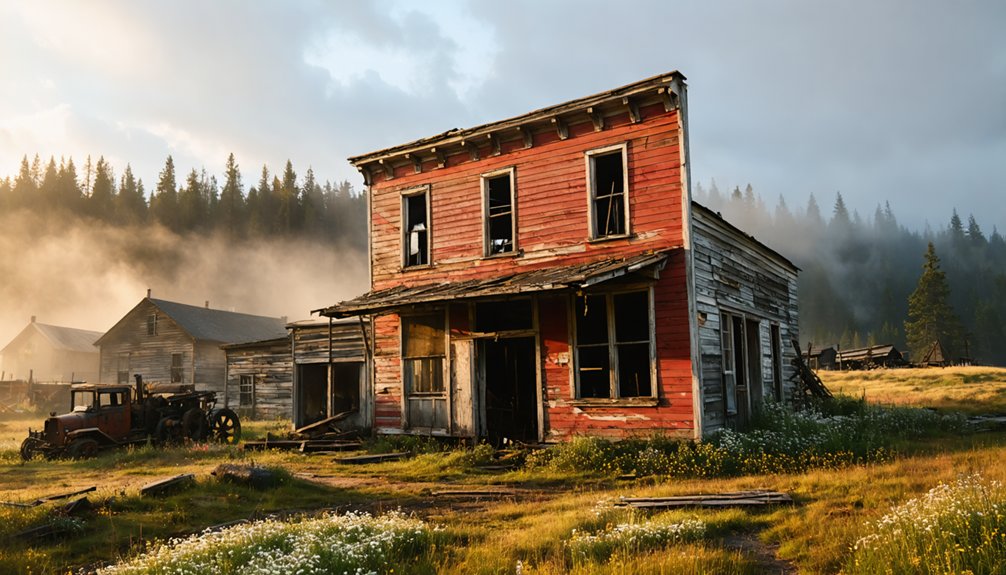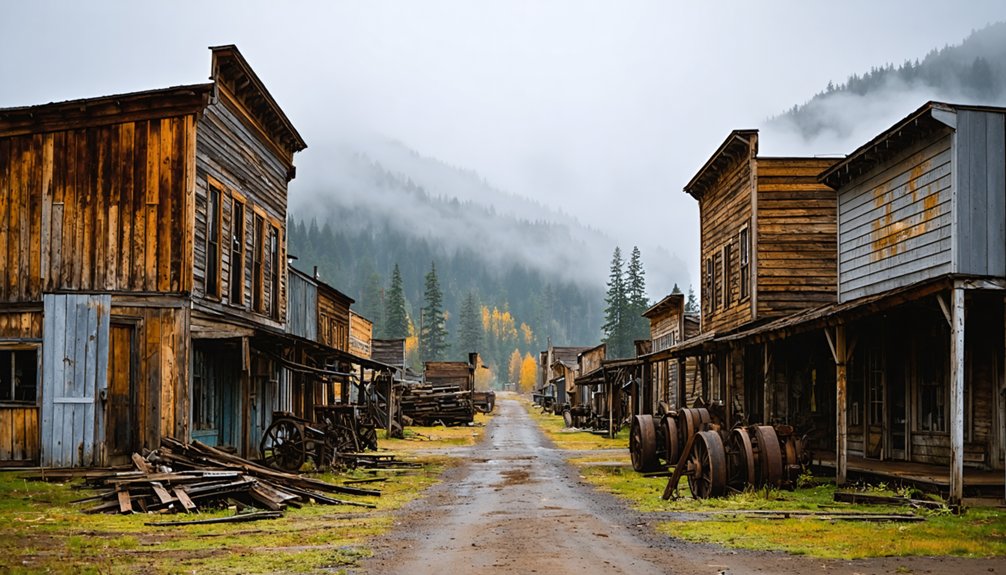
Washington’s ghost towns remain frozen in time due to several key factors you’ll find fascinating. Geographic isolation protects these abandoned settlements from vandalism and interference, while harsh winter conditions naturally preserve structures by slowing decay. The Pacific Northwest’s unique climate, combined with cultural preservation efforts and original construction using local materials, keeps these historic sites remarkably intact. Exploring these factors reveals an intricate web of natural and human forces at work.
Key Takeaways
- Geographic isolation protects ghost towns from human interference, with many sites requiring challenging hikes through the Cascades for access.
- The Pacific Northwest’s cool climate slows decay by limiting microbial activity and reducing wood rot in abandoned structures.
- Winter conditions preserve buildings through subfreezing temperatures, protective snow cover, and reduced biological deterioration processes.
- State-led cultural heritage protection programs prevent development and maintain historical integrity through grants and preservation initiatives.
- Remote locations increase redevelopment costs and lack modern infrastructure, discouraging new settlement or commercial ventures.
The Legacy of Mining Booms and Busts
While gold discoveries in the late 19th century sparked Washington’s mining booms, they also set the stage for the ghost towns that would follow.
You’ll find remnants of this mining heritage in places like Liberty, where prospectors rushed to extract crystalline wire gold and rare Ellensburg Blue Agates. These towns rapidly grew from nothing into bustling hubs, complete with post offices, wagon roads, and hundreds of residents.
From empty wilderness to thriving boomtowns, mining settlements like Liberty sprang up overnight as prospectors chased dreams of striking it rich.
When mineral deposits ran dry or metal prices plummeted, these towns faced swift abandonment. Mine closures triggered mass exoduses, shuttering businesses and forcing entire communities to relocate. Like Nighthawk, which supported six concentration mills during its peak operations in 1903.
Today, ghost town folklore surrounds these silent settlements, where abandoned equipment and crumbling infrastructure tell stories of boom-and-bust cycles that shaped Washington’s landscape forever. The historic town of Liberty, located 80 miles east of Seattle, stands as a testament to this era with its preserved log exteriors and wooden structures.
Geographic Isolation Preserves History
Geographic isolation has become the unexpected guardian of Washington’s ghost towns, acting as a natural time capsule for these abandoned settlements.
You’ll find these historic sites nestled deep within the Cascades, protected by formidable topographical features like dense forests, rugged mountains, and winding rivers. These natural barriers serve as preservation strategies more effective than any human intervention.
When you venture to these remote locations, you’ll discover original structures and artifacts remarkably intact, thanks to limited human interference. Monte Cristo’s isolation requires visitors to take a four-mile hike just to reach its historic remnants.
Liberty’s position two miles off US-97 near Blewett Pass has helped maintain its status as Washington’s only living ghost town.
The lack of modern development pressures means these sites remain frozen in time, with old mining equipment, schoolhouses, and wagon bridges still standing.
Nature’s slow reclamation through vegetation growth actually helps protect these remnants, while the surrounding wilderness shields them from vandalism and urban expansion.
Weather’s Role in Structural Preservation
Throughout Washington’s ghost towns, harsh winter conditions play a surprising role in preserving abandoned structures. The state’s unique weather patterns create a natural preservation system that helps maintain structural integrity far longer than you’d expect.
Mother Nature turns harsh Washington winters into an unexpected ally, acting as nature’s preservative for forgotten ghost town buildings.
When winter sets in, four key preservation factors emerge:
- Subfreezing temperatures considerably slow decay by reducing bacterial and fungal activity.
- Low humidity levels in cold air minimize wood rot and material deterioration.
- Protective snow blankets shield buildings from UV damage and rapid temperature changes.
- Dormant biological threats like termites, rodents, and invasive plants reduce structural damage.
You’ll find these preservation effects most prominent in Washington’s remote ghost towns, where undisturbed winter conditions create a time capsule effect, fundamentally freezing these historic structures in place year after year. During bad weather in Western Washington, explorers often shift their attention to eastern areas where different preservation conditions exist.
In Molson, situated at 3708 feet elevation, the harsh winter climate has helped maintain numerous historical structures including the 1914 schoolhouse and original mining buildings.
Transportation Changes and Town Abandonment
You’ll find that many of Washington’s ghost towns owe their abandonment to significant shifts in railroad routes, particularly when new tunnels and track alignments bypassed once-bustling stops.
Towns like Wellington and Corfu lost their liveliness when the Milwaukee Road Railroad and Great Northern Railway altered their routes, effectively cutting off these communities from crucial commerce and transportation. Wellington became Tye in 1910 following a devastating avalanche, but this name change couldn’t prevent its eventual abandonment.
The construction of more efficient rail lines and newer highways sealed the fate of these settlements, as both trade and populations migrated toward better-connected locations. Corfu’s population dropped dramatically when the Chicago Milwaukee St Paul rail line was decommissioned in the 1980s.
Railroad Shifts Impact Towns
When Washington’s railroad towns sprang up in the late 19th century, few residents could have predicted how technological changes would seal their communities’ fate.
You’ll find that railroad rerouting consequences devastated these remote settlements, where town economic dependency on rail traffic meant survival or extinction. The town of Alpine illustrates this pattern, as the Nippon Lumber Company operations defined its brief existence until its demolition around 1930. Like many ghost towns, Liberty, Washington stands as a rare exception, maintaining its status as the state’s only living ghost town.
Consider these crucial factors that transformed thriving communities into ghost towns:
- The switch from steam to diesel locomotives eliminated the need for frequent service stops.
- New tunnel construction bypassed established routes, cutting off essential commercial lifelines.
- Catastrophic events like the 1910 Wellington avalanche forced permanent route changes.
- Removal of rail depots and infrastructure stripped towns of their economic purpose.
These technological and operational shifts left once-bustling communities frozen in time, abandoned to the elements as the railroad’s priorities evolved.
Bypassed Routes Seal Fates
The rise of modern highway systems struck another devastating blow to Washington’s small communities in the mid-20th century.
You’ll find towns like Govan that withered once Highway 2 bypassed their commerce, cutting off essential traffic flow that once sustained local businesses and farms.
When major routes shifted, you’d see a rapid chain reaction: bypassed commerce led to closed post offices and schools, while reduced traffic meant fewer travelers stopping to spend money.
Without these economic lifelines, residents had no choice but to seek opportunities in larger urban areas. The towns that couldn’t adapt to these transportation changes simply faded away.
Today, you’ll discover only silent remnants – abandoned depots, empty storefronts, and quiet cemeteries – marking places where thriving communities once stood before progress redirected their destiny.
Cultural Heritage Protection Efforts
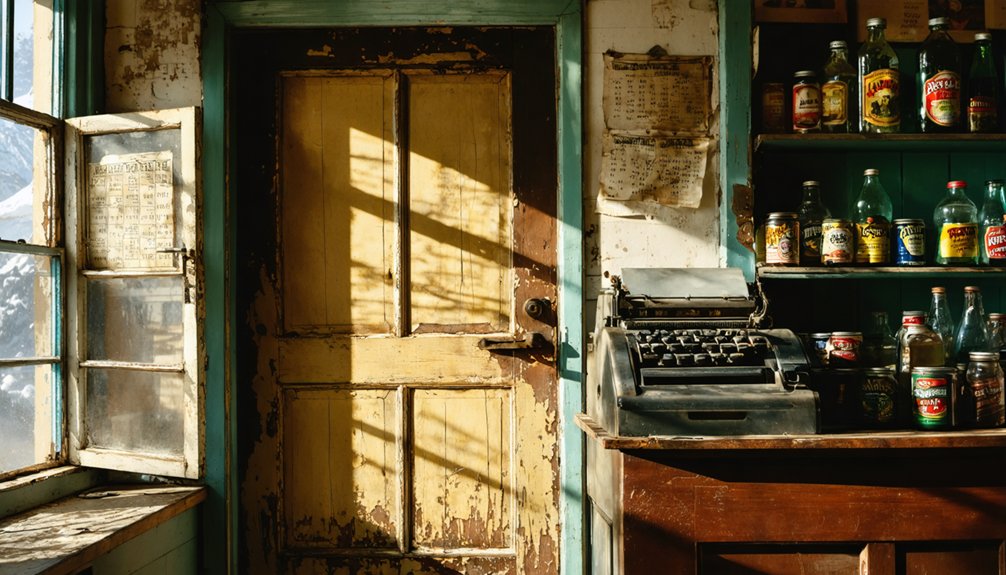
Washington’s commitment to preserving its ghost town heritage manifests through extensive cultural protection initiatives coordinated by the State Historic Preservation Officer.
You’ll find thorough cultural stewardship programs that engage Native American tribes, preservation communities, and stakeholders in protecting these historic treasures.
Here’s how preservation initiatives protect your access to these historic sites:
- Grant programs fund rehabilitation of heritage barns, historic cemeteries, and community spaces
- Documentation efforts capture detailed records of artifacts, structures, and mine locations
- Physical protection measures shield sensitive equipment and buildings from weather damage
- Open-air museum development balances public access with site preservation
You can explore these preserved ghost towns year-round while dedicated preservationists continue their work to protect these invaluable pieces of Washington’s frontier history.
Natural Materials and Slow Decay
While preservation efforts protect these historic sites, natural forces play an equally important role in their endurance.
You’ll find the natural resilience of Washington’s ghost towns stems from their original construction using local materials. Old-growth timber, stone foundations, and clay walls work harmoniously with the environment, displaying remarkable material longevity.
The Pacific Northwest’s climate creates ideal conditions for slow decay. Cool temperatures limit microbial activity, while dense forest cover shields structures from harsh UV rays and extreme weather.
You’ll notice how moss and lichen actually protect surfaces rather than harm them. The absence of human interference allows these sites to reach a stable ecological balance, where native vegetation provides natural barriers against erosion, and the gradual process of decay creates a suspended state of preservation.
Economic Factors Preventing Redevelopment
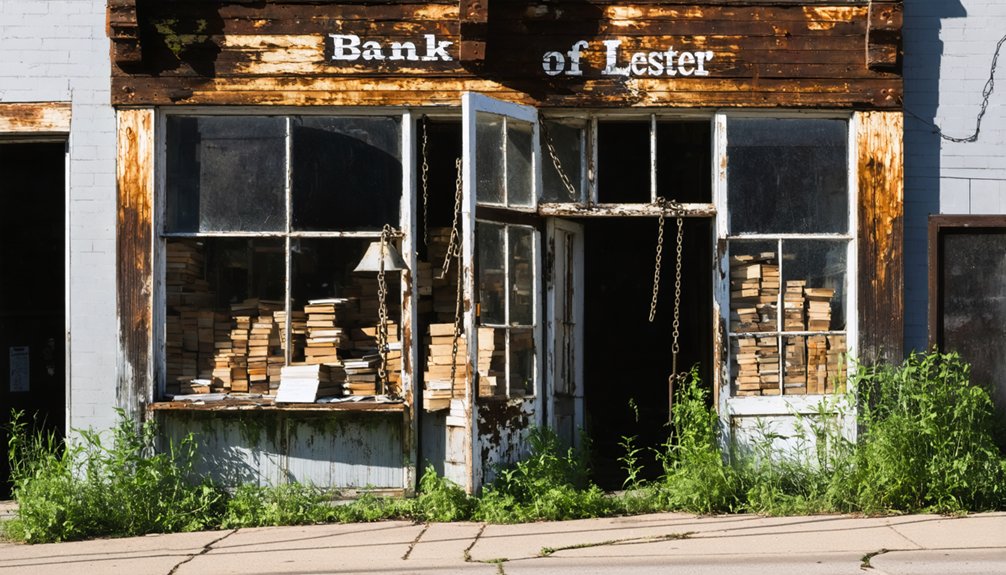
If you’re examining the economic barriers to ghost town redevelopment in Washington, you’ll find that remote locations dramatically increase construction and transportation costs while making daily operations financially challenging.
You’ll notice that utilities and infrastructure in these isolated areas often remain underdeveloped, as service providers see little return on investment for modernizing systems.
The towns’ historical dependence on single industries, such as mining or logging, has left them particularly vulnerable when those economic drivers disappear, making it difficult to attract new businesses or residents.
Remote Location Costs
Despite their historical appeal, ghost towns across Washington face steep economic barriers to redevelopment due to their remote locations.
You’ll encounter significant transportation expenses and logistical challenges when attempting to revive these isolated communities.
Here’s what makes remote locations particularly costly to develop:
- Limited highway and rail access forces developers to invest heavily in road improvements and alternative transportation methods.
- Distance from urban centers drives up fuel costs and complicates material delivery schedules.
- Harsh weather conditions, including snow and flooding, regularly disrupt access and construction efforts.
- Utility infrastructure extensions require substantial investment, as power lines, water systems, and internet services must span considerable distances.
These location-based challenges create a significant financial burden that often exceeds potential returns on investment.
Limited Infrastructure Investment
Because economic barriers consistently block infrastructure development in Washington’s ghost towns, you’ll find a complex web of factors preventing meaningful investment.
Infrastructure gaps persist as cities struggle with underdeveloped utilities, roads, and public transit systems that deter potential developers. You’re facing substantial investment barriers, including high upfront costs for structural rehabilitation and limited access to favorable financing for modernization projects.
The absence of thorough development plans, coupled with fragmented property ownership, creates additional hurdles for coordinated improvements.
Energy regulations and environmental permitting delays further frustrate essential infrastructure projects. Without state and local funding support, these ghost towns can’t overcome the prohibitive costs of upgrading aging systems.
Insurance expenses for businesses in these areas remain steep, effectively blocking commercial revival efforts.
Single Industry Dependencies
While many Washington ghost towns once thrived as vibrant communities, their reliance on single industries proved devastating to their long-term survival.
The economic fragility created by single industry reliance left these towns vulnerable to market forces beyond their control.
You’ll find this devastating pattern repeated across Washington’s ghost towns, where:
- When commodity prices plummeted, mines and operations shut down, triggering massive job losses
- Secondary businesses collapsed as workers left, creating a devastating economic domino effect
- Regulatory changes made it increasingly costly for companies to maintain operations
- Limited economic diversity prevented communities from pivoting to new industries
This combination of factors created a perfect storm that transformed bustling towns into abandoned remnants of their former glory, with few prospects for revival.
Environmental Conservation and Land Management
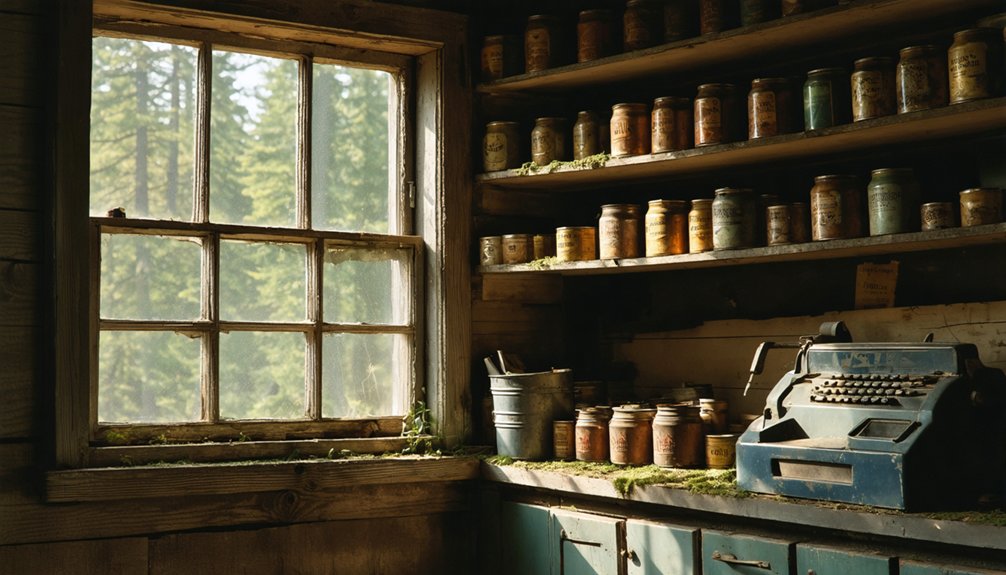
As Washington’s ghost towns fade into history, their preservation has become intertwined with environmental conservation efforts. You’ll find these sites largely undisturbed, maintaining both ecological balance and historical integrity through minimal human intervention.
Among these efforts are a number of historic sites in Washington state that showcase the region’s rich heritage. Visitors can explore these remarkable locations, each telling a unique story of the past while providing critical habitats for local wildlife. By prioritizing both preservation and conservation, Washington state honors its history while fostering a healthier environment for future generations.
Limited vehicle access and seasonal road closures protect the surrounding terrain, while original structures and equipment remain in place as authentic relics of the past.
Nature’s reclamation process has taken hold, with native flora overtaking up to 90% of abandoned structures. This creates unique ecosystems where rare plant species thrive.
You’ll also find ongoing remediation projects removing contaminated soils and hazardous materials from former mining sites, ensuring the long-term health of waterways and wildlife.
Most locations now fall under protected status, preventing development while preserving these time capsules of Washington’s industrial heritage.
Frequently Asked Questions
Can You Legally Live in Washington’s Ghost Towns Today?
You can’t freely live in Washington’s ghost towns unless you’ve secured legal ownership or leasing rights. Living arrangements must comply with property regulations, zoning laws, and safety requirements.
What Valuable Artifacts Are Commonly Found in Washington Ghost Towns?
You’ll find historically significant mining tools, household items, structural materials, and precious metal remnants. While treasure hunting’s tempting, remember these artifacts are protected and shouldn’t be removed or disturbed.
Are There Paranormal Investigations Conducted in Washington’s Abandoned Mining Towns?
You’ll find limited formal paranormal activity investigations in Washington’s mining ghost towns, though ghost hunting occurs regularly at related sites like Black Diamond Cemetery and Port Gamble’s historic buildings.
Do Native American Tribes Have Claims to Ghost Town Territories?
You’ll find many tribes maintain valid claims to ghost town territories through ancestral rights and tribal sovereignty, though ongoing land disputes often complicate their legal authority over these historic areas.
How Many Undiscovered Ghost Towns Might Exist in Washington State?
You’ll find hundreds of undiscovered settlements scattered across Washington’s wilderness, with experts estimating 200-400 hidden relics await discovery in remote valleys, mountainsides, and forested regions of the state.
References
- https://stateofwatourism.com/ghost-towns-of-washington-state/
- https://www.seattlepi.com/local/seattlenews/article/exploring-ghost-towns-in-washington-state-16095136.php
- https://okanogancountry.com/ghost-towns
- https://www.wta.org/go-outside/seasonal-hikes/fall-destinations/hidden-history-ghost-town-hikes
- https://www.cascadeloop.com/ghost-towns-and-haunted-places-in-the-washington-cascades
- https://www.ghosttownsofwashington.com
- https://www.ghosttowns.com/states/wa/waalpha.html
- https://www.opb.org/article/2023/10/29/washington-only-living-ghost-town-history-lingering-residents/
- https://www.wta.org/go-hiking/hikes/liberty-ghost-town
- https://www.islands.com/1988063/washington-off-radar-abandoned-mining-ghost-town-molson-free-visit-history/