You’ll find ghostly tales deeply embedded in agricultural communities due to their unique relationship with life, death, and unpredictable forces of nature. From the dark legacy of poor farms to hidden family secrets, farming life creates the perfect breeding ground for supernatural beliefs. These communities often use paranormal stories to process generational trauma, explain crop failures, and maintain social order. The haunted barns, cursed fields, and sacred grounds you encounter tell deeper stories of agricultural heritage and human struggle.
Key Takeaways
- Agricultural hardships like crop failures and financial ruin create psychological stress that manifests in supernatural interpretations.
- Isolated rural settings and old structures like barns provide perfect backdrops for ghost stories to develop and persist.
- Deep family secrets and unresolved traumas in farming communities often emerge as supernatural tales passed through generations.
- Historic tragedies like poor farms and the Great Depression left lasting emotional scars on agricultural communities.
- Sacred grounds and cursed fields reflect farming communities’ strong spiritual connections to land and ancestral traditions.
The Dark Legacy of Poor Farms and Rural Tragedies
While poor farms emerged as a practical solution to rural poverty in the 19th century, these institutions left an indelible mark of suffering on America’s agricultural communities.
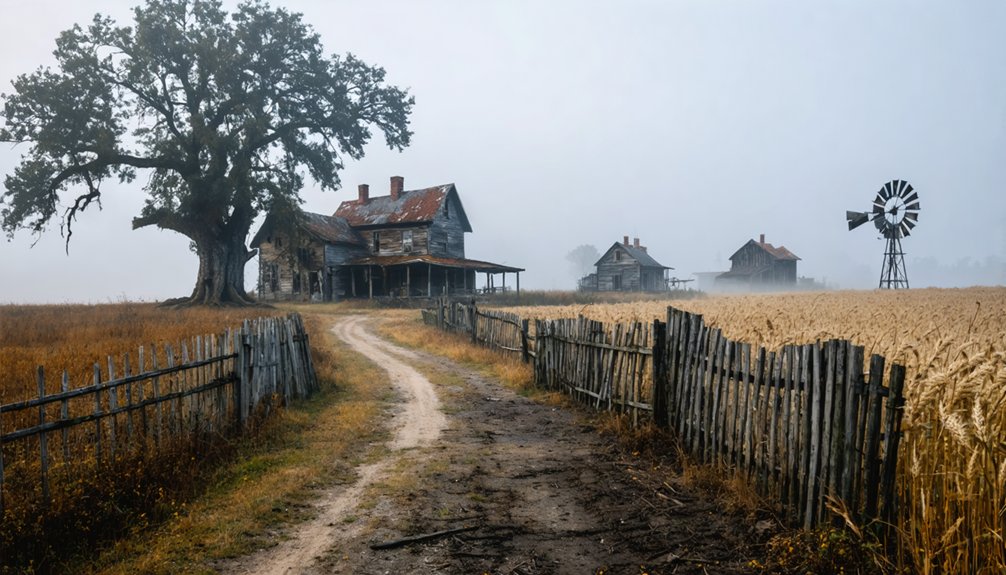
You’ll find their dark legacy woven into the fabric of rural poor farm history, where harsh conditions and social stigma created a perfect storm of despair. These facilities, often doubling as detention centers, housed society’s most vulnerable – the elderly, disabled, and mentally ill – in deplorable conditions that prioritized cost-cutting over care. The rise of outdoor relief programs had initially provided alternatives to institutionalization through home-based assistance.
Poor farms warehoused society’s forgotten souls, turning desperate poverty into a life sentence of institutional neglect and despair.
When the Great Depression and Dust Bowl struck, they became overwhelmed sanctuaries of last resort. Between 1930 and 1935, nearly 750,000 family farms collapsed, forcing countless rural Americans to face the grim reality of these institutions. The collapse of small country banks further devastated these communities as over 75% of the 5,000 banks that closed between 1930 and 1932 were rural institutions.
The resulting trauma of rural neglect still echoes through generations of farming communities.
Agricultural Hardship and Supernatural Beliefs
Throughout history, farming communities have turned to supernatural beliefs to make sense of agricultural uncertainty and hardship. You’ll find this especially true in regions where modern agricultural science hasn’t fully taken root. When faced with crop failure, farmers often seek explanations beyond the natural world, attributing their misfortunes to angry spirits, divine punishment, or magical interference.
These beliefs aren’t merely superstitions – they serve as powerful coping mechanisms in communities where one bad harvest can spell disaster. Early agricultural rituals originated from ancient religions in Greece, Egypt, and Mesopotamia. Spiritual rituals become woven into the fabric of agricultural life, from planting ceremonies to harvest festivals. They provide farmers a sense of control over unpredictable forces and maintain social order through shared practices.
In many traditional societies, farming itself is considered a sacred act, connecting communities to their deities and ancestral traditions. The Hopi people demonstrate this through their sacred corn ceremonies, which are increasingly threatened by modern economic pressures.
Family Secrets in Tight-Knit Farming Communities
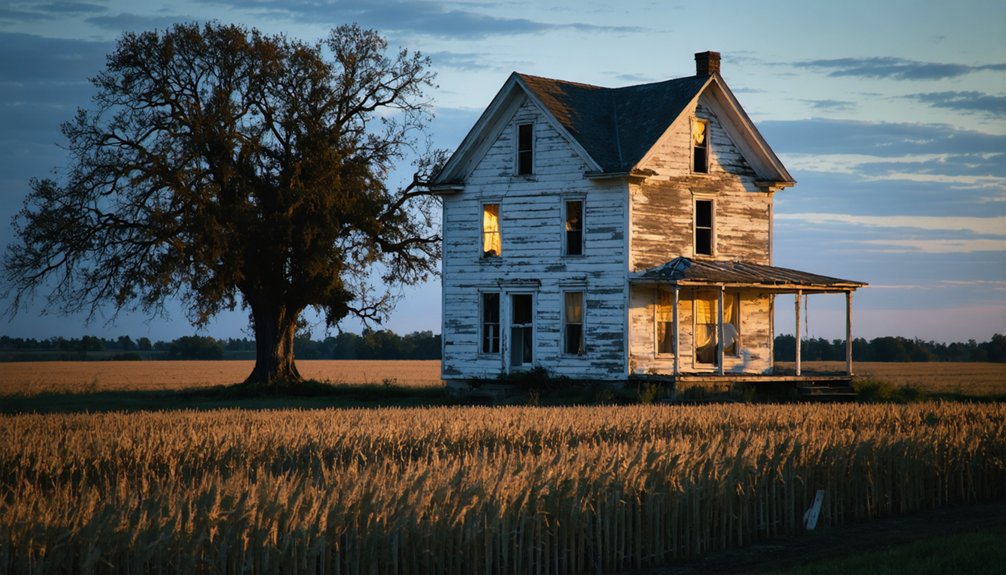
In tight-knit farming communities, family secrets often run as deep as the roots that anchor generations to their land. You’ll find hidden histories woven into the fabric of these close agricultural communities, where 95% of operations remain family-owned and succession planning gaps create unresolved tensions that simmer beneath the surface.
- Financial struggles remain concealed as families maintain appearances, with many small farms operating at a loss while supplementing income through off-farm work. The mounting pressure of crippling debt has led to rising bankruptcies among small family farms.
- Power dynamics and inheritance disputes fester silently, as 77% of farms lack formal succession plans. The presence of strong family ties helps most farming families weather these challenges and maintain unity despite disagreements.
- Mental health challenges and family conflicts stay buried due to cultural emphasis on self-reliance and privacy.
These suppressed realities create an atmosphere where stories of supernatural occurrences often emerge as metaphors for unspoken family trauma and generational burdens.
Sacred Grounds and Cursed Fields
Sacred grounds and cursed fields form the bedrock of agricultural folklore, where ancient beliefs still shape modern farming practices. You’ll find cursed landmarks scattered across farmlands, often marked by sacred trees like elder and hawthorn, serving as silent sentinels of supernatural boundaries.
These natural markers weren’t placed by chance – they’re deeply woven into the community’s spiritual fabric. The presence of three distinct tokens – an elder tree, corncrake calls, and nettle patches – signals potential danger in these haunted places.
Ancient markers stand as spiritual anchors, their placement reflecting generations of belief woven into rural communities’ cultural DNA.
When you venture into farming communities, you’ll discover how seriously they take these ancient sites. Disturbing a fairy mound or removing a standing stone isn’t just about physical changes – it’s believed to trigger devastating consequences for crops and livestock. Modern druids are sometimes called upon to perform blessing ceremonies when these sacred sites are disturbed.
Local farmers still honor these sacred spaces through offerings and rituals, protecting their livelihood from unseen forces that they believe can either nurture or destroy their agricultural success.
From Barn to Beyond: Architecture’s Role in Rural Ghost Stories
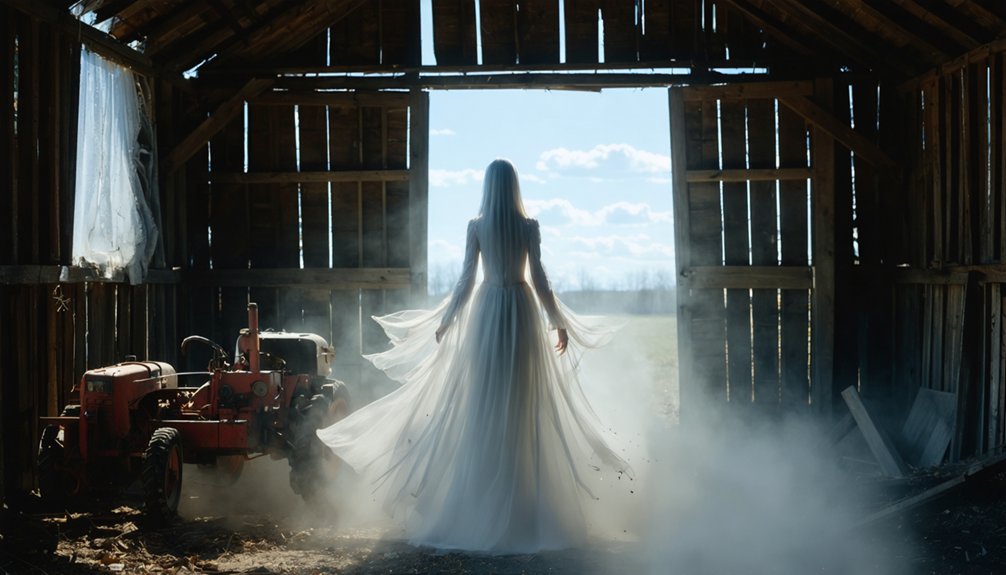
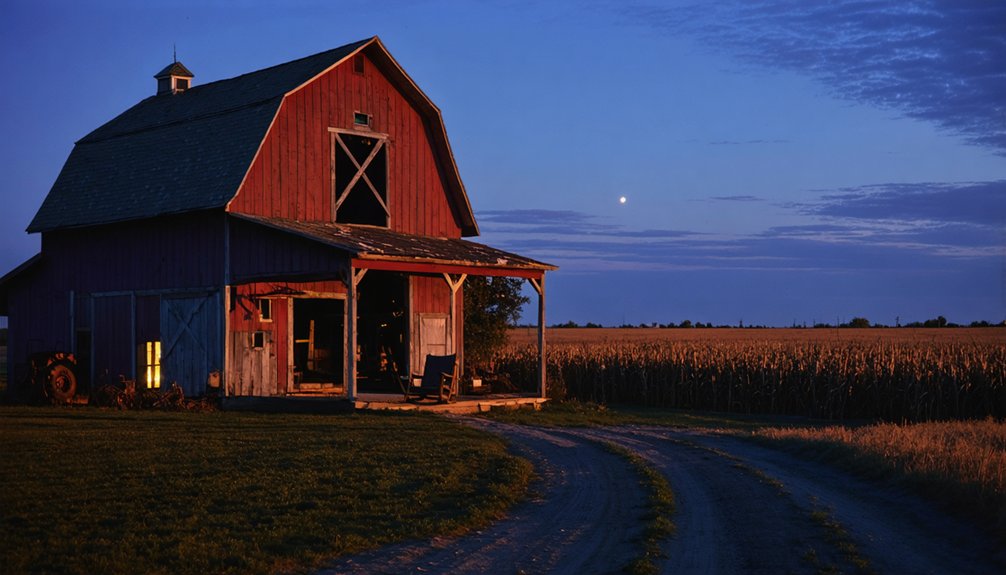
When you explore the architectural legacy of rural ghost stories, barns emerge as powerful focal points where history, tragedy, and the supernatural converge.
The pristine interiors of abandoned barns often mask their haunted histories, creating an unsettling contrast that draws paranormal investigators. These isolated structures serve as repositories of collective memory, where architectural isolation amplifies the eerie tales that echo through generations of farming communities. The Floyd County Asylum’s transformation from a poor farm refuge exemplifies how these buildings absorb decades of human suffering.
You’ll find that barn symbolism runs deep in rural ghost narratives, representing more than just agricultural heritage:
The stories of these abandoned places often echo the forgotten dreams of their inhabitants. Exploring ghost towns in the western usa reveals the remnants of a once-thriving community, where hope and despair coexist in the dusty streets. Each building stands as a testament to the resilience of spirit, drawing visitors eager to uncover the history that lingers in the air.
- Original wooden beams and dark corners create natural stages for unexplained phenomena
- Isolated locations between cultivated fields and wild spaces blur the boundary between the known and unknown
- Historic tragedies embedded in these structures – from poor farm fires to family feuds – transform ordinary architecture into supernatural touchstones
The physical remnants of these aging structures continue to anchor modern ghost stories in tangible reality.
Frequently Asked Questions
How Do Modern Farming Technologies Affect the Creation of New Ghost Stories?
You’ll find precision agriculture’s digital sensors and automated systems spawning new digital folklore, as unexplained data glitches, mysterious machine behaviors, and remote farming operations fuel modern supernatural narratives in farming communities.
Do Ghost Stories Differ Between Crop Farmers Versus Livestock Farmers?
Like two sides of the same weathered coin, you’ll find crop folklore centers on land and family legacies, while livestock legends focus on animal spirits and pasture hauntings in farming communities.
What Role Do Seasonal Workers Play in Spreading Agricultural Ghost Stories?
You’ll find seasonal workers act as essential carriers of migrant narratives and seasonal folklore, spreading ghost stories across farms while blending cultural elements from their diverse backgrounds and experiences.
How Do Immigrant Farming Communities Blend Ghost Stories From Their Homelands?
You’ll find immigrants weaving their homeland spirits into local legends through cultural exchange, adapting ancestral ghost stories to fit new farmlands while maintaining traditional folklore’s moral lessons and protective warnings.
Are Haunted Farm Tales More Common in Certain Geographical Regions?
You’ll find haunted farm tales concentrated in East Coast and Southern states, where regional folklore and cultural influences intersect with colonial history, agricultural heritage, and deep-rooted community traditions.
References
- https://www.paraholics.com/p/haunted-poor-farm-the-real-ghost
- https://www.agweb.com/news/crops/crop-production/ghost-house-forgotten-american-farming-tragedy
- https://www.terrorfarm.com/new-index
- https://www.creepypastascarystories.com/creepypasta/spooky-scary-ghost-stories-about-haunted-farms/
- https://www.natickhistoricalsociety.org/news/2025/11/2/the-haunted-house-of-bacon-brook-a-new-look-at-the-land-beneath-natick-community-organic-farm
- https://nchauntedfarm.com/about-scariest-haunted-house-in-north-carolina/
- https://www.thewanderingappalachian.com/post/appalachian-ghost-stories
- https://courses.lumenlearning.com/wm-ushistory2/chapter/the-dust-bowl-and-farming-during-the-depression/
- https://digitalcommons.murraystate.edu/cgi/viewcontent.cgi?article=1117&context=crsw
- https://grapevinelibrary.info/2024/03/ancestors-fall-on-hard-times-check-out-the-poorhouses/