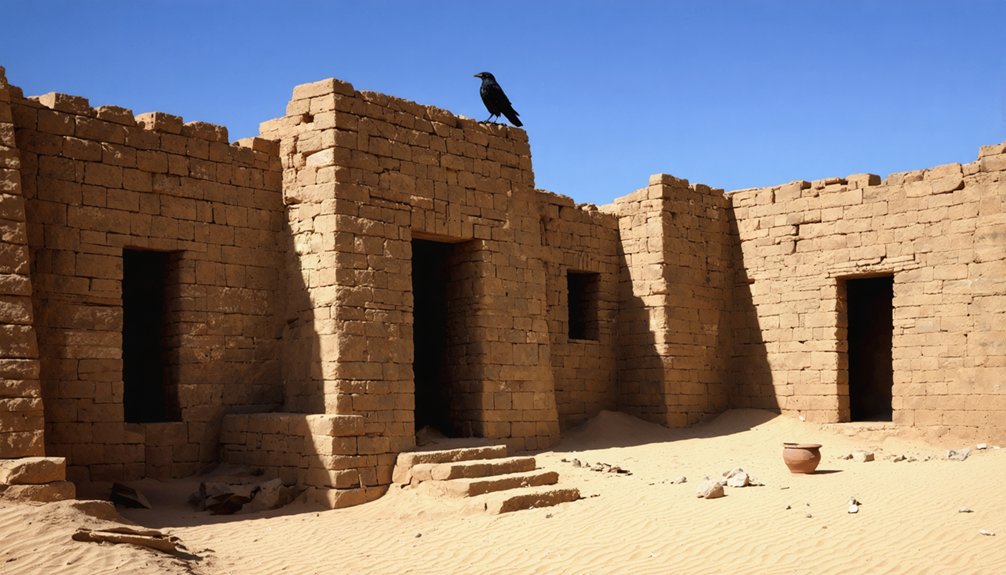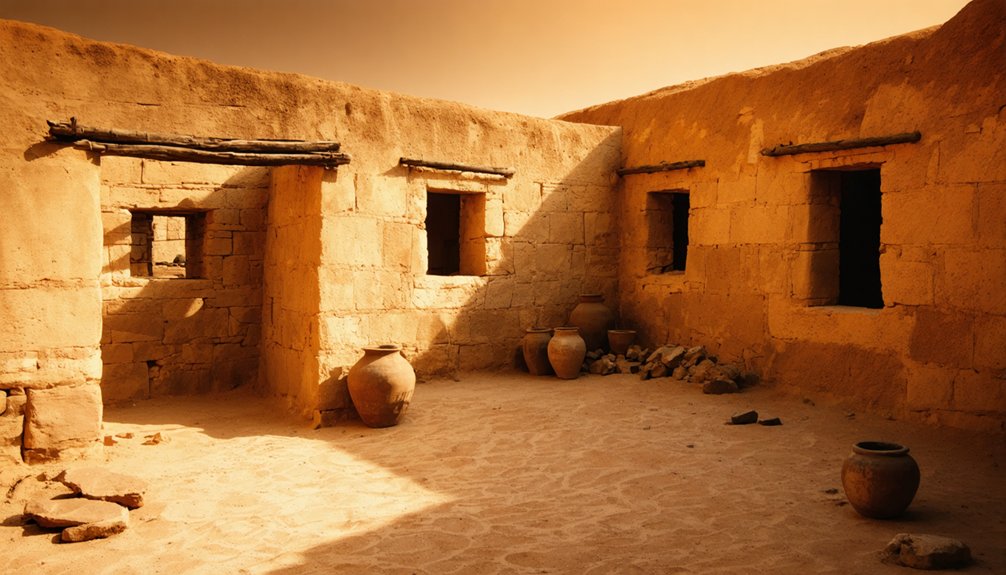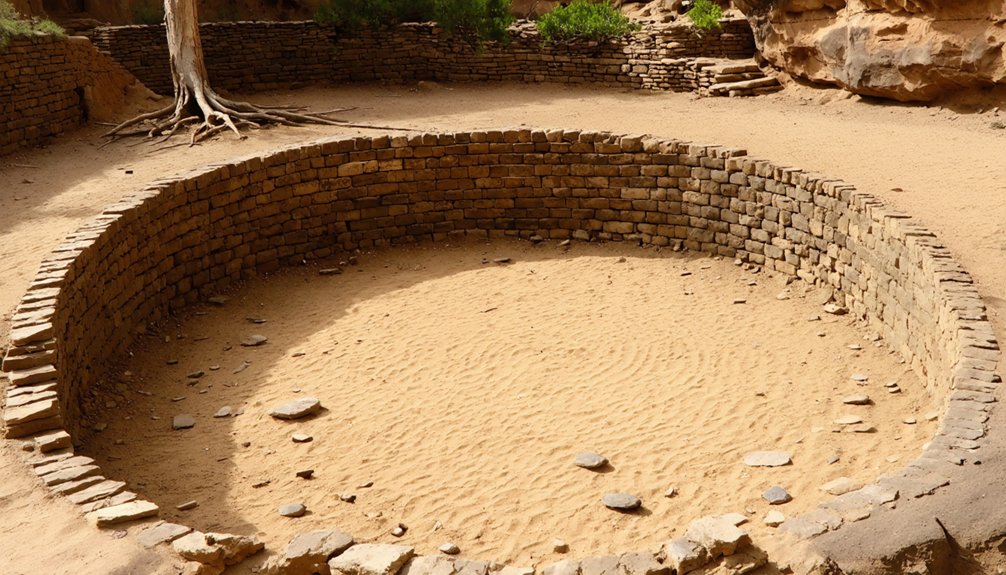
You’ll find Native American village remnants exist today because settlements were gradually abandoned over generations, not suddenly vacated. These communities responded to environmental pressures like climate change, water scarcity, and resource depletion. Before departing, inhabitants typically salvaged valuable materials while leaving behind artifacts that reveal their daily lives, cultural practices, and sophisticated defensive strategies. The layers of evidence at these sites tell a complex story of adaptation and survival.
Key Takeaways
- Environmental pressures forced gradual abandonment of villages as inhabitants migrated to areas with better resources and water availability.
- Villages were deliberately abandoned in stages, with valuable materials salvaged and specific items left behind through ritual practices.
- Warfare and rising tensions between neighboring communities led to village abandonment as groups competed for dwindling resources.
- Climate fluctuations and changes in water availability disrupted traditional subsistence practices, causing communities to relocate over generations.
- Archaeological evidence shows villages were strategically located and fortified, but eventually abandoned due to environmental or social pressures.
The Natural Process of Village Abandonment
While many assume ancient village abandonments occurred suddenly, archaeological evidence reveals a more nuanced pattern of gradual departure phases that often spanned generations.
When examining these sites, you’ll notice how inhabitants carefully salvaged valuable materials like roof timbers, indicating they weren’t fleeing in panic but making calculated moves to nearby locations.
The migration sequences often reflect environmental pressures, with communities moving upslope or to resource-rich areas within the vicinity.
You’ll discover evidence of ritual practices in how items were left behind, and some structures show signs of intentional burning or dismantling – suggesting various motives behind the abandonment process.
The amount of de facto refuse left behind in structures provides key insights into whether departures were planned or unexpected, with fewer remaining items typically indicating well-organized relocations.
Many tribes experienced forced migration through government policies that displaced them from their ancestral lands, leading to the abandonment of traditional village sites.
Evidence Left Behind: Artifacts Tell the Story
The systematic study of artifacts left behind in Native American village sites provides a detailed window into past lifeways and cultural practices. Through artifact significance and cultural narratives, you’ll discover how these ancient communities thrived and adapted over time.
- Stone tools reveal sophisticated crafting techniques, with projectile points and scrapers made from quartz, quartzite, and chert demonstrating technological expertise.
- Pottery vessels with baked residues reveal secrets about diet and food storage methods.
- Organic artifacts like bone tools and antler points showcase resourceful hunting practices.
- European trade items, including glass beads and brass rings, document the complex relationships between indigenous peoples and colonizers.
The Wichita people utilized flint and chert extensively to create their tools, demonstrating their mastery of local resources.
The artifacts discovered along the Rappahannock River include thousands of beads and pottery fragments that confirm indigenous settlement locations described in John Smith’s writings.
These material remains tell stories of innovation, adaptation, and resilience, preserving vital evidence of how Native American communities lived, traded, and evolved over generations.
Environmental Factors Leading to Settlement Changes
When you examine the archaeological record, you’ll find that climate fluctuations played a decisive role in Native American settlement patterns, as evidenced by 4,000-year-old mollusk shells from coastal villages showing significant environmental changes.
These changes impacted traditional subsistence practices, similar to how today’s indigenous communities struggle to maintain their ancestral ways of living.
You can trace how these climate shifts affected water resources, particularly through oxygen isotope data that reveals altered salinity levels in ancient fisheries.
Changes in water availability and resource sustainability ultimately forced many communities to abandon their original settlements, as demonstrated by decreasing fishery yields in places like Sapelo Island, Georgia. The transition away from these coastal areas led to the abandonment of shell ring villages by the end of the Late Archaic period.
Climate’s Role in Migration
Throughout recorded history, climate pressures have dramatically shaped Native American settlement patterns, with modern data revealing unprecedented environmental stresses forcing indigenous communities to abandon traditional territories.
You’ll find modern climate adaptation strategies vastly different from historical migration timelines, as communities now face accelerated changes.
The Weenusk First Nation exemplifies these disruptions as their hunting and gathering practices face severe climate impacts.
Alaska’s rapidly changing environment has led to twice the warming rate compared to other regions, severely impacting native communities.
Key climate-driven displacement factors include:
- Temperature spikes causing 50-60+ days annually above 100°F, devastating traditional agriculture
- Forced relocation to environmentally vulnerable zones with considerably less rainfall
- Ecosystem shifts disrupting critical hunting and gathering patterns
- Coastal erosion and permafrost thaw threatening over 200 Native Alaskan villages
These pressures continue transforming indigenous settlements, often concentrating communities in areas with limited adaptive capacity and heightened exposure to environmental stresses.
Water Resource Depletion
Modern investigations into Native American settlement patterns reveal water scarcity as a fundamental driver of community displacement, both historically and presently. You’ll find evidence of this in prehistoric shell ring villages that were abandoned when water resources became insufficient for sustaining populations.
Similar challenges persist today, with 48% of reservation households lacking access to clean water and adequate sanitation. The Navajo Nation particularly struggles as families spend forty-three thousand dollars per acre-foot of water, compared to the average American’s $600.
Resource management struggles extend beyond simple availability. You’re seeing contamination from uranium mining and improper sewage handling compound these issues, while bureaucratic barriers prevent effective solutions. A complex web of federal agencies’ oversight creates fragmented accountability, with multiple departments managing water service delivery.
Even when tribes hold water rights on paper, they often can’t exercise them practically. This combination of environmental degradation, infrastructure deficiencies, and institutional obstacles continues to mirror the historical patterns that led to settlement abandonment centuries ago.
Social and Cultural Reasons for Village Departures
Although Native American village departures are often attributed to environmental factors, the social and cultural dynamics played an equally essential role in community displacement.
During periods of resource scarcity, you’ll find evidence of how social fear and intracommunity violence fractured once-cohesive societies. Archaeological findings reveal complex patterns of abandonment driven by deteriorating social conditions:
- Rising paranoia between neighboring villages led to preemptive attacks and cycles of violence
- Communities experienced staged departures, with systematic salvaging of materials
- Competition over dwindling resources created destructive feedback loops of conflict
- Social structures collapsed as resource control became unstable
These pressures transformed peaceful settlements into zones of conflict, where survival often meant choosing between fighting or fleeing.
Many communities opted for phased relocation, preserving what they could of their cultural fabric while seeking safer territories.
Challenges in Preserving Ancient Village Sites
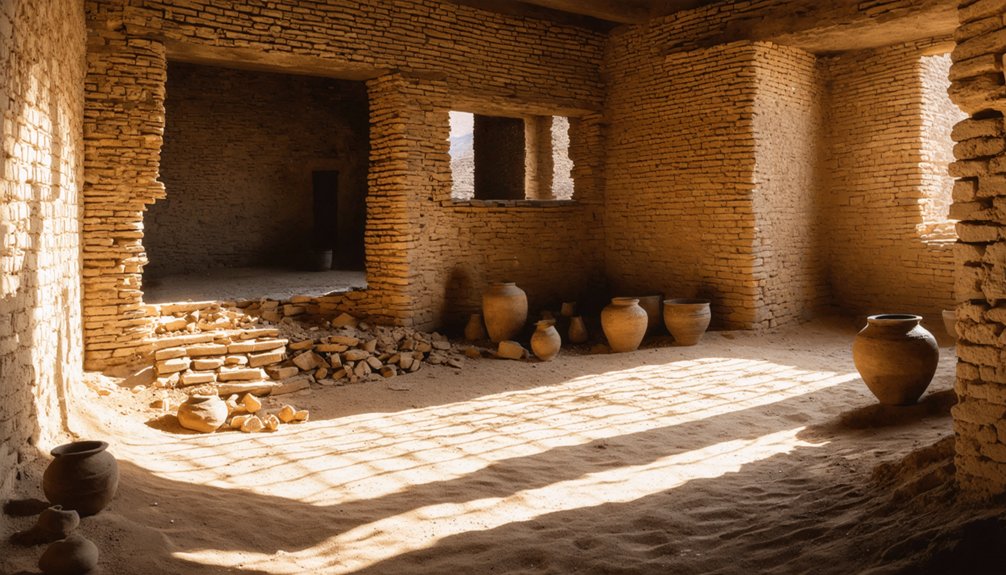
Preserving ancient Native American village sites faces a complex web of legal, financial, and environmental challenges that threaten their long-term survival.
You’ll find legal protections like Section 106 of the NHPA often undermined by loopholes and overlapping land claims. Funding disparities disproportionately affect smaller tribes, who struggle to access grants for essential preservation work while competing with other governmental priorities.
Climate impacts accelerate these sites’ deterioration through erosion, flooding, and severe weather events, requiring costly interventions that exceed available resources.
The preservation challenges multiply when you consider persistent vandalism, unauthorized excavations, and development projects that can permanently destroy these irreplaceable cultural landmarks.
Limited surveillance and bureaucratic hurdles in obtaining National Register protection further complicate conservation efforts.
Unraveling Migration Patterns Through Time
You’ll find evidence of seasonal movement patterns in Native American village remnants, where archaeological layers reveal both temporary camps and permanent settlements aligned with trade routes and resource availability.
Through careful examination of settlement layers, you can trace how communities expanded, contracted, and relocated in response to changing environmental conditions over centuries or even millennia.
Ancient travel routes, often following waterways and mountain passes, connected these settlements into vast networks that facilitated trade and cultural exchange across the Americas.
Seasonal Movement And Trade
While archeological evidence reveals complex migration patterns among Native American societies, their movements primarily followed precise seasonal cycles that aligned with both animal migrations and environmental conditions.
These seasonal camps and migration strategies reflected sophisticated environmental adaptability, allowing communities to optimize resource availability year-round.
Key aspects of their seasonal movement and trade networks included:
- Low-elevation spring/summer camps focused on planting and harvesting
- High-elevation hunting techniques during late summer, using specialized ambush sites
- Strategic winter camps near game herds with reliable shelter and fuel sources
- Waterway-based trade networks connecting agricultural and hunting communities through economic activities
This intricate system of cultural interactions and subsistence patterns enabled communities to thrive through coordinated movement between established territories, demonstrating remarkable community organization across vast landscapes.
Settlement Layers Tell Stories
Through carefully excavated layers at Native American settlement sites, archaeologists have uncovered rich chronological records spanning thousands of years of human habitation.
You’ll find compelling evidence of settlement continuity at locations like the Modoc Rock Shelter, where 8,700 years of repeated occupation reveals the shift from hunting camps to established family settlements.
At sites like Nipéhe, dating back 16,000 years, stratified deposits showcase evolving cultural practices and tool-making traditions potentially linked to Northeast Asian origins.
The layers tell intricate stories of daily life – from the architectural evolution of earth lodges at Yutan to sophisticated fire management techniques near Sturgeon Lake.
These deposits reveal how Native Americans adapted their settlements, managed resources, and maintained complex social structures across millennia.
navigating settlement remnants in Arizona provides insights into the architectural innovations and agricultural practices that flourished in this arid environment. By examining these remnants, researchers can uncover the strategies employed by these communities to thrive despite the challenging climate. This understanding not only enriches our knowledge of their historical lifestyle but also informs modern approaches to sustainable living in similar landscapes.
Following Ancient Travel Routes
The intricate settlement layers that document Native American life also point to the extensive travel routes these ancient peoples followed across the Americas.
Your ancestors navigated multiple migration patterns that shaped the continent’s human geography, leaving traces you can still track today.
Consider these primary routes that defined early movement:
- Pacific coastal routes (~17,000 BC) – Maritime-adapted peoples used boats to rapidly move south, establishing settlements now submerged by rising seas.
- Ice-free corridor (~15,000 BC) – Interior pathway between massive ice sheets, marked by Clovis technology.
- River systems – Major waterways served as highways deep into continental interiors.
- Caribbean/Atlantic coastal routes – Enabled settlement of eastern South America, particularly Brazil.
DNA evidence and linguistic patterns confirm these ancient pathways, revealing how your predecessors masterfully utilized land and water routes to populate two continents.
The Role of Warfare and Defense in Village Life
As archaeological evidence reveals, Native American villages were masterfully engineered defensive strongholds that balanced strategic military advantage with practical living needs.
You’ll find these settlements strategically positioned on elevated terrain, surrounded by natural barriers like ravines and rivers that deterred attackers while providing essential resources for daily life.
The warfare strategies employed multiple layers of defense, including timber palisades reaching heights of 18 feet, complemented by deep ditches and bastions.
Defense structures featured innovative designs like loopholes for protected archer fire and elevated watchtowers for early warning.
Villages maximized their defensive capabilities through compact layouts, with earth lodges arranged in organized rows to minimize vulnerable areas.
This sophisticated approach to security demonstrates how Native Americans adapted their living spaces to survive in a world where conflict was an ever-present reality.
Frequently Asked Questions
How Did Native Americans Dispose of Their Dead in Village Settings?
Like layers in nature’s grand design, you’ll find Native Americans practiced diverse burial practices from shallow graves beneath homes to elevated platforms, reflecting deep cultural significance through ceremonial preparations and communal rituals.
What Spiritual or Religious Ceremonies Were Performed During Village Abandonments?
You’ll find that ceremonial rituals during village abandonments included intentional burning of kivas, removal of sacred timbers, placement of ritual offerings, and spiritual cleansing ceremonies marking final departure from communal spaces.
How Did Different Tribes Communicate and Trade Between Distant Villages?
You’ll find tribes overcame language barriers by establishing extensive trade routes, using sign language, smoke signals, and multilingual intermediaries. They also developed shared trading languages for cross-cultural commerce and communication.
What Role Did Women Play in Village Leadership and Decision-Making?
You’ll find female leadership was central, with women choosing chiefs, controlling resources, and directing warfare decisions. They wielded significant power through clan mother roles and decision-making dynamics in council meetings.
How Were Children Educated and Trained Within Native American Villages?
You’d learn through oral traditions passed down by elders, hands-on skill acquisition from experienced tribe members, and gender-specific training that taught crucial tasks essential for survival and cultural preservation.
References
- https://crowcanyon.org/ResearchReports/WoodsCanyon/Text/wcpw_abandonment.php
- https://news.illinoisstate.edu/2023/06/video-isu-students-unearth-history-of-ancient-native-american-village-during-archaeological-field-school/
- https://www.museum.state.il.us/muslink/nat_amer/post/htmls/arch_starv.html
- https://www.andrewlawler.com/we-finally-have-clues-to-how-americas-lost-colony-vanished/
- https://www.firstcolonyfoundation.org/news/new-clues-bring-search-for-indigenous-village-of-roanoke-to-elizabethan-gardens/
- https://www.ancient-origins.net/news-history-archaeology-ancient-places-americas/british-columbia-ancient-shuswap-settlements
- https://www.youtube.com/watch?v=uy65g6CcKl8
- https://archaeology.org/news/2022/09/08/220909-florida-palica-village/
- https://www.audubon.org/magazine/how-tribes-are-reclaiming-and-protecting-their-ancestral-lands-coast-coast
- https://en.wikipedia.org/wiki/Trail_of_Tears