Nevada’s ghost towns will transport you back to the Wild West through their remarkably preserved architecture and authentic artifacts. You’ll discover iconic structures like the 1907 Esmeralda County Courthouse and the unique Bottle House built from 50,000 glass bottles. These abandoned mining communities offer compelling tales of lawlessness, haunted locations, and frontier life, all set against stunning desert landscapes. The state’s 600 ghost towns hold countless stories of boom-and-bust cycles waiting to be explored.
Key Takeaways
- Well-preserved buildings and artifacts offer authentic glimpses into the American frontier during the mining boom era.
- Ghost towns provide dramatic visual contrasts between historic structures and stunning desert landscapes.
- Visitors can explore paranormal activities through guided tours and overnight ghost-hunting experiences.
- Educational opportunities showcase frontier life, mining practices, and technological developments through interactive experiences.
- Historical sites feature compelling stories of lawlessness, vigilante justice, and Wild West legends.
Time-Capsule Appeal: Preserved Architecture and Artifacts
The time-capsule appeal of Nevada’s mining ghost towns stems from their remarkably preserved architecture and artifacts, offering visitors an authentic window into the American West’s mining boom era.
You’ll discover architectural significance in iconic structures like the 1907 Esmeralda County Courthouse and the unique Bottle House built from 50,000 glass bottles.
The desert’s dry climate has created an “arrested decay” effect, preserving wooden buildings and stone structures that tell compelling stories of past prosperity.
Through historical storytelling, these sites reveal the region’s ambitious spirit through Mission-style depots and Victorian homes.
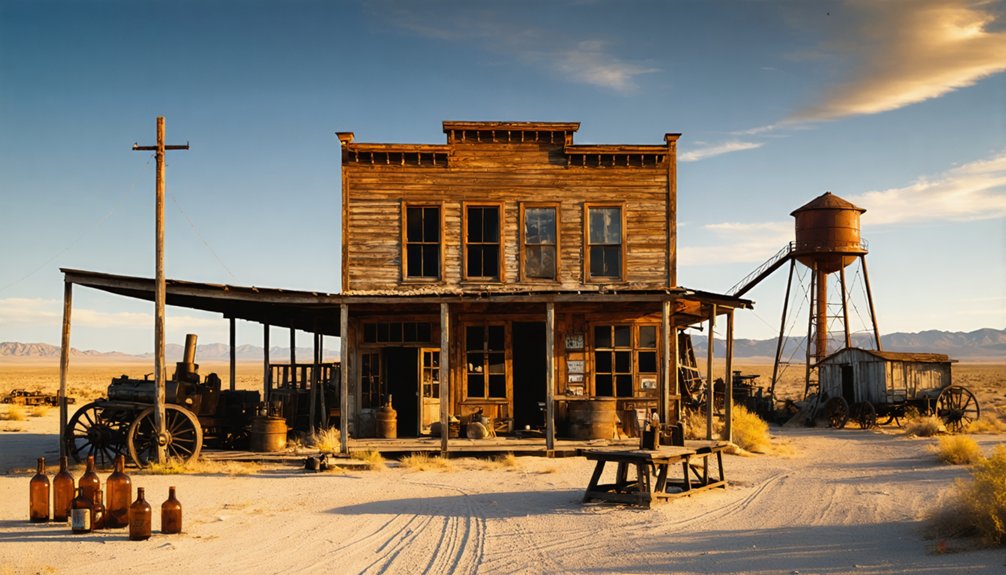
You can explore preserved mining equipment, stamp mills, and scattered artifacts that bring the industrial past to life, while restored businesses like Dirty Dick’s Belmont Saloon maintain living connections to this fascinating era.
These remarkable sites serve as vital educational resources, allowing visitors to experience Nevada’s rich mining history firsthand.
Visitors can explore over three hundred ghost towns throughout Nevada, each offering unique insights into the state’s mining heritage.
Tales of the Wild West: From Lawlessness to Legends
While Nevada’s mining ghost towns stand as physical remnants of the past, their most enthralling stories emerge from an era of lawlessness that defined the American frontier.
Booming towns like Goldfield attracted diverse residents including bankers and gunslingers, reflecting the stark social contrasts of mining communities.
You’ll discover tales of outlaw legends who sought refuge in these remote camps, from Civil War deserters hiding in Eldorado Canyon to notorious criminals staging daring robberies. Infamous criminal Charles Manson allegedly left his mark on the Belmont Courthouse through graffiti that remains visible today.
As populations swelled during mining booms, volatile social conditions and minimal law enforcement led to vigilante justice, where townspeople took matters into their own hands.
These stories of conflict and survival, preserved through oral histories and local museums, blend fact with frontier mythology.
Today, you can explore these dramatic narratives through guided tours and reenactments that bring to life the complex reality of Nevada’s mining communities, where desperate prospectors, gamblers, and outlaws once crossed paths.
Desert Beauty Meets Historical Decay
Beyond the tales of outlaws and vigilantes, Nevada’s ghost towns captivate visitors through their stark visual poetry of abandonment set against breathtaking desert landscapes.
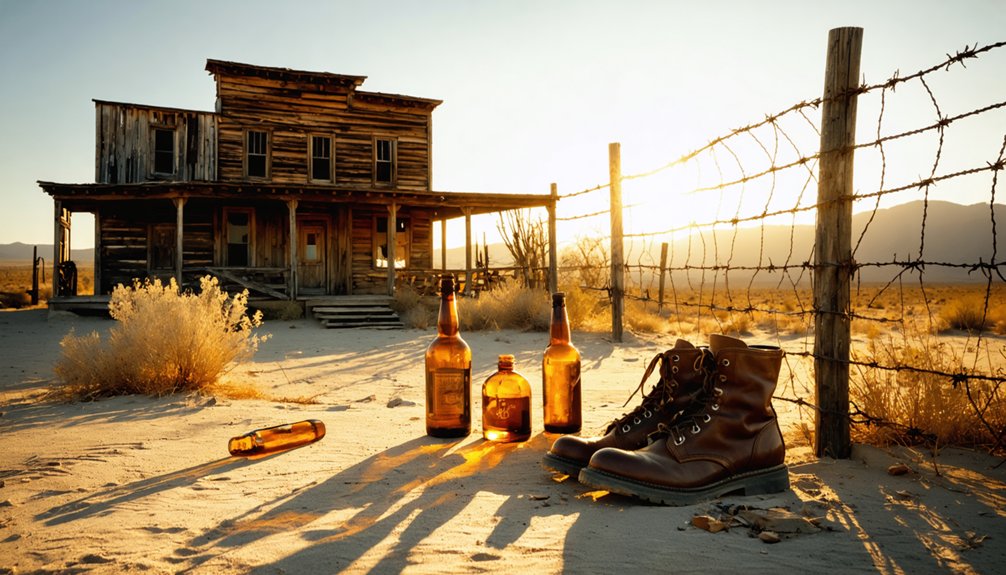
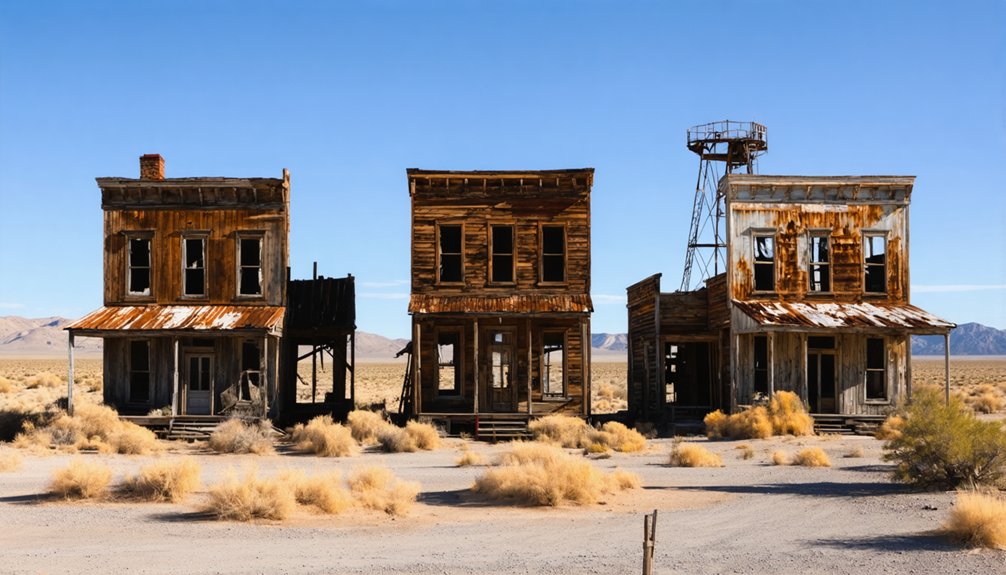
You’ll discover natural contrasts between weathered wooden structures and vast, arid terrain, creating a haunting visual storytelling experience. Original saloons, mining offices, and storefronts stand frozen in time, their sun-bleached facades complemented by dramatic desert lighting at dawn and dusk.
Native wildlife and resilient desert flora have reclaimed these quiet spaces, where lizards bask on crumbling stone foundations and sagebrush pushes through forgotten doorways. The iconic Bottle House, constructed from 50,000 beer bottles, stands as a testament to the resourcefulness of early settlers. With nearly 600 ghost towns scattered across Nevada, these remnants of the past continue to tell stories of boom-and-bust mining communities.
The interplay of human ambition and nature’s persistence unfolds before you, as each decaying building frames stunning views of rugged mountains and endless sky.
Paranormal Investigations and Haunted Mysteries
Among Nevada’s most intriguing ghost towns, paranormal phenomena have transformed abandoned mining sites into magnets for supernatural investigation.
You’ll discover that tragic mining accidents, murders, and mysterious disappearances have fueled countless ghost stories, particularly in places like Nelson’s Techatticup Mine and Goldfield’s historic cemetery.
When you explore these sites, you might encounter commonly reported phenomena: unexplained footsteps echoing through mine shafts, sudden cold spots in desert heat, or shadowy figures lurking near abandoned buildings.
Visitors can explore these haunted locations through ATV and RZR tours that traverse the rugged desert terrain.
Professional ghost hunters and curious tourists alike flock to these locations, equipped with specialized gear to capture evidence of spirit sightings.
From guided haunted tours to overnight investigations, these ghost towns offer you a unique blend of historical exploration and paranormal adventure.
With over 300 former residences once standing in their heyday, these abandoned towns provide extensive grounds for paranormal activity.
Living History: Educational Value and Cultural Heritage
As time-worn evidences to Nevada’s mining era, ghost towns serve as invaluable outdoor classrooms for understanding frontier life and industry.
Through cultural immersion, you’ll discover preserved Victorian architecture, restored buildings, and authentic mining equipment that tell compelling historical narratives of boom-and-bust cycles. The Techatticup Mine in Nelson stands as a testament to the area’s lawless mining past of the 1860s. Pioche’s infamous Million-Dollar Courthouse exemplifies the financial mismanagement that plagued many mining communities.
These living museums offer you three distinct educational experiences:
- Interactive guided tours showcasing daily frontier life, mining operations, and technological developments
- Hands-on activities like rockhounding that connect geological science with historical mining practices
- Access to preserved structures, including unique sites like Tom Kelly’s Bottle House in Rhyolite, demonstrating the resourcefulness of mining communities
Through these experiences, you’ll gain deep insights into the socio-economic dynamics, architectural heritage, and pioneering spirit that shaped Nevada’s mining frontier.
the ongoing nevada’s mining town preservation efforts highlight the importance of maintaining these historical sites for future generations. By showcasing the rich history and cultural significance of mining towns, communities can foster tourism and economic growth. Additionally, these efforts serve to educate visitors about the challenges and triumphs faced by early settlers in the region.
Frequently Asked Questions
What Safety Precautions Should Visitors Take When Exploring Abandoned Mining Structures?
Properly protect yourself with proper safety gear, including sturdy boots and helmets. Don’t enter structures with questionable structural integrity, stay with others, and carry emergency supplies like flashlights and first-aid kits.
Are There Camping Facilities or Overnight Accommodations Near These Ghost Towns?
You’ll find varied camping options near ghost towns, from BLM dispersed sites to state park campgrounds. Lodging availability includes historic hotels in Virginia City and motels in nearby active towns.
How Accessible Are Ghost Towns During Winter Months and Severe Weather?
You’ll find winter accessibility severely limited, with many ghost towns requiring 4WD vehicles. Heavy snow, ice, and flooding often block roads, while some sites enforce seasonal closures for safety reasons.
What Photography Permits or Restrictions Exist for Commercial Shoots in Ghost Towns?
Like catching a wild mustang, commercial photography isn’t free-range in ghost towns. You’ll need permits ($50-$250), signed waivers, and must follow strict regulations about timing, equipment use, and shooting locations.
Which Ghost Towns Are Wheelchair-Accessible or Suitable for Visitors With Limited Mobility?
You’ll find Rhyolite most wheelchair-accessible with its paved roads, while Gold Point offers modernized facilities. Other ghost towns present significant mobility challenges due to rough terrain and limited infrastructure.
References
- https://www.smithsonianmag.com/sponsored/nevadas-living-and-abandoned-ghost-towns-180983342/
- https://nvtami.com/2023/12/05/las-vegas/
- https://www.visittheusa.com/experience/6-nevada-ghost-towns-explore-if-you-dare
- https://www.reviewjournal.com/local/local-nevada/abandoned-but-not-forgotten-5-ghost-towns-in-southern-nevada-3351038/
- https://savingplaces.org/stories/explore-wild-west-mining-history-in-nevada-ghost-towns
- https://nevadamining.org/nevada-ghost-towns-pioche/
- https://travelnevada.com/ghost-town/
- https://www.rgj.com/story/life/2025/10/17/nevada-town-spookiest-place/86729038007/
- https://en.wikipedia.org/wiki/List_of_ghost_towns_in_Nevada
- https://nvtami.com/top-10-ghost-towns-nevada-northwest/