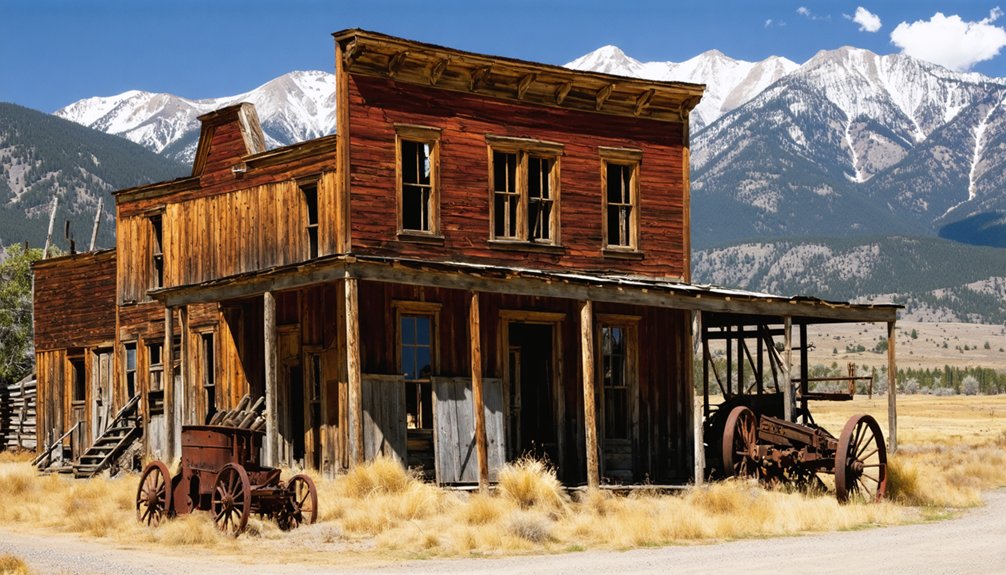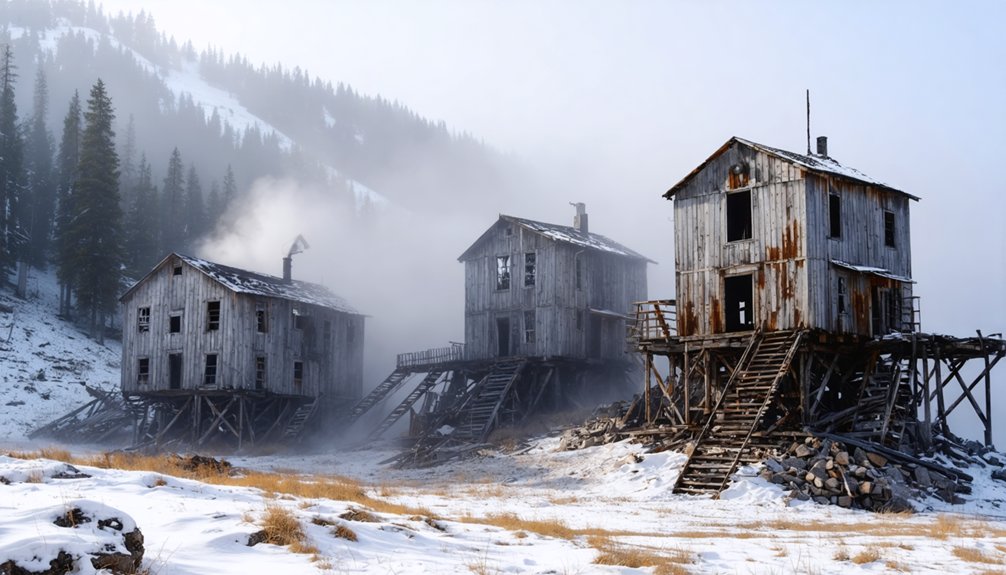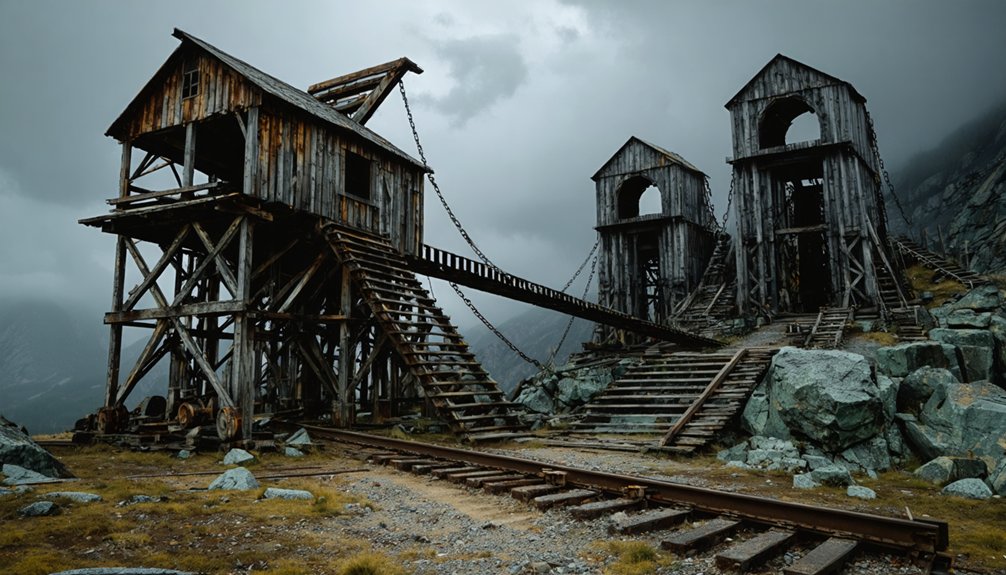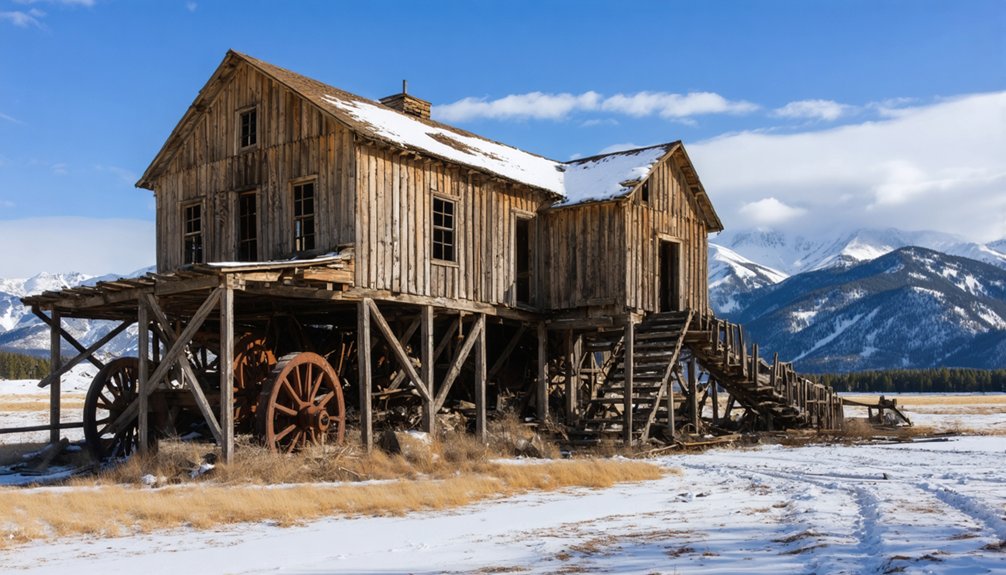
Colorado’s remote mining camps remain ghostly due to a perfect storm of challenges you’d recognize from the 1800s gold and silver rushes. You’ll find these abandoned sites high in the Rockies, where harsh weather, rugged terrain, and limited access routes made survival difficult. When silver prices collapsed in 1893, miners fled these isolated communities, leaving behind over 18,000 mines. The haunting remnants of this boom-and-bust era hold countless untold stories of frontier life.
Key Takeaways
- Geographic isolation and harsh mountain conditions above 10,000 feet make redevelopment and maintenance extremely challenging.
- Economic devastation from silver price collapse and mine closures led to mass exodus without sufficient resources for revitalization.
- Aging infrastructure and high costs of modernizing utilities discourage new investment in these remote locations.
- Environmental contamination from abandoned mines, including acid drainage and heavy metals, makes areas unsafe for habitation.
- Limited transportation access through rugged terrain prevents efficient development and restricts potential for new economic opportunities.
The Boom and Bust Legacy of Colorado’s Mining Era
When gold was discovered near Pikes Peak in 1859, Colorado’s mining era began a dramatic cycle of boom and bust that would shape the state’s development for decades to come.
The rush for riches near Pikes Peak launched Colorado’s mining saga, forever altering the destiny of this untamed frontier.
You’ll find that early mining innovations transformed small camps into thriving cities like Denver and Central City. The real explosion came with the 1879 silver strike in Leadville, creating unprecedented wealth and propelling Colorado to statehood.
But by 1893, the repeal of the Sherman Silver Purchase Act devastated these communities, sending silver prices plummeting and leaving thousands destitute. Banks failed, properties emptied, and ghost town folklore began as families fled en masse. The extensive mining operations left behind over 18,000 mines scattered across Colorado’s landscape.
While some towns adapted and survived, many remote mining camps couldn’t overcome the combined challenges of resource depletion, labor conflicts, and severe economic collapse. The discovery of Tom’s Baby gold nugget in 1887 near Breckenridge was one of the last major finds of the era.
Geographic Isolation and Mountain Challenges
Although Colorado’s mineral wealth drew thousands of prospectors to the region, the remote mining camps they established faced extraordinary geographic challenges that would ultimately contribute to their decline.
You’ll find these settlements scattered along the Colorado Mineral Belt, where geographic barriers made survival exceptionally difficult. Most camps sat above 10,000 feet, where you’d encounter brutal weather conditions including summer blizzards and dangerous avalanches.
The mountain access was treacherous, with many camps reachable only by rough trails miles from the nearest supply towns. While this isolation helped preserve mining structures after abandonment, it also meant communities couldn’t sustain themselves long-term. The rotten wood timbers in these abandoned structures continue deteriorating, making the sites increasingly hazardous.
Without reliable infrastructure, year-round communication, or alternative industries, these camps couldn’t overcome the harsh realities of their mountain environment. The challenging conditions were especially evident in places like Summitville, where unexpected snow squalls could strike at any time due to the extreme elevation.
Economic Dependencies That Shaped Ghost Towns
The economic fate of Colorado’s mining towns hinged on complex market forces that extended far beyond their mountain boundaries.
You’ll find that when silver prices soared in 1879, towns like Leadville boomed overnight, but their prosperity remained tethered to unstable market fluctuations and government policies like the Sherman Silver Purchase Act.
These remote settlements faced multiple economic vulnerabilities. They depended heavily on reliable transportation networks to receive essential supplies and export ore. The Knights of Labor organization formed by Erie coal miners in 1878 highlighted growing tensions between workers and mine operators. The rapid growth of coal production in the 1870s fueled both mining operations and national industrial needs.
When winter storms blocked mountain passes or when railroads couldn’t reach them, their economies suffered. Additionally, the towns’ reliance on single industries meant that corporate mining decisions, labor disputes, or depleted resources could trigger their collapse.
While some camps evolved into sustainable industrial operations, many couldn’t survive when silver prices crashed in 1893, transforming bustling communities into ghost towns.
Social Fabric and Community Abandonment
You’ll find that early Colorado mining camps dealt with constant population shifts as single men moved between sites seeking better prospects, creating unstable communities that struggled to put down roots.
In these male-dominated settlements, class divisions emerged between mine owners, skilled miners, and laborers, while ethnic groups formed tight-knit subcultures to preserve their traditions and support networks. The Chinese workers faced severe hostility from miners who viewed their presence as a sign of failing operations. The discovery of uranium and vanadium in the early 1900s brought a new wave of prospectors to Colorado’s western slope.
When mines became unprofitable, these precarious social structures often collapsed quickly, with workers and their families dispersing to other opportunities, leaving behind empty buildings and fractured communities.
Transient Population Dynamics
Mining camps across remote Colorado experienced three distinct waves of population dynamics that shaped their social fabric and eventual abandonment.
The remains of these once-thriving communities can now be found scattered throughout ghost towns in the Colorado Rockies. Each town tells a unique story of prosperity followed by decline, with structures that reveal the harsh realities faced by their inhabitants. Exploring these ghost towns offers a glimpse into the past and serves as a reminder of the transitory nature of life in such extreme environments.
You’ll find that these population shifts directly impacted community resilience, as camps struggled to maintain stability amid constant change.
- Young, single men dominated the initial wave, creating temporary settlements with minimal permanent infrastructure.
- Families gradually moved in during prosperous periods, attempting to establish more stable communities.
- Diverse ethnic groups, including Chinese, Hispanic, and European immigrants, formed the third wave, adding complexity to social dynamics.
The transient nature of these populations, combined with discrimination and economic uncertainty, prevented most camps from developing lasting communities.
When mineral prices collapsed, especially after the 1893 silver crash, you’d see entire communities dissolve as residents sought opportunities elsewhere, leaving ghost towns in their wake.
This pattern was evident in places like Central City, which once rivaled Denver with a population of 20,000-30,000 before its dramatic decline.
Towns like Teller City saw families depart in such haste that they left behind utensils and porcelain in their abandoned homes.
Mining Culture and Class
Most remote Colorado mining camps developed rigid social hierarchies that shaped daily life and community dynamics.
You’d find educated professionals like doctors and bankers at the top of the mining hierarchy, while miners and their families occupied lower rungs despite their essential role in camp operations. Social mobility remained limited, with stark wealth disparities between mine owners and workers frequently erupting into violent conflicts.
Though harsh conditions prevailed, communities forged bonds through shared institutions.
You’ll notice how churches, schools, and social gatherings helped residents cope with mining life’s instability. Women, though often more educated than men, found themselves restricted to domestic roles.
When mines eventually failed, these carefully constructed social structures crumbled quickly, leaving behind ghost towns as lasting reminders of the rigid class system that once defined Colorado’s mining communities.
Infrastructure Limitations in Rocky Mountain Mining Sites
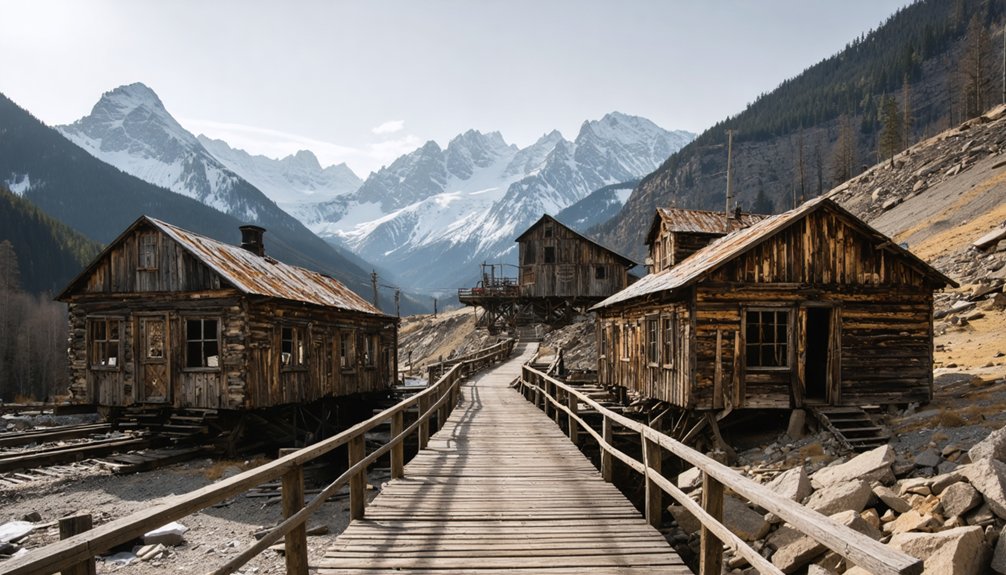
While Colorado’s remote mining camps helped shape the state’s early development, their infrastructure limitations have long presented significant operational challenges.
Transportation challenges persist due to rugged terrain and unpaved roads vulnerable to weather disruptions, while energy shortages plague operations relying on outdated or nonexistent power grids.
You’ll find these critical infrastructure barriers in Rocky Mountain mining sites:
- Limited access routes and absence of rail connections restrict efficient mineral shipping
- Aging utility systems incompatible with modern environmental regulations
- High costs of infrastructure development discourage reinvestment
The regulatory environment further complicates matters, as new development projects face stringent permitting requirements and environmental reviews.
When combined with physical challenges like mine subsidence and acid drainage, these limitations continue to keep many historic mining camps in their ghostly state.
Natural Elements vs. Mining Operations
You’ll find that severe Rocky Mountain weather conditions frequently shut down mining operations, with heavy snowfall and freezing temperatures making work impossible for months at a time.
Despite these seasonal interruptions to mining activity, the environmental damage continues year-round through acid mine drainage and heavy metal contamination of local waterways.
The harsh climate actually accelerates the degradation, as freeze-thaw cycles crack exposed mine surfaces and spring runoff carries pollutants deeper into the ecosystem.
Harsh Weather Halts Mining
Although Colorado’s remote mining camps promised riches beneath the earth’s surface, their high-altitude locations presented formidable challenges that frequently brought operations to a grinding halt.
You’d find these camps perched above 10,000 feet, where weather challenges created treacherous conditions year-round. The brutal environment caused significant mining disruptions, forcing most operations to shut down for three to four months during winter.
Consider these severe impacts of high-altitude weather:
- Heavy snowfall blocked access roads and buried mining shafts
- Extreme cold damaged equipment and threatened miners’ health
- Avalanche risks made mining areas too dangerous to access
You couldn’t maintain year-round operations except during rare mild winters, like 1875-76 at Summitville.
These weather-related obstacles ultimately contributed to many camps’ abandonment, as the seasonal nature of mining made long-term success nearly impossible.
Environmental Damage Persists Today
Despite efforts to clean up abandoned mining sites, Colorado’s historic mining operations left an enduring toxic legacy that continues to poison the state’s environment.
You’ll find over 23,000 abandoned mines statewide that have contaminated roughly 1,800 miles of streams with acid mine drainage. When exposed sulfide minerals interact with water and oxygen, they create acidic runoff loaded with heavy metals like copper, lead, and arsenic.
Environmental remediation faces major hurdles as these toxic legacies persist in both water and soil. The contamination spreads through food chains, threatens livestock, and makes once-pristine waters uninhabitable for aquatic life.
Even with federal Superfund programs working to cap waste piles and treat polluted water, the scale of damage means many former mining camps remain environmental hazards decades after their closure.
Historical Preservation and Modern Tourism Impact
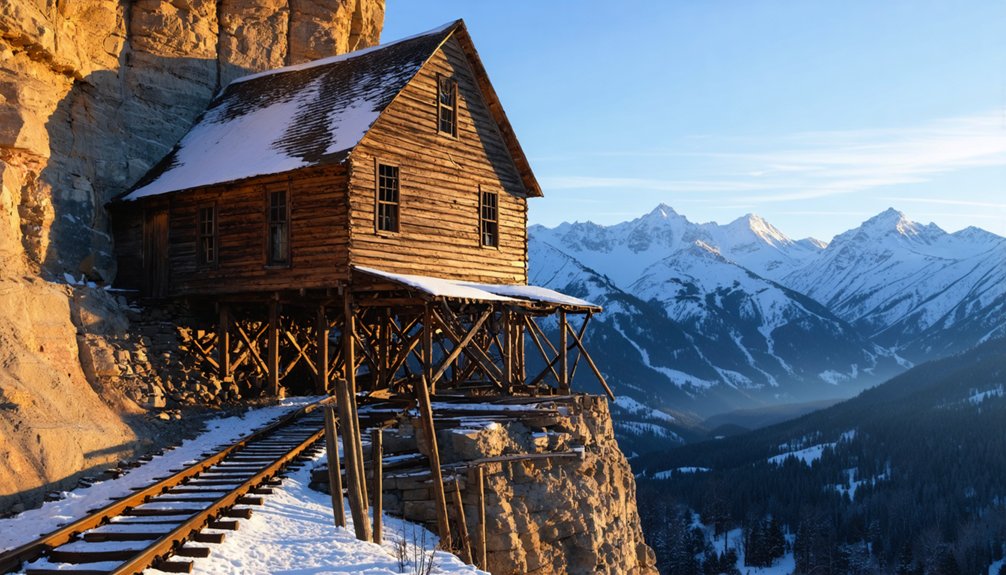
Since the early 2000s, remote Colorado mining camps have undergone significant preservation challenges through partnerships between the Bureau of Land Management, local museums, and private resorts.
You’ll find these historic sites now protected under the National Register of Historic Places, with organizations like the Ghost Town Club of Colorado leading volunteer restoration efforts.
The tourism impact has transformed places like Cripple Creek, where casinos and museums have revitalized the local economy since the 1990s.
Here’s what drives preservation activities today:
- Heritage centers and specialized tours that interpret mining history
- Ongoing monitoring and repairs to stabilize historic structures
- Public education programs that balance visitor access with safety
You’ll notice a delicate balance between maintaining authenticity and modern development, as these sites face continuous threats from weather damage and economic pressures while serving as cultural landmarks.
Frequently Asked Questions
Are There Still Undiscovered Precious Metals in Colorado’s Abandoned Mining Camps?
You’ll likely find undiscovered minerals in Colorado’s abandoned camps, since old mining techniques couldn’t reach deeper deposits. Modern technology could now access previously overlooked or unreachable precious metal veins.
What Paranormal Activities Have Been Reported in Colorado’s Ghost Mining Towns?
You’ll find ghost sightings at Cripple Creek’s casinos, haunted locations like Hotel St. Nicholas, and abandoned mines where visitors report shadowy figures, unexplained noises, cold spots, and malfunctioning electronic equipment.
Can People Legally Live in or Purchase Property in Ghost Towns?
Ever dream of owning a piece of the Old West? You can legally purchase ghost town properties in Colorado if they’re privately owned, but you’ll need to navigate strict ghost town regulations and property ownership laws.
How Dangerous Are the Remaining Mine Shafts and Tunnels Today?
You’ll face lethal mine shaft hazards including sudden drops of hundreds of feet, toxic gases, radioactive materials, and tunnel collapse risks. Hidden flooding, unstable ground, and extreme temperatures make exploration potentially fatal.
What Valuable Artifacts Are Commonly Found in These Abandoned Mining Camps?
You’ll find mining tools, historic coins, glass bottles, personal items like pipes and buttons, and rare historical documents scattered throughout abandoned camps – though removing artifacts is typically illegal.
References
- https://www.legendsofamerica.com/co-ghosttowns/
- https://www.sandradallas.com/colorado-ghost-towns-and-mining
- https://www.visitouray.com/ghost-towns
- https://gunnisoncrestedbutte.com/blog/hike-to-colorados-abandoned-mining-camps/
- https://www.colorado.com/articles/colorado-ghost-towns
- https://www.uncovercolorado.com/ghost-towns/
- https://www.coloradolifemagazine.com/blog/post/11-colorado-ghost-towns
- https://visitfourcorners.com/colorado-mining-history-made-the-state/
- https://www.uncovercolorado.com/colorado-mining-history-timeline/
- https://www.denvergazette.com/2022/05/22/a-timeline-of-colorados-mining-heyday-130e2806-b2c2-5503-bcc2-a6d057e66f73/