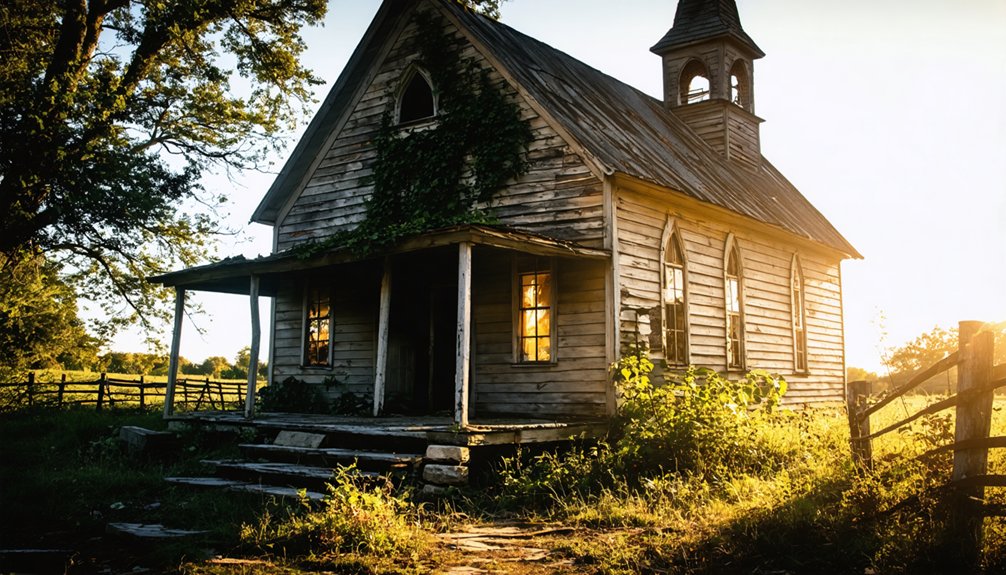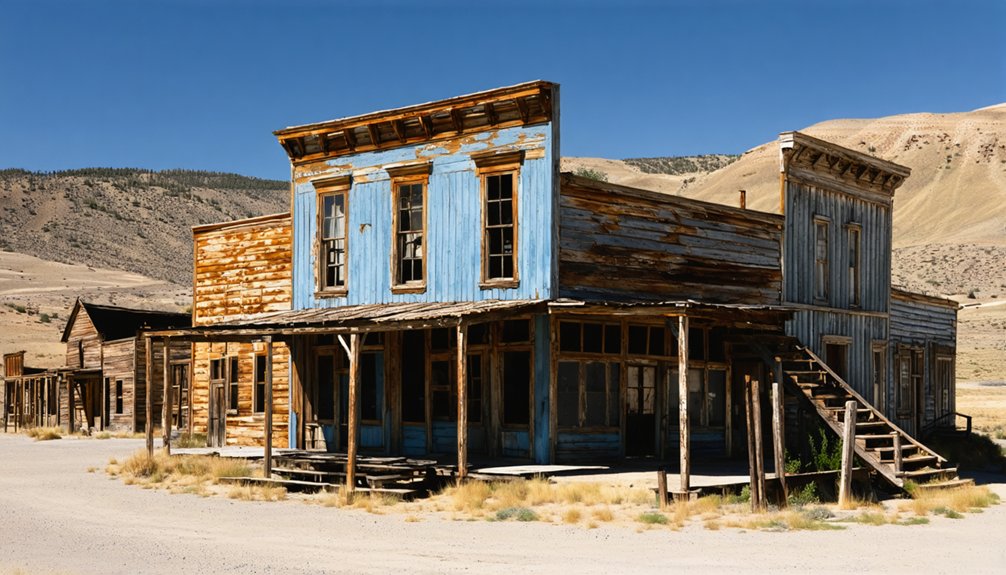
You’ll find that U.S. colonial ghost towns endure through multiple factors working together. While many faced economic collapse from depleted resources and shifting transportation networks, they’ve gained new life through historical preservation efforts and cultural tourism. These abandoned settlements now serve as living museums, protected by federal agencies and supported by tourism revenue. Their endurance also stems from their role as essential repositories of collective memory and American frontier heritage, with each weathered building telling a unique story.
Key Takeaways
- Federal preservation programs protect colonial ghost towns through legal safeguards and funding, maintaining their historical structures and cultural significance.
- Cultural heritage tourism generates sustainable revenue, creating economic incentives for communities to preserve and maintain colonial ghost towns.
- National Monument and Historic Site designations ensure ongoing federal oversight and conservation of colonial ghost towns for future generations.
- Collective memory and shared historical experiences maintain these sites’ cultural importance, connecting modern Americans to their colonial heritage.
- Ghost towns serve as living museums, providing tangible evidence of early American settlement patterns and colonial-era industrial development.
The Economic Foundations of Colonial Ghost Towns
While many factors contributed to the rise and fall of colonial ghost towns, their economic foundations typically rested on a precarious dependency on single extractive industries, particularly mining.
You’ll find that these towns lacked economic sustainability, as they relied heavily on the extraction of resources like gold, silver, and coal. Without proper resource management or economic diversification, they became vulnerable to devastating boom-and-bust cycles.
The workforce consisted mainly of transient laborers, especially single men, who weren’t invested in building lasting communities. The towns often collapsed when economic activity shifted to more prosperous locations.
This temporary mindset led to minimal investment in durable infrastructure and fixed capital. When resource depletion or commodity price collapses occurred, these towns had no economic cushion to soften the blow.
Their singular focus on extraction meant they couldn’t adapt when their primary industry failed, ultimately sealing their fate. Similar patterns emerged in places like Richwoods, Missouri, where the closure of local mills in the early 1990s drastically impacted the community’s vitality.
Transportation Networks and Their Impact on Town Survival
Beyond their economic vulnerabilities, colonial ghost towns often met their fate through the ever-shifting landscape of transportation networks.
You’ll find that transportation evolution profoundly shaped these settlements’ destinies, as rail bypasses and new highway systems redirected essential traffic flows. When steam trains gave way to diesel engines, towns that once served as critical water stops and repair stations lost their purpose. Industrial Revolution developments accelerated the decline of many settlements.
Similarly, the rise of America’s Interstate system dealt a devastating blow to communities along historic routes like U.S. 66.
Towns like Kelton demonstrate how railway communities could thrive and fall, as it went from handling 6 million pounds of goods annually to near abandonment when train routes changed.
The most resilient colonial towns typically commanded multiple transport modes – rivers, rails, and roads. Yet even this advantage couldn’t guarantee survival when technological advances eliminated the need for frequent stops or when newer, more efficient routes emerged through easier terrain.
The Legacy of Resource Booms and Busts
As settlers rushed to exploit newly discovered mineral deposits across colonial America, they inadvertently created a pattern of boom-and-bust cycles that would define many ghost towns‘ trajectories.
You’ll find that resource exploitation often followed a predictable sequence: rapid settlement, explosive growth, and eventual abandonment.
When prospectors discovered valuable minerals, towns could spring up virtually overnight, growing from tent cities to bustling communities of thousands within months. The discovery of gold on July 4, 1879 at Independence exemplifies this pattern of rapid development.
But these mining legacies were typically short-lived. Once easily accessible deposits were depleted, or transportation costs became prohibitive, towns faced swift decline. Texas and California emerged as the states with the highest concentration of these abandoned settlements.
When mineral wealth vanished, so did the towns that relied on it, leaving only echoes of their brief prosperity.
What’s left behind tells a sobering tale – abandoned infrastructure, environmental damage, and contaminated groundwater serve as stark reminders of the true cost of unchecked resource extraction.
These ghost towns stand as powerful symbols of the temporary nature of resource-driven prosperity.
Historical Preservation Efforts and Cultural Significance
Throughout America’s vast landscape of abandoned settlements, dedicated preservation efforts have transformed ghost towns into vital historical repositories.
You’ll find federal agencies like the Bureau of Land Management and National Park Service implementing preservation strategies that protect these cultural treasures through “arrested decay” policies and careful restoration work.
Organizations collaborate with local communities to secure legal protections and funding, ensuring these sites endure for future generations.
When you visit these preserved locations, you’re experiencing living museums that tell the story of America’s industrial heritage, architectural evolution, and community life.
These restored ghost towns provide community identity as they help maintain memories of both triumphs and hardships from the past.
They’ve become vital centers of cultural heritage tourism, drawing hundreds of thousands of visitors annually.
Through adaptive reuse and sustainable tourism practices, these sites maintain their authenticity while generating the economic support needed for ongoing conservation efforts.
Many sites actively encourage visitors to explore while practicing leave no trace principles to protect these historic treasures.
Geographic Challenges and Environmental Forces
While numerous colonial settlements faced economic and social challenges, the harsh realities of geographic and environmental forces often delivered the final blow to their survival.
You’ll find that geographic isolation played a devastating role, particularly when settlements were bypassed by railroads or positioned away from essential trade routes. These locations faced higher transportation costs and limited commercial opportunities that proved unsustainable.
Environmental constraints wreaked additional havoc through severe droughts, flooding, and hostile terrain. Communities in arid regions couldn’t maintain consistent water supplies, while others battled swampy conditions or dense forests that made expansion impossible. The sea air and humidity caused rapid deterioration of buildings and infrastructure, hastening abandonment.
Harsh environments doomed many settlements as drought-stricken lands, flood-prone areas, and impenetrable wilderness made survival nearly impossible.
When combined with natural disasters that exceeded local reconstruction capabilities, these geographic challenges created insurmountable barriers. The 1930s Dust Bowl exemplifies how environmental forces could ultimately force entire communities to abandon their settlements. Much like the housing vacancies in Sunbelt cities during the subprime crisis, these ghost towns became enduring symbols of environmental and economic distress.
Demographic Shifts and Population Migration
Since the early 20th century, colonial and older American towns have experienced dramatic demographic shifts that transformed vibrant communities into ghost towns.
These changes reflect broader migration patterns as residents sought better opportunities in urban areas, leaving behind aging populations and vacant properties.
You’ll find these demographic trends particularly evident in:
- Rural regions of the Great Plains, which have lost one-third of their population since 1920
- Former railroad towns bypassed by modern transportation infrastructure, leading to economic isolation
- Areas with housing vacancy rates exceeding 20%, where median home values have plummeted below $60,000
This ongoing exodus continues to reshape America’s landscape, as younger generations abandon these historical settlements for metropolitan areas.
This perpetuates a cycle of decline that’s proven difficult to reverse.
The Role of Tourism in Ghost Town Persistence

As abandoned settlements fade into history, tourism has emerged as a crucial lifeline for America’s ghost towns, transforming these forgotten places into cultural attractions that generate sustainable revenue.
Among these sites, abandoned coastal towns in Massachusetts stand out with their rich maritime history and picturesque landscapes. Visitors are drawn to explore their crumbling architecture and hear stories of their former glory. Local initiatives aim to preserve these areas while enhancing their appeal, ensuring that they remain vibrant parts of the community.
Through heritage tourism, you’ll find these historical sites carefully preserved in a state of “arrested decay,” allowing you to experience authentic glimpses of frontier life while ensuring their longevity.
Heritage tourism freezes time in ghost towns, preserving authentic frontier moments while safeguarding these treasures for future generations.
Tourist engagement takes many forms, from exploring preserved mine shafts to watching staged gunfights and participating in historical reenactments.
You’ll discover that this tourism-driven preservation creates jobs, supports local businesses, and provides economic incentives for restoration projects.
Natural Disasters and Town Abandonment
When natural disasters strike vulnerable settlements, their devastating impact often leads directly to ghost town formation across America.
You’ll find that these abandoned places often tell stories of nature’s ruthless power and humanity’s retreat from unsurvivable conditions.
Consider these primary catalysts of colonial town abandonment:
- Flood damage transforms riverside communities like Valmeyer, Illinois, forcing entire populations to relocate to higher ground.
- Wildfire impacts devastate wooden structures in mining towns such as Shasta, California, leaving only brick ruins behind.
- Extreme weather and geological hazards, from Centralia’s underground fires to Animas Forks’ brutal winters, make settlements permanently uninhabitable.
Infrastructure decline often follows these disasters, as destroyed transportation routes and depleted resources eliminate any chance of recovery, cementing these locations’ ghost town status.
Legal Protection and Heritage Conservation
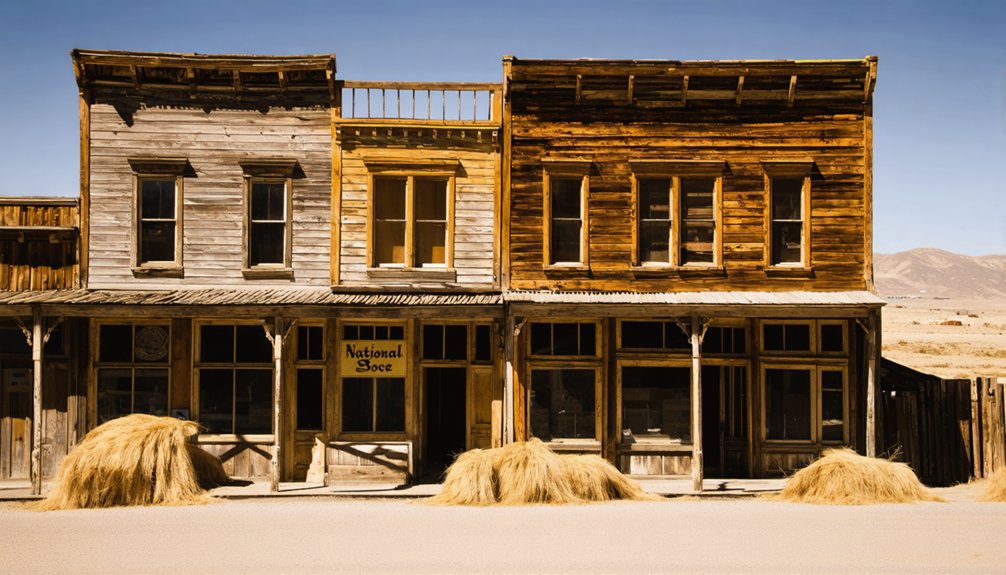
You’ll find that many colonial ghost towns have received National Monument or Historic Site status, granting them essential federal protections against development and degradation.
These designations impose strict regulations on site modifications, requiring detailed preservation reviews before any structural changes can occur.
Historic preservation laws further safeguard these sites by establishing specific maintenance standards and providing access to federal funding for conservation efforts.
National Monument Status
Through the Antiquities Act of 1906, colonial ghost towns can receive robust legal protection as national monuments, safeguarding these historical treasures for future generations.
When you explore these protected sites, you’ll find that monument designation provides essential federal oversight that prevents development while enabling preservation efforts.
Key benefits of national monument status include:
- Strong legal safeguards against destruction or unauthorized modifications
- Dedicated federal funding for conservation and maintenance
- Professional management by the National Park Service, ensuring proper preservation techniques
You’ll discover that this protection extends beyond just physical preservation – it includes thorough archaeological surveys, artifact documentation, and controlled visitor access.
These measures help maintain the site’s authenticity while allowing you to experience these remarkable pieces of American history firsthand.
Historic Preservation Laws
Beyond national monument designation, an extensive network of federal, state, and local preservation laws forms the backbone of ghost town protection in America.
You’ll find preservation statutes at every level, from the National Historic Preservation Act‘s Section 106 review process to state-specific regulations that impose fines and jail time for violations. These laws guarantee cultural sensitivity through mandated tribal consultation and strict guidelines for handling archaeological resources.
You’re protected by a system that balances property rights with heritage conservation.
Through Certified Local Government programs and tax incentives, you can participate in preservation efforts while maintaining autonomy.
If you’re exploring ghost towns, remember that unauthorized excavation or artifact removal can result in criminal penalties, including substantial fines and imprisonment.
The law empowers both federal agencies and local authorities to enforce these protections.
Social Dynamics of Frontier Communities
You’ll find that frontier communities struggled to maintain law and order amid their highly mobile, mainly male populations, with some boomtowns experiencing weekly murders during peak periods.
The volatile social environment emerged from a complex mix of economic opportunism, limited law enforcement, and the prevalence of saloons, gambling, and prostitution that challenged community stability.
Despite these pressures, residents formed tight-knit social bonds through overlapping social circles, though these connections often proved temporary due to the transient nature of frontier life.
Law and Order Challenges
Law and order in colonial frontier communities faced severe structural challenges that stemmed from overlapping jurisdictions, ineffective enforcement models, and deeply rooted racial biases.
You’ll find these challenges manifested in three critical ways:
- Complex jurisdictional conflicts between tribal, federal, and local law enforcement created enforcement gaps that allowed criminals to exploit legal loopholes.
- Poorly organized watch groups and sheriffs prioritized tax collection over active policing, leading to rampant corruption and unofficial agreements.
- Law enforcement’s racist origins in slave patrols shaped discriminatory practices that targeted marginalized groups, creating deep-rooted distrust in frontier communities.
These systemic issues weren’t just temporary setbacks – they fundamentally shaped how frontier settlements developed and ultimately contributed to their instability and eventual decline.
Community Bonds Under Pressure
While law enforcement challenges strained frontier settlements, the social fabric of these communities faced even greater pressures from complex demographic and economic forces.
You’ll find that frontier towns attracted diverse populations, from miners to merchants, creating intricate social networks that both strengthened and challenged community resilience.
The economic foundation of these settlements often relied on single industries, making them vulnerable to boom-and-bust cycles.
Yet, you’d discover that shared hardships fostered deep interpersonal bonds through overlapping social circles and mutual support systems.
Residents depended on face-to-face interactions at communal spaces like saloons and churches to maintain their social cohesion.
When industries failed or natural disasters struck, these established bonds would fragment as populations dispersed, though the spirit of community often persisted in collective memory long after abandonment.
Frequently Asked Questions
Are There Any Ghost Towns That Have Successfully Become Repopulated?
While you’d expect success stories, most ghost towns face tough repopulation challenges. Jerome, Arizona’s your best bet, though it’s only attracted a small population through tourism and economic incentives.
What Role Did Indigenous Communities Play in Ghost Town Formation?
You’ll find indigenous displacement played a central role, as forced relocation cleared land for colonial settlements that later failed. Cultural preservation efforts now highlight these complex histories of settlement and abandonment.
How Do Property Rights Work in Abandoned Ghost Towns?
You’ll need to navigate complex property ownership through title searches, while considering abandonment laws that may revert land to public domain if properties aren’t maintained or occupied for specific periods.
Do Any Ghost Towns Still Maintain Functional Local Governments?
You’ll find countless ghost towns still maintaining local governance, though with bare-bones operations. They keep running due to legal requirements and ghost town regulations, managing basic services despite minimal populations.
What Happens to Cemeteries and Burial Grounds in Ghost Towns?
You’ll find ghost town cemeteries protected by burial ground regulations and managed through cemetery preservation efforts, often led by religious organizations, descendants, local governments, or dedicated nonprofit “friends” groups.
References
- https://en.wikipedia.org/wiki/Ghost_town
- https://www.geotab.com/ghost-towns/
- https://www.notesfromthefrontier.com/post/untitled
- https://www.legendsofamerica.com/gt-ghosttownethics/
- https://www.britannica.com/topic/ghost-town
- https://nightofthejack.com/2025/01/23/top-creepy-ghost-towns-in-america/
- https://www.youtube.com/watch?v=ZiJctD8Cs70
- https://wildwestcity.com/old-west-ghost-towns/
- https://history.howstuffworks.com/history-vs-myth/ghost-towns.htm
- https://jasontdunn.com/files/ghost_towns_big_cities.pdf