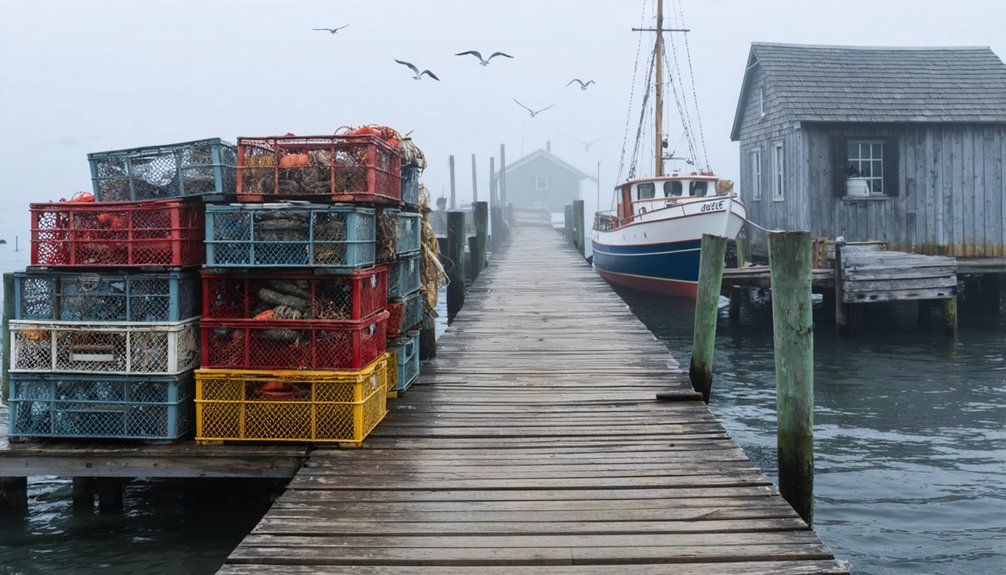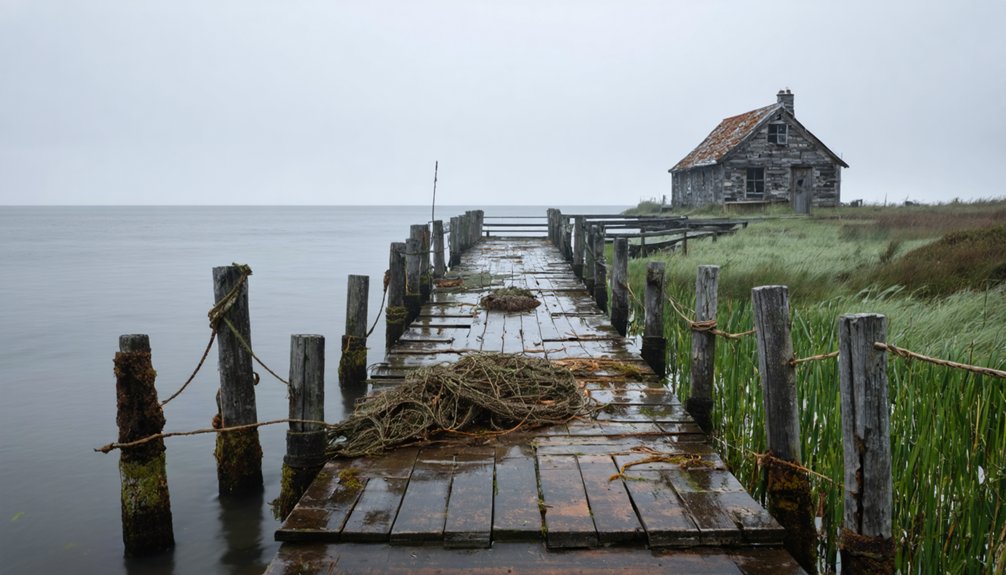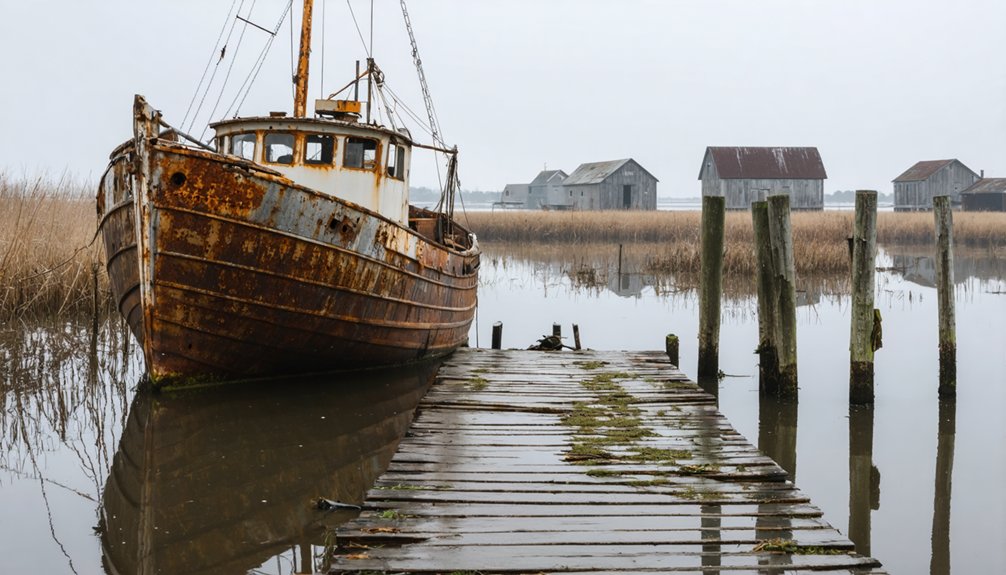
You’ll find remnants of vanished fishing towns because of their durable construction materials and strategic positioning against coastal forces. Stone structures and concrete foundations withstand environmental pressures better than wood, while geographic barriers can shield buildings from aggressive erosion. Sacred spaces and cultural sites often persist through intentional preservation efforts, while natural burial processes protect some structures beneath protective sediment layers. These surviving elements hold countless stories of maritime heritage and community resilience.
Key Takeaways
- Durable building materials like stone and concrete structures resist deterioration longer than wooden elements, preserving physical evidence of fishing communities.
- Natural burial processes and protective sediment layers shield remnants from complete destruction, allowing artifacts to survive through time.
- Sacred spaces and stone structures endure as cultural repositories, embodying community values and traditional fishing practices.
- Geographic barriers and sheltered locations protect some structures from aggressive coastal erosion and destructive weather patterns.
- Historical artifacts persist due to their cultural significance, prompting preservation efforts and community engagement in protection initiatives.
The Nature of Coastal Abandonment
When examining the nature of coastal abandonment, you’ll find a complex interplay of socioeconomic and environmental factors that drive community decline. The reasons for abandonment stem from a vicious cycle where environmental pressures meet economic instability, creating a downward spiral that’s difficult to escape.
You’ll notice that coastal nostalgia often masks the harsh realities of these communities’ struggles. Sunny day flooding is becoming increasingly common, with some areas experiencing 25-75 days of flooding annually. Rising seas and habitat degradation combine with seasonal employment volatility and outmigration of skilled workers, leading to a systematic breakdown of once-vibrant waterfronts. Traditional coastal towns face high unemployment rates that persist year after year, deepening the cycle of decline.
The process accelerates as working waterfronts disappear, taking with them both jobs and cultural identity. What’s left behind isn’t just empty buildings – it’s the remnants of communities that couldn’t adapt to the dual threats of environmental change and economic disinvestment.
Physical Traces Through Time
Three distinct processes shape the physical remnants of abandoned fishing towns: material degradation, environmental forces, and human interference.
When you analyze these remnants, you’ll find that durable materials like stone and concrete foundations persist longest, while wooden structures deteriorate rapidly. The historical significance of these sites emerges through careful remnant analysis of surviving features – from distinctive quarry marks on stonework to scattered fishing equipment. Evidence from the lodge shows how guest cabin layouts reveal the property’s past capacity for multiple visitors.
Stone endures while wood crumbles, yet each remnant – from quarry marks to rusted hooks – tells the story of forgotten harbors.
You’ll notice how coastal elements steadily transform these places, as salt spray erodes surfaces and vegetation both destroys and preserves ruins. At Port in Donegal, the local stone houses stand as enduring testaments to traditional building methods.
While looters and scavengers accelerate decay, natural sedimentation processes can protect some remains. Seasonal freeze-thaw cycles fracture exposed materials, yet debris accumulation sometimes shields foundations, allowing you to trace original building footprints decades after abandonment.
Environmental Forces at Work
You’ll find that coastal erosion acts as both destroyer and preserver of fishing town remnants, as rising seas and storm surges simultaneously wash away exposed structures while burying others under protective layers of sediment.
Nature’s preservation through burial creates time capsules when storm-driven sand and soil accumulation shield artifacts from degradation, though this process depends heavily on local geological conditions.
Weather patterns play a vital role in determining whether remnants persist or vanish, with factors like freeze-thaw cycles, salt spray exposure, and precipitation intensity directly affecting the rate of structural deterioration.
Marine debris from abandoned fishing gear poses additional threats to these coastal remnants by entangling and damaging historical structures.
The nuclear wastewater discharge further threatens the preservation of coastal village remnants through environmental contamination and accelerated community abandonment.
Coastal Erosion’s Lasting Impact
Along coastlines worldwide, the relentless force of coastal erosion systematically dismantles fishing communities through multiple interconnected mechanisms.
You’ll see the destruction unfold as essential fish breeding grounds disappear, seagrass beds vanish, and mangroves collapse – devastating both marine ecosystems and local livelihoods.
While some fishing community adaptations include protective structures like breakwaters and geotubes, these often trigger unintended consequences, accelerating erosion elsewhere.
The impact extends beyond environmental damage. These communities face severe economic hardships as property values plummet and tourism revenue dwindles.
Communities in places like Uppada have reported over 100 ghost houses due to coastal degradation and environmental damage.
You’re witnessing the emergence of ghost towns as homes crumble into the sea, cultural heritage sites submerge, and entire communities abandon their ancestral lands.
Despite attempts at coastal resilience strategies, the combination of rising seas, altered sediment flows, and human interventions continues to transform once-thriving fishing villages into haunting remnants of their former existence.
Nature Preserves Through Burial
While coastal erosion claims many fishing communities, nature’s burial processes simultaneously work to preserve their remnants. You’ll find that sediment layers accumulate through river deposits and tidal action, creating protective barriers that shield artifacts from decay.
In regions devastated by blast fishing damage, abandoned coastal settlements often become naturally entombed beneath layers of marine sediment. Nature’s burial techniques include vegetative overgrowth, where root systems anchor remains while contributing to soil development. In Raja Ampat, sustainable diving practices help prevent further deterioration of these historically significant sites.
In areas where ecological balance has been restored, you’ll discover how marine processes deposit fine sediments during storms and tidal cycles, particularly in estuarine environments. The cultural significance of these sites benefits from both natural and human-induced burial, as abandoned structures become integrated into evolving landscapes.
Mangroves and marsh vegetation trap sediments around shoreline ruins, while community-led restoration projects intentionally promote preservation through strategic replanting and landform modification.
Weather’s Role in Preservation
Despite their destructive potential, weather patterns play a complex role in both degrading and preserving coastal archaeological sites. You’ll find that storms and hurricanes can strip away protective sand layers from shipwrecks and archaeological features, while simultaneously creating new preservation contexts through burial and sediment deposition.
The preservation dynamics you witness in coastal zones depend heavily on water-driven mechanisms. When sites become waterlogged, they develop anaerobic environments that slow decomposition.
You’ll notice how tidal actions can alternately expose and submerge artifacts, creating unique preservation conditions. While severe weather events often damage above-ground structures and dismantle site components, they can also contribute to preservation by rapidly burying materials under protective sediment layers, shielding them from further atmospheric degradation.
Cultural Heritage in Stone and Memory
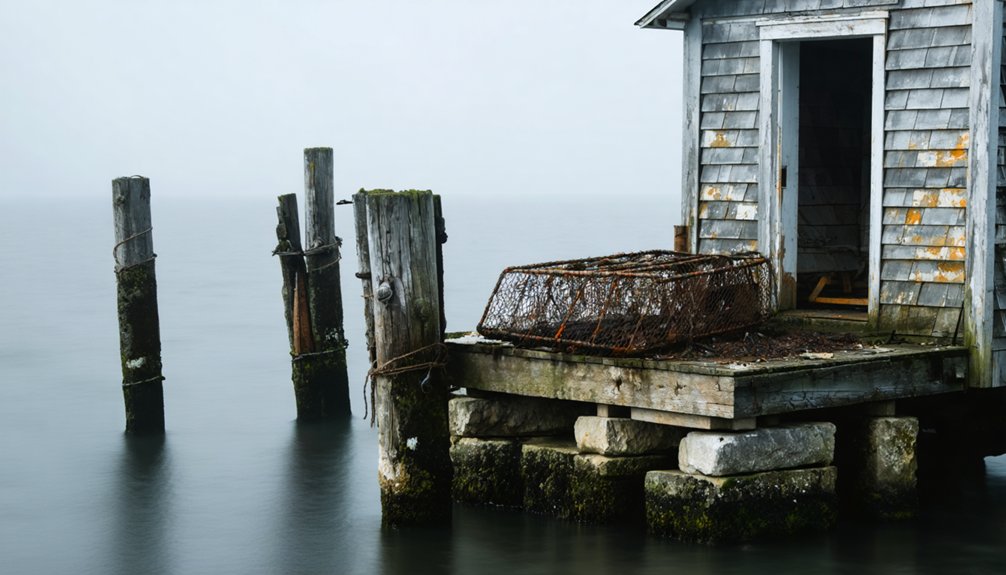
You’ll find that sacred spaces within vanished fishing towns, from temples to community halls, remain as enduring symbols to the spiritual and social lives of maritime communities.
These stone structures, along with their architectural details and surviving artifacts, tell rich stories of cultural practices, religious observances, and communal gatherings that defined coastal life.
Today’s preservation efforts guarantee these physical remnants continue serving as essential links to maritime traditions, with former residents and their descendants working to protect and interpret these irreplaceable cultural landmarks.
Sacred Spaces Still Standing
Throughout coastal regions worldwide, sacred spaces and structures from vanished fishing communities persist as powerful cultural anchors, serving multiple vital functions for both descendants and society at large.
You’ll find these sacred sites acting as tangible links to ancestral knowledge, spiritual values, and traditional fishing practices that shaped coastal life for generations.
These cultural landscapes, from preserved buildings to stone mazes and shell middens, reinforce community identity while safeguarding important historical narratives.
They’re not just architectural remnants – they’re living educational platforms where you can experience the transmission of cultural values and traditional ecological knowledge.
Through these enduring structures, you’ll discover how vanished communities maintain their connection to place, even as their physical towns have disappeared, ensuring their heritage continues to influence and educate future generations.
Community Stories Through Stone
While coastal communities have vanished over time, their stone structures stand as enduring repositories of cultural memory and ecological wisdom. Through stone storytelling, you’ll discover how tidal fish weirs embody generations of shared expertise and environmental stewardship.
These lasting monuments encode practical knowledge about marine ecosystems, tides, and sustainable fishing practices. The stone structures you encounter serve as anchors for communal memories, preserving the intangible heritage of vanished fishing towns.
They’re not just physical remnants – they’re living archives of territorial rights, spiritual beliefs, and community values. As climate change threatens coastal heritage, these stone features become increasingly essential links to ancestral traditions.
You’ll find they’re powerful catalysts for cultural education, connecting modern generations to their maritime roots through tangible touchstones of the past.
Maritime Traditions Preserved Today
Modern maritime communities are actively preserving their ancestral traditions through innovative conservation methods that blend cultural wisdom with scientific practice.
You’ll find traditional fishing practices like Palau’s bul system working alongside GPS technology, while maintaining cultural identity through time-tested navigation techniques based on celestial patterns and ocean currents.
These communities are using digital platforms to document their maritime heritage, protecting it from climate change threats and economic pressures.
Through UNESCO-supported initiatives and indigenous-led conservation programs like Australia’s TUMRAs, you’re witnessing a renaissance in maritime cultural preservation.
These efforts aren’t just about maintaining fishing grounds – they’re creating resilient coastal communities that can adapt to environmental challenges while honoring their ancestral connections to the sea.
Economic Ripple Effects of Ghost Towns
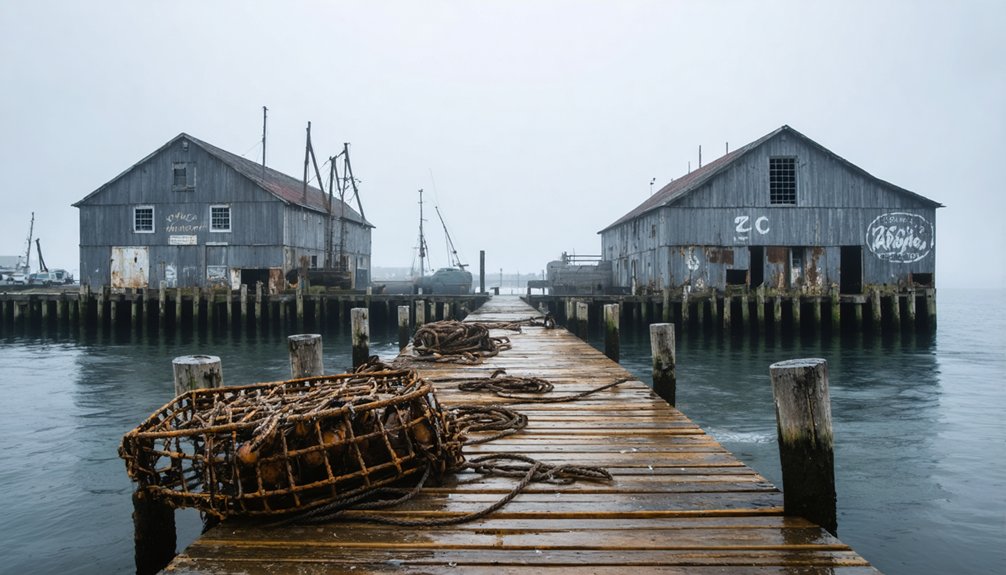
As fishing communities succumb to the economic pressures of ghost fishing and depleted stocks, their transformation into ghost towns triggers far-reaching financial consequences.
You’ll witness economic decline ripple through entire regions as derelict fishing gear continues to trap and kill commercially valuable species, reducing available fish stocks by thousands of metric tons.
The impact extends beyond lost fishing revenues – processing plants shut down, tourism dwindles, and local businesses struggle as disposable income evaporates.
Community resilience faces its ultimate test when fishers need retraining for new sectors, while cultural identities built around maritime heritage begin to erode.
The downstream effects hit supply chains hard, forcing seafood distributors to source from elsewhere at higher costs, creating a cascade of economic challenges that reshape entire coastal economies.
Structural Survival Against the Elements
Despite decades of abandonment, the structural remnants of fishing towns reveal fascinating patterns of survival against coastal elements.
As the environment continues to evolve, understanding the impacts of climate change on fishing becomes increasingly crucial for both local economies and ecosystems. Fish populations are shifting in response to warming waters, altering traditional fishing grounds and threatening livelihoods. Communities must adapt to these changes to sustain their practices and preserve their cultural heritage.
You’ll find that stone structures demonstrate remarkable structural resilience, particularly when builders incorporated natural rock formations and solid bedrock foundations. These enduring features have withstood punishing winds exceeding 160 km/h and relentless salt spray that rapidly corrodes less durable materials.
Material longevity varies considerably based on construction choices and environmental exposure. While wooden components and roofs typically succumb to decay, thick stone walls and foundations persist, especially in villages perched on rocky coastlines.
You’ll notice that geographic barriers like cliffs and dunes have helped shield some structures, while sites exposed to aggressive coastal erosion may lose up to 2 meters of shoreline yearly, hastening their deterioration.
Maritime Legacy in Modern Times
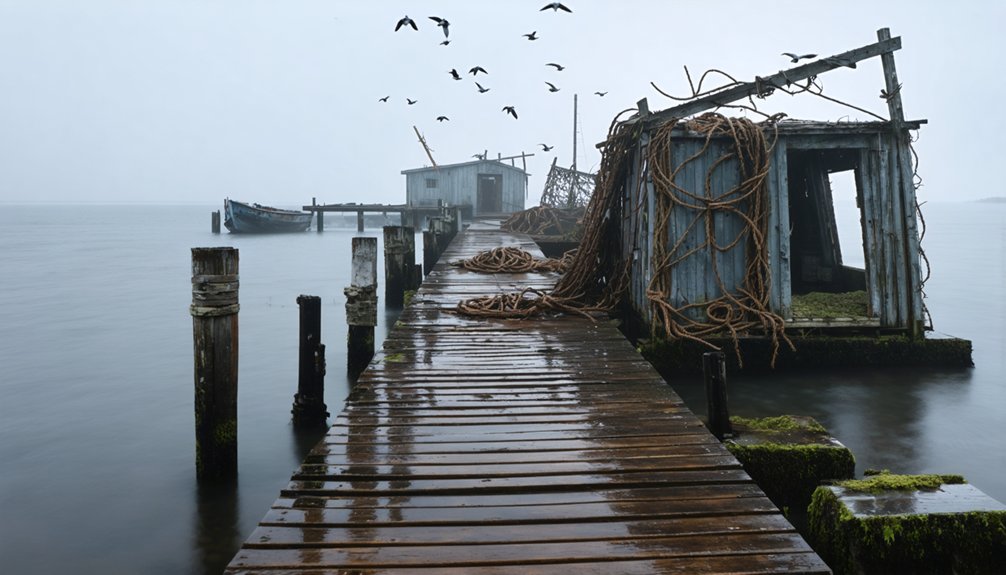
Beyond weathered walls and eroded foundations, vanished fishing towns serve as invaluable repositories of maritime heritage in today’s world.
You’ll find these sites acting as living laboratories where maritime archaeology reveals centuries-old fishing practices, trade patterns, and community structures through artifacts and architectural remains.
These ghost ports aren’t just static ruins – they’re dynamic coastal storytelling vessels that document the rise and fall of fishing economies.
You can trace technological evolution through preserved gear, understand environmental changes through stranded harbors, and analyze economic shifts through abandoned infrastructure.
The remnants showcase how communities adapted to changing seas, industrial transformations, and resource depletion.
Each pier, warehouse, and weathered boat tells a chapter in humanity’s enduring relationship with marine resources and coastal living.
Preservation Efforts and Tourist Appeal
The preservation of vanished fishing towns combines cultural stewardship with sustainable tourism initiatives, creating a model for heritage conservation that benefits both local economies and historical legacies.
Historic fishing villages showcase how preserving cultural heritage and developing sustainable tourism can revitalize communities while honoring their past.
You’ll find heritage tourism bringing new life to these sites through interpretive tours, museums, and cultural festivals that celebrate maritime traditions, while federal and state agencies invest over $59 million in aquatic conservation efforts to restore essential habitats.
When you visit these locations, you’ll experience outdoor museums preserving historical architecture alongside revitalized waterfronts that offer modern recreational facilities.
Through community engagement and educational programs, you can participate in activities ranging from traditional fishing demonstrations to wildlife observation.
These preservation efforts don’t just protect history – they’re creating sustainable economic opportunities while maintaining the authentic character that makes these sites unique.
Frequently Asked Questions
How Long Does It Typically Take for a Fishing Town to Become Completely Abandoned?
You’ll typically see coastal decay and abandonment timelines ranging from 30-250 years, with most modern fishing towns declining over several decades due to environmental pressures and economic shifts.
Can Abandoned Fishing Towns Be Legally Reclaimed by Former Residents?
Want to reclaim your old fishing town? You’ll face strict limitations on legal ownership, as resident rights rarely supersede state control of submerged lands, requiring legislative approval and complex legal processes.
What Happens to the Fishing Rights After a Coastal Town Disappears?
You’ll find fishing rights often transfer away from the original community through sales or leases, while coastal regulations may remain valid but lack local enforcement, reducing community economic benefits and control.
You’ll find that submerged town remnants greatly impact modern navigation by creating hazards for vessels and interfering with underwater mapping systems, sonar signals, and automated navigation technology.
Are There Documented Cases of Successfully Reviving Abandoned Fishing Communities?
You’ll find documented successes like Maine’s lobster industry, where community revitalization through self-imposed fishing limits and local governance created economic sustainability, supporting thriving coastal towns that once faced decline.
References
- https://www.countryfile.com/go-outdoors/historic-places/britains-abandoned-coastal-villages
- https://www.atlasobscura.com/articles/newfoundland-abandoned-resettlement-villages
- https://idaho-forged.com/idahos-ghost-towns-eerie-yet-approachable/
- https://www.youtube.com/watch?v=gVxf4G4LLn4
- https://www.loveexploring.com/gallerylist/188219/the-us-state-with-the-most-ghost-towns-revealed
- https://academic.oup.com/cjres/article/17/1/103/7473358
- https://estuaries.org/coastal-threats/
- https://www.nature.com/articles/s41586-024-07038-3
- https://www.prb.org/resources/ripple-effects-population-and-coastal-regions/
- https://urbanoceanlab.org/climate-readiness-framework/