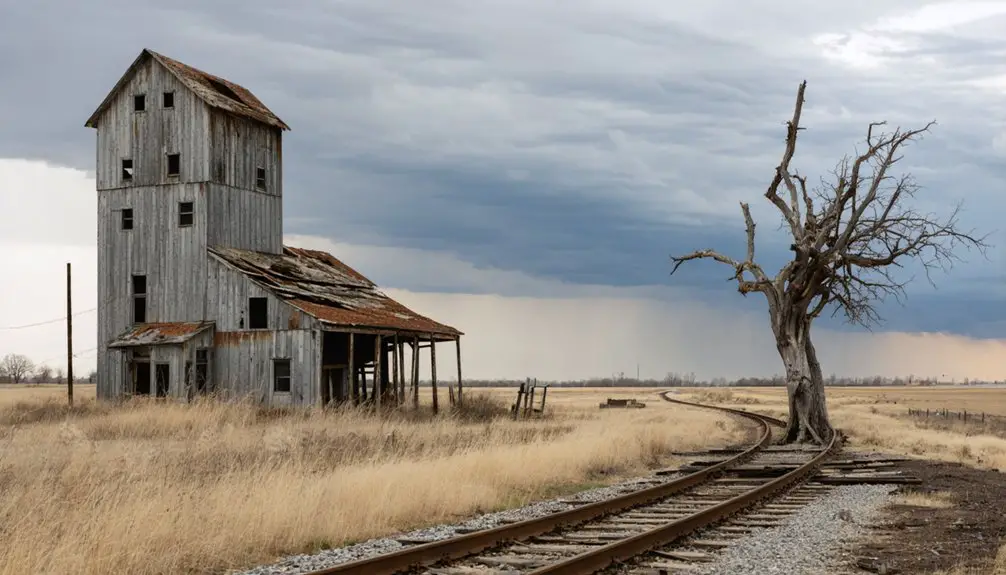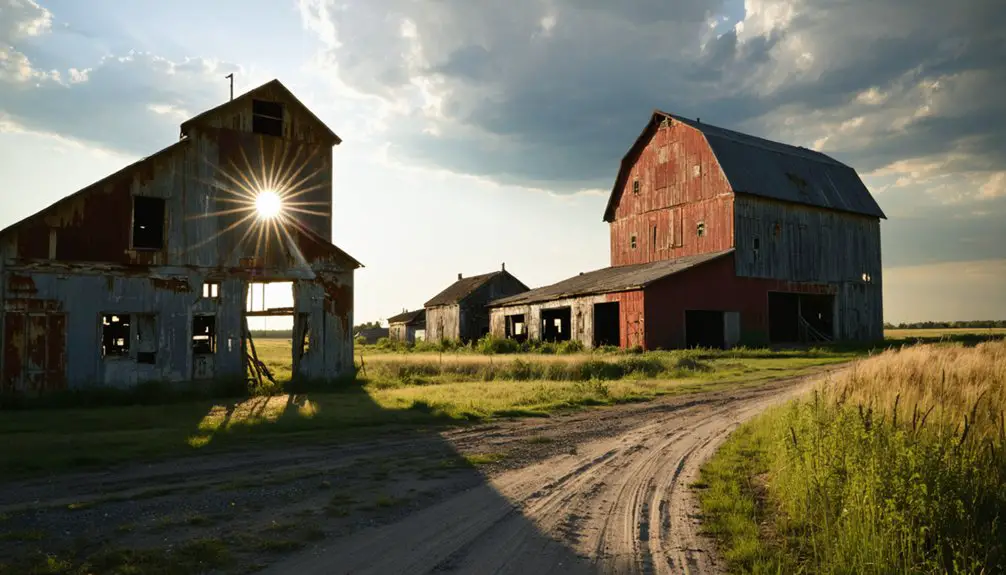
You’ll find over 150 abandoned settlements across Minnesota, with many dating to the 1850s when the Dakota Treaty opened southeastern regions to settlers. Towns like Forestville flourished until railroad bypasses in 1868 led to their decline. Mining communities such as Elcor thrived until the 1950s, while river ports prospered during the steamboat era (1855-1865). Before exploring these historic sites, you’ll need to understand access permissions and safety protocols—each ghost town holds unique stories waiting to be discovered.
Key Takeaways
- Forestville declined after being bypassed by the railroad in 1868, transforming from a bustling 150-resident town into an abandoned settlement.
- Elcor became a ghost town in 1954 when the Corsica mine closed, forcing nearly 1,000 residents to evacuate their homes.
- River towns like Nininger and Pine Bend vanished after railroads redirected trade routes and flooding damaged vital infrastructure.
- Vicksburg and San Francisco deteriorated following railroad bypasses and economic crises like the Panic of 1857.
- Taconite Harbor was abandoned after mining operations ceased, leaving modern architecture to be reclaimed by nature.
The Lost Legacy of Forestville
While treaties with the Dakota people had opened southeastern Minnesota to settlement in 1852, it wasn’t until the following summer that Robert Foster made his pivotal journey on foot from Decorah, Iowa, to stake claims along the Root River.
Within a decade, Forestville history took shape as the town grew to 150 residents, becoming one of the largest settlements south of Minneapolis. You’ll find its prosperity centered around a bustling general store, sawmills, and position on the stagecoach line. Today, the town’s remaining structures and artifacts are managed by site manager Matt Eidem.
But when the railroad bypassed Forestville in 1868, its fate changed dramatically. The Meighen legacy emerged as the family acquired the entire town by 1889, transforming it into a company settlement. By 1910, the once-thriving community saw the closure of its store, marking the final chapter of Forestville as an active town.
Mining Ghosts: Elcor and Taconite Harbor
As the iron mining boom transformed Minnesota’s landscape in the late 1800s, two distinctive company towns emerged in the state’s northeastern region: Elcor and Taconite Harbor.
Originally named Elba, Elcor history began in 1897 when the mining company built wooden homes for workers near Gilbert. At its peak in 1920, you’d have found nearly 1,000 residents, two churches, and a bustling main street lined with boardwalks. These sites now blend with nature as natural reclamation has taken over the abandoned structures.
While Elcor flourished with its diverse immigrant population until the 1950s, Taconite Harbor represented a different era. Its modern architecture featured functional homes built specifically for taconite plant workers. The residents owned their homes but the land belonged to mining companies.
Yet both towns shared similar fates. When the Corsica mine closed in 1954, Elcor’s residents were forced to evacuate. Today, only foundations remain where this once-thriving community stood, now overshadowed by the Minorca mine.
Rise and Fall of River Towns
During the peak steamboat era of 1855-1865, Minnesota’s river towns emerged at strategic locations where natural barriers and navigation challenges created economic opportunities.
You’d find these settlements perched on bluffs and terraces, positioned near rapids and fords where river commerce naturally concentrated.
These towns initially thrived as transportation hubs, with their economies built around steamboat traffic, agricultural exports, and essential services for travelers.
But their prosperity wouldn’t last. By the late 1860s, railroads began redirecting trade routes away from the river.
Natural forces dealt additional blows – flooding damaged infrastructure, channel migrations left some towns stranded from the main waterway, and sedimentation made navigation increasingly difficult.
Many river settlements struggled with unpredictable waterways, as demonstrated by Mankato’s Jefferson’s Bend which marked the final navigable loop for steamboats.
The towns that once buzzed with steamboat passengers and merchants gradually emptied as people moved to rail-connected communities.
Towns like Nininger and Pine Bend vanished quickly from the landscape, serving as early examples of failed river settlements.
Why Minnesota Towns Became Abandoned
Since the mid-1800s, Minnesota’s ghost towns emerged through five distinct patterns of abandonment.
These economic shifts triggered widespread population decline, transforming once-thriving communities into forgotten places.
Economic upheavals swept through Minnesota, leaving empty streets and silent buildings where vibrant communities once flourished.
- Railroad bypasses devastated towns like Vicksburg and Forestville, as commerce shifted to communities along new rail lines.
- Resource depletion struck hard when mining declined in Elcor during the 1950s, while logging operations abandoned Sawbill Landing.
- The Panic of 1857 crushed emerging settlements like Tazaska, while economic uncertainty forced residents to flee Nininger for Hastings.
- Infrastructure losses, particularly post office closures, spelled doom for towns like Dorothy, where the 1956 closure triggered rapid decline.
Natural disasters played a major role too, with the town of San Francisco suffering from severe flooding that contributed to its demise.
You’ll find these ghost towns scattered across Minnesota’s landscape, each telling a story of boom-and-bust cycles that shaped the state’s development.
The forced removal of Ojibwe people to White Earth reservation in 1868 led to the abandonment of Old Crow Wing, once a thriving multicultural community.
Surviving Structures and Remnants
Physical remnants of Minnesota’s ghost towns tell rich stories through their surviving structures. You’ll find restored general stores like the Meighen store in Forestville serving as museums, while one-room schoolhouses have become community halls.
Throughout the state, you’ll spot abandoned churches, stone foundations, and town halls marking former civic centers. Many of these settlements succumbed to economic hardships during the Panic of 1857, causing widespread town abandonment.
The housing remnants paint a particularly vivid picture of past life. Finland’s cluster of 43 empty homes showcases post-Cold War abandonment, while scattered foundations across the Mesabi Range reveal former mining communities. These homes feature single-stall garages with varying states of deterioration.
Industrial remains are equally telling – from mine headframe foundations to sawmill ruins and brick kiln sites. You can trace transportation history through abandoned rail grades and loading platforms, while archaeological artifacts continue surfacing in plowed fields, offering tangible connections to these lost communities.
Exploring Ghost Towns Safely and Legally
Before exploring Minnesota’s ghost towns, you’ll need to research property ownership records and obtain necessary permissions to avoid trespassing violations.
You can access historic sites legally through guided tours, public heritage sites, or by contacting private landowners directly for written consent.
When visiting approved locations, follow basic safety protocols like bringing a companion, notifying others of your plans, and staying clear of unstable structures.
Know Before You Go
While exploring Minnesota’s ghost towns can be a fascinating journey into the past, you’ll need to navigate essential legal and safety considerations before venturing out.
ghost towns in minnesota’s landscape often tell stories of forgotten communities and lost livelihoods. Each site provides a unique glimpse into the challenges and triumphs of those who once called them home. As you visit these remnants, take the time to appreciate the history they embody and the lessons they hold.
Smart ghost town exploration starts with understanding your obligations and preparing accordingly.
- Check property ownership through county records and obtain necessary permissions – trespassing can result in serious legal consequences, from misdemeanors to felonies.
- Research potential hazards specific to your chosen site, including structural instability, environmental contamination, and seasonal weather risks.
- Secure required permits for photography, group visits, or artifact documentation, particularly on managed historical sites.
- Share your detailed itinerary with someone you trust, including GPS coordinates and expected return time, and pack essential safety gear including first-aid supplies and emergency communication devices.
Accessing Historic Sites
Understanding legal access requirements stands as the essential first step before exploring Minnesota’s ghost towns.
Even abandoned properties remain under ownership, and trespassing laws apply whether buildings appear occupied or not. You’ll need to research property ownership through county records and obtain explicit permission before entering these historic sites.
Don’t assume that a deteriorating structure is free to explore – government-owned abandoned sites carry particularly severe penalties for unauthorized entry.
Your best approach is contacting the property owner directly to explain your interest and request written consent.
While ghost towns may seem like forgotten relics, they’re still legally protected properties.
Remember that brief occupation or regular visits don’t create access rights – only formal easements or owner permission guarantee legal entry to these fascinating historical locations.
Safety Best Practices
Once you’ve secured proper access permissions, following strict safety protocols becomes your next priority when exploring Minnesota’s ghost towns. Your safety gear should include sturdy boots, protective clothing, and a well-stocked first aid kit. Remember that abandoned structures are often unstable and can be hazardous, especially after years of exposure to the elements.
- Plan your visit during daylight hours and bring ample water and emergency supplies.
- Document findings with photos while maintaining proper exploration etiquette – never disturb or remove artifacts.
- Watch for environmental hazards like unstable floors, exposed nails, and wildlife.
- Stay alert for hazardous materials and avoid areas with visible structural damage.
Always respect local ordinances regarding abandoned properties and be prepared for natural obstacles that have reclaimed these historic sites.
Uncovering Stories Through Historical Records
Through careful examination of historical records, Minnesota’s ghost towns reveal fascinating stories of rise and decline, preserved in documents ranging from newspaper advertisements to government notices.
You’ll find historical significance in the 1856 New York Times promotion of Nininger, which promised settlers an idyllic Mississippi River settlement.
Community memories surface in Old Crow Wing’s records detailing the forced Ojibwe removal of 1868, while Forestville’s story unfolds through documents of the Meighen family’s gradual property acquisition.
Tazaska’s brief existence is confirmed in Territorial Congress records from 1844, though it vanished during the Panic of 1857.
Elcor’s timeline emerges through mining company documents, revealing its swift rise and organized evacuation by 1956 when the Corsica mine closed.
Frequently Asked Questions
Are There Any Reported Ghost Sightings in Minnesota’s Abandoned Towns?
You won’t find documented ghostly encounters in these abandoned Minnesota towns. Despite their eerie histories, there aren’t any confirmed paranormal investigations or official reports of supernatural activity.
Which Ghost Town Is Considered the Most Well-Preserved in Minnesota?
While most ghost towns crumble into history, you’ll find Forestville standing proud with its well-preserved buildings, including the iconic Meighen General Store that’s meticulously maintained by the Minnesota Historical Society.
Can Metal Detecting Be Done Legally in Minnesota Ghost Towns?
You’ll need proper permits and landowner permission due to metal detecting regulations and historical preservation laws. On public ghost town sites, it’s largely restricted to licensed archaeologists with state authorization.
What Items Have Been Found by Archaeologists in These Ghost Towns?
Like buried treasure maps, archaeological discoveries reveal fascinating finds: building foundations, household items, railroad spikes, mining equipment, ceramics, bottles, and trade goods that whisper stories of historical artifacts.
Do Any Former Residents Still Return to Visit These Abandoned Towns?
You’ll find former residents making nostalgia trips to preserved sites like Forestville and Mill City, while others visit during organized events or reunions at historic ghost towns with public access.
References
- https://thievesriver.com/blogs/articles/ghost-towns-in-minnesota
- https://quickcountry.com/minnesotas-abandoned-ghost-towns/
- https://www.ghosttowns.com/states/mn/mn.html
- https://www.youtube.com/watch?v=5bCG6B2rzZY
- https://kroc.com/abandoned-places-minnesota/
- https://www.youtube.com/watch?v=SK_qpflb_ao
- https://metaldetectingforum.com/index.php?threads/minnesota-ghost-towns.7172/
- https://www.mngoodage.com/voices/mn-history/2019/07/a-ghost-town-turned-history-site/
- https://www.cbsnews.com/minnesota/news/forestville-southern-minnesota-ghost-town-still-attracting-summer-visitors/
- https://www.mnhs.org/forestville/learn/site