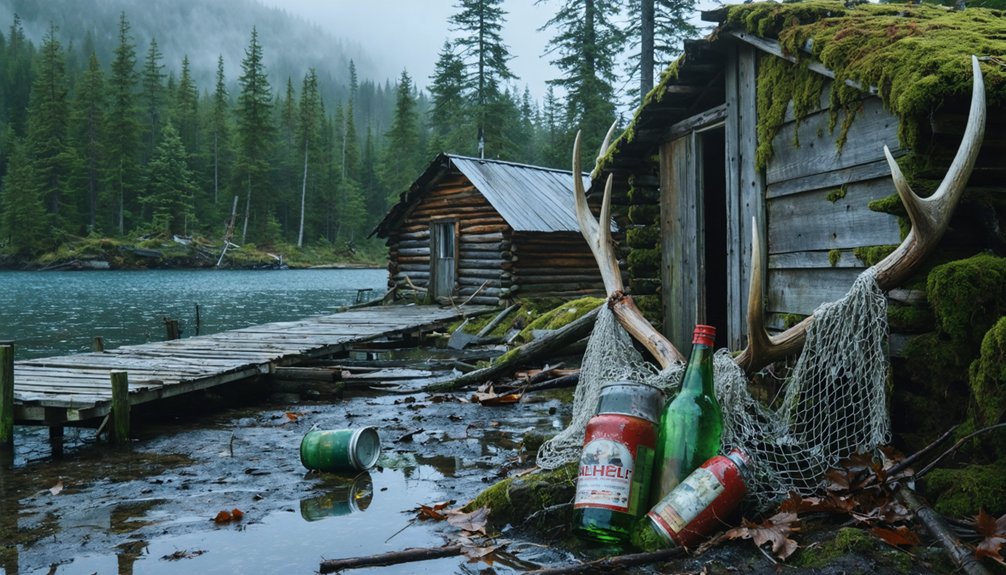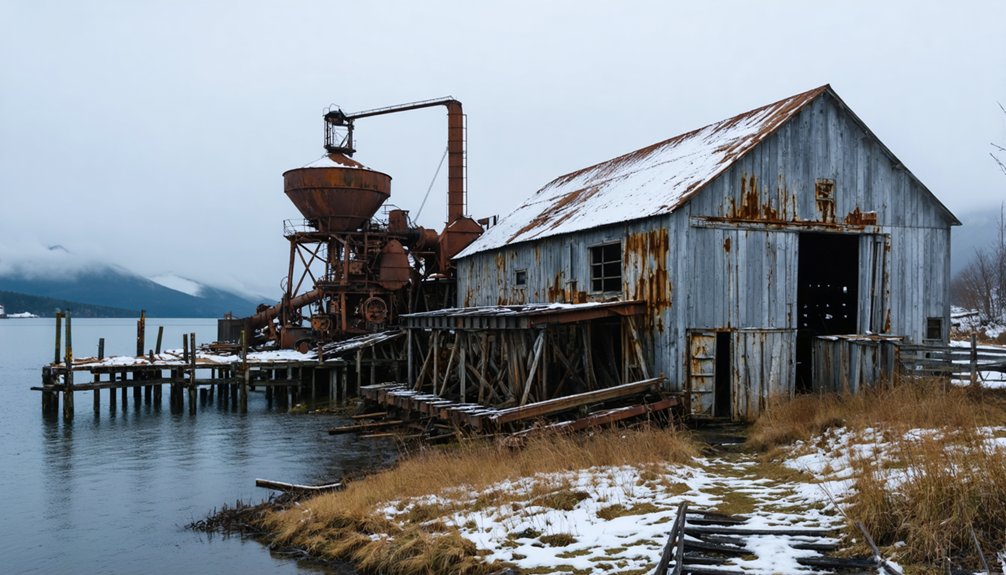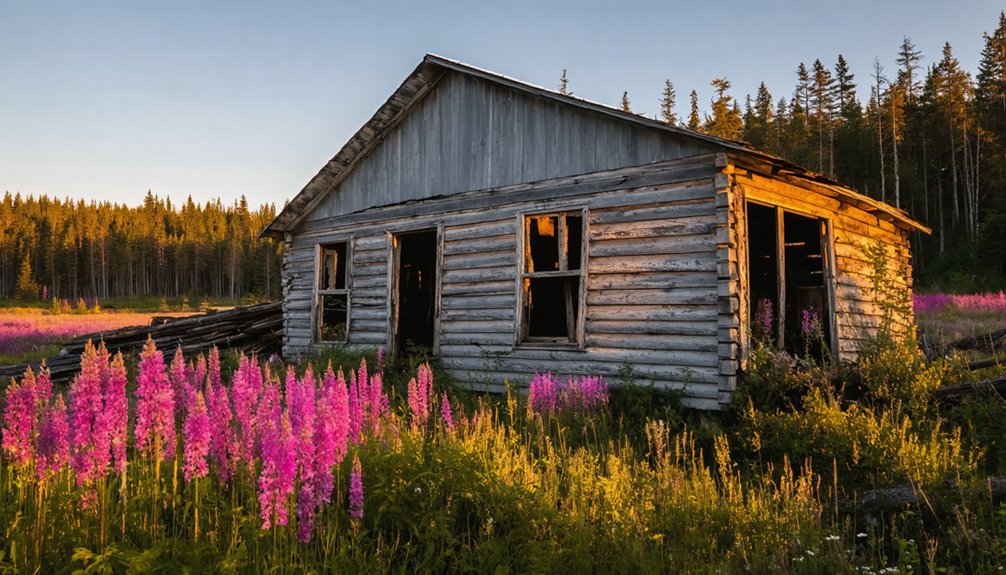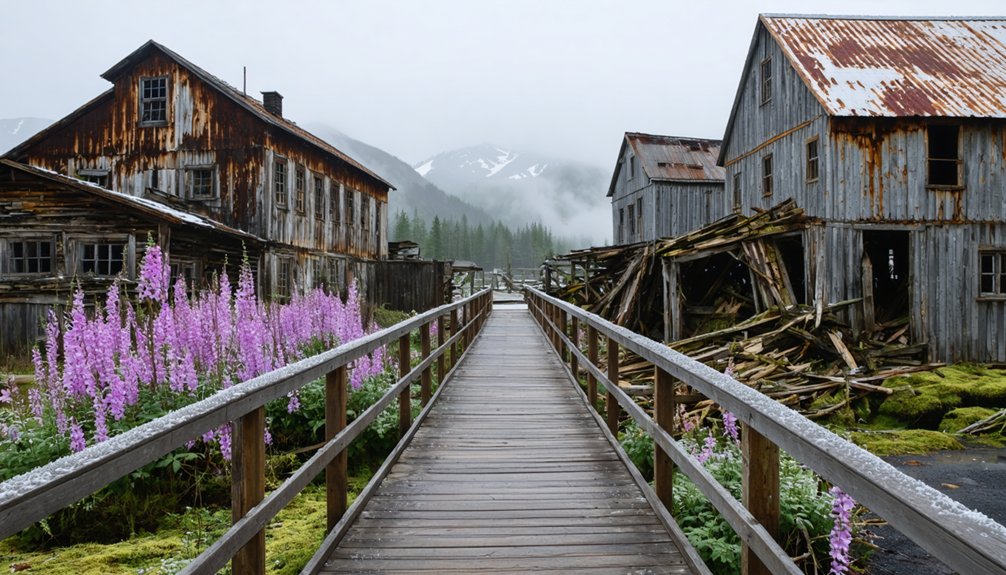
You’ll find over 100 documented ghost towns across Alaska’s rugged landscape, each telling a unique story of boom and bust. These abandoned settlements include former gold rush camps, copper mining towns like Kennicott, relocated Native villages, and old military outposts. While some sites have completely vanished into the wilderness, others like Kennecott’s iconic red mill building remain remarkably preserved. Alaska’s ghost towns offer a fascinating glimpse into the state’s rich frontier history and ongoing environmental challenges.
Key Takeaways
- Alaska has over 100 documented ghost towns, ranging from abandoned mining camps to former mission villages and trading posts.
- Kennicott, a National Historic Landmark, became a ghost town in 1938 after producing 120.8 million pounds of copper during its peak.
- Gold rush ghost towns include Iditarod, Dyea, Treadwell, Independence Mine, and Fort Egbert, which once supported thousands of residents.
- Environmental challenges like erosion, flooding, and permafrost thaw have forced the abandonment of numerous Native Alaskan villages.
- Many ghost towns remain preserved, with some featuring original structures and serving as tourist attractions or historical sites.
Defining Alaska’s Ghost Towns and Their Historical Significance
While many states have ghost towns from bygone mining booms, Alaska’s abandoned settlements represent a more diverse historical tapestry.
You’ll find that historical definitions of ghost towns here extend far beyond mining camps to include former mission villages, trading posts, and relocated native communities spanning from 18th-century Russian settlements through 20th-century resource rushes.
Settlement patterns reveal at least 100 documented ghost towns across Alaska’s varied landscape, though experts believe this count is conservative.
You’ll discover these sites scattered throughout the Seward Peninsula, Yukon River basin, and Aleutian regions. Some remain completely abandoned, while others maintain sparse year-round populations or seasonal tourism.
The sites preserve vital evidence of indigenous heritage, economic changes, and environmental challenges that have shaped Alaska’s human geography over centuries.
One notable example is the town of Ellamar, where rich copper deposits once supported a thriving community of 300 residents during the early 20th century.
The devastating 1918 flu epidemic led to the complete abandonment of several villages, including the settlement of York.
Mining Ghost Towns: From Boom to Abandonment
You’ll find no better example of Alaska’s mining ghost towns than Kennicott, where the discovery of rich copper deposits in 1900 sparked a 38-year boom that produced up to $200 million worth of ore.
The company town flourished with over 600 residents, modern amenities, and the highest-paid workers in the lower 48 states, until depleted deposits and Depression-era copper prices forced its closure in 1938. Construction workers and miners endured harsh winter conditions while building the essential infrastructure.
When the last train departed on November 10, 1938, residents left behind a perfectly preserved snapshot of early 20th-century mining life, which you can still explore today in the Wrangell-St. Elias National Park. The town operated under strict regulations against alcohol, leading many workers to seek entertainment in the nearby town of McCarthy.
Copper King Kennicott’s Decline
After reaching its peak production of 120.8 million pounds of copper in 1916, the mighty Kennicott mining operation began showing signs of decline by the mid-1920s.
The operation was built on 70% pure copper deposits, making it one of the richest copper mines ever discovered. You’ll find that geologists predicted the end of high-grade ore bodies, and by the early 1930s, the richest deposits were depleted. Despite generating over $200 million in total revenues, the writing was on the wall.
The decline hit hard and fast. You can trace Kennecott’s downfall through the systematic closure of its five mines: Glacier in 1929, followed by Mother Lode, Erie, Jumbo, and Bonanza in 1938. Due to potential confusion over the spelling, many historical records use multiple name variations when referring to the mining operations.
When the last train departed on November 10, 1938, it marked the end of an era. The once-bustling operation, which employed up to 600 workers, became an instant ghost town, preserved today as a National Historic Landmark.
Gold Rush Ruins Today
Throughout Alaska’s rugged landscape, five remarkable ghost towns stand as silent witnesses to the state’s gold rush era: Iditarod, Dyea, Treadwell, Independence Mine, and Fort Egbert.
At its peak, Iditarod supported up to 11,000 residents. These gold rush ghost towns tell unique stories of boom-and-bust cycles. You’ll find Iditarod’s remains along its namesake river, where it once served as a crucial supply hub.
Dyea’s ruins mark the start of the famous Chilkoot Trail, while Treadwell’s ghostly structures near Juneau showcase late 1800s mining operations. The Palm Sunday Avalanche of 1898 brought devastating tragedy to Dyea when over 70 travelers perished.
Independence Mine, now a state historical park, preserves the legacy of Alaska’s largest gold-producing district.
Fort Egbert in Eagle represents the military presence during the rush.
Today, these mining heritage sites serve as time capsules, allowing you to explore Alaska’s rich mining history through their preserved structures and artifacts.
Gold Rush Era Settlements Lost to Time
During Alaska’s gold rush era, numerous settlements sprang up across the territory’s harsh landscape, only to vanish as mining fortunes shifted.
You’ll find ghostly echoes of these lost communities at places like Iditarod, once a bustling supply hub that served as an essential staging point for interior gold operations. Today, only scattered foundations remain where hundreds once lived and worked. Fort Egbert stands as a historic reminder along the Yukon River banks, preserving the spirit of those adventurous times.
Dyea tells a similar tale of Alaska’s mining heritage. This major gateway to the Klondike rush housed thousands before Skagway’s rise led to its decline. The town thrived with over 150 businesses including hotels, restaurants, and saloons during its peak.
Nature reclaimed the site through floods and avalanches, leaving just wharf pilings and foundations for modern explorers to discover. While Kennicott survived as a preserved copper mining town, most gold rush settlements have faded into the wilderness, marking chapters in Alaska’s frontier story.
Native Villages: Relocated and Abandoned Communities
You’ll find that Alaska’s Native villages face unprecedented challenges from climate-induced erosion, with over 200 communities affected and 31 requiring complete relocation.
The environmental pressures have accelerated the abandonment of traditional settlements, as evidenced by places like Napakiak losing 50 feet of shoreline since 2018 and Newtok’s urgent plea for federal relocation assistance.
These forced migrations leave behind not just physical structures but centuries of cultural heritage, including archaeological sites like the Esook trading post and Kolovik Inupiaq village, which are now being claimed by rising waters.
Environmental Forces Drive Relocation
As rising temperatures accelerate climate change in Alaska at rates 2-3 times faster than the global average, Native villages face unprecedented environmental threats. The environmental impacts have forced many communities to confront difficult choices about their future, testing community resilience in the face of mounting challenges.
- Of Alaska’s 229 federally recognized Native villages, 144 face damage from erosion, flooding, or thawing permafrost.
- Northwestern and western Alaska communities face the highest risks, particularly along the Bering Sea coast.
- More than 30 villages are currently in process or need relocation.
- Relocation costs can reach hundreds of millions per community, with projects like Newtok’s move to Mertarvik requiring $160 million.
These relocations involve complex coordination between tribal, federal, state, and local entities, often leading to lengthy timelines and significant funding challenges.
Cultural Heritage Left Behind
The abandonment of Native Alaskan villages has left behind a poignant legacy of cultural displacement spanning more than a century.
You’ll find ancestral memories preserved in places like Kalifornsky’s graveyard, where 16 unmarked Spanish flu victims rest behind a fence, while elder Peter Kalifornsky’s grave stands as a sentinel outside.
Cultural legacies endure despite forced relocations, as seen in the Unangax̂ people who maintain their identities from lost villages like Attu and Kashega.
The striking Ukivokmiut village on King Island, built on 45-degree slopes with ingenious stilts, stands empty – a reflection of how mandatory mainland schooling fractured traditional ways of life.
Each abandoned site, from Three Saints Bay to the eight vacant Dena’ina villages, tells a story of communities adapting to profound change while carrying their heritage forward.
Maritime and Cannery Ghost Sites Along Alaska’s Coast

Along Alaska’s rugged coastline, five significant maritime ghost sites stand as remnants of the state’s fishing and seafaring heritage.
From Three Saints Bay’s pioneering Russian settlement to the mysterious Portlock Cannery, these abandoned locations tell tales of maritime trade and cannery operations that once thrived along these shores.
- Three Saints Bay served as Alaska’s first permanent Russian settlement until a devastating 1792 earthquake forced residents to relocate.
- The Portlock Cannery site, with its unexplained accidents and mass exodus, remains one of Alaska’s most enigmatic ghost towns.
- Dyea’s decline followed the tragic 1898 avalanche that killed 70 people and shifted maritime traffic to Skagway.
- Ukivok’s steep hillside settlement on King Island stands frozen in time, abandoned by its seafaring people who once hunted marine mammals from this strategic location.
Military Ruins and Cold War Remnants
Scattered across Alaska’s vast landscape, abandoned military installations from the Cold War era stand as silent sentinels of American defense strategy.
You’ll find the Site Summit Nike Missile Site in the Chugach Mountains, where missile launchers and radar systems once protected Anchorage.
On Adak Island, the former Naval Air Facility’s ghostly remnants include the mysterious Seven Doors of Doom nuclear bunkers, while Whittier’s massive Buckner Building sits empty, its bomb-proof walls housing memories of a thousand soldiers.
This Cold War legacy extends to remote radar stations like Oliktok and former air bases that monitored Soviet activity.
Today, these installations tell a compelling story of Alaska’s strategic importance, with abandoned barracks, rusting equipment, and concrete bunkers slowly surrendering to nature’s relentless advance.
Natural Disasters That Created Ghost Towns
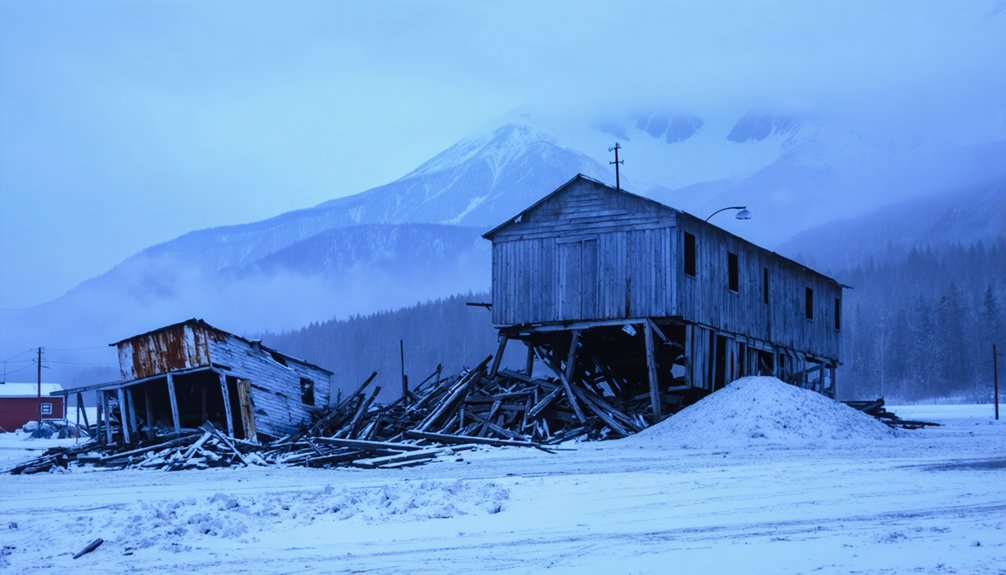
Devastating natural forces have transformed numerous Alaskan settlements into ghost towns, with earthquakes and tsunamis inflicting the most dramatic changes.
You’ll find stark reminders of natural disaster impacts throughout the state, where entire communities were forced to relocate or abandon their homes entirely.
- The 1964 Good Friday earthquake submerged Portage, creating eerie “ghost forests” and forcing residents to abandon buildings now below the high-tide line.
- Old Valdez relocated after earthquake-triggered tsunamis destroyed the original settlement.
- The 1898 Palm Sunday Avalanche contributed to Dyea’s demise as a gold rush staging town.
- Storm surges and typhoon remnants have displaced over 1,500 people from western Alaska villages.
Historical town relocations weren’t limited to coastal areas – interior mining camps like Dome City succumbed to earthquakes and avalanches, while permafrost thaw has destabilized remote settlements.
Environmental Changes Forcing Town Abandonment
Alaska’s coastal towns face relentless environmental pressures that have transformed once-thriving communities into abandoned settlements.
You’ll find entire villages forced to relocate as rising seas and intensifying storms accelerate coastal erosion, particularly visible in places like Ukivok where stilted homes perch precariously on eroding cliffs.
In Alaska’s northern regions, thawing permafrost has destabilized building foundations and infrastructure, making many towns structurally unsound and ultimately uninhabitable.
Coastal Erosion Drives Relocation
While coastal erosion has long affected Alaska’s shorelines, dramatic increases in erosion rates since the 2000s have forced multiple communities to face relocation or abandonment. The erosion impacts have intensified as protective sea ice diminishes, leading to unprecedented coastal migration challenges.
- Erosion rates along Alaska’s Arctic Beaufort Sea have doubled from 20 ft/yr to 45 ft/yr in some areas.
- At least 31 Alaskan villages face imminent displacement from erosion and flooding.
- Communities like Newtok, Shishmaref, and Kivalina are actively pursuing relocation plans.
- Over 84% of Alaska’s monitored shoreline segments have retreated since the 1940s.
You’ll find thawing permafrost, rising sea levels, and intensifying storms combining to accelerate coastal loss, making many traditional village sites increasingly uninhabitable and forcing communities to abandon their ancestral lands.
Permafrost Thaw Destroys Towns
Permafrost thaw poses an existential threat to Alaska’s built environment, with 85% of the state’s land area susceptible to ground failure as warming temperatures destabilize frozen soils.
You’ll find over 19,500 documented thaw locations across the state, where permafrost impacts range from cracked foundations to complete structural collapse.
The thaw consequences are devastating for communities. When ice-rich ground melts, it creates sinkholes that swallow buildings and infrastructure.
You’ll see homes tilting as uneven ground settlement twists their frames, while failed water systems and sewage lagoons make towns unlivable.
In places like Point Lay, rapid thawing has triggered emergency declarations as buildings crack and storage tanks rupture.
These conditions often force residents to abandon their communities, especially when repair costs soar into the millions and critical services become impossible to maintain.
Rising Seas Threaten Communities
As rising seas increasingly batter Alaska’s coastline, you’ll find nearly a quarter of buildings across 46 coastal communities lying vulnerable within historical floodplains. Flood vulnerability will likely worsen, with projections showing up to 37% of structures at risk by 2100 due to sea-level rise and coastal erosion.
- Western Alaska faces the highest current flood exposure, with recent storms destroying vessels and lifting buildings off foundations.
- Storm damage to critical infrastructure disrupts power, transportation, and essential services.
- Repeated flooding destroys subsistence gear and boats, threatening food security.
- Rising repair costs and insurance rates make maintaining community resilience increasingly difficult.
These pressures force tough choices: adapt, relocate, or abandon communities entirely as traditional ways of life become unsustainable in these changing coastal environments.
Preserved Ghost Towns You Can Visit Today
Though many Alaskan ghost towns have crumbled into ruins, several remarkably preserved sites offer visitors a glimpse into the state’s rich frontier history.
Alaska’s abandoned settlements stand frozen in time, beckoning modern explorers to discover stories of frontier dreams and forgotten lives.
You’ll find Kennecott’s iconic red mill building standing tall, where ghost town tours take you through 14 stories of original machinery.
At Dyea, you can walk the same paths as gold rush miners, now embraced by silent forests.
For a more remote adventure, Ukivok’s cliffside stilted homes showcase historical preservation in its most dramatic form.
Near the Seward Highway, Portage’s earthquake-ravaged foundations emerge from tidal marshes, while Fort Egbert’s military structures still guard the Yukon River.
Each site tells a unique story of Alaska’s past, from mining booms to natural disasters.
Life After Abandonment: Current State of Alaska’s Ghost Towns
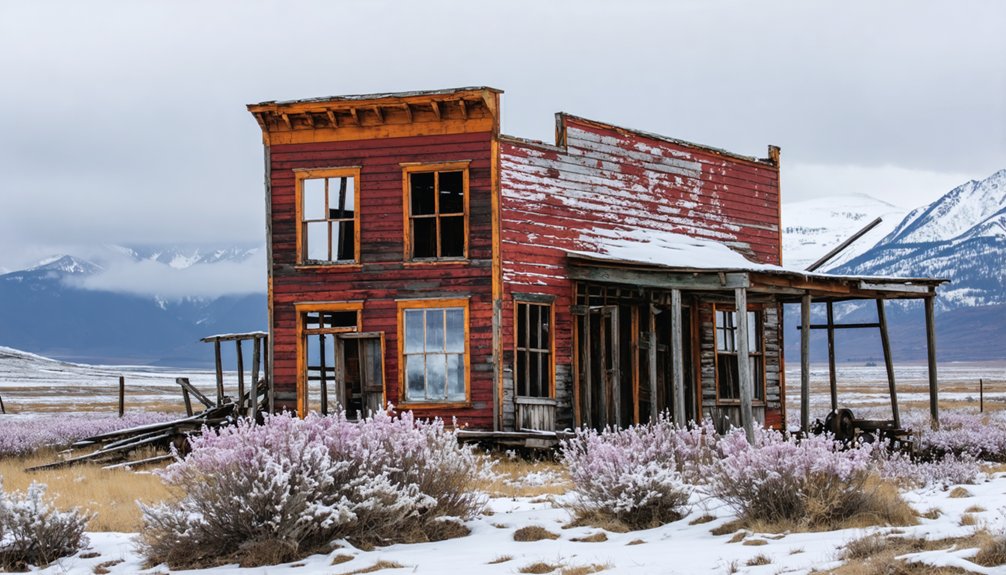
What becomes of Alaska’s ghost towns once their last residents depart? The abandonment patterns vary dramatically across the state, from completely vanished settlements to partially inhabited historic communities showing remarkable community resilience.
ghost towns throughout alaska’s history tell stories of prosperity, struggle, and adaptation to the harsh northern climate. Each site serves as a haunting reminder of the people who once built their lives there, many drawn by dreams of gold and opportunity. Today, these remnants offer a unique glimpse into the past and attract adventurous visitors eager to explore the forgotten corners of the state.
Among the fascinating aspects of exploring these sites are the annual events in ghost towns that often celebrate local history and culture. These gatherings attract not only history enthusiasts but also families looking to create new memories in places steeped in stories. As visitors share tales and partake in activities, the spirit of these once-thriving communities comes alive once more, bridging the past with the present.
- You’ll find barren sites where nature has reclaimed everything except foundations, especially in coastal areas where erosion and storms have taken their toll.
- Many locations feature deteriorating structures with collapsed roofs and failing infrastructure, accelerated by freeze-thaw cycles and harsh weather.
- Some ghost towns maintain a tiny year-round population of caretakers or tourism workers, preserving a thread of human presence.
- Federal agencies protect certain historic sites through restoration efforts, while others remain under tribal jurisdiction or private ownership, leading to varied preservation outcomes.
Frequently Asked Questions
Are There Any Haunted Ghost Towns in Alaska?
You’ll find haunted legends at Kennicott’s copper mill complex, Skagway’s Red Onion Saloon, and Treadwell’s ruins, where ghostly sightings and unexplained phenomena are frequently reported by visitors and guides.
Can You Legally Live in an Alaskan Ghost Town?
Home is where the heart is, but you can’t legally settle most Alaskan ghost towns. Federal land ownership, preservation laws, and building codes restrict living arrangements, though some towns like Chitina permit regulated residency.
What Items Are Commonly Left Behind in Alaskan Ghost Towns?
You’ll find abandoned artifacts like mining equipment, household items, tools, and furniture. Historical remnants include old buildings, machinery, personal belongings, kitchenware, photographs, and various industrial equipment from past operations.
How Many Undiscovered Ghost Towns Exist in Alaska’s Wilderness?
You’ll never know the exact number of hidden settlements in Alaska’s vast wilderness, but remote exploration suggests dozens remain undiscovered across the 13.2 million acres of challenging terrain.
Do Any Alaska Ghost Towns Still Have Electricity or Utilities?
You won’t find active utilities in Alaska’s major ghost towns. The abandoned infrastructure at Kennicott, Treadwell, Ukivok, and Dyea lacks any maintained electricity or modern utility availability since their desertion.
References
- https://www.atlasobscura.com/things-to-do/alaska/ghost-towns
- https://live.laborstats.alaska.gov/sites/default/files/trends/may24art2_0.pdf
- https://www.thealaskalife.com/blogs/news/alaska-ghost-towns-youve-probably-never-heard-of
- https://getlostinamerica.com/alaska-ghost-towns/
- https://thealaskafrontier.com/ghost-towns-in-alaska/
- https://www.geotab.com/ghost-towns/
- https://www.gi.alaska.edu/alaska-science-forum/ghost-towns-scattered-across-alaska-map
- https://www.youtube.com/watch?v=Cz0IGc2Uy0E
- https://ghosttownsbix.com/why-ellamar-became-an-alaskan-ghost-town/
- http://home.nps.gov/thingstodo/ghost-towns.htm