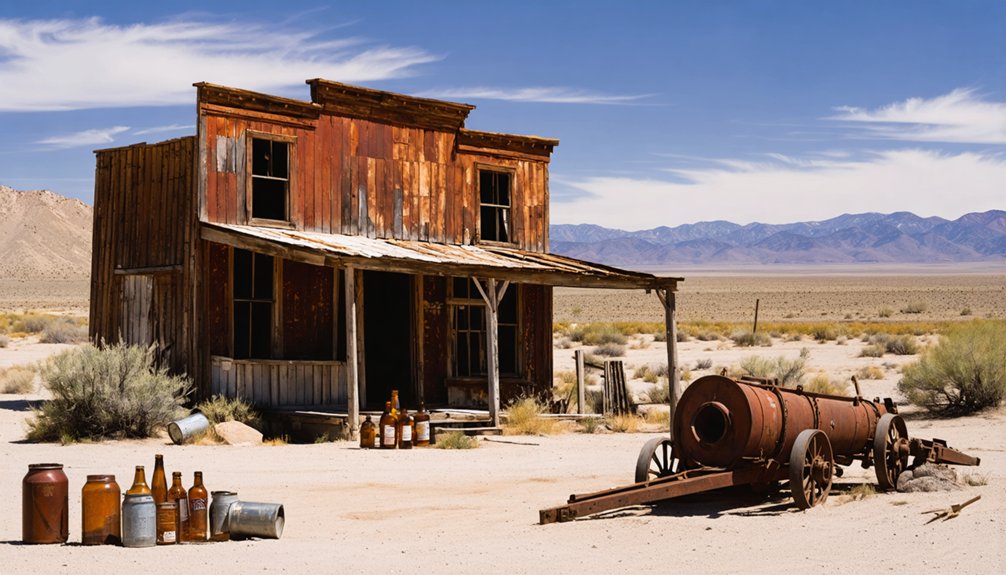
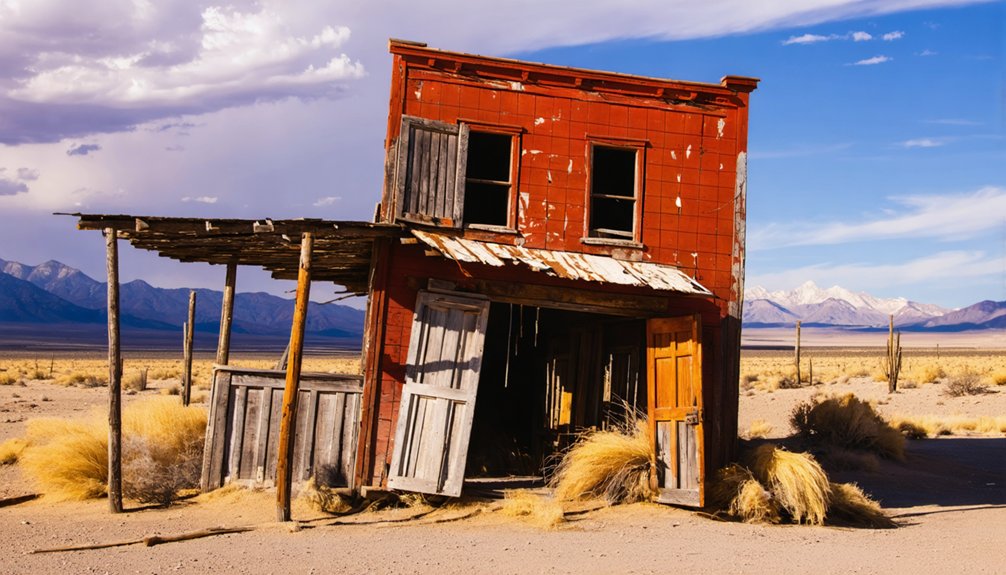
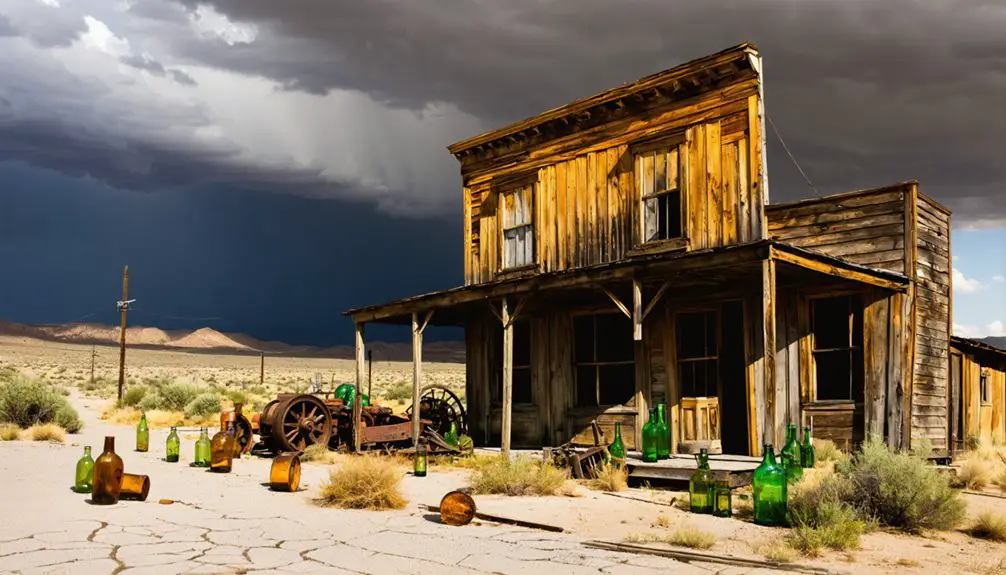
You’ll discover over 600 documented ghost towns scattered across Nevada’s desert landscape, making it one of America’s richest regions for abandoned settlements. These historic sites, dating from 1849 to 1906, showcase the state’s mining heritage through preserved structures like opera houses, saloons, and mining equipment. Notable locations include Rhyolite with its iconic Bottle House, Goldfield’s early 1900s architecture, and Virginia City’s living museum status. The vast network of these fascinating time capsules holds countless stories waiting to be explored.
Key Takeaways
- Nevada contains over 600 documented ghost towns and more than 1,200 historical camps and outposts across the state.
- Famous ghost towns include Rhyolite, Goldfield, Belmont, and Virginia City, each featuring unique preserved structures from Nevada’s mining era.
- Most ghost towns emerged during Nevada’s mining booms between 1849 and 1906, reflecting the state’s rich mining heritage.
- Ghost towns now serve as popular tourist attractions, offering guided tours, paranormal events, and cultural festivals throughout the year.
- Best times to visit Nevada’s ghost towns are spring (March-May) and fall (September-November) when weather conditions are most favorable.
Nevada’s Rich Ghost Town Heritage
While California’s Gold Rush often dominates Western history, Nevada’s ghost town legacy stands unmatched, with over 600 documented abandoned settlements scattered across its rugged landscape.
You’ll find these remnants of mining history expanding to over 1,200 sites when including historical camps and outposts. The state’s ghost town preservation efforts protect stories spanning from the 1849 Dayton gold discovery through the boom years of Goldfield’s 20,000-strong population in 1906. Visitors can explore these sites through guided walking tours to learn about their historical significance.
These abandoned places chronicle Nevada’s dramatic mining cycles, where strikes could transform empty desert into bustling cities almost overnight. From Belmont’s $15 million silver production to Goldfield’s reign as Nevada’s largest city, you’re witnessing the physical remains of an era when fortunes were made and lost in the pursuit of mineral wealth. Many of these sites range from completely abandoned ruins to semi-preserved towns with a handful of remaining residents.
Famous Abandoned Mining Towns Worth Visiting
Among Nevada’s most compelling ghost towns, four historic mining sites stand out for their exceptional preservation and accessibility: Rhyolite, Goldfield, Belmont, and Virginia City.
You’ll find photogenic Rhyolite ruins near Beatty, featuring a striking three-story bank facade and the restored Bottle House.
Goldfield museums showcase the town’s early 1900s prosperity through its surviving brick commercial buildings and mining artifacts.
In remote central Nevada, Belmont preservation efforts protect its 1860s courthouse and mill remains, though you’ll need to navigate gravel roads to reach it. Like many ghost towns that rose from sagebrush, Belmont’s ruins stand as testament to unfulfilled mining dreams. With over three hundred ghost towns scattered across Nevada, these abandoned settlements offer remarkable windows into the state’s mining heritage.
Virginia City architecture represents the height of Comstock Lode wealth, with its wooden false-front buildings, historic saloons, and commercial streets now serving as a living museum with guided tours and extensive interpretive programming.
Safety Tips for Ghost Town Exploration
Before venturing into Nevada’s ghost towns, you’ll need thorough safety preparations to navigate the unique hazards of abandoned mining sites. Your safety gear should include sturdy boots, protective clothing, and a well-stocked first-aid kit. Emergency planning must include sharing your itinerary with a trusted contact and carrying a satellite messenger for areas without cell service. Having medical care hours away, it’s essential to customize your first aid supplies for any specific health conditions of travelers. The presence of open mine shafts throughout these areas poses severe risks to explorers.
- Pack at least one gallon of water per person daily, plus high-energy food for unexpected delays.
- Travel with a high-clearance or 4×4 vehicle equipped with recovery gear and spare fuel.
- Stay out of unstable buildings and mine openings to avoid collapses and hidden drop-offs.
- Download offline maps and verify current road conditions before departing.
Remember to respect historical structures by leaving artifacts untouched and following all posted warnings and barriers.
Historical Significance and Cultural Impact
Nevada’s ghost towns serve as invaluable repositories of mining heritage, where you’ll find preserved headframes, mill foundations, and artifacts that document the state’s dramatic boom-and-bust cycles.
You can trace the evolution of 19th and early 20th-century mining technology through surviving industrial remains, while public buildings and domestic structures reveal the social fabric of these once-thriving communities.
Nevada contains over 600 ghost towns scattered across its landscape, making them a significant part of the state’s historical legacy.
These ghost towns in Nevada history offer a glimpse into the boom-and-bust cycles that defined the American West. Visitors can explore the remnants of once-thriving mining communities and learn about the people who inhabited them. Each site tells a story of adventure, hardship, and the relentless pursuit of fortune that shaped the state’s development.
These abandoned settlements now fuel cultural tourism through their compelling stories of prosperity and decline, drawing visitors who seek authentic connections to the American West’s mining era. Goldfield exemplifies this history, having transformed from a 20,000-resident boomtown into a living museum of Nevada’s golden age.
Mining Heritage Tells All
While the American West holds countless stories of boom-and-bust cycles, nowhere is mining heritage more dramatically preserved than in Nevada’s 600-plus ghost towns.
The 1849 Great Basin gold discovery and 1859 Comstock Lode triggered massive demographic shifts, transforming remote outposts into bustling cities where mining technology evolved rapidly to meet production demands.
You’ll find evidence of this remarkable era in:
- Towns that grew from 100 to 20,000 residents in just two years during the Comstock surge
- Advanced infrastructure like indoor plumbing and electricity in places like Rhyolite
- Sophisticated mining operations that yielded millions in silver, gold, and lead
- Preserved opera houses, saloons, and smelters that showcase the region’s rapid industrialization
These sites stand as proof of Nevada’s pivotal role in America’s mineral extraction history. In Goodsprings, the lead-zinc mining operations continued well into the mid-20th century, demonstrating the longevity of Nevada’s mineral wealth. Historic Eureka exemplifies this legacy, where fifty active mines once made it Nevada’s second-largest city.
Ghost Stories Drive Tourism
Today’s ghost towns serve as powerful economic engines for rural Nevada, transforming abandoned mining settlements into lucrative tourist destinations.
You’ll find these historical sites generating revenue through guided tours, paranormal events, and seasonal festivals, particularly during Halloween and summer months. Ghost narratives have become central to the region’s tourism impact, with local businesses reporting significant uplift from marketed haunted experiences.
The preservation of these sites involves careful balance between tourism development and site protection.
You’ll encounter interpretive signs, restored artifacts, and curated walking maps that enhance your understanding while protecting fragile structures. Local communities have embraced ghost stories as part of their cultural identity, incorporating these narratives into educational programs and annual events that strengthen civic pride while differentiating Nevada’s rural tourism from its urban casino counterpart.
Living Ghost Towns: Where Past Meets Present
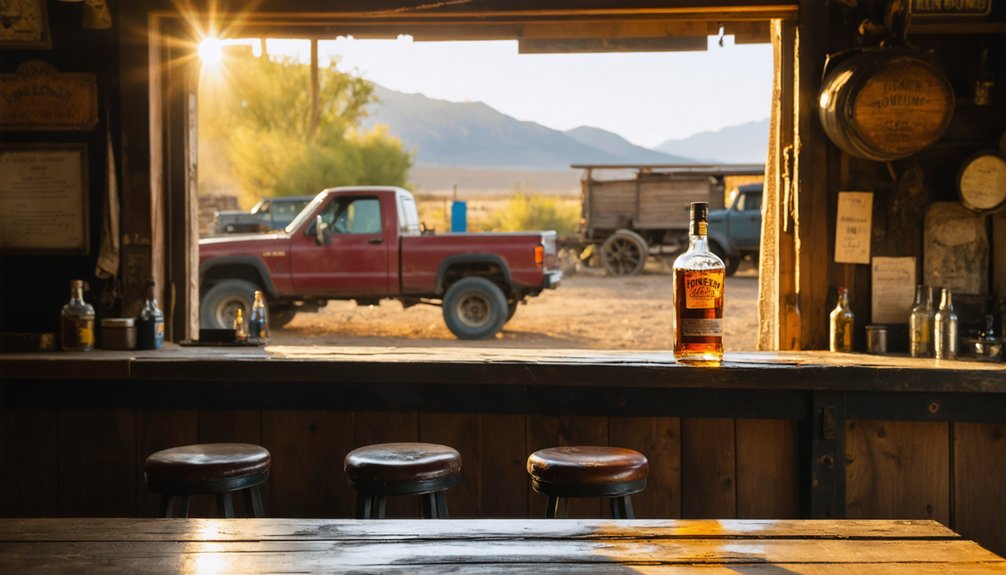
Throughout the American West, living ghost towns stand as unique hybrid communities where the past and present converge in fascinating ways. Nevada alone hosts numerous living ghost towns where you’ll find small but resilient populations maintaining historic structures while adapting to modern needs.
These communities, born from mining booms of the 19th and 20th centuries, now attract heritage tourism while supporting year-round residents.
Former boomtowns find new life balancing their rich mining heritage with modern survival as tourist destinations and living communities.
- Historic hotels and saloons transformed into bed-and-breakfasts
- Former general stores converted to museums and art galleries
- Restored train depots serving as community gathering spaces
- Original miners’ churches repurposed for special events
You’ll discover populations ranging from single households to several hundred residents, with many earning their living through tourism, remote work, or small-scale mining operations.
Despite limited services and isolation, these communities preserve a tangible connection to Nevada’s frontier past.
Best Times and Seasons to Visit Ghost Towns
You’ll find Nevada’s ghost towns most accessible during spring and fall when temperatures are moderate and snow hasn’t yet blocked mountain passes.
Winter storms can make many high-elevation sites like Bennetville completely inaccessible, while summer brings intense desert heat that requires careful planning and extra water supplies.
The ideal visiting windows typically fall between March-May and September-November, when you can explore places like Rhyolite and Belmont without weather extremes hampering your experience.
Spring and Fall Access
When planning a visit to Nevada’s ghost towns, spring and fall emerge as the prime seasons due to their moderate temperatures and excellent travel conditions.
Spring visits offer blooming desert flora and longer daylight hours, though you’ll need to watch for muddy roads from snowmelt.
Fall conditions provide stable dirt-road access before winter storms arrive, with comfortable temperatures perfect for exploration.
- Navigate high-elevation locations before seasonal closures hit in late fall
- Witness desert wildflowers and wildlife migrations during spring months
- Take advantage of heritage festivals and Halloween events in autumn
- Experience top-notch photography conditions with dramatic fall colors and spring desert blooms
Remember to check seasonal operating schedules for museums and guided tours, as many facilities adjust their hours during shoulder seasons.
You’ll also want to monitor weather forecasts and road conditions, especially for remote locations.
Winter Weather Challenges
Despite their haunting allure, Nevada’s ghost towns pose significant winter hazards that demand careful consideration before visiting.
You’ll face winter road hazards including treacherous mountain passes, sudden whiteouts, and black ice on remote access roads. Many sites become completely inaccessible without 4WD and chains, while cell service gaps leave you vulnerable in emergencies.
Snow preservation challenges threaten both your safety and historic structures. Freeze-thaw cycles accelerate building deterioration, causing roof collapses and masonry damage.
You’ll need specialized cold-weather gear to combat hypothermia risks, as wind chill in exposed desert basins can be severe. For safer exploration, target early winter visits during late November to early December when snowfall is typically lighter.
Remember that limited medical facilities in these remote areas mean you must plan thoroughly for self-sufficiency.
Summer Heat Safety Tips
Visiting Nevada’s ghost towns requires strategic timing to avoid dangerous heat conditions that can exceed 100°F during peak summer months. Proper heat acclimatization strategies and hydration techniques are essential for your safety when exploring these remote locations.
- You’ll need at least one gallon of water per person daily, plus electrolyte replacement drinks for strenuous activities.
- You should explore during sunrise or early morning hours when temperatures are coolest and lighting is ideal for photography.
- You’ll want to wear UV-protective clothing, including a broad-brimmed hat and long sleeves, rather than relying solely on sunscreen.
- You must carry navigation tools, emergency communications, and vehicle supplies since you’ll be traveling through areas with sparse services.
Plan your ghost town visits during spring or late fall for favorable conditions and reduced heat risks.
Planning Your Nevada Ghost Town Adventure
As you commence exploring Nevada’s vast collection of over 600 documented ghost towns, proper planning becomes essential for both safety and preservation. Your ghost town logistics should include verifying land ownership through BLM maps, as many sites lie on public lands while others remain private property.
You’ll need high-clearance or 4×4 vehicles for most significant locations, along with GPS coordinates and detailed topographic maps.
Exploration ethics demand strict adherence to preservation guidelines. Remember that removing artifacts from protected sites is illegal, and you must follow leave-no-trace principles.
Always carry satellite communications, extra water, and vehicle recovery equipment, as cell service is unreliable in remote areas. Plan your visits during spring or fall to avoid extreme weather conditions that could make access hazardous.
Frequently Asked Questions
Can I Stay Overnight in Any Nevada Ghost Towns?
Want to sleep where miners once roamed? You’ll find overnight accommodations in Gold Point’s restored cabins, Virginia City’s haunted hotels, and Goldfield Stop Inn, complete with ghost town amenities and WiFi.
Are There Guided Tours Specifically for Paranormal Investigations?
You’ll find dedicated paranormal tours with ghost hunting elements in Lake Tahoe’s Cal-Neva Lodge, Carson City’s West Side walks, and Reno’s Lovers Lane, all offering specialized equipment and experienced guides.
Which Ghost Towns Are Closest to Las Vegas?
Like beacons in the desert, Goodsprings and Nelson beckon closest to Vegas, just 25-45 minutes away. You’ll find the Pioneer Saloon’s historic charm and Techatticup Mine’s gold rush remnants waiting nearby.
What Photography Permits Are Required for Filming in Ghost Towns?
You’ll need specific photography regulations and filming permissions based on who owns the ghost town – BLM permits for federal land, state permits for state parks, or private location fees for commercial sites.
Are Metal Detectors Allowed in Nevada’s Abandoned Mining Towns?
You’ll need to check specific metal detecting regulations, as most historic ghost towns prohibit it. BLM lands may allow detecting, but historical preservation concerns restrict artifact removal from protected sites.
References
- https://en.wikipedia.org/wiki/List_of_ghost_towns_in_Nevada
- https://www.visittheusa.com/experience/6-nevada-ghost-towns-explore-if-you-dare
- https://www.atlasobscura.com/things-to-do/nevada/ghost-towns
- https://nvtami.com/nevada-ghost-towns-map/
- https://www.smithsonianmag.com/sponsored/nevadas-living-and-abandoned-ghost-towns-180983342/
- https://travelnevada.com/ghost-town/
- https://nvtami.com
- https://forgottennevada.org/sites/newlist.html
- https://www.ghosttowns.com/states/nv/nv.html
- https://findingnevadawild.com/goldfield-the-old-west-lives-in-nevadas-best-ghost-town/