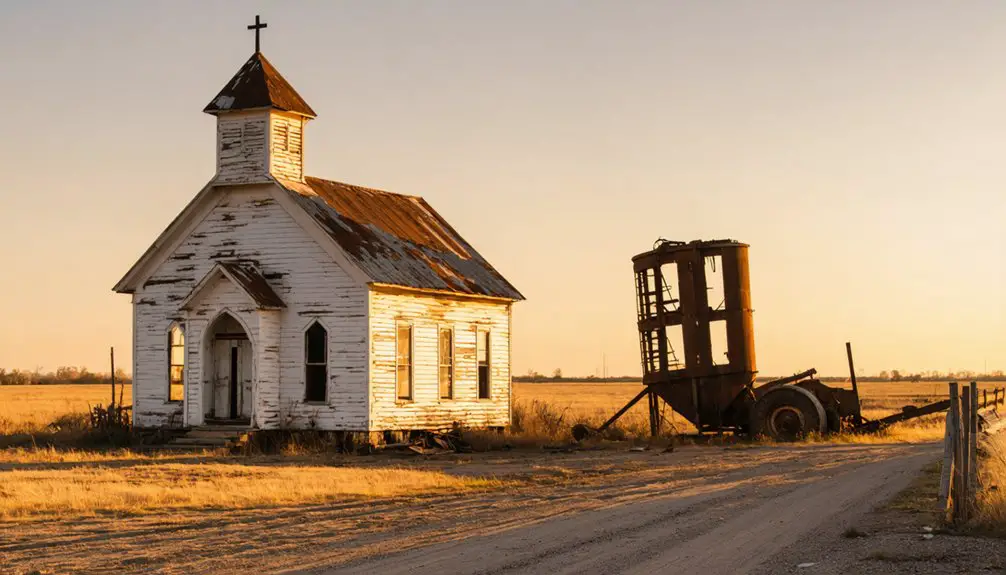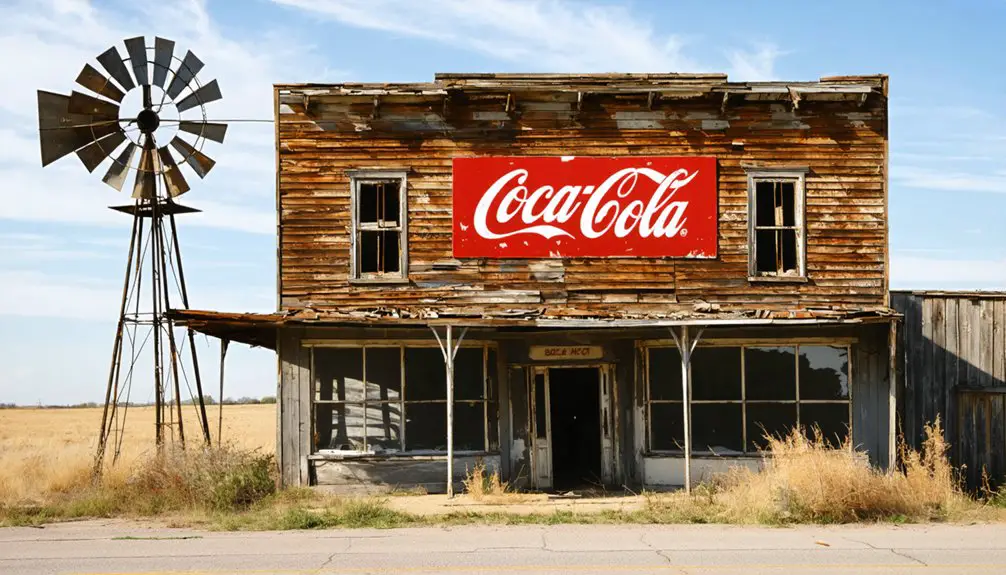
You’ll find Oklahoma leads the nation with approximately 2,000 ghost towns, representing the highest concentration in the U.S. These abandoned settlements range from mining towns like Picher, devastated by environmental contamination, to former oil boom communities like Empire City. Many towns became deserted after being bypassed by highways or depleting their natural resources. From Pushmataha County’s 13 documented ghost towns to Route 66’s abandoned storefronts, each site tells a unique story of Oklahoma’s complex past.
Key Takeaways
- Oklahoma has approximately 2,000 ghost towns, representing the highest concentration of abandoned settlements in the United States.
- Picher, Oklahoma’s most famous ghost town, was evacuated by 2009 due to toxic lead mining contamination and structural instability.
- Many Oklahoma towns became abandoned after being bypassed by highways or following the depletion of natural resources.
- Pushmataha County alone contains 13 documented ghost towns, while Norman’s region has 11 abandoned settlements within 25 miles.
- Historic Route 66 features numerous ghost towns, including Texola, which displays abandoned motels and boarded storefronts.
The Scale of Oklahoma’s Abandoned Towns
While many states have their share of abandoned settlements, Oklahoma stands out with an estimated 2,000 ghost towns scattered across its landscape, creating one of the densest concentrations of abandoned communities in the American heartland.
Oklahoma’s ghost towns, numbering near 2,000, represent an unmatched legacy of abandonment across America’s heartland.
You’ll find these ghost town demographics particularly concentrated in areas like Pushmataha County, which boasts 13 documented ghost towns, while Norman’s surrounding region contains at least 11 abandoned settlements within a 25-mile radius.
Many of these communities became ghost towns after being bypassed by highways, forcing businesses to close and residents to relocate.
Current vacancy statistics paint a broader picture of decline, with Oklahoma’s statewide vacancy rate at 11.2% – representing nearly 200,000 empty structures.
Towns like Okmulgee and Blackwell exemplify this trend, with vacancy rates exceeding 10%, while several communities have dwindled to populations under ten residents. Many of these properties are typically built in the 1950s, making them less appealing to potential buyers.
What Caused Towns to Become Abandoned
Although multiple factors contributed to Oklahoma’s ghost towns, the devastating impact of resource extraction stands out as a primary cause of abandonment.
You’ll find stark examples in places like Picher, where lead and zinc mining left a toxic legacy of contaminated water, poisoned soil, and deadly health effects. Resource depletion played a significant role too, as seen in oil boom towns like Empire City that vanished once the wells ran dry. Similarly, the decline of Ingalls began after outlaws were eliminated by lawmen who tracked down the infamous Doolin-Dalton Gang.
Mining pollution in Picher created catastrophic environmental damage, with over 100 million tons of mining waste and 14,000 abandoned shafts. The town produced over $20 billion worth of lead and zinc ore between 1917 and 1947.
The town’s fate was sealed by severe structural instability, as 86% of buildings were undermined and prone to collapse. When a devastating EF-4 tornado struck in 2008, it accelerated the inevitable, leading to federal buyouts and the town’s official closure in 2009.
Notable Ghost Towns Across the State
Oklahoma’s ghost towns reveal powerful stories of boom-and-bust mining operations, with Picher’s toxic lead mining legacy standing as one of America’s most complete abandoned municipalities.
You’ll discover the environmental devastation that forced Picher’s total evacuation by 2009, while other mining communities like Kusa, once Okmulgee County’s largest town, simply faded after their natural resources were depleted. Former mining boomtowns like Zincville were completely abandoned by 1954.
Along Historic Route 66, you can explore forgotten places where businesses and communities thrived before being bypassed by newer highways, leaving behind empty streets and abandoned structures that document the evolution of American transportation. Among these abandoned sites, all-black towns like Texola showcase Oklahoma’s rich cultural diversity during territorial settlement.
Mining Towns Tell Stories
Throughout the early to mid-1900s, resource extraction transformed numerous Oklahoma settlements into bustling boomtowns before their eventual abandonment.
You’ll find stark examples in Picher, where zinc and lead mining left a toxic legacy of contaminated groundwater and dangerous sinkholes, forcing residents to relocate by 2009.
Kusa’s coal-smelting operations once supported theaters and a power plant until a railroad bypass sealed its fate.
The mining legacy continues with Jumbo, where asphalt extraction created a brief boom before resources ran dry.
Lehigh’s coal-driven prosperity lasted longer, from 1880 to 1956, while Ingersoll’s story differed slightly – its fate tied to both oil and rail fortunes until a 1957 flood washed away hopes of recovery.
Cloud Chief, another once-thriving settlement, served as the Washita County seat from 1892 until its decline in 1964.
In Adamson, a devastating mine collapse in 1914 trapped fourteen miners and marked the beginning of the town’s decline.
These town memories remind us how closely tied communities were to their natural resources.
Route 66 Abandoned Places
When Interstate 40 replaced much of historic Route 66, it left behind a trail of near-ghost towns across Oklahoma’s western corridor.
You’ll find Route 66 relics scattered throughout communities like Texola, where boarded storefronts and abandoned motels tell stories of busier days. In Foss, Kobel’s gas station stands as a silent reminder of when travelers regularly stopped at these roadside havens. In 1930, Teola hosted 581 residents before falling into abandonment. The once-bustling town of Picher sits abandoned after environmental concerns forced residents to relocate.
- Depew exemplifies the “loneliest” stretches, where highway realignments diverted crucial traffic from once-thriving main streets.
- Erick’s quiet streets reveal the impact of changing transportation patterns.
- The Narcissa/White Oak area showcases industrial ruins and shuttered sawmills.
- Original Route 66 pavement segments peek through near Texola, marking where determined travelers once journeyed west.
Environmental Impact and Toxic Sites
Mining operations in northeastern Oklahoma left behind an environmental catastrophe that continues to plague former ghost towns like Picher, Cardin, and Treece.
The toxic waste legacy includes 178 million tons of chat piles containing lead and zinc mine tailings, while acid mine drainage has turned Tar Creek’s waters blood red since 1973.
You’ll find devastating environmental justice issues, with 34% of local children suffering from lead poisoning and miners battling silicosis and lung cancer.
The contamination doesn’t stop there – groundwater pollution, soil degradation, and windborne chat dust have created an uninhabitable wasteland.
Despite EPA Superfund designation in 1983 and ongoing cleanup efforts, the area remains severely scarred.
The structural damage is equally dire, with 159 buildings at risk of collapse from undermined foundations.
Preserving Oklahoma’s Ghost Town History
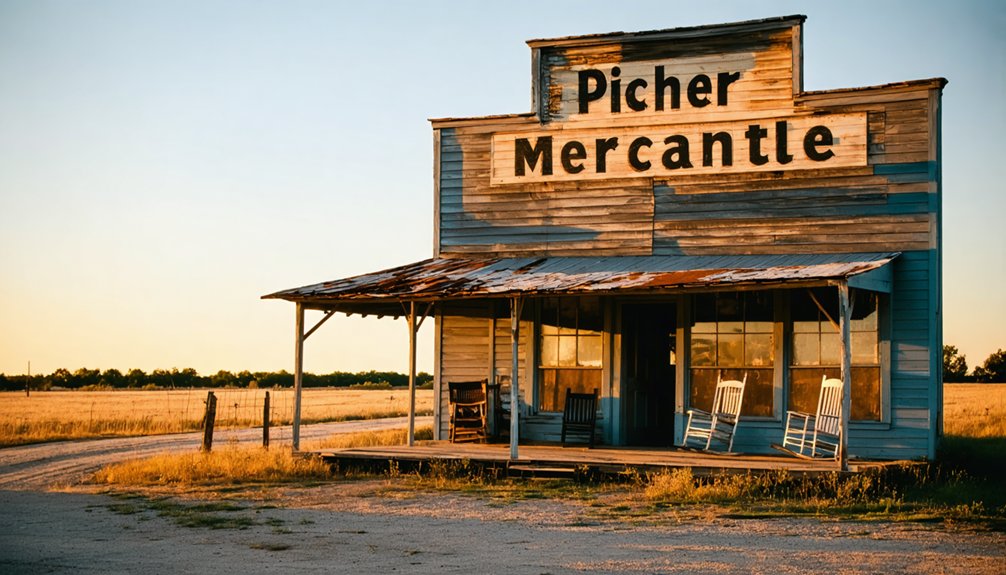
Dedicated efforts to preserve Oklahoma’s ghost town history span multiple fronts, from documentary filmmaking to museum curation and legal protections.
You’ll find preservation efforts ranging from Colleen Thurston’s “Drowned Land” film documenting Sardis Lake displacement to the careful relocation of Picher Mining Museum’s artifacts before its destruction.
- The Oklahoma Historical Society’s Encyclopedia documents roughly 2,000 ghost towns, maintaining vital historical records for future generations.
- Museums like No Man’s Land preserve Beer City’s cultural significance through artifacts and storytelling.
- Legal interventions, from the 1890 Organic Act to modern EPA buyouts, shape preservation strategies.
- Documentation projects, including “Ghost Towns In Oklahoma” website, actively capture these communities’ current states while connecting their past to present.
Cultural historians continue safeguarding these stories through various preservation approaches, ensuring Oklahoma’s ghost town legacy endures.
Planning Your Ghost Town Visit
Before commencing your Oklahoma ghost town expedition, you’ll need to carefully consider three critical planning elements: route logistics, safety protocols, and peak timing.
Begin your route planning by identifying major highways and secondary roads, particularly along historic Route 66 and state highways. Create an interactive map overlay to plot multiple sites per day, but verify land ownership and access rights, as many locations sit on private property or Corps of Engineers holdings.
Chart your ghost town journey along Oklahoma’s historic Route 66, mapping each stop while respecting private lands and protected areas.
Essential safety considerations include obtaining written permissions where required, avoiding structurally compromised buildings, and carrying emergency supplies for remote travel.
Time your visits during spring or fall for prime weather conditions, and schedule daylight-only explorations. Allow 60-90 minutes per site, and group destinations geographically to maximize efficiency in regions like the southeastern timber areas or western Dust Bowl territories.
Frequently Asked Questions
Are There Any Ghost Towns in Oklahoma That Are Still Inhabited?
You’ll find several inhabited ghost towns across Oklahoma, including Blackburn with about 25 families, Skedee with scattered residents, and Marshall maintaining roughly 200 people amid its historic town history.
The history of these communities offers a glimpse into the past, highlighting the challenges and changes that led to the creation of ghost towns in Oklahoma history. Many of these sites have been preserved, allowing visitors to explore the remnants of a bygone era. As you travel through the state, you’ll encounter fascinating stories and unique artifacts that celebrate Oklahoma’s rich heritage.
Exploring these abandoned locations means discovering Oklahoma’s unique ghost towns, where eerie silence mingles with the whispers of history. Each town has its own story to tell, often reflecting the lives of those who once called it home. You might even stumble upon remnants of old buildings and forgotten pathways that connect the present with the past.
Can I Legally Collect Artifacts or Items From Oklahoma Ghost Towns?
Like ancient treasures under lock and key, you can’t legally collect artifacts from Oklahoma ghost towns without proper permits due to strict preservation laws protecting historic sites and materials.
Which Oklahoma Ghost Towns Have Reported Paranormal or Haunted Activity?
You’ll find haunted legends at Skedee, where the witch’s curse echoes at night, Ingalls with its outlaw spirits, Picher’s abandoned church, and Texola’s Route 66 paranormal investigations report strange activity.
Are There Any Ghost Towns Accessible by Public Transportation?
You’ll find several ghost towns reachable by public transport options, including Texola and Picher via intercity bus routes, though you’ll need rideshare services for the final few miles of urban exploration.
Do Any Oklahoma Ghost Towns Host Regular Historical Reenactments or Events?
You’ll find historical festivals and reenactment events at several Oklahoma ghost towns, including Ingalls’ Dalton Gang shootout recreations, Boggy Depot’s heritage days, and Picher’s mining history commemorations.
References
- http://sites.rootsweb.com/~oktttp/ghost_towns/ghost_towns.htm
- https://kids.kiddle.co/List_of_ghost_towns_in_Oklahoma
- https://www.youtube.com/watch?v=5d-wHDTIbb0
- https://pocketsights.com/tours/tour/Shamrock-Oklahoma-Ghost-Towns-Creek-Lincoln-Payne-and-Pawnee-Counties-2749
- https://abandonedok.com/class/disappearing-town/
- https://www.okhistory.org/publications/enc/entry?entry=GH002
- https://www.ghosttownsinoklahoma.com/map
- https://247wallst.com/special-report/2016/11/12/20-american-ghost-towns/
- https://en.wikipedia.org/wiki/List_of_ghost_towns_in_Oklahoma
- https://www.preservationok.org/most-endangered-places-2025