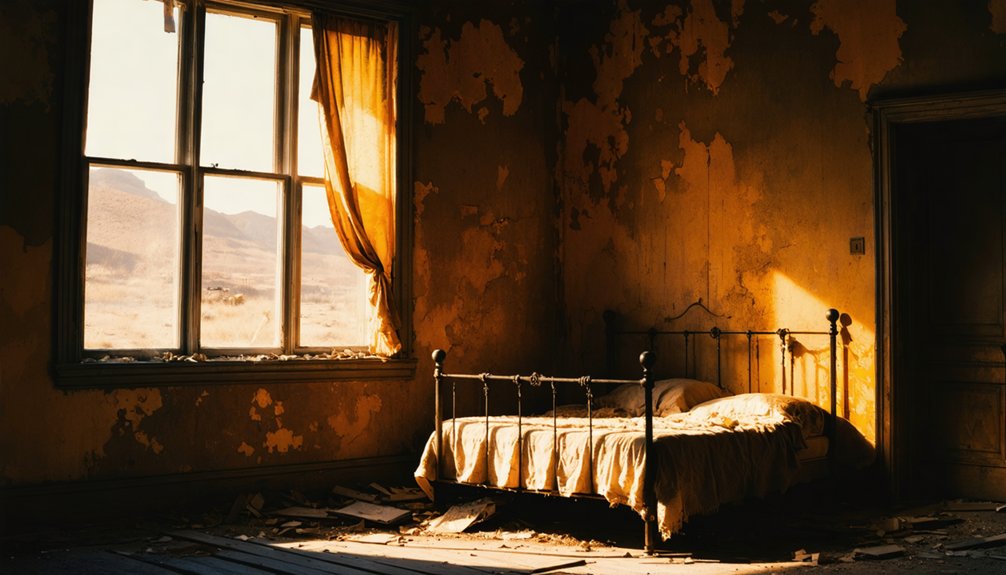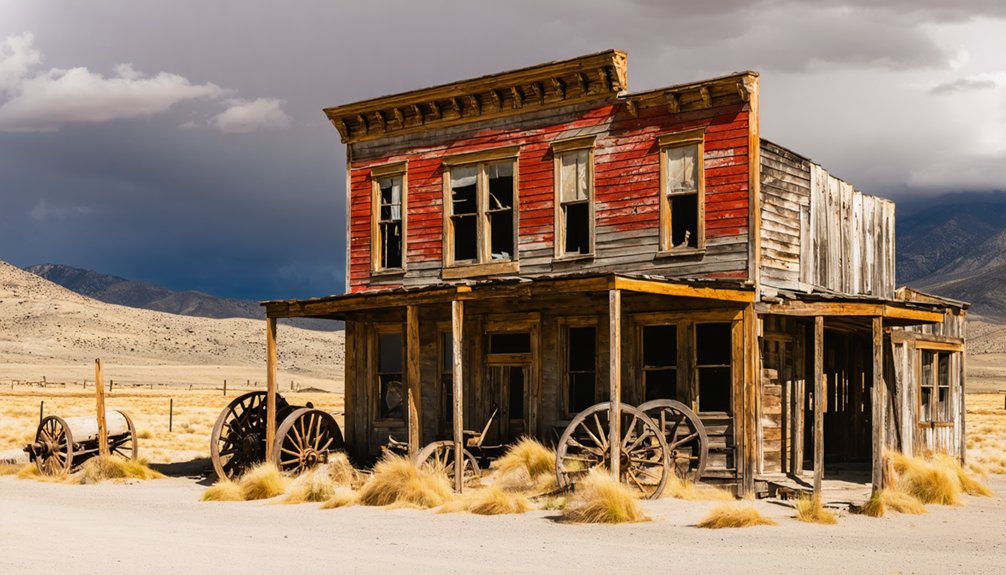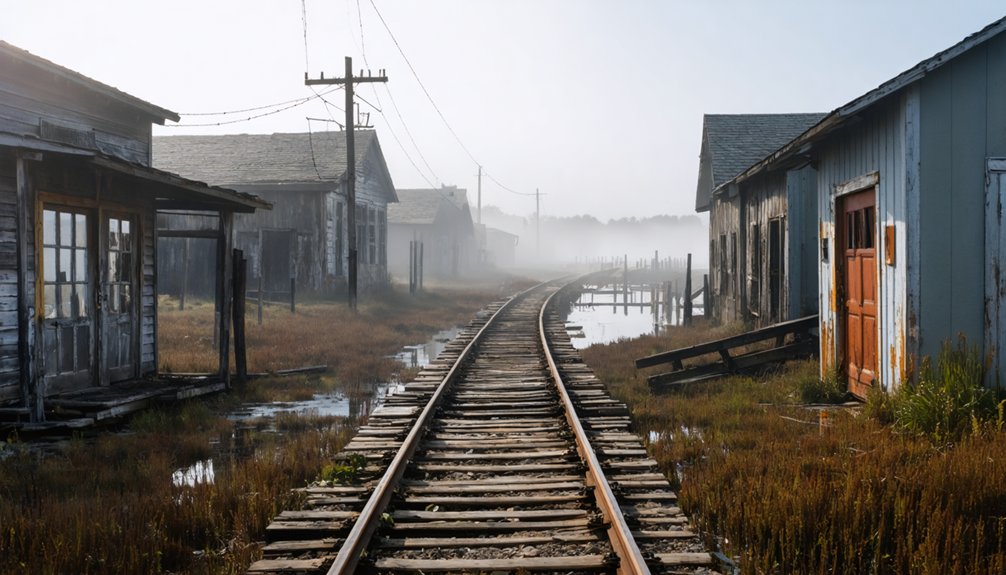
You’ll find fascinating ghost towns scattered throughout the Bay Area, with Drawbridge and New Almaden standing as prime examples. Once-bustling Drawbridge began as Saline City in 1876, featuring nearly 90 Victorian cabins before environmental decline set in. New Almaden’s mercury mines fueled the Gold Rush, producing 46 million pounds of liquid mercury between 1850-1875. These abandoned settlements offer glimpses into California’s industrial past, with some sites still accessible for exploration.
Key Takeaways
- Drawbridge, originally Saline City, was a Victorian resort town with 90 cabins now preserved within a wildlife refuge.
- New Almaden operated crucial mercury mines that supported the Gold Rush and created a network of company towns.
- Purissima, once a logging and farming community, is now marked by a preserved cemetery and foundations along Echo Canyon Road.
- Black Diamond Mines Regional Preserve offers guided tours and interpretive trails through historic mining sites.
- These ghost towns require proper permits, safety precautions, and respect for protected sites when visiting.
The Hidden History of Bay Area’s Forgotten Towns
While the bustling Bay Area of today teems with tech campuses and suburban sprawl, its landscape holds the forgotten remnants of once-thriving communities that have faded into obscurity.
You’ll find these forgotten settlements scattered across the region, from Drawbridge’s marsh-consumed ruins to Purissima’s weathered foundations along the coast. Drawbridge began as Saline City in 1876 when railroad construction brought the first settlers to operate the bridges.
Each ghost town tells a unique story of boom and bust. Drawbridge flourished as a Victorian-era resort with nearly 90 cabins before environmental damage drove residents away. Like many ghost towns such as Virginia City, these places experienced a rapid decline after their primary economic activities ceased.
Purissima served as a crucial logging and farming hub until floods and storms erased its presence.
New Almaden’s mercury mines powered a network of company towns, while the Black Diamond coal mining complex fueled regional industry.
Their historical significance lives on through preserved structures, archaeological sites, and interpretive trails that reveal glimpses of the Bay Area’s industrial and cultural heritage.
Mercury, Gold, and the Industrial Legacy
When the California Gold Rush erupted in 1848, it wasn’t just the Sierra Nevada mines that transformed the region’s fortunes.
The Bay Area played a significant role through its mercury mining operations, particularly at New Almaden and New Idria. These mines became North America’s richest sources of quicksilver, essential for gold extraction in the Sierra Nevada and Klamath Mountains.
You can trace this industrial legacy through ghost towns like Idria and Spanishtown, where abandoned mines and foundations tell stories of boom-and-bust cycles. Between 1850 and 1875, an astounding 46 million pounds of liquid mercury was extracted from these mines.
While the mines supplied over 120 million pounds of mercury during their operations, they’ve left a toxic heritage. The New Idria Mine alone produced 38 million pounds of mercury before its closure in 1972. Today, mercury contamination persists in local watersheds, with many sites requiring extensive cleanup.
The remnants of this era are preserved in places like Almaden Quicksilver County Park, where you’ll find interpretive signs marking this pivotal chapter in California’s history.
Best-Preserved Ghost Towns Within Day-Trip Range
Several fascinating ghost towns lie within easy reach of the Bay Area, each offering distinct windows into California’s past.
Among these nostalgic landscapes, you’ll find Drawbridge – a sinking remnant visible from passing trains, now protected within a wildlife refuge.
The coastal settlement of Purissima reveals its historical significance through a preserved cemetery and scattered foundations along Echo Canyon Road. Beautiful coastline views make it an especially scenic destination for history buffs. These sites echo the rich heritage found at Shasta State Historic Park, which once thrived as the queen city of California’s northern mining district.
For the most complete ghost town experience, head to Black Diamond Mines Regional Preserve, where Nortonville’s mining heritage comes alive through interpretive trails and seasonal mine tours.
While Drawbridge remains off-limits and Purissima requires viewing from public roads, Black Diamond’s well-preserved ruins offer the most accessible glimpse into the region’s industrial past.
Essential Safety and Access Guidelines
Despite their historic allure, Bay Area ghost towns require careful preparation and strict adherence to safety protocols. Before exploring, you’ll need proper gear including survival manuals, navigation tools, and emergency supplies.
Don’t forget your essential safety precautions: travel in groups, watch for unstable structures, and stay alert for wildlife. Carry a comprehensive medical kit since professional care could be hours away. For immediate assistance during emergencies, use the 24-hour dispatch line at (510) 881-1121.
Securing access permissions is vital – always obtain property owners’ consent and respect protected sites. You can’t remove artifacts, as it’s a felony.
Remember to check for restricted areas marked by locked gates or berms. If you encounter emergencies, call 911 or the park service directly. Keep the provided numbers handy and report any concerns through Park Watch.
When planning your route, don’t rely solely on Google Maps – historical washouts and seasonal closures may affect access.
Photography and Exploration Tips for Urban Adventurers
To capture the haunting beauty of Bay Area ghost towns, you’ll need specialized photography gear and techniques that work in challenging light conditions.
Pack a mirrorless or DSLR camera with a wide-angle lens for expansive ruins, and don’t forget your tripod for those moody long exposures. Your flashlight will become an essential tool for urban exploration in dark corners. Always bring a cleaning kit since abandoned buildings are filled with dust and debris. Due to recent vandalism issues, some locations now require special permits to visit.
A sturdy tripod and powerful flashlight can transform shadowy ghost town ruins into hauntingly beautiful photographic masterpieces.
Master the art of composition by shooting during golden hour when shadows stretch across weathered buildings. Focus on iconic structures like old saloons and churches, while documenting architectural details that tell the site’s story.
Black Diamond Mines and Sutro Ruins offer perfect settings to practice your photographic techniques. Try black and white photography to emphasize textures, and use window reflections and silhouettes to create mystery in your shots.
Frequently Asked Questions
Are There Any Reported Paranormal Activities in Bay Area Ghost Towns?
You’ll find numerous paranormal sightings at Drawbridge, where visitors report ghostly voices and shadows, while New Almaden’s haunted locations feature phantom miners, and Port Costa’s Burlington Hotel hosts unexplained disturbances.
Which Ghost Towns Allow Camping or Overnight Stays Nearby?
With over 50 ghost town sites across Northern California, you’ll find camping near Calico (full hookups available), while remote desert locations offer dispersed camping. Check local regulations and make reservations during peak seasons.
What Indigenous Communities Originally Inhabited These Ghost Town Locations?
You’ll find the Miwok tribes at Black Diamond Mines, Aloney people at Purissima, and Ohlone communities at Spanish Town – all with deep indigenous history and cultural significance spanning thousands of years.
Do Any Ghost Towns Host Special Events or Seasonal Festivals?
Like stepping into a time machine, you’ll find vibrant ghost town festivals throughout the year – from Civil War battles in Calico to Julian’s apple celebrations and spooky Halloween haunts in historic mining towns.
Can Metal Detecting or Artifact Collecting Be Done at These Sites?
You’ll need to respect metal detecting regulations and artifact preservation ethics. Most ghost town sites prohibit detecting or collecting – they’re protected by state and federal laws to safeguard historical resources.
References
- https://nvtami.com/ghost-towns-historical-sites-of-nevada-california-beyond-text-version/
- https://www.visitcalifornia.com/road-trips/ghost-towns/
- https://www.camp-california.com/california-ghost-towns/
- https://tisqui.github.io
- https://www.7×7.com/small-bay-area-towns-lost-in-time-2669360964.html
- https://en.wikipedia.org/wiki/Category:Ghost_towns_in_the_San_Francisco_Bay_Area
- https://secretsanfrancisco.com/ghost-town-bay-area-drawbridge-history/
- https://www.youtube.com/watch?v=bz6XtozCSMg
- https://www.youtube.com/watch?v=ttGi9F2MeWA
- https://www.christywanders.com/2024/08/top-ghost-towns-for-history-buffs.html