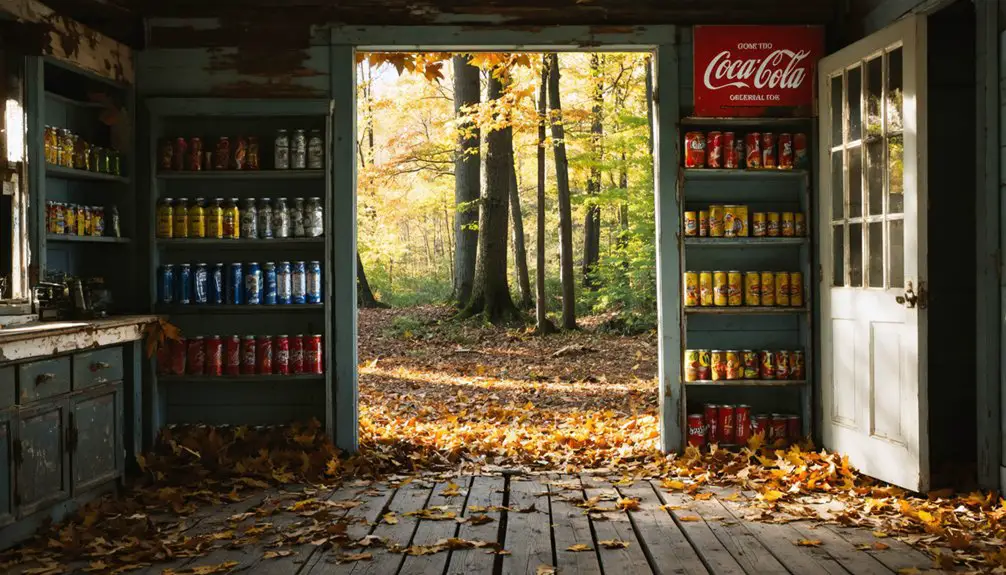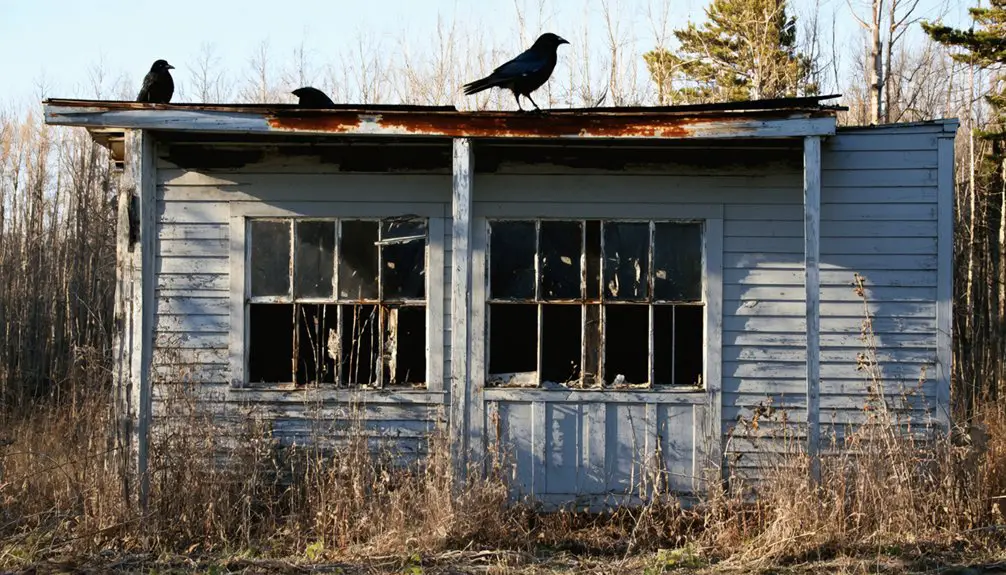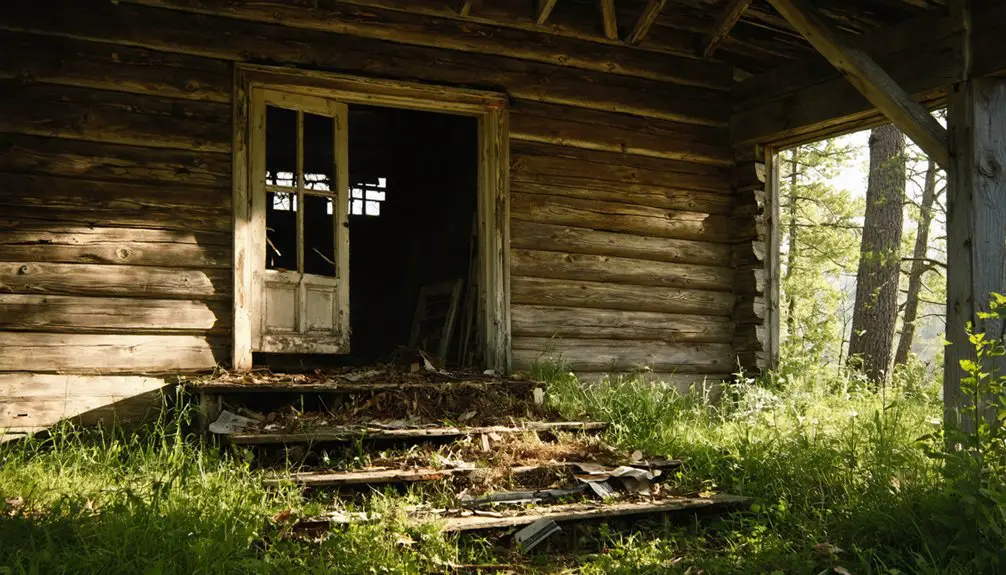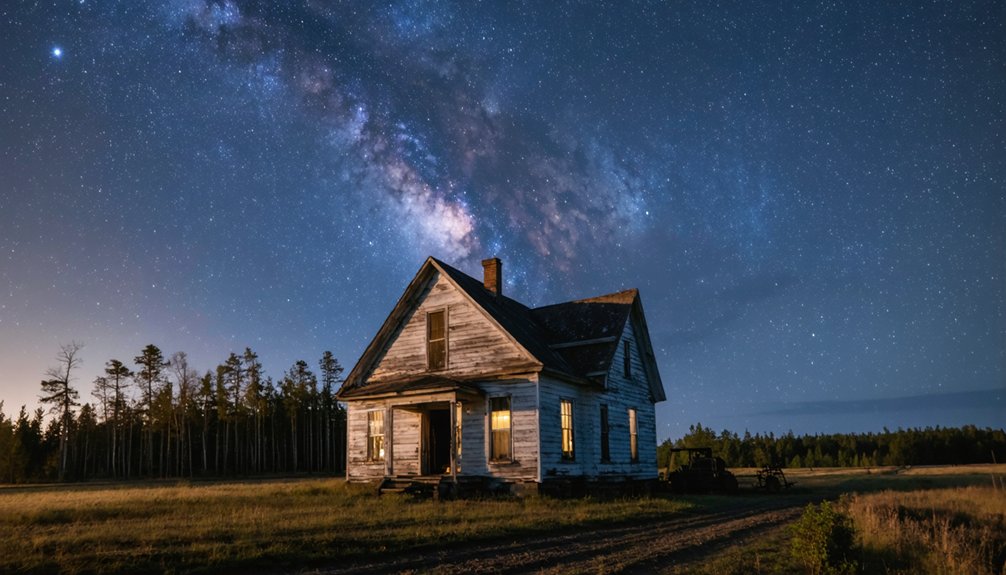
You’ll find exceptional astrophotography opportunities in Maine’s ghost towns, particularly in Aroostook County’s abandoned logging camps and the Katahdin Region’s historic ruins. The pristine dark skies and minimal light pollution create perfect conditions for capturing the Milky Way and aurora displays. Focus on locations like Swan Island’s 1800s structures, Flagstaff Lake’s submerged village remnants, and Cobscook Bay’s coastal ruins. These remote sites offer unique compositions that blend celestial wonders with haunting architectural elements.
Key Takeaways
- Abandoned logging camps near Seboeis offer pristine dark skies and minimal light pollution, perfect for capturing the Milky Way.
- Swan Island provides historic 1800s structures and open fields under dark skies, accessible only by boat.
- The Katahdin Region features old mill ruins and smokestacks that create striking foreground elements against star-filled skies.
- Flagstaff Lake’s submerged village remnants emerge during drawdowns, offering unique compositions beneath Maine’s dark northern skies.
- Cobscook Bay’s coastal ghost sites combine maritime ruins with excellent dark sky conditions for astrophotography.
What Makes Maine’s Ghost Towns Perfect for Night Sky Photography
While many photographers dream of capturing the perfect night sky, Maine’s ghost towns offer an unparalleled combination of pristine dark skies and haunting locations.
Maine’s deserted communities provide photographers with nature’s perfect studio – where dark skies meet forgotten places.
You’ll find abandoned structures scattered throughout Aroostook County’s vast wilderness, where light pollution maps reveal some of the darkest skies in the eastern United States. The region’s expansive 14,000-square-kilometer forests naturally block urban light sources, creating ideal conditions for astrophotography.
In areas like Haynesville Woods and Bucksport’s Silver Lake, you’re treated to exceptional night sky quality, enhanced by the region’s stable atmospheric conditions and dense tree coverage. Local astronomy clubs can provide valuable guidance on finding the most secluded and darkest ghost town locations.
These remote locations, many within reach of Dark Sky-certified territories, offer unobstructed views of the Milky Way and frequent aurora displays, making them perfect staging grounds for capturing both stellar phenomena and eerie abandoned settings. The views here are so pristine that they mirror the same night skies seen by Wabanaki people over 11,000 years ago.
Essential Gear and Planning for Ghost Town Astrophotography
You’ll need a full-frame camera like the Canon 6D or Nikon Z6III paired with fast wide-angle glass such as the Rokinon 14mm f/2.8 to capture Maine’s ghost towns under starlight.
For tracking the night sky, a portable mount like the Sky-Watcher Star Adventurer will let you take exposures up to 5 minutes while keeping your gear load under 20 pounds for hiking into remote locations. A quality intervalometer remote will be essential for capturing long exposures without disturbing the camera. Consider adding a guide scope setup to improve tracking accuracy during longer exposures.
Pack essential safety gear including headlamps, emergency supplies, and weather protection alongside your imaging equipment, as Maine’s abandoned locations require careful preparation and awareness of rapidly changing conditions.
Camera Equipment Essentials
Four essential pieces of equipment form the foundation of successful ghost town astrophotography in Maine: a capable camera body, fast wide-angle lenses, stable support systems, and specialized accessories.
You’ll need a full-frame DSLR or mirrorless camera like the Canon 6D or Nikon D750 for ideal low-light performance.
For lens selection, focus on fast wide-angles – the Rokinon 14mm f/2.8 or Tamron 17-28mm f/2.8 will capture Maine’s abandoned structures against starlit skies. These lenses excel at light collection in dark environments.
Tripod stability is critical – invest in a robust support system and consider adding a star tracker like the iOptron Sky Tracker for extended exposures. Manual control of shutter speed and ISO settings through dedicated camera apps will help you optimize your ghost town night shots.
Don’t forget essential accessories: an intervalometer for precise timing control and a clip-in light pollution filter to combat any residual coastal city glow affecting your ghost town shots.
Safety And Weather Prep
Before venturing into Maine’s ghost towns for astrophotography, meticulous preparation can mean the difference between capturing stellar images and facing dangerous situations in remote locations.
A red-light headlamp is essential for navigating ruins safely while preserving your night vision for photos. You’ll need to monitor weather conditions carefully, especially during winter months when temperatures plummet below zero and sudden storms can leave you stranded in these remote settings. Many photographers explore sites like Flagstaff Lake, where submerged ruins create ethereal foregrounds for night sky shots.
- Pack a satellite communicator and power bank for emergencies – cell service is nonexistent in most locations.
- Wear insulated, waterproof gear with multiple layers – weather changes rapidly in Maine’s wilderness.
- Carry extra food, water purification, and emergency shelter – many sites require deep woods navigation.
- Always inform others of your itinerary and planned return time – safety precautions are critical when exploring these isolated areas.
Don’t underestimate Maine’s harsh environment – proper preparation guarantees both your safety and shooting success.
Northern Maine’s Abandoned Logging Camps Under the Stars
You’ll need to plan your approach to these remote logging camp sites carefully via the 96-mile Golden Road, timing your arrival before sunset to scout compositions amid the remnants of Maine’s timber heritage.
For ideal Milky Way alignment over historical features like old middens or camp foundations, position yourself where camp clearings meet the treeline to maximize your view of the dark northern sky.
Consider scheduling your shoot during winter months when you’ll have extended dark-sky hours and potentially capture the spirit of these seasonal camps as they once operated beneath the stars. Local guides note that six-day workweeks were standard for loggers during the peak season. One notable location is the original Great Northern Paper camp, established in 1980 and serving as a testament to Maine’s logging industry.
Remote Camp Access Strategies
Accessing Northern Maine’s abandoned logging camps requires meticulous planning and specialized gear due to their remote locations deep within the state’s vast timber lands. Your remote access strategy must account for the rugged terrain, seasonal conditions, and complex network of logging roads that crisscross the region.
- Cross-reference multiple map sources (DeLorme, USFS, State ATV) to identify primary access corridors and verify seasonal gate closures.
- Use high-clearance 4WD vehicles equipped with recovery gear and spare fuel for deep-forest exploration.
- Pack lightweight astrophotography equipment that’s easily transportable from roadheads to camp sites.
- Verify land ownership status and obtain necessary permits before entering private timberlands.
Always plan alternate routes and carry emergency gear – you’re venturing into areas where cell service is unreliable and help may be hours away.
Celestial Exposure Planning
Once you’ve secured reliable access to your chosen logging camp, successful astrophotography demands precise celestial exposure planning.
Your exposure strategy needs to align with Maine’s seasonal windows, particularly from late April through September when the Milky Way core reaches peak visibility. Master celestial navigation techniques to anticipate ideal shooting angles and timing.
Calculate exposure times based on your focal length using the 500/NP rule – wider lenses allow longer exposures before star trailing occurs. For classic Milky Way shots, shoot 15-25 seconds at ISO 1600-6400 with fast wide lenses.
When capturing logging camp remnants, employ separate exposures for foreground elements. Consider stacking multiple 120-300 second tracked exposures for deep-sky details, while using brief light-painting exposures to illuminate camp structures against the starlit canvas.
Katahdin Region’s Historic Ruins and Dark Sky Sanctuary
While the Katahdin region’s industrial past has faded into history, its abandoned structures now serve as compelling foreground elements for astrophotography within Maine’s darkest skies.
The area’s historic significance shines through remnants of logging camps, mill sites, and railroad infrastructure, all set against some of the East Coast’s most pristine night sky conditions.
Weathered artifacts of Maine’s timber industry stand as silent witnesses beneath the luminous, untamed wilderness of Katahdin’s night skies.
- Scout the Ripogenus Dam area for concrete ruins and timber pilings that create stark silhouettes against the Milky Way.
- Frame star trails behind the brick foundations and smokestacks of Millinocket’s old pulp mills.
- Explore abandoned logging camps near Seboeis for isolated foregrounds with minimal light pollution.
- Utilize old rail grades and bridge abutments to create leading lines toward celestial targets.
The region’s International Dark Sky Sanctuary designation guarantees exceptional conditions for capturing both historical elements and astronomical phenomena.
Coastal Ghost Sites Along Maine’s Dark Shorelines

Maine’s coastal ghost sites offer photographers an extraordinary convergence of preserved dark skies and historical maritime remnants.
The eerie beauty of these locations provides a unique backdrop for capturing hauntingly beautiful images. Exploring ghost towns for photography in Maine can reveal forgotten stories etched into the landscapes, making each visit a journey into the past. As the light changes, these sites transform, allowing photographers to experiment with mood and atmosphere like never before.
the best seasons to explore maine’s ghost towns are typically in the fall and spring, when the scenery is most vibrant and the weather is manageable for outdoor adventures. Each season brings its own charm, with colorful foliage in autumn and blooming flora in spring, enhancing the haunted allure of these deserted places. As you wander through these forgotten locations, you’ll uncover the whispers of history that linger in the crisp air, inviting you to capture their essence through your lens.
You’ll find prime shooting locations along Cobscook Bay’s shoreline, where coastal ruins emerge beneath starlit landscapes untouched by modern light pollution. The dark shores of Harpswell and Mount Desert Island provide exceptional vantage points for capturing the Milky Way above abandoned fishing outposts.
Head to York’s protected coastline to photograph centuries-old maritime structures against pristine night skies, or explore Rangeley Lakes’ mountain-rimmed shores where forgotten lakeside settlements create compelling foregrounds.
These locations benefit from Maine’s extensive dark sky preservation efforts, with local ordinances specifically designed to maintain ideal astrophotography conditions. You’ll discover each site offers unique compositions combining historical elements with remarkable celestial visibility.
Swan Island: A Photographer’s Night Paradise
Situated in the heart of the Kennebec River, Swan Island stands as one of New England’s most compelling astrophotography destinations.
This 1,500-acre ghost town offers you pristine dark skies and haunting historic structures, perfect for capturing the cosmos above abandoned 18th-century ruins.
- Set up your wide-angle gear in vast open fields where the Abenaki once roamed 9,000 years ago.
- Frame the Milky Way behind five surviving historic houses from the 1800s.
- Explore over 20 cellar holes and the Curtis Cemetery for unique foreground compositions.
- Capture star trails above the gambrel-roofed Priest Property, a 1930s reminder of Swan Island’s final days.
You’ll need to arrange boat transport through Maine’s IF&W department, but the reward is unparalleled access to this preserved slice of dark sky history.
Flagstaff Lake’s Submerged Village Remnants
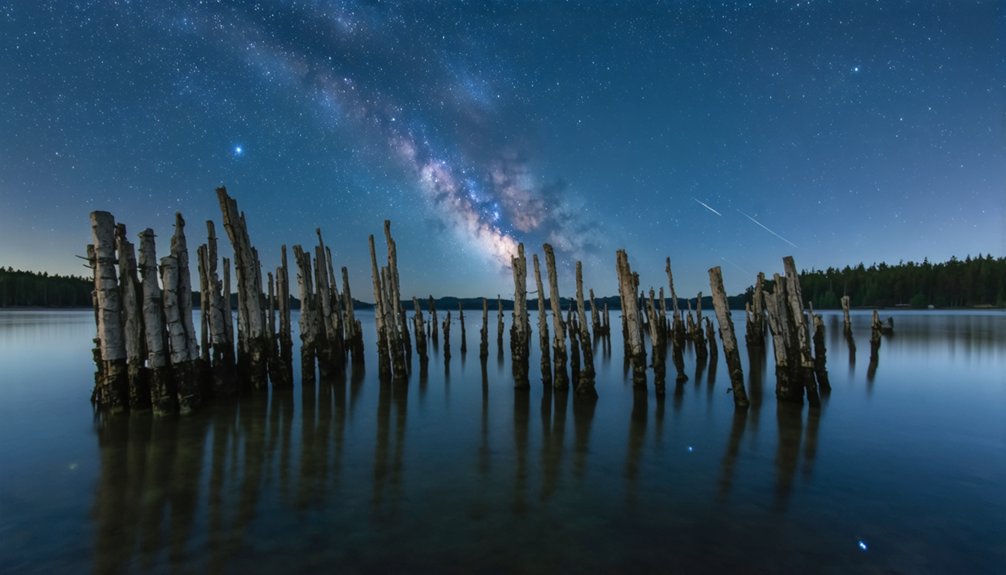
Beneath the dark waters of Flagstaff Lake lies a haunting piece of Maine’s history – the submerged remnants of Flagstaff Village and Dead River Plantation.
You’ll find exceptional night photography opportunities where historical significance meets starlit skies, as submerged foundations create mysterious silhouettes during low water periods.
Access these underwater ruins by boat from public launch points, or set up your tripod along shorelines near Eustis and Stratton. During controlled drawdowns, you’ll discover exposed cellar holes and building foundations that serve as compelling foreground elements for Milky Way compositions.
Track water levels through CMP notices to time your shoots perfectly.
Remember to pack offline navigation tools – cell service is spotty. GPS coordinates from county records will guide you to prime shooting locations where relocated grave markers and surviving structures tell the story of this flooded valley.
Safety Tips and Best Practices for Night Photography in Ghost Towns
Safety serves as the foundation for successful ghost town astrophotography, requiring meticulous preparation and awareness of your surroundings.
Before venturing into Maine’s abandoned settlements, you’ll need to understand local trespassing laws and secure proper access permissions. Equip yourself with essential protective gear and maintain heightened awareness of wildlife threats in these remote locations.
- File a detailed float plan with your intended location and return time
- Carry multiple light sources and use the dimmest setting to preserve night vision
- Implement wildlife precautions including bear spray and snake boots
- Scout locations during daylight to identify hazards like unstable structures
Set your camera to manual focus after initial autofocus, and maintain f/8 to f/10 aperture settings for ideal long exposures.
Remember to keep your movements deliberate and measured, prioritizing safety over getting the perfect shot.
Frequently Asked Questions
Are There Any Haunted Ghost Towns That Offer Unique Paranormal Photography Opportunities?
You’ll find prime paranormal events at Mount Hope Cemetery, where ghostly encounters align perfectly with dark skies. Fort Knox’s abandoned spaces create ideal conditions for capturing mysterious orbs and apparitions.
Which Maine Ghost Towns Allow Overnight Camping for Star Trail Photography?
You’ll find legal camping and photography permits at Katahdin Woods & Waters ghost settlements, AMC Maine Woods logging camps, and Swan Island’s Perkins Township. Each requires following specific camping regulations.
Can Drones Be Used for Night Photography at Maine Ghost Sites?
Swift as shadows, you’ll need FAA night waivers and anti-collision lights for drone photography at ghost sites. You must follow regulations, maintain visual line-of-sight, and check local restrictions.
What Insurance Coverage Is Recommended for Photographing in Abandoned Maine Locations?
You’ll need extensive liability insurance that covers trespassing claims and property damage, plus equipment coverage for your gear and personal injury protection when exploring Maine’s abandoned structures.
Are There Guided Astrophotography Tours Specifically for Maine Ghost Towns?
While zero commercial operators offer dedicated ghost town astrophotography workshops in Maine, you’ll find astronomy clubs and private guides who can customize dark-sky tours to abandoned locations upon special request.
References
- https://www.mooseriverlookout.com/post/ghost-towns-in-maine-9-haunted-places-to-explore-this-fall-2025-guide
- https://www.go-astronomy.com/dark-sky-parks-stargazing-state.php?State=ME
- https://www.greenhealthymaine.com/blog/stargazing
- https://www.themainemag.com/a-guide-to-maine-stargazing/
- https://www.outdoors.org/amc-maine-woods-international-dark-sky-park/
- https://www.youtube.com/watch?v=iX5zjixvUTo
- https://hitraveltales.com/stories/dark-sky-tourism-a-guide-to-night-skies-and-stargazing
- https://visitmaine.com/articles/things-to-do-watching-maines-night-sky/
- https://www.allagash.com/discover/sustainability/seeing-stars-amcs-north-maine-woods-are-dark-sky-certified/
- https://www.onlyinyourstate.com/nature/maine/most-haunted-hikes-me