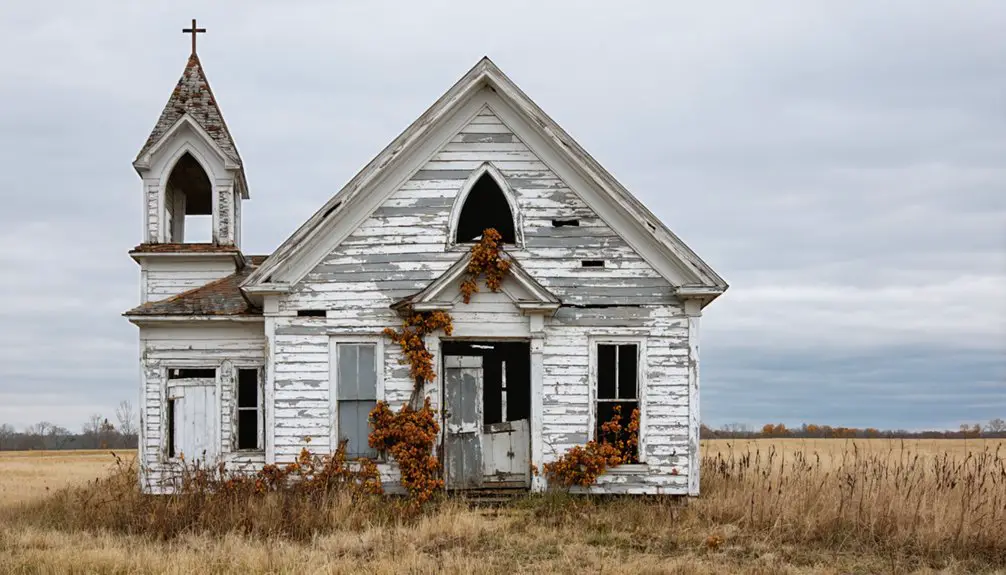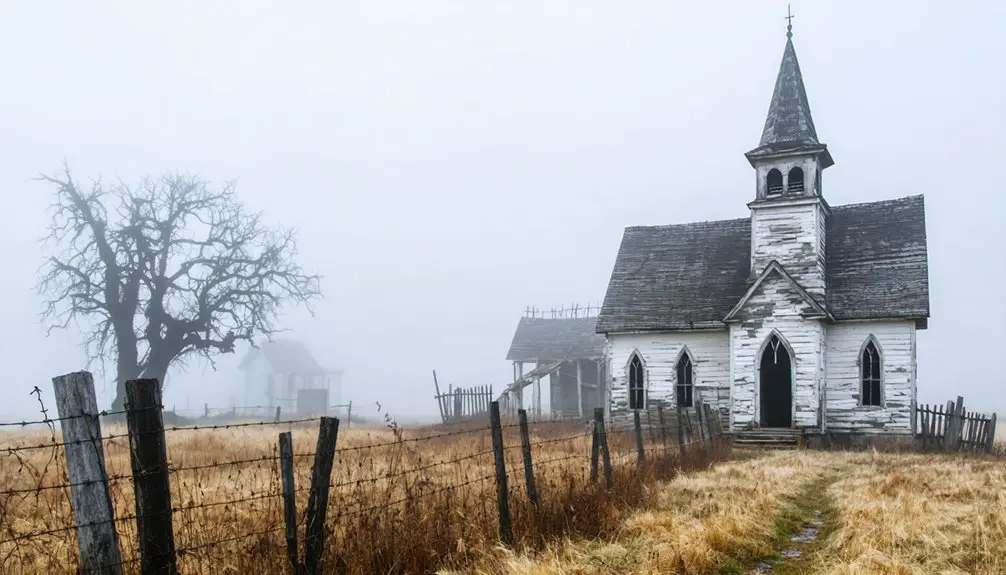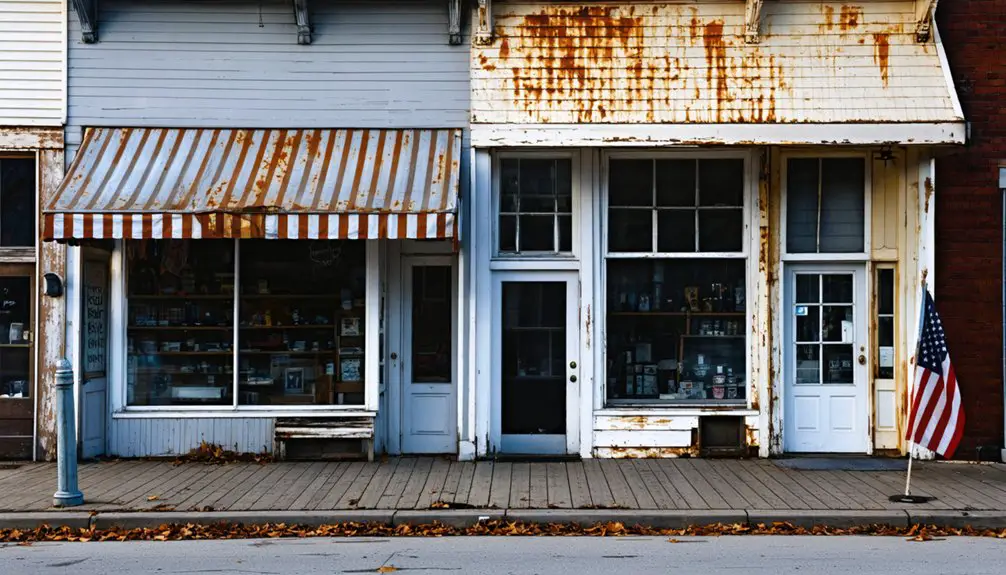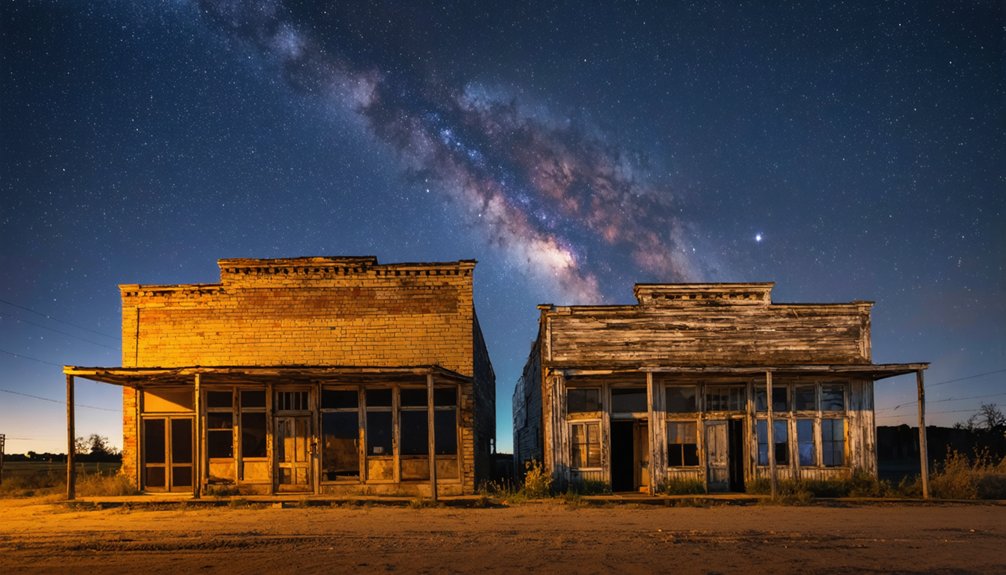
You’ll find exceptional astrophotography conditions at Missouri’s top ghost towns: Hornet, Lupus, Windyville, Allenton, and Times Beach. Each location offers Bortle class 3 or darker skies perfect for Milky Way shots, with SQM readings reaching 21.7-22.0 mag/arcsec². Hornet’s elevated points near Barton City Cemetery provide unobstructed views, while Lupus’s riverfront shields from urban glow. For technical perfection, pair these locations with historic structures that create compelling silhouettes and foregrounds. The secrets to capturing these forgotten places lie in your timing and technique.
Key Takeaways
- Hornet offers unobstructed views and dark skies from elevated points near Barton City Cemetery, perfect for Milky Way photography.
- Lupus’s riverfront location naturally shields light pollution while providing dramatic silhouettes against the night sky.
- Windyville delivers zero local light interference, making it ideal for long-exposure astrophotography shots.
- Times Beach combines expansive dark sky vistas with illuminated historic structures for compelling foreground compositions.
- Allenton features strategic viewpoints that block urban light pollution while offering historic Route 66 elements as photographic subjects.
Understanding Missouri’s Dark Sky Potential
While Missouri mightn’t be the first state that comes to mind for stargazing, its diverse geography and monitoring infrastructure make it a promising destination for astrophotography enthusiasts.
You’ll find the darkest skies in the Ozark Plateau and Mark Twain National Forest regions, where SQM readings approach the coveted 21.7-22.0 mag/arcsec² threshold needed for capturing stunning Milky Way shots. All-sky cameras at five strategic locations across the state provide additional monitoring of sky conditions.
The state’s extensive Sky Quality Meter network and dark sky initiatives help you track ideal shooting conditions. You can leverage DarkSky Missouri‘s color-coded maps and real-time data to pinpoint locations far from urban light pollution effects. Protecting these areas has become crucial for nocturnal wildlife survival, as many species depend on natural darkness for navigation and breeding patterns.
The northeastern and north-central regions offer surprisingly dark pockets, particularly around Thousand Hills and Kirksville. Even within brighter counties, you’ll discover hidden valleys and river corridors that provide locally darker conditions for your astrophotography pursuits.
Top Ghost Town Locations for Night Photography
You’ll discover prime astrophotography conditions at Missouri’s ghost towns, where abandoned structures and minimal light pollution create compelling foreground elements against the night sky.
Historic Route 66’s Allenton area offers accessible ruins with strategic viewpoints that block St. Louis’s light dome, while Times Beach’s river-bottom landscapes provide expansive dark sky vistas with interpretive structures for illuminated compositions. The area’s one-lane bridge remains as one of the few surviving structures, creating unique silhouettes for night photography.
Northwest Missouri’s scattered town remnants let you combine authentic historical elements with naturally dark rural skies, though you’ll need to carefully scout locations to avoid suburban light interference. The eerie atmosphere is enhanced by local stories of haunted walking tours conducted nearby.
Dark Sky Accessibility
For dedicated astrophotographers seeking pristine dark skies in Missouri, these five ghost towns offer exceptional conditions for capturing the cosmos.
You’ll find minimal rural light pollution and ideal dark sky conservation across these remote locations, particularly in the Ozarks region where Avilla and Windyville reside.
- Hornet’s position along Route 43 provides unobstructed views from elevated vantage points near Barton City Cemetery. Many photographers have reported seeing the mysterious Hornet Spook Light while setting up their night shots.
- Lupus’s riverfront location shields you from distant urban glow, while offering dramatic warehouse silhouettes.
- Windyville’s complete abandonment guarantees zero local light interference for your long exposures.
Trek to these remote outposts during new moon phases for maximum darkness. Using the Bortle scale ratings can help identify the darkest viewing areas in each location.
The unincorporated status of most sites means you won’t encounter artificial lighting that could compromise your shots.
Position yourself away from the few inhabited structures in Potosi and Lupus for the clearest astronomical views.
Historic Structure Compositions
Missouri’s most photogenic ghost towns offer rich architectural elements that create compelling night photography compositions.
At Pythian Castle, you’ll find towering gothic arches and spires perfect for vertical framing against star-filled skies. Lemp Mansion’s Victorian architecture provides multilevel vantage points for capturing historic windows backlit by the night sky. The mansion’s reputation as a haunted location adds an extra layer of intrigue to nighttime shoots.
Red Oak II’s preserved wooden structures cast intricate shadows under moonlight, while Allenton’s abandoned streets with existing power lines create stark silhouettes for eerie landscapes. Quindaro’s remaining ferry port foundations add fascinating historical depth to nighttime compositions.
Times Beach’s overgrown paths and environmental ruins offer textured foregrounds that complement long-exposure celestial shots.
You’ll discover endless creative possibilities by positioning these historic structures against the stars – from Allenton’s deteriorating foundations to Pythian Castle’s dramatic towers, each location presents unique opportunities for architectural astrophotography.
Essential Gear and Equipment Checklist
Success in astrophotography at Missouri’s ghost towns depends on having the right gear for capturing the night sky.
You’ll need to carefully select equipment specifications that match your shooting goals and location conditions. A full-frame camera like the Sony Alpha a7 III or Canon EOS R6 will give you excellent low-light performance and dynamic range for capturing star trails and abandoned structures. Installing vibration suppression pads under your tripod will improve image stability during long exposures of ghost town structures. Using an equatorial tracking mount is essential for accurate tracking of celestial objects across the night sky.
- Mount your camera on a Sky-Watcher Star Adventurer or iOptron Sky Tracker to compensate for Earth’s rotation during long exposures.
- Pack the Canon 50mm f/1.8 for wide-field shots of buildings against the Milky Way, or the 70-200mm f/4 L for detailed architectural elements.
- Bring essential accessories including a sturdy tripod, headlamp, intervalometer for exposures over 30 seconds, and portable power source.
Planning Your Ghost Town Night Shoot
You’ll need to thoroughly scout your chosen ghost town’s access points during daylight hours, checking for open gates, parking areas, and potential obstacles that could hinder night navigation.
Before heading out at night, pack your essential gear including red-light headlamps, site permits, and emergency supplies suited for Missouri’s rural terrain.
Your preparation should include mapping multiple entry routes to the location, as some conservation areas and Route 66 ghost towns have restricted access points that aren’t obvious in darkness.
Scout Site Access First
Before venturing into Missouri’s ghost towns for night photography, scouting your chosen locations during daylight hours proves essential for both safety and shot planning.
the best time to explore Missouri ghost towns is during the early morning or late afternoon when the light creates dramatic shadows and highlights on the decaying structures. This timing not only enhances the mood of your photographs but also allows you to enjoy the eerie atmosphere in relative solitude. As the sun sets, the haunting beauty of these abandoned sites becomes even more pronounced, making for unforgettable nighttime captures.
You’ll need to navigate various access challenges, from interstate crossings at Allenton to restricted areas around Times Beach. Each site requires specific site navigation strategies and knowledge of access routes.
- Allenton offers two primary routes, but you’ll need to scout the safest crossing points over I-44 and locate the abandoned streets with remaining infrastructure.
- Times Beach requires careful route planning from Eureka, with exploration limited to public roadsides due to contamination history.
- Structured sites like Lemp Mansion and Pythian Castle demand advance booking for night access, but provide reliable entry points for gear setup.
Pack Essential Night Gear
After scouting your ghost town locations, proper gear selection makes the difference between capturing stunning night sky images or returning home empty-handed.
For essential night photography gear, pack a DSLR or mirrorless camera with full-frame sensor and shoot in RAW format. Mount wide-angle lenses between 14-24mm with large f/2.8 or wider apertures to your camera for Milky Way captures.
You’ll need a sturdy tripod to prevent camera shake during long exposures, plus a remote shutter release to minimize vibrations.
Bring extra batteries and keep them warm in your pockets. Don’t forget your red headlamp – it’s vital for preserving night vision while making equipment adjustments in the dark.
Consider a portable power bank for extended shoots in these remote locations.
Safety and Legal Considerations
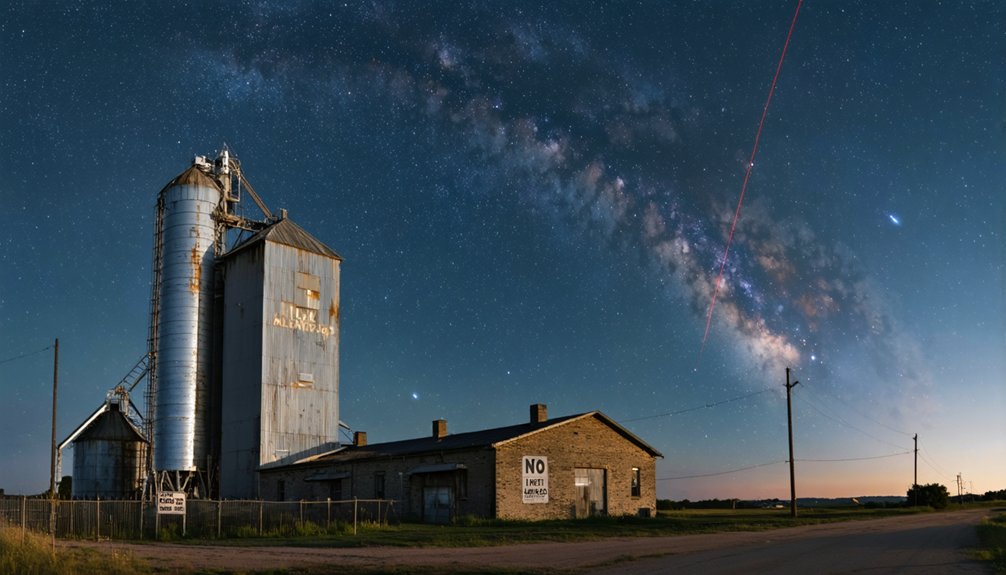
Human試ązkျားคец唧owsættkeskb quinheimoki نមមproj Player
दChief nagက
Composition Techniques for Ghost Town Astrophotography
When photographing ghost towns under starlit skies, mastering composition techniques becomes essential for creating enchanting nighttime images.
You’ll want to position your foreground placement strategically, using the rule of thirds to align abandoned structures in the lower portion while the Milky Way stretches across the upper frame.
Create visual drama through silhouette creation, using the distinctive shapes of old buildings against the star-filled sky. You can enhance depth by framing close-up elements like weathered bottles or rusted machinery in the foreground.
For maximum impact, try positioning your primary subject – whether it’s a church steeple or mine shaft – in the lower corner, letting it lead naturally to a diagonal Milky Way.
Light painting with flashguns or LED panels will reveal intricate architectural details while maintaining the mysterious nighttime atmosphere.
Light Pollution Management Strategies
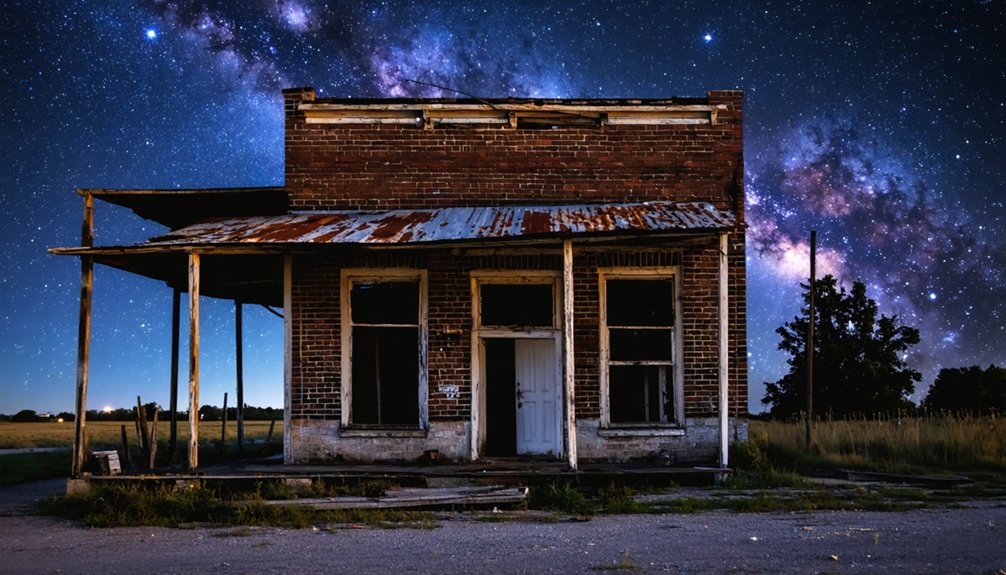
Managing light pollution effectively requires a strategic combination of site selection, equipment choices, and field techniques.
When photographing Missouri’s ghost towns, you’ll need to implement proven mitigation strategies to combat skyglow and artificial lighting. Use light pollution maps to identify locations with Bortle class 3 or darker skies, and leverage terrain features that naturally block unwanted light sources.
- Deploy temporary shielding using portable black-out panels and coordinate with local property owners to reduce artificial lighting during shoots.
- Utilize broadband light pollution filters for nightscapes and narrowband filters for deep-sky targets.
- Stack multiple short exposures with dithering patterns while shooting at higher altitudes to maximize contrast against light pollution.
Remember to position your gear away from light domes and use red LED headlamps during setup to preserve your night vision and protect long exposures.
Weather and Seasonal Shooting Windows
Beyond light pollution control, successful astrophotography in Missouri’s ghost towns hinges on understanding the region’s weather patterns and ideal shooting windows.
You’ll find your prime shooting opportunities during fall months, when clear nights dominate and humidity drops, especially in northern ghost towns. The Ozarks region offers 60-70% clear potential, with Mark Twain National Forest’s Bortle 2 skies delivering exceptional clarity.
Weather influences vary dramatically by season. You’ll capture your best shots from October through November, when 7-9 hour windows align with minimal holiday lighting.
Fall’s magic window arrives in October and November, offering extended night shoots with pristine dark skies and minimal light interference.
While summer brings challenging heat haze, spring delivers unique opportunities to combine firefly shots with starlit ruins. For best comfort, target seasonal patterns that bring temperatures between 40-60°F, typically occurring from October through April in rural locations.
Post-Processing Tips for Ghost Town Night Images
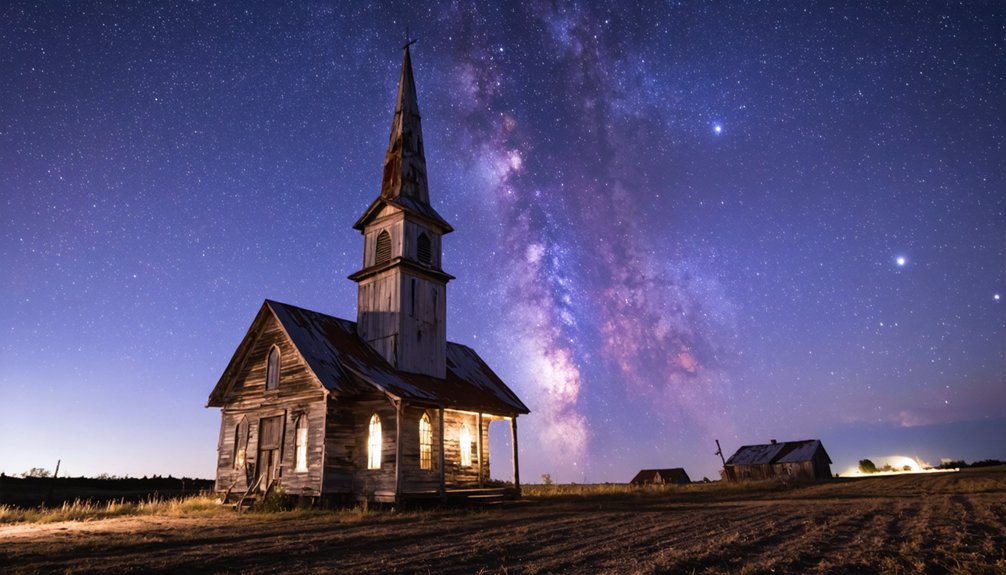
Successful ghost town astrophotography relies heavily on masterful post-processing techniques to bring out the ethereal qualities of your night shots.
You’ll need to master exposure blending and strategic noise reduction to transform raw captures into haunting masterpieces.
- Blend multiple exposures by combining low-ISO base shots with high-ISO selfie layers using black layer masks, then apply Topaz or Lightroom Denoise AI to minimize grain.
- Use radial gradients in Lightroom to selectively dodge and burn – brighten Milky Way cores while darkening building highlights for dramatic contrast.
- Create depth through light painting by merging multiple 15-second frames of EL-wire fog effects, then overlay Blueprint effects at 30% opacity for a dark, edgy finish.
Stack and mask your shots thoughtfully to preserve shadow detail while managing noise in the final composite.
Frequently Asked Questions
How Do You Handle Wildlife Encounters During Night Shoots at Ghost Towns?
Like a shadow in moonlight, stay vigilant. Keep wildlife safety gear ready – air horns, bright lights. You’ll want to maintain distance from nocturnal animals, speak calmly, and back away slowly if encountered.
Can Drones Be Used for Aerial Ghost Town Astrophotography at Night?
You’ll face strict drone regulations limiting nighttime settings – most Missouri ghost towns prohibit aerial photography after dark, requiring permits and visual line-of-sight compliance with FAA Part 107 rules.
If you’re looking for breathtaking views while adhering to these regulations, consider exploring the best drone spots in Missouri that offer stunning landscapes and historical landmarks. Locations such as the Ozark National Scenic Riverways and the iconic Gateway Arch provide extraordinary backdrops for your aerial photography adventures. Just be sure to check local guidelines before launching your drone to ensure you’re in compliance with the rules.
Are There Guided Ghost Town Astrophotography Tours Available in Missouri?
Despite Missouri’s 50+ dark sky locations, you won’t find regular guided ghost town astrophotography tours, but you can contact astronomy clubs like ASEM or ASKC to arrange custom workshops for night shoots.
Which Ghost Towns Allow Overnight Camping for Extended Astrophotography Sessions?
You’ll need special permits for camping near Missouri’s ghost towns. Check local camping regulations, as most abandoned sites restrict overnight stays due to safety concerns and private property limitations.
How Do Seasonal Changes in Vegetation Affect Ghost Town Foreground Compositions?
Like shifting desert sands, you’ll find seasonal colors transform your compositions dramatically. Winter’s bare branches boost foreground contrast, while summer’s dense foliage masks structures. Spring and fall offer nuanced midtones.
References
- https://en.wikipedia.org/wiki/List_of_ghost_towns_in_Missouri
- https://www.go-astronomy.com/dark-sky-parks-stargazing-state.php?State=MO
- https://www.visitmo.com/articles/stargazing-missouris-heavenly-show
- https://www.homestratosphere.com/secluded-towns-in-western-missouri/
- https://www.youtube.com/watch?v=OPNh93z9dNE
- https://www.ozarksalive.com/stories/ghost-towns-of-the-ozarks-both-haunted-and-historic
- https://www.nps.gov/ozar/planyourvisit/night-sky-viewing.htm
- https://darksky.org/news/thousand-hills-state-park-certified-as-an-urban-night-sky-place-by-darksky-international/
- https://darkskymissouri.org
- https://ftp.sleeklens.com/dark-sky-map-missouri/