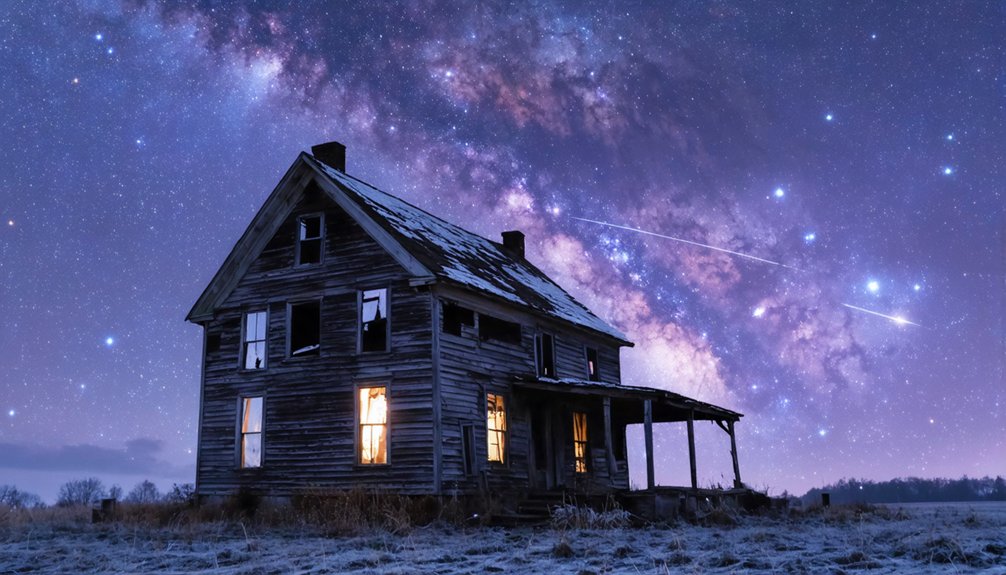
You’ll find Rhode Island’s best astrophotography at five prime ghost town locations: Fort Wetherill, Ramtail Factory, Rocky Point, Fort Mansfield, and Hanton City. These sites combine Bortle 4 dark sky conditions with compelling architectural ruins for dramatic foreground elements. For ideal results, target winter nights when the air is crisp and humidity is low. The concrete structures and stone foundations create striking silhouettes against the Milky Way’s cosmic canvas. Discover how these abandoned places reveal celestial shooting possibilities.
Key Takeaways
- Hanton City offers ancient stone foundations and a cemetery that create compelling foreground elements for night sky photography.
- Fort Wetherill provides dark skies and concrete structures with strong leading lines perfect for star trail compositions.
- Rocky Point’s abandoned coastal structures create dramatic silhouettes against the Milky Way with minimal light pollution.
- Ramtail Factory features geometric foundations in a secluded area with Bortle 4 dark sky conditions.
- Napatree Point combines sand-buried remnants with coastal darkness, creating unique opportunities for celestial photography.
Discovering Rhode Island’s Abandoned Sites
While Rhode Island may be America’s smallest state, its abandoned sites offer exceptional dark sky opportunities for astrophotographers seeking unique foregrounds.
You’ll discover five prime locations that combine urban exploration appeal with stellar viewing conditions. Hanton City’s stone foundations and mysterious cemetery provide compelling compositional elements against the night sky, while Napatree Point’s sand-buried remnants create otherworldly silhouettes. The remote location of Shadowcrest Hospital adds an extra layer of isolation perfect for uninterrupted night shooting.
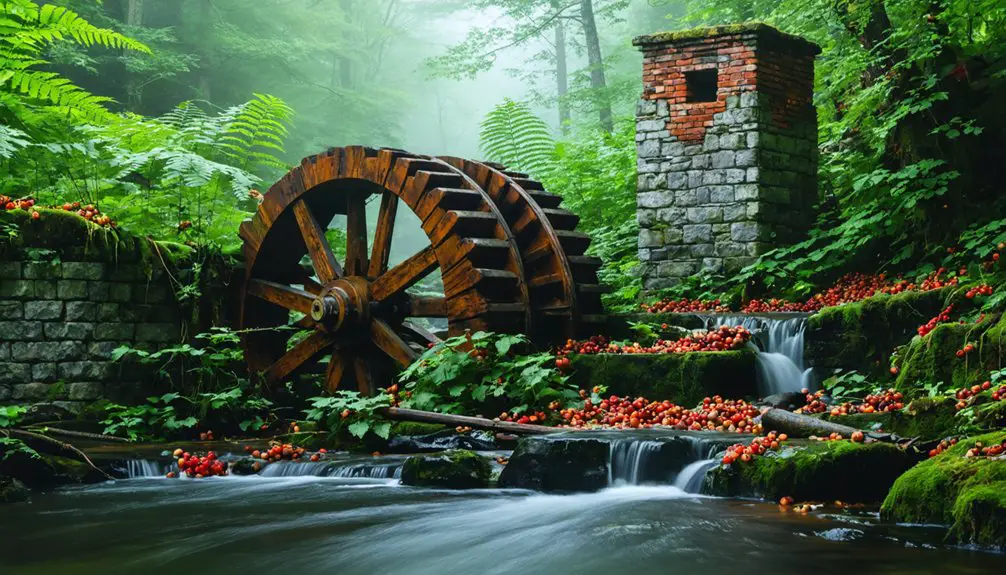
For historical significance, Fort Wetherill’s coastal fortifications deliver dramatic framing opportunities for Milky Way shots. The haunting Ramtail Factory bell still echoes through ghostly legends, making it an atmospheric choice for nighttime photography. The decaying structures of Rocky Point and Enchanted Forest amusement parks offer surreal juxtapositions between manufactured entertainment and celestial wonders.
Each location’s isolation from light pollution creates ideal conditions for capturing both terrestrial artifacts and astronomical phenomena in a single frame.
Essential Gear for Night Photography
To capture the ethereal beauty of ghost towns under starlight, you’ll need specialized photography equipment that maximizes light-gathering potential while maintaining image sharpness during extended exposures.
Your lens selection will greatly impact your ability to document these abandoned sites against the night sky. Choose wide-angle lenses with large apertures (f/2.8 or wider) like the Sigma 14mm f/1.8 to frame both architectural remnants and celestial elements. A remote shutter release will help prevent unwanted camera vibrations during exposures. The Canon 6D excels in these low-light conditions, making it an excellent choice for nighttime ghost town photography.
Tripod stability becomes vital for those long exposures – invest in a robust model that won’t succumb to gentle breezes. Consider adding a star tracker if you’re planning deep-sky shots lasting beyond 30 seconds.
Don’t forget essential accessories: extra batteries for cold nights, memory cards for high-resolution files, and a red headlamp to preserve your night vision while traversing these historic locations.
Planning Your Ghost Town Shoot
Before venturing into the darkness, you’ll need to pack essential safety gear including a satellite messenger, first-aid kit, and red-light headlamps for safe navigation through unstable ruins and remote coastal areas.
You should plan your visit during ideal celestial conditions by checking moon phases, weather forecasts, and astronomical ephemeris to capture the Milky Way or specific celestial objects against your chosen ghost town backdrop.
Your timing must account for seasonal factors that affect star visibility, such as summer’s coastal haze versus winter’s crystal-clear skies, while adhering to site-specific access permits and curfew restrictions. When photographing in Hanton City ruins, be mindful of the rough terrain and bring appropriate hiking equipment for navigating the old settlement grounds. Consider visiting the preserved Greene Homestead from April through October when the site offers regular public access.
Equipment and Safety Essentials
Successful astrophotography in ghost towns demands a carefully curated blend of imaging equipment and safety preparations to capture the ethereal connection between abandoned structures and the cosmos.
You’ll need a full-frame mirrorless camera or DSLR paired with a fast wide-angle lens (f/1.4-f/2.8) for ideal camera settings in low-light conditions. The Sony Alpha a7 III excels in these dark environments with its superior low-light sensor performance. A portable equatorial tracker will enable longer exposures of both architectural elements and star trails. An apochromatic refractor telescope can provide detailed close-ups of celestial objects above the ghost town structures.
For power management, pack a LiFePO4 power station or high-capacity battery pack (100-300 Wh) to keep your gear running through the night.
Don’t forget your safety essentials: inform a contact of your location, carry bear spray and a whistle, and bring cold-weather gear and emergency shelter. A satellite messenger becomes essential where cell service fails in these remote locations.
Timing Your Night Visit
While capturing ethereal night scenes in Rhode Island’s ghost towns requires detailed planning, your primary focus should start with ideal timing across multiple celestial factors.
You’ll want to align your visits with new moon phases for perfect darkness, particularly at sites like Hanton City and Ram Tail Factory where urban light pollution is minimal.
Target autumn nights from September through November when humidity drops and skies clear. You’ll find the longest dark hours during winter solstice, though the Milky Way core shines brightest from June to September.
Time your arrival 2-3 hours after sunset when artificial lights dim, and verify low tide schedules for coastal locations like Napatree Point.
Scout locations during daylight to navigate confidently after dark, especially at sites with 24/7 access like Foster’s factory ruins. Consider visiting historical spots like The White Horse Tavern for unique architectural elements in your nighttime compositions. The tavern’s ghostly apparitions have been known to appear in photographs, adding an extra layer of intrigue to your astrophotography.
Light Pollution Management Tips
Managing light pollution effectively requires understanding the Bortle Scale classifications and their impact on astrophotography exposure times. For Rhode Island’s ghost towns, you’ll need to adjust your exposures based on local dark sky conditions, where 1 hour at Bortle 1 equals 9.8 hours at Bortle 5. The state’s best locations achieve Bortle 4 ratings.
- Use lightpollutionmap.app to identify dark sky pockets near abandoned settlements, focusing on areas showing 21.7-20.5 mag/arcsec² readings.
- Target ghost towns near protected zones like Burlingame State Park and Ninigret Wildlife Reserve for ideal visibility.
- Plan shoots during periods when Providence’s light dome won’t interfere with your chosen location’s darkness quality.
Remember to check VIIRS satellite data for the most current light pollution trends when selecting your ghost town shooting locations.
Weather and Safety Considerations
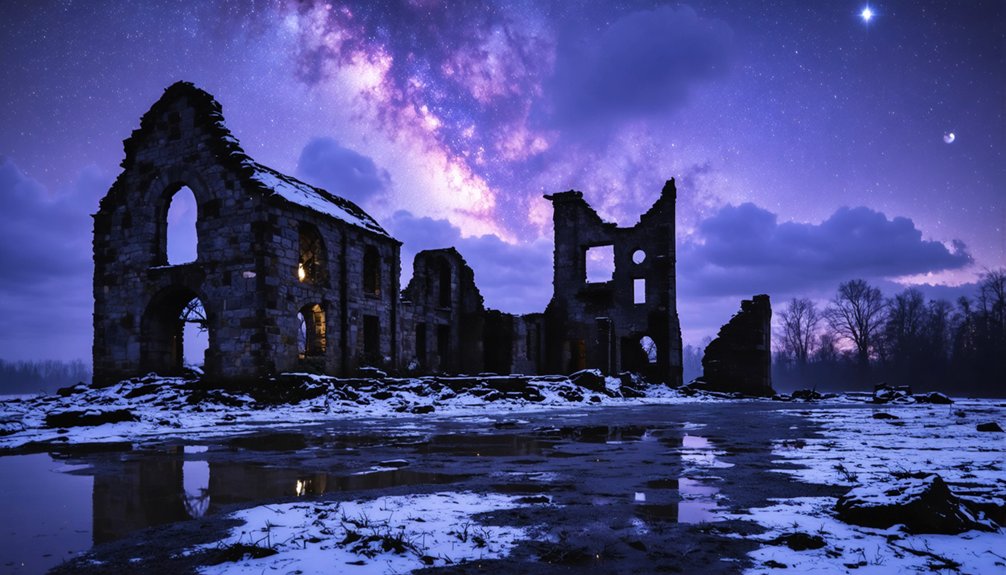
To capture stunning astrophotography in Rhode Island’s ghost towns, you’ll need to monitor several critical weather parameters that affect image quality. Track cloud cover forecasts carefully, as even partial cloud coverage can ruin long-exposure shots.
Winter nights offer your best shooting conditions, with crisp, clear skies ideal for capturing star trails and deep-sky objects.
Keep a close eye on atmospheric transparency and seeing conditions through reliable forecasting models like CMC and ECMWF. During humid summer evenings, watch for ground fog that can form suddenly in valleys.
You’ll want to protect your gear when humidity exceeds 95%, as condensation can damage sensitive camera equipment. For safety, monitor the K-index and avoid shooting during geomagnetic storms (Kp ≥5).
Always dress appropriately for cold winter sessions.
Composing Historic Ruins After Dark
Once you’ve identified ideal weather conditions, mastering nighttime composition techniques becomes your next challenge. Rhode Island’s abandoned structures provide perfect subjects for crafting celestial narratives through your lens.
Understanding ruin aesthetics helps you leverage these historic remnants as compelling foreground elements against star-filled skies.
Decay and celestial beauty intertwine as abandoned structures frame the dance of stars in nature’s nocturnal theater.
- Fort Wetherill’s concrete batteries and Ramtail Factory’s geometric foundations create strong leading lines for star trail compositions.
- Rocky Point’s gondola stations and Fort Mansfield’s coastal remains offer dramatic silhouettes for Milky Way alignment.
- Hanton City’s stone foundations and scattered remnants provide textural elements for low-light foreground interest.
Position yourself to capture these structural ghosts against the cosmic canvas. Each location’s unique architectural elements can frame celestial phenomena while telling stories of Rhode Island’s industrial and military past through your nighttime exposures.
Permits and Legal Guidelines
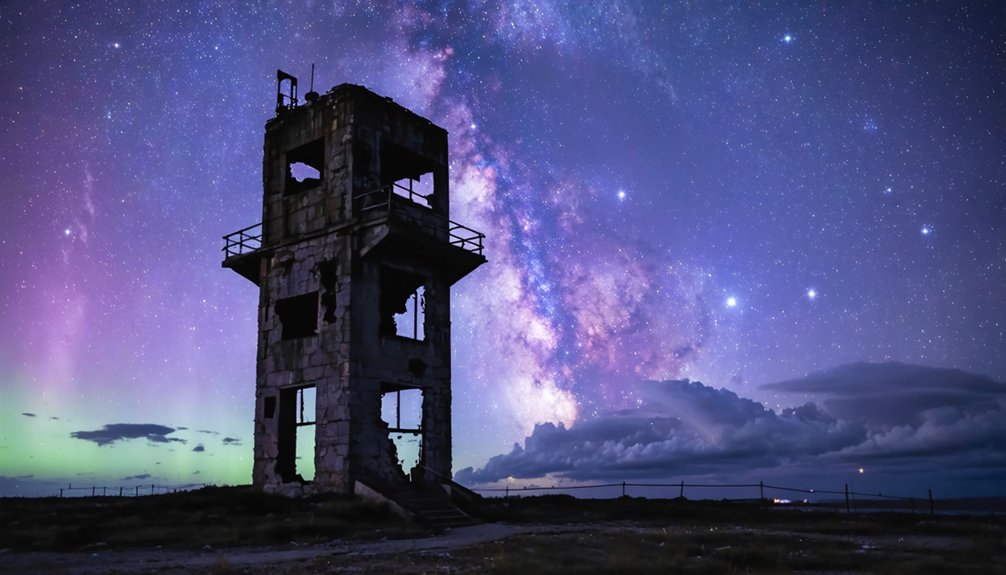
Legal compliance represents a critical foundation for successful ghost town astrophotography in Rhode Island.
You’ll need to secure proper permit requirements before setting up your night shoot at any historical site. For private ghost town properties, obtain written permission from landowners to avoid trespassing issues.
State parks require Professional Photography Permits, while National Park Service locations demand specific Film and Photography permits.
When planning your celestial captures, you’ll need Special Use Permits if your shoot involves more than 10-25 participants or requires equipment setup that could impact other visitors.
Night photography with artificial lighting typically triggers additional legal permissions, especially in municipal areas.
For extensive coverage, secure liability insurance with minimum limits of $1,000,000 per occurrence, and remember that drone operations require separate authorizations.
Frequently Asked Questions
Are There Guided Night Photography Tours Available at These Ghost Towns?
While you’ll find evening ghost tours in Rhode Island, there aren’t any dedicated guided night photography tours of ghost towns. You’ll need to arrange custom access through local historical societies or park authorities.
For those interested in capturing stunning landscapes, exploring the best locations for drone shots in Rhode Island can yield breathtaking results. From the rugged coastal cliffs to the serene inland lakes, each area offers unique perspectives that highlight the state’s natural beauty. Be sure to check local regulations regarding drone usage to ensure a smooth filming experience.
When considering the best months to explore Rhode Island, keep in mind the vibrant fall foliage and pleasant summer weather that attract many visitors. Spring also brings blooming flowers and lively festivals, making it an ideal time for photography enthusiasts to capture the essence of the state. Each season offers distinct opportunities for unique shots, showcasing everything from sandy beaches to charming small towns.
Which Ghost Town Site Has the Most Paranormal Activity Reports?
You’ll find the most documented paranormal sightings at the Conjuring House in Burrillville, where two spectral phenomena involving young girls and intense supernatural activity are consistently reported by trustworthy witnesses.
Can Drones Be Used for Aerial Night Photography at These Locations?
Like Icarus’s flight, you’ll face strict limits – drone regulations prohibit night ops in state parks, though you can capture aerial photos with proper FAA lighting and Remote ID in unrestricted ghost town areas.
What Wildlife Encounters Are Common During Night Shoots at These Sites?
You’ll encounter white-tailed deer, coyotes, owls, and bats during your night shoots. These nocturnal animals often appear in frames as eye-shine, silhouettes, or streaks against your starlit compositions.
Do Any Locations Offer Emergency Shelter if Weather Suddenly Changes?
You’ll find no reliable emergency shelter at these abandoned sites. Like a photographer caught in last summer’s sudden storm, you’ll need to bring portable weather protection or stay within quick reach of your vehicle.
References
- https://en.wikipedia.org/wiki/List_of_ghost_towns_in_Rhode_Island
- https://newenglandwithlove.com/ghost-towns-in-rhode-island/
- https://www.rimonthly.com/haunted-places-rhode-island/
- https://www.rhodeislandredfoodtours.com/2024/10/28/haunted-sites-of-rhode-island/
- https://www.youtube.com/watch?v=kpy7zlXYrAU
- https://www.geotab.com/ghost-towns/
- https://carte-urbex.com/en/blogs/infos/top-10-abandoned-places-in-rhode-island
- https://www.videolinea.com/en/blog/essential-equipment-guide-for-stunning-night-sky-photography-b97.html
- https://www.rmg.co.uk/stories/space-astronomy/best-astrophotography-equipment-according-experts
- https://astrobackyard.com/astrophotography-equipment/