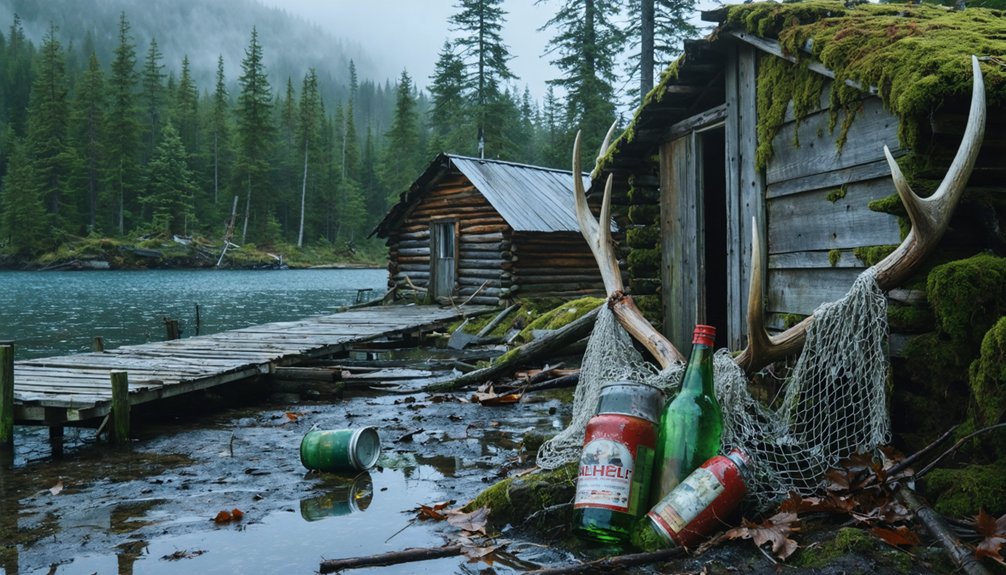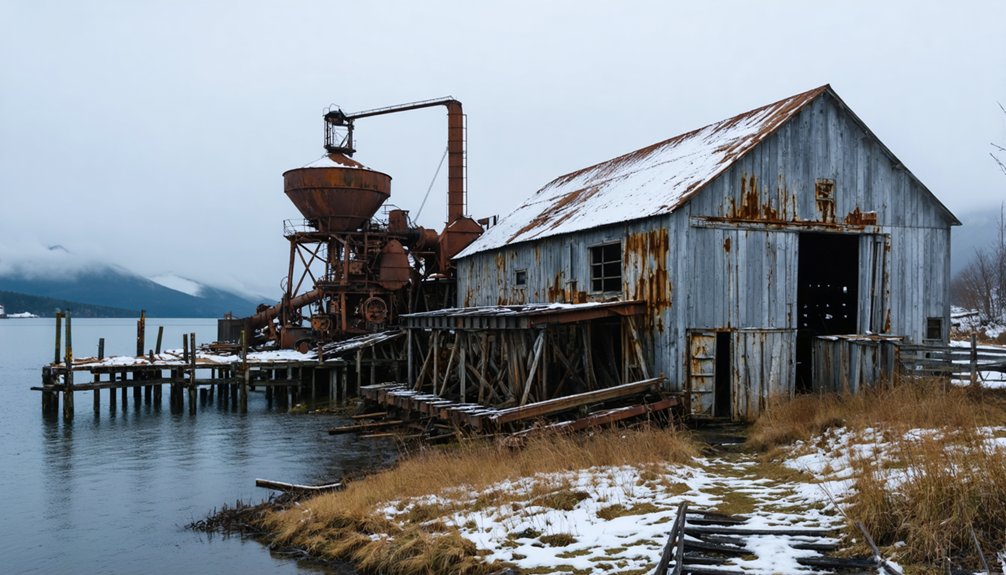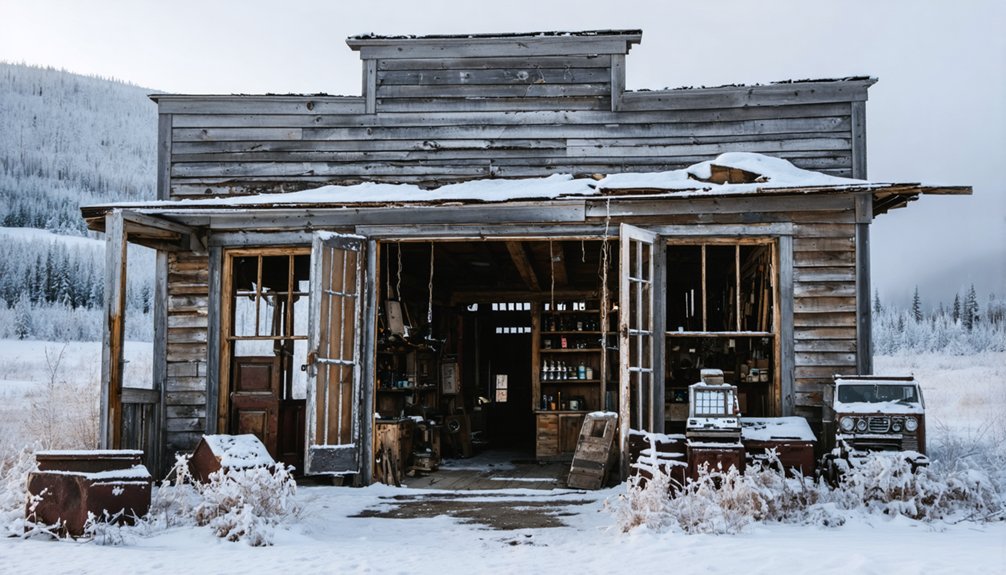
You’ll find Alaska’s most fascinating ghost towns scattered across the untamed wilderness, each telling a unique story of boom-and-bust cycles. Visit Kennecott’s towering copper mill, explore Dyea’s crumbling remains along the historic Chilkoot Trail, or wander through Treadwell’s sunken gold mining empire near Juneau. Fort Egbert’s restored buildings and Three Saints Bay’s Russian colonial ruins stand as silent sentinels to the state’s pioneering spirit, beckoning you deeper into Alaska’s remarkable past.
Key Takeaways
- Kennecott stands as Alaska’s most famous ghost town, featuring well-preserved copper mining buildings and offering guided tours through National Park Service.
- Dyea, the historic gateway to the Chilkoot Trail, showcases remnants of the Klondike Gold Rush with accessible hiking trails.
- Treadwell, near Juneau, features ruins of what was once the world’s largest hard-rock gold mining operation.
- Fort Egbert in Eagle maintains five original restored structures from its days as a significant military outpost.
- Three Saints Bay, Alaska’s first Russian settlement, offers visitors historic ruins and insights into early colonial history.
The Mighty Kennecott: A Copper Kingdom’s Legacy
When prospectors stumbled upon a rich copper deposit near Alaska’s Kennicott Glacier in 1900, they couldn’t have imagined the industrial empire that would soon rise from the wilderness.
Within a decade, the Kennecott mining operation transformed into one of North America’s richest copper producers, yielding ore so pure you could practically ship it straight to market. The mine’s chalcocite deposits contained an astounding 70% copper content. The operation proved so successful that it supplied over half of the world’s copper during World War I.
You’ll find the remnants of this copper kingdom standing proud against the Alaskan backdrop, where $200-300 million worth of copper (billions in today’s money) was extracted between 1911 and 1938.
This remote ghost town once bustled with 600 workers and boasted a self-sufficient community complete with a hospital, school, and recreation facilities.
Today, the historic mill buildings tell the story of American ingenuity and untamed frontier spirit.
Dyea: Gateway to the Chilkoot Trail
While copper transformed Alaska’s interior, another ghost town shaped its coastal gateway to gold-rush glory. You’ll find Dyea’s haunting remnants where the Taiya River meets the inlet, marking the legendary start of the Chilkoot Trail.
Before stampeders rushed through in 1897, this spot served as a Tlingit trading hub, known as Dayéi – “to pack” in their language. The area was controlled by notorious crime boss Soapy Smith during its peak.
During the Klondike frenzy, you’d have seen thousands of prospectors hauling their mandatory ton of supplies through this boomtown. The bustling settlement quickly grew to house over 150 businesses by 1898.
But Dyea’s history took a sharp turn when Skagway’s railroad emerged in 1899. The shallow port and devastating avalanches sealed its fate.
Today, you can explore this National Historic Landmark‘s quiet traces, where the 33-mile Chilkoot Trail still beckons adventurers toward the Canadian border.
Three Saints Bay: Russia’s First Alaskan Settlement
Three miles inland from Alaska’s rugged southeastern coast, you’ll find the remnants of Russia’s first foothold in North America – Three Saints Bay. Established in 1784 by Grigorii Shelikhov, this Russian settlement faced fierce Alutiiq resistance before gaining control through superior firepower.
The protected harbor made an ideal base for maritime fur trading, though the site’s cramped shoreline and sparse timber posed challenges. The settlement represents the Three Saints phase of the region’s prehistoric Kachemak tradition. The colony served as the primary trading hub for Russian fur operations in North America for nearly a century.
Nature ultimately decided the colony’s fate. After devastating earthquakes and tsunamis in 1788 and 1792 caused significant damage, Alexander Baranov relocated operations to present-day Kodiak.
While the settlement declined into “Old Harbor,” its legacy lives on through Russian Orthodox influence and mixed cultural heritage. Today, this National Historic Landmark preserves the dramatic intersection of Russian colonial ambition and indigenous Alutiiq culture.
Treadwell: The Sunken Gold Mining Empire
Moving from Russia’s earliest Alaskan settlement, we find another historical treasure beneath the waters of Southeast Alaska.
Once the world’s largest hard-rock gold mining operation, Treadwell’s remarkable history showcases pioneering mining technology and human ambition.
You’ll discover the remnants of a sprawling empire that produced gold worth billions in today’s value before meeting its watery fate in 1917. The mine’s success attracted 5,000 curious tourists to its dock in 1890 alone, making it an early Alaskan tourist destination.
- Four massive mines stretched along Gastineau Channel, powered by innovative hydroelectric systems
- 960 stamps crushed ore 24/7, processing 5,000 tons daily at peak operation
- Over 2,000 workers lived in a thriving company town with modern amenities
- Tunnels plunged 2,700 feet deep until cave-ins flooded the underground network
Today, you can explore the haunting ruins of this industrial giant while imagining the thunder of stamps that once echoed across these shores. During its operational years from 1891 to 1922, the complex processed an astounding 20.7 million tons of gold-bearing ore.
Fort Egbert: Frontier Military Outpost
Deep in Alaska’s rugged interior, Fort Egbert stands as a tribute to America’s frontier military presence along the mighty Yukon River.
You’ll discover the rich military history of this 1899 outpost, established under Lieutenant W. P. Richardson to maintain order during the Klondike Gold Rush. At its peak, you could’ve found nearly 40 buildings bustling with up to 102 soldiers, making it the U.S. Army’s Alaskan headquarters. The fort was ultimately abandoned in 1919 after the gold rush population declined sharply.
Today, ghost town preservation efforts by the Eagle Historical Society have reconstructed five original structures, including the mule barn and quartermaster storehouse. Famous explorer Roald Amundsen used the fort’s telegraph station in 1905 to announce his successful Northwest Passage crossing.
As you explore the grounds beneath Eagle Bluff, you’ll walk where General Billy Mitchell once supervised the construction of America’s first transcontinental telegraph line, connecting Alaska’s wilderness to the lower 48 states.
Kashega: Lost Village of the Aleutians
If you’re seeking one of Alaska’s most poignant ghost towns, you’ll find Kashega’s haunting story in the Aleutian Islands, where this once-thriving Unangan village featured a Russian Orthodox chapel and the region’s only school before World War II forced its evacuation.
You can trace the village’s tragic transformation from a traditional hunting and fishing community to an abandoned settlement after its residents were interned in southeastern Alaska camps from 1942-1945.
Today, you’ll discover only archaeological remnants of this lost village, where George Borenin once maintained the Chapel of the Transfiguration as its last resident before complete abandonment.
Pre-War Community Life
Before World War II disrupted life in the Aleutians, Kashega thrived as the largest of three traditional Unangan villages around Unalaska Island. The community dynamics revolved around strong leadership, with chiefs governing hunting activities and resource distribution.
You’d find a tight-knit society practicing subsistence traditions passed down through generations.
- The Russian Orthodox Chapel of the Transfiguration stood as the village’s spiritual center, maintained by devoted residents.
- A school operated briefly, making Kashega the only village among the three with formal education.
- Chiefs controlled hunting access and organized whale meat distribution among families.
- Traditional hunting of marine mammals sustained the self-sufficient lifestyle.
This remote settlement preserved its cultural identity through regulated hunting practices, spiritual devotion, and communal living, creating a sustainable existence in the challenging Aleutian environment.
World War II Evacuation
When Japanese forces invaded the Aleutian Islands in 1942, they set off a chain of events that would permanently alter Kashega’s fate. As enemy forces occupied Attu and Kiska, bombing Dutch Harbor, the U.S. Navy initiated urgent evacuation procedures.
You’ll find haunting evidence of the military’s scorched-earth policy – they burned Kashega’s homes to prevent Japanese use.
The villagers endured severe internment hardships at Ward Lake CCC camp, allowed only one suitcase and blanket roll per person.
They’d later move to Burnett Inlet in 1944 due to overcrowding. Tragically, 18% of Ward Lake’s internees perished during their confinement.
The harsh conditions in these abandoned southeast Alaska facilities, combined with limited possessions and separation from their homeland, took a devastating toll on Kashega’s people throughout their three-year internment.
Modern Archaeological Remains
Nestled between Brennan Lake and Kashega Bay on Unalaska Island’s Bering Sea coast, the archaeological remains of Kashega village offer a fascinating glimpse into Alaska’s lost communities.
While limited archaeological work has been conducted at the site itself, nearby discoveries reveal rich cultural heritage spanning 10,000 years.
You’ll discover evidence of the Unangan Aleut‘s sophisticated relationship with the sea through:
- Complex burial practices, including mummification of respected whalers
- Traditional tools like chipped knives and chekalina with slate covers
- Skeletal remains showing varied stratification patterns
- Personal artifacts preserving hair and other ritual elements
The National Park Service‘s Lost Villages project documented the site in 2010, though much remains unexplored.
As an adventurous explorer, you’ll find that Kashega’s archaeological findings continue to reveal secrets of this remarkable maritime civilization.
Historic Transportation Routes and Ghost Towns
You’ll discover Alaska’s most fascinating ghost towns along the historic transportation corridors that once served as lifelines for mining, commerce, and settlement.
Among the famous ghost towns in Alaska, you can explore the remnants of once-thriving communities such as Kennecott and Chitina, which reflect the state’s rich history. As you wander through these abandoned streets, you’ll feel the echoes of miners and settlers who sought fortune in the harsh wilderness. Each town tells a unique story of ambition, hardship, and ultimately, resilience against the odds.
From the copper-rich ruins of Kennicott along the Copper River Northwestern Railroad to the abandoned roadhouses dotting the Richardson Highway, these routes tell stories of boom-and-bust cycles that shaped the territory.
Whether you’re following the Klondike Gold Rush trails to Dyea or traversing the remote Dalton Highway past Coldfoot, each path reveals communities that thrived briefly before fading into Alaska’s vast wilderness.
Trails Between Ghost Settlements
Throughout Alaska’s rugged terrain, historic transportation routes serve as time capsules linking the state’s most fascinating ghost towns and abandoned settlements.
You’ll find remnants of boom-and-bust cycles along these ghost town trails, from the historic Chilkoot Trail’s gold rush heritage to the copper-hauling tracks of the Northwestern Railroad.
- Follow the gravel sections of Denali Highway to discover forgotten outposts like Igloo City
- Trek the legendary Chilkoot Trail through Dyea’s ruins, once a bustling Klondike gold rush gateway
- Explore Taylor Highway’s remote path to Eagle’s preserved Fort Egbert buildings
- Travel the old Copper River Northwestern Railroad route to reach Kennicott’s historic mine sites
These paths offer you raw historic exploration across Alaska’s untamed wilderness, connecting you to the state’s pioneer spirit and abandoned frontiers.
Maritime Trade Impact Sites
Along Alaska’s rugged coastline, abandoned maritime trade settlements tell stories of boom-and-bust cycles that shaped the state’s commercial history.
You’ll find Three Saints Bay‘s Russian fur trading remnants on Kodiak Island, where sea otter pelts once drove a thriving economy before nature intervened.
At Portlock’s cannery ruins, mysterious circumstances led to its abandonment, leaving only building footers and rusty cans as evidence to its fishing heritage.
Dyea’s maritime glory days ended when the railroad chose Skagway, while York’s brief stint as a coastal freight hub vanished almost overnight.
Even Knik Trading Hub, once bustling with hotels and saloons, couldn’t survive after the Alaska Railroad bypassed it for Anchorage.
These ghost towns stand as silent witnesses to Alaska’s maritime past.
Railroad-Linked Abandoned Communities
When the Alaska Railroad carved its path through the wilderness in the early 1900s, it spawned a network of towns that would later become some of the state’s most fascinating ghost towns.
You’ll discover remarkable railroad history woven through these abandoned communities, from luxury stops to mining outposts.
- Curry’s wilderness palace hotel met a fiery end in 1957, leaving only chimneys visible from today’s Aurora Winter Train.
- Knik thrived until the railroad chose Anchorage, prompting an exodus that left just two original buildings.
- Kennicott’s copper mining legacy lives on in its towering 14-story mill, now a National Historic Landmark.
- Chatanika and Chitina tell tales of boom-and-bust cycles tied to mining and rail transport.
These remnants of Alaska’s railroad era stand as symbols of the territory’s pioneering spirit and industrial ambition.
Preservation Efforts and Tourist Access
As Alaska’s ghost towns weather the harsh northern elements, dedicated preservation efforts have transformed several historic sites into protected landmarks that you can still explore today.
You’ll find careful restoration work at places like Coal Creek, where crews have replaced rotting timbers and repaired historic structures while tackling preservation challenges like mercury contamination.
The iconic Kennecott Mine, now a National Historic Landmark District, showcases how tourist engagement can help protect these invaluable sites.
Before heading out to explore these remnants of Alaska’s mining past, you’ll need to secure necessary permits and check current site conditions.
Many locations offer guided walking tours, particularly at Kennecott, where you can safely experience the authentic atmosphere of a preserved mining camp while supporting ongoing conservation efforts.
Life in Alaska’s Abandoned Communities
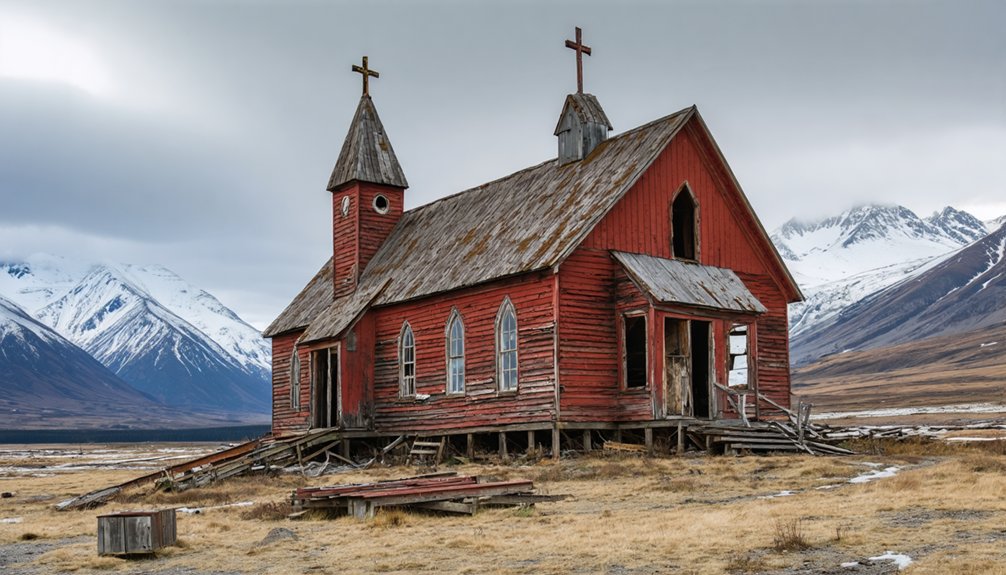
You’ll discover that life in Alaska’s ghost towns revolved around intense daily work – from mining copper in Kennicott to hunting marine mammals in Ukivok – where survival demanded both individual grit and tight community bonds.
While these settlements offered incredible freedom and connection to nature, you can trace how isolation and harsh conditions gradually wore down residents’ resolve, particularly visible in places like Portlock where unexplained threats accelerated departures.
Even after abandonment, you’ll find these communities’ spirits endure through returning elders who teach traditions at Old Minto and the handful of year-round residents who keep Kennicott’s story alive.
Daily Survival and Work
Life in Alaska’s ghost towns revolved around demanding daily work that tested the limits of human endurance. You would’ve found yourself battling harsh elements while engaging in subsistence fishing from precarious cliffside homes or descending into dark mine shafts for brutal mining labor.
From Ukivok’s stilt houses to Chatanika’s gold dredges, survival meant adapting to extreme conditions.
- Salmon cannery workers in places like Portlock processed massive fish hauls during intense seasonal peaks.
- Miners at Kennicott extracted the world’s richest copper deposits until the 1938 shutdown.
- Railroad crews at Curry maintained critical transportation links in complete isolation.
- Military personnel in Whittier lived entirely within the walls of the Buckner Building during WWII.
These communities demanded grit, resourcefulness, and unwavering determination from their inhabitants.
Isolation’s Mental Toll
While pioneering spirits were drawn to Alaska’s remote frontiers, the crushing weight of isolation exacted a devastating psychological toll on those who remained.
You’ll find evidence of these mental health struggles etched into the weathered walls of abandoned homes, where settlers battled not just the harsh elements, but their own minds.
The isolation effects were brutal – with no regular human contact, cognitive distortions took root. Seasonal darkness disrupted natural rhythms, while distance from medical care left psychological wounds untreated.
In Native communities, forced relocations and cultural losses deepened these mental scars.
Even today, these ghost towns stand as silent witnesses to the human cost of extreme solitude, where substance abuse and depression often became unwelcome companions in the struggle to survive Alaska’s beautiful but unforgiving wilderness.
Community Bonds Endure
Despite their ghostly appearances today, Alaska’s abandoned settlements reveal enduring bonds between former residents and their ancestral grounds.
You’ll find remarkable examples of community resilience in places like Port Lions, where Afognak villagers collectively rebuilt their lives with help from charitable organizations. Cultural continuity persists through generations, evident in how Portlock’s elders finally opened up about their mysterious past in 2021.
- Ukivok’s striking cliffside homes still stand as evidence of Aseuluk ingenuity and determination.
- Kennicott maintains its spirit through year-round residents who preserve its mining heritage.
- Port Lions exemplifies successful community relocation while honoring Alutiiq traditions.
- Portlock’s stories live on through oral histories, now shared by tribal elders who kept silent for decades.
Impact of Natural Disasters on Historic Settlements
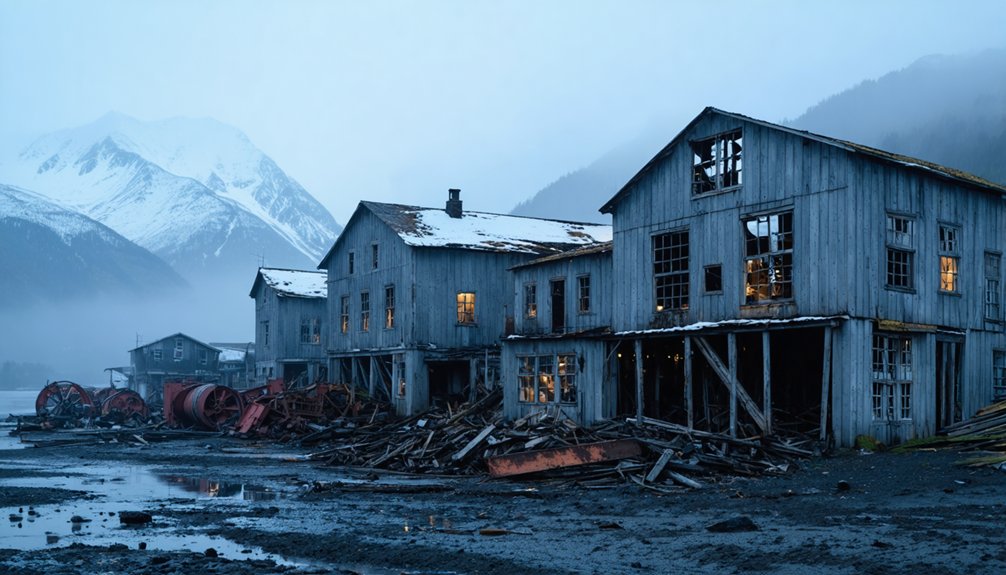
Throughout Alaska’s history, natural disasters have transformed thriving settlements into haunting ghost towns, leaving behind stark reminders of nature’s raw power.
You’ll find evidence of nature’s devastating impact in places like Chenega, which a massive tsunami leveled after the 1964 Good Friday earthquake, and Three Saints Bay, where an 18th-century earthquake and tidal wave forced total abandonment.
Today, you’re witnessing this pattern continue as coastal erosion devours barrier islands at alarming rates, sometimes claiming 50 feet of shoreline in a single storm.
Villages like Shishmaref and Newtok face the harsh reality of historic settlement abandonment, while permafrost thaw undermines buildings and infrastructure.
These forces have triggered the largest evacuation airlift in state history, creating new ghost towns as communities reluctantly surrender their ancestral lands to Alaska’s unforgiving elements.
Frequently Asked Questions
Are There Any Reported Ghost Sightings in Alaska’s Abandoned Towns?
You’ll find a million spooky legends in Alaska’s ghost towns, from phantom miners at Kennicott and Treadwell to haunted histories at Fort Egbert, where visitors report shadowy figures, voices, and unexplained phenomena.
What Survival Gear Should Visitors Bring When Exploring Remote Ghost Towns?
You’ll need survival essentials like bear spray, GPS, insulated gear, waterproof maps, and emergency shelter. Don’t forget navigation tools, first-aid kit, fire starters, and extra food supplies.
Which Ghost Towns Are Accessible During Alaska’s Harsh Winter Months?
You’ll find Whittier’s Buckner Building most reliably accessible in winter. Some interior ghost towns along maintained highways offer limited access, but you’ll need snowmachines and proper gear for safe exploration.
Can Visitors Take Artifacts or Souvenirs From These Abandoned Sites?
No, you can’t remove artifacts – it’s illegal and diminishes historical significance. These sites require artifact preservation for future generations to explore. You’ll face hefty fines and harm irreplaceable historical treasures.
Are There Any Active Gold Claims Near These Historic Ghost Towns?
While most historic claims lie dormant, you’ll find active mining at Funter Bay’s private claims and Crow Creek Mine near Girdwood. Kennicott and Treadwell remain strictly preservation zones.
References
- https://www.christywanders.com/2024/08/top-ghost-towns-for-history-buffs.html
- https://www.thealaskalife.com/blogs/news/alaska-ghost-towns-youve-probably-never-heard-of
- https://thealaskafrontier.com/ghost-towns-in-alaska/
- https://www.atlasobscura.com/things-to-do/alaska/ghost-towns
- https://www.experiencedenali.com/blog/alaskas-most-haunted-places/
- https://www.youtube.com/watch?v=P1ZqxD5x478
- https://en.wikipedia.org/wiki/List_of_ghost_towns_in_Alaska
- https://groundtruthalaska.org/articles/Kennecott-Copper-Mine/
- https://www.miningnewsnorth.com/story/2022/01/07/northern-mining-history/alaskan-copper-mine-once-giant-of-america/7136.html
- https://exploremccarthyalaska.com/kennecott-alaska-historic-mill-town/