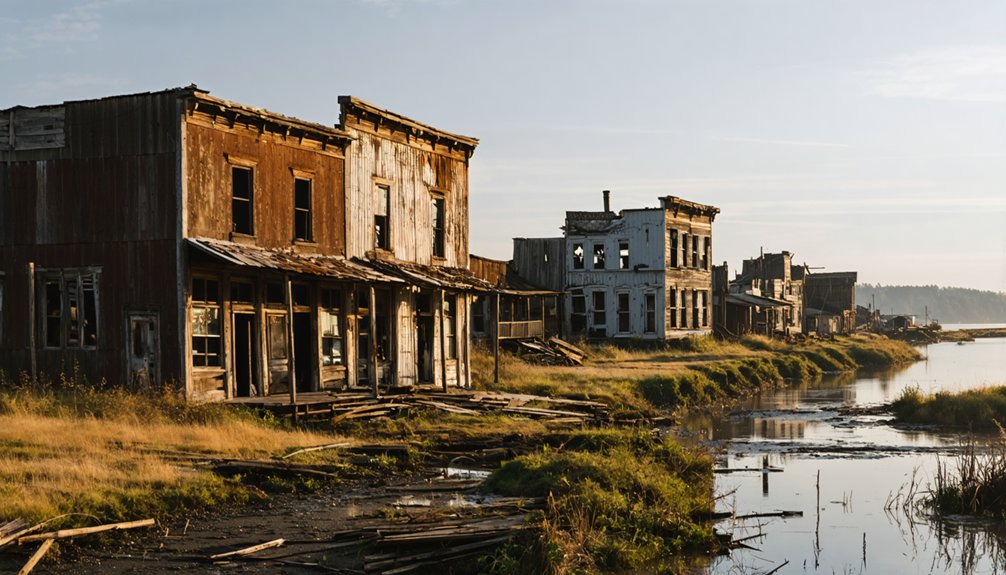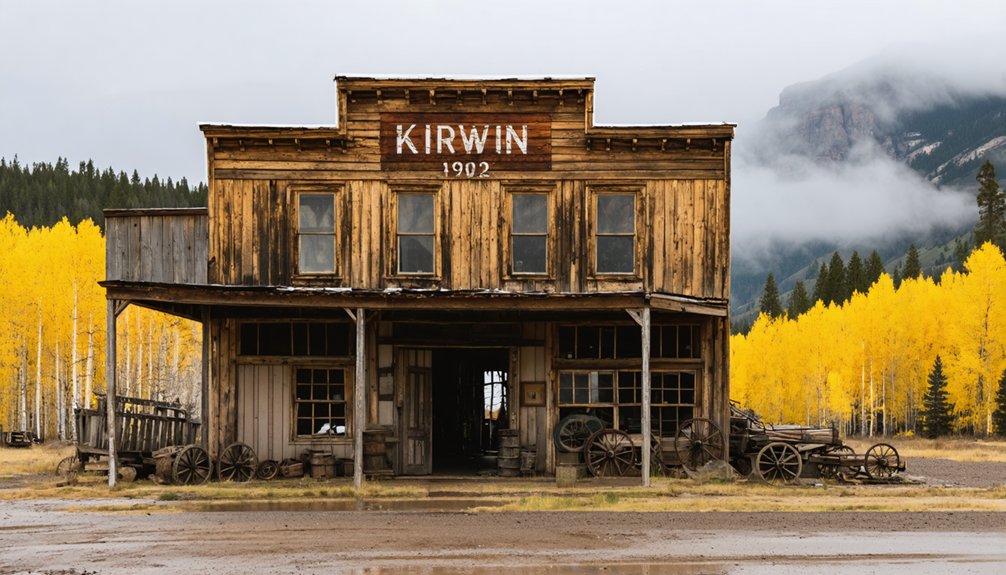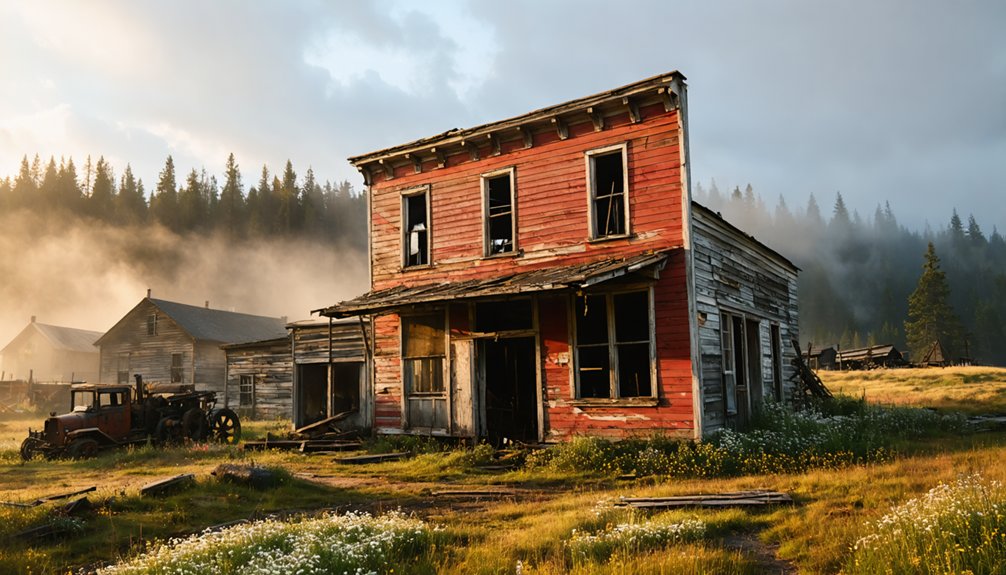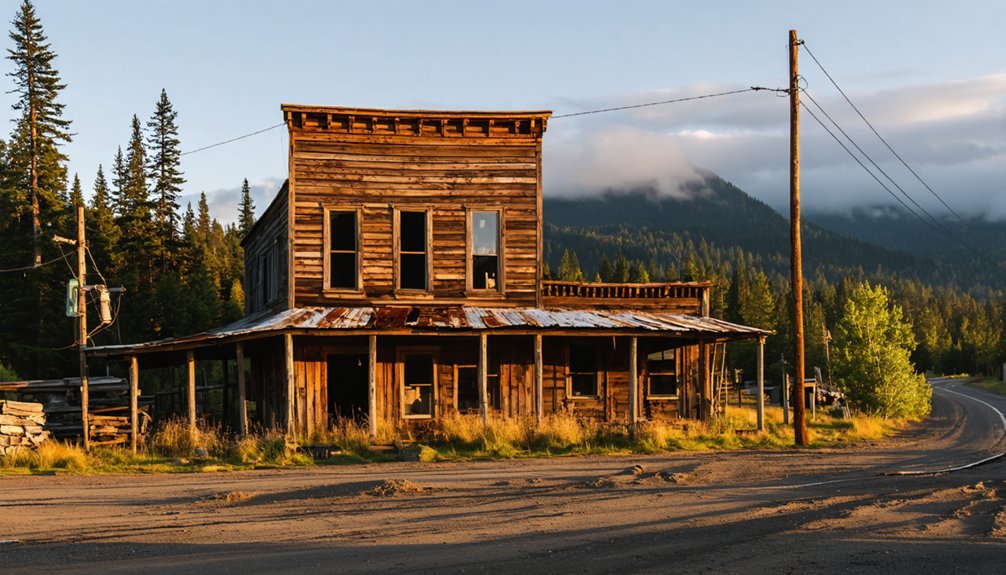
The Pacific Northwest offers photographers a wealth of ghost town treasures. You’ll find Liberty’s gold rush structures in Washington, Oregon’s church in Golden, and Idaho’s well-preserved Silver City. Each location tells its own story through weathered doorways, sunlight-dappled ruins, and forgotten artifacts. Pack your DSLR, wide-angle lens, and sturdy boots to navigate these haunting remnants of frontier life. The region’s 200+ abandoned settlements hold secrets only your camera can reveal.
Key Takeaways
- Liberty in Washington offers well-preserved structures from the 1870s Gold Rush listed on the National Register of Historic Places.
- Silver City, Idaho features intact 19th-century architecture, providing exceptional photography opportunities in a remote setting.
- Shaniko, Oregon remains a “living ghost town” with 30 residents dedicated to preserving authentic frontier architecture.
- Nighthawk’s ruins in Washington include concentration mills, a hotel and schoolhouse with Enloe Dam creating picturesque backdrops.
- Southern Oregon’s Golden features a rustic 1890s church on the National Register, ideal for architectural photography.
Washington’s Historic Mining Towns: Cascade Treasures
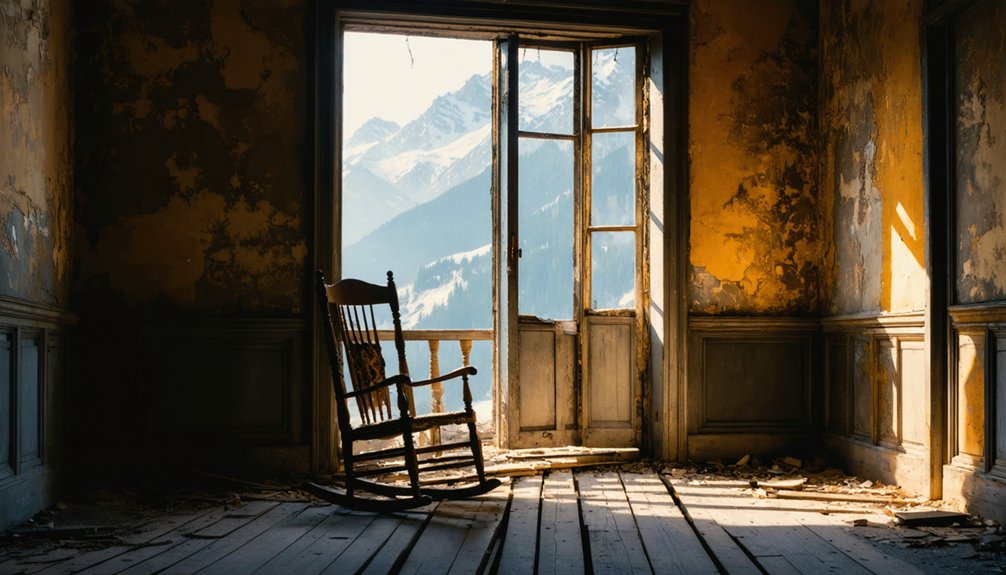
As you journey through the mist-shrouded valleys of Washington’s Cascade Range, you’ll discover a constellation of forgotten mining towns where history lies etched in weathered clapboard and rusted metal.
Liberty’s Legacy beckons photographers with its well-preserved structures dating to the 1870s Gold Rush—once called Meaghersville before earning its place on the National Register of Historic Places.
Venture northeast to find Nighthawk’s Ruins, where six concentration mills once thundered with activity. The still-standing hotel, schoolhouse, and mining office create perfect frames for your lens. The picturesque Enloe Dam nearby offers an additional compelling backdrop for photographers. Near the Canadian border, Molson showcases a treasure trove of pioneer buildings and vintage farm equipment frozen in time.
These towns offer more than mere backdrops; they’re portals to Washington’s rugged spirit. Capture the textured remains of ambition against mountain backdrops, where each weathered board tells tales of boom-and-bust cycles that shaped the frontier’s soul.
Oregon’s Well-Preserved Ghost Town Architecture
Oregon’s ghost towns stand as weathered monuments to ambition and perseverance, their architectural bones telling stories no history book could fully capture.
Southern Oregon’s Golden boasts a rustic 1890s church on the National Register, while Buncom’s preserved general store exemplifies authentic frontier craftsmanship.
Time stands still in these weathered gems of Oregon’s frontier past, where humble structures become portals to America’s pioneer spirit.
Shaniko’s living ghost town status allows you to witness maintained Old West architecture with about 30 residents keeping architectural preservation efforts alive.
- Weathered clapboard storefronts casting long shadows across dusty Main Streets
- Wooden church steeples piercing blue skies, silhouetted against mountain backdrops
- Abandoned vehicles slowly surrendering to nature, rusting among sagebrush
- Sun-bleached timber porches where miners once gathered after long shifts
For photographers seeking ghost town aesthetics, Hardman’s stagecoach-era structures and Greenhorn’s seven remaining homes offer unfiltered glimpses into frontier life’s architectural realities. As Oregon holds the highest ghost town count in America with approximately 200 abandoned settlements, photographers have unparalleled opportunities to document this unique historical legacy. Jawbone Flats in the Opal Creek Wilderness provides unique photography opportunities with its abandoned mining equipment scattered throughout the landscape.
Idaho’s Remote Mining Heritage Sites
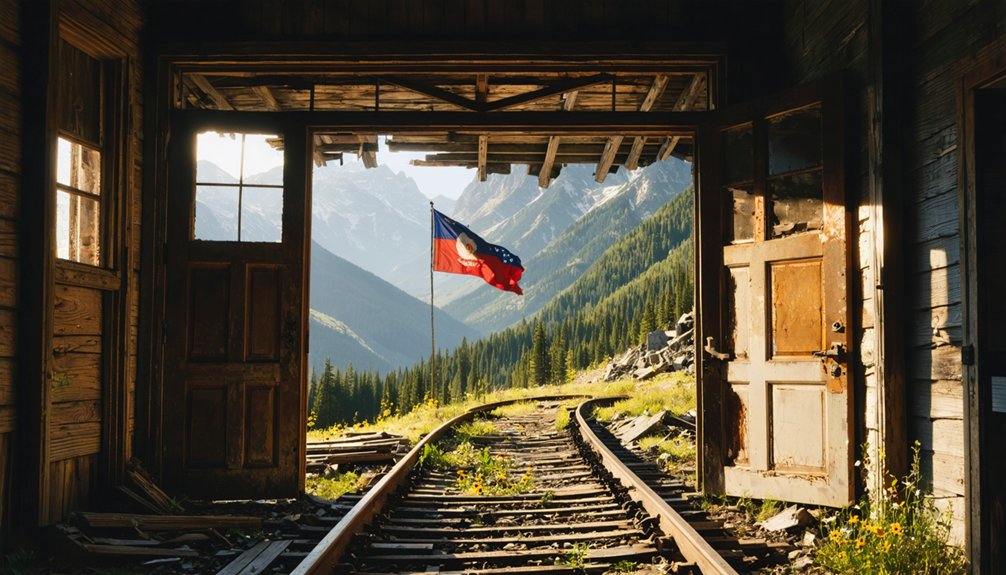
Deep within Idaho’s rugged wilderness, remnants of America’s mining boom era slumber beneath vast mountain shadows, awaiting discovery by photographers willing to venture where paved roads end.
Lemhi County offers extraordinary photographic treasures—Gilmore’s 40 abandoned structures stand frozen in time since the 1929 depression, while Shoup clings to existence with just four resilient souls.
Follow Forest Road 061 to capture Leesburg’s weathered cemetery and collapsed remnants, once home to 7,000 fortune-seekers.
Silver City’s well-preserved 19th-century architecture provides accessible shooting opportunities, while Bonanza—arguably Idaho’s most renowned ghost town—beckons from Custer County’s forgotten valleys.
Throughout these mining heritage sites, you’ll frame weathered log cabins against mountain backdrops and discover rusting equipment that whispers tales of faded dreams and untamed spirits. Idaho’s arid climate has remarkably preserved these historical structures, making them exceptional subjects for photographers seeking authentic glimpses into America’s pioneering past.
Leburg Town, established during the gold rush of 1866, offers photographers haunting images of a once-bustling community where thousands of miners sought fortune before its early 1900s decline.
Essential Gear for Ghost Town Photography Expeditions
When venturing into the weathered remains of Pacific Northwest ghost towns, your gear selection becomes as essential as the expeditions themselves.
Your camera settings must adapt to challenging lighting conditions while capturing the ethereal quality of these forgotten places. Pack a thorough gear checklist that balances protection and creative possibility.
- A sturdy DSLR with both wide-angle and prime lenses to frame crumbling facades against moody skies
- Reliable illumination tools—headlamp strapped tight while your hands adjust tripod legs on uneven, rotting floorboards
- Protective equipment that doesn’t hinder your freedom to explore—breathable respirators and fingerless gloves
- Multiple batteries and memory cards tucked safely in a weatherproof bag, ready for those moments when golden light breaks through dust-filled windows
Ensure your footwear has slip-resistant soles for safely navigating the often slippery and unstable surfaces found throughout abandoned structures.
A quality tripod becomes indispensable for creating sharp images in the dim interiors, with experts recommending you extend the lowest legs first to prevent sand or debris from damaging your equipment.
Capturing Decay and Abandonment: Composition Tips
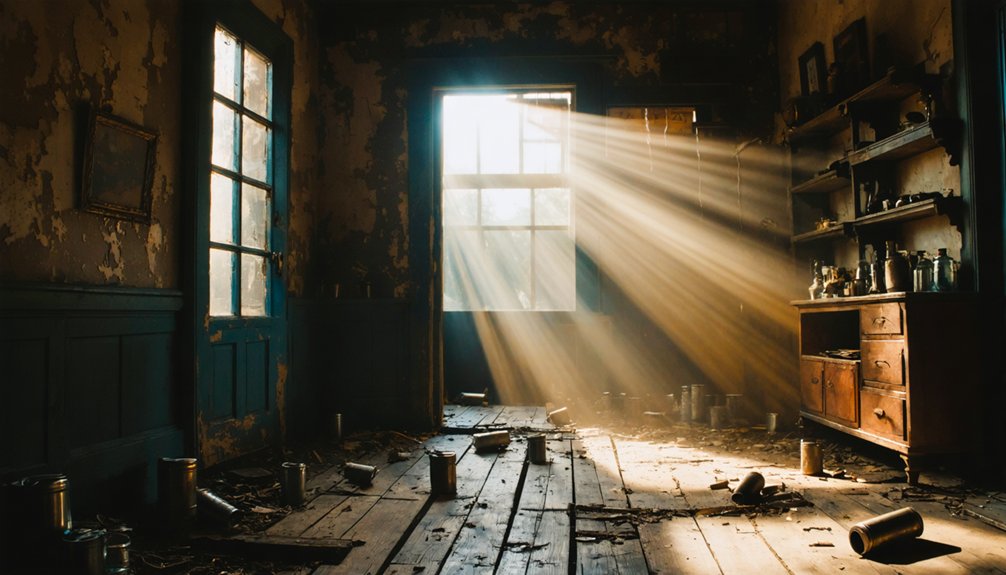
You’ll find that abandoned doorways frame decaying interiors with haunting precision, creating natural portals between past and present.
As dawn light filters through broken windows, dust particles dance in golden beams that illuminate weathered textures and forgotten corners with an ethereal glow. Long-exposure techniques can transform ghostly movements of light and shadow into surreal visual poetry that captures the essence of these forgotten places.
Each crumbling wall, rusted hinge, and faded signage tells its own silent story of time’s relentless march, inviting your camera to document these fleeting monuments before nature reclaims them completely. Remember to maintain straight verticals when photographing building facades to preserve the architectural integrity even in their deteriorated state.
Framing Through Doorways
Doorways in abandoned structures offer photographers a powerful compositional tool that transforms ordinary ghost town scenes into hauntingly structured narratives.
When you frame your subject through a doorway, you’re creating visual separation that draws viewers deeper into your story. Position your subject strategically within these natural boundaries to enhance isolation themes while controlling where the eye travels. The frame-within-frame technique isn’t just aesthetic—it’s storytelling through architectural remnants.
- Crumbling archways of Sumpter’s abandoned mines create natural vignettes that focus attention on rusted machinery.
- Weather-beaten cabin doorframes in Kirwin provide weathered textures that complement the desolation beyond.
- Broken hotel entrances in Bodie cast angular shadows that slice across empty corridors.
- Church doorways in Bannack frame distant mountain landscapes, connecting human abandonment to eternal nature.
Natural Light Effects
Natural light serves as the ghost photographer‘s most essential tool, transforming mundane decay into ethereal tableaux of abandonment.
You’ll find elevation dictates both access and quality of light—higher locations like Monte Cristo offer extended golden hours during summer months when roads remain passable.
The interplay of shadows across cemetery grounds creates dramatic contrasts, particularly during early morning or late afternoon shoots. Weathered headstones and crumbling markers become compelling subjects when backlit, their textures amplified against deteriorating wooden structures.
For texture enthusiasts, foundation remnants at Franklin and Liberty reward side-lighting techniques that emphasize decay’s intricate patterns.
Even overcast conditions prove valuable, casting soft illumination across exposed basements and mine shafts.
After sunset, these forgotten places transform again—combine long exposures with minimal light painting to capture star trails arcing above history’s silent sentinels.
Telling Time’s Story
Beneath the surface of every forgotten settlement lies a visual narrative waiting to be uncovered through your lens. When documenting time’s decay, position storytelling artifacts off-center using the rule of thirds to emphasize their isolation and abandonment.
Frame your shots through broken windows or doorways to add depth and context to these once-thriving spaces.
- Weathered ledgers splayed open on dusty countertops, their faded ink revealing fragments of bygone commerce
- Rusted machinery standing sentinel, half-consumed by creeping vines and morning fog
- Peeling wallpaper curling away from walls like pages from history’s forgotten chapters
- Personal belongings—a child’s shoe, a tarnished locket—telling intimate stories of hasty departures
Contrast these human elements against nature’s reclamation to create visual tension that speaks to the viewer’s own yearning for escape and exploration.
Seasonal Photography Considerations for PNW Ghost Towns
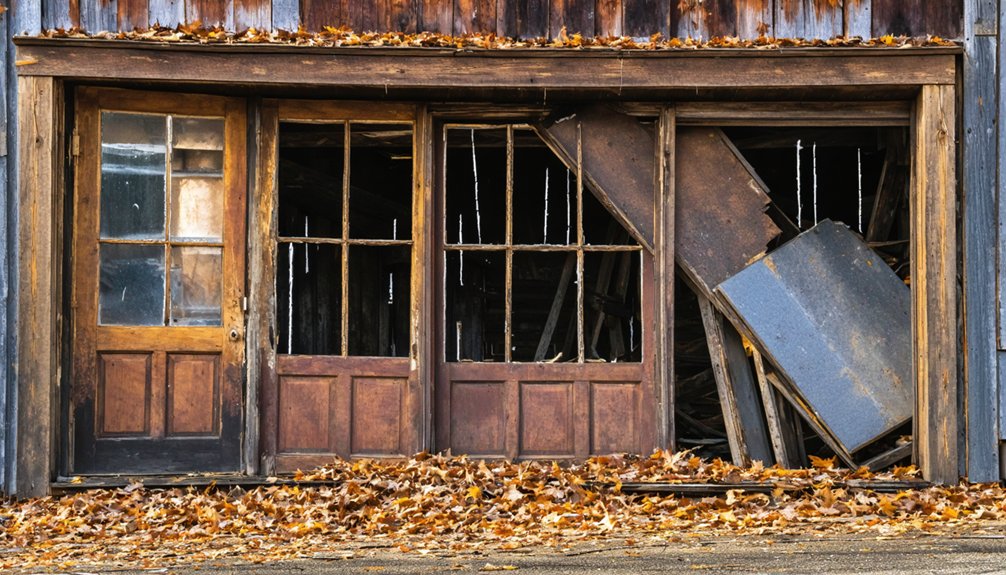
The Pacific Northwest’s abandoned settlements reveal their secrets differently as the seasons change, transforming both access and aesthetics throughout the year.
Summer grants you the most reliable seasonal access, with open trails from June through September, while winter snow renders many mountainous ghost towns unreachable.
The mountain’s ghosts hide beneath winter’s blanket, revealing themselves only to summer’s determined seekers.
Weather impacts every aspect of your ghost town expedition. Summer offers extended golden hours and clear skies perfect for dramatic shots, while spring and fall wrap abandoned structures in mysterious fog and dramatic cloud formations.
Winter’s stark landscapes expose normally hidden architectural details, though daylight hours shrink considerably.
Consider wildlife and vegetation cycles too—spring wildflowers and autumn foliage create stunning backdrops, while winter’s barren landscapes tell stories of abandonment more starkly.
Always check road conditions before venturing out, especially during shoulder seasons when conditions change rapidly.
Respecting History: Ethics and Etiquette at Abandoned Sites
As you step into these weathered remnants of bygone days, you’re not just a photographer but a custodian of fragile history that whispers through crumbling walls and rusted machinery.
Your camera captures what time slowly reclaims, creating a permanent record while your footsteps leave no mark on these hallowed grounds.
Remember that every artifact tells a story worth preserving—photograph respectfully from multiple angles rather than rearranging items for the “perfect shot.”
Preserving Through Photography
Wandering through the weathered remnants of Pacific Northwest ghost towns, you’ll quickly realize that photography isn’t just about capturing compelling images—it’s about preserving fleeting moments of history with respect and care.
Your camera becomes a tool for ghost town preservation when wielded with ethical photography practices in mind.
Through your lens, you’re documenting structures that may not stand another decade, creating visual records future generations might never otherwise see. Your work becomes part of the historical record—a responsibility not to be taken lightly.
- Sunlight streaming through collapsed rooftops, highlighting dust particles suspended in time
- Faded wallpaper clinging desperately to warped wooden walls, telling stories of lives once lived
- Rusted machinery half-buried in earth, slowly returning to the land
- Weathered headstones tilting in forgotten cemeteries, names barely visible beneath lichen’s embrace
Leave No Trace
While light-footed explorers tread carefully through history’s hallowed remnants, true ghost town photographers abide by a sacred covenant—leave no trace.
Practice proper ghost town etiquette by verifying legal access before venturing forth. These weathered sentinels stand on lands both public and private, often requiring permits or containing restricted areas. Honor all posted warnings and closures.
Your environmental responsibility extends beyond merely packing out trash. Never disturb artifacts, remove souvenirs, or damage fragile structures. Tread only on established paths, preserving both the physical remains and the stories they whisper.
When sharing your captures online, consider obscuring exact locations. Vague geographic references protect vulnerable sites from overcrowding and potential vandalism.
Remember—these timber-and-stone witnesses to bygone eras deserve your protection as much as your appreciation.
Document, Don’t Disturb
Ghost towns whisper their secrets through crumbling doorways and weathered timbers, beckoning your camera lens to document what remains—but they demand reverence in return.
The haunting history of submerged towns reveals tales of lives interrupted and dreams submerged beneath waves. Each submerged structure tells a story of resilience and loss, inviting exploration and reflection on what was once vibrant. As the waters rise and recede, these ghostly remnants remind us of the fragile nature of our existence and the landscapes we leave behind.
When documenting decay, remember you’re a visitor to history, not its editor. Capture structures as you find them—never move artifacts, rearrange scenes, or fabricate stories for dramatic effect. Ethical storytelling preserves authenticity while honoring those who once called these places home.
- Shadow-traced floorboards bearing century-old footprints, untouched beneath your careful steps
- Rusted machinery standing sentinel, photographed from respectful distances
- Weathered photos clinging to faded wallpaper, stories told without disturbing their rest
- Sunlight streaming through collapsed roofs, illuminating dust motes dancing where families once gathered
Your images become tomorrow’s historical record—document with integrity.
Frequently Asked Questions
Are Permits Required for Commercial Ghost Town Photography?
Yes, you’ll need permits for commercial ghost town photography. Whether on federal, state, or private land, commercial photography regulations require specific ghost town permits before capturing those hauntingly authentic shots.
How Do I Find Lesser-Known Ghost Towns Not on Tourist Maps?
Like trackers following whispers on forgotten trails, you’ll unearth hidden ghosts through meticulous online research of historical society archives and by seeking weathered local recommendations from county museums and regional historians.
What Wildlife Hazards Should Photographers Be Prepared For?
As you’re framing that weathered doorway, you’ll face black bears, rattlesnakes, mountain lions, and coyotes. Wildlife encounters demand your vigilance—carry bear spray and practice hazard awareness during dawn and dusk shoots.
Can Drones Be Legally Used at Pacific Northwest Ghost Towns?
Drone regulations vary widely. You’ll need permits on public lands and owner permission on private property. Mind FAA altitude limits while capturing your aerial photography of these weathered, silent settlements.
Are Guided Photography Tours Available for Dangerous or Remote Locations?
Like Monte Cristo’s misty ruins, you’ll find guided tours available for remote ghost towns. Professional outfitters provide access to dangerous locations with strict safety precautions, letting you freely capture haunting images others can’t reach.
References
- http://pnwphotoblog.com/ghost-towns/
- https://bestofthenorthwest.com/northwest-travel-ideas/northwest-ghost-towns/
- https://www.photocascadia.com/for-the-love-of-ghost-towns/
- https://stateofwatourism.com/ghost-towns-of-washington-state/
- https://www.emeraldpalate.com/abandoned-places-in-washington/
- https://www.wta.org/go-outside/seasonal-hikes/fall-destinations/hidden-history-ghost-town-hikes
- https://www.dnr.wa.gov/Publications/ger_ic1_dmm_directory_wa_mines_1938.pdf
- https://okanogancountry.com/ghost-towns
- https://en.wikipedia.org/wiki/List_of_ghost_towns_in_Washington
- https://westernmininghistory.com/state/washington/