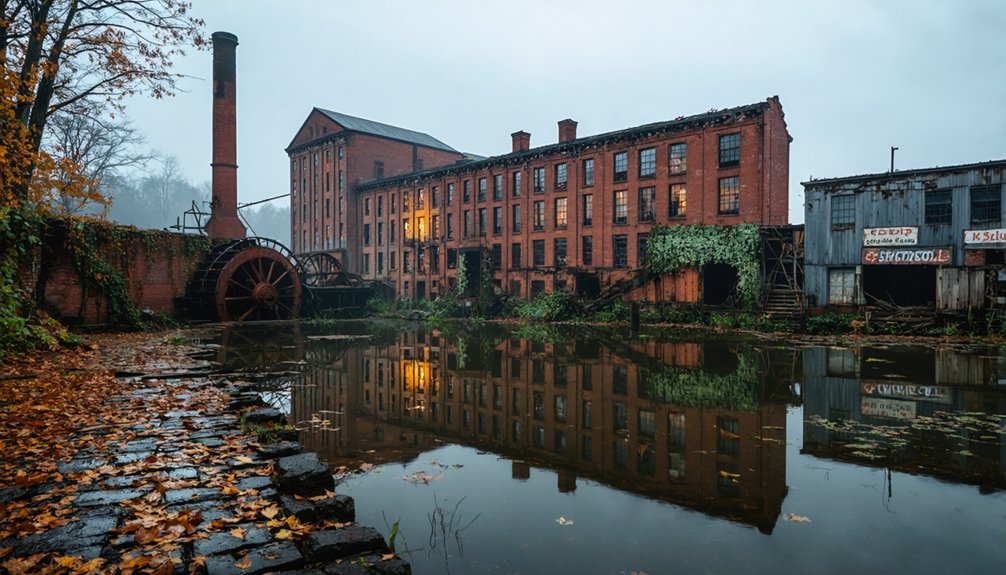
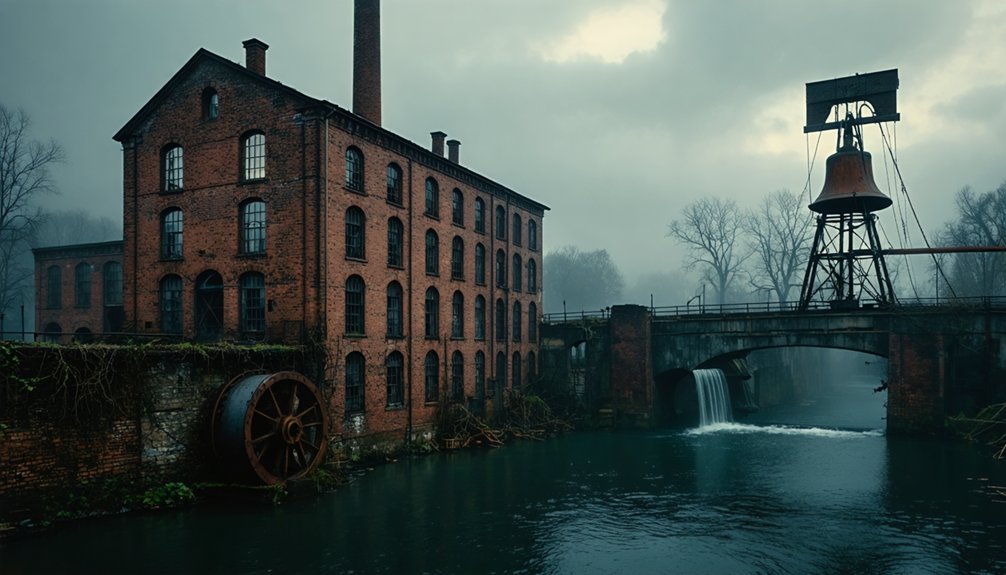
Before exploring abandoned mill towns, research site history through local archives and verify land ownership to avoid trespassing. Always bring safety essentials: sturdy boots, cut-resistant gloves, respirators, and reliable lighting. Test structural integrity before entering buildings and document finds without removing artifacts. Inform someone of your plans and expected return time. Proper preparation guarantees you’ll capture the historical significance while respecting these vanishing monuments to industrial America.
Key Takeaways
- Research the site’s history and verify land ownership status before visiting to avoid trespassing issues.
- Wear appropriate safety gear including sturdy boots, cut-resistant gloves, and respiratory protection when exploring deteriorating structures.
- Assess structural stability by checking support beams and testing floors before applying full weight.
- Document findings through photographs and notes without removing artifacts to preserve historical context.
- Inform someone about your exploration plans including route and expected return time.
Essential Research Before Your Mill Town Adventure
Before starting any exploration of abandoned mill town sites, thorough research stands as your essential first step toward a meaningful and safe experience.
Begin by investigating the mill’s historical significance through local archives, historical societies, and online databases. Document the operational timeline, type of manufacturing, and economic impact on the surrounding region. As seen in Laurel’s history, understanding the transition from grist mill to cotton mill provides crucial context for interpreting remaining structures.
History lives in the documents. Uncover a mill’s past through archives before setting foot on its forgotten grounds.
Verify land ownership status to avoid trespassing issues and secure necessary permissions before your visit.
Research the community infrastructure that once supported workers, including housing patterns, churches, and schools. These details enrich your understanding of the site’s societal framework.
Don’t overlook safety hazards specific to mill towns, such as structural instabilities, industrial contamination, or seasonal terrain challenges.
Check recent visitor reports for current access conditions and potential restrictions that might affect your exploration.
Ghost towns often emerged during rapid growth periods, then were abandoned when the resources that sustained them were exhausted.
Safety Equipment and Preparation Checklist
Proper preparedness forms the foundation of safe mill town exploration, requiring equipment that protects against the unique hazards of these industrial relics. Your safety gear arsenal must include sturdy hiking boots with thick soles to prevent punctures, cut-resistant gloves for handling sharp debris, and N95/P100 respirators that filter asbestos and mold particles—regular facemasks won’t suffice.
Don’t venture without reliable illumination; headlamps free your hands while maneuvering through treacherous structures. Always pack extra batteries to ensure continuous lighting throughout your expedition. Carry offline maps and compasses as cellular service often fails at remote sites.
For emergency preparedness, attach first aid kits to your backpack’s exterior with carabiners for immediate access to medical supplies. Layer clothing appropriately for unpredictable weather conditions, and consider knee/elbow pads when crawling through tight spaces. Before departing, remember to inform someone about your exploration plans, including your intended route and expected return time.
Steering through the decaying remnants of mill towns demands heightened vigilance as these structures harbor countless hidden dangers that can quickly turn exploration into catastrophe.
When evaluating structural stability, always scan for compromised support beams, water damage, and pest infestation before entering any building.
Maintain constant terrain awareness by:
- Testing floor strength with a walking stick before applying your full weight
- Staying at least 10 feet from unstable walls that show cracking or leaning
- Avoiding staircases with visible rust or missing steps
- Marking your path through debris fields to guarantee safe exit routes
Remember that contaminated soil and water are often invisible threats.
Don’t assume a structure is safe simply because it’s still standing—many mills remain upright despite critically compromised load-bearing elements.
Be especially cautious of abandoned adits or shafts which may contain poisonous gases and unstable ceilings that could collapse without warning.
Areas like Gilman often contain toxic pollutants that contributed to their abandonment, creating potential health hazards for explorers decades later.
Understanding the Industrial Heritage of Mill Towns
When exploring mill town ruins, you’ll witness the physical remnants of boom-and-bust economic cycles that once transformed rural landscapes into industrial centers.
The preserved machinery—from water wheels to belt-drive systems—documents technological evolution that revolutionized manufacturing processes between the 18th and early 20th centuries.
These artifacts require careful contextual interpretation as they represent not just mechanical innovation but the social and economic forces that shaped entire communities before their eventual decline.
In Oldham, which became the cotton spinning center of the world by the late 19th century, visitors can trace the dramatic population growth from 12,000 to over 137,000 people that accompanied industrial expansion.
The rise of railways in the 1870s and 1880s facilitated the development of lumber mill towns throughout eastern Indian Territory, creating the foundation for Oklahoma’s timber industry.
Economic Rise and Fall
Despite their modern ghost-town status, mill towns once served as economic powerhouses that transformed rural landscapes into bustling industrial centers during the 18th and 19th centuries.
You’ll witness the physical remnants of dramatic economic cycles that shaped these communities when exploring these sites today.
Four key phases characterized mill town development:
- Rapid population growth – England’s population doubled between 1801-1851, with mill towns driving urbanization.
- Industrial specialization – Towns focused on textiles, ironworks, or mining, generating immense regional wealth.
- Competitive decline – Outside competition and changing demands triggered economic downturns.
- Cultural transformation – Former industrial centers now repurposed as heritage sites or arts districts.
Understanding this boom-and-bust pattern provides essential context for interpreting the urban decline evident in abandoned machinery, empty factory floors, and repurposed industrial architecture. Manchester exemplifies this pattern with its population surging from 70,000 to over 210,000 by the 1841 census data.
Machinery and Innovation
The technological heartbeat of mill towns can be traced through the evolution of their machinery, which transformed from simple water-powered mechanisms to sophisticated electrical systems over centuries.
When exploring abandoned mill sites, you’ll witness this machinery evolution through remaining belt-drive systems, wheelhouses, and retrofitted equipment foundations.
Examine how industrial innovation progressed from water wheels to Newcomen engines, then to Watt’s revolutionary steam engines, and finally to electrification in the 1880s.
This progression freed factories from geographical constraints, enabling unprecedented production capacity—imagine thousands of cotton yarns spinning simultaneously.
Look for evidence of vertical integration in machine shops and specialized facilities.
The shift from wooden to fireproof brick structures reflects both technological advancement and safety concerns.
These artifacts tell the story of human ingenuity and the communities built around industrial progress.
The Blackstone River provided essential water power for many Rhode Island mills, including the Valley Falls Mill and Pawtucket Hair Cloth Mill, which relied on this natural resource for their manufacturing operations.
Ethical Exploration and Artifact Preservation
Ethical exploration of abandoned mill towns requires adherence to stringent preservation protocols that safeguard both the historical integrity and legal standing of these fragile sites.
When practicing responsible site stewardship, you’ll preserve history for future generations while avoiding legal entanglements.
Following these ethical guidelines guarantees your exploration remains above reproach:
- Always obtain written permission from landowners before entering private property
- Document but never remove artifacts you discover, maintaining their contextual significance
- Leave structures undisturbed by avoiding alterations to buildings, foundations, or machinery
- Fill any excavations and properly dispose of modern trash encountered during your visit
Remember that proper documentation of finds contributes more to historical understanding than possession of artifacts, which often constitutes illegal looting and damages irreplaceable industrial heritage.
Documentation Techniques for Historical Sites
When documenting mill town ghost sites, you’ll need to photograph not just remaining structures but also the surrounding industrial landscape, including water sources, power systems, and transportation networks that contextualize the site’s function.
Record these elements systematically using photogrammetry or detailed sketching, making note of spatial relationships that reveal operational workflows and community organization.
You’ll maximize research value by organizing your findings in a database that links photographic evidence with historical records, creating a thorough documentation system that preserves both visual data and contextual information for future preservation efforts.
Photography Beyond Buildings
While buildings naturally dominate the landscape of abandoned mill towns, thorough documentation must extend beyond structures to capture the fuller historical narrative. Non-building artifacts like tools, furniture, and personal items reveal intimate glimpses into past lives that structural remains cannot.
To document these vital historical elements effectively:
- Use close-up shots of distinctive features—peeling paint, rusted tools, discarded toys—to preserve textural details that tell deeper stories.
- Experiment with creative framing through window reflections or lattice work to add visual depth.
- Photograph objects from multiple angles with a tripod to guarantee complete documentation.
- Incorporate measured documentation with rulers or tape measures alongside your photographs.
Remember to adjust white balance and ISO settings according to lighting conditions, guaranteeing true-to-life representation of these irreplaceable artifacts.
Recording Industrial Context
Beyond the individual artifacts and structures lies the broader industrial context that gives meaning to abandoned mill towns.
You’ll need to capture this context through measured surveys, creating detailed plans and elevations that document spatial relationships when written records fail.
Complement your fieldwork with thorough photographic documentation, shooting both wide-angle site layouts and close-ups of distinctive features.
Label each photo with location and date for proper archiving. For deeper analysis, consider employing 3D documentation technologies like photogrammetry or laser scanning.
Don’t neglect archival research—historical maps, photographs, and documents will help you interpret the physical remains you’re recording.
Organizing Research Findings
After completing your fieldwork and collection phase, the real power of your research emerges through thoughtful organization. Effective data organization transforms scattered observations into meaningful narratives about mill town histories.
Structure your material using research synthesis techniques that align with your documentation objectives.
For ideal organization of your ghost town findings:
- Create a chronological timeline of the site’s development, including construction phases and technological shifts.
- Categorize artifacts and features by function (production, housing, infrastructure).
- Map spatial relationships between structures to reveal social hierarchies and industrial workflows.
- Cross-reference your field documentation with archival sources to validate observations.
This systematic approach guarantees your documentation preserves not just physical remnants but also captures the economic and cultural contexts that shaped these once-thriving industrial communities.
Local Legends and Cultural Sensitivity
When exploring old mill town ghost sites, you’ll often encounter a rich tapestry of local legends that form the narrative backbone of these abandoned places.
These stories, passed through generations, blend historical fact with local storytelling traditions that heighten your connection to these forgotten communities.
Approach these narratives with cultural sensitivity, particularly when they intersect with indigenous legends.
Many mill towns were built on lands with deep significance to Native communities. Federal regulations like NAGPRA require consultation with tribes before exploring culturally sensitive areas.
Always secure proper permits and respect tribal perspectives when documenting these sites.
Seasonal Considerations for Ghost Town Visits
The timing of your visits to old mill town ghost sites greatly affects both your experience and safety. Each season presents unique seasonal challenges requiring specific preparation.
Winter offers hauntingly beautiful snow-covered ruins with fewer tourists, but limited access and shorter daylight hours demand careful planning.
Winter transforms forgotten mill towns into ethereal landscapes of snow-draped ruins, rewarding the prepared traveler with solitude and timeless beauty.
When exploring these historical remains throughout the year, remember:
- Spring brings muddy terrain and increased wildlife activity, necessitating proper footwear and wildlife awareness.
- Summer offers extended exploration time but crowds and heat exhaustion risks require additional water supplies.
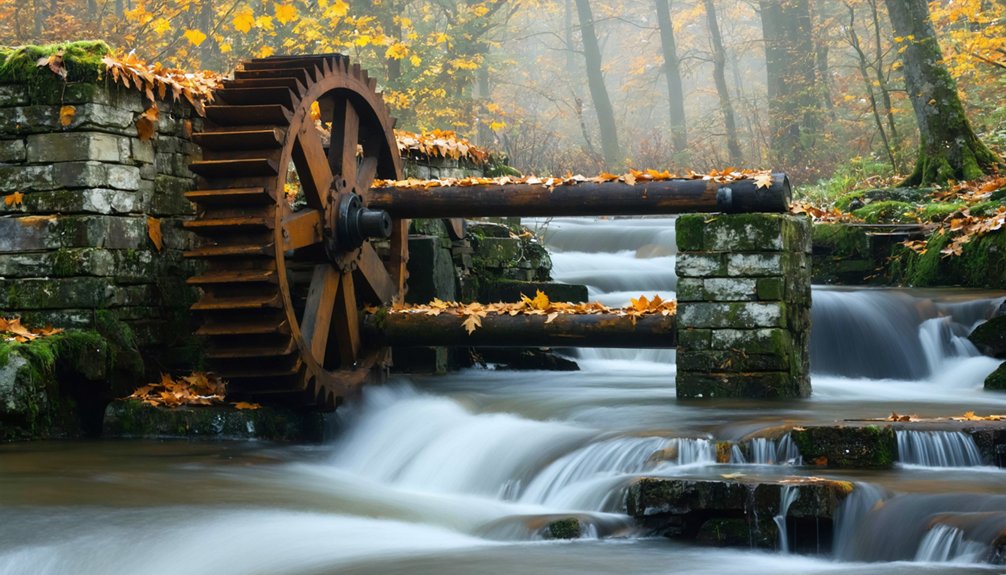
- Fall provides spectacular foliage backdrops but leaf-covered hazards demand extra vigilance.
- Winter creates pristine photographic conditions but requires cold-weather gear and daylight-optimized scheduling.
Always check seasonal accessibility before departing and carry appropriate emergency supplies regardless of when you visit.
Frequently Asked Questions
How Do I Handle Encounters With Squatters or Homeless Individuals?
Maintain distance while evaluating safety precautions. Announce your presence calmly, employ respectful interactions, and exit immediately if threatened. Document encounters thoroughly, preserving everyone’s autonomy and dignity in these contested spaces.
Can Metal Detectors Be Used at Abandoned Mill Sites?
Keep your nose clean when metal detecting at abandoned mills. You’ll need landowner permission, historical research on site designations, and proper documentation techniques before searching. Some sites prohibit detection entirely due to archaeological protections.
Exploring historic sites in Colorado’s mining towns can yield fascinating discoveries, but it’s crucial to follow local regulations and environmental guidelines. Many of these towns, rich in history and charm, offer more than just relics; they provide a glimpse into the lives of early miners and their communities. Respecting these areas not only preserves their heritage but also ensures that they remain accessible for future generations to appreciate.
Are There Specific Photography Techniques for Capturing Mill Machinery Details?
You’ll get stunning machinery details with macro photography for intricate parts and strategic lighting techniques to highlight texture. Use diffused light to reveal rust patterns and mechanical wear while avoiding harsh glare.
How Do I Identify Potentially Toxic Industrial Contaminants?
Rust-stained soil reveals hidden danger. Look for discolored earth, chemical odors, leaking barrels, and stained concrete around machinery locations—these visual indicators often mark industrial waste and contamination sources requiring careful documentation.
What’s the Protocol if I Discover Human Remains?
Stop all activity immediately. You’re legally obligated to contact local law enforcement—don’t disturb anything. Ethical considerations demand meticulous documentation of the site while respecting these remains’ contextual significance. Never handle them yourself.
References
- https://albiongould.com/ghost-towns-to-visit-in-the-states/
- https://bnu.repository.guildhe.ac.uk/id/eprint/20221/1/20221_Okeeffe.pdf
- https://www.geotab.com/ghost-towns/
- https://en.wikipedia.org/wiki/Template_talk:Infobox_NRHP/Archive_3
- https://en.wikipedia.org/wiki/Ghost_town
- https://ghost.org/explore/about/
- https://www.youtube.com/watch?v=eyOASXxAmMI
- https://www.youtube.com/watch?v=bGi9Y0tsT5w
- https://www.loveexploring.com/gallerylist/188219/the-us-state-with-the-most-ghost-towns-revealed
- https://en.wikipedia.org/wiki/List_of_reportedly_haunted_locations