You’ll find the best ghost town experiences in Alaska from May through September when weather conditions are ideal and daylight stretches long. These peak months offer reliable transportation to historic sites, comfortable 55-70°F temperatures, and full access to abandoned settlements. While summer brings crowds, you can dodge the tourist crush by visiting mid-week or during shoulder seasons. The changing seasons transform these haunting places, each offering its own unique historical perspective to uncover.
Key Takeaways
- Peak summer season (May-September) offers ideal accessibility with extended daylight hours and fully operational transportation to ghost town sites.
- Early fall (September) combines aurora viewing opportunities, fall foliage, and reduced crowds at ghost towns with moderate temperatures.
- Winter months provide dramatic northern lights backdrops against ghost town ruins, though access may be limited by weather.
- Shoulder seasons (early May/late September) offer 10-25% lower prices while maintaining reasonable access to most ghost town locations.
- Mid-week visits during October-April see 88% fewer tourists, allowing for more intimate ghost town exploration experiences.
Peak Summer Season: When History Comes Alive
While Alaska’s ghost towns hold an eerie allure year-round, the peak summer season from May through September offers you the most rewarding exploration opportunities.
With 2.7 million visitors flocking to Alaska during these months, you’ll find infrastructure and services fully operational to support your ghost town history adventures.
You’ll benefit from extended daylight hours and ideal weather conditions that make abandoned buildings and historic sites more accessible.
Multiple daily transportation options, from cruise ships to regional flights, can get you close to these historical treasures.
From April through October, you can expect to see up to five cruise ships docking daily in port cities, making ghost town access easier than ever.
Summer’s peak season guarantees you’ll have access to guided tours, accommodations in nearby towns, and reliable transportation – essential elements for serious ghost town exploration.
Plus, with tourism services operating at full capacity, you can easily combine your historical quest with other regional attractions.
With over 3 million visitors during the tourism season, you’ll be joining fellow history enthusiasts in exploring these fascinating remnants of Alaska’s past.
Wildlife and Natural Encounters
As you explore Alaska’s ghost towns, you’ll discover they’re far from lifeless – these abandoned settlements have become sanctuaries for diverse wildlife.
Nature reclaims what humans leave behind, transforming Alaska’s forgotten towns into thriving havens for wild creatures.
These historical sites now serve as natural habitats where wildlife migration patterns intersect with remnants of the past.
- Watch brown and black bears feast on salmon at Fish Creek near Hyder from July through September, safely viewing from elevated boardwalks.
- Spot puffins and sea otters around Unga Island’s abandoned structures, where coastal species thrive amid historical ruins.
- Observe eagles perched on weathered buildings while bears investigate old foundations, especially during morning fog.
Near Portage, visitors can witness the haunting beauty of a ghost forest created when the 1964 earthquake caused the land to sink.
The Salmon Glacier viewpoint, North America’s fifth largest glacier, provides an excellent vantage point for spotting wildlife against dramatic icy landscapes.
The best wildlife encounters often occur during summer months when animals are most active.
However, remain vigilant – these ghost towns belong to nature now, and wild residents deserve space and respect.
Planning Around the Northern Lights
You’ll find exceptional aurora viewing opportunities at many of Alaska’s abandoned settlements, where minimal light pollution and remote locations create ideal conditions for witnessing the northern lights.
Ghost towns like Dyea and Kennicott offer prime viewing spots from September through March, when clear winter skies coincide with peak auroral activity.
With at least 100 settlements scattered across Alaska’s vast wilderness, visitors have numerous options for remote stargazing locations.
The historic copper mining ruins of Kennicott provide a dramatic backdrop against the dancing northern lights, creating an unforgettable photography opportunity.
For the best combination of site access and viewing conditions, plan your ghost town aurora expedition during March’s prime 10-day window, when you’ll typically encounter both passable roads and up to 10 hours of prime dark-sky viewing time.
Aurora Hotspots Near Ruins
Since Alaska’s ghost towns often sit under prime aurora viewing bands, timing your visit during peak northern lights season can create unforgettable experiences against historic backdrops.
The remote locations that once housed mining operations now offer exceptional dark sky conditions for aurora photography, particularly near Wiseman and Coldfoot along the Dalton Highway. The best chances of seeing the northern lights occur during the September to April viewing window when nights are longest and darkest. Plan your viewing between 10 pm and 3 am for optimal aurora activity.
These historic settlements provide unique foregrounds for capturing the dancing lights against remnants of Alaska’s gold rush era.
- Position yourself at Cleary Summit, a former mining district, for 360-degree views of both ruins and the northern lights.
- Explore abandoned structures near Murphy Dome, where minimal light pollution enhances both historical significance and aurora visibility.
- Set up near Chena Hot Springs’ historic mining sites, combining thermal comfort with ideal viewing conditions beneath active auroral bands.
Timing Your Ghost Visit
Planning a ghost town aurora adventure requires careful timing to maximize both site accessibility and northern lights viewing potential. Late August through mid-September offers your perfect window, combining ghost town accessibility with emerging aurora displays.
You’ll enjoy 11-14 hours of daylight for exploring ruins, followed by increasingly dark nights for light shows. This sweet spot delivers ideal visiting conditions: reduced crowds at historic sites, shoulder season discounts of 10-25% on accommodations, and peak fall colors above the tree line.
While February-April boasts clearer skies for aurora viewing, many remote ghost towns become inaccessible. By timing your visit during the summer-to-fall shift, you’ll dodge both the peak tourist crowds and winter’s harsh conditions while experiencing the dual magic of abandoned settlements and dancing lights. The late summer period offers a 25% chance of rain, making it one of the driest times to explore these historic sites. The shoulder season after Labor Day brings significantly lower prices for travelers exploring these historic locations.
Weather Patterns and Trail Conditions
Alaska’s ghost town trails endure dramatic seasonal changes that directly impact accessibility and exploration conditions.
You’ll face significant seasonal challenges, from spring’s treacherous breakup period when melting snow creates impassable mud to winter’s extreme subfreezing temperatures that blanket trails for months.
Trail accessibility varies dramatically throughout the year, with ideal conditions typically occurring between mid-July and early August.
For optimal ghost town exploration in Alaska, plan your trek during the brief window of mid-July through early August.
- Summer brings near-constant daylight and temperatures between 55-70°F, offering prime exploration time after mosquito season peaks.
- Fall delivers a brief but stunning display of yellow-orange foliage before freezing temperatures set in.
- Winter transforms trails with deep snow and temperatures plunging to -17°F in Fairbanks, while coastal ghost towns become shrouded in thick fog.
Avoiding Peak Tourist Crowds
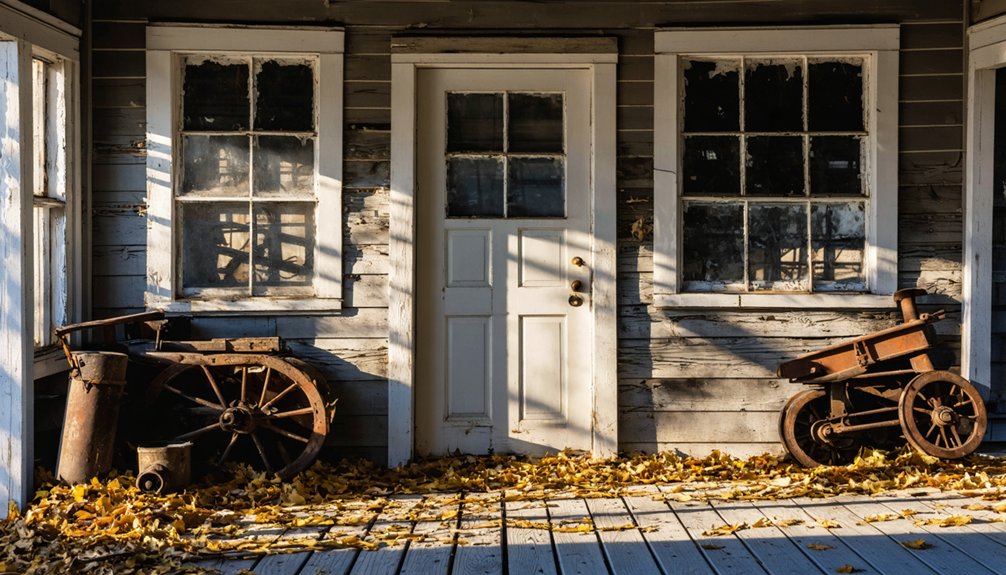
While ideal weather conditions draw many to Alaska’s ghost towns during peak season, you’ll find the most authentic and peaceful exploration opportunities by timing your visit strategically.
Consider visiting between October and April when tourist traffic drops to just 12% of annual visitors, giving you nearly exclusive access to these historical sites. You’ll avoid the summer crush of 2.6+ million visitors, particularly the cruise ship crowds that dominate popular ports.
For an even more secluded experience, plan around local events and historical festivals that typically draw crowds.
Aim for mid-week visits during shoulder seasons, especially in early October or late April. With summer hotel occupancy rates hovering around 60% in major cities, you’ll find better accommodation rates and availability during the off-season.
Seasonal Outdoor Activities
Ghost towns across Alaska offer distinct seasonal activities that transform dramatically throughout the year, from summer glacier treks to winter aurora viewing.
You’ll find prime glacier hiking conditions during warmer months when you can trek the 2-mile Root Glacier Trail or tackle the challenging Matanuska Ice Fall. As seasons shift, you’ll discover opportunities for rainforest kayaking through the Tongass National Forest or witness the ethereal Northern Lights from Kennecott’s elevated vantage points during long winter nights.
- Summer brings ideal conditions for guided glacier exploration and mill tours, with extended daylight for extended adventures.
- Fall delivers a perfect blend of aurora viewing and moderate temperatures for rainforest treks.
- Winter transforms the landscape into a ski paradise, while providing peak Northern Lights viewing from 9pm-3am.
Budget-Friendly Travel Windows
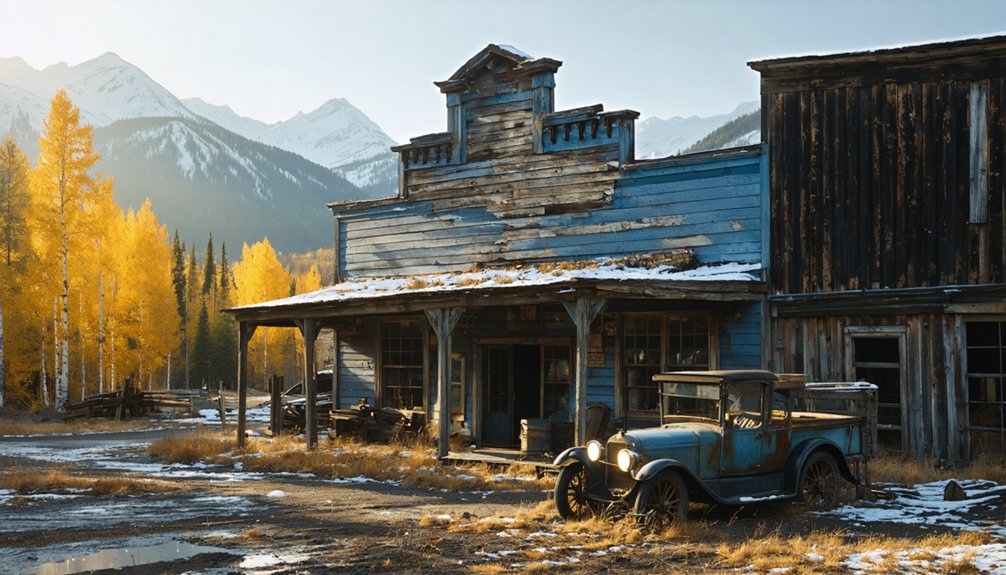
Beyond the seasonal activities, savvy travelers can access significant savings by timing their ghost town visits strategically.
You’ll find the best budget accommodations during the shoulder seasons of early May to mid-June and late August through mid-September, when prices drop 10-25% below peak rates.
For maximum cost saving strategies, consider planning your ghost town expedition during October through April.
During these months, you’ll discover lodging rates under $100 per night in smaller towns near historic mining sites.
Budget-savvy explorers can find affordable rooms under $100 nightly in small communities surrounding ghost town sites.
While winter months require careful planning for indoor accommodations, they offer unmatched deals on flights and rentals.
September visits provide an ideal balance, combining fall colors with reduced tourism crowds and moderate prices, making it perfect for exploring abandoned settlements while maintaining comfortable travel conditions.
Frequently Asked Questions
Are Ghost Towns in Alaska Accessible by Public Transportation?
You’ll find limited public transport options to Alaska’s ghost towns. Most sites require your own vehicle, though Whittier’s ghost sites are uniquely accessible by ferry or cruise ship.
What Safety Precautions Should I Take When Exploring Abandoned Mining Sites?
You’ll need proper safety gear including a hard hat, sturdy boots, and respirator. Never explore alone, watch for wildlife encounters, and tell someone your plans. Avoid unstable structures and water-filled areas.
Can I Legally Collect Artifacts From Alaskan Ghost Towns?
You can’t legally collect artifacts from ghost towns – they’re protected by federal and state laws. Focus on artifact preservation through photos instead to avoid serious legal implications.
Are There Guided Tours Specifically Focused on Paranormal Activity?
You’ll find several paranormal-focused tours in Alaska, including Haunted Sitka’s ghost hunting experiences, Lizzie Borden’s investigations in Anchorage, and the Red Onion Saloon’s haunted brothel tours featuring real paranormal investigations.
Which Ghost Towns Offer Overnight Camping or Accommodation Options Nearby?
You’ll find camping options and nearby lodges at Kennicott’s Glacier Lodge, McCarthy’s rustic cabins, Camp McCarthy’s luxury tents, and Eagle Shadow Campground near Hyder – perfect for ghost town adventurers seeking solitude.
References
- https://www.alaska.org/advice/best-time-to-visit-alaska
- https://backpackinglight.com/forums/topic/alaska-when-should-i-go/
- https://www.travelingigloo.com/best-time-of-year-visit-alaska/
- https://koa.com/blog/alaska-travel-guide-the-best-time-to-visit-places-to-go-travel-tips-more/
- https://takemytrip.com/2018/04/take-that-trip-to-alaska-11-alaska-ghost-towns/
- https://www.tripadvisor.ie/ShowTopic-g28923-i349-k11836913-When_to_visit_alaska_may_june_or_sept-Alaska.html
- https://www.alaskatia.org/sites/default/files/2025-10/Alaska Visitor Volume Winter and Full Year 2024-25 7.8.25.pdf
- https://theorcasonian.com/weve-become-an-amusement-park-the-alaskan-town-torn-apart-by-cruise-ship-tourism/
- https://www.ktoo.org/2025/10/22/last-years-alaska-tourism-season-was-a-record-year-but-just-barely/
- https://alaskapublic.org/programs/alaska-economic-report/2025-06-05/alaska-tourism-operators-begin-the-season-with-one-word-in-mind-uncertainty